
Home / Extra Strong / Iceberg Strawberry Pomegranate Nicotine Pouches

Iceberg · 50mg
Read the full guide
Iceberg Strawberry Pomegranate Nicotine Pouches
£39.90
✔ In stock — ready to ship
100% tobacco-free
Free over £20
Same-day dispatch
Secure checkout
This page covers Iceberg Strawberry Pomegranate Nicotine Pouches. The brand is Iceberg, the flavour name on the can is Strawberry Pomegranate, and the listed price is £39.90. One strength is held against this product — 50mg — and that single strength is the whole of the variant table. We carry one product image for it.
Two things about the listing need saying before anything else, because they change how you should read the rest of the page. The first is that this product is currently out of stock. You can read about it, you can decide whether it is something you would want, but you cannot put it in a basket today. We have left the page up rather than hiding it, because a page that disappears and reappears is worse for someone trying to work out what a can is than a page that stays put and tells you the truth about availability.
The full guide to Iceberg Strawberry Pomegranate Nicotine Pouches
5,858 words on how it eats, who it suits, how to serve it and what to put beside it.
Iceberg Strawberry Pomegranate: the listing in plain terms
The second is that we do not hold a can count for this listing. The field is empty in our records. At £39.90 the price is in line with what a ten-can pack costs elsewhere on this site, but lining up with a pattern is not the same as knowing, and we are not going to print a pack size we cannot stand behind. If you need to know whether £39.90 buys one can or a roll of them, that is a question for us directly rather than something this page can settle. Everywhere on this site where we do know the pack count, we print it; here we do not, so we say so.
Everything that follows is one of three things: a description of the object, a comparison against other cans on our shelves, or a plain admission that a piece of information is not something we have. There will be gaps. We would rather you could see them.
This is an age-restricted nicotine product for adults over 18 who already use nicotine. The full compliance wording sits in its own section at the foot of the page and is not decoration.
Strawberry and pomegranate, described as taste and aroma
Start with a discrepancy, because it is the honest place to start. The can is called Strawberry Pomegranate. The flavour tags we hold against it are berry and strawberry. There is no pomegranate tag. That is not us hiding something — it is simply how the record was filed, and it means that when you browse by flavour on this site, this can surfaces under berry and under strawberry and nowhere else. If you came looking for pomegranate specifically, our filing will not help you find it, and no amount of writing around that changes it. The name says pomegranate; our tags do not.
So: strawberry first, since that is the half both the name and the tags agree on. Strawberry as a flavouring is one of the most-attempted notes in this whole category and one of the least consistently achieved, because real strawberry is not a single flavour. It is a sweet body, a faint acidity that stops the sweetness going flat, and a green, slightly stalky edge from the hull. Flavourings that reach for all three tend to read as fruit. Flavourings that reach only for the sweet body tend to read as confectionery — the boiled-sweet strawberry that everyone recognises and nobody mistakes for the fruit. Neither is wrong; they are different targets. We have not tasted every batch of this can and we are not going to tell you which target Iceberg hit, because we do not have that on record and inventing it would be the easiest lie on this page.
Pomegranate, taken on its own terms, is a different shape of flavour. It is tarter than strawberry and drier at the finish. Where strawberry is round, pomegranate has an edge to it — a clean acidity, and behind that a faint astringency, the mouth-drying quality you get from the seeds and the pale membrane rather than from the juice. In drinks and confectionery it usually arrives as a deep red-fruit sharpness rather than as a sugary note. Put next to strawberry it does a specific job: it stops the strawberry from being only sweet. The pairing is common in the category precisely because the two halves pull in different directions.
In the nose, a can like this one usually reads sweeter than it tastes. That is true across the whole format and is worth expecting rather than being caught out by. Lift the lid and the strawberry side of a strawberry-and-something flavour tends to arrive first, because sweet aromatic notes are volatile and light; the tarter, drier half generally shows up on the tongue rather than in the air. So the aroma will likely lean strawberry and the taste will likely be the more balanced of the two. That is a general property of this kind of flavour build, not a promise about this specific can.
What we will not do is tell you it is refreshing, moreish, vibrant or any of the other words that are moods pretending to be tastes. A flavour is a sweet-to-sour position, an aroma, and a finish. Whether you like this one is a question about your palate, and a product page is not equipped to answer it.
Buying rhythm: one can, a roll, and the spare in the drawer
This is the section the pack asks us to write at length, and it is genuinely more useful than most of what gets written about pouches, because how you buy has more day-to-day effect than almost anything else on the can.
Prices across this site are quoted on more than one basis, and that catches people out constantly. A number next to a product name is not a per-can price unless the listing says so. Velo Strawberry Ice is listed at £4.19 and Pablo Exclusive Strawberry Cheesecake at £3.85 — those are small numbers because they are small units. 77 Strawberry is listed at £39.90, the same figure as this Iceberg can, and it is a bigger number because it is a bigger unit. Comparing £3.85 against £39.90 and concluding one is a tenth the price of the other is the single most common misreading on any pouch site, and it is worth slowing down over. The correct comparison is always price divided by cans, and where we do not know the can count — as here — the honest answer is that the comparison cannot be made.
Given that, how do people actually buy? Broadly three rhythms, and they suit different circumstances.
The first is the single-can purchase. You buy one, you use it, you decide. The advantage is obvious: if the flavour is not for you, you have spent a small amount finding that out and you can move on. The disadvantage is equally obvious: per can, you are paying more, and you will be ordering again sooner. Single cans suit someone trying an unfamiliar flavour or an unfamiliar brand for the first time, which is exactly what a can like Fumi Strawberry at £27.90 or a small Velo unit is good for.
The second is the roll or multipack. You buy a stack of identical cans and you are set for weeks. The per-can arithmetic is better, the ordering is less frequent, and the delivery cost is spread over more product. The risk is concentration: you have committed to one flavour at one strength, and if you tire of it halfway through, you have a stack of cans you are working through out of stubbornness rather than preference. Multipacks reward certainty. They punish curiosity.
The third, and the one most long-term users drift into without ever deciding to, is the mixed order. One roll of the flavour you actually reach for, plus one or two singles of something different. It costs a little more than a pure multipack and a lot less than buying everything as singles, and it solves the boredom problem before it starts. When people ask us how to order, this is usually the answer that fits, and it is why the flavour-pairing section further down this page exists at all.
Then there is the spare. A can kept in a bag, a coat pocket, a desk drawer or a car glovebox against the day the main one runs out. The practical argument for it is delivery timing: online orders arrive when they arrive, and the gap between noticing you are low and a parcel landing is usually a few days. People who keep a spare are not being dramatic, they are just refusing to plan their week around a courier. The practical argument against it is condition — a can that has spent six weeks in a hot car is not the same can that went in, and the storage section below covers why.
Reordering rhythm is personal and we cannot tell you yours, but it is easier to work out than people assume: note the date you open a can, note the date it runs out, and you have your interval. Set a reminder a few days short of it. That is the whole system, and it beats discovering the drawer is empty at an inconvenient moment.
One last point on buying rhythm specific to this can. Because this listing is out of stock, any rhythm you build around it is currently hypothetical. If Iceberg Strawberry Pomegranate is the can you want, the realistic options are to watch this page, or to run a different strawberry can in the meantime from our strawberry listings. We would rather say that than leave you refreshing a page.
What the 50mg on this can is, as a number
The single strength held against this product is 50mg. Here is what that figure is and what it is not.
It is a label figure. It is the number the manufacturer prints to describe the nicotine content of the product, and it is how we sort cans into shelves on this site. It is information printed on a can, in the same way a percentage on a bottle is information printed on a bottle. We reproduce it because you are entitled to know what is declared, and for no other reason.
What it is not is a recommendation, a ranking, or a quality score. A higher figure is not a better can and a lower figure is not a lesser one. Iceberg cans in general are declared at the upper end of the figures we list, and it would be easy to write that up as a virtue — plenty of sites do. We are not going to, because it is not one. The number describes a declared content. It does not describe how good the flavour is, how well the pouch is made, how comfortably it sits, or whether the can is right for anyone in particular. Those are separate questions and the mg figure answers none of them.
Nor are figures comparable across brands as cleanly as the arithmetic suggests. Brands do not all declare on the same basis, pouch weights differ, and two cans printing the same number are not therefore interchangeable. We reproduce what each manufacturer states and we do not convert between them, because converting would mean inventing a relationship we cannot evidence.
On our shelves, this 50mg figure files the can under our extra strong shelf, which holds 98 products. The other strength shelves are the medium strength shelf and the strong shelf, and both hold plenty. Those shelves exist so you can browse by declared figure. They are a filing system, not a ladder to climb, and we would be doing something we are not allowed to do if we described them as one.
We hold no guidance on what strength suits any individual, and we will not offer any. That is not evasion, it is the rule we work under, and it is a sensible one.
The pouch as an object, and the can it comes in
A nicotine pouch is a small soft sachet, roughly the size and shape of a short flat bean, that sits between the upper lip and the gum. It stays where it is put. It is dry, there is nothing to chew and nothing to light, no liquid and no heat, and the whole of it is the sachet: no device, no battery, nothing to charge and nothing to carry beyond the can it came in. It is quiet, and once it is in place it needs no hands at all. That physical plainness is the whole design, and it is why the format looks so uniform across every brand on this site.
Pouch size varies. Most cans in the category hold what is usually called a slim or a regular portion — a longer, narrower sachet that tucks along the gum line — and some brands produce a shorter, thicker mini. We do not hold a portion-size record for this Iceberg can, so we cannot tell you which of those it is. Where a product name announces a mini, the name tells you; this one does not, so the honest position is that we do not know.
Seating one is a small manual skill that takes about three attempts to learn and is then permanent. You take a pouch from the can, put it under the top lip roughly above a canine or a little further back, and press it flat with a fingertip so it lies along the gum rather than balling up. Lying flat is the whole trick. A pouch that stays bunched sits as a lump and feels like one; flattened, it disappears from your attention inside a minute or two. Most people find a side they prefer and one or two positions that suit their mouth, and then never think about it again.
How long a pouch stays in is a matter of personal habit rather than a rule. Across the format, people commonly keep one in somewhere between twenty minutes and an hour, and plenty of users sit at either end of that. Some take one out well before the flavour has gone; others leave one in until it has clearly finished. There is no correct duration and we are not going to invent one. What is reliable is the shape of the experience: flavour is strongest early, settles to a plateau, and fades at the end, and that fade is the usual cue people use.
Nearly every can in this category, and as far as we know this one, has a catch lid — a second compartment in the top of the tin, under the outer lid, for used pouches. It exists for the straightforward reason that a used pouch has nowhere else to go when you are away from a bin. It holds a handful, it is not a long-term store, and it wants emptying every day or two rather than every week. Used pouches go in general waste. They do not go down a sink or a toilet, they do not go in food recycling, and they should never be left where a child or an animal could reach them. That last point is the one to actually remember: cans and used pouches both need keeping out of reach, full stop.
What people run alongside it, and why
The second thing the pack asks us to write about at length is pairing — what else people keep in the drawer so that one flavour does not become the only flavour. This is a practical subject rather than a promotional one, and the reason is palate fatigue: run any single flavour continuously and it stops registering. It does not become unpleasant, it becomes invisible. Most long-term users solve this by rotating between two or three cans rather than by chasing new ones.
There are three sensible ways to build a rotation, and this can fits into all of them differently.
Pair close. Keep a second strawberry can that is built differently, so you get variation without leaving the flavour family. Denssi Strawberry Freeze at £39.90 puts a cold finish behind the fruit, which is a noticeably different experience from a plain sweet-tart strawberry even though the fruit word is the same. XQS Strawberry Kiwi, also £39.90, takes the same base and pushes it green and sharp with kiwi rather than deep and dry with pomegranate. Between them you can taste how much the second fruit in a two-fruit name actually does.
Pair across. Step sideways into an adjacent fruit family so the contrast is real but not jarring. The blueberry and dark-berry end is the natural neighbour to a strawberry-and-pomegranate build, because it shares the deep red-fruit character while losing the bright top note. Clew Blueberry at £39.90 and Cuba Black Blueberry at the same £39.90 are both straightforward single-fruit cans of that kind. Elf Bar Blueberry Raspberry at £29.90 doubles up the dark berries instead of splitting between a bright one and a dark one.
Pair far. Keep one can that has nothing to do with the others, so that returning to the fruit feels like returning to something. A dessert-framed can such as the Pablo Exclusive Strawberry Cheesecake listed at £3.85 is technically a strawberry but is built as confectionery rather than as fruit, which makes it a genuine change of register. Killa Exclusive Strawberry Watermelon at £33.50 pulls the strawberry toward a lighter, more watery fruit instead of a darker one.
Two practical notes on running a rotation. First, keep rotating cans in the same place, because the point of a rotation is that you can reach for a different one without thinking about it; a can in another room is a can you will not use. Second, label or position them so that different strengths are distinguishable at a glance — Iceberg prints the flavour and the figure on the lid, and the lid is the part you actually read when there are four cans face-up in a drawer.
If you would rather browse the field than take a shortlist, the berry shelf holds 76 products and is the widest net for this kind of flavour on the site.
Iceberg on our shelves, and the cans that sit beside this one
We list 40 Iceberg products in total, and you can see them together on the Iceberg shelf. Iceberg runs a wide flavour catalogue — fruit cans, mint cans, confectionery-framed cans, and a handful of one-off names — and cans in the range are commonly declared at the upper end of the figures we list, which is why so many of them file where this one does.
The same-brand cans attached to this record are worth naming one by one, and one fact belongs in front of them rather than buried underneath. Every Iceberg listing we hold is out of stock at the time of writing, this one included. That is the brand as a whole rather than a single flavour running dry, so the links below go to pages you can read and compare but cannot order from today. Each of those pages carries its own live stock line, and that line is the authority over this paragraph if the position has moved since it was written.
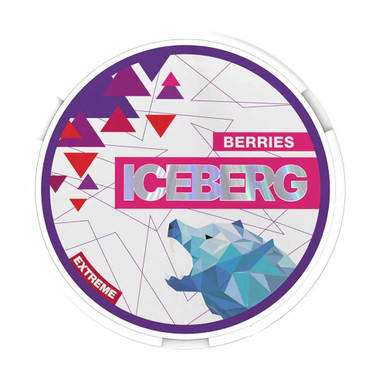
Closest to a strawberry-and-pomegranate idea is Iceberg Berries at £39.90, which takes the plural route — a mixed berry rather than two named fruits — and is the obvious page to read next if the berry half of this can is the half you care about. Iceberg Black Currant, the same £39.90, is the darkest and sharpest fruit the brand lists, and it is the one that reaches tartness through the fruit itself rather than by hanging a pomegranate off a strawberry. Both are unavailable at present, in common with everything else under the name.
Iceberg Apple Lemon Pineapple at £39.90 is the closest match in construction rather than in taste: a listing that stacks three named fruits where this one stacks two, which tells you something about how the brand builds a name out of its components. Away from fruit altogether, Iceberg Black Mint and the plainer Iceberg Black can are the range's darker listings and the sensible things to keep beside a sweet fruit can for contrast, both at £39.90. Iceberg Arasaka, also £39.90, is a name rather than a description, so its own page is the only honest source on what it actually holds. Those four are out of stock as well, so none of the six is a route to a basket this week.
Six is what this record attaches; the full forty under the brand is the wider view and it is in exactly the same state. If what you want is a can in hand rather than a page to read, the listings from other brands named earlier on this page are the better place to look, because several of those can be bought today.
Against the wider site, this can sits in a specific corner: a two-fruit name, a single declared strength, and a price quoted on a basis we cannot fully break down. Plenty of other cans on the site are simpler than that in one way or another. Cuba's listings run to long lists of single-fruit names at a consistent price; the Pablo range is quoted in small units. Neither is better. They are different ways of packaging the same category, and knowing which kind of listing you are looking at is most of what makes a price make sense.
Keeping a can in usable condition
Cans do not need special treatment, but they do respond to a few obvious things, and a can that has been treated badly is genuinely worse to use than one that has not.
Pouches in this category are broadly either drier or moister depending on how they are made, and both kinds lose condition in the same two ways: heat and air. Heat drives off the volatile part of a flavouring, which is the part your nose reads on opening and the part that carries the top note. A can left on a sunny windowsill, on a radiator shelf, or in a parked car in summer will smell flatter when you open it than it did when it arrived. Air does the same job more slowly, which is why a lid pressed properly home matters. A lid balanced on top rather than clicked down is the commonest cause of a can going dull before it is finished.
So: a drawer, a cupboard, a bedside table, a bag pocket away from a window. Cool, dark, closed. That is the entire storage requirement. Some people keep cans in a fridge, which does no harm and is not necessary; nobody needs to freeze one, and we would not suggest it.
Keep cans upright where you can. Pouches lie flat in a ring inside the tin and stay tidier that way. Cosmetic, mostly, but it makes the last few pouches less pleasant to fish out.
Two things that are not cosmetic. First, the used-pouch compartment wants emptying regularly — a catch lid left full for a fortnight is unpleasant and entirely avoidable. Second, and more importantly: store cans where children and animals cannot reach them. A pouch tin is small, brightly printed, and looks like a great many harmless things. It is not one. A high shelf or a closed drawer is not an overreaction, it is the minimum.
On dates: check the can for whatever the manufacturer has printed. We do not hold a date for this listing and we are not going to estimate one. A can that smells noticeably flatter than it did on opening has lost condition, whatever the printing says, and that is the practical test most people end up using.
Strength and pack choices, where there are any
On this listing there are none, and that is worth stating cleanly rather than dressing up. There is one strength, 50mg, and one variant at £39.90. There is no second strength to choose between, no smaller can, no larger multipack, and no price ladder. If 50mg is not the declared figure you want on a can, the choice here is not between options on this page; it is between this page and another one.
Where that leads depends on what you are after. The strength shelves are the direct route: the strong shelf holds a different set of declared figures and is the neighbouring shelf to this one, and the medium strength shelf is a step further along the same filing. Browsing by figure is genuinely the fastest way to narrow a catalogue this size, provided you remember that the shelves sort cans rather than rank them.
If flavour matters more than the figure, go the other way and browse the flavour shelves first. The nineteen strawberry cans we list span several brands and a range of declared strengths, and starting from flavour and then checking the figure is a perfectly sensible order to do it in — arguably a better one, since flavour is the thing you will actually notice every time you open the can.
On pack size we are back to the same admission as the top of the page: we do not hold a can count for this listing, so we cannot tell you what £39.90 buys in units. Where a listing does state a count — and many on this site do — the arithmetic is straightforward. Here it is not available, and we will not guess at it.
Ordering, delivery and proving your age
Ordering works the way it does everywhere on this site: choose the product, choose the variant where there is more than one, check out. On this page that second step does not arise, because there is a single variant — and in any case, this product is currently unavailable to order. If you are reading this page with the intention of buying today, that is the sentence that matters, and we would rather it appeared three times on the page than nowhere.
Delivery is by courier to a UK address. Timings depend on the service chosen at checkout and on when the order is placed, and we are not going to print a promise on a product page that a courier has not made to us.
Age verification is not a formality here. These products are sold only to adults aged 18 or over. Our checkout carries an age confirmation step, we may run age verification on the order, and the courier may ask for photographic ID at the door. If nobody of 18 or over is there to receive the parcel and show ID when asked, it will not be handed over. Sending a parcel to an address where an adult cannot receive it is the main reason deliveries in this category fail, and it is worth thinking about before you choose a delivery address rather than after.
Buying these products on behalf of someone under 18 is illegal. We will not knowingly supply an order that is going to an under-18, and no part of this site is aimed at anyone who does not already use nicotine.
Finding your way around from here
If this can is not the one, the site is organised to make the next step short. There are three ways in.
By brand: the Iceberg shelf collects all 40 of the Iceberg products we list, and if it is the brand you are loyal to rather than the flavour, that is the shelf to start from. Cuba's listings and the Pablo range are the two other large brand shelves.
By declared strength: the 98 cans filed as extra strong include this one, with the strong shelf and the medium strength shelf alongside it. Again — a filing system, not a ranking.
By flavour: seventy-six berry cans is the broad shelf this product sits on, with our strawberry listings as the narrower cut inside it. Because of the tagging gap noted at the top of this page, pomegranate is not a shelf you can browse here.
And if none of those is how your head works, everything we stock is one page with the full catalogue on it, filterable, and it is often faster than guessing at a category name. The whole of the full catalogue is there, brands and flavours together.
Questions people actually ask
Can I buy this today?
No. This listing is out of stock at the time of writing. The page stays up so you can see what the product is and what we hold on it, but there is nothing to add to a basket. We cannot tell you when or whether it will return, because we do not hold restock dates and guessing at one would be worse than saying nothing. If you want a strawberry can now rather than later, our strawberry shelf is the practical alternative.
How many cans do I get for £39.90?
We do not know. The can-count field is empty for this listing, so we cannot tell you whether £39.90 is one can or a multipack. Several products on this site at the same price are multipacks, but a pattern is not a fact and we are not going to print one as though it were. Ask us directly if the answer matters to your order, and check the listing at the point of purchase.
Is there a pomegranate flavour tag on this?
No, and it is a fair thing to notice. The product is named Strawberry Pomegranate but the flavour tags we hold are berry and strawberry only. That means it will not appear in a pomegranate search on this site, because we do not run a pomegranate shelf. The name comes from the manufacturer; the tags come from our own filing, and on this listing the two do not match. We would rather tell you than let you find out by searching.
What does 50mg mean?
It is the strength figure printed on the can, and it is how we sort products into strength shelves. That is all it is on this page. It is not a recommendation, not a ranking, and not a statement that this can is better or worse than one with a different number. We reproduce the manufacturer's declared figure and we do not convert between brands, because brands do not all declare on the same basis.
Which strength should I pick?
We do not answer that, on any product page. We are not in a position to advise any individual on strength, and it would be wrong of us to pretend otherwise. What we will do is show you the declared figures, tell you which shelf each can sits on, and let you compare listings. The choice, and any consequences of it, are yours.
Are there other strengths of this exact flavour?
Not on this listing. The variant table holds a single entry — 50mg at £39.90 — and there is no second option to switch to. Some products on this site carry two, three or four declared figures under one page; this one does not. If you want the same declared figure in a different flavour, the extra strong shelf is the place to browse.
How long should I keep a pouch in?
There is no should. People commonly keep one in for somewhere between twenty minutes and an hour, and there is real variation either side of that. Flavour is strongest early and fades towards the end, and the fade is the cue most people use. We are not going to print a recommended duration, because it would be advice about consumption and that is not something a product page ought to be handing out.
Does it need refrigerating?
No. A cool, dark, closed place is all any can in this category needs — a drawer or a cupboard is fine. Fridge storage does no harm if you prefer it, but it is not required and there is no reason to freeze a can. What genuinely does matter is keeping cans out of direct sun and out of hot cars, and pressing the lid properly home each time, because heat and air are what flatten a flavour.
Are these the same as the mini pouches some brands sell?
We do not hold a portion-size record for this listing, so we cannot say whether it is a slim, regular or mini format. Where a product is a mini, the name on the can usually announces it; this one does not. That is as far as our records take us, and the only way to know for certain is to read the can itself.
Can I find Iceberg's other flavours from this page?
Yes. Six of them are linked by name in the brand section further up: the mixed-berry can, the blackcurrant, the three-fruit blend, two darker non-fruit listings and one can whose name describes nothing at all. All six are £39.90, the same as this listing, and all six are out of stock at the time of writing, as is every other product we hold under the brand — so they are pages to compare rather than cans to order. The Iceberg brand shelf carries all 40 if you want the whole range rather than the six this record points at.
Do I have to show ID?
Possibly, yes. This is an 18+ product. There is an age confirmation step at checkout, we may verify age on the order, and the courier may ask for photographic ID on delivery. If an adult is not present to receive the parcel and show ID when asked, it will not be left. Choose a delivery address with that in mind rather than hoping it will not come up.
Legal and compliance
Please read this section. It is the part of the page with actual legal weight.
- This is an 18+ product. We sell it only to adults aged 18 or over who already use nicotine. It is not offered to anyone else.
- Nicotine is an addictive substance.
- This product is not a licensed stop-smoking medicine. It is not licensed or intended as any kind of medicinal product, and nothing on this page should be read as a therapeutic claim of any sort.
- It is not intended for non-smokers, for people who do not already use nicotine, for anyone under 18, or for anyone who is pregnant or breastfeeding.
- ID may be requested on delivery. Age verification may be carried out at checkout and the courier may ask for photographic identification. Without it, the parcel will not be handed over.
- Keep cans and used pouches out of the reach of children and animals at all times.
- We give no medical advice, no dosage advice and no guidance on which strength suits any individual, and nothing above should be taken as any of those things.
Last word
Iceberg Strawberry Pomegranate is a single-strength listing — 50mg — at £39.90, filed on our site under berry and strawberry, carrying a name whose second fruit our own tagging does not record, with a can count we do not hold, and it is out of stock as this is written. That is a short list of facts and a couple of honest gaps, and it is all we have.
What we can do from here is point you somewhere useful. If the brand is what brought you, the Iceberg shelf holds the other 39 products. If it was the fruit, the strawberry and berry shelves are wider than this one page. And if you would rather just look at the lot, the shop page carries the full catalogue in one place. Whatever you decide, decide it on the facts printed on the can and on this page, and not on anything a product description has tried to talk you into.
More from Iceberg


More extra strong pouches



More berry pouches
Where this sits
Iceberg Strawberry Pomegranate Nicotine Pouches appears in these categories. Browse them, or jump to something close.
You might also like