
Clew · 5mg–20mg · 10-can pack
Read the full guide
Clew Blueberry Nicotine Pouches
£39.90
✔ In stock — ready to ship
100% tobacco-free
Free over £20
Same-day dispatch
Secure checkout
Clew Blueberry Nicotine Pouches, listed at £39.90, offered here in four declared strengths — 5mg, 10mg, 15mg and 20mg — every one of them at that same price. The listing covers 10 cans. Our flavour data gives it a single tag, berry, and our records show it in stock. The brand is Clew and the maker calls the product simply Blueberry.
Two things about that paragraph are unusual enough to shape the whole page. The first is the can count: we actually hold one for this listing, which is not true of most products on this site, and it changes what the price means. The second is the spread of strengths — four declared figures on a single listing is at the wider end of what we carry, and it is worth explaining what that does and does not signify.
The full guide to Clew Blueberry Nicotine Pouches
5,043 words on how it eats, who it suits, how to serve it and what to put beside it.
Clew Blueberry: what is on the listing
Beyond those, this page spends most of its length on two things: what people keep alongside a blueberry can for variety, which the Clew range is unusually well set up for, and where a blueberry actually lands as a taste. Where our information runs out we say so, and on flavour that happens more than once.
The standard note first: age-restricted nicotine product for adults who already use nicotine. Full wording at the foot of the page.
Ten cans, and what that does to the price
Most listings on this site do not tell us how many cans they contain. The field exists and it is usually empty, which is why so many of our product pages end up saying "check the listing image before ordering". This one is different: our data records 10 cans per pack, and that is a fact rather than an inference.
It follows that £39.90 buys ten cans here, which works out at £3.99 a can. That is simple arithmetic on two figures we hold, and it is the only sum on this page. It matters because a price quoted for ten cans and a price quoted for one can are completely different propositions, and a shelf where both appear side by side is easy to misread.
Take an example from further down this page. Velo Icy Berries is listed at £4.19 and Nordic Spirit Max Foresty Berry at £4.49 — figures that sit just above the per-can arithmetic above, and well below this listing's headline number. We do not hold can counts for those listings, so we cannot tell you whether they are single cans, and we are not going to assume it. The honest instruction is the same one either way: read what a listing contains before reading across between two prices, because the headline figure on its own tells you very little.
The practical consequence of buying ten at once is storage, which gets its own section below, and the fact that you will be living with this flavour for a while. That is the real argument for thinking about what sits alongside it, which is what the largest section of this page is about.
Where a blueberry lands as a taste
Rather than reach for adjectives that mean nothing in particular, it is more useful to place a flavour on a few axes that can be described in plain language. Four do the job: sweet, sharp, cool and bitter. Blueberry is an interesting case because it is not where most people assume it is on two of them.
Sweet — present, but less than expected. Blueberry reads as a sweet fruit and it is one, but it is among the less sugary of the berries. A strawberry is sweeter and rounder; a blue raspberry, which is a manufactured flavour rather than a fruit, is sweeter again and much more obviously so. Blueberry sits below both. In a pouch this usually means the sweetness is a base the rest of the flavour sits on rather than the thing you notice first, which is not what people expect from a fruit can.
Sharp — more than expected, and the defining axis. Blueberries carry a real tartness, and it is the characteristic that separates a blueberry flavour from the generically sweet berry cans it sits beside on a shelf. It is a dark, skin-like tartness rather than the bright acidity of a citrus — nearer to a blackcurrant than to a lemon. If a blueberry can reads as slightly drier or less confectionery than you anticipated, that tartness is why, and it is the main reason people either take to this flavour or find it not sweet enough.
Cool — low, and this is the notable one. Our flavour data gives this product one tag: berry. There is no mint tag on it and no cold word in its name. That makes it an uncooled fruit, which is genuinely less common on our berry shelf than the cooled sort. Most berry cans we stock pair the fruit with a cold note; this one leaves the fruit on its own. Whether that suits you is a real fork in the road, and it is the single most useful thing to know about this can before ordering.
Bitter — low. There is a faint darkness to a blueberry, the sort that comes with skin and depth, but it does not cross into bitterness. If a bitter edge is what you are looking for in a flavour, Clew Coffee at £39.90 is the can in this brand's range that has it, and this one is not.
| Axis | This can | The short version |
|---|---|---|
| Sweet | Moderate | Sweet, but among the less sugary berries |
| Sharp | Moderate to high | A dark tartness — the defining characteristic |
| Cool | Low | No mint tag and no cold word; the fruit stands alone |
| Bitter | Low | Dark rather than bitter |
A note on aroma, which is a separate event from taste and often a misleading one. Cold and mint notes are volatile and carry, so a cooled can announces itself the moment the lid comes off. A fruit on its own, with no cold note set against it, does not project in the same way — you may get very little off an opened can of this type, and people sometimes read that as a sign the flavour is weak. It is not a reliable signal in either direction. Aroma tells you how a flavour behaves in the air, not how it will read in the mouth, and the two regularly disagree.
One limitation on all of the above, stated clearly. We are describing a flavour direction, which is the sort of thing our tags and the product name support. We are not measuring this can, because flavour intensity is not a field we hold for any product on this site. Nobody can tell you from a listing how sweet or how tart a particular can is relative to another one, and any page that appears to is guessing.
Pairing across the Clew range
This is the long section, and there is a good reason it belongs on this page in particular. The Clew brand page holds eight products, and we hold six of them as near neighbours to this one — so between this can and those six, nearly the entire range is visible from here. That is rare. On a brand with thirty listings you can only ever see a slice; here you can see almost all of it, which makes it possible to talk about pairing properly rather than gesturing at it.
And pairing matters more on this listing than on most, because of the ten cans. Buying a single can is a small commitment and you can simply try something else next time. Ten is a different proposition, and the people who think about what sits alongside a flavour tend to be exactly the people buying at that quantity.
The range, laid out
Every one of these is listed at £39.90, the same as this can, which makes the comparison unusually clean — nothing in the decision turns on price.
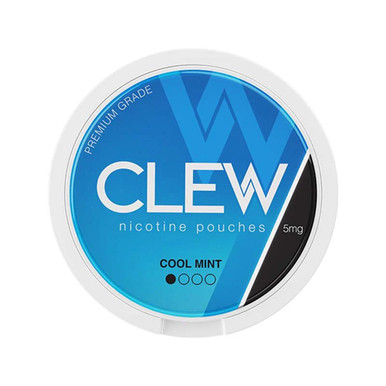
- Clew Cool Mint — the cold end of mint, and the furthest from a plain fruit of the six.
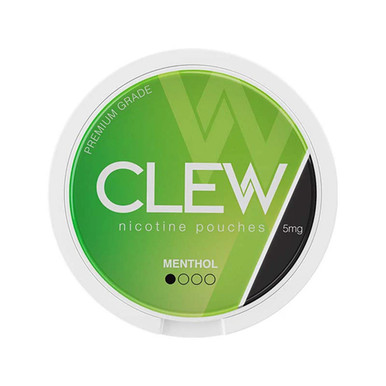
- Clew Menthol — a named menthol character rather than a general mint, which is a more specific thing.
- Clew Spearmint — the leafy, herbal end of mint, and a different proposition from the cool one despite both being mints.
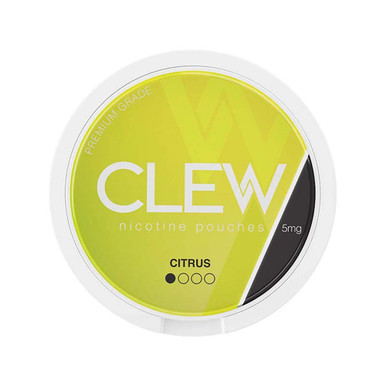
- Clew Citrus — bright and acidic, the sharp axis taken much further than a blueberry takes it.
- Clew Watermelon — the other fruit in the range, and a sweeter, rounder, softer one than this.
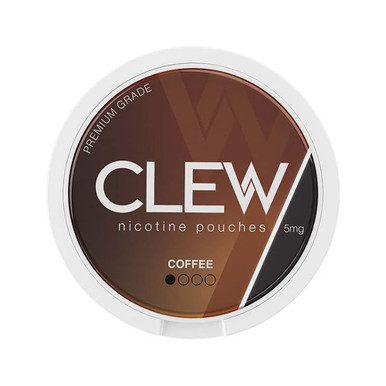
- Clew Coffee — the outlier, and the only can here with real bitterness to it.
Pairing for contrast
The commonest approach, and the one most people arrive at without thinking about it much: keep something that is as unlike your main flavour as possible, so that going between them feels like a genuine change rather than a variation.
Against a dark, tart, uncooled berry, the three mints are the obvious contrasts, and they are not interchangeable with one another. The Cool Mint can gives you cold, which is precisely the axis this blueberry is lowest on — it is the biggest single jump available inside the range. Spearmint goes leafy and sweeter instead of cold, which is a softer contrast and one some people prefer for that reason. Menthol is the most specific of the three and the most distinct from a fruit of any kind.
If you want contrast without leaving fruit behind, the Citrus can does it by pushing hard on the axis blueberry only touches: where a blueberry has a dark tartness, a citrus has bright acidity, and the two do not resemble each other despite both being described as sharp.
Pairing for similarity
The other approach is to keep two things in the same neighbourhood and rotate between them for small variety rather than large. Within Clew, that means the Watermelon can — still a fruit, still uncooled by name, but sweeter and rounder with almost none of the tartness that defines the blueberry. It is a shift in emphasis rather than a change of subject.
Outside the brand, the berry shelf offers plenty of near neighbours, which the next section covers. The thing worth noting here is that "similar" is doing less work than people expect: two cans that are both tagged berry can sit a long way apart, particularly on whether a cold note has been set against the fruit.
The outlier
Coffee deserves its own mention because it does not fit either pattern. It is not a contrast in the way a mint is — it is a different category of flavour altogether, and the only can in this range with bitterness as a structural component rather than an accent. People who keep a coffee can generally keep it for particular moments rather than as a rotation partner, and we mention it mainly so you know the range extends that far.
What a pairing actually is
Worth being plain about this, because the word can suggest more than it should. A pairing here means nothing more than keeping two cans and using one or the other when you feel like it. There is no sequence, no system, no reason to have two rather than one, and nothing about this can requires a companion. We are describing what people who keep several cans tend to do, and pointing at where each option lives on the site. It is not a suggestion to buy more than you came for.
Beyond Clew: the wider berry shelf
Our berry shelf runs to 76 products, and the useful way to read it is by whether the fruit stands alone or has a cold note set against it. This can is in the first group, which is the smaller one.
In the cooled group sit Denssi Blueberry Freeze at £39.90, which takes the same fruit and chills it; the Velo Icy Berries listing at £4.19; and 77 VB Edition Mini Arctic Berry at £39.90, which is also a mini-format can and so differs on two counts rather than one.
Staying with blueberry but changing brand, Killa Blueberry at £33.50 is the nearest single-fruit equivalent we stock. Moving to fruit combinations, Elf Bar Blueberry Raspberry at £29.90 sets a second berry beside the first, and Pablo Gold Edition Blue Raspberry at £19.95 goes to blue raspberry, which is a confected flavour rather than a fruit and reads considerably sweeter.
For other berries entirely: Cuba Ninja Strawberry at £39.90 is the sweeter, rounder direction, while Fumi Blackcurrant at £27.90 goes darker and keeps the tartness this can has. And outside berry altogether, Edge Mint at £14.95 is the plainest and cheapest mint in this group if a contrast can is all you are after.
The format, briefly
Identical across everything we sell, so this section is short. A pouch goes between the lip and the gum, most often under the top lip, and stays there. Nothing is chewed and nothing is swallowed. You place it, leave it, and take it out when you have finished with it, into the catch compartment under the lid or into a bin. Used pouches are general waste — not a sink, not a drain.
How long one stays in varies so much between people that we publish no figure for it; the range genuinely runs from a few minutes to the better part of an hour, and the usual reason for taking one out is that the flavour has thinned. Whatever usage guidance the manufacturer prints on the can is what applies, and it outranks anything general written here.
One feature worth a line because it comes up constantly: the catch compartment. Most pouch cans carry a shallow chamber under the lid, separated from the body where the unused pouches sit, and its only job is to hold used ones until a bin turns up. It is a small piece of design and a genuinely useful one, and it fills faster than people expect. Empty it before it reaches the point where the lid no longer seats flat, because a lid that will not close properly is how loose pouches end up in the bottom of a bag.
We hold no pouch dimensions for this product, so we will not describe the portion size or name a format designation. The can carries that information. Every pouch within a can is the same as the others in it, so the first one out tells you what the rest will be like.
Four declared figures on one listing
This listing carries 5mg, 10mg, 15mg and 20mg, all at £39.90. Those are the manufacturer's own declarations per pouch, printed on the can, published by us exactly as supplied and neither adjusted nor interpreted.
Something worth noticing, since this page is about reading a listing accurately: that spread crosses our own shelf bands. We file this listing under the Strong band, which holds 132 products, but the range it covers runs from a figure that would sit comfortably in the medium band up to one at the top of the Strong one. A single shelf label cannot describe four different variants, and where a multi-strength listing gets filed is a practical decision about where to put it rather than a description of every option inside it. Read the variant, not the shelf.
The same two standing cautions apply here as everywhere. Declared figures do not translate between brands — different makers declare in different ways against different formats, so two cans showing the same number are not therefore the same can. And a larger number is not a better product: our bands sort the catalogue, they do not rank it, and nothing here suggests anyone should be looking at a higher figure than they already use.
The strength shelves — medium, Strong and Extra Strong — exist as browsing routes and nothing more.
Living with one flavour across ten cans
A quantity like this raises a question a single can never does, and it is a fair one: is ten cans of the same flavour too much of one thing? We cannot answer it for you, but we can set out what actually determines the answer, because it is not really a question about this product.
It comes down to how you use a flavour. Some people find one can and stay with it for months, and for them a ten-can listing is simply the efficient way to buy what they were going to buy anyway. Others get tired of any single taste after a few days and want something different by the end of the week. Neither pattern is better and most people know which one they are before they finish reading this paragraph.
Where it gets less obvious is with a flavour like this one specifically. An uncooled, tart berry is a more distinctive taste than a plain mint, and distinctive flavours are generally the ones people tire of faster — a mint can sit in the background in a way that a dark fruit does not. That is a pattern rather than a rule, and it is the honest argument for having a second can of something else in the house if you are buying at this quantity rather than a single tin.
The other practical consideration is time. Ten cans last a while, and how long depends entirely on your own usage, which we have no way of estimating and would not publish if we did. What follows from it is mundane but worth saying: check the dates printed on the cans when they arrive, work through them in order rather than opening whichever is nearest, and keep the unopened ones somewhere you will not forget about them. A pack that gets split across a house, a bag and a car tends to end up with one can sitting somewhere warm for months.
None of this is an argument for or against buying ten. It is the set of things that actually change when you buy a supply instead of an item, and they are worth thinking about before you order rather than after the third can.
Storing ten cans
The general rules are the same as for any can, with one addition that matters at this quantity.
Lid on and seated flat is most of it. A closed can is a sealed container and the contents hold; an open one is not, and the flavour thins. Keep cans somewhere cool and out of direct light — a drawer, a cupboard, a box — rather than on a windowsill or a dashboard, where heat and sunlight will get at them over weeks.
The addition is this: with ten cans you are storing a supply rather than an item, and the sensible approach is to keep the unopened ones together and away from the one in use. A stack of cans in a drawer keeps perfectly well. What does not work is distributing them around a house and a car and a coat, because that is how cans get left in warm places and forgotten. Check the date printed on them, and use them in the order you opened them rather than at random.
Refrigerating cans is a common habit among pouch users and does nothing bad; whether it makes a difference you would notice is disputed and we will not settle it. If you do, keep them sealed and keep them clear of food you would rather not taste of berry.
The most important line in this section has nothing to do with flavour: keep cans out of reach of children and of animals, deliberately rather than by accident. That applies more rather than less when there are ten of them in the house, because a supply is easier to lose track of than a single can on a shelf.
Choosing between the four strengths
Here is what we can tell you. There are four variants — 5mg, 10mg, 15mg and 20mg — and all four cost £39.90, so price is not part of the decision. The flavour tag applies to the product rather than to a variant, so all four are recorded as the same berry flavour. The ten-can pack quantity is a property of the listing, and our data does not distinguish between variants on it.
Here is what we will not tell you: which one to pick. A recommendation about nicotine strength is advice about how much nicotine a person should use, and that is not something a retailer should offer under any circumstances. We do not know you, we have no basis for a view, and we are not qualified to have one. The figures are printed on the cans and the choice is yours alone.
The one practical point worth making about a four-variant listing is mechanical: check which variant is selected before you check out. All four display at the same price, so nothing on screen changes when you move between them, and that is exactly the situation in which people click past a selector without registering it. At ten cans a pack, an unnoticed selection is not a small thing to correct.
Ordering, delivery and age verification
We sell to adults in the UK aged 18 or over who already use nicotine. Age verification applies at checkout and ID may be requested on delivery; a courier can decline to release the parcel if it is not produced. We will not knowingly supply anyone under 18, or anyone ordering on behalf of someone under 18.
On price, this listing is one of the few where we can be precise, and it is worth restating: £39.90 covers ten cans, which is £3.99 each. When you compare that against other listings on our shelves, the thing to establish first is what those listings contain — and for most of them we do not hold a can count to publish. A headline price is not comparable until you know what sits behind it, and this is the clearest example on the site of why.
Delivery charges, carriers and timings appear at checkout, against your real basket and address, which is where they can be accurate. We do not quote timescales in product copy, since product copy does not get rewritten when a carrier changes its schedule.
Getting around from here
Brand is the natural route from this page, because the Clew listing is small enough — eight products — to read end to end in a minute. That is unusual and it makes the brand page genuinely useful rather than just another grid.
By flavour, the berry category holds 76 cans and is the place to go for alternatives to this one. By declared figure, the three band shelves sort the catalogue by number. Two of the larger brand ranges elsewhere on the site are the Pablo page and the Cuba page, both worth a browse if you are working out whose cans you get on with. And the full catalogue shows everything at once.
Questions we get about this one
Does £39.90 really get me ten cans?
That is what our data records for this listing: ten cans per pack, which works out at £3.99 a can. It is one of the few listings on this site where we hold that figure, which is why this page keeps returning to it. Confirm on the listing page before ordering, as you should with any quantity, but the figure here comes from our product data rather than from an assumption.
Is there mint in this one?
No mint tag appears in our flavour data for it, and there is no cold word in the product name. It is recorded as a berry flavour and nothing else, which makes it an uncooled fruit — less common on our berry shelf than the cooled sort. If you want the cold alongside the fruit, the cooled berry cans listed further up this page are where to look.
What is the difference between the four strengths?
The declared figure printed on the can, and nothing else we hold. All four are £39.90, all four carry the same berry tag, and the pack quantity does not vary between them in our data. We cannot advise which to choose and will not, because that would be advice about nicotine use and a shop is the wrong source for it.
Why is it on the Strong shelf if it also comes in 5mg?
Because a listing has to be filed somewhere and a single shelf label cannot describe four variants at once. The range here spans figures that would sit in our medium band and figures at the top of the Strong one. That is a practical filing decision, not a description of every option — read the variant you are selecting rather than the shelf it sits on.
How does blueberry differ from blue raspberry?
Quite a lot. Blueberry is a fruit with a dark tartness behind a moderate sweetness. Blue raspberry is a confected flavour rather than a fruit, and reads considerably sweeter and more obviously so. We stock both — the Pablo can mentioned above is the blue raspberry option — and they are not substitutes for one another despite the similar names.
Is it sweeter or sharper than other berries?
On direction, blueberry is among the less sugary berries and among the more tart, which is the reverse of what people usually expect. On degree, we cannot tell you, because we hold no measure of intensity for any product and cannot rank one can against another. Direction we can describe; how much of it, we cannot.
How many pouches are in each can?
We do not hold that figure. We know the listing covers ten cans, but the count of pouches within a can is not in our data, and we are not going to quote a number that is typical for the format as though it applied here. The manufacturer prints it on the can.
How should I store ten cans?
Together, somewhere cool and dark, with the unopened ones kept apart from the one in use. A drawer or a box is entirely adequate. Keep them out of reach of children and pets, check the printed dates, and avoid scattering them around a house and a car — that is how cans end up somewhere warm and forgotten about.
Which Clew flavour goes best with this one?
There is no best and we are not going to pick for you. What we can say is how the range is laid out: three mints for contrast, a citrus that pushes hard on sharpness, a watermelon that is sweeter and rounder, and a coffee that sits apart from all of them. Which contrast appeals is a matter of taste, and all six are listed at the same price as this can.
Is Clew a big range?
No — eight products, which makes it one of the smaller brand listings we carry. That is genuinely useful when you are browsing, because the whole range fits on a page and you can see what a brand does rather than sampling it. It also means there are fewer alternatives within the brand if a flavour does not suit you.
Is ten cans of one flavour too many?
That depends entirely on how you use a flavour, and it is not something we can judge for you. Some people stay with one taste for months and find a pack the efficient way to buy it; others want a change within a week. A distinctive flavour like an uncooled tart berry is generally one people tire of sooner than a plain mint, which is the honest argument for keeping something else alongside it at this quantity.
Do all ten cans have the same use-by date?
We do not hold date information for any listing, so we cannot tell you whether they will match or differ. The dates are printed on the cans themselves. The practical advice is the same either way: check them when the pack arrives and work through the cans in order rather than opening whichever comes to hand first.
Where is it made?
We do not hold that information and will not name a country we cannot verify. The manufacturer's details are printed on the can, which is the reliable place to read them. The same applies to company background, production and anything else outside the small set of fields we publish on these pages.
Is this the only blueberry you stock?
No. Staying with the single fruit, the Killa can at £33.50 is the nearest equivalent from another brand, and the Denssi listing at £39.90 takes the same fruit with a cold note set against it. There are also combinations that put blueberry alongside another fruit. All of them sit on the berry category page, which is the efficient way to see them together rather than clicking between listings.
Can I mix strengths in one order?
Each variant is selected separately on the listing, so ordering more than one is a matter of adding each to your basket. We have no advice about whether to, and offering any would take us into territory a retailer should stay out of. The mechanical point stands: check what is selected before checking out, since all four variants show the same price.
Compliance
Sold only to adults aged 18 or over who already use nicotine. Age verification applies when ordering and ID may be requested on delivery; where it cannot be produced, the parcel may not be handed over.
Nicotine is an addictive substance. We say so plainly here, as on every nicotine listing we publish, because it is the most important thing to know about what is in these cans.
This product is not a licensed stop-smoking medicine and nothing on this page presents it as one. It is not intended for non-smokers, for anyone who does not already use nicotine, for under-18s, or for anyone who is pregnant or breastfeeding. No health, medical or therapeutic claim is made about it here in any direction.
Keep cans away from children and pets — a point that carries extra weight with a ten-can pack in the house. Medical questions about nicotine belong with a qualified professional rather than a retailer, and we will not attempt to answer them.
To close
Ten cans at £39.90, which is £3.99 each, in four declared strengths from 5mg to 20mg, carrying a single berry tag with no cold note set against it. A blueberry that is more tart and less sugary than most people expect a berry can to be, sitting in a brand range of eight that you can read in a single sitting. If the tartness is what appeals, the Fumi blackcurrant can at £27.90 is the nearest thing in character on our shelves; if you would rather the fruit came with a chill behind it, the berry category is where the cooled alternatives are.
More from Clew
More strong pouches
More berry pouches
Where this sits
Clew Blueberry Nicotine Pouches appears in these categories. Browse them, or jump to something close.
You might also like