Clew · 5mg–20mg · 10-can pack
Read the full guide
Clew Citrus Nicotine Pouches
£39.90
✔ In stock — ready to ship
100% tobacco-free
Free over £20
Same-day dispatch
Secure checkout
This page describes Clew Citrus Nicotine Pouches. The listing price is £39.90, the pack holds ten cans, the declared strengths are 5mg, 10mg, 15mg and 20mg, and the flavour recorded against it is citrus. Every one of those four strengths carries the same £39.90 price. The listing is in stock as this is written. Those are the facts our record holds, and everything below is built from them, from comparisons with other cans sitting on our shelves, or from a direct admission that a particular thing is not something we know.
Before the description proper, one piece of housekeeping. This is an adult nicotine product. It is sold only to people aged 18 or over who already use nicotine, and the full wording on that sits in its own section at the foot of the page. Nothing here is an encouragement to consume anything.
The full guide to Clew Citrus Nicotine Pouches
5,405 words on how it eats, who it suits, how to serve it and what to put beside it.
Clew Citrus, stated plainly
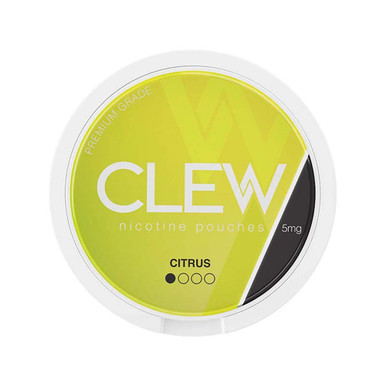
The object itself is a round pouch tin of the ordinary kind — a shallow plastic cylinder, wide enough to cover with a palm, with a lid that lifts clear and presses back on. Clew prints the brand name and the flavour word on the lid, and the strength figure appears on the can as the manufacturer has chosen to print it. Buying ten of them at once means ten identical tins, which is worth thinking about for a second before you order: ten cans is a box rather than a pocket item, and where you put the other nine once one is open is a real question we return to further down.
Divide £39.90 by ten and you get £3.99 a can. That arithmetic is ours, not a claim from the manufacturer, and it is the only sense in which we will tell you the price is anything other than £39.90 — because £39.90 is what leaves your account, and the per-can figure is just a way of comparing this listing with the single cans elsewhere on the site. We do not publish a pouch count per can for this product. Our record does not carry that field, so the printed can is where you read it.
What citrus tastes and smells like here
The flavour word on our record is a family name rather than a single fruit. Citrus covers orange, lemon, lime, grapefruit and the various blends of them, and our record does not break out which of those Clew has built this around. We are not going to guess. What we can describe is what the word citrus means as a taste category on a pouch shelf, and what you are broadly committing to when you buy a can labelled with it.
Citrus, as a taste, is defined by sharpness. It is the acid, zesty end of the fruit spectrum rather than the soft end — closer to peel and juice than to jam. There is usually a sweetness under it, because flavourings in this family almost always carry one, but the sweetness sits behind the sharpness rather than in front of it. That is the structural difference between a citrus can and a berry can: berry flavours lead with roundness and citrus flavours lead with an edge. Neither is better; they are shaped differently.
The aroma, when the lid comes off, arrives before anything else. Citrus is a loud smell. Open a can of this in a quiet room and the room knows. It reads as bright and slightly oily in the way that the smell of a squeezed peel is oily — a sharp top note with a faint bitterness sitting underneath it, which is the part people either like or do not. That bitter undertone is characteristic of the family. It is why some people find citrus the most refreshing thing on a pouch shelf and others find it the one flavour they cannot get on with.
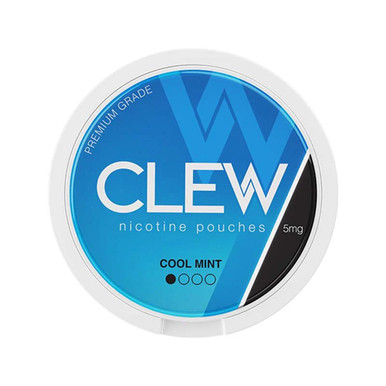
On the tongue there is no cooling element to speak of. This is the useful distinction between the citrus cans and the mint-family cans we stock, and it is worth being clear about because people shopping by flavour sometimes assume every pouch has a cold edge to it. It does not. Cans like Clew Cool Mint at £39.90 are built around a cooling character; a citrus can is built around a sharp one. Those are different sensations and they behave differently over the life of the pouch, with sharpness generally softening faster than cold does.
How long the flavour lasts is not something we can give you a number for. It fades. That is the honest description. In a dry pouch of any brand the flavour is at its most defined early and thins out from there, and the point at which a person decides there is nothing left to taste is individual. Some people take a pouch out because the citrus has gone flat; others leave it in well past that point. We do not hold timing data for this product and are not going to invent any.
If you want to see what else on the site carries this flavour word, our citrus flavour shelf collects twenty-five listings and lays the prices out side by side. It is an ordinary filtered page. Nothing on it is ranked, and the order it appears in carries no meaning.
The pouch as a physical object: size, position, duration
The format is the thing most worth writing about on a page like this, because the flavour is one word and the format is where the actual experience of owning a can lives. A nicotine pouch is a small sealed pouch, soft to the touch, that a person places in the mouth and leaves there. It is not chewed. It is not swallowed. That description is identical for every product on this site, and none of what follows is specific to the citrus flavour — it is specific to the format.
Taking one out
Lids on pouch cans are designed to be opened one-handed, and most people learn to do it with a thumb under the lip of the lid within about two cans. The pouches inside are laid flat in a ring around the base, which means the first one is slightly awkward to lift and the rest are easy. A dry pouch does not stick to the can or to its neighbours. If you tip a can upside down without the lid on, everything inside comes out at once, which is a mistake most people make exactly once.
Pouches vary in size between brands and we do not hold a format designation for this listing. We cannot tell you whether Clew builds these as a slim pouch, a regular one, or something between the two. That is printed on the can and it is not in our data, so we are not going to state it. What we can tell you, because it is true of every can of pouches ever made, is that all the pouches inside one can are the same as each other. There is no variation within a tin. Once you have had one you know what the remaining ones are.
Where it goes and how it sits
The pouch goes at the front of the mouth, tucked between the lip and the jaw, most commonly under the top lip. Your lip holds it there. It is not held by anything else and it does not adhere to anything — the geometry of the space is what keeps it in position, which is why it stays put when you talk and does not when you do something violent with your face.
You can move it. People shift a pouch from one side to the other, or from the top lip to the bottom, and that is entirely normal. If a pouch is uncomfortable in one position it is worth trying another before assuming the product does not suit you; if it is uncomfortable everywhere, take it out. There is nothing about this format that requires anyone to persist with a pouch that feels wrong, and no reason to.
Speech is the thing people ask about most. A pouch under the top lip is visible as a slight fullness if somebody is looking for it, and it changes the shape of a few consonants for the first minute or so until you stop thinking about it. That is a description of a physical object in a mouth, not a claim about discretion or social acceptability, and we will leave it at that.
How long one stays in
The honest answer is that it varies enormously, and any average we quoted would be a made-up number wearing a suit. The range people describe runs from a few minutes to the better part of an hour. The reasons given for taking one out tend to be that the taste has gone, that the pouch has begun to feel like an object rather than a background presence, or simply that the person is done with it.
We do not set a duration, we do not recommend one, and we could not sensibly do either. Whatever usage guidance Clew prints on the can is the guidance that matters, and it is printed there precisely because the manufacturer is the party entitled to give it. Our role is to sell you the can and describe what it is.
The catch lid, and what happens to a used pouch
Most pouch cans, these included, are built with a shallow compartment in the top of the lid, separated from the main chamber where the unused pouches sit. Used pouches go in there. It is a plain, practical piece of design: it exists because a used pouch needs somewhere to go when there is no bin within reach, and because carrying one loose in a pocket is unpleasant for everyone involved.
The compartment is small, which people underestimate. Three or four used pouches will fill it, at which point the lid stops seating cleanly and the can starts to feel wrong in the hand. Empty it more often than feels necessary. If you let it go, the lid eventually will not close flat, and a can that does not close flat is a can that is going to spill in a bag.
Disposal is general waste. A used pouch goes in a bin — not a sink, not a toilet, not out of a car window. The can is plastic and goes into household recycling to whatever extent your local authority takes that grade of plastic, which differs by council and is not a question we can answer for your postcode. With a ten-can pack you will accumulate ten empty tins over time, and a fair number of people keep one or two of them as containers for other things and recycle the rest.
Where Citrus falls inside the Clew range
The Clew shelf on this site carries eight listings. Seven of them are named on this page: this citrus can and the six siblings linked below. The eighth is on the shelf itself, and the shelf is the place to look at it, because we would rather point you at the live page than describe a listing whose details are not in the fact pack in front of us.
The useful thing about this range for anyone buying more than one can is that the pricing is flat. Every Clew listing we hold is £39.90, which strips price out of the decision entirely. When two products cost different amounts, the choice between them is partly a money question; here it is purely a flavour question, and that makes the range unusually easy to navigate. You are not weighing a cheaper can against a nicer one, because they are all the same number.
Read as a set, the Clew range divides into a mint group and a not-mint group. The mint group is the larger of the two and contains three distinct readings of the word: the Cool Mint can, the Menthol can and the Spearmint can, each of which is a different taste rather than three names for one thing. The not-mint group is where this citrus listing lives, alongside a berry, a melon and a coffee.
That grouping matters if you are buying across the range rather than repeatedly buying the same thing, because the jump from one group to the other is a large one. Going from citrus to another fruit is a sideways step. Going from citrus to a mint can is a different category of taste altogether, and people who do it usually do it deliberately, wanting the two cans in the house to have nothing in common.
What people keep alongside a citrus can
Very few repeat orders on this site are one product bought again and again. The common pattern is two or three cans in rotation, chosen so that they do not taste alike, because a flavour you have had continuously for a fortnight stops registering the way it did at the start. This section is about the cans people put next to this one, and every reason given is a flavour, a brand or a price from our own catalogue — nothing else.
Staying inside the brand
The simplest second can is another Clew, since the price is identical and you already know the can and lid. Clew Watermelon at £39.90 is the obvious partner for a citrus can: still fruit, still recognisably a fruit flavour rather than a confection, but soft and round where citrus is sharp. Watermelon has almost no acidity to it, so the two cans sit at opposite ends of the fruit spectrum while remaining in the same family.
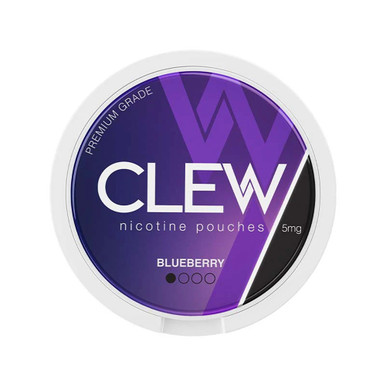
Clew Blueberry, also £39.90, is the darker fruit in the range and the one people pair with citrus when they want a proper contrast without leaving fruit behind. Berry flavours carry their sweetness up front; a citrus flavour carries its sharpness up front. Alternating between the two is about as different as two fruit cans can be from one another.
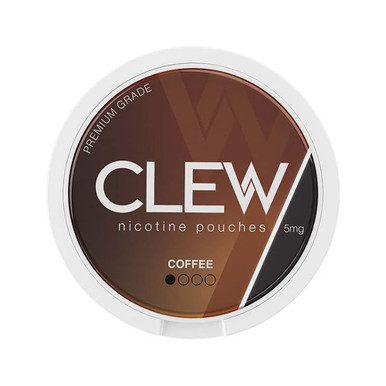
For a complete change of direction, Clew Coffee at the same £39.90 is the outlier of the whole range. It is not sweet in the way the fruit cans are and it is not cold in the way the mints are; it sits on its own axis entirely, and it is the can Clew customers most often name when they want the second tin in the drawer to taste nothing like the first.
Other sharp and fruit-forward cans on the site
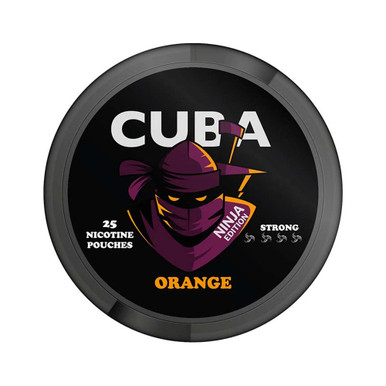
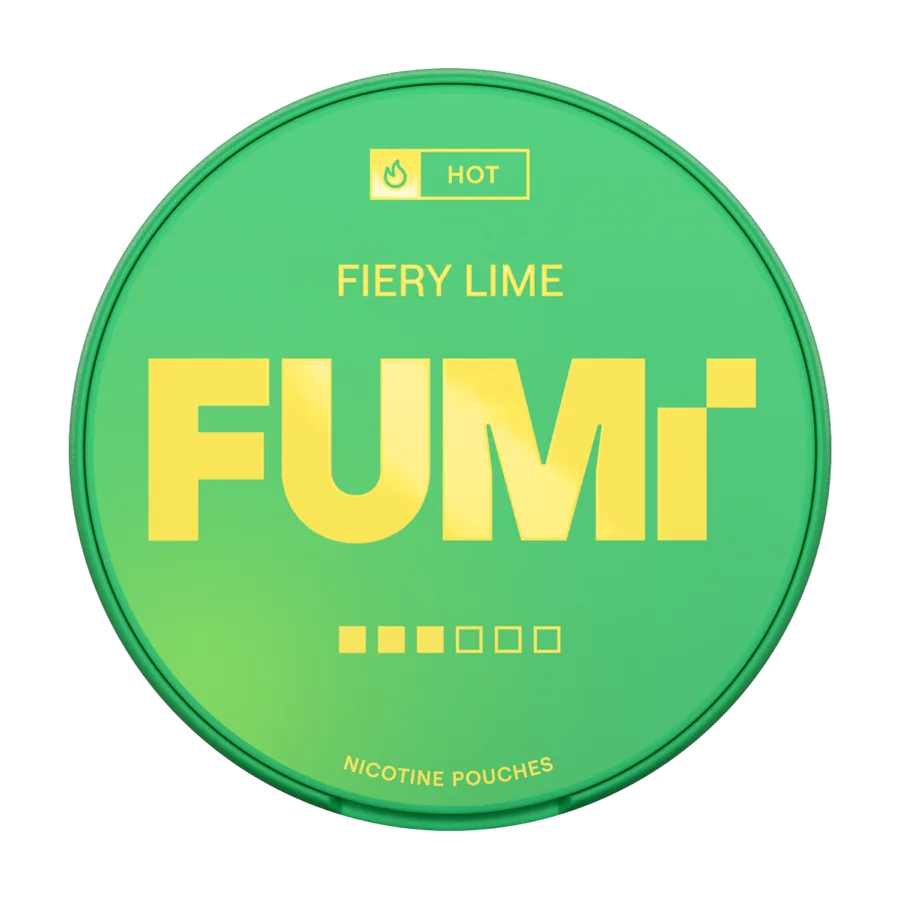
Outside the brand, the citrus shelf is where the closest neighbours are. Cuba Ninja Orange is £39.90 — the same price as this listing — and takes orange as a single fruit rather than a citrus blend, which makes it a narrower flavour than a general citrus can. Fumi Fiery Lime at £27.90 goes to the lime end and puts a warm, spiced edge alongside it, which is a genuinely different construction rather than the same idea at a lower price.
Killa Exclusive Lemonade at £33.50 takes the lemon reading but frames it as a soft drink rather than a fruit, which means more sweetness and less bite than a straight citrus. Velo Orange Spark is the cheapest thing named on this page at £4.19, and the price gap is worth pausing on: a £4.19 listing and a £39.90 listing are not the same kind of purchase, and what sits behind each figure is stated on that product's own page. Read it before you add either to a basket.
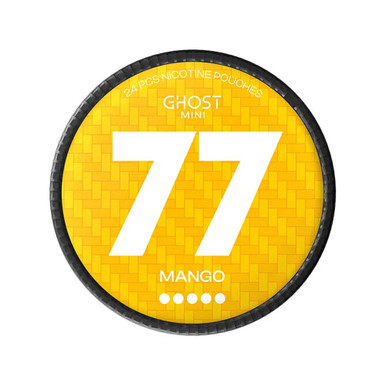
Going further from citrus but staying with fruit, 77 Ghost Mini Mango at £39.90 is a tropical fruit rather than a sharp one, and it comes from a mini-can line, so the format is worth checking on its listing. Elf Bar Blueberry Raspberry at £29.90 doubles up two berries instead of one. Denssi Blueberry Freeze at £39.90 takes a berry and adds a cold edge to it, which is a third thing again — fruit with a temperature attached.
Cans chosen for having nothing in common with this one
Some people want the second can to be a complete break. The mint family is where they go. Edge Mint at £14.95 is a plain mint at a middling price, Klint Avalanche Mint at £36.90 is a colder reading of the same idea, and Nordic Spirit Max Foresty Berry at £4.49 is a mixed-berry can from a line that carries its own declared figures — check them on its page rather than assuming they match anything here.
If it is the whole of a range you want rather than one listing from it, the Pablo brand page and the Cuba brand page both collect their lines in one place, with the price and declared strength shown on each card.
5mg, 10mg, 15mg and 20mg: what the number on the can is
This listing carries four declared strengths and they all cost £39.90. That is a slightly unusual arrangement and it makes this a good page on which to be precise about what a milligram figure actually is, because the flat pricing removes the one thing that normally muddies the question.
What the figure is
The milligram number is the nicotine content that Clew declares for one pouch, printed by them on the can, and reproduced by us exactly as they give it. It is a label figure. We do not measure it, we do not verify it, and we do not adjust it. When our page says 15mg, that is because the manufacturer's declaration says 15mg, and if the two ever disagreed the can would be the authority, not us.
Read as arithmetic, the four figures behave the way numbers behave. Twenty is larger than fifteen, fifteen is larger than ten, ten is larger than five. Within this one product, that ordering is the whole of the comparison we are in a position to make, and it is a comparison of printed figures rather than of anything a person will experience.
What the figure is not
It is not advice. Nothing on this page tells you which of the four to buy, and we are not going to imply an answer by describing one as gentler, more suitable or a better place to begin. That is not evasion for its own sake — it is that we genuinely do not know anything about you, and a shop that pretended otherwise would be doing something it has no business doing.
It is also not a description of intensity. A declared figure sits on a label. What a given pouch is like in practice depends on the format, the flavour construction and the person, none of which a single number captures. Two cans showing the same figure can be unalike in every other respect.
Comparing figures between brands
This is the part people most often get wrong, so it is worth stating bluntly. Manufacturers declare these figures in different ways and against different pouch formats. A 20mg declaration from one company and a 20mg declaration from another are two separate statements made by two separate parties under their own conventions, and they are not automatically equivalent to one another.
We publish what each manufacturer publishes. We do not convert between them, normalise them or place them on a common scale, because we do not hold the underlying technical detail that would let anyone do that honestly. If you want to compare the Spearmint can in this range with something from another brand, the two cans and their own labelling are the only sources worth using.
Why our shelves are sorted by strength at all
Sorting by declared band is a navigational convenience. It exists so that a customer who already knows the figure they are looking for can filter to it in one click instead of reading four hundred product pages. It is a filing system. It is not a ladder, not a progression, and not a recommendation about where anybody should be.
This listing is filed on our Strong shelf, which currently holds 132 products. It does not also appear on the Medium Strength shelf or the Extra Strong shelf, even though its four declared figures span a wide range — a listing sits on one strength shelf here, and this is the one it sits on. If the band label and the figure on the can seem to sit oddly together, trust the can. The shelf is our filing; the figure is the manufacturer's declaration.
Choosing a strength and dealing with a pack of ten
Because all four strengths are £39.90, the choice between them carries no financial consequence. That is genuinely unusual and it is the single most practically useful fact on this page. On many listings the higher figures cost more, which drags money into a decision that should not involve any; here it does not.
What does have a consequence is the pack size. Ten cans is a commitment to one flavour and one figure at a time. If you order the 10mg and decide it is not the can you wanted, you have nine more of it, and no amount of writing on a product page can undo that. This is worth saying because it is the obvious practical risk of a multi-can pack and pretending otherwise would be dishonest.
The ways people handle that risk are straightforward and none of them are our advice — they are just what customers do. Some buy a single-can listing from another brand first to work out what they want from a flavour before committing to ten of anything. Some buy the ten-can pack of a flavour they already know and treat the strength as the only variable. Some split a pack with somebody else. And some simply buy ten and accept that a pack of one flavour is a pack of one flavour.
On the question of which figure to pick: we will not answer it. Not because the answer is complicated but because it is not ours to give. The four numbers are listed, they are all the same price, and the decision is yours to make with the can's own labelling in front of you.
Keeping cans in decent condition
Pouch cans are not delicate but they are not indestructible either, and ten of them arriving at once raises questions that a single can does not. The general principle is unremarkable: a cool, dry, dark cupboard is the right place for the nine you are not using, and the one in circulation lives wherever you keep it.
Heat is the thing to keep away from them. A car parked in the sun, a windowsill, the top of a radiator or a shelf above a hob all cycle through temperatures that plastic tins were not designed around. The practical consequence is not dramatic — it is that a hot can and then a cold can and then a hot can again is not a good environment for anything with a flavour in it, and a citrus flavour in particular is a volatile, aromatic thing that does not improve for being cooked.
Keep unopened cans sealed until you want them. Whatever wrapping or seal they arrive in is doing a job, and taking all ten out of it at once so that they look tidier in a drawer does not help. An opened can loses its aroma over time simply by being opened repeatedly; there is nothing you can do about that beyond closing the lid properly each time and not leaving it off on a worktop for an afternoon.
There will be a date printed on the can by the manufacturer. That date is theirs, we do not carry it in our data, and it is the one to go by. We cannot tell you how long an opened can keeps, because that depends on the can, the room and how often it has been opened, and any figure we invented would be exactly that.
Ordering, delivery and age checks
Ordering is ordinary online retail: the listing page states the price, you choose the declared strength you want, and the basket shows what you are paying for before you commit to anything. £39.90 buys the ten-can pack. If a field on the listing page ever contradicts a sentence on this description, the listing page is the one that is live and the one that is right.
Stock is shown on the listing. We record this product as in stock at the time of writing, but stock moves and a description page is not a real-time feed. The product page and the basket are authoritative. If something has gone out of stock between this page being written and you reading it, the listing will say so plainly rather than quietly accepting an order we cannot fill.
Age verification is not optional and it is not a formality. This is an 18+ product. Our checkout requires you to confirm that you are over 18, orders may be subject to a check before they are dispatched, and the courier may ask for photographic identification at the door. If nobody aged 18 or over is there to receive it, the parcel does not get left. That is not us being awkward; it is the condition on which products like this can be sold at all.
Deliveries go out in plain outer packaging. That is a statement about packaging and nothing more — we are not going to dress it up as anything else. Delivery timings, carriers and costs are set out in our delivery information rather than on a product description, because they apply to every order and change independently of any one listing.
Finding your way back here
There are four routes to this page and knowing them saves time on a reorder. By brand, it sits on the Clew shelf with its seven siblings. By flavour, it sits with the other twenty-five citrus listings. By declared band, it sits in the Strong group. And everything we sell, all of it, is reachable from the full catalogue if you would rather scroll than filter.
The category pages are ordinary filtered lists. They show what we hold, with the price and the declared strengths on each card, and nothing on them is ranked, promoted or presented as a recommendation. The order of products on a shelf is the order the shelf generates; it carries no meaning and you should not read any into it.
Questions we are actually asked about this can
Which citrus fruit is it?
We do not know, and we are not going to guess. Our record for this product carries the flavour word citrus and nothing more granular than that. It could be built around orange, lemon, lime, grapefruit or a blend, and only the can and Clew's own labelling will tell you. If precision about the fruit matters to you, a single-fruit listing such as the orange or lime cans named earlier removes the ambiguity.
Is £39.90 the price of one can or ten?
Ten. This listing is a ten-can pack and £39.90 is the price for the pack, which works out at £3.99 a can. That arithmetic is ours. The basket is the authority on what you are buying, and it states the quantity before you pay. If you want a single can rather than ten, the single-can listings on the site are priced accordingly — the £4.19 and £4.49 products named above are examples of that different kind of listing.
Do the different strengths cost different amounts?
No. All four declared strengths — 5mg, 10mg, 15mg and 20mg — are listed at £39.90. You are not paying more for a higher declared figure or less for a lower one on this product. That is not true of every listing on the site, so it is worth checking on each individual page rather than assuming it carries across.
How many pouches are in a can?
We do not hold that figure. Our product record has the price, the strengths, the flavour, the brand, the ten-can pack size and the stock status, and it does not have a pouch count. The number is printed on the can by the manufacturer. We would rather tell you we do not know than publish a number that turned out to be wrong across ten tins.
Is this a slim pouch or a regular one?
Again, not something we hold. Format designations vary between manufacturers and are not in our data for this listing, so we are not going to state one. The can carries it. All the pouches within a single can are identical to each other, so whatever the format is, it is consistent across the tin and across the pack.
How long should I keep one in?
That is not a question we can answer for you, and it would be wrong of us to try. People vary from a few minutes to the better part of an hour, and the usual trigger for taking one out is that the taste has faded. The manufacturer prints usage guidance on the can and that is the guidance to follow. We do not set times and we do not recommend them.
Which strength should I buy?
We cannot tell you. We do not know you, we hold no information that would make such a suggestion meaningful, and it is not the job of a shop to decide that for a customer. What we can do is state the four figures clearly, note that they are all the same price, and leave the decision where it belongs. The can's own labelling is the thing to read.
Where is it made?
We do not publish that. Our data does not include a country of origin for this listing and we are not going to reconstruct one from the brand name or from anything else. Manufacturing and importer details appear on the packaging, which is the proper place for them and the only place we would point anybody.
Will it taste the same as it did last time?
Within a can, yes — every pouch in one tin is the same. Across a ten-can pack, the cans are from the same listing and there is no reason to expect them to differ. What we cannot promise is that a flavour will read to you the same way in month three as it did in week one, because taste habituates to whatever it meets repeatedly. That is why most people keep a second, unrelated can in rotation.
Can I recycle the cans?
They are plastic tins, so they go with household plastics to whatever extent your council accepts that grade. Councils differ and we cannot answer for your postcode. Used pouches themselves are general waste and belong in a bin — not a sink and not a toilet. With ten cans you will end up with ten empties, and plenty of people keep a couple for storing small things and recycle the rest.
Is this suitable for somebody who does not use nicotine?
No. This is a nicotine product sold to adults who already use nicotine, and nothing on this page is addressed to anybody else. If that does not describe you, this is not a product for you, and we would rather say that in a single sentence than bury it.
The legal position, in full
This product is for adults aged 18 or over who already use nicotine. We do not sell it to anybody else. Our checkout carries an age confirmation, orders may be verified before dispatch, and the courier may ask for photographic ID on the doorstep — a parcel will not be handed over without an adult to receive it.
Nicotine is an addictive substance. We state that plainly because it is true and because it belongs at the front of any honest description of a product like this one, not buried in small print at the bottom of a page.
This is not a licensed stop-smoking medicine and it is not presented as one. It is not intended for non-smokers, for anyone who does not already use nicotine, for under-18s, or for anyone who is pregnant or breastfeeding. We make no health, safety or medical claim of any kind about this product, in either direction, and nothing on this page should be read as one. If you have a medical question about nicotine use, a pharmacist or a doctor is the person to ask; we are a shop and we do not hold that expertise.
To close
Clew Citrus is a ten-can pack at £39.90, offered in four declared strengths at one price, carrying a sharp citrus flavour whose exact fruit we do not hold. It is filed on the Strong shelf, it sits alongside seven other cans under the same brand, and it belongs to a flavour family with twenty-five listings on this site. Everything else on this page is either the format described as an object, a comparison with something else we stock, or a clear statement that we do not hold a particular fact. If you need a detail we have not given, the can itself carries it, and the manufacturer's own labelling is always the authority over anything written here.
More from Clew
More strong pouches

More citrus pouches

Where this sits
Clew Citrus Nicotine Pouches appears in these categories. Browse them, or jump to something close.
You might also like