Nordic Spirit · 17mg
Read the full guide
Nordic Spirit Max Foresty Berry Nicotine Pouches
£4.49
✔ In stock — ready to ship
100% tobacco-free
Free over £20
Same-day dispatch
Secure checkout
This page is for Nordic Spirit Max Foresty Berry Nicotine Pouches at £4.49. Unlike most of the brand's cans, there is only one version of it here: a single declared strength of 17mg, with no second listing beside it. Our record tags the flavour berry, and the listing shows as in stock as this is written.
Because there is only one variant, there is nothing to choose between on this page — no strength decision, no price comparison within the listing. That makes it a short product to describe factually and a useful one to describe carefully, so most of what follows is about the physical object, about what the 17mg on the label is and is not, and about how this can sits among the others we keep.
The full guide to Nordic Spirit Max Foresty Berry Nicotine Pouches
4,970 words on how it eats, who it suits, how to serve it and what to put beside it.
Max Foresty Berry: one listing, one figure, one price
Everything factual here comes from our own product record. Where that record is silent, this page says so rather than filling the gap with something plausible, and on this particular can there is one fairly significant silence, which is dealt with below under the two names.
The necessary line up front: this is an adult nicotine product sold only to people aged 18 or over who already use nicotine. The compliance section at the foot of the page sets that out in full.
The can as an object
Flavour is what gets written about. The can is what you handle several times a day, so it is worth a proper description.
Shape and size
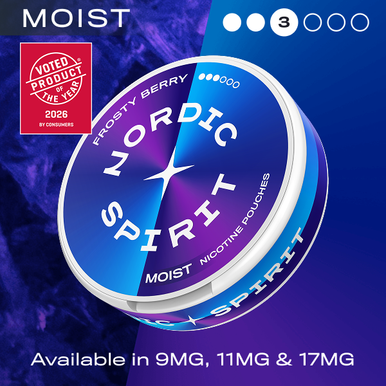
It is the standard round pouch tin: a shallow cylinder, wider than it is deep, with a body and a separate lift-off lid. You can close a hand around it without effort and it sits flat on a surface without rolling, which is more than can be said for it in a bag. The outside is smooth, so it slides in and out of a pocket easily, and it is rigid enough not to deform under ordinary handling.
The lid, and how it closes
The lid lifts with a thumb under the rim rather than with a fingernail, and it presses back on with a definite closure rather than a click. A brand-new can is noticeably stiffer than one that has been opened twenty times; the tension settles after the first few days and then stays where it is for the life of the tin. If a lid ever stops holding — which normally means the can has been sat on or dropped on its edge — it will not recover, and the contents are better moved somewhere sealed than left in a tin that no longer shuts.
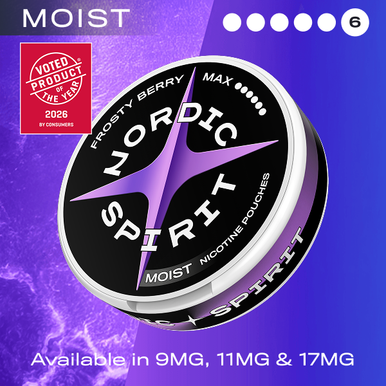
The face of the lid carries the brand, the product name and the declared figure. That is the part you actually use when there is more than one can in a drawer, because it is the only way to tell two tins of the same size and shape apart without opening them.
The catch compartment
Set into the top of the lid is a second, shallower space. It is there for used pouches, and it is the reason the lid is deeper than it needs to be for a lid. It holds a handful — enough for an afternoon away from a bin — and it is a convenience rather than storage. Left for a week it makes opening the can an unpleasant business, and there is no remedy for that except emptying it promptly.
Used pouches otherwise go in a bin. Not down a sink, not down a drain, not down a toilet, and never left where a child or an animal could get at them.
How many pouches — the honest answer
People reasonably want a portion count before they buy, and here we have to be straight with you: we do not hold one. Our product record for this listing carries no pouch count and no cans-per-pack figure, so there is no number for us to publish. The printed can carries it, and that is the source to use.
We could estimate from the size of the tin. We are not going to, because an estimate printed on a product page is indistinguishable from a fact and would be treated as one. It is the same reason this page does not give dimensions, weights or anything else that is stamped on the packaging rather than held in our data.
What fits in a pocket
One tin sits comfortably in a coat pocket, a jacket pocket or the front pocket of a bag, and it does not make an obvious shape through fabric. Two tins together are less comfortable and more likely to work each other's lids loose; if you carry two, a zipped compartment or a small case keeps them still. A trouser pocket works for a short while but is the most common way cans get sat on, which is the one thing that reliably ruins a lid.
And whatever it is carried in, the rule is the same as at home: out of reach of children and animals, and out of places that get hot. A glovebox in summer is the worst of both.
The fruit, described as a taste
Our record gives this can one flavour tag: berry. No mint tag sits alongside it, so on our data there is no cooling element recorded here.
Described as a taste, berry means the dark end of the fruit register rather than the bright end — the family that blackcurrant, blackberry and raspberry belong to, as against the lighter orchard and citrus flavours. It usually reads as jammy or cordial-like rather than as fresh fruit, and the aroma on opening a tin follows the same line: fruit-forward, deep, and without the lift you get from a can that has a cold word in its name.
The product name adds Foresty, which is setting rather than fruit. It is the kind of word used to suggest a wild, mixed, hedgerow sort of berry character rather than one named fruit, and it is naming rather than specification. Which berries are actually involved is not something our record holds and not something we will guess at.
That is as far as an honest flavour description can go from the data we have. The can and the manufacturer's own labelling carry whatever fuller description they stand behind.
Two names, one unanswered question
This is the part of the page that matters most if you are choosing between cans in this range, so it gets its own heading and a plain answer.
This product is called Max Foresty Berry. Another product in the same range is called Forest Berries. Both carry a single berry tag in our record. Both are £4.49. The names are clearly cousins — one uses an adjective, the other a plural noun — and the obvious question is whether they are the same flavour under two names.
We do not know, and we are not going to imply an answer either way. Our product data records a tag, not a recipe, and nothing in it links or separates the two beyond the words on the lids. It is entirely possible they are the same blend named differently for two label variants, and entirely possible they are two different blends. Anybody who tells you confidently which, without the manufacturer's own word for it, is guessing.
What we can evidence is the difference that is recorded. Forest Berries is listed at 6mg and 9mg and sits in the medium band. This can is listed at 17mg and sits on the strong shelf, which holds 132 products. So: the declared figure differs, the shelf differs, the price does not, and the flavour relationship is unknown.
One more naming note while we are here. Nordic in the brand name is a trademark and nothing more. It is not a statement about where this product or anything in it comes from, we hold no origin information for this listing, and a word on a lid is not evidence of geography.
17mg as label information
The number printed on this can is 17mg. That is the manufacturer's declared amount per pouch, and it appears on this page for the same reason the name and the price do: it is on the label, and it is how an adult who already uses nicotine identifies the product they use.
It is not a measurement we have taken. It is not a rating, a grade, or a quality. And the word Max in the product name is manufacturer naming attached to that larger figure — a word on a can and a filing decision on this site, not a rank. Nothing on this page presents a higher declared figure as better, as more advanced, or as something to move towards. We do not advise on strength, we do not describe any figure as suitable for any person, and we do not treat the range of figures we stock as a ladder with a top.
The shelves work the same way. We sort cans into bands so people can find things: this one falls on the strong shelf, other cans fall in the medium band, and cans with larger figures again appear on the extra strong shelf. A band name describes where a printed number falls. It says nothing about the can beyond that, and nothing about anyone who buys it.
Within this brand the figure has no effect on price at all. This 17mg can is £4.49, exactly like the Frosty Mint listing at 9mg and 11mg and exactly like every other Nordic Spirit can we hold.
Moving between cans on our shelves: what changes and what does not
People rarely stay on one can forever, and the useful thing to understand before moving is which differences between listings are real and which are cosmetic. Here is the honest breakdown.
What changes: what is in the box
This is the biggest and least obvious variable on our shelves, and it is the reason prices look wild. A listing price covers whatever that listing contains. Ours is a single can at £4.49. Several of the cans nearest this one are listings of a different kind: Clew Blueberry, Cuba Ninja Strawberry, Denssi Blueberry Freeze and Iceberg Raspberry all show at £39.90, and the Killa blueberry listing at £33.50 is not far off it. Before concluding anything from a nine-fold gap, read what each listing holds. Most of that difference is quantity.
What changes: the format
Not every can is the same physical thing. Some products are listed specifically as minis or slims, which changes the size of the portion and how it sits — the 77 VB Edition mini listing at £39.90 says so in its name. Others are ordinary-format cans like this one. The format is worth checking before you assume that two berry cans at similar figures are the same experience, because portion size is one of the few things that genuinely changes the feel of the thing in the mouth.
What changes: the declared figure
Figures vary from can to can and from brand to brand, and there is no standard shared between makers about how a figure is arrived at or printed. That is precisely why we publish them as label information rather than as anything comparable. Two cans showing the same number from two different makers are two cans showing the same number, and we would not read more into it than that.
What changes: the flavour vocabulary
Names do not mean the same thing across brands. Velo Icy Berries at £4.19 pairs a cold word with a fruit family; the Elf Bar listing at £29.90 names two fruits and no temperature; Pablo Gold Edition Blue Raspberry at £19.95 attaches an edition name to an invented fruit compound. Only the underlying tag is consistent on our side, and a tag is a family rather than a description.
The nearby berry cans, priced out
Here are the berry-side listings closest to this one with the price we show against each, and one piece of information the packs do not carry but the site does: whether it is available. Several are not at the time of writing, and we would rather tell you that here than let you click into a dead end.
| Listing | Price we show | Availability as this page is written |
|---|---|---|
| Nordic Spirit Max Foresty Berry (this page) | £4.49 | in stock |
| Velo Icy Berries | £4.19 | in stock |
| Pablo Gold Edition Blue Raspberry | £19.95 | in stock |
| Elf Bar Blueberry Raspberry | £29.90 | in stock |
| Killa Blueberry | £33.50 | in stock |
| Clew Blueberry | £39.90 | in stock |
| Cuba Ninja Strawberry | £39.90 | in stock |
| Denssi Blueberry Freeze | £39.90 | in stock |
| Iceberg Raspberry | £39.90 | showing unavailable |
Stock moves and this page does not, so treat that last column as a note rather than a guarantee in either direction — each listing shows its own live position. The price column is worth reading twice, though: the same warning applies as everywhere else on this site, in that the figure is attached to the listing and not to the pouch.
What does not change: the format ritual
Lid off, pouch out, pouch placed, lid on, used pouch into the bin or the catch. That sequence is identical on every can we sell regardless of brand, price or printed figure, and anyone moving between brands will find nothing new to learn in it. It is the one genuinely universal thing about the category.
What does not change: the rules at the door
Every nicotine product we sell is 18+, age-checked at the point of sale, and subject to ID being requested on delivery. That does not vary by brand, by price, by declared figure or by order size. A £4.19 can and a £39.90 listing are handled in precisely the same way.
Where this can sits in the brand
Fourteen Nordic Spirit listings sit on the brand's shelf and they divide into three groups.
The fruit group holds this can, Blueberry — which commits to a single named fruit rather than a family — and Forest Berries. The mint group holds Frosty Mint, the plain Mint can and Max Frosty Mint, which carries the same prefix this can does. Bridging the two is Frosty Berry, the only can in the range our record tags twice, with mint and berry both.
Sitting outside all three is Dark Fizz, which carries no flavour tag in our record at all and therefore appears on no flavour shelf anywhere on this site. Worth knowing if you ever go looking for it by flavour and cannot find it.
Every one of the fourteen is £4.49. Whatever else moves in this range — figure, family, prefix — the price does not.
One variant, and what that changes about buying
Most listings on this site carry two or three variants under one product. This one carries a single 17mg option, and that has a few practical consequences worth setting out.
The first is that there is no decision to make on the page. Adding the can to a basket is the whole of it. No figure to compare, no price to weigh — and since every can in this range is £4.49 anyway, no budget question would have arisen even if there had been a second variant.
The second is that reordering is simple to the point of being forgettable. People who settle on a single-variant can tend to reorder without looking at the page again, which is fine right up until something changes. If a product ever disappears from a range or a price moves, a single-variant listing is where you notice it last, because you were not reading the page.
The third is what happens when it is unavailable. A listing with three variants usually has something on it even when one option runs out; a single-variant listing is either there or it is not. If this can is out when you look, the honest options are to check the brand shelf for the rest of the range, or to look along the shelf its figure falls on for another maker's can at a comparable printed number. We would not suggest a replacement for you — what somebody buys instead is their decision, not something a shop should be steering.
The fourth is small but real: with one variant there is one product photograph, and it shows the can as photographed rather than the contents, the pouches or the scale of it in a hand. Colour in packaging photography shifts with lighting, so a lid that looks deep on a screen can look flatter on a worktop. Nothing about the shade of a lid tells you anything about the flavour inside it.
Berry across the wider shelf
The berry shelf holds 76 products, which makes it a large category but a much more navigable one than mint. The naming on it falls into three groups, and knowing which group a can belongs to is the most reliable way to read a berry listing you have never seen.
The first group names a single fruit and commits to it. The Blueberry can in this range, Clew Blueberry and Iceberg Raspberry all do this, and it is the most informative naming there is: you know the target even if you do not know how close the can gets to it.
The second group names a family or a setting instead, as this can does with Foresty Berry and as Forest Berries does with its plural. A family name signals a blend and accepts that no single fruit will be identifiable. Some buyers prefer that precisely because a blend is harder to tire of; others find it vague.
The third group builds a compound: two fruits together, as in the Elf Bar listing, or a fruit with a temperature word, as in Velo Icy Berries, or an edition name stacked in front of both. The more elements in a name, the more the name is doing marketing work and the less of it is description.
Across all three groups, the tag underneath is the same single word: berry. That is the limit of what our data standardises, and it is why this page compares names, figures, formats and prices rather than asserting that two cans from different makers taste alike.
Cans people keep alongside this one
Running two cans is the normal pattern rather than the exception, because one flavour without a break stops registering. The logic is contrast, and from a fruit can with no cold element recorded there are two obvious directions.
The first is cold. Within the brand that is Frosty Mint or Frosty Berry, both at the same £4.49 — the first removes the fruit and adds the chill, the second keeps the fruit and adds the chill alongside it. Outside the brand, Edge Mint at £14.95 is a plain mint can from a different maker, and Velo Icy Berries is the cold-fruit idea at £4.19.
The second is a different fruit. A two-fruit listing or a single-fruit can like Blueberry both give you a change without leaving the family. If you want the change to be more definite than that, pick something with no shared vocabulary at all — the naming on the Iceberg and Cuba listings above shares nothing with this one.
A practical note that applies to any rotation: keep no more than two cans open at once and leave the rest sealed. Open tins spend most of their life standing rather than being used, and standing is what dulls them. It costs nothing to do and it is the single most effective habit for cans that disappoint towards the bottom.
Keeping a can in good order
Press the lid fully home every time. Most of the difference between a can that is as good at the end as at the start and one that is not comes down to that alone. A lid resting rather than closed lets a tin dry gradually, and the change is slow enough that nobody notices it happening.
Keep it away from heat and out of direct sunlight. Cars, windowsills and the shelf above a radiator all do the same thing — warm the can through and let it cool again, repeatedly — and no can comes back from much of that. A drawer, a bag or a cupboard asks nothing and avoids the problem.
Fridge storage is a matter of preference and not a recommendation. It does no harm, and our data says nothing about whether it changes anything. Lid shut, away from open food, out of reach of children and pets, as always.
Buy at the rate you get through them rather than stockpiling. A can in circulation is better than one that has stood open for a season. That is a practical remark, not a statement about shelf life — the printed date on the packaging is the authority on that.
Buying it, and the age check
There is one listing, so buying is as simple as it gets: add the can at £4.49 and build the rest of the order around it from everything we stock. Mixing brands, flavours, formats and declared figures in a single basket is entirely ordinary, and there is no reason to place two orders. If you would rather browse by maker than by flavour, the Pablo shelf and the Cuba shelf are the deepest alternative ranges we hold.
Age verification applies to every order without exception. This is an 18+ product for adults who already use nicotine. Age is checked at checkout and ID may be requested on delivery; if an adult at the address cannot produce it when asked, the parcel will not be handed over.
Stock changes and this page does not. The listing reads as in stock at the time of writing; the listing itself is the live answer, and the brand shelf will show the position on the others if this one is unavailable when you look.
Finding it again on the site
Three shelves hold this product. The brand shelf shows it with the other thirteen listings from the range. The strong shelf holds it with 131 other cans whose printed figures fall in that band. And the berry shelf, with 76 products, holds it alongside every other can our records tag as berry, at every figure and from every maker.
If none of those is how you think about it, the shop index lists everything at once — including the cans with no flavour tag, which never appear on a flavour shelf at all.
Questions about this can
Is Max Foresty Berry the same flavour as Forest Berries?
We do not hold anything that would let us answer that. Both carry a berry tag in our record and both are £4.49; the names are similar but differently constructed. Whether the manufacturer intends them as the same blend at different declared figures, or as two separate flavours, is not in our data and we will not assert it either way. What is recorded is the figure: 17mg here, 6mg and 9mg on the other listing.
What does "Max" mean?
It is part of the product name the manufacturer prints on the can, attached to a higher declared figure — 17mg in this case. On this site it also determines which strength shelf the can is filed on. That is the whole of its meaning here. It is not a rank, not a tier, and not a suggestion that anyone should be moving anywhere.
Why is there only one strength listed?
Because one is what we hold for this product: a single 17mg variant at £4.49. Other cans in the range are listed with two figures each, and those appear on their own pages. We publish the variants we actually have and do not speculate about ones we do not list.
How many pouches are in the tin?
We do not hold that number. There is no pouch count and no cans-per-pack figure in our record for this listing, so the printed can is the place to read it. We will not publish an estimate, because on a product page an estimate reads as a fact.
Is it a mini or a standard-size can?
Our record does not describe this listing as a mini or a slim, so it is the standard format as far as our data goes. Some products we stock do say so in their names, and where a listing is a mini it is usually named as one. For confirmed dimensions, the packaging is the authority rather than us.
Does it have any mint or cooling element?
Not according to our record, which gives it a berry tag and no mint tag. The cans in this range that do carry a mint tag are the Frosty ones, and Frosty Berry is the one that carries both mint and berry at once. Nothing in this can's name points at a cooling element either.
Is 17mg stronger than the other cans in the range?
17mg is a larger printed number than the 6mg, 9mg and 11mg figures on the other listings, and that is precisely all we will say about it. The figure is label information. We do not interpret it, we do not advise on strength, and we do not present a bigger number as better or as a next step for anyone.
Why is it the same price as the lower-figure cans?
Because this brand prices its range flat: every Nordic Spirit listing we hold is £4.49 regardless of the printed figure. That is unusual enough across the wider shelf to be worth knowing, and it means moving between cans within this range is never a spending decision.
Can I order this with cans from other brands?
Yes. There is no restriction on mixing brands, flavours, formats, price points or declared figures in one basket, and most regular buyers order two or three cans at a time for rotation.
Some of the cans linked on this page show as unavailable. Why mention them?
Because they are the cans nearest this one in our own catalogue, and leaving them out would give a misleading picture of what the shelf looks like. Where we know a listing is showing as unavailable at the time of writing, this page says so — the table above marks it. Stock is live and a page is not, so a listing that is out today may not be tomorrow and the reverse is equally true. The listing itself is always the current answer.
Does a bigger declared figure mean a bigger pouch?
No, and the two are worth keeping separate in your head. The printed figure is a declared amount; the portion is the physical size of the pouch. They are independent, which is why some products are listed as minis at figures that are not small and why ordinary-format cans appear across every band on this site. Our record does not describe this listing as a mini, and it holds no measurement for the portion either way.
Is the can itself different from the other cans in this range?
Nothing in our data suggests so. The tins across this brand are the same standard format — same shallow round body, same lift-off lid, same catch compartment set into the top — and the printed face is what differs. That is worth knowing if you keep two of them: two identical tins in one pocket are easy to confuse, and the lid is the only thing that tells them apart.
Where is it made?
We do not hold origin information for this listing and will not infer any from the brand name, which is a trademark rather than a place. Anything the manufacturer states about origin appears on the packaging, along with ingredient and technical detail we also do not publish.
Will I be asked for ID?
You may be. Age is verified at checkout and ID may be requested on delivery; an adult at the address must be able to produce it or the delivery will not be completed. This applies to every nicotine product we sell, at every price and every declared figure.
Do you publish ingredients or technical specifications?
No. We publish only what our product record holds — name, brand, price, declared strength, flavour tag and stock status. Ingredient lists, specifications and anything else printed on the packaging belong to the manufacturer. Where our record holds nothing, this page says so instead of filling the gap.
Legal and compliance
Nicotine is an addictive substance.
This product is sold to adults aged 18 or over who already use nicotine, and on that basis only. We do not sell to under-18s. Age is verified at the point of purchase, and ID may be requested on delivery; where it is requested and an adult cannot produce it, the delivery will not be completed.
Nordic Spirit Max Foresty Berry Nicotine Pouches are not a licensed stop-smoking medicine and are not authorised, sold or intended as one. This product is not intended for non-smokers, for people who do not already use nicotine, for anyone under the age of 18, or for anyone pregnant or breastfeeding. Nothing on this page is medical advice, and nothing on it should be read as encouragement to begin using nicotine or to move to a higher declared figure.
Keep out of reach of children and animals. Every factual statement on this page — the name, the brand, the £4.49 price, the 17mg declared figure, the berry flavour tag and the stock position — comes from our own product record for this listing. Where that record is silent, so is this page, and the two names discussed above are the clearest example of it. The can and the manufacturer's labelling remain authoritative for anything printed on the packaging.
Closing note
Max Foresty Berry is a single-variant berry can at £4.49, listed at one declared figure of 17mg, filed on the strong shelf, the berry shelf and the brand's own page. The prefix in its name is manufacturer naming attached to that figure and nothing else. Its nearest relative in the range, Forest Berries, shares its flavour tag and its price and differs on the printed number — and on whether the flavour itself differs, we have told you plainly that we do not know. The rest of what we stock is a step away at the main index.
More from Nordic Spirit
More strong pouches
More berry pouches
Where this sits
Nordic Spirit Max Foresty Berry Nicotine Pouches appears in these categories. Browse them, or jump to something close.
You might also like