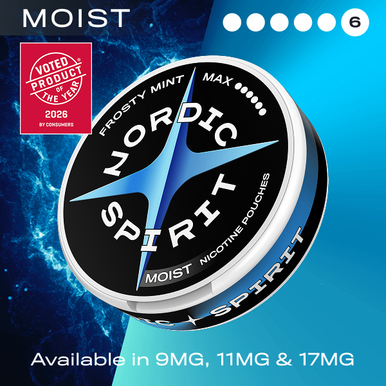
Nordic Spirit · 17mg
Read the full guide
Nordic Spirit Max Frosty Mint Nicotine Pouches
£4.49
✔ In stock — ready to ship
100% tobacco-free
Free over £20
Same-day dispatch
Secure checkout
This page is the listing for Nordic Spirit Max Frosty Mint Nicotine Pouches. The price is £4.49. There is one declared strength on the listing, 17mg, and one variant behind it at that same £4.49. The flavour recorded against it in our catalogue is mint. The can is in stock as this page is written, and we hold one photograph of it.
That short paragraph is the complete set of hard facts we have. Everything that follows is one of three things: a description of the object itself, a comparison with other cans that are physically on our shelves, or an admission that we do not hold a particular piece of information. We would rather leave a gap visible than fill it with something plausible, because a plausible invention on a product page is worse than an obvious blank.
The full guide to Nordic Spirit Max Frosty Mint Nicotine Pouches
5,064 words on how it eats, who it suits, how to serve it and what to put beside it.
Max Frosty Mint, set out plainly
Two things about the name are worth clearing up before anything else, because both are easy to read as a claim and neither is one. The word Max is the manufacturer's naming convention for a can carrying a higher declared milligram figure than the standard line — it is a label, not a verdict, and we say more about it further down. The word Nordic is part of the brand name and nothing else. It tells you nothing about where this can or anything inside it was made, and we are not going to imply otherwise. We do not hold country-of-origin information for any product on this site, so we do not print any.
The last piece of housekeeping: this is an adult nicotine product. It is sold only to people aged 18 or over who already use nicotine. The full wording sits in its own section at the foot of the page.
Frosty mint, described as taste and smell
The flavour name is Frosty Mint, and the useful thing to do with a flavour name is to unpack the two words separately, because they are doing different jobs.
"Mint" places it in a family. Mint is not one flavour but a spread of related ones, and the two poles most people can taste the difference between are peppermint — the cold, sharp, slightly medicinal mint of a peppermint tea or an after-dinner mint — and spearmint, the softer, greener, herbier mint of a garden mint leaf or a mint sauce. A great many pouch mints sit somewhere on the line between the two, and manufacturers pick a flavour name to signal roughly where.
"Frosty" signals the cold end. A mint described as frosty is normally built so that the cooling sensation arrives first and dominates — a clean, sharp coldness across the tongue and the roof of the mouth, with the mint character reading underneath it rather than in front of it. That is a description of what the word conventionally signals in this category, and of what you would reasonably expect from a can carrying it. We want to be exact about the epistemic status of that: it is an inference from the flavour name and from how the word is used across the mint cans we stock, not a measurement. Nobody at this shop has sat down with a laboratory panel and scored it.
On the aroma, the honest answer is that a dry pouch gives you very little through the nose until the can is open, and once the lid is off what you get is a concentrated version of the same cold-mint character in the air above the pouches. It is a short-lived smell. Put the lid back on and it goes.
The sweetness question comes up a lot, so: mint flavourings of this kind generally carry some rounding sweetness, because a mint with nothing behind it reads as bare and slightly harsh. A can named for frost rather than for sweetness is signalling that the sweetness is in a supporting role. That is the most we can responsibly say. We cannot tell you how sweet this one tastes to you, and taste is one of the genuinely individual things — two people can take the same pouch from the same can and describe it differently without either being wrong.
What we will not do is give you a number. There is no cooling scale, no mint intensity index, no scoring system behind any of the flavour names in this category. If you see one quoted anywhere, it is somebody's opinion dressed as data.
What the word "Max" is actually telling you
Nordic Spirit uses "Max" in the product name on certain cans, and this is one of them. The other on our shelves is Nordic Spirit Max Foresty Berry, also £4.49 and also in stock, which is the berry-side equivalent of the same naming.
Here is what the word means and what it does not. It means the manufacturer has given this can a higher declared milligram figure than the cans in the standard line and has named it accordingly. That is a naming convention. It is not a quality rating, not a product tier, not a measure of flavour intensity, and not a description of anything except the figure printed on the can.
It is worth being blunt about a framing this page is deliberately not using. Nothing about a higher declared figure makes a can better, more advanced, or a thing to progress towards. There is no ladder here and we are not describing one. A 6mg can and a 17mg can are two products on a shelf with two different numbers printed on them. Which of those numbers is appropriate for any individual person is not a question this shop can answer, and we are not going to pretend otherwise anywhere on this page.
There is also a separate listing, without the Max, for Nordic Spirit Frosty Mint — same £4.49, also in stock. It is a distinct product with its own page, and the declared figures on that listing are printed there rather than here. If you are comparing the two, that page is where the comparison has to be made, because we are not going to state another listing's strengths from this one.
17mg: a number on a lid, and where that number files
The figure on this can is 17mg. What that figure is, plainly, is the nicotine content the manufacturer declares per pouch, printed on the packaging as a label statement. It is a piece of product information in exactly the way a weight on a packet is. We reproduce it from our product data and we do not interpret it.
Where it files in our own shelving is a question of how we sort the catalogue. This can is shelved as Strong, which is where cans in this band of declared figures go. For context on how wide that sorting is, the Strong category currently holds 132 cans, sitting between the Medium Strength shelf and the Extra Strong shelf. Those three names are our navigation labels. They are a way of grouping listings so the catalogue can be browsed by declared figure, and they are not a recommendation of any kind.
Something that trips people up when they compare cans across brands: the declared figure is set and printed by each manufacturer, and different manufacturers do not necessarily measure or express it in the same way. A number printed on one brand's can and the same number printed on another's are both label statements from their respective makers. Treating them as directly interchangeable across brands is reading more into a printed figure than a printed figure carries.
This listing is single-strength. There is no 6mg or 9mg option behind this particular page — one variant, 17mg, £4.49. If you want the brand at other declared figures, the other Nordic Spirit listings carry their own, and the Nordic Spirit brand page is the quickest way to see the fourteen we list side by side.
We cannot advise which strength suits anyone. Not by age, not by how long someone has used nicotine, not by what they used before, not by any other criterion. It is not a judgement we are qualified or permitted to make, and any page that offers you one on the basis of a two-line form should be read sceptically.
Moving between cans on our shelves: what changes and what does not
Most people who buy from a shelf like this one do not buy the same can forever. They move — between flavours, between brands, occasionally between declared figures. It is worth setting out what actually differs when you do, because the differences are narrower than the shelf's variety suggests, and the things that stay constant are the things people most often assume change.
What genuinely changes between brands
Three things, mainly. The first is the flavour, which is the whole point and where the range on our shelves really does spread out. Within mint alone, Clew Cool Mint at £39.90, Denssi Cold Mint at the same £39.90, Klint Avalanche Mint at £36.90 and Fumi Fiery Mint at £27.90 are four different makers' readings of a cold mint, and the names alone tell you they are aiming at different things. All four are in stock.
The second is the can and the pouch format. Cans vary in diameter and depth between brands, and pouches vary in size and in how much material is in them. A brand that makes a slim pouch and a brand that makes a fuller one produce noticeably different objects to hold in the mouth, even at the same declared figure. We do not hold pouch dimensions or format designations in our product data for any listing, so we cannot tell you which is which — the can states its own format.
The third is the declared figure, which we have covered. A can from Cuba Ninja Ice Cool or Elf Bar Cool Storm — £39.90 and £29.90 respectively, both in stock — will carry its own figures on its own listing.
What the price column does not tell you
This is the comparison that catches people out most often, so it is worth a paragraph of its own. Look down the prices above: £4.49 here, £39.90 there, £14.95 for Edge Mint, £19.95 for Pablo Gold Edition Blueberry Peach Ice, £33.50 for Killa Banana Ice. Those gaps look enormous and they are not what they appear.
The reason is that our product data does not record how many cans each listing covers. The cans-per-pack field is empty for this product and it is empty for the others too. A listing at £39.90 may well be a multi-can roll; a listing at £4.49 may well be a single can. We are not going to assert either, because we do not hold it. What we will say plainly is this: do not read the price difference between two listings as a per-can price difference. Check the individual product page and the listing photograph before you draw that conclusion, and if the page does not settle it, ask us rather than guessing.
What stays exactly the same
The format does. A pouch is a pouch — it goes between lip and gum, it is not chewed, it is not swallowed, and it comes out and goes in a bin. That is true of every listing on everything we stock, from the cheapest to the dearest, and it does not change when you change brand.
The legal position stays the same too. Every product here is 18+, every order goes through the same age check, and nothing about moving from one brand to another alters that. And the honest limits of what a shop can tell you stay the same: whatever can you are looking at, we can tell you the name, the brand, the price, the declared figures, the flavour tag and whether it is in stock. We cannot tell you how it will taste to you, how long you will keep one in, or which one you should buy.
The format itself, in practical detail
This section is the mechanics — the thing people actually want explained the first time they look at a can properly, and the thing product pages usually skate over in a sentence.
The portion, and how it sits
A pouch is a small sealed sachet with flavouring material inside it. It goes in the mouth, between the lip and the gum — most commonly under the top lip, though under the bottom lip is equally normal and people settle on one out of habit rather than rule. You place it, you close your lip over it, and it stays there. It is held by nothing but the lip and the shape of the gum line, which is why it does not move around much once it is in position.
You can shift it. Moving it from one side of the mouth to the other is ordinary and takes a second with the tongue. If it is uncomfortable in one spot, moving it is the first thing to try; if it is uncomfortable everywhere, taking it out is the sensible answer, because nothing about the format asks anyone to persist with something that does not sit well.
On portion size specifically: we do not hold the pouch dimensions for this product, so we are not going to tell you whether it is a slim pouch or a regular one. What is reliably true is that every pouch in a given can is the same as every other, so the first one tells you what the rest of the can is like.
How long people keep one in
Widely variable, and any average would mislead more than it helped. Some people take one out after a few minutes. Others leave one in for the better part of an hour. The most common reason given for taking one out is simply that the flavour has gone — mint fades from a pouch gradually and then entirely, and once it has, there is not much reason to leave the pouch where it is.
We do not set a time, we do not recommend one, and we do not hold manufacturer usage guidance in our data. Whatever the can prints on this is the guidance to follow. What we would say, as a purely practical observation about the object rather than advice about consumption, is that the taste fading is the signal most users go by.
The lid, the catch compartment and the bin
The can is a shallow round tin with a lid that lifts off and presses back down. Most pouch cans of this kind, this one included, have a catch compartment built into the lid: a separate shallow chamber above the main body where the fresh pouches sit. Used pouches go in there.
It is not a sophisticated feature and it does not need to be. What it does is give a used pouch somewhere to go when there is no bin to hand, which means it is not going loose into a pocket. The practical note is that the compartment fills, and it is better emptied early than left until the lid stops seating properly. A lid that will not close flat is almost always a full catch compartment rather than a damaged can.
Disposal is general household waste. Used pouches go in a bin — not down a sink, not down a toilet, not out of a car window. The can itself is a plastic tin. Whether your local authority takes that plastic in kerbside recycling varies by council and we cannot answer it for your postcode.
Where this can falls in the Nordic Spirit line we list
We list fourteen Nordic Spirit products. Every one of them that we hold a price for is £4.49, which makes the brand unusually flat on price across its flavours — the choice between them is a flavour choice and a declared-figure choice, not a budget one.
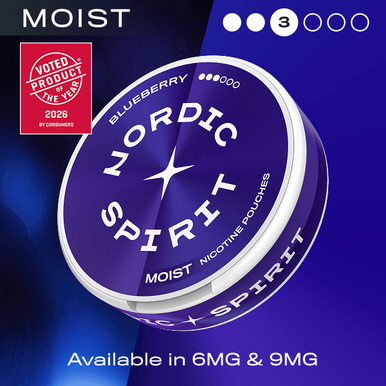
On the mint side, this can and the non-Max Frosty Mint listing share a flavour name, and there are further mint-tagged cans in the line. On the berry and fruit side sit the Blueberry can, Forest Berries, Frosty Berry and the Max-named Foresty Berry — note that the manufacturer's spelling on that last one is "Foresty", and we reproduce it as given rather than tidying it, since correcting a product name is how listings stop matching what arrives in the box.
The odd one out is Dark Fizz, which is neither mint nor berry and does not carry a flavour tag we can put a family name to. It is £4.49 and in stock like the rest. The whole set is on all fourteen Nordic Spirit listings if you want to see it laid out.
Three cans with mint on the lid and one tag between them
This deserves saying straight, because it is the kind of thing a product page normally papers over. In our catalogue, Max Frosty Mint carries exactly one flavour tag: mint. So do the brand's Spearmint and Sweet Mint listings. Our own data does not distinguish between them at all. The only thing in our records that separates a frosty mint from a spearmint from a sweet mint is the name the manufacturer printed on the lid.
That does not mean they taste the same — the names are signalling real differences, and frost, spear and sweet point at genuinely different places within the mint family. Frosty leans to the cold, sharp, peppermint end. Spearmint is the herbier, greener, softer mint. Sweet Mint puts the rounding sweetness in front rather than behind. Those are meaningful distinctions and the makers did not choose the words at random.
But we are not in a position to verify or quantify any of it from our records, and where a difference exists only as a difference in naming, we will say so rather than inventing a tasting note to fill the space. If the distinction matters to you, the reliable route is to try one can rather than to trust a paragraph — including this one.
What people keep alongside a can like this
Keeping two flavours going at once is common, for the simple reason that a single flavour used continuously stops registering as clearly. There is no trick to it: people keep a second can and alternate.
For a second mint that reads differently, Klint Avalanche Mint at £36.90 and Denssi Cold Mint at £39.90 are both cold-named mints from other makers, both in stock. Fumi Fiery Mint at £27.90 is the interesting one in that group because "fiery" is pointing somewhere other than cold, which makes it a different reading of the same herb.
For a deliberate change of direction, the fruit cans are the usual choice: Killa Banana Ice at £33.50, Pablo Gold Edition Blueberry Peach Ice at £19.95, and 77 VB Edition Mini Arctic Berry at £39.90. All three are in stock. Bear in mind the pack-size caveat above before reading those prices as comparable to £4.49.
Staying within one maker is the other approach, and at a flat £4.49 across the brand, Blueberry or the Forest Berries can is the least complicated second can you can put beside this one.
Keeping the tin in reasonable condition
Not much is required, and most of what is required is obvious once stated.
Keep the lid on. The pouches inside are exposed to air whenever the can is open, and an open can left open is the main thing that changes how a can tastes by the end of it. Closing it properly after each pouch is the whole of the maintenance routine.
Keep it somewhere cool and out of direct sunlight. A shelf, a drawer, a bag. Not a car dashboard in July, not a windowsill, not next to a radiator. Heat is the second thing that will change a can over time.
Some people keep cans in a fridge. Others do not. We do not hold manufacturer storage instructions in our data, so we are not going to tell you which is correct — the can prints its own guidance and that is the one to follow. What is not in doubt is that a can kept shut, cool and dry lasts better than one that is not.
Keep it out of reach of children and away from anyone it is not intended for. That is not storage advice so much as basic sense with an age-restricted product, and it applies to a can sitting on a kitchen counter as much as to one in a cupboard.
One strength, one price, and the pack-size question
There is not much of a choice to make on this listing, which is unusual and worth stating rather than dressing up. One declared figure, 17mg. One variant. One price, £4.49. If you add this to a basket, that is what you get.
Where a choice does exist is across listings rather than within this one. Other cans in the brand carry their own declared figures and are priced identically at £4.49, so moving between them costs nothing and is purely a question of what is printed on the lid. Browsing by declared figure is done through the Strong category, 132 cans deep, or through the medium and extra-strong shelves linked earlier.
On multi-can packs: we do not hold a cans-per-pack figure for this product. We are not going to state that it is a single can and we are not going to state that it is a roll, because our data does not say. The listing photograph and the product page as it appears at checkout are the places to confirm what quantity you are buying, and if that is still unclear, asking before ordering is faster than sorting it out afterwards.
Placing the order, and the check on delivery
The order runs the way any order on this site runs. The can goes in the basket at £4.49, you check out, and the order is subject to age verification because every product we sell is age-restricted. That check is not a formality we can waive for a small order or a regular customer.
You must be 18 or over to order. ID may be requested at the point of delivery, and the courier may refuse to hand over the parcel if the check cannot be completed. That refusal is the courier following the rules, not a fault with your order.
Stock changes. We have shown this can as in stock at the time of writing and the same for every product linked from this page, but availability on a catalogue this size moves daily. The live product page is the one that is correct; a description page like this one is a snapshot.
If you are ordering several cans at once, they go in one basket and ship together — there is nothing special about mixing brands or flavours in a single order, and the age check applies to the order as a whole rather than to each line on it.
Four routes to this listing
This page can be reached from four directions, which is worth knowing if you want to find it again without searching.
By brand, through the Nordic Spirit brand page, which lists all fourteen. By declared figure, through our Strong shelf. By flavour, through the mint flavour shelf, which is the largest flavour category we run at 148 listings and therefore the slowest of the four routes unless you already know the brand you are after. Or from the top, through the full catalogue.
The flavour and brand shelves cross over, so if you are working through mints in particular, the mint shelf's 148 listings will include cans from most of the makers we carry. If you are working by maker instead, the Pablo brand page and the Cuba brand page are two of the larger single-brand shelves on the site and give a sense of how much one maker's range can vary within itself.
Common questions about the 17mg can
How many pouches are in the can?
We do not hold a pouch count for this product. Our data records the price, the declared figure, the flavour tag, the stock position and one photograph, and a per-can pouch count is not among them. The printed can carries that figure and it is the reliable place to read it. We would rather say this plainly than repeat a number we have seen quoted elsewhere and cannot verify from our own records.
Is Max Frosty Mint stronger than Frosty Mint?
The Max naming indicates a higher declared milligram figure than the standard line, and this listing declares 17mg. We are not going to state the figures on the separate Frosty Mint listing from this page, because those belong on that page and quoting another listing's numbers second-hand is how errors get propagated. Open both pages and compare the printed figures directly. Neither figure makes either can better; they are two different numbers on two different cans.
Which strength should I buy?
We cannot tell you. Not for this can, not for any can, and not on the basis of anything you could tell us in a message. Recommending a nicotine strength for an individual is not something this shop is qualified or permitted to do, and we are not going to imply an answer by calling one figure a starting point and another a destination. The declared figures are printed so you can read them. The choice is yours to make.
What does Frosty Mint taste like?
Mint, at the cold and sharp end of the mint family rather than the soft and herby end — that is what the flavour name signals and it is consistent with how the word is used across the mint cans we carry. We have not run a tasting panel and we are not going to describe notes we cannot verify. Taste also varies between people to a degree that makes any confident single description a bit of a fiction.
Is the 17mg more expensive than the brand's other cans?
No. Every Nordic Spirit listing we hold a price for is £4.49, including this one. The declared figure does not move the price within this brand. That is not true across the catalogue as a whole, where prices range widely, but within Nordic Spirit the price is flat.
Does "Nordic" mean it is made in Scandinavia?
It means the brand is called Nordic Spirit. We do not hold country-of-origin information for this or any other product on the site, so we make no statement about where anything is manufactured. A brand name is a brand name and reading a factory location out of one is a mistake.
How long should I keep a pouch in?
We do not set a time. In practice people vary from a few minutes to the better part of an hour, and most take one out when the flavour has gone. Any usage guidance printed on the can by the manufacturer is the guidance to go by. We hold no such guidance in our data and we are not going to invent a figure that sounds authoritative.
Is this can in stock?
It was in stock when this description was written, along with every product linked from this page. Availability changes daily across a catalogue of this size, and the live listing is the accurate source. If a page shows as unavailable, that is current and this description is out of date, not the other way round.
Can I order this with other brands in the same basket?
Yes. There is nothing that separates brands at checkout — a Nordic Spirit can, a Clew Cool Mint and anything else in the catalogue go in one basket and ship together. The age check applies to the order, not to each item on it, so mixing makers does not add a step.
Why is the flavour tag just "mint" when the name says Frosty Mint?
Because the tag is a shelving category, not a tasting note. Its job is to put the can on the mint flavour shelf alongside the other 147 listings there so it can be found by browsing. It is deliberately broad. The name on the lid is more specific than the tag, and where the tag is the only thing our data holds, we say so rather than dressing the tag up as a description.
Do you publish ingredients or technical details?
No. We do not publish ingredient lists, composition, dimensions, weights or any technical specification for the products we sell, and we do not explain how anything works. The manufacturer's packaging and their own materials are the place for that. Our product pages are limited to what is in our catalogue data: name, brand, price, declared strengths, flavour tag, stock and images.
What if it arrives and I do not get on with the flavour?
Our returns position is the same for this can as for anything else on the site and is set out in our terms rather than here, so that there is one version of it rather than several. The short practical answer is that flavour is individual and one can is the only way to find out, which is part of why people buy a single can of something new rather than committing to a larger order.
Age restriction and the required notices
This product contains nicotine and is sold only to adults aged 18 or over who already use nicotine.
Nicotine is an addictive substance.
This is not a licensed stop-smoking medicine and it is not offered as one. It is not intended for non-smokers, for people who do not already use nicotine, for anyone under 18, or for anyone who is pregnant or breastfeeding. Nothing on this page should be read as a suggestion to begin using nicotine, and nothing on it is medical advice.
ID may be requested on delivery as proof of age. The courier may decline to complete the delivery if that check cannot be satisfied. If you have any health concern relating to nicotine use, that is a conversation for a qualified professional rather than for a retailer.
Where that leaves you
Nordic Spirit Max Frosty Mint is a single-strength listing at £4.49, declaring 17mg, tagged mint, shelved under Strong, and in stock at the time of writing. "Max" is the manufacturer's naming for a higher declared figure and nothing more than that. "Nordic" is part of the brand name and says nothing about origin. The flavour name points at the cold end of mint, our catalogue tag says only "mint", and we have not pretended to more precision than that.
If you want to see the rest of the line, the Nordic Spirit brand page has all fourteen at the same £4.49. If you are comparing mints across makers, Edge Mint at £14.95 and Elf Bar Cool Storm at £29.90 are two of the more different readings on the shelf, both in stock, both with the pack-size caveat attached to their prices.
More from Nordic Spirit
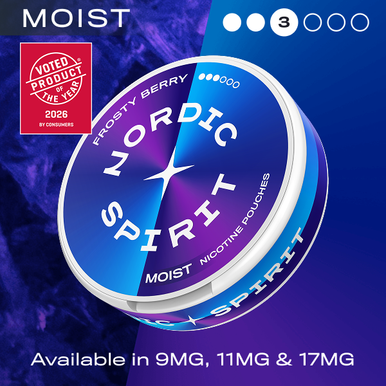
More strong pouches
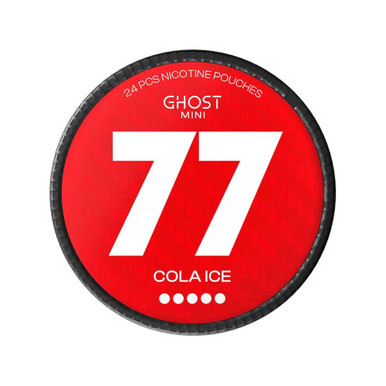
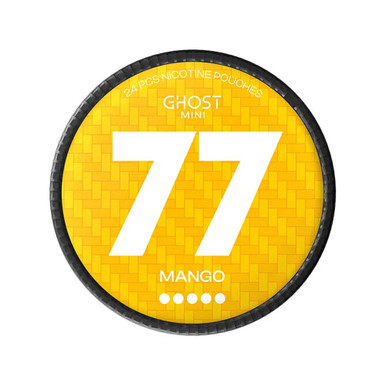
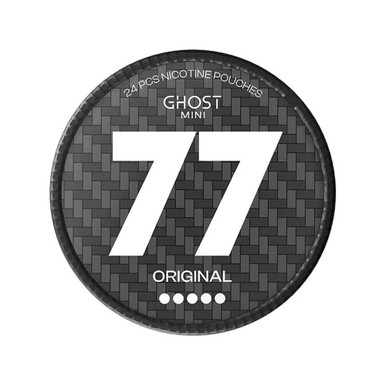
More mint pouches
Where this sits
Nordic Spirit Max Frosty Mint Nicotine Pouches appears in these categories. Browse them, or jump to something close.
You might also like