Elf Bar · 6mg–20mg
Read the full guide
Elf Bar Cool Storm Nicotine Pouches
£29.90
✔ In stock — ready to ship
100% tobacco-free
Free over £20
Same-day dispatch
Secure checkout
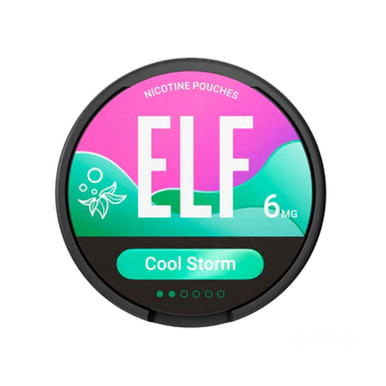
This listing is Elf Bar Cool Storm Nicotine Pouches. The brand field reads Elf Bar and the product name is Cool Storm. Our price is £29.90. Three declared strengths appear against it — 6mg, 12mg and 20mg — each carrying that same £29.90 figure. The flavour tag is mint. The stock field showed in stock when this description was compiled, and one image is attached.
A word on the name before anything else, because it sets the tone for the rest of the page. "Cool Storm" is what the manufacturer decided to print on the lid. It is a brand name and nothing more. It is not a statement about intensity, it is not a grading, and it does not tell you anything about the product that the milligram figure beside it does not tell you better. We reproduce it because it is the product's name and that is how you find the can. We are not going to build a paragraph of atmosphere out of it, and any page that reads the word "storm" as a promise about what a pouch does is inventing a claim the manufacturer did not make.
The full guide to Elf Bar Cool Storm Nicotine Pouches
5,111 words on how it eats, who it suits, how to serve it and what to put beside it.
What we hold on Elf Bar Cool Storm
What follows is the object, the shelf around it, and a running note on where our information stops. There is a fair amount in the second category. We hold a product record, not a technical file, and the difference matters when somebody is choosing between two cans on detail.
Sold to adults aged 18 or over who already use nicotine. The full statement on that is the second-to-last section of this page.
The tin, the pouch and the well under the lid
Physically this is a shallow circular tin with a press-on lid. The lid face carries the branding, the flavour name and the milligram figure. That last detail is a small piece of design that earns its keep once somebody owns more than one can, because cans get stacked in drawers and read from above, and a figure printed on the top is the difference between picking up the right tin first time and picking up three.
Inside, the pouches are arranged in a ring, lying flat. They are soft white rectangles with rounded corners, dry to handle, and small enough that one sits in the palm without registering as weight. We do not publish the number of pouches per tin, the mass of a single pouch, or the diameter of the can. Those figures are not in our record. They are on the packaging, and the packaging is a more reliable source for them than we would be.
Underneath the lid there is a hollow — a shallow well with a raised rim. That is the catch compartment, and it is where a finished pouch goes until there is a bin available. The capacity is a few, not a dozen. Overfill it and the lid stops seating properly, which announces itself as a soft give when you press the top down. Clearing the well daily keeps the tin something you would happily leave on a table. Leaving it a fortnight does not. A used pouch is ordinary waste and goes in a bin, not down a sink and not out of a car window.
In use, the pouch sits between lip and gum and stays where it is put. It feels noticeably present for the first minute or so and then stops announcing itself. Speech is unaffected. Most people drink with one in without thinking about it. Eating is possible, though food tends to shift a pouch out of position and you will usually end up resetting it afterwards.
How long anyone leaves one in varies enormously and we have no opinion on it. The observable pattern is that the flavour is at its most defined early and thins steadily from there, so people who are in it for the taste tend to change pouches sooner and people who are not tend to forget the whole business for half an hour. Neither is right. We are not going to suggest a duration, because that is guidance about consumption and it is not ours to hand out.
Mint, written as a taste
Mint is the largest flavour family on this site and the most internally varied, which makes "mint" on a tag one of the less informative words we publish. It covers everything from a sharp, almost medicinal leaf note through to a sweet confectionery mint with barely any herbal character at all, and both ends of that spread get the same tag.
What can be said about a can named Cool Storm is what the words on the lid signal. The manufacturer has chosen a naming convention that emphasises cold rather than leaf. Across the mint shelf that is a meaningful distinction: a can named for the plant tends to lead with a green, slightly bitter herbal character, while a can named for temperature tends to lead with the cold impression and carry the herbal note underneath it. Which way round this particular can lands is not recorded in our data, and the name is the only steer available. We are not going to convert a name into a tasting note and present it as fact.
The aroma on opening is usually the sharpest single moment a mint can offers, because scent collects in the closed tin and comes off in one go when the lid lifts. That burst is not a preview of the taste and it fades from the room in seconds. A quiet-smelling can is not necessarily a quiet-tasting one, and the reverse holds too.
Buying rhythm: how a mint can gets replaced
Mint cans get through a household faster than fruit cans do. This is not a claim about the product; it is an observation about rotations. Fruit flavours tend to be the ones people get tired of and set aside half-finished, while a mint tends to be the one that gets used up, because it is the flavour people fall back on when nothing else appeals. If you keep two cans open, the mint is usually the one that empties first. That single fact changes how you should think about ordering.
Counting in cans, not in pounds
The trap on a shelf like this is comparing headline prices. Ours is £29.90. Nordic Spirit Max Frosty Mint is listed at £4.49, Edge Mint at £14.95, Pablo Gold Edition Blueberry Peach Ice at £19.95, Fumi Fiery Mint at £27.90, Killa Banana Ice at £33.50, Klint Avalanche Mint at £36.90, and Clew Cool Mint at £39.90. A spread from £4.49 to £39.90 inside one flavour family is not a ladder of quality. It is a spread of quantities, and reading it as a quality ranking is the single most common mistake made on a page like this.
Our record does not hold a cans-per-pack figure for this product, so we cannot convert £29.90 into a per-tin number for you, and we are not going to imply one. The basket at checkout states exactly what a line contains. Read it before you confirm, every time, including on reorders — a listing's composition is not something you should assume from memory.
The two-can household and the one-can household
Households that keep a single can open buy reactively: the tin empties, somebody notices, an order goes in, and there is a gap of some days while it travels. Households that keep two open almost never have a gap, because the second can becomes the signal to reorder rather than the emergency supply. That is the entire mechanism, and it is worth more than any amount of planning discipline, because it requires no planning at all. The trigger is physical. You open the spare, so you order.
Going beyond two is a different decision and a less obvious win. A drawer of eight identical tins is money committed early to a flavour you might be bored of by the time you reach the bottom of the pile. Dry pouches do not improve with keeping, and a large single-flavour hold is the most direct route to a drawer of cans you are using out of obligation. If you are going to hold more than two tins, holding them across two or three different flavours costs the same and leaves you with options.
Reordering without thinking about it
There is no subscription needed for any of this. The practical version is to place an order the day you break the seal on the spare, not the day the first can runs out. It moves every order about a week earlier in the cycle, which is precisely the amount of slack a delivery needs, and it makes every purchase a calm one rather than a hurried one. Hurried purchases are where people stop comparing and start adding whatever is nearest to the basket.
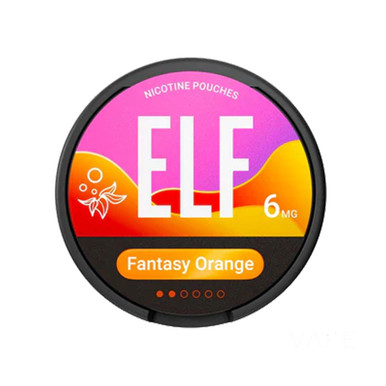
If you already run a rotation, the reorder is also the natural moment to change one line of it. Keeping the mint constant and varying the other can is a common arrangement, because the mint is the dependable slot and the other one is the slot where you are allowed to be disappointed. The Elf Bar pineapple can and the Elf Bar blueberry and raspberry can both cost the same £29.90 as this one, which means rotating the second slot inside the same brand carries no price consequence at all.
The second tin that lives somewhere else
Plenty of people end up with a can at home and a can somewhere else — a desk drawer, a locker, a bag that goes to work every day. That arrangement solves a real problem, which is that the tin you own is no use to you in a building you are not in, and it creates a small one, which is that the away can gets forgotten and then discovered months later in worse condition than the one you have been using. If you run a split like that, the away tin is the one to keep an eye on, and a bag that spends the summer in a warm car boot is the worst possible home for it.
Travel is a related case and the practical points are dull rather than dramatic. A tin is small, sealed and not fragile, so it packs without special handling. The rules about where nicotine products can be bought, carried and used differ from country to country and sometimes from airline to airline, and we are not in a position to advise on any of them. Check the rules for wherever you are going before you pack, because a product page is not a substitute for that and we would be guessing if we tried.
One thing worth not doing
Do not keep the spare in a car. A parked car in warm weather reaches temperatures nothing in a drawer ever sees, and a tin that has been through that repeatedly is not the tin you paid for. The same goes for a windowsill and for the shelf above a radiator. This is a low-maintenance product with exactly two enemies, heat and daylight, and both are easy to avoid.
The number printed on the lid
6mg, 12mg and 20mg are manufacturer declarations about the pouch. They exist so cans can be ranked against each other and so people can find the same figure again next time. They are not doses, not recommendations, and not predictions about anyone's experience. We publish them because they are printed on the product and because our shelves are sorted by them.
| Declared figure | Our price | Position among the figures we publish |
|---|---|---|
| 6mg | £29.90 | Lower end of the range we carry |
| 12mg | £29.90 | Mid-range |
| 20mg | £29.90 | Upper band |
Two observations follow from that table and neither is advice. The first is that one product name here covers three quite different shelf positions, so "I buy Cool Storm" does not identify which can somebody is holding — the figure does. The second is that because the price is flat across all three, nothing in our pricing pushes you toward one figure or another. On plenty of listings the higher number costs more and the money quietly does the choosing. Here it does not.
On comparing figures between brands: we would not lean on it. Each manufacturer declares its own number and we hold no information about how any of them arrives at one. Two cans both printing 20mg have both chosen to print 20mg, and that is the extent of what the match establishes. Within a single brand the numbers are at least set by the same company, which makes the internal ladder the more dependable comparison and the cross-brand one the looser.
How a mint note gets built into a dry pouch
This section is about flavour as a construction problem, described strictly at the level of what a person tastes. We do not publish ingredient lists and nothing below is one. It is a way of reading the mint shelf that makes the names on the lids more useful than they first appear.
Cold and mint are two different things
The most useful idea when comparing mint cans is that the cold impression and the mint impression are separable. A can can read as intensely cold with only a light leafy character behind it, or as strongly herbal with very little cold at all, or as both, or as neither — and all four of those get filed under mint on our shelves. Once you start listening for the two layers separately, cans that seemed interchangeable stop being interchangeable.
The naming conventions across the shelf track this reasonably well, which is why the words on a lid are worth reading properly. Names built on temperature and weather — Clew's cool mint, Denssi Cold Mint, the Nordic Spirit frosty mint can, Klint Avalanche Mint — are signalling that the cold layer leads. Names built on the plant itself, or on a specific mint variety, signal the herbal layer leading. Names built on heat, like Fumi's fiery mint at £27.90, are signalling something different again: a warm-edged character rather than a cold one, which is an unusual direction on this shelf and worth knowing about before it surprises you.
Sweetness is the third axis
Beyond cold and herbal there is a sweetness level, and it moves independently of both. A confectionery-style mint reads sweet and rounded; a drier construction reads sharper and more austere. Two cans with the same cold intensity can sit a long way apart on this axis, and it is often the axis that decides whether somebody finds a mint refreshing or cloying after the third pouch.
This is also where mint cans and fruit cans stop being comparable. A fruit can is being judged on whether it resembles the fruit. A mint can is being judged on a balance of three qualities, none of which is a resemblance to anything in particular. That is why people can dislike most fruit cans and still happily rotate four different mints, and why "I like mint" is a much weaker statement of preference than it sounds.
What a dry format does to any of this
The practical constraint is that flavour in a dry pouch arrives in a curve rather than a plateau. Whatever the construction, the first stretch is the most defined and the taper is steady after that. A can built to lead cold usually keeps something recognisable for longer, because a cold impression is a blunter thing to perceive than a delicate herbal one. A can built on subtlety tends to lose its distinctiveness earlier and end up generic. Neither behaviour is a fault. It is the format, and it is the same on every brand we stock.
Where iced fruit cans fit
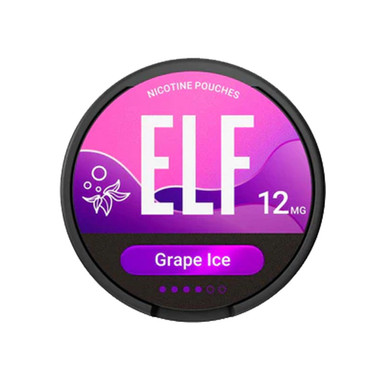
Some of the most interesting cans on our shelves are not mints at all but fruit flavours with a cold layer added. Killa Banana Ice at £33.50, the Pablo blueberry peach ice can at £19.95 and 77 VB Edition Mini Arctic Berry at £39.90 all take a fruit and build the cold layer underneath it. Elf Bar Grape Ice does the same within this brand at the same £29.90. If you like the cold part of a mint can more than the mint part, that construction is worth understanding, because it gives you the layer you like attached to something other than a leaf.
Cans people keep open alongside this one
A rotation is two or three cans open at once, chosen to be different enough from each other to stay noticeable. What people put next to a mint tends to fall into a few groups.
- A second mint, built differently. Running a cold-led and a herbal-led mint side by side is the fastest way to work out which layer you actually respond to. The Denssi cold mint can at £39.90 is a straightforward candidate for the cold-led slot.
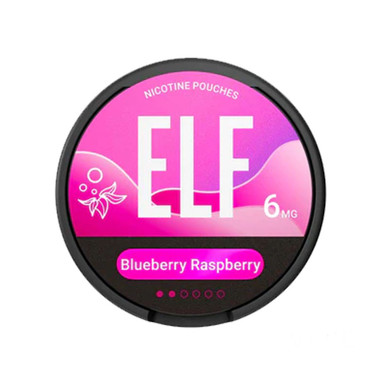
- A fruit, for contrast. The blueberry and raspberry can from this brand keeps the price at £29.90 and goes as far from mint as the range allows without changing the commercial terms of the order.
- An iced fruit, as a middle position. The Elf Bar grape ice can is the one most often paired with a plain mint, because it shares a cold character and differs on everything else.
- A cheap mint as the backstop. The Edge mint can at £14.95 is the least expensive way on our shelves to keep a third tin in the drawer purely so that the drawer is never empty.
- Something sharper. Cuba Ninja Ice Cool at £39.90 sits on the cold side and comes from a brand with a very different house character, which is the point of including it.
- A tropical fruit. Elf Bar Pineapple at £29.90 is the most acidic option in this brand's range and the biggest single change available without leaving the shelf.
None of those is an upgrade on this can and none of them is a replacement. The reason a rotation works is variety, not ranking.
Where it lands on the mint shelf
Our mint category holds 148 listings, which makes it the largest flavour shelf we run. That size is worth stating because it changes how you should browse it: scrolling the whole page is not a realistic way to find anything, and reading the lid names for the cold-versus-herbal signal described above is a far quicker filter than opening listings one at a time.
Within that shelf, this can is one of the mid-priced entries with a wide strength spread, sitting in the same commercial bracket as the Fumi mint at £27.90 and below the £36.90 and £39.90 listings further along. It is also one of a small number of mint cans that belong to a brand range where every listing shares a price, which is a practical convenience rather than a merit.
On the strength side it appears on our Strong shelf, which carries 132 listings. The Elf Bar page is the third shelf it sits on and the shortest of the three, with six cans on it.
The gap between 148 mint listings and 6 Elf Bar listings is the most useful number pairing on this page, because it describes two completely different browsing jobs. A six-can shelf can be read end to end in under a minute and a decision made from the names alone. A 148-can shelf cannot, and anybody trying to will end up choosing whichever can happened to be near the top rather than the one that suited them. The strength shelves sit somewhere between the two: 132 listings under Strong is still a long page, but it is a page where every entry has already been narrowed on the one attribute that is comparable across brands.
What that means for somebody standing on this listing is that the quickest sensible next step depends on what they are unsure about. Unsure about the flavour but happy with the brand and price? Read six names on the brand page. Unsure about the brand but certain about mint? Filter the mint shelf by whatever else you have decided, because reading all of it is not a plan. Unsure about the number? The strength shelves are the only route that sorts on it directly.
Picking a figure, and deciding how many to order
The strength decision here costs nothing either way, so there is no financial argument to be made. What we can give you is placement. The 6mg belongs among our lower published figures and overlaps in practice with the Medium Strength shelf. The 12mg is mid-table. The 20mg sits in the upper band, and the figures that go beyond it live on the Extra Strong shelf, where the Killa banana ice can at £33.50 is one example.
We will not tell you which figure to choose. Recommending a strength as suitable for a person is advice, we are not qualified to give it, and a product page is the wrong place for it to come from in any case. The figures are published so the shelf can be compared. The comparison is yours to make.
On quantity: buy what covers you until the next order and no more. With no cans-per-pack figure in our record, the honest position is that we cannot do the arithmetic for you, and the checkout basket can. Anyone trying to work out value across brands should be reading what each line contains rather than which number is smallest.
Keeping a can in usable condition
Lid on, indoors, out of the sun. That is the entire specification, and it is enough for a tin that will be finished in weeks.
The recognisable failures are heat and air. A can that has cooked on a dashboard tends to come back with a flatter flavour than it left with. A can that has sat with the lid ajar dries further than intended, and a drier pouch behaves differently in place and gives up its flavour sooner. A can that has been loose in a bag with the lid unseated will have pouches sitting out of the ring, which is untidy rather than serious but does make one harder to take out cleanly.
Nothing there makes a can unusable. It simply means the bottom half is a worse version of the top half, which is avoidable for free by using a drawer. Carrying a tin about in a coat or bag is entirely normal; the only habit worth forming is emptying the catch well when you get home rather than when it stops shutting.
Routes back to this page
Three shelves carry this listing, and which one is useful depends on what is already decided. If the brand is settled, the six-can Elf Bar shelf is the shortest route. If you are working by flavour family, the 148-listing mint page is the one, though it needs filtering. If you are sorting by the number on the lid, the Strong listing is where this can appears.
The complete product listing is the top-level route when none of those is settled. The Pablo shelf and the Cuba brand page are the two other ranges most often looked at alongside this one, both of them broad enough to carry mint and fruit lines of their own.
Ordering, delivery and the age check
Our record showed this product in stock when the page was compiled. Stock changes, and the live listing rather than this paragraph is the current answer.
The sale is restricted to buyers aged 18 or over. We may ask for proof of age, and the courier may ask again at the door. A delivery that cannot be verified at handover is not left behind: not with a neighbour, not in a porch, not in a safe place. Send it to an address where somebody 18 or over will be in, and avoid sending it to a workplace where a colleague might sign for it.
Otherwise there is nothing unusual about shipping a tin of this kind. It is small, light and not fragile. Carriers, costs and timescales are handled at checkout and on our delivery pages, because those details change and a product description that quotes them is out of date within a month.
Straight answers to the questions we get
Does "Cool Storm" mean it is stronger than the other Elf Bar cans?
No. It is a flavour name chosen by the manufacturer, not a grading. Every can in this brand's range on our shelves carries the same three declared figures — 6mg, 12mg and 20mg — so the name tells you nothing about the number. If you are comparing cans on that basis, the milligram figure printed on the lid is the field to read, and the name is just how you find the listing again.
Is this a sweet mint or a sharp one?
We do not hold that detail. Our record carries a single flavour tag of mint and no description of where the can sits on the sweetness axis. The name signals that the cold layer is meant to lead, which is a steer rather than a fact. Anything more precise from us would be invented, and a fabricated tasting note is worse than an honest gap.
How many pouches come in a can?
Not something we publish. Our data holds no portion count for this product, and we are not prepared to estimate one. The figure is on the packaging. The same goes for pouch weight and tin dimensions — where the can states something our record does not, the can is the authority and we defer to it rather than guessing.
Why is it the same price at 6mg and 20mg?
That is simply how the listing is priced in our system, with all three variants at £29.90. We do not set that structure and cannot explain the reasoning behind it. The useful consequence is that moving between the three has no effect on your spend, so the figure you pick is decided by you and not nudged by the price.
Is 20mg here comparable to 20mg from a different brand?
We would not assume so. Each manufacturer declares its own number and we do not hold information on how those declarations are arrived at. A matching figure across two brands establishes that both chose to print it, and no more than that. Comparisons made inside one brand's range are sounder, because at least one company set every number in them.
Where is this product made?
We cannot tell you. Country of origin is not a field in our product record, and we do not publish facts we have not verified. Anything printed on the tin is the manufacturer's own statement and is a better source than anything we could piece together.
Can I order different flavours and strengths together?
Yes — each product and each variant is a separate line, so a basket can carry a 6mg of one flavour and a 20mg of another without any complication. People running two or three cans usually order them together, which also handles the delivery window more tidily than ordering one tin at a time.
Once opened, how long will a can last?
We do not publish a figure, and it would depend on storage in any case. The fair observation is that a lidded tin in a cool indoor drawer holds up better than one that has been through a hot car, and that a can left open dries beyond what was intended. Any best-before date is on the packaging. Ours is a note about keeping, not a shelf-life statement.
Which strength should I get?
That is not a question we will answer. Suggesting a figure as suitable for a particular person is advice, and we are a shop with a product record rather than anybody's adviser. We publish the declared numbers and where they sit relative to the other cans we carry. What to do with that is entirely your decision.
How is this different from Elf Bar Grape Ice?
Flavour family, and effectively nothing else. Both are £29.90, both list 6mg, 12mg and 20mg, and both sit on the same brand shelf. This one is tagged mint; Grape Ice is a grape flavour with a cold character, which puts it in the fruit camp with a cold layer rather than in the mint camp. The choice between them costs nothing either way.
Do you know when a sold-out variant will return?
No, and we will not invent a date. Our record holds the current position and nothing about incoming deliveries. The listing itself is the live answer, and if a variant is unavailable the other cans on the Elf Bar range page are the nearest equivalents while you wait.
Are the pouches in this can a large or a small format?
We do not hold a format descriptor for this listing. Some cans on our shelves are explicitly sold as minis and say so in the product name, and this one does not, which is a weak signal rather than a specification. Pouch dimensions are not a field in our record. If the physical size of the portion matters to your choice, the packaging states what is inside and is the only reliable source for it.
Does it need to be kept in a fridge?
No. A cool indoor cupboard or drawer is entirely sufficient, and nothing about this product requires refrigeration. Some people do keep tins in a fridge out of habit or preference, and we have no view on it beyond noting that it is not necessary. What matters is the opposite end: sustained heat and direct sunlight are the two conditions worth keeping a can away from, and an ordinary indoor shelf does that without any effort.
Does it leave a taste or residue afterwards?
We do not hold information on that and are not going to speculate, because anything we said would be a claim about what the product does rather than a description of what it is. The tin, the pouch, the catch well and the shelf around it are what we can describe honestly, and we would rather stop there than guess.
What we are required to say
This product is for adults aged 18 or over who already use nicotine. We do not sell to anyone under 18, and this listing is not offered or described to people who do not currently use nicotine.
Nicotine is an addictive substance.
This is not a licensed medicine and it is not a stop-smoking aid. We make no claim that it helps with anything at all, and nothing written above should be taken as a statement about health in any direction. It is not intended for non-smokers, for anyone who does not already use nicotine, for under-18s, or for anyone pregnant or breastfeeding.
Proof of age may be requested at the point of ordering and again by the courier on delivery, and an order that cannot be verified will not be handed over. Anyone with concerns about nicotine use should speak to a qualified healthcare professional rather than rely on a retail page.
The short version
A £29.90 mint can from a six-listing brand shelf, offered at 6mg, 12mg and 20mg for the same money. The name signals cold rather than leaf and is a manufacturer's name, not a grading. The format is a dry pouch in a lidded tin with a catch well underneath. The portion count, the sweetness level and the country of manufacture are all things we have said we do not hold rather than filled in with something plausible, and everything else here is either on the can or a plain comparison with the cans beside it.
More from Elf Bar
More strong pouches
More mint pouches
Where this sits
Elf Bar Cool Storm Nicotine Pouches appears in these categories. Browse them, or jump to something close.
You might also like