Elf Bar · 6mg–20mg
Read the full guide
Elf Bar Max Polar Mint Nicotine Pouches
£29.90
✔ In stock — ready to ship
100% tobacco-free
Free over £20
Same-day dispatch
Secure checkout
Start with the part that matters before anything else on this page does. This listing showed as out of stock when this page was written. You can read everything below, and it is all accurate, but you cannot presently put the can in a basket. We would rather say that in the first paragraph than let you reach the checkout and find out there. If you came here to buy a cold mint can today, the sections on comparable cans further down are the useful part of this page, and there is no shame in skipping straight to them.
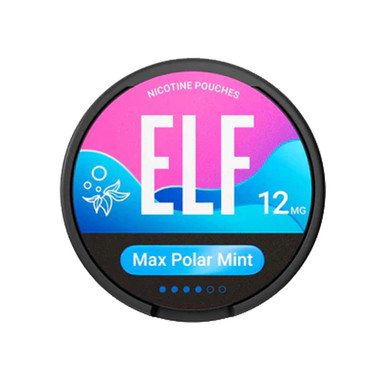
Elf Bar Max Polar Mint Nicotine Pouches is recorded at £29.90 across three declared figures — 6mg, 12mg and 20mg — with no price difference between them. Our catalogue files a single flavour tag, mint. One photograph sits with the entry. Availability, as stated, was showing as nil. Those five things are the whole of the catalogue record, and this page is built from them, from sums done on them, and from what we can see on the rest of our own shelves.
The full guide to Elf Bar Max Polar Mint Nicotine Pouches
4,971 words on how it eats, who it suits, how to serve it and what to put beside it.
Elf Bar Max Polar Mint: the entry, and its current status
What the record does not contain is also worth naming. There is no pack structure against this entry — our catalogue does not say whether £29.90 buys one can or several, and since we will not publish a number we cannot stand behind, we are leaving it as a gap rather than filling it. Nor is there a portion classification, a can count, a dimension or a date. Those live on the packaging.
This is an adult product containing nicotine, sold only to people aged 18 or over who already use nicotine. The full statement has its own section near the bottom.
What "out of stock" means in practice here
It means our system had no units allocated to the entry at the moment this page was generated. It does not mean the product has been withdrawn, and it does not mean it is returning on a particular date, because we do not hold restock dates and are not going to guess at one. The live listing is the authority. If it has come back since, the product page will show it as available and this paragraph will simply be out of date, which is the ordinary fate of stock notes.
The three figures against one price
| Declared figure | Listed price | Availability |
|---|---|---|
| 6mg | £29.90 | Out of stock |
| 12mg | £29.90 | Out of stock |
| 20mg | £29.90 | Out of stock |
Three steps, one price, nothing available. The flat pricing is a genuine feature of the entry rather than an accident, and it holds across the whole of the Elf Bar shelf, which currently runs to six listings. It is worth knowing when the entry comes back, and it is also worth knowing now, because it tells you something about how this brand structures its range that a single out-of-stock page might otherwise obscure.
The format, taken seriously
Since there is nothing to buy on this page today, it is a good place to be thorough about the thing people ask about most and find least written down: what the format actually is to carry, to place and to live with. None of what follows is specific to this can. All of it applies to the mint cans listed further down that you can actually order.
The object in a pocket
A can of this type is a shallow round tin, wider than it is deep, with a lid that lifts clear and presses back on. It is roughly the diameter of a large coin and about the thickness of a short stack of them. It goes in a front jeans pocket, a jacket's inside pocket, a coat pocket, a bag's inner sleeve or a car door bin, and in all of those it is small enough to be forgotten about. It survives being sat on. It does not leak, because there is nothing in it to leak. Full, it barely rattles; half empty, it rattles more, which some people use as an informal gauge of how much is left and others find mildly annoying.
The important consequence of that standardisation is cross-brand: because nearly every can we sell is built to the same broad shape, a routine you develop with one brand transfers to another without adjustment. Swapping between Elf Bar's six listings and something from another maker changes the flavour, the declared figure and the price, but not the handling.
Portion size, and what we will not classify
Pouch portions across the trade are usually described as slim, regular or large, and the distinction is genuine — the physical dimensions differ, and anyone who has used both formats notices immediately. Our record does not classify this entry, so we are not going to assign it to one of those categories. The packaging states it. This is one of several places on this page where the honest answer is that our catalogue is thinner than your question.
What we can say about portion size in general is that it is the single format variable most likely to determine whether a person gets on with a can at all, more so than flavour and considerably more so than the printed figure. A portion that does not sit comfortably will not be redeemed by a good flavour. If you have found one size works for you, staying with it when you change brands is more reliable than matching a milligram number across brands.
How it sits
A pouch is placed under the lip and is meant to stay put without being held, adjusted or moved around. The first time is invariably strange, and the strangeness is about the position rather than the product. Most people find it settles within a minute and then stops registering as an object at all until they think about it. Talking is fine. Drinking is fine, though anything hot is a more noticeable experience than anything cold. A pouch that keeps shifting is usually either badly seated or the wrong portion size, and both of those are discovered by doing rather than by reading.
There is nothing on or about the pouch that tells you anything while it is in place. No indicator, no colour change, no timer. Whatever you know about how long it has been there, you know from the clock or from the flavour fading, and the second of those is a rough instrument.
Getting one out of the can without a performance
The small mechanical skill nobody mentions is the retrieval. Pouches sit packed reasonably tightly, and a full can is harder to take one from than a half-empty one, which is the reverse of what people expect. The technique most settle on is to tilt the can rather than dig in it, so that a single pouch presents itself at the rim. Done properly it is a two-second operation with one hand. Done badly it involves visibly rummaging, which is the part of the routine people who care about discretion tend to notice first.
Cold hands make it harder. So does trying to do it in a pocket, which people attempt and mostly regret. And a can that has been shaken about in a bag all morning packs down differently from one that has sat flat in a drawer, which is a small enough thing not to matter and a real enough thing to notice. None of that is specific to any brand; it is simply what the format is like once the novelty has worn off.
How long people keep one in
The honest range reported across this category runs from about fifteen minutes at the short end to roughly an hour at the long end, with the bulk of people somewhere between twenty and forty minutes. Flavour generally fades well before the point at which anyone takes a pouch out, so the taste is a poor guide to duration and people mostly work on habit. We will describe that pattern because it is descriptive; we are not going to turn it into a recommendation, because how long anybody keeps a pouch in is not a matter for a shop to advise on.
The catch compartment and disposal
The top section of the lid is a separate recess — the catch, or the disposal compartment, depending on who is talking. Lift the outer cap, drop the used pouch into the recess, close it. Its entire purpose is to solve the problem of what to do with a used pouch when there is no bin within reach, and it solves it well.
Two caveats, both practical. We hold no figure for its capacity and would not publish one if we did, since it depends on how damp the pouches going in are. And it is not sealed the way the main body is, so a few days of accumulation will become apparent by smell. Tip it into a bin at the end of the day and the question never arises. Used pouches belong in general waste — not down a drain, not on the pavement. The tin is plastic and goes wherever your local authority says plastic of that sort goes, which varies by council and is not something we can answer for your area.
The flavour named on the lid
Two words are doing the describing. Polar is the cold signal, and it is emphatic as these signals go — the word is chosen to sit at the far end of the cold vocabulary rather than in the middle of it. Mint is the flavour family, and our catalogue's single tag against this entry confirms it without further subdivision. We do not hold a note of whether it is a peppermint or a spearmint reading, and those two are genuinely different in the mouth, so we are not going to pick one on your behalf.
What a can named this way generally presents is cold arriving early and staying late, with the mint character acting more like the vehicle for it than the headline. That is the opposite arrangement from a fruit can with a cold finish, where the fruit leads and the chill closes. The aroma on opening tends to be sharper and less sweet than a fruit can's, and it carries less far across a room.
Max, the third word, is a range name rather than a description of anything, and we are not going to read a claim into it. It identifies which Elf Bar mint listing you are looking at and that is all the work it does.
What the milligram figure is, and what it is not
The number on a can is a quantity declared per pouch by the manufacturer and printed on the packaging. It is a label. This page treats it as a piece of information and does not attach anything to it.
Three consequences follow. Since it is declared per pouch, comparing two cans is only meaningful if you also know both pack structures — and here we do not know this one's. Since brands do not all measure or declare identically, the same printed number from two makers is not guaranteed to describe precisely the same thing. And since the figure has nothing to do with flavour, a 6mg version and a 20mg version of the same entry taste the same as each other. That last point is the one people most often get wrong, and the flat pricing here means nobody is paying extra for the misunderstanding.
The 6–20mg spread on this entry is wide for a single listing. Most entries on our shelves cover two adjacent steps rather than three across that range. It is filed under the Strong shelf, with its hundred and thirty-two listings, on the basis of the entry rather than of each variant, which is why a 6mg option appears there at all. Our Medium Strength shelf holds a hundred and thirty-five, and the Extra Strong shelf takes the upper end. We mention the sorting because a wide ladder always looks slightly odd in a three-way sort and we would rather explain it than have you assume an error.
What else sits at these figures on our shelves
This is the section that earns its place on an out-of-stock page, because the practical question is not "what is this can like" but "what is available that occupies the same position". Taking the cold-mint territory and the 6–20mg span together, here is the landscape on our own shelves, with prices from our own listings.
The cold mint cans, by price
The spread is remarkable and worth seeing laid out, because cold mint is one of the most competitively stocked positions in the whole catalogue and the money involved varies by almost a factor of ten.
- Nordic Spirit Max Frosty Mint at £4.49 sits at the bottom of the range by some distance.
- Edge Mint at £14.95 is the next step up and the cheapest of the mid-priced options.
- Fumi Fiery Mint at £27.90 comes in just under this entry's £29.90.
- Killa Banana Ice at £33.50 is not a mint can, but it belongs in the comparison because it is doing the cold-finish job with a fruit note instead.
- Klint Avalanche Mint at £36.90 names its intensity in the title, as this entry does.
- Clew Cool Mint, Denssi Cold Mint and Cuba Ninja Ice Cool all sit together at £39.90, which is the top of this particular field.
What the price spread actually reflects
Not flavour quality, which is not something we would attempt to rank and not something price reliably indicates in this category. A large part of it is pack structure: a £4.49 listing and a £39.90 listing are very often not selling the same quantity of product, and comparing the shelf price of two entries without knowing what is in each box is the most common mistake made in this category. Where we hold a can count we publish it and do the division; where we do not, as here, we say so and leave the sum undone. That is why we are showing you a price ladder rather than a value ranking.
Reading across from this entry
If what appealed about this listing was specifically the emphatic cold reading, the three £39.90 cans and the Klint entry are the closest in intent, since all four put the cold character in the product name rather than treating it as a finish. If what appealed was the £29.90 price point, the Fumi mint listing at £27.90 is the nearest neighbour and the Edge one at £14.95 is well under. And if the appeal was the wide strength ladder, that is genuinely harder to replace — few entries span 6mg to 20mg — so the honest answer is that no single can on our shelves does that job identically.
The part of the comparison we cannot complete
A proper like-for-like comparison at a given declared figure would require knowing which figures each of those cans is offered in, and then holding the pack structures side by side. We publish the strengths we hold against each listing, so the first half of that is available on the individual product pages. The second half frequently is not, here or elsewhere, and where a can count is missing we say so rather than assuming one. The result is that a strength comparison across brands is always going to be partial, and anyone presenting it as exact is presenting more confidence than the underlying data supports. We would rather hand you an honest, incomplete table than a tidy, invented one.
One more comparison worth making, because it comes from a different direction entirely: Pablo Gold Edition Blueberry Peach Ice at £19.95 and 77 VB Edition Mini Arctic Berry at £39.90 are both fruit-led cans with a cold element attached. They are the alternative to a cold mint rather than a version of it, and if the cold is what you want and the mint is negotiable, they widen the field considerably.
Picking between 6mg, 12mg and 20mg
When it returns, the choice here is made without any help from the price, since all three cost £29.90, and without any help from the flavour, since all three carry the same one. That leaves only the printed figure.
Here is the full extent of what we are able to say about that. The figures are declared per pouch. They are printed by the manufacturer. They do not affect taste. They do not affect the size of the can or the way it handles. Comparing them against figures from a different brand is rougher than the arithmetic looks. And all three are the same product in every respect except that number.
Here is what we will not say. We will not tell you which figure suits you, we will not describe one as a sensible starting point, and we will not frame any of them as appropriate for any person or situation. Those are not retail judgements. If the question genuinely concerns your own circumstances, it belongs with a healthcare professional and not with a shop.
On pack size there is no decision available, because our record holds a single structure for the entry and does not state what it is.
The Elf Bar range as we hold it
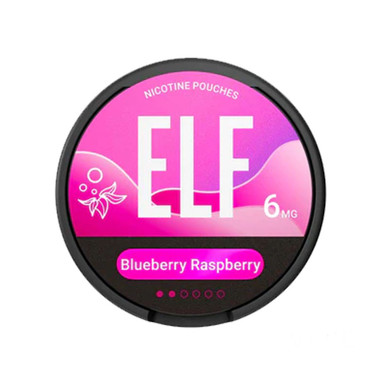
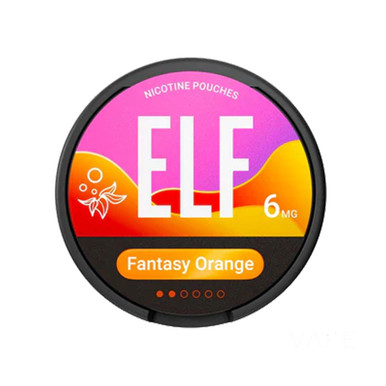
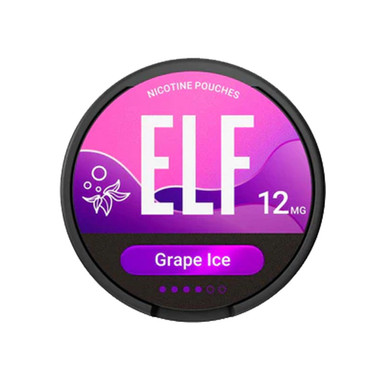
Six listings, all at £29.90, is a small and very tidily priced brand shelf. Beyond this one, the other members are Elf Bar Blueberry Raspberry, Elf Bar Cool Storm, Elf Bar Grape Ice, Elf Bar Pineapple and Elf Bar Fantasi Orange, each at the same figure.
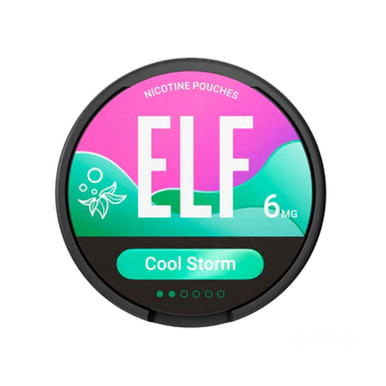
The internal logic is easy to read. Blueberry Raspberry is the berry position, Pineapple the tropical one, Fantasi Orange the citrus one, and Grape Ice the dark, sweet, low-acid fruit with a cold finish. Cool Storm, like this entry, names a cold character without naming a fruit, which makes it the closest relative on the shelf and — importantly today — one you can actually order. If you arrived here wanting a cold Elf Bar can at £29.90 and found nothing to buy, Cool Storm is the first place to look, and it is a one-click move rather than a change of brand, price or pack structure.
What the flat pricing means for a customer is that moving around inside this range costs nothing and risks nothing except the flavour. That is a more comfortable position than most brand shelves offer.
Running a second can alongside
Most people who use a mint can regularly keep something else in rotation, because a single flavour gets less interesting the more consistently you use it. A cold mint is arguably the easiest can to run as a default precisely because it is the least distinctive, but that cuts both ways.
The usual pairing is a fruit can that shares the cold element, so the change is in the flavour family rather than in the character of the finish. The Elf Bar grape can does that at the same £29.90 and inside the same brand. The Pablo Gold Edition blueberry peach can at £19.95 does it for less. A sharper alternative is to pair against a mint from a different maker rather than a different flavour altogether: the Fumi mint listing at £27.90 and the Klint avalanche mint at £36.90 are both mint cans that read differently from each other, and keeping two mints going is a legitimate arrangement that people rarely think to try.
For a cheap third can that lives in a coat and gets forgotten about, the Edge mint listing at £14.95 and the Nordic Spirit frosty mint at £4.49 are the least expensive options we hold in this flavour territory.
Storage, and what actually spoils a can
Cool, dry, dark, stable. A drawer or a cupboard is ideal. The two things that genuinely degrade a can are sustained heat and repeated swings between hot and cold, which between them account for the two worst storage locations people habitually pick: a car in summer and a sunny windowsill.
Close the lid properly. It is a press fit rather than a seal, and an ajar can in a bag loses its aromatic edge over days. A can that tastes flatter than the previous one has almost always been stored poorly rather than made poorly, and that is worth checking before you conclude anything about a batch.
Buying several at once is fine on storage grounds as long as they all sit in the same undramatic conditions. Dating is on the packaging; our catalogue holds no shelf-life information and we are not going to estimate one. And keep cans out of reach of anyone under 18 — that is not a storage tip, it is a condition of having them in the house.
One habit worth adopting if you keep more than one flavour going: store the cans somewhere you can see the lids rather than stacked face down. The tins are near enough identical in shape that telling them apart by feel in a drawer is a losing game, and people regularly open the wrong one. It is a trivial annoyance rather than a problem, but it is the kind of trivial annoyance that a minute of arrangement removes permanently.
Finally, a note on travel. The can survives being carried about — that is what it is designed for — but a bag that spends a day in direct sun is a hot environment regardless of what the weather felt like to you. If a can is going to live in a car, the glovebox is warmer than the boot and both are warmer than a coat pocket. None of that will destroy a can overnight; it is simply the difference between a can that reads as it should in week four and one that does not.
Buying, delivery and age checks
None of this applies today, since the entry is showing no stock, but it applies to every can linked from this page and it will apply to this one if it returns.
The listed price is £29.90 at all three figures, so the basket total does not change with your choice. Age verification is applied at the point of purchase — this is an 18+ product, sold only to adults who already use nicotine — and ID may be requested on delivery. The person taking the parcel should be ready to show it, and a courier who is not satisfied can decline to hand it over.
Orders go out in ordinary parcel packaging. Courier timings change too often to be printed on a product page, so they live in their own part of the site where they can be kept current. If a delivery arrives damaged, short or wrong, quote the order reference to us and we will sort it.
Where to go next on this site
Given the availability position, the navigation matters more than usual here. The mint shelf is the biggest single flavour collection we hold at a hundred and forty-eight listings, and it is the direct substitute for this page. The brand page is the shortest route to the five Elf Bar cans that are not this one. Everything we stock is one long page if you would rather browse than filter.
By declared figure, the Medium, Strong and Extra Strong shelves divide the catalogue three ways. And two brand shelves referenced throughout the comparisons above are worth bookmarking in their own right: the Pablo range and the Cuba range, both of which carry cold-finish cans in the price brackets discussed here.
Questions this page gets
When will it be back in stock?
We do not know and we are not going to invent a date. Our catalogue records availability as a present state, not as a forecast, and restock timing depends on things outside this page. The live listing is the only reliable indicator — if it shows as available, it is. Anyone who tells you a specific week for a specific pouch listing is guessing, and we would rather admit ignorance than guess in public.
Can I order it anyway and wait?
Not through the listing while it shows no stock, no. If you want to be told when something changes, ask us directly rather than relying on this page, which is generated from the catalogue and does not update itself in real time. In the meantime, the cold mint cans listed above are all orderable and cover the same flavour territory at prices from £4.49 to £39.90.
Is Cool Storm the same flavour as this one?
We cannot tell you that, because our record files both under the same broad heading without a finer note, and a shared category is not evidence of a shared recipe. What we can say is that both name a cold character in the title rather than a fruit, both are Elf Bar, and both are £29.90 — which makes it the closest substitute on the brand shelf by every measure we actually hold. Whether the two taste alike is something only the cans can answer.
Does "Max" mean it is stronger?
It is a range name, part of how the manufacturer labels this line, and we are not going to read a meaning into it. The only figures that are declared on this entry are the 6mg, 12mg and 20mg printed on the packaging, and those are the numbers to look at. Several brands use words of that kind in product titles without them carrying a defined meaning across the category.
How many cans is £29.90 buying?
We do not hold that for this entry. The catalogue records a price, three declared figures, one flavour tag and an availability state, and no pack structure. Rather than assume that a price near £30 implies a particular quantity — which would be a guess dressed as information — we are leaving the question open. The packaging answers it.
Is it peppermint or spearmint?
Our record says only "mint", so we cannot narrow it further without inventing a detail. The distinction is a real one and people often have a firm preference between the two, which is exactly why we are not going to assign one on the strength of a product name. If that difference matters to you, the packaging is the place to check, or pick a can elsewhere on the mint shelf that states it.
Why does the 6mg version sit on the Strong shelf?
Because the shelving follows the entry, and this entry reaches 20mg. It is a quirk of sorting a wide ladder into three bands rather than an error. When you are browsing by strength, read the declared figures listed on each entry as well as the shelf it is filed under, and any oddity of this kind explains itself.
Do all the mint cans you sell taste the same?
No, and the price ladder above is a clue that the field is more varied than the shared word suggests. Mint covers a wide territory of readings, from sweet and rounded to dry and severe, and different makers land in different places within it. We describe taste where we can and decline to rank, so the useful approach is to treat "mint" as a starting category rather than as a specification.
Can I use the lid compartment for unused pouches?
You can physically, but the recess is designed for used ones and is not sealed the way the main body is, so anything stored there is in worse conditions than anything stored below. If you want to carry a couple of pouches without the whole can, that is a common enough habit, but the compartment is not the place for it. The main body with the lid shut is.
Does an out-of-stock page mean the product is discontinued?
Not as far as our record goes. Availability and discontinuation are separate states in our system, and this entry is recorded as the former rather than the latter. We keep pages up for entries that are temporarily unavailable precisely because the comparison information stays useful even when the buy button does not work. If a listing were withdrawn permanently, it would eventually stop appearing on the brand shelf rather than sitting on it showing no stock.
Is the price likely to be the same when it returns?
We cannot promise that. The £29.90 recorded here is the price as our catalogue held it when the page was written, and prices across the category move for reasons that have nothing to do with any individual shop. What we can say is that the flat structure across the three figures, and the flat £29.90 across all six listings on this brand shelf, has been the pattern for this range rather than the exception. Whether that survives a restock is not something we know in advance.
Will you recommend one of the alternatives?
We will lay out what each one costs, what flavour territory it occupies and where it sits on our shelves, all of which is above. We will not pick. A recommendation dressed as information is still a recommendation, and on a nicotine product page it is not our place to make one.
The legal part, stated in full
This product is for adults aged 18 or over who already use nicotine. We do not sell it, or anything else on this site, to anyone under 18. Age checks apply at purchase, and ID may be requested on delivery.
Nicotine is an addictive substance. That holds at every declared figure on this entry — 6mg, 12mg and 20mg alike — and for every nicotine product we list.
This product is not a licensed stop-smoking medicine and is not licensed as a medicine of any kind. It is not intended for non-smokers, for anyone who does not already use nicotine, for anyone under 18, or for anyone who is pregnant or breastfeeding. We make no health claim about it in either direction, and nothing written here is medical advice. Anything touching your own circumstances is a question for a healthcare professional rather than for a retailer.
The short version
Elf Bar Max Polar Mint is a £29.90 entry in 6mg, 12mg and 20mg at a single flat price, carrying one mint tag and an emphatically cold name, and it was showing no stock when this page was written. The format is the ordinary round can with a catch compartment in the lid. The cold mint field on our shelves runs from £4.49 to £39.90, the closest same-brand substitute at the same price is the Cool Storm can, and the wide 6–20mg ladder is the one feature of this entry that nothing else replaces neatly. Everything above is either in our catalogue or is an admission that it is not.
More from Elf Bar
More strong pouches
More mint pouches
Where this sits
Elf Bar Max Polar Mint Nicotine Pouches appears in these categories. Browse them, or jump to something close.
You might also like