
Home / All Pouches / Nordic Spirit
Nordic Spirit Nicotine Pouches
This shelf holds every Nordic Spirit listing in our catalogue: 14 products, all priced at £4.49, with declared strengths across the group running from 6mg to 17mg per pouch. All 14 are orderable, so nothing on the grid below is here purely for the record.
The awkward part of this shelf is not stock and it is not price. It is that our own filing separates these 14 listings very poorly — four flavour tags cover the lot, two listings carry none at all, and one pair of names is close enough that no data we hold tells them apart. This page says so directly rather than dressing the gap up. It is written for adults aged 18 or over who already use nicotine.
Energy PouchesLow StrengthMedium StrengthStrongExtra StrongPabloCubaIcebergKilla77ZYNVeloFumiNordic SpiritXQSRushDenssiUBBSSYXClewMaggiePouch NurdzElf BarWhite FoxKlintSiberiaEdgeMintBerryTropicalCitrusWatermelonCherryStrawberryColaMangoGrapeSweetEnergyCoffee
Related categories
Other ways into the range.
Fourteen listings, four tags
Most brand shelves on this site spread across six, eight or nine of our flavour categories. This one uses four. Here is the whole distribution, which takes about ten seconds to read and explains most of what is difficult about browsing this page:
| Flavour tag | Listings carrying it |
|---|---|
| Mint | 7 |
| Berry | 5 |
| Watermelon | 1 |
| Tropical | 1 |
| No tag at all | 2 |
Two listings carry two tags each, which is why those numbers add to more than the twelve tagged cans. The blunt reading is that our flavour axis is close to useless on this particular shelf: filter for mint and you get half of it, filter for berry and you get most of the rest, and the two untagged listings never appear under any filter at all. If you want to compare these 14, this page is the tool, not the filters.
Choosing between listings the catalogue barely separates
This is the substance of the shelf, so it gets the most space. The situation is simple to state and uncomfortable to sit with: several of these listings are, as far as our records are concerned, the same product with a different word on the front.
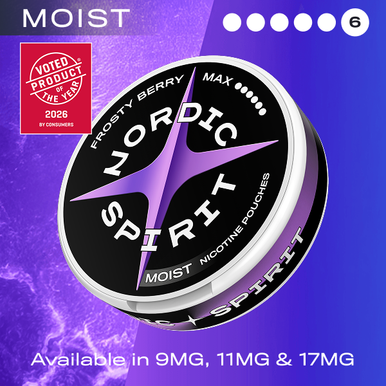
Forest Berries and Max Foresty Berry
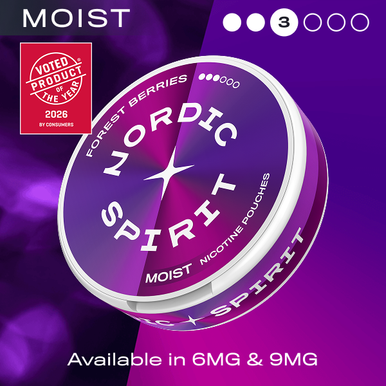
The clearest case. Nordic Spirit Forest Berries and Nordic Spirit Max Foresty Berry are both in stock, both £4.49, and both filed under the single tag berry. The names differ by an adjective and a word.
We do not know what separates them, and we are not going to invent a difference. We could write a confident paragraph about one being rounder and the other darker, and every word of it would be made up. What we actually hold is two names, two prices that are identical, two stock flags that are identical, one shared flavour tag, and a declared milligram figure on each listing. The figures on the two product pages are the only checkable difference our data offers, so if you need a basis for choosing that is not a guess, that is where to look.
This is the kind of thing a shop is tempted to paper over, because "we cannot tell these apart" reads worse than a paragraph of invented tasting notes. It is also the only honest thing on the page. A shopper who buys on the strength of a description we made up has been misled, and a shopper who knows the catalogue does not separate two listings can decide for themselves whether to try both.
The five mint-named listings
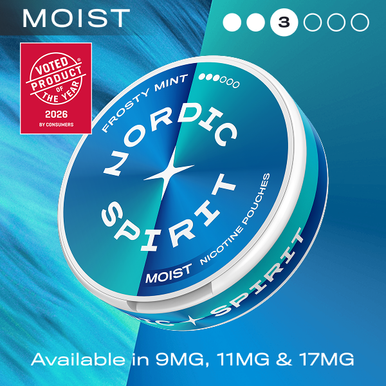
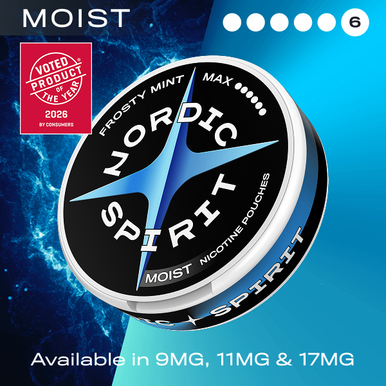
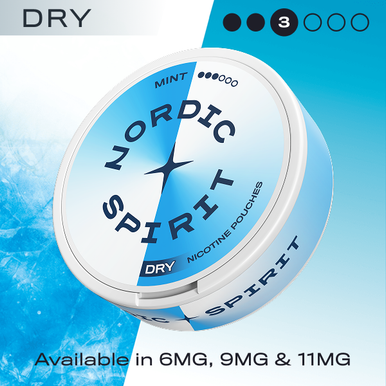
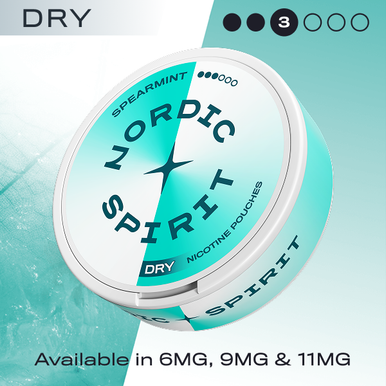
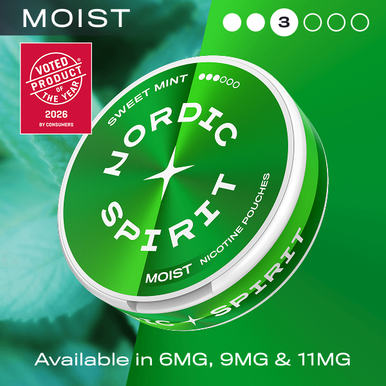
The same problem, spread wider. Nordic Spirit Mint, Spearmint, Frosty Mint, Sweet Mint and Max Frosty Mint all sit at the same price, all carry the single tag mint, and all are available. Our system treats the five as interchangeable.
The names are not interchangeable, and that much is real. Spearmint and peppermint are different plants and a lid saying spearmint is telling you something our tag cannot. "Frosty" and "Sweet" are conventional taste vocabulary. Beyond that — which is to say, beyond what is printed on the packaging — our records are silent, and we will not fill the silence. Note also that Sweet Mint does not appear on our sweet flavour shelf, because it was never tagged that way; the word is in the name and not in the filing.
What is actually checkable
When the catalogue gives you little, it helps to be precise about what it does give. On this shelf, four things are genuinely verifiable per listing, and everything else is either on the packaging or nowhere:
- The name. It comes from the lid, so it is the most faithful description on the page.
- The declared milligram figure, stated on each individual listing. This is the only numeric difference our data records between two otherwise identical entries.
- The price, which on this shelf is £4.49 across the board and therefore separates nothing.
- The stock flag, which on this shelf is positive across the board and therefore also separates nothing.
That leaves the name and the number. If two listings share a tag, share a price and share a stock position, the useful question is whether their declared figures differ — and if they do not, then as far as anything we publish is concerned you are choosing between two words. Some shoppers buy both and decide for themselves. That is a reasonable response to a badly separated list, and it is the only suggestion this section makes.
The two listings no filter will find
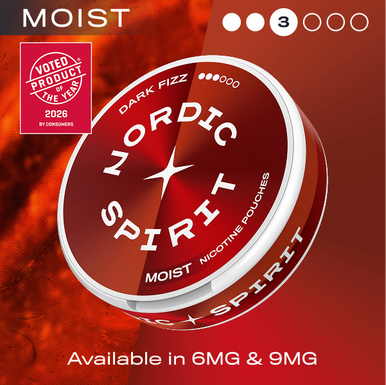
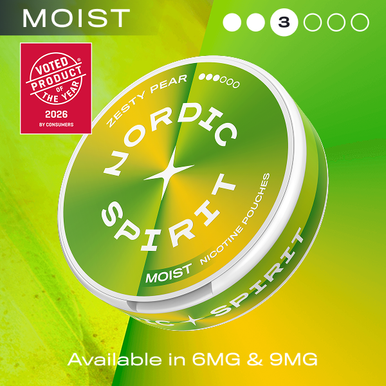
Nordic Spirit Dark Fizz and Zesty Pear carry no flavour tag at all. Both are in stock. We have no shelf that fits either of them and nobody was willing to file them somewhere they do not belong, so neither will ever appear in a flavour filter. They are reachable from this brand shelf, from a search on the name, or by working through the full catalogue listing, and by no other route. If you browse by tag, these two are exactly what this page exists to put in front of you.
The word "Max" on two of these lids
Two listings here carry "Max" in the name. It is worth being exact about what that is, because shoppers reasonably read a word like that as a position on a scale.
It is naming. It is a word the manufacturer has put on a product, in the same way "Frosty" and "Zesty" are words the manufacturer has put on products. It is not a tier in our catalogue, it is not a rung on anything, and it does not appear in our filing in any form. We do not stock a Max category, we do not sort by it, and we will not describe one listing as the upgraded version of another.
If the practical question behind the word is what the two Max listings declare, the answer is on the two product pages, where each states its own figure. Read both, read the figure on whatever you are comparing them against, and decide on numbers. We cannot advise which strength suits any individual — we do not know what any reader currently uses, and that judgement is not one a shop is qualified to make for a person.
"Nordic" is part of a brand name
One more piece of vocabulary worth disarming. The word at the front of this brand is part of a name. It is not a statement about where anything is made, and nothing on this page should be read as one.
Our records hold no manufacturing or origin information for any listing on this shelf, and we do not publish any. We are not going to dress the page in geography we cannot support, and we are not going to imply a place of origin in order to make a shelf feel more considered than the data behind it. Where a brand name contains a word that sounds like a claim, treat it as a name until something on the packaging says otherwise.
What the 14 listings share, and where they diverge
Having spent most of this page on what the catalogue fails to separate, here is the complete picture of what it does hold — first the constants, then the variables.
Constant across the whole shelf
- Price. £4.49 on every listing, so price carries no information within this page.
- Availability. All 14 orderable at the time of writing, which is unusual on this site and makes the grid a buying list rather than a record.
- Brand. A listing appears here for one mechanical reason: the brand field on its record reads Nordic Spirit. No curation is involved.
- Missing can counts. Not one of the 14 listings records how many pouches a can holds.
Variable between listings
- The name, which is the most informative thing on the shelf.
- The declared milligram figure, which spans 6mg to 17mg across the group and is stated individually on each page.
- The flavour tag, which takes one of four values, or none.
Three of those four constants are good news for a shopper: one price, full availability and a clear inclusion rule mean fewer things to check. The fourth is not. Because no listing on this shelf records a can count, there is no way to derive a cost per pouch from anything we publish here, and a comparison against the Fumi shelf at £27.90 — where every listing does record a count — cannot be made on equal terms. The number printed on the packaging is the only reliable source, and our record is not it. The Velo shelf is in the same position, with the field empty across all of its listings too.
Declared figures and what the strength shelves do with them
Across this shelf the declared strengths run from 6mg to 17mg per pouch. That is a group range describing 14 different products; it is not the figure for any one of them, and the individual listing is where the real number is.
Our strength shelves file on that declared figure and nothing else: low up to about 6mg, medium from roughly 7mg to 14mg, strong from 15mg to 30mg, and extra strong above 30mg. This shelf therefore has listings sitting at the bottom of the site's range and listings crossing into the strong band, with the medium shelf holding the middle of it. Nothing here reaches the extra strong shelf, whose 98 listings belong to other brands, and that absence carries no meaning at all.
None of this is guidance. We will not present the range as a ladder with a first rung and a last one, we will not call any figure a beginning or a destination, and we do not think a larger number makes a better purchase. The bands exist because sorting several hundred listings from two dozen brands requires one shared axis, and the declared figure is the only measure that works across all of them.
Where this shelf sits in the catalogue
The site is organised on three axes — brand, flavour and declared strength — and this page is the brand axis. At 14 listings it is the smallest of the brand shelves linked from here. Pablo runs to 56, Cuba to 47 and Iceberg to 40; Killa holds 31 and the 77 shelf 29, with ZYN at 22 and Fumi at 16.
Size matters in one practical way. On a shelf this small, with tagging this coarse, the flavour axis will not narrow anything for you — but on the bigger shelves it will, because there are simply more listings spread over more tags. So if a specific flavour family is the priority and the brand is not, the sensible move is to leave this page. The mint shelf gathers 148 listings from every brand we stock, the berry shelf 76, and the tropical shelf 58, and each of them will give you far more to compare than seven, five and one.
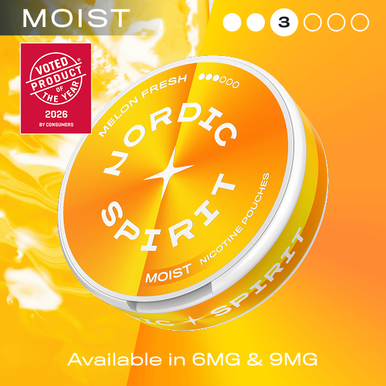
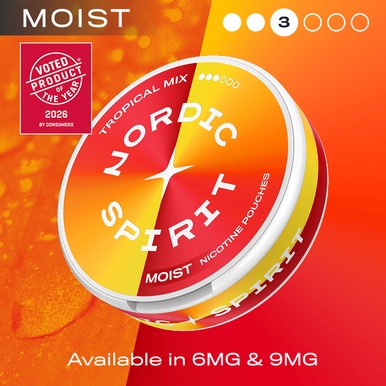
Worth naming the one genuinely comparable listing on this shelf while we are here: Melon Fresh is the only watermelon-tagged can here and Tropical Mix the only tropical one, so in both cases the brand shelf offers you a choice of exactly one. The rest of the range on those tags lives elsewhere. If the site's filing vocabulary is unfamiliar, our guide to what a pouch is explains the format and the categories with no brand detail attached.
Ordering, stock and age verification
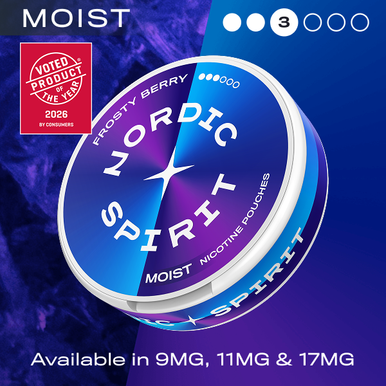
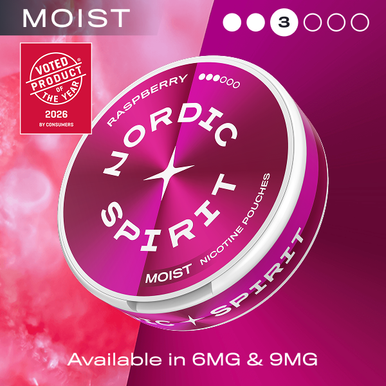
Order from the individual listing rather than from this shelf, because the declared strength and the current stock flag shown there belong to that specific can. Blueberry, Raspberry and Frosty Berry are three more berry-tagged listings in stock at the time of writing, and each states its own figure on its own page rather than inheriting the group range quoted above.
Stock flags are taken from our records and can trail reality by a short period. A shelf that is completely available today may not be tomorrow, so the listing is the thing to trust. If something is ordered and turns out to be unavailable, we will contact you rather than substituting a listing we consider close, because on products filed by declared strength that substitution is not ours to make on a customer's behalf.
We sell to adults only. Age verification applies at checkout and ID may be requested on delivery; where age cannot be confirmed at the door, the order is not handed over. For keeping a can in good condition: closed, dry, out of direct sun, lid pressed back on after each use. That is storage housekeeping and implies nothing further.
Age restriction and the legal position
Everything on this shelf is age-restricted and sold to adults aged 18 or over who already use nicotine. Nicotine is an addictive substance. Nothing on this page is addressed to anyone outside that group, and nothing here is an encouragement to anyone to begin.
These products are not a licensed stop-smoking medicine and are not intended for non-smokers, non-nicotine-users, under-18s, or anyone pregnant or breastfeeding. We are a retailer. We give no medical advice, make no claim about wellbeing in any direction, and cannot tell any individual which listing or which declared figure is right for them.
Frequently asked questions
What is the difference between Forest Berries and Max Foresty Berry?
We do not know, and we are not going to invent one. The two listings share a price, share a stock position and share the single flavour tag berry, so our records separate them by name alone. The declared milligram figure on each product page is the only checkable difference our data offers, so compare those two numbers if you need a basis that is not a guess. Some shoppers faced with this simply buy both and decide for themselves.
Does Max mean a stronger pouch?
It is a word in a product name, not a tier in our catalogue. We do not stock a Max category, we do not sort by it, and we will not describe one listing as an upgraded version of another. If the question behind the word is what a listing declares, that figure is printed on its own product page and on the packaging. Read the number rather than the adjective, and treat our strength shelves as sorting rather than ranking.
Does the brand name tell me where these are made?
No. It is part of a name and nothing more. Our records hold no manufacturing or origin information for any listing on this shelf, and we publish none. We are not going to dress a page in geography we cannot support just because a brand name contains a word that sounds like a place. Where a lid or a pack states something about origin, that is the source to trust; our catalogue simply does not carry the field.
How many of these 14 listings can I order?
All of them, at the time of writing. That is unusual on this site, where plenty of brand pages carry a substantial unavailable share, and it makes this grid a buying list rather than a catalogue record. Stock flags come from our records and can trail reality briefly, so the flag on an individual listing stays the authoritative one. Nothing on this page is linked with an out-of-stock warning because nothing currently needs one.
Why do so few flavour tags cover this shelf?
Because our tag vocabulary is small and this range does not spread across it. Four tags cover the 14 listings: mint on seven, berry on five, watermelon on one and tropical on one, with two listings carrying nothing. Most brand shelves of this size touch six or more categories. The practical effect is that filtering by flavour will not narrow this shelf usefully — the page itself is the better tool, and the listing titles carry more information than the tags do.
Which of the five mint listings should I pick?
Our catalogue cannot separate them, so we will not pretend to. All five share a price, a stock position and the single tag mint. What is real is on the lids: spearmint and peppermint are different plants, and words like Frosty and Sweet are ordinary taste vocabulary rather than anything we can measure. The declared figures on the individual pages are the one numeric difference our data records, so compare those and treat the adjectives as names.
Which listings will a flavour filter never show me?
Dark Fizz and Zesty Pear. Neither carries a flavour tag, because no tag in our small vocabulary fits and nobody was prepared to file them somewhere they do not belong. Both are in stock. They can be reached from this brand shelf, from a search on their names, or by working through the full catalogue, and by no other route. If you normally browse by tag, those are the two listings you would otherwise never encounter.
How many pouches are in a can?
Our records do not say, and that applies to all 14 listings here rather than a few of them. We have not estimated, because an invented number would sit in the same table as the real ones and look just as authoritative. The count printed on the packaging is the reliable figure. It is the one field whose absence has a real cost: without it, no price per pouch can be worked out from anything we publish on this shelf.
Is £4.49 cheap compared with your other shelves?
We cannot say, and the missing can counts are the reason. Without a pouch count there is no per-unit arithmetic to do, so setting £4.49 against a shelf listed at £27.90 compares prices for units of unknown size. Within this shelf the question does not arise at all, since every listing carries the same figure — which means price separates nothing here and you can decide entirely on name, declared strength or tag.
Which strength here is right for me?
That is not a question we can answer. We do not know what any reader currently uses, and choosing a strength for an individual is not something a shop is qualified to do. The arithmetic is what we have: declared figures across this shelf run from 6mg to 17mg per pouch, and each listing states its own on its own page. Compare those against whatever you already buy, and read our strength shelves as a sorting tool, never as a ranking.
Where should I look if this shelf is too narrow?
If the flavour family matters more than the brand, leave this page — the flavour shelves gather every brand we stock and are far wider, with mint at 148 listings, berry at 76 and tropical at 58. If you want a bigger brand shelf, Pablo at 56, Cuba at 47 and Iceberg at 40 are the largest we run. If the terminology on the grid is unfamiliar, the pouch guide covers the format and the filing conventions without any brand attached.