Home / Medium Strength / Nordic Spirit Melon Fresh Nicotine Pouches
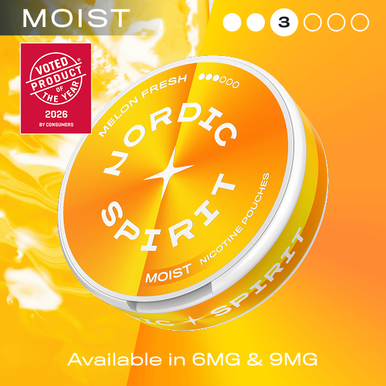
Nordic Spirit · 6mg–9mg
Read the full guide
Nordic Spirit Melon Fresh Nicotine Pouches
£4.49
✔ In stock — ready to ship
100% tobacco-free
Free over £20
Same-day dispatch
Secure checkout
This is Nordic Spirit Melon Fresh Nicotine Pouches at £4.49. Two declared strengths are listed against it, 6mg and 9mg, and both variants are the same £4.49 — the figure on the lid does not change what you pay. Our catalogue carries two flavour tags for this can, mint and watermelon. It is in stock at the time of writing, and there is one photograph on the listing.
That is the whole of our factual record. This page is built out of three materials only: a description of the physical can, comparisons with other cans that are genuinely on our shelves, and honest notes about the things our data does not contain. There are several of the last kind, and we have left them visible rather than smoothing them over.
The full guide to Nordic Spirit Melon Fresh Nicotine Pouches
4,986 words on how it eats, who it suits, how to serve it and what to put beside it.
What this listing holds
One note on the brand name before we go further. "Nordic" is a word in a brand name and carries no information about where this product or anything in it was made. We hold no country-of-origin data for anything we sell and we make no origin claims on any page. Read the name as a name.
And the standing point: this is an adult nicotine product for over-18s who already use nicotine. The required wording has its own section at the bottom.
The can, considered as an object
Most product copy treats the container as packaging and moves on. It is worth more attention than that, because the can is the part of the purchase you handle every day, and the differences between one maker's tin and another's are the differences you actually notice.
The lid, and the way it comes off
This is a shallow round tin with a lift-off lid. It is not a screw thread and it is not a hinge. The lid sits down over the rim with a friction fit, comes off with a light pull, and presses back on with a light push. A well-seated lid gives a small dull click as the rim goes home; if you are not getting that, something is in the way.
The two practical consequences are worth saying out loud. The first is that it can be opened one-handed with a thumb under the rim once you are used to it, which is the reason the format works at all for people carrying a can around. The second is that a friction lid opens if it is squeezed hard enough in the wrong place — a tight trouser pocket sat on for an hour, for instance. This is not a fault; it is what a press-fit lid does.
The top of the lid carries the brand and the flavour name, and the declared figure is printed where you can read it without opening anything. That detail matters more than it sounds if you keep two cans in the house at 6mg and 9mg, because the lid is the only surface you actually look at when you pick one up.
The catch compartment
Inside the lid is a second, shallower chamber, separated from the main body where the unused pouches sit. This is the catch compartment, and its job is to hold used pouches until you are somewhere with a bin.
It is a simple idea and it works, with two caveats. It has a finite capacity, which is smaller than people assume — a handful, not a day's worth for a heavy user. And it wants emptying before it is full rather than after, because the first sign of a full compartment is a lid that no longer seats flat, and the second sign is the lid coming off in a bag. If a can of yours has started to feel badly behaved, the compartment is the first thing to check.
Used pouches go into general household waste when you empty it. Not into a sink, not into a toilet, not out of a window. The tin itself is plastic; whether your council takes that particular plastic at the kerbside varies by authority and we cannot answer it for your address.
The portion count, which we do not have
Here is a gap we are not going to paper over. Our product data holds no pouch count for this can. Not an estimate, not a range. The field simply is not populated, for this listing and for the rest of the Nordic Spirit line.
The printed can states its own count, and that is the number to trust. We would rather write this awkward paragraph than reproduce a figure we have seen quoted on other sites and cannot verify from our own records, because a wrong count is the sort of error that gets copied onwards indefinitely once it is published.
The same goes for the pouch dimensions and the format designation. We do not hold whether this is a slim pouch or a regular one, so we do not state it. What is reliably true, and worth knowing, is that every pouch in a can is identical to every other, so the first one tells you what the rest are like.
The body of the tin, and how the pouches lie
Under the catch compartment is the main body, and the pouches sit in it laid flat in a ring around the inside wall with the middle left open. That arrangement is close to universal across the category and it exists for a practical reason: a ring keeps every pouch reachable with one finger, where a stacked pile would mean digging. The open centre is also why a can rattles slightly when it is half empty and does not when it is full.
The base is flat and unmarked in the main, with the manufacturer's printing carried on the outer wall and the lid. There is no window, so you cannot judge how much is left without opening it — the weight in the hand is the only guide, and it is a poor one. People generally discover a can is nearly finished at the moment they want a pouch from it, which is the practical argument for keeping a second tin somewhere rather than a single one.
What actually fits in a pocket
A can of this type is roughly the diameter of a small jar lid and a centimetre or so deep. It goes in a coat pocket without thinking about it, in a jeans pocket with mild awareness that you are sitting on a press-fit lid, and in any bag at all. It is the right shape to disappear into the bottom of a rucksack and stay there, which is the most common way people end up with three half-used cans.
Two cans stack, and a stack of two in a coat pocket is stable enough. Beyond that they slide. We do not sell or supply a case or holder of any kind and do not hold any such item in the catalogue, so this is simply a description of how the tins behave rather than a lead-in to an accessory.
Melon, mint, and what the name does not say
The flavour name on this listing is Melon Fresh. The flavour tags in our catalogue are mint and watermelon. Those two descriptions do not line up neatly, and it is worth being exact about the mismatch rather than writing over it.
The name says "melon", which is a family rather than a fruit — honeydew, cantaloupe, galia and watermelon are all melons and none of them tastes much like the others. Honeydew is soft, sweet and faintly floral. Watermelon is lighter, waterier and more obviously sugary. Our tag says specifically watermelon, which is narrower than the name on the can. We hold that tag because it is what our catalogue records, but the manufacturer did not print the word watermelon on the lid, and we are not going to pretend our shelving tag is a statement from the maker.
The name also says "Fresh", not "Mint" — yet mint is the other tag we hold. "Fresh" is a conventional signal for a cooling character in this category, and a mint tag alongside a fruit is the usual way a fruit-and-cool combination gets shelved. So the tag is consistent with what the name is gesturing at. It is still an inference rather than a printed statement, and you should read it as one.
What that leaves, described as taste and aroma only: a melon character, light and sweet in the way melon flavourings generally are, with a cool mint note sitting alongside it rather than on top of it. In a fruit-and-mint pouch the mint usually functions as the edge that keeps the fruit from reading as flat, and the fruit is what you notice first. On the aroma, an unopened can gives you nothing; an open one gives you the melon in the air above the pouches, briefly, and it goes when the lid goes back on.
There is a further point about how a two-part flavour behaves that is worth setting down, because it is the practical difference between a fruit can and a fruit-and-cool can. A single-note flavour tends to fade evenly — it is there, it is thinner, it is gone. A pairing tends to come apart instead, with one element outlasting the other. In fruit-and-mint combinations the fruit is generally the first to thin, because a fruit character is the more delicate of the two, and what is left at the end reads as a plain cool note with the melon behind it as a memory rather than a taste. That is a description of how the combination is constructed, not a claim about this specific can, and it is the sort of thing you will register yourself within the first pouch.
We have not run a tasting panel and there is no scoring scale behind any of this. Where our description is inference from a flavour name and a shelving tag, we have said so. There is no cooling index, no sweetness rating and no intensity number attached to any pouch in this category, and anything presented as one somewhere else is an opinion wearing a number's clothes.
The pouch, once it is out of the tin
A pouch goes in the mouth, between the lip and the gum. Most people place it under the top lip; under the bottom lip is equally ordinary and people settle into one by habit. It is not chewed and it is not swallowed. It stays where you put it, held by the lip and the shape of the gum line, and it can be shifted across with the tongue if it does not sit well in one spot. If it is uncomfortable wherever you put it, the sensible thing is to take it out — nothing about the format requires anyone to persist.
How long people keep one in varies far too widely for an average to be useful. A few minutes at one end, most of an hour at the other. The usual reason for taking one out is that the flavour has gone, which in a fruit-and-mint can tends to happen in two stages: the fruit thins out first and the cool note lingers a little behind it. We do not set a time, we do not recommend one, and we hold no manufacturer usage guidance in our data — the can prints its own and that is what to follow.
6mg and 9mg on one listing
Two declared figures sit behind this page, and both are £4.49. The declared figure is the nicotine content the manufacturer states per pouch and prints on the packaging. It is label information. We reproduce it from our product record and we do not interpret it.
Both figures put this can on the Medium Strength shelf, which currently holds 135 listings. That shelf sits alongside the Strong shelf and the Extra Strong shelf, and those three names are our own navigation labels — a way of grouping cans by declared figure so the catalogue can be browsed. They are not grades, not tiers, and not recommendations.
One thing that catches people comparing across makers: each manufacturer sets and prints its own declared figure, and a number on one brand's can is not automatically equivalent to the same number on another's. Both are label statements from their respective makers. Treating them as interchangeable reads more into a printed figure than a printed figure can carry.
We cannot advise which of the two figures on this listing suits anyone. Not on the basis of anything you could tell us, and not by any criterion at all. It is not a judgement a retailer is qualified or permitted to make, and we will not imply one by calling one figure a place to start and the other a place to arrive at. They are two numbers at the same price.
Changing cans: what moves and what stays put
Almost nobody stays on one can indefinitely. People rotate — between flavours, between makers, sometimes between declared figures. This section sets out what genuinely differs when you do, because the real differences are narrower than a shelf of forty brands suggests.
The flavour, which is the whole point
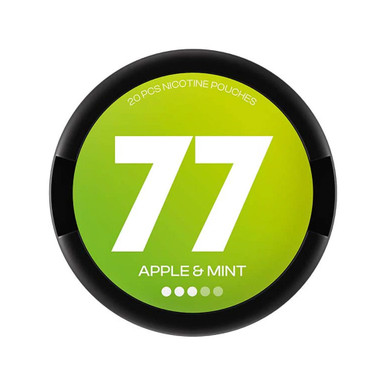
This is where the range actually spreads. Stay within watermelon and you can move between 77 Watermelon Ice at £39.90, Velo Watermelon Ice at £4.19, ZYN Watermelon Mint at £19.99 and Fumi Watermelon Mint at £27.90 — four makers' readings of the same fruit, two of them pairing it with mint exactly as this can does. All four are in stock. That is a genuine spread of interpretations and the only way to find out how they differ is to open them.
The can and the pouch, which differ more than people expect
Tins vary in diameter and depth between makers, and pouches vary in size and in how much material they carry. A slim pouch and a fuller one are noticeably different objects to hold in the mouth even at the same declared figure. Since we do not hold dimensions or format designations for any listing, we cannot tell you in advance which is which — this is a real difference we are simply not able to document.
The price, which tells you less than it appears to
Run your eye down the figures in this page: £4.49 here, £4.19 for the Velo can, £39.90 for two of the others, £29.90 for SYX Cool Mint, £34.90 for White Fox Double Mint, £19.95 for UBBS Cola Ice. Those gaps look dramatic and they are not what they seem.
Our data does not record how many cans a listing covers. The cans-per-pack field is empty for this product and for the others. A £39.90 listing may be a multi-can roll and a £4.49 listing may be a single tin — we are not going to assert either, because we do not hold it. So: a price difference between two listings is not a per-can price difference until you have checked what each listing actually contains. The individual product page and its photograph are where to settle that, and asking us beats guessing.
What does not change at all
The format does not. Lip, gum, no chewing, no swallowing, bin afterwards — that is true of every listing across the whole catalogue and it does not alter with the brand on the lid. The legal position does not change either: every product here is 18+ and every order goes through the same check. And the limits of what we can tell you do not change. Name, brand, price, declared figures, flavour tags, stock — those we have. How it will taste to you, how long you will keep one in, which one you should buy — those we do not, for any can on any shelf.
A can that files on two flavour shelves
Because this listing carries two tags, it appears in two flavour categories, and it is one of the smaller number of cans that do. It sits on the mint shelf, which at 148 listings is the largest flavour category we run, and on the watermelon shelf, which at 23 is one of the smaller ones.
That second number is the more useful of the two if you are browsing. A 148-listing shelf is a lot to work through; a 23-listing one can be read in a sitting. If watermelon is the part of this can you care about, the 23 cans tagged watermelon is the efficient route into the rest of the catalogue, and the mint shelf is the one to use only when you already know which maker you are looking for.
The Nordic Spirit line as we list it
We carry fourteen Nordic Spirit products, and every one we hold a price for is £4.49. A flat price across a brand's whole range is not common, and it has a practical effect: choosing between them is only ever a flavour decision and a declared-figure decision, never a budget one.
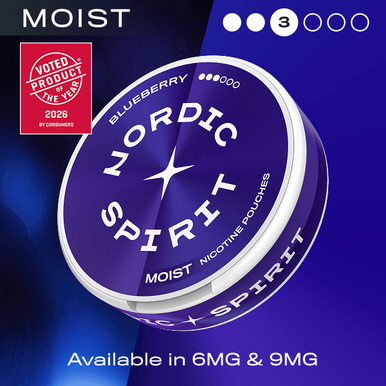
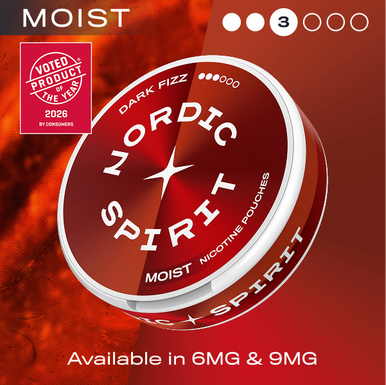
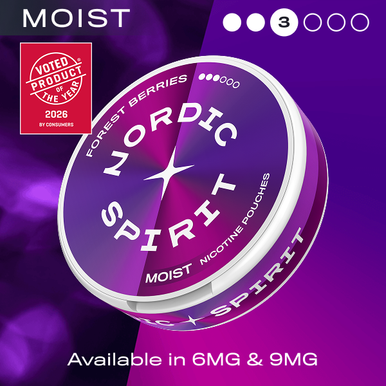
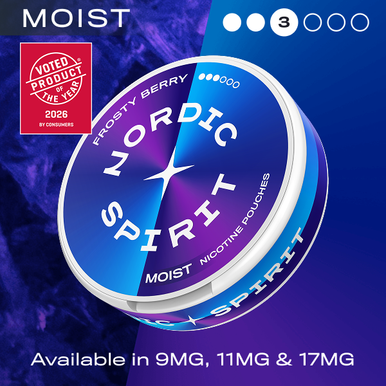
On the fruit side sit the Blueberry can, Forest Berries, Frosty Berry and Max Foresty Berry — the manufacturer's spelling on that last one is "Foresty" and we reproduce it as given rather than tidying it, because a corrected product name is a name that no longer matches the box. On the mint side is Frosty Mint among others. And then there is Dark Fizz, which belongs to neither family and does not carry a flavour tag we can put a name to. All are in stock and all are £4.49.
Melon Fresh is one of the few in the line with two tags rather than one, which is worth noting because it is the thing that distinguishes it structurally from most of its siblings rather than just by flavour. The brand page shows all fourteen together.
Second cans that work alongside this
Running two cans at once is common, and the reason is mundane: a single flavour used continuously stops registering clearly, and alternating keeps both readable. There is no technique to it beyond owning two tins.
If you want a second can in the same fruit, the Velo watermelon listing at £4.19 is the closest thing on our shelves to a like-for-like price comparison with this one, both being at the lower end of what we list. If you want the same fruit handled differently, the ZYN watermelon and mint can at £19.99 pairs the two the same way this one does and will read differently anyway.
For a deliberate contrast, a plain mint is the usual second can: Edge Spearmint at £14.95, Klint Arctic Mint at £36.90, the SYX cool mint at £29.90 or the White Fox double mint at £34.90. All in stock. For something further away again, the UBBS cola can at £19.95 and Pablo Silver Edition Blueberry Peach Ice at £39.90 are about as far from a melon as the shelf goes. The pack-size caveat applies to every one of those prices.
Simplest of all is staying inside the brand at £4.49, where the Forest Berries can is the least complicated thing to put beside a melon.
Keeping an opened can in good order
The routine is short. Put the lid back on properly each time — the pouches are exposed to air whenever the tin is open, and an open can left open is the single biggest reason a can tastes different by the end than it did at the start.
Keep it cool and out of direct sun. A drawer, a shelf, a bag. Not a dashboard in summer, not a windowsill, not the shelf above a radiator. Heat is the second thing that changes a can over time.
Whether to keep a can in the fridge is a question we get regularly and cannot settle. Some people do. We do not hold manufacturer storage instructions in our data, so we are not going to issue an instruction of our own — read what the can says. What is not in question is that a tin kept shut, cool and dry will be in better condition at the end than one that is not.
And keep it away from children and from anyone it is not meant for. That is less storage advice than plain sense with an age-restricted product, and it applies as much to a tin on a kitchen worktop as to one in a cupboard.
Choosing between the two figures, and the quantity question
The choice on this listing is narrow: 6mg or 9mg, both £4.49. There is no price consequence either way, so the decision is purely about which printed figure you want. We are not going to help you make it, and we would be sceptical of any retailer who offered to.
On quantity, we hold no cans-per-pack value for this product. We will not tell you it is a single can and we will not tell you it is a roll, because our record does not say. The listing photograph and the product page as it appears at checkout are where to confirm what you are buying. If that leaves it ambiguous, ask before ordering rather than after.
If you want to browse by declared figure instead of by flavour, the 135 cans on the medium shelf is where cans in this band sit, and the two shelves above it are linked earlier on this page.
How an order is placed and checked
The mechanics are the same as for anything else here. The can goes into the basket at £4.49 with your chosen figure, and the order is subject to age verification, because every product we sell is age-restricted. That check is not something we waive for small orders or for regular customers.
You must be 18 or over to order. ID may be requested on delivery, and the courier may refuse to hand the parcel over if the check cannot be completed. That is the courier doing their job, not a fault with the order.
Stock moves. Everything linked from this page was in stock when it was written, but availability across a catalogue this size changes daily and the live listing is always the accurate one. A description page is a snapshot.
Mixed orders are ordinary. Different brands, different flavours and different declared figures go in one basket and ship together, and the age check applies to the order as a whole rather than line by line.
Where this page sits
Four routes lead here. By maker, through the Nordic Spirit brand page. By declared figure, through the medium shelf. By flavour, through either of the two categories this can files under, which is the advantage of a two-tag listing. Or from the top, through everything we stock.
If you are browsing by maker rather than by fruit, the Pablo brand page and the Cuba brand page are two of the deeper single-brand shelves on the site and give a fair sense of how widely one maker's range can vary within itself — useful context when a brand like Nordic Spirit holds its price flat across fourteen listings and another does not.
Questions we get about Melon Fresh
Is it honeydew melon or watermelon?
The can says "melon", which does not specify. Our catalogue tags it watermelon. Those are two different sources saying two different levels of detail, and we are not going to resolve the difference by guessing. If the specific melon matters to you, the can's own printed description is the authority, not our shelving tag. We have flagged the mismatch rather than quietly picking one.
Why is there a mint tag when the name says Fresh?
Because "Fresh" conventionally signals a cool note in this category, and our catalogue records that note as a mint tag so the can files correctly for browsing. The manufacturer did not print the word mint on the lid. The tag is our shelving decision, consistent with the name but not a quotation from it, and it is why this listing appears on both the mint and watermelon shelves.
How many pouches are in a can?
We do not hold that figure. It is not in our product data for this can or for any other Nordic Spirit listing, so we are not going to state one. The printed can carries its own count and that is the number to rely on. Publishing an unverified count would be worse than leaving the gap, because counts copied between sites are how a wrong number becomes permanent.
Is the 9mg dearer than the 6mg?
No. Both variants are £4.49, and every Nordic Spirit listing we hold a price for is the same. The declared figure has no effect on price within this brand. That is not true across the catalogue generally, where prices range from a little over £4 to around £40, but within this brand the price is flat.
Which of the two should I buy?
We cannot tell you, and we are not going to imply an answer. Recommending a nicotine strength for an individual person is not something a retailer is qualified or permitted to do. The figures are printed on the listing so that you can read them and decide. Anyone offering you a strength recommendation off the back of a short questionnaire is doing something we are not prepared to do.
Does "Nordic" mean it comes from Scandinavia?
It means the brand is called Nordic Spirit. We hold no country-of-origin information for this or any other product on the site, so we state none. Reading a manufacturing location out of a brand name is a mistake, and a common one.
How does this compare with the other watermelon cans you stock?
We can tell you the brands, the prices and the tags, and we have. What we cannot tell you is how any of them taste next to each other, because we have not run a comparison and would not publish one as fact if we had. There are 23 listings tagged watermelon; they come from different makers with different formats, and that is the honest extent of what our data supports.
Is this a limited edition?
We do not hold that information. Our record shows a product, a price, two declared figures, two tags and a stock position. Whether a line is permanent or seasonal is the manufacturer's to state, and we are not going to characterise it either way. If a listing disappears from the site it has gone out of stock or been discontinued, and the live catalogue is the only reliable indicator.
Can I put several different cans in one order?
Yes, and most orders do. A Nordic Spirit can, the 77 watermelon listing and anything else here go into one basket and ship together. Mixing makers or declared figures does not add any step at checkout, and the age check applies to the order rather than to each item on it.
How long should I keep a pouch in?
We do not set a time. In practice it ranges from a few minutes to the better part of an hour, and most people take one out when the flavour has faded. Any usage guidance the manufacturer prints on the can is the guidance to follow. We hold no such guidance in our data and are not going to invent a figure that sounds more authoritative than it is.
Do you publish ingredients or technical specifications?
No. We do not publish ingredient lists, composition, weights, dimensions or technical detail for anything we sell, and we do not explain how any of it works. That material belongs to the manufacturer and appears on their packaging. Our pages are limited to what is in our catalogue: name, brand, price, declared strengths, flavour tags, stock position and images.
Why does this can appear on two flavour shelves?
Because our catalogue holds two tags against it rather than one, so it files in both places. Most listings carry a single tag and appear once. It is not a sign of anything special about the product — it is simply how a combination flavour gets shelved so that somebody browsing mints and somebody browsing watermelons both find it. The practical consequence is that the smaller of the two shelves is the faster way back to this page.
What can I tell from the listing photograph?
We hold one image for this can, and one image settles less than people hope. It shows the lid, the branding and the flavour name. It will not reliably tell you the pouch count, the pouch size or the physical dimensions of the tin, because a photograph without a reference object beside it has no scale. Use it to confirm you are looking at the right can and the right flavour name, and read anything else off the printed can when it arrives.
Is it in stock now?
It was when this description was written, as was everything linked from it. Availability changes daily. The live product page is correct and this page is a snapshot — if the two disagree, believe the live page.
Age restriction, and the notices we are required to give
This product contains nicotine. It is sold only to adults aged 18 or over who already use nicotine.
Nicotine is an addictive substance.
It is not a licensed stop-smoking medicine and is not offered as one. It is not intended for non-smokers, for anyone who does not already use nicotine, for anyone under 18, or for anyone who is pregnant or breastfeeding. Nothing on this page is a suggestion to begin using nicotine, and nothing on it is medical advice.
ID may be requested on delivery, and the courier may decline to complete the delivery if proof of age cannot be provided. Any health question relating to nicotine use belongs with a qualified professional, not with a retailer.
To summarise
Nordic Spirit Melon Fresh is a £4.49 listing with 6mg and 9mg behind it at the same price, tagged both mint and watermelon, shelved under Medium Strength, and in stock at the time of writing. The name says melon where our tag says watermelon, and the name says Fresh where our tag says mint — we have flagged both gaps rather than writing over them. We do not hold a pouch count and we have not invented one.
If you want the fruit from other makers, the watermelon category is the short, readable shelf to work through. If you want the rest of this brand at the same flat price, all fourteen Nordic Spirit cans are in one place.
More from Nordic Spirit
More medium strength pouches
More mint pouches
Where this sits
Nordic Spirit Melon Fresh Nicotine Pouches appears in these categories. Browse them, or jump to something close.
You might also like