Home / Medium Strength / ZYN Watermelon Mint Nicotine Pouches
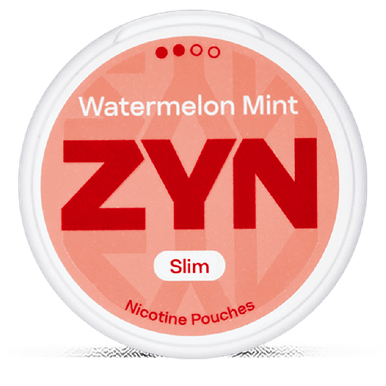
ZYN · 11mg · 5-can pack
Read the full guide
ZYN Watermelon Mint Nicotine Pouches
£19.99
✔ In stock — ready to ship
100% tobacco-free
Free over £20
Same-day dispatch
Secure checkout
This page describes ZYN Watermelon Mint Nicotine Pouches, and it is written for adults who already use nicotine. Our catalogue record gives the brand as ZYN, the product name as Watermelon Mint, the declared strength as a single figure of 11mg, the price as £19.99, and the pack as 5 cans. Two flavour tags are attached to it: mint and watermelon. The listing is currently in stock. That is the whole of what we hold, and everything below either restates it, explains what one of those fields does and does not settle, or compares the listing against other cans on our own shelves.
A word about the shape of this page. One declared strength and one price means the listing asks you no questions at all — no variant picker, no cheaper option further down, no larger pack behind a second tab. So the useful writing here is not about choosing between options within the page. It is about what the single number on the lid actually tells you, what the format is like to keep and to carry, and what else sits near it on our shelves.
The full guide to ZYN Watermelon Mint Nicotine Pouches
5,522 words on how it eats, who it suits, how to serve it and what to put beside it.
ZYN Watermelon Mint: the listing exactly as our record holds it
| Field in our record | Value |
|---|---|
| Brand | ZYN |
| Product name | Watermelon Mint |
| Declared strength | 11mg |
| Price | £19.99 |
| Pack size | 5 cans |
| Flavour tags | mint, watermelon |
| Stock position | In stock |
| Photographs on file | 1 |
The other thing worth saying up front is what happens where our record is silent. We do not hold an ingredient list for this listing, a moisture specification or a portion weight, and we do not publish company history for any brand we stock. Where one of those gaps comes up below, the page says so plainly rather than filling the space with something that sounds right. An invented detail on a page like this is a problem; a paragraph that admits a gap is not.
Two flavour words on one line, and what our tagging does with them
Start with the name, because the name and our tagging agree here, which is not always the case in this catalogue. The product is called Watermelon Mint. Our record attaches two flavour tags to it: mint and watermelon. Both words in the name appear in the tagging, and no third tag has been added on top. There is nothing to reconcile and nothing to warn you about, which is worth stating positively, because on other listings we have had to write the opposite.
The one small mismatch is order. The name leads with watermelon and finishes with mint. Our tags are stored the other way round, mint first. That ordering is an artefact of how the tags are filed and it carries no information about proportion. Nothing in our record tells you whether the watermelon note dominates the mint, whether they sit level, or how the maker would describe the balance. If you want a ratio, we do not have one, and we are not going to estimate one from the order of two words in a database field.
What can be said about the flavour is the convention the two words describe. Watermelon, as a flavour idea in confectionery and drinks, sits at the light and watery end of the melon family rather than the dense, honeyed end. It reads as sweet without much acidity, with a thin, almost cucumber-adjacent freshness underneath the sugar and a faint green edge at the back of the taste. It is a flavour built on brightness rather than depth. Where a berry note gives you a dark, jammy middle, watermelon gives you something shallower and more open, which is exactly why it is so often paired with something cooling — there is room in it for a second note without the two fighting.
Mint, in that pairing, is the second note. Mint as a category covers a wide spread of taste and aroma, from the round, almost creamy sweetness of a spearmint through to the sharp, glassy edge of a peppermint or a menthol-forward profile. Our tagging records only the word "mint", with no sub-category, so we cannot tell you which of those ends this can leans towards. What the pairing does structurally is predictable enough: the mint sharpens the top of the watermelon and lengthens its finish, and the watermelon rounds off the mint and keeps it from reading as purely cold. Fruit-and-mint is one of the oldest combinations in the flavour trade for exactly that reason. Each covers the other's weakness.
On aroma, a can carries most of its scent in the moment the lid comes off, and a watermelon-and-mint profile typically announces the sweeter half first, with the mint arriving a half-second later in the nose. That is a description of a flavour family rather than a tasting note taken from this specific can, and it is worth treating as the former.
If watermelon is the part of the name you are here for, the site files the watermelon shelf separately from the mint one, and it is the narrower of the two by a wide margin — the twenty-three cans tagged watermelon against the far broader run of listings we tag as mint. If it is the mint half that matters more to you, the mint shelf is one of the largest single flavour shelves we keep, at 148 listings, which tells you something about how the flavour is distributed across the trade and nothing at all about this particular can.
The object in your hand: can, portion, lid, bin
The physical description is the least contested thing on this page, because anyone who has held one of these can check it. A pouch is a small soft sachet, roughly the shape and give of a flattened bean, designed to sit tucked between the lip and the gum and to stay there without being held. It is not chewed and it is not swallowed. It sits still. That is the whole of the format, and it is why the category exists as something separate from anything else on our shelves.
Pouches come in more than one physical size across the trade. A standard portion is the larger of the two common formats and is noticeably present under the lip; a mini or slim portion is shorter, narrower or both, and sits with less of the lip pushed out. Our record does not state a portion format for this listing. It does not give a pouch weight either. If the physical size of the portion matters to you — and for a lot of people it matters more than any other single attribute — the can itself is the place that information lives, and we would rather point you at the can than guess on its behalf.
How long people keep one in varies so widely that any number we printed would be misleading. Some keep a pouch in for a few minutes, some for the better part of an hour, and the same person will do both on different days. We do not publish a duration, we do not publish a frequency, and we are not going to suggest one. The can carries the maker's own wording, and that is the wording to follow.
The can itself is the standard two-part design the whole category has settled on. The main body holds the portions, stacked flat or on their edges depending on the format. The lid contains a shallow catch compartment, usually a separate sealed layer under the top, intended to hold used pouches until you can get to a bin. It is the single most practical piece of design in the category and it is the reason a can is worth carrying rather than tipping a handful of pouches into a pocket. A used pouch has nowhere to go otherwise, and the catch lid solves that.
Disposal is straightforward and worth saying plainly. Used pouches go in a bin. Not down a drain, not down a toilet, not into a plant pot or out of a window. They do not break down usefully in water and they cause problems in plumbing. The catch lid is a holding bay, not a destination — it is worth emptying it when you empty the can, rather than letting it fill to the point where the lid will not seat properly.
Reading 11mg: what a number on a lid settles, and what it leaves open
This listing carries one declared strength, 11mg, and our record gives no second figure. It is the only number of its kind on the page, so it is worth spending real length on what kind of number it is, because it is routinely asked to carry more meaning than it can hold.
The first and most important thing: it is a label figure. It is what the maker declares for the product, and it is what we record in the catalogue field so that the listing can be filed and filtered. It is a piece of product information, in the same category as the price and the pack size. It is not a measurement we have taken, it is not a description of an experience, and it is not a prediction about what any particular person will find when they use one. We publish it because it is on the product and because you would reasonably expect a shop to tell you what is printed on the thing it is selling.
The second thing is that declared figures are not automatically comparable across brands. Our catalogue stores a single strength figure per listing in a single field, and that field flattens whatever basis each maker used to arrive at it. We do not hold, and therefore do not publish, the basis of calculation behind any individual brand's number. What that means in practice is that reading two figures from two different makers side by side and treating the larger one as straightforwardly "more" than the smaller one is doing more work with those numbers than they will reliably support. Within a single brand's own range, a figure is at least being produced consistently. Across brands it is a looser comparison than it looks.
The third thing, and the reason we have called this section a ladder while immediately complaining about the word, is that a ladder implies a direction of travel and we do not mean one. Our shelves are sorted by strength because sorting is useful, not because the sort order is a recommendation. Our record files this 11mg can on our Medium Strength shelf, which is where the great majority of our catalogue lives — the 135 listings we file as medium is the biggest of the three strength bands we keep. Above it on the sort we keep the Strong shelf, and above that the Extra Strong shelf. Those exist as filters. They are not rungs you are supposed to climb, we are not suggesting you move up them, and a higher figure is not a better product. It is a different product with a different number on it.
Which brings us to the thing we will not do. We cannot advise which strength suits you, and we are not going to try. That is not a dodge and it is not a legal formula we are reciting — it is genuinely outside what a shop can responsibly say. We do not know anything about the person reading this page, we hold no information that would let us match a figure to an individual, and any sentence that pointed a particular reader at a particular number would be us pretending to knowledge we do not have. If you want a view on that, it is a conversation for a suitably qualified person and not for a product description.
What we can do is tell you what is on the shelf and how it is filed, which is useful to someone deciding what to order and a different activity entirely from advising. So: this listing is 11mg, declared, one figure, no alternatives within the listing, filed as medium. Other cans we stock carry other figures and are filed elsewhere. The sort exists so you can find things. That is the honest extent of it.
One last observation. Because the number is the most prominent thing on most cans and the easiest attribute to filter by, it tends to swallow the attributes people actually notice day to day — portion format, flavour, how a can is built, whether the lid is any good. None of those appear in the strength field, so the sort will narrow the catalogue to a manageable size and then leave every remaining decision to something the number does not describe.
Keeping a can in usable condition: moisture, warmth, and the four you are not opening yet
This listing arrives as five cans. Unless you are unusual, one of them gets opened and four of them sit somewhere for a while. That makes storage a more relevant subject on a five-can listing than on a single can, and it is the second thing this page wants to be properly useful about.
The underlying variable is moisture. Pouches across the category are made to different moisture levels, and the difference is one of the biggest practical distinctions in the whole format. At one end sit dry or "dry white" style pouches, which feel light and slightly powdery through the material and release their flavour more gradually. At the other end sit moister pouches, which feel heavier and softer in the fingers and tend to be more immediate. Neither is better. They are different things that suit different habits, and plenty of people keep one of each on the go.
Our record does not state which of those this listing is. There is no moisture field in our catalogue and the maker's own description is not something we hold. We are not going to infer it from the brand, from the flavour or from the price, because an inference dressed up as a specification is exactly the kind of thing this page is trying not to do. If it matters to you, the can is the source.
What is true regardless of where a can sits on that scale is that the direction of travel is always the same. Left open, left warm, or left long enough, a pouch loses moisture. It does not gain it back. A dry-style pouch that has dried further feels stiffer and the flavour flattens out; a moister pouch that has dried feels firmer than it should and loses the softness that was the point of it. Nothing about this is dangerous and nothing about it is a defect — it is simply what happens to a small damp object in a container that gets opened repeatedly.
That gives you three practical rules, none of which is complicated.
- Close the lid properly, every time. A lid that is seated but not turned home is the commonest cause of a can that has gone stiff by the end of the week. This is the one that actually matters.
- Keep cans out of sustained warmth. A sunlit windowsill, the shelf above a radiator, a bag left in the sun and the inside pocket of a coat that lives next to a heat source are all worse places for a can than a drawer. Heat pulls moisture out faster than anything else in ordinary domestic life.
- Keep the unopened ones somewhere boring. A cupboard, a drawer, a box on a shelf. Cool, dark, dry, closed, and out of reach of anyone under 18 or anyone who does not use nicotine. That last part is not a storage tip, it is a condition of having them in the house at all.
On refrigeration: some people keep cans in a fridge, and some cans carry maker's wording about cold storage. We do not hold storage instructions from the maker for this listing beyond whatever is printed on the can in front of you, so we are not going to tell you to refrigerate it or tell you not to. Read the can. If it says something about storage, that wording outranks anything on this page, and we would say the same about any product we sell.
On dates: we do not publish a best-before or an expiry for this listing. Cans generally carry their own dating, on the product rather than in our catalogue, so if you are working out how long five will take to get through, the date on the can is the number to look at and we cannot supply it in advance.
On carrying one around: an opened can in a pocket lives a harder life than one in a drawer. It gets warm, it gets knocked, it gets opened and shut a dozen times, and the catch compartment fills up. That is why the can you are carrying is usually in worse condition than the four in the cupboard.
One limitation on all of the above: it describes how the format behaves generally, not what a specification sheet says about this can. If one arrives in a condition you would not expect, raise it with us rather than working around it.
The rest of the ZYN cans on our shelves
We keep 22 listings under the ZYN brand page, and this is one of them. Before the list, one thing we are not going to give you: we publish no company history, no founding story, no origin and no figures about how the brand performs anywhere. Not because there is anything wrong with the brand, but because none of that sits in our record and a shop repeating a story it has not verified is a shop inventing facts. What we can tell you is which cans we hold, what each one is called, and what it costs.
Across the ZYN listings we stock, the pricing is strikingly flat. Every sibling below is £19.99, the same as this one. That is unusual in our catalogue as a whole, where prices range from a few pounds to the high thirties, and it means that within this brand the decision is never a money decision. It is entirely a flavour decision.
If you want to stay in mint territory, ZYN Cool Mint X is the straight mint listing in the range at £19.99 and is in stock, and ZYN Blueberry Mint takes the same fruit-plus-mint structure this can uses and swaps the watermelon for a berry — if the structure is what you like here rather than the specific fruit, the other mint-and-fruit ZYN we hold is the closest thing on the brand's shelf, also £19.99 and also in stock.
Away from mint, the range runs through darker and sharper fruit and one outlier. ZYN Black Cherry goes deep and jammy where this can goes light and bright. ZYN Blackcurrant Forest is the sharper berry option. ZYN Citrus is the brand's bright, acidic listing and is probably the biggest single step away from a watermelon profile while staying in fruit. And ZYN Coffee Mini is the outlier — a coffee flavour in a listing whose name includes the word Mini, which we mention because it is part of the product's name and not because our record tells us anything about its portion format. All five are £19.99 and all five are in stock as we write.
What people keep beside it for variety
Most people who use pouches regularly keep more than one can going, because a single flavour used constantly stops registering. Here is what sits nearest this listing on our shelves, with the reason for each one and the price we hold, so you can see where a second can would take you without having to open six tabs.
Closest of all is Fumi Watermelon Mint, at £27.90 and in stock, which is a different brand's reading of the identical flavour pairing. If you want to know whether the combination is being done differently elsewhere, the Fumi can carrying the same two words is the direct comparison, and it costs about eight pounds more than this listing does.
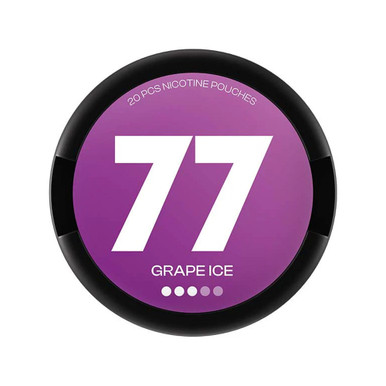
For the watermelon note without the mint word in the name, 77 Watermelon Ice at £39.90 is the most expensive can in this whole group and is in stock, while Velo Watermelon Ice at £4.19 is the cheapest thing on the entire page by a distance and is also in stock. The gap between those two — £4.19 against £39.90 for two listings that share a flavour word — is the clearest illustration we can give of how little a flavour tag predicts about price in this catalogue. Nordic Spirit Melon Fresh at £4.49 sits at the same budget end and comes at the melon family from a slightly different angle, going for the broader melon idea rather than watermelon specifically.
If the mint half is what you would rather chase, there are four in stock worth knowing about. Edge Spearmint at £14.95 is the cheapest of them and goes for the rounder, sweeter end of mint. SYX Cool Mint at £29.90 and Klint Arctic Mint at £36.90 sit at the cooler, sharper end by name. White Fox Double Mint at £34.90 puts the word twice in the title; if a mint-forward can is what you are after and price is not the deciding factor, the White Fox can at £34.90 is the one in this group that most obviously advertises mint as the whole point rather than half of a pairing.
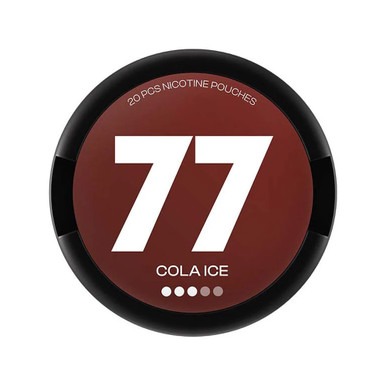
Two further afield, for when you want the break to be a real one. Pablo Silver Edition Blueberry Peach Ice at £39.90 stacks two fruits and a cold note together, which is a busier construction than the two-note build here. And UBBS Cola Ice at £19.95 — within five pence of this listing — leaves fruit behind entirely for the cola-and-cold family, which is about as far from watermelon as our shelves go while still being sweet. Both are in stock.
A standing caveat on all twelve of those links: stock positions move, and every one of them is accurate at the time of writing rather than permanently. The product pages themselves carry the live position, and that is the one to trust.
Strengths and pack sizes: what there is to choose here
Very little, and it is more honest to say so than to manufacture a decision. This listing has one declared strength, 11mg, and one pack configuration, five cans at £19.99. Our record holds a single variant. There is no 3mg version of this listing, no 6mg version, no single-can option and no ten-can roll on this page. If any of those exist elsewhere in the world, we do not hold them, and a page that hinted otherwise would be wasting your time.
So the decision here is binary: this can at this figure and this price, or a different listing. The comparison shopping happens between pages rather than within one, which is why this page carries as many links out as it does.
On the arithmetic, since people ask: £19.99 for five cans works out at just under four pounds a can. Whether that is good value depends entirely on how long a can lasts you, and we have no way of knowing that. Note also that the cheapest listings referenced on this page, at £4.19 and £4.49, are priced per can rather than per five, so the figures are not comparable without doing that division first. It is the commonest pricing confusion in the category, and worth ten seconds before assuming one listing is five times the price of another.
Ordering, delivery and the door
This is an age-restricted product and the buying process reflects that at both ends. You must be 18 or over to order, and age verification is part of how we operate rather than an optional extra. ID may be requested on delivery, so it is worth having something to hand if the name on the order is not the name on the door, or if the person receiving the parcel is not the person who placed the order. A courier who cannot verify age will not simply leave the parcel, and that is a feature of the system rather than a fault in it.
A few things are therefore worth getting right at checkout. Use an address where somebody can answer the door, keep the name on the order consistent with the ID that will be produced, and if the parcel is going to a workplace, check first — some will not accept age-restricted deliveries at reception, and that is theirs to decide rather than ours.
The stock position shown on the product page is the one that governs. Our record has this listing in stock as this page is written, but a page of copy is a snapshot and the listing itself is live. If something in the group of links above has moved to unavailable by the time you read this, the product page will say so plainly rather than letting you get as far as the basket.
Where this page sits in the catalogue
For anyone navigating rather than buying: this listing appears on four shelves — the brand page, the strength band, and both of its flavour tags. That is four different routes by which somebody could have arrived here.
From here, the widest view is everything we currently stock, which is the full catalogue with nothing filtered out. If you would rather browse by brand than by flavour, two of our larger brand pages are the Pablo brand page and the Cuba brand page, both of which run to considerably more listings than the ZYN shelf does and both of which are structured the same way this one is. Every shelf on the site is filterable in the same fashion, and none of the orderings imply a ranking.
Questions we are actually asked about this can
What exactly arrives for £19.99?
Five cans of ZYN Watermelon Mint at the declared strength of 11mg. That is the single configuration our record holds for this listing — one strength, one price, one pack size. There is no option to buy a different quantity on this page and no second strength hiding behind a dropdown. If you need a smaller commitment than five cans, the answer is a different listing rather than a different version of this one, and several of the cans linked above are priced per can.
Is there a weaker or stronger version of this exact flavour?
Not in our catalogue. We hold one variant of this listing at 11mg and nothing else under the same name. Other cans we stock carry other declared figures and are filed on other strength shelves, but they are different products with different flavours rather than versions of this one. We cannot tell you whether the maker produces this flavour at other figures elsewhere, because our record only covers what we ourselves stock.
Which strength should I go for?
We cannot answer that, and we would rather say so directly than give you something vague that looks like an answer. We hold no information about you, and matching a declared figure to an individual is not something a shop is in a position to do. We publish the figure because it is on the can and because you should know what you are buying. Anything beyond that — what any particular number means for any particular person — is not ours to say, and the fact that it is a common question does not make it answerable.
Does the name mean it tastes more of watermelon than of mint?
We do not know, and the ordering of the words does not settle it. Our record carries both tags with no weighting, and the maker has not given us a balance to publish. Naming conventions across the trade are inconsistent — some names lead with the dominant note and some lead with the more marketable one. What we can say is that both notes are declared to be present, and that the pairing of a light fruit with a cooling note is a well-established construction.
How long is a pouch meant to stay in?
We do not publish a duration and we are not going to suggest one. Practice varies enormously between people and between days, and any figure we printed would be a made-up average dressed as guidance. The can carries the maker's own wording on use, and that wording is the one to go by. If the can says something that contradicts anything on this page about how the product is used, follow the can.
Is it dry or moist?
Our record does not say. There is no moisture field in our catalogue and we do not hold the maker's own description of this listing, so anything we told you would be a guess based on the brand or the price. That distinction is one of the more meaningful ones in the format, so we would rather leave the gap visible than fill it. The can itself, and the maker's wording on it, is where that information lives.
Where is it made, and what is in it?
We cannot tell you either of those things. We hold no origin information for this listing and we do not publish ingredient lists on our product pages. The can carries the manufacturer's own information, including whatever they declare about contents, and that is the authoritative source rather than a shop's description. If a supplier's own documentation matters to you before ordering, ask us and we will tell you what we do and do not have rather than improvising.
How should I keep the four cans I am not using?
Somewhere cool, dark, dry and closed — a drawer or a cupboard rather than a windowsill, a bag or a shelf above a radiator — and out of reach of anyone under 18 and anyone who does not use nicotine. Leave them sealed until you need them. The main thing that degrades a can is sustained warmth, and the second thing is a lid that has not been closed properly on an opened can. Unopened cans in a cool cupboard look after themselves.
What do I do with a used pouch?
It goes in a bin. The catch compartment in the lid is designed to hold used pouches temporarily until you reach one, which is what makes the can worth carrying rather than loose pouches. Empty that compartment when you open a fresh can, or sooner — a full catch lid stops the top seating properly, and a lid that does not seat properly is the start of every storage problem described further up this page.
Is it in stock right now?
Our record says yes as this page was written, and the listing shows the live position at the top of the page, which is the one to trust. Everything else linked from this page was also in stock at the time of writing. Stock moves, though, and a description written once does not update itself, so treat any availability statement in this copy as a snapshot rather than a promise.
Will I definitely be asked for ID?
Possibly, and you should be ready for it. ID may be requested on delivery, and the courier is entitled to ask. Have something valid available, make sure somebody over 18 can take the parcel, and expect it not to be left unattended. It is worth checking before you order that the delivery address is somewhere a person can actually answer the door, because an age-restricted parcel is not one that gets left behind a plant pot.
Why does this page not tell me anything about the brand's history?
Because we do not hold it and we will not repeat what we cannot check. Company histories, founding stories, origins and performance figures get copied between retail sites until nobody can trace the original source, and a shop restating them is a shop publishing claims it has not verified. Our record contains a brand name, a product name, a price, a strength, a pack size, flavour tags and a stock position. That is what this page is built from, and the absence of anything else is deliberate.
The required wording, which is the part worth reading
This section carries the statements that have to appear on a page like this one. They are not a formality and they are not buried at the bottom because they matter least.
- 18+ only. This product is sold only to adults aged 18 or over, and only to adults who already use nicotine. We do not sell to anyone under 18 under any circumstances.
- Nicotine is an addictive substance.
- This is not a licensed stop-smoking medicine, and it is not intended for non-smokers, non-nicotine-users, under-18s, or anyone who is pregnant or breastfeeding. We make no health or medical claims of any kind about this product, in either direction.
- ID may be requested on delivery. Age verification applies at checkout and can apply again at the door, and a courier may decline to hand over an age-restricted parcel without it.
Keep cans out of reach of children and of anyone who does not use nicotine. Nothing on this page is advice of any kind about whether to use this product, how much of it to use, or which declared figure to choose, and nothing on it should be read as encouragement to begin using nicotine.
In short
ZYN Watermelon Mint is a five-can pack at £19.99 with one declared strength of 11mg, tagged for both mint and watermelon, filed on our medium band, and in stock as we write. The number on the lid is a label figure and not a recommendation. The four cans you are not opening want a cool, dark, closed cupboard. And if the flavour turns out not to be for you, the pages linked throughout this description are where the rest of the shelf is — including one can from another brand carrying exactly the same two words in its name.
More from ZYN
More medium strength pouches
More mint pouches
Where this sits
ZYN Watermelon Mint Nicotine Pouches appears in these categories. Browse them, or jump to something close.
You might also like