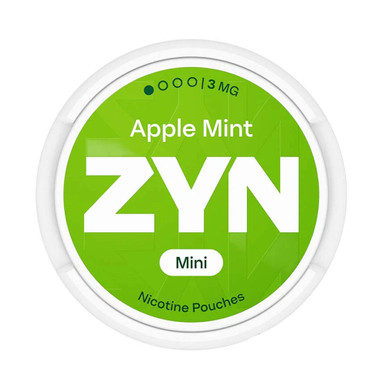
Home / Medium Strength / ZYN Citrus Nicotine Pouches
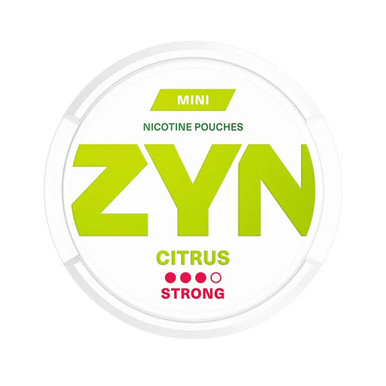
ZYN · 3mg–11mg · 5-can pack
Read the full guide
ZYN Citrus Nicotine Pouches
£19.99
✔ In stock — ready to ship
100% tobacco-free
Free over £20
Same-day dispatch
Secure checkout
ZYN Citrus Nicotine Pouches is listed at £19.99. Our record holds three declared strengths against it — 3mg, 6mg and 11mg — and every one of those three carries the same £19.99 price. The pack holds five cans. The flavour tag is a single word, citrus. The listing is in stock as this page is written. Those are the facts we hold. What follows is built out of them, out of comparisons with other cans on our shelves, or out of an outright admission that a thing is not something our record knows.
Before anything else: this is an adult nicotine product. It goes only to people aged 18 or over who already use nicotine, and the formal wording on that has its own section at the bottom of this page. Nothing written here is an invitation to anyone to consume anything.
The full guide to ZYN Citrus Nicotine Pouches
5,260 words on how it eats, who it suits, how to serve it and what to put beside it.
ZYN Citrus: the listing in plain terms
Take the arithmetic first, because it is the part people work out in their heads anyway. Five cans at £19.99 works out at almost exactly £4.00 each. That division is ours rather than the manufacturer's, and it is the only sense in which we will describe the price as anything other than £19.99, because £19.99 is the figure that leaves your account. The per-can number is only useful for one thing: comparing this listing fairly against the single-can listings elsewhere on our shelves, where a headline price of £4.19 or £14.95 means something entirely different from a headline price of £39.90. Compare per can or you will mislead yourself.
Five cans is a box rather than a pocket item, and that is worth a moment's thought before ordering. One can goes in a jacket; five want a drawer. Where the other four live while the first is in use is a real question, and we come back to it in the storage section, because the most common way people waste a multipack is by opening all of it at once and leaving the rest breathing on a shelf.
We do not publish a pouch count per can for this listing. The field is not in our record, and rather than lift a plausible number from somewhere else and present it as fact, we will say plainly that the printed can is where that count lives. It is a small gap and we would rather name it than paper over it.
The citrus note, as taste and as smell
Our flavour field for this product contains one word: citrus. That is a family rather than a single fruit — the family that covers orange, lemon, lime, grapefruit, mandarin and all the blends people build out of them. Which of those the recipe leans on is not recorded, and we are not going to decide on the manufacturer's behalf. What we can set out is what the word means as a taste category, which is enough to tell you whether it is a direction you want to go in.
Sharpness is the defining property. The citrus family occupies the acidic, zesty end of the fruit spectrum, a long way from the soft, cooked, jam-like end where most berry flavours sit. Sweetness is generally present but it plays a supporting part, sitting underneath the acidity rather than leading. This is the practical difference between reaching for a citrus can and reaching for a berry can: berry arrives round and stays round, citrus arrives with an edge on it. Neither of those is superior. They are built to do different things and people sort themselves between them by preference.
The smell reaches you before the taste does. Lift the lid on a can in this family and the aroma is immediate and unmistakably bright — the volatile, slightly oily smell of fruit skin rather than fruit flesh, with a faint bitterness underneath it. That bitter undertone is inherent to citrus flavourings and it is the element that divides opinion. Some people read it as the thing that stops a citrus flavour being cloying. Others find it the single note they cannot get past. If you have met it before and disliked it, no can in this family is going to be free of it, and that is worth knowing before you buy five at once.
There is no cooling element recorded against this listing, and it is worth being explicit about that because plenty of shoppers assume a cold edge comes as standard with the format. It does not. Cold is a separate flavour decision and it is usually named in the product title when it is present — XQS Citrus Cooling at £39.90 puts it right there in the name, and that is the listing to look at if the cold is the part you actually want. What you get from a bare citrus tag is the fruit character and nothing bolted onto it.
Flavour in a dry pouch has a shape over time that is unlike anything you drink. It comes up over the first minute or two, holds at a plateau, and then thins out gradually rather than stopping at a point. In the citrus family the sharp top note is typically the first thing to go, which leaves the softer, sweeter base doing the work through the back half. That is the normal behaviour of the flavour family rather than a defect, and it explains why some people find citrus best early and switch to something flatter later in the day.
What a standard portion is like to have in place
The format is the first thing this page is meant to cover properly, so here is the detail without dressing it up.
A pouch of this kind is a small soft rectangle with rounded ends. It goes between the lip and the gum line, most often under the top lip and pushed off towards one side rather than sitting centrally. Once it is placed it stays placed. The first few times anyone does this it feels like an object in the mouth, because it is one; after a while most people stop registering it unless they think about it. That adjustment period is real and short, and it is not something a product page can shorten for you.
This listing is the standard portion rather than the smaller one the brand also makes. A standard pouch has more physical presence in position — more surface against the inside of the lip, more of it to feel with a tongue, and slightly more chance of showing as a fullness in the line of the lip when the face is at rest. Whether it shows at all depends on where you place it and on the shape of your own mouth, which no description can predict. We are describing a tendency of the format, not making a promise about your face.
Session length is the question we are asked most and the one with the least satisfying answer. There is no correct duration. Reported use across this format runs from a handful of minutes to something approaching an hour, with most of it bunched in the middle of that spread. What tends to bring a session to an end is the flavour thinning rather than any other signal, and because the fade is gradual there is no clean moment that announces itself. Some people take one out as soon as the taste drops off; others leave it well past that point out of habit. We are not going to write a rule, because there is not one to write and it would not be our place to write it.
Dryness changes how the format behaves in use. A dry pouch produces less moisture than a damp one, which in practice means less to deal with and less prompting to reposition it, so it sits more quietly and stays where it was put. That matters more than it sounds if you are talking for any length of time, and it is the property along which people who have tried both formats usually sort their preference — ahead of flavour, ahead of brand.
Eating and drinking around a pouch is a practical question nobody prints an answer to. Most people take one out before a meal, for the plain reason that chewing and a pouch in position do not cooperate, and because food and a sharp fruit flavour arriving together is an unpleasant combination rather than a dangerous one. Hot drinks are the other common complication: heat tends to accelerate the flavour and shorten the useful part of a session, so a can worked through alongside a pot of tea will not go as far as the same can worked through without one. None of that is a rule, and none of it is a warning. It is simply the sort of thing people discover in the first fortnight and nobody writes down.
Talking is the test the format usually passes. A pouch set properly under the top lip and pushed to one side does not interfere with speech in any way an ordinary listener would notice, and that is largely why people who use the format at all tend to use it in situations where other things would be conspicuous. What does interfere is a pouch placed too centrally or too low, which will shift as you speak and which you will then spend the session pushing back into place. Placement solves almost every complaint people have about the format, and it takes a couple of tries to work out where your own mouth prefers it.
Disposal deserves a paragraph because packaging almost never gives it one. A finished pouch has to go somewhere, and the somewhere is not a toilet, not a pavement and not anywhere within reach of a child or an animal. The lid of a tin like this generally has a second compartment in the top with its own floor: lift the upper section, drop the used pouch in, press it shut, and carry it until you find a bin. The capacity of that compartment is smaller than the can's, and the habit worth forming is emptying it each time you start a fresh can. A stuffed catch chamber stops the lid seating properly, and a lid that does not seat properly is how a can goes flat. Where there is no compartment or it is already full, a folded tissue in a pocket is the unglamorous solution and it works perfectly well.
As a thing to carry, a tin of this type is undemanding. It rides in a coat pocket, a bag, a glovebox or a car door bin without complaint, and it takes more abuse than you would expect. The failure mode is a lid knocked half off by an impact and then left that way in a warm pocket, which will cost you the contents quietly over a day or two. Press the lid home when you put it away and that is the entire maintenance schedule.
Three numbers on one listing
This listing carries three declared strengths — 3mg, 6mg and 11mg — and one price covering all of them. That arrangement raises the second thing this page has to deal with honestly: what those figures actually do.
A declared milligram figure is a number the manufacturer states and prints, expressed per pouch. On our site it does one job: it decides which shelf a listing gets filed on so that several hundred products can be navigated. It is an organisational figure. That is the beginning and the end of its function here.
What it is not is a rank. People sometimes read a set of figures like 3, 6 and 11 as steps in a sequence, with a starting point and a destination and progress in between. We do not present it that way and we would ask you not to read it that way on our page. A larger printed number is not more advanced, is not a graduation, is not an accomplishment and is not an improvement on a smaller one. A smaller number is not a practice run. There is no route through this catalogue, and we have not built one.
Nor does the figure let you compare across brands the way a shared unit implies it should. Manufacturers declare on their own terms, and portion size, format and the construction of the flavour all change how a can reads in use. A can printed 6mg from one brand and a can printed 6mg from another are not interchangeable on the strength of that shared number, and treating them as though they were is over-reading a label. The figure describes a manufacturer's declaration. It does not describe what happens to a person.
We are not able to advise you on which of the three to choose. Not here, not by email, not on the phone. That is not a legal hedge we are sheltering behind — it is that the question is about you and the only things we know about are products. We will tell you precisely what is declared and precisely where we have filed it, and the choice remains entirely yours. If you want a view from someone, it should come from a person qualified to give one rather than from a shop that sells cans.
A word about the band we filed this under
There is an oddity in our own filing here and it is better pointed out than left for you to trip over.
This listing sits on the Medium Strength shelf, which is the largest band we keep at a hundred and thirty-five listings. But the listing's own declared figures run from 3mg to 11mg, and a 3mg figure taken on its own would not obviously belong in the same band as an 11mg one. Our shelves file the listing, not each variant, so a product with a wide spread of declared strengths ends up in a single band that cannot describe all of it at once.
That is a limitation of shelving rather than a statement about the product. If you are shopping by band, be aware that the band is a navigation aid applied at listing level, and read the individual declared figures rather than relying on the shelf name to tell you what is in the box. The other bands we keep are the Strong shelf and the Extra Strong shelf, and those names work the same way — they are labels we apply for sorting, not verdicts, not tiers and not recommendations.
The same caution applies to names printed by manufacturers. Words like Mini, X and Gentle appear on cans across this brand's range and they are the manufacturer's naming, not our measurement. Where a printed name and a declared milligram figure seem to point in different directions, the figure is the thing we would trust, because it is the thing we file by and the thing the manufacturer has actually declared.
The rest of the ZYN shelf
The ZYN brand page gathers twenty-two listings, of which this is one. They share a £19.99 price and a common can style, and they spread across mint, fruit and one roasted option.
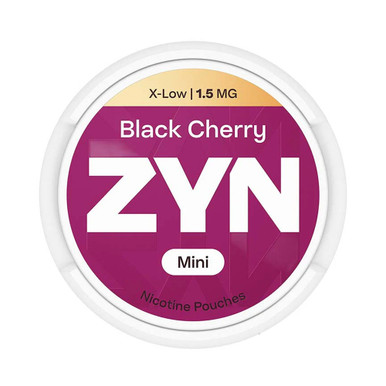
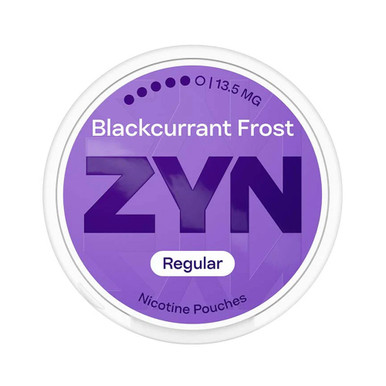
Within fruit, ZYN Black Cherry is the dark, rounded end of the range and about as far from this can's acidity as the brand's fruit cans get. ZYN Blackcurrant Forest is the sharper berry, which makes it the closest thing in the range to citrus's character without actually being citrus. If you want fruit with cold attached rather than fruit alone, ZYN Blueberry Mint is the blend on the shelf. All three sit at the same £19.99 and all three are in stock.
Away from fruit, the brand's Coffee Mini can is the roasted, bitter-leaning listing and comes in the smaller portion size rather than this one, so it differs from this can on two counts at once. ZYN Cool Mint X carries the widest spread of declared figures of anything we hold from the brand — 1.5mg through to 11mg, all at £19.99 — which makes it the listing where the shelf-band point above applies most sharply. And ZYN Guava Spice X is the outlier of the range, a tropical fruit with a spiced note rather than a straightforward sweet one.
The brand also lists this same citrus flavour in the smaller portion size as a separate product. We have not linked it here because it is not among the related listings held against this page, and the brand shelf above is the route to it. Worth knowing it exists if the portion size is the thing you are shopping for.
Cans that sit near this one
Most people who use pouches regularly keep two or three flavours in rotation, because one flavour used continuously flattens out. Here is what sits nearby on our shelves, with an actual reason for each.
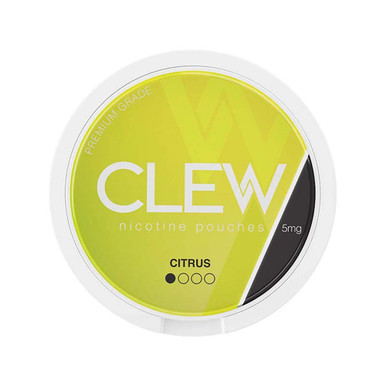
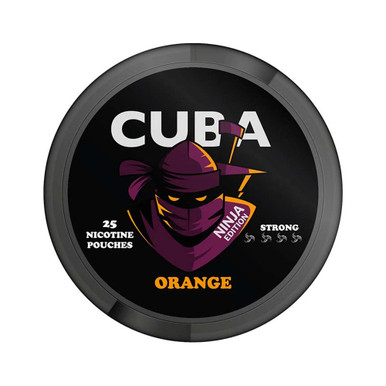
Inside the citrus family, Clew Citrus at £39.90 is the ten-can option, which suits someone who has settled on the flavour and wants a supply rather than a trial. Cuba Ninja Orange, also £39.90, names its fruit where this listing does not, so it is the one to look at if unspecified citrus is not precise enough for you. At the other end of the price scale, Velo Lime Flame at £4.19 is a single can and the cheapest way on the site to establish whether the lime direction appeals before committing to a box.
For sweeter, softer territory that still counts as citrus-adjacent, Killa Exclusive Lemonade at £33.50 takes the lemonade route rather than the sharp-peel route. Klint Cola Lime at £36.90 puts lime against cola, which is an unusual pairing and worth a look — though it is out of stock at present, so that link is a browse rather than an order.
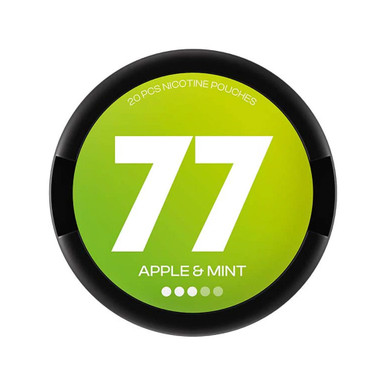
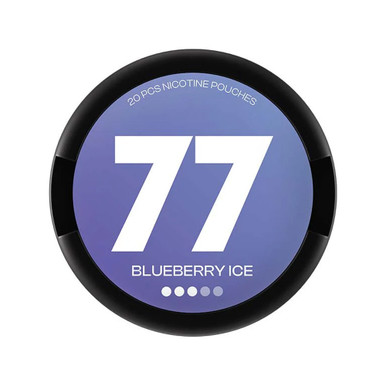
For contrast rather than similarity, people who keep a sharp fruit can going often keep something flatter alongside. 77 Apple Mint at £39.90 is orchard fruit with a cold edge. Edge Spearmint at £14.95 is the plain sweet mint at a mid price. Nordic Spirit Blueberry at £4.49 is soft berry in a single can. And Fumi Blackcurrant at £27.90 is the darker berry option in between. Any of those makes a sensible second can beside a citrus tin, for no better reason than that they taste nothing like it.
Looking after an open can, and the other four
These are dry pouches, and drying out is the thing that goes wrong with them. Heat, direct sunlight and a badly seated lid are the three causes, roughly in that order of damage.
Keep cans cool and out of the light. A drawer, a cupboard or the inside of a bag is ideal. The worst place in an ordinary life is a car dashboard in summer, and a sunny windowsill is not far behind. Sustained warmth pulls moisture out and takes the top of the flavour with it, and because citrus lives at the top end of the flavour range, a citrus can shows that loss sooner than a heavy sweet one would.
With a five-can pack the discipline is simple: open one, leave four sealed. A sealed can holds its condition far longer than an open one, and there is no benefit whatever to breaking the seals early. Keep the four somewhere cool and dark and bring them into use one at a time. People who open the whole box at once and then wonder why the last can is disappointing have usually answered their own question.
Seat the lid properly each time you close a can. A lid resting on the rim rather than pressed onto it will flatten a tin within days. Empty the catch compartment before putting a can away for any stretch, because a used pouch left in the lid is unpleasant to reopen and stops the lid closing cleanly.
Refrigeration is optional. A sealed can takes no harm from it and it slows drying, but it is unnecessary for cans you will work through in a normal span, and repeatedly taking a cold tin into a warm pocket is not helping anything. Cool, dark and sealed covers it.
Whatever you do with the cans, keep them where children and animals cannot get at them. That is not advice about product quality. It is the one instruction on this page that has nothing to do with taste.
Choosing between 3mg, 6mg and 11mg — and where we stop
The mechanics of the choice are simple: three declared figures, one price, one flavour, one pack size of five cans. Nothing about the box or the cost changes with the figure you select, so there is no financial angle to the decision at all. Whatever you pick, £19.99 buys five cans.
That is genuinely the whole of what we can tell you about it. We will not suggest which figure suits you, because that is a question about a person and we hold facts about products. We will not describe any of the three as a starting point, a step up, a natural progression or a sensible place to end up, because none of those framings is one we are prepared to put on a page. And we will not tell you that one of them is better, because better is not a property a declared milligram figure has.
If pack size rather than strength is the variable you care about, that comparison lives across listings rather than within this one. The multipacks on our shelves run to ten cans and the single cans run to one, and the only fair way to compare any of them is to divide the listed price by the stated can count and set the results side by side. Headline prices on this site are not comparable and they will mislead you if you let them.
Ordering, age checks and delivery
This listing is in stock at the time of writing, so ordering is straightforward and works like any other online purchase. The price you pay is the price in the basket, which is the authority if it ever disagrees with a figure quoted in body copy that has gone stale.
Sales are limited to people aged 18 or over, and that limit is enforced rather than decorative. Age verification runs against orders, and where it cannot be completed electronically we will ask for something further before the parcel goes anywhere. The courier may also request photographic ID at the door, and the driver is entitled to refuse to hand the parcel over if satisfactory ID is not produced. Parcels are not left with anyone under age and are not left unattended where age cannot be confirmed.
Delivery options, carriers and costs appear at checkout against your own address and basket. Those are the figures that apply to your order. We do not restate them in product copy because they change and copy does not.
What a five-can listing looks like over a few weeks
A multipack changes the shape of the purchase rather than the product inside it, and since this is a five-can listing it is worth a short section on what that practically means.
The first thing it changes is commitment. Buying one can of a flavour you have not met is a small decision; buying five of it is a larger one, and the citrus family in particular is one people have strong reactions to. The bitter undertone described earlier is not an acquired taste for everybody, and if it turns out not to suit you then four unopened cans are a more annoying outcome than one. If you already know the family suits you, the opposite applies and five is straightforwardly better value at roughly £4.00 a can than the single cans we list at £4.19 and £4.49.
The second thing it changes is rotation. Five cans of one flavour used back to back is the surest way to get tired of a flavour, which is why people who buy multipacks usually buy something else alongside to alternate with. That does not have to be expensive — a single berry can at £4.49 sitting next to a box of citrus does the job, and keeps both tasting like themselves for longer.
The third thing it changes is storage, which we have covered, and the fourth is the arithmetic when you compare listings. A ten-can listing at £39.90 and a five-can listing at £19.99 come out at almost exactly the same price per can. The headline figures look very different and the per-can figures do not, which is the whole reason we keep insisting on the division.
How to get back here
Three routes lead to this page and any of them works. It is filed on the Medium Strength shelf by its declared figures, on the ZYN brand page by its brand, and on the citrus flavour shelf by its tag, where twenty-five listings share that classification.
If you would rather start from the top, the full catalogue listing puts everything we stock in one place. For browsing by brand instead, the Pablo shelf and the Cuba shelf are two of the larger ones we keep and both are worth a wander if you are not simply repeating an order.
Straight answers to common questions
How many cans come in the pack?
Five, and that figure is held in our record rather than estimated. At £19.99 that works out at almost exactly £4.00 a can, which is the number to use if you are comparing this listing against single cans elsewhere on the site. The headline price on its own is not a fair comparison against a one-can listing and will mislead you if you treat it as one.
How many pouches are in each can?
We do not hold that figure. Our record has a can count but not a pouch count, and we are not going to publish a number we cannot source. The printed can carries it. It is a small gap in what we know and we would rather state it than produce a plausible-looking guess that turns out to be wrong for this particular listing.
Do the three strengths taste different from each other?
Our record gives one flavour tag for the whole listing, so we have no basis for telling you the taste varies between the declared figures, and no basis for telling you it does not. We do not know. Manufacturers build their ranges in different ways and our data does not go to that level of detail. If it matters to your order, the manufacturer's own labelling is the place to look.
Which citrus fruit is this?
Not recorded. Our flavour field says citrus and nothing more specific, and we are not going to assign a fruit that the record does not support. Several listings we stock do name their fruit in the product title and we have linked a few of them above. For this one the can itself is the source for any further detail.
Is 11mg the best one to get?
No — and more to the point, best is not something a declared figure can be. The three numbers on this listing are not ranked, not sequential and not a route. We publish them because the manufacturer declares them and because they decide our filing. Which one anyone should buy is a question we do not answer for anybody, and that applies equally to all three.
Why is this on the Medium shelf when one strength is 3mg?
Because our shelves classify listings rather than individual variants, and a listing spanning 3mg to 11mg has to go somewhere. The band is a navigation label applied at listing level, not a description of every option inside it. Read the declared figures themselves rather than inferring anything from the shelf name, which cannot cover a spread that wide.
How long does a pouch last?
There is no fixed answer. Reported use runs from a few minutes up towards an hour, and what usually ends it is the flavour thinning rather than anything definite. Since that thinning is gradual, nothing tells you a pouch is finished. That leaves it as your decision, which is where it belongs, and it is not something a product description is placed to decide for you.
What is the right way to dispose of one?
The catch compartment in the lid, then a bin. Not a toilet, not the ground, and never anywhere a child or an animal could reach it. Empty the compartment when you open a new can rather than letting it fill, because a packed catch chamber stops the lid seating and an unseated lid is how a can dries out. A tissue works when the compartment is unavailable.
Can I mix this with other flavours?
Plenty of people keep more than one can in rotation, and there is nothing about this listing that makes it awkward to do so. Sharp fruit and something flatter is a common pairing simply because the contrast keeps both tasting distinct. We have linked several nearby options above with prices, and the choice of what to put beside it is entirely a matter of taste.
Is the price the same for every strength?
Yes. All three declared strengths on this listing are £19.99 for five cans, so the figure you choose has no effect on what you pay. That is unusual enough to be worth stating, because on some listings elsewhere the variants are priced separately. Here the price is flat across the range and the basket will confirm it before you commit.
Will you tell me what to buy if I email you?
We will answer questions about facts — what is in stock, what a listing holds, what a pack contains, what the declared figures are. We will not answer a question about which strength suits a particular person, because we are not in a position to answer it and no answer we could give would be worth having. That stays outside what a shop should be doing, by email or otherwise.
Does the flavour last the whole time the pouch is in?
Not at full strength, no. Flavour in this format builds over the first minute or two, holds for a stretch and then thins gradually, and in the citrus family the bright top note is usually the first part to go. What remains through the back half is the softer base. That is how the flavour family behaves rather than a fault in a can, and it is the reason many people end a session on taste rather than on time.
Is a can from this brand interchangeable with another brand at the same number?
We would not treat it that way. Declared figures come from each manufacturer on its own terms, and portion size, format and flavour construction all change how a can reads in practice. Two cans printed with the same number from two different brands are not equivalent on the strength of that alone. The number tells you what a manufacturer has declared and files the product on our shelves. It does not do more than that.
Required notice for this product
Sold to adults aged 18 or over only. We supply this to people who already use nicotine and to nobody else. Nicotine is an addictive substance. This is not a licensed stop-smoking medicine and is not offered, described or intended as one. It is not intended for non-smokers, for anyone not already using nicotine, for under-18s, or for anyone pregnant or breastfeeding. Photographic ID may be requested on delivery and the driver may decline to release the parcel without it. Store out of reach of children and animals.
To close
ZYN Citrus is a five-can listing at £19.99 with three declared strengths of 3mg, 6mg and 11mg at one flat price, a single citrus flavour tag, and stock on the shelf today. Everything else on this page has been format, comparison, storage and navigation, because those are the subjects a shop can write about honestly and at length. Where the record ran out — the specific fruit, the pouch count, whether the three figures taste alike — we said so instead of filling the space. Those gaps are real, they are on the can rather than on us, and we would rather you knew where they were.
More from ZYN
More medium strength pouches
More citrus pouches
Where this sits
ZYN Citrus Nicotine Pouches appears in these categories. Browse them, or jump to something close.
You might also like