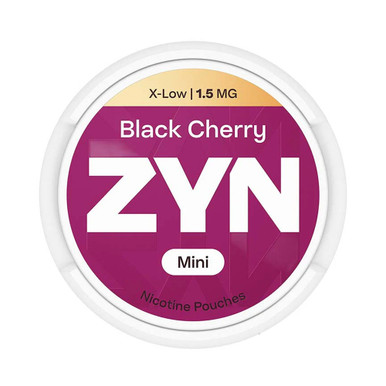
Home / Low Strength / ZYN Apple Mint Nicotine Pouches
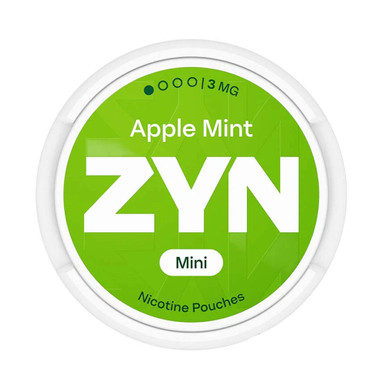
ZYN · 3mg–6mg · 5-can pack
Read the full guide
ZYN Apple Mint Nicotine Pouches
£19.99
✔ In stock — ready to ship
100% tobacco-free
Free over £20
Same-day dispatch
Secure checkout
ZYN Apple Mint Nicotine Pouches are currently showing as out of stock. The listing is live, it is a product we carry, and it cannot be ordered as this page is written. Everything below assumes you are either waiting for it, deciding whether waiting is worth it, or looking for the nearest thing we do have on the shelf right now — and there is a section further down devoted entirely to that last case.
We do not publish restock dates and will not guess at one here. We are frequently not given firm dates by suppliers, and a date printed on a page that then slips is worse than no date at all. The product listing itself is where the position will change when it changes, so that is the page to watch rather than this paragraph.
The full guide to ZYN Apple Mint Nicotine Pouches
4,898 words on how it eats, who it suits, how to serve it and what to put beside it.
Start here: this one is not available at the moment
With that stated, the rest of this page describes the product properly, because a description is still useful to somebody deciding whether to wait.
The listing as our record holds it
The price is £19.99, and there are two declared strengths on the listing: 3mg and 6mg. Both are priced identically at £19.99, which means the choice between them carries no financial consequence in either direction and cannot be settled by cost. Against the pack quantity we hold a figure of five cans, so the £19.99 covers five tins rather than one — a mid-sized pack by the standards of this catalogue, which runs from single tins at under four pounds to ten-can packs approaching forty.
We hold one product photograph for the listing. There is no gallery, no size comparison and no cutaway, so anything said below about the physical object is said in words because words are all the material there is.
This is an age-restricted nicotine product for adults aged 18 or over who already use nicotine. The compliance statement towards the end of this page sets out the full position, and it applies whether or not the can is currently orderable.
The flavour record, and a tag that does not fit
Our flavour field for this listing holds two entries: mint and tropical. The first of those is exactly what you would expect from a can called Apple Mint. The second is not, and rather than smoothing over it we are going to say so directly.
Apple is an orchard fruit. It is not a tropical one by any ordinary reading of the word, which covers pineapple, mango, passion fruit, guava and their relatives. A tropical tag filed against an apple-and-mint product is therefore inconsistent with the name on the lid, and we cannot tell you why it is there. The plausible explanations are all guesses: a broad filing convention that sweeps sweet fruit characters into one bucket, a categorisation error upstream, or a flavour that leans more exotic than its name suggests. We do not know which, and inventing the reason would be worse than admitting the gap. What we can say is that the catalogue places this can on our tropical shelf of 58 listings as well as on the mint shelf, which at 148 listings is the largest flavour shelf we keep — so if you find it in an unexpected place while browsing, that is why.
Take the tags as a filing record rather than a tasting note. The name on the lid is the manufacturer's own description of the flavour and it is the more reliable of the two here.
The tasting note: cool, sweet, sharp and bitter
Four axes are worth separating when describing a flavour of this kind, because a can that reads well on one can read badly on another and lumping them together is how product copy becomes meaningless. What follows describes the flavour terms and the construction the name points at. It is not a measurement, because no measurements exist — nobody in this category publishes cooling, sweetness or intensity figures, our record holds none, and any page giving you a number out of ten has invented it.
Cool
The mint half of the name is where the cool character comes from. Mint as a flavour family reads cool to almost everybody, and that is a property of the flavour rather than something layered on afterwards. Where a can sits within that range depends on which mint the maker has reached for: the leafy, softer readings carry a gentle, wide coolness; the sharper ones carry a narrower, more cutting version; the frost-named products push the cold character to the front and let the herbal part recede behind it. A can named simply Apple Mint, with no cold word in the name, points at the moderate part of that range rather than either extreme — though that is a reading of a name, not a fact from our record.
Sweet
Apple supplies most of the sweetness in a construction like this, and apple is a particularly useful fruit in that role because its sweetness is clean rather than heavy. It does not coat the way a dark berry or a banana character does. In flavour terms it sits high and bright, which is why it pairs readily with mint — two light characters rather than one light and one heavy. Whether this can takes the green, sharper apple reading or the red, rounder and sweeter one is not recorded anywhere we can see, and the two are noticeably different as flavours.
Sharp
Sharpness in a fruit-and-mint construction can come from either side. The apple can provide it through acidity — a green apple character is defined by exactly that — and the mint can provide a different kind of sharpness through its cutting edge. The two are not the same sensation on the palate and a can that is sharp in both ways at once reads as busy. Most makers pick one. Which one this can picks is not something our data will tell you, and we would be inventing it if we said.
Bitter
Bitterness is the axis people most often forget and the one that most often decides whether somebody finishes a tin. Fruit-and-mint constructions are usually built to sit low on it; mint itself carries a slight bitter edge at the back of the palate, and a sweet fruit set against it is partly there to balance exactly that. Where a can lands on this axis is the single hardest thing to predict from a name, and it is the usual reason two cans with identical names from two houses can feel like different products.
Aroma, briefly
On a dry product in a rigid tin, the smell on opening is a condensed version of the flavour rather than something separate from it. Apple-and-mint constructions typically present the apple first on the nose and the mint underneath it, because fruit characters are more volatile than herbal ones. It is strongest on a freshly unsealed can. If you have two cans to hand, smelling them one after another will tell you more in ten seconds than any written description.
How a flavour like this is put together
This section is about flavour architecture — what leads, what supports, and how a two-word name translates into something recognisable — rather than about composition. We do not publish ingredient or formulation detail for the products we list and are not going to describe what is inside a pouch, because that is the manufacturer's information and it is printed on the can. What can usefully be discussed is structure as it is perceived.
One note or two
A single-word flavour — a plain mint, a plain watermelon — is built as one character, and the whole job is making that character convincing on its own. A two-word flavour is built as a relationship, and the interesting decision is which of the two leads. In an apple-and-mint construction, a maker can put the apple in front with the mint as a cool base underneath, or lead with the mint and let the apple appear as a sweet finish behind it. Those two are genuinely different products despite carrying the same name, and the name does not tell you which one you have.
Front, middle and finish
Flavours in this format tend to be describable in three stages: what arrives first, what settles in over the following minutes, and what is left at the end. Fruit characters typically own the first stage because they are brighter and more volatile. Herbal and cool characters typically own the middle, because they persist longer. The finish is where a construction either holds together or falls apart — a fruit that fades entirely leaves the mint sounding thin, and a mint that fades leaves a sweetness with nothing underneath it.
Why the same flavour name differs between houses
Because a name is a marketing word, not a specification. Two manufacturers can both produce an apple-and-mint can and make entirely different decisions about which note leads, which apple they are imitating and how far towards bitterness the mint is allowed to go. Our own catalogue tag will not separate them either, since it is the same handful of single words applied across hundreds of listings — as the misfiled tropical entry on this very listing demonstrates. The practical conclusion is the boring one: the only way to know a can is to try it, which is the argument for a small purchase before a large one whenever something is unfamiliar.
The mini format, and what changes with it
One of this brand's listings is worth mentioning here because it changes the physical side of the equation rather than the flavour side. The ZYN Coffee Mini listing at £19.99 is a smaller portion format as well as a very different flavour — coffee being about as far from a fruit-and-mint construction as this brand's range goes, sitting deliberately high on the bitter axis where this can sits low. A smaller portion is a real difference in the mouth regardless of flavour, and it is worth knowing the option exists if the standard size has never quite sat right.
3mg and 6mg, as printed figures
Both variants on this listing are declared figures published by the manufacturer, and both sit on our Low Strength shelf, which holds 15 listings and is by a distance the shortest of our strength pages — short enough to read end to end in a couple of minutes, which makes it genuinely useful rather than merely a filter.
For orientation on how the site is laid out: the bulk of the catalogue files under the Medium Strength band, with Strong and Extra Strong above it. Those shelves are a filing system designed to make several hundred listings searchable. They are not a ladder, they imply no direction of travel, and nothing on this page suggests that a higher printed figure is better, more advanced or more worth having.
We cannot advise which figure suits anyone, and we will not. A declared milligram number allows a rough comparison between cans that publish their figures the same way, and that is where its usefulness ends. It is not a measure of experience, it does not translate reliably between brands, and it carries no information about portion size, portion weight or dryness — all of which vary from house to house and none of which appears in the number. Two cans both marked 6mg from two manufacturers are not equivalent in any precise sense. If you already use nicotine you will have your own working sense of what a declared figure means to you; that is the only input to this decision that is worth anything, and a retailer does not have it.
The format in practice
A portion is taken from the tin and placed under the upper lip, flat along the ridge, long edge horizontal. It is placed rather than pushed and, once seated, needs no holding, moving or chewing. The first half minute is the period you are conscious of it; a portion that went in at an angle will say so in that window, and resetting it immediately is easier than putting up with it. After that, the defining quality of the format is that there is nothing to do.
How long people keep one in varies widely — the commonly reported spread runs from about fifteen minutes to roughly an hour, with plenty of people on either side of it. There is no correct figure inside that range, we are not proposing one, and those numbers describe reported habit rather than instruction. What is mechanically true of any flavoured product of this kind is that it is most distinct early and tails off.
The tin is a shallow rigid cylinder with a friction-fit lid and a recess moulded into the underside of that lid. The recess is the catch compartment for used portions, for when no bin is to hand: lift, drop, close, empty at the next opportunity. It is deliberately shallow and is not somewhere to let several accumulate over days. A used portion goes in ordinary household waste; the tin, once finished, is a rigid container and belongs wherever your local authority says such things belong.
The object itself is small — a shallow disc roughly the footprint of a small jar lid and flatter than most people expect before handling one. It goes in a coat or trouser pocket without creating a bulge worth noticing, and the printing on the top face is the only labelling on the outside, so a tin on a table reads as a tin of something to anybody not close enough to read small print. The closure is a friction fit rather than a screw thread, which makes it a one-handed open and also means a tin rattling loose in a bag among keys can be persuaded open by pressure. A pocket or a dedicated bag compartment is the better home for one.
As for where a person may use it — offices, transport, venues, customer sites — those rules are set by the employer, the operator or the venue, they differ from one to the next, they are revised without telling the shops that sell the product, and many cover nicotine products as a category regardless of format. We are not going to guess at them. The people who can answer are the ones who wrote the policy.
Five tins, which is what our pack figure says £19.99 covers, is a drawer quantity rather than a pocket one. One carried and four kept somewhere cool, closed and out of reach is the ordinary arrangement.
The ZYN shelf while you wait
We carry 22 ZYN listings, collected on the brand page, and the pricing across them is flat: effectively everything we hold from this house sits at £19.99, whatever the flavour and whatever the declared figure. That means the range cannot be read as a quality sequence. It reads only as a spread of flavours and figures, which is a cleaner way to read a range in any case, and it makes substituting one listing for another a decision about taste rather than about budget.
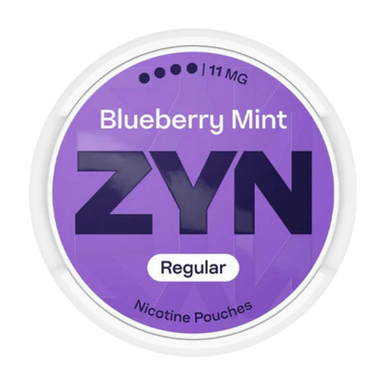
If the mint half of this can is what you are after, the Cool Mint X listing at £19.99 is the brand's straightforward cool entry and is in stock. If the fruit half matters more, Blueberry Mint, £19.99 keeps the same fruit-on-a-cool-base construction and swaps a bright orchard fruit for a dark berry, which is the smallest structural change available inside the brand. Blackcurrant Forest at £19.99 takes the berry direction further and drops the mint element from its name entirely.
Away from mint altogether: Black Cherry at £19.99 is the dark, sweet and rounder corner of the range, Citrus, £19.99 is the sharp one and sits highest on the sharp axis of anything the brand offers us, and the coffee listing mentioned earlier is the bitter one. Between them those five cover most of the directions a person could want to move in from an apple-and-mint starting point, and all five are in stock at the time of writing.
One ZYN listing to note as unavailable: ZYN Black Licorice at £19.99 is out of stock along with this can. It is the most distinctive flavour in the brand's range on our shelves and the one least like anything else here, so it is worth remembering for later rather than dismissing.
What to buy in the meantime, from other houses
If the apple-and-mint construction specifically is what you want, the nearest equivalents we stock are worth knowing, along with what differs about each.
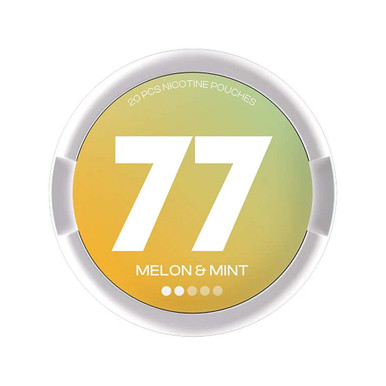
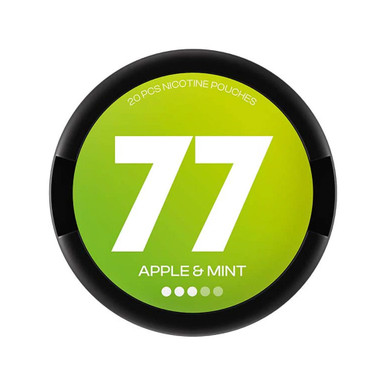
77 Apple Mint at £39.90 is the closest match by name anywhere in our catalogue — the same two-word construction from a different house at a considerably higher price, which reflects a larger pack rather than anything about the can itself. Always check what a price covers before reading anything into it. Klint Apple Mint, £36.90, is currently out of stock, which is unfortunate since it is the third apple-and-mint listing we hold; its page is live and the position there is the live one.
For apple without the mint, Cuba Black Apple Juice at £39.90 isolates the fruit and takes it in a sweet, juice-like direction with no cool element filed against it — the cleanest way to find out whether it was the apple or the mint you actually liked. Going the other way, XQS The Spearmint at £39.90 is mint with no fruit at all, in the softer and leafier reading of the family, and it is in stock.
Further afield, UBBS Peach Passion at £19.95 sits at almost exactly this listing's price and swaps the orchard fruit for a stone fruit and a tropical one — which, given the odd tropical tag on this record, may be closer to this can than its name implies or may be nothing like it. Velo Peach Ice at £4.19 is the cheapest way on this page to test a fruit-with-a-cool-note construction, and at that price it is a sensible thing to try rather than a commitment. Pablo Exclusive Banana Ice at £3.85 is cheaper still and heads for a soft, heavy fruit character instead of a bright one. The Killa banana listing at £33.50 takes the same fruit direction at a much higher declared figure and a much higher price, and is filed on a different strength shelf entirely.
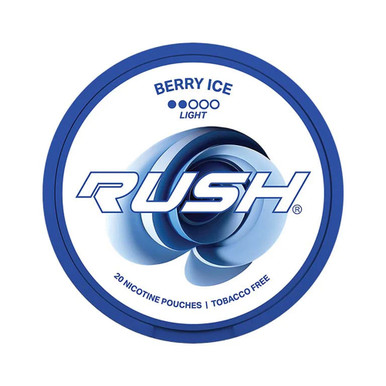
One more currently unavailable: Rush Berry Ice Light, £19.99, is out of stock. It sits at the same price as this can and in the same low-figure territory, which would otherwise make it the obvious like-for-like substitute.
For breadth rather than specific substitutes, the Pablo shelf and the Cuba shelf are the two largest brand pages we keep and both spread across several price points instead of sitting on one, which makes them useful for seeing how differently ranges can be organised.
Storage, for when it does arrive
Five tins is enough that where they live matters. The rules are unexciting and effective.
- Lids closed between portions. An open tin on a desk loses its aromatic top note faster than anything else will take it, and on a fruit-led flavour that top note is a large part of the character.
- Cool, dark, dry. A drawer or a cupboard beats a windowsill, a dashboard or a shelf above a radiator. Heat flattens flavour and a bathroom is the wrong room for a dry product.
- Leave sealed tins sealed. Open one at a time. There is nothing to gain from opening all five early.
- No fridge. For a dry portion there is no benefit, and moving tins between cold and warm invites condensation, which is the one thing a dry product genuinely does not want.
- Out of reach. Wherever four spare tins live, it has to be out of the reach of children and of anyone under 18.
The date printed on the can by the manufacturer is the only date information that exists for these. We do not publish production or batch dates on our listings and could not supply one if asked.
Choosing between 3mg and 6mg, and whether five cans is the right size
Two decisions sit on this listing and they are independent.
The first is the declared figure, and as with the pricing, there is no help available from the numbers themselves: 3mg and 6mg cost the same £19.99, both cover five tins, both carry the same flavour record and both file on the same shelf. The only difference is the digit on the lid. We cannot tell you which is appropriate for you, we are not permitted to guess, and a shop that offers you an answer to that question is making one up. That is the third time this page has said so, deliberately, because silence in that spot tends to be read as implying something.
The second is quantity. Five tins is a moderate commitment — more than a trial, less than the ten-can packs elsewhere in the catalogue — and at £19.99 it is one of the better-value mid-sized packs we list. The case against it is the usual one: it is five tins of a flavour whose construction, as this page has explained at length, cannot be predicted from its name. The single-can listings mentioned above, at under five pounds, exist so that finding that out does not cost twenty.
Nothing requires an order to stay within one brand, one flavour family or one strength band, and a common basket is a pack of something known plus a cheap tin of something being tried.
Ordering, delivery and the age check
This listing cannot be ordered at present. When it returns, ordering works in the ordinary way, and everything else linked from this page that is in stock can be ordered now.
All orders are age-verified. This is an 18+ product, checks are applied at ordering, and ID may be requested on delivery. A courier is entitled to refuse to hand over a parcel where age cannot be established, and the parcel returning undelivered is the ordinary consequence rather than an unusual one — most failed handovers happen because a delivery was arranged to an address where nobody able to prove their age would be present.
On returns, an age-restricted consumable cannot be taken back into stock once it has left us, so order what you actually want rather than treating a pack as a trial. Damaged or incorrect deliveries are a separate matter and normal to raise with us.
Where this page sits on the site
This listing is reachable from five directions, which is more than most. By declared figure it files under the low band and its 15 listings. By house it is one of 22 on the ZYN page. By flavour it appears on the mint shelf and, for the reasons set out near the top of this page, also on the tropical shelf — a filing quirk rather than a description. And the complete shop listing holds everything we carry in one place, which is the sensible starting point when you have not narrowed anything down and the thing you came for is unavailable.
Questions we are asked about this listing
Why is it filed under tropical when it is an apple can?
We do not know, and we are not going to make up a reason. Our record carries two flavour tags against this listing, mint and tropical, and the second of those does not match an orchard fruit by any ordinary reading of the word. It could be a broad filing convention, it could be an error upstream, or it could reflect something about the flavour that the name does not convey. The tags place the can on two flavour shelves, which is why it turns up in an unexpected place when browsing.
When will it be back?
We do not know and we do not publish restock dates. We are often not given firm ones by suppliers, and a date on a page that then slips is worse than saying nothing. The listing page is where the position will change when it changes.
How many tins come for £19.99?
Five, according to the pack quantity on our record, and that applies to both declared figures. It puts this in the middle of our range of pack sizes — larger than the single tins at the cheap end of the catalogue, smaller than the ten-can packs at the expensive end.
Which of the two strengths should I get?
We cannot tell you. There is no figure this page can identify as right for any individual, the strength shelves here are a filing device rather than a ranking, and a retailer has no basis for a judgement of that kind. Since both variants are the same price and the same pack size, there is no other consideration we can offer either — the difference is the digit on the lid and nothing else on our record.
Does it taste like the other apple-and-mint cans you sell?
Not necessarily, and the page above explains why at some length. Two houses can build the same two-word flavour with different decisions about which note leads, which apple is being imitated and how the finish is handled. Our single-word tags will not tell them apart. The 77 listing and the Klint one are the two nearest by name, and the only way to compare them properly is to try them.
Is there a cold or iced version of this flavour?
Not under this name on our shelves. Nothing in the name or in our record indicates an iced construction here. Cans built that way generally declare it in their names, and several linked above do exactly that — the Velo peach listing and the Rush berry one among them, though the latter is currently unavailable.
How long do people keep a portion in?
Commonly somewhere between about fifteen minutes and an hour, with a long tail either side. There is no correct figure inside that range, we are not proposing one, and the numbers describe reported habit rather than guidance.
How many portions are in a tin?
We do not hold a per-tin portion count for this listing, only the pack quantity of five cans, so we cannot give you a number and will not estimate one. The manufacturer prints what it prints on the can and its outer packaging, and that is the source to use.
What is in it?
We do not publish ingredient or composition detail for the products we list and are not going to summarise a manufacturer's formulation from memory. What is printed on the physical can and packaging is the manufacturer's own information and is the thing to read if that matters to your decision.
Where is it made?
We do not hold that information and will not invent it. Our record carries brand, product name, price, declared figures, flavour tags, pack quantity and stock position, and that is the complete extent of what we can state as fact about it. Countries, factories, company histories and founding dates are not on the record.
Is everything else linked here available?
Mostly, but not all. Three linked listings are out of stock at the time of writing and each is flagged where it appears: the ZYN licorice can at £19.99, the Klint apple-and-mint can at £36.90 and the Rush berry can at £19.99. Everything else linked from this page was in stock when it was written, and each product page carries its own live position.
Why is every ZYN listing the same price?
Because the brand prices flat on our shelves — effectively all 22 listings sit at £19.99 regardless of flavour or declared figure. Why the manufacturer or the supply chain arranges it that way is not something we know. The practical effect is useful, though: swapping one listing in the range for another is a decision about taste rather than about money, and nothing in the range is positioned above anything else by cost.
Is a smaller portion format available in this flavour?
Not under this name. The brand's mini-format listing on our shelves is the coffee one, which is a different flavour entirely and sits at the opposite end of the bitter axis from a fruit-and-mint construction. A smaller portion is a genuine physical difference in the mouth, so it is worth knowing the format exists even though it is not offered here in this flavour.
Can I be told when it returns?
Not through this page, which is a description rather than a notification service. The listing page is the place to check. We would rather say that plainly than imply a service we are not describing accurately here.
The legal position, stated in full
- This is an 18+ product, sold to adults who already use nicotine and to nobody else. We never suggest that anybody who does not already use nicotine should begin.
- Nicotine is an addictive substance.
- It is not a licensed stop-smoking medicine and is not offered, described or intended as one. It is not intended for non-smokers, for anyone who does not already use nicotine, for under-18s, or for anyone who is pregnant or breastfeeding.
- We make no health, medical or therapeutic claim about this product in any direction, and nothing above should be read as one.
- Orders are age-verified and ID may be requested on delivery. A courier may decline to complete a delivery where age cannot be established.
- Store it out of the reach of children and of anyone under 18.
The short version
ZYN Apple Mint is a five-can pack at £19.99 in two declared figures, 3mg and 6mg, both the same price, and it is out of stock as this is written. Its flavour record carries mint and, inexplicably, tropical, which is a filing quirk rather than a description of an orchard fruit. If you would rather find something available now, the rest of the brand's shelf is flat-priced and largely in stock, and everything we carry is the widest view on the site.
More from ZYN
More low strength pouches


More mint pouches
Where this sits
ZYN Apple Mint Nicotine Pouches appears in these categories. Browse them, or jump to something close.
You might also like