Home / Medium Strength / ZYN Blackcurrant Forest Nicotine Pouches
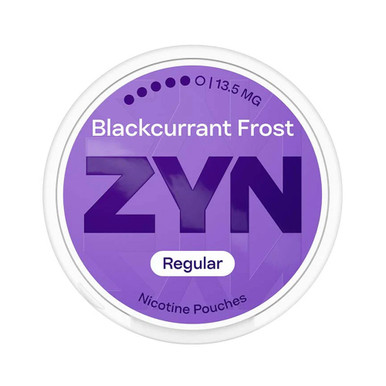
ZYN · 13.5mg
Read the full guide
ZYN Blackcurrant Forest Nicotine Pouches
£19.99
✔ In stock — ready to ship
100% tobacco-free
Free over £20
Same-day dispatch
Secure checkout
ZYN Blackcurrant Forest Nicotine Pouches is listed at £19.99 and is currently in stock. Brand: ZYN. Product name: Blackcurrant Forest. One declared strength, 13.5mg, with no variant choice attached to it. One flavour tag: berry.
There is one gap in that record worth putting near the top rather than at the bottom. We do not hold a pack size for this listing. The field that tells us how many cans a purchase contains is empty on this one. Most of the brand's listings on our shelves are five-can packs; this one does not say, and we are not going to assume it matches the others because that assumption is exactly the sort of thing that turns into a complaint at the door. The listing page and the product itself are the authority on quantity. If the pack arrangement matters to your decision — and at £19.99 it obviously does — check the listing before ordering rather than taking a number from a description.
The full guide to ZYN Blackcurrant Forest Nicotine Pouches
4,931 words on how it eats, who it suits, how to serve it and what to put beside it.
The record for ZYN Blackcurrant Forest
Apart from that gap, everything factual on this page comes from the record above, from describing the physical format, or from setting this listing beside others we hold. Where we do not have something, we say so. On a product sold only to adults aged 18 or over who already use nicotine, filling gaps with plausible-sounding invention is not a style choice we get to make.
What the two words in the name are doing
"Blackcurrant" is straightforward: it names a specific fruit, dark, small, and characteristically sharp. Blackcurrant is not a sweet fruit in its natural state. It carries real acidity and a slightly resinous, almost leafy quality alongside the sugar, which is what distinguishes it from the softer berries. In flavouring terms that sharpness is usually kept rather than sanded off, because it is the whole point of the fruit — a blackcurrant flavour that has had its tartness removed is just a generic dark sweet.
"Forest" is the other flavour word, and it is not a claim about where anything comes from. Across food and drink labelling, "forest" attached to a fruit name is shorthand for the mixed wild-berry idea: blackberry, bilberry, elderberry and their relatives, presented as a group rather than singly. Forest fruits, as a phrase, means dark mixed berries. So Blackcurrant Forest reads as blackcurrant leading, with the broader dark-berry family behind it. That is a description of a flavour construction. It is not telling you that anything was grown in, harvested from, or made anywhere near a forest, and our record holds no origin information for this listing in any case.
Our own tag is blunter than either word. The record attaches one tag — berry — which is what files this can on the berry shelf with 75 other listings. Our tagging vocabulary is a small set of broad words chosen so that shelves remain usable, not a tasting vocabulary. It does not distinguish blackcurrant from blueberry from strawberry, and it cannot tell you anything the name has not already told you.
Aroma and taste, as far as we can honestly go
Opening the can gives you a dark fruit aroma with a sharp edge on it — less rounded and less confectionery than a cherry flavour, more like fruit preserve with the acidity left in. It reads as a cooler smell than a warm stone fruit does, even though nothing cooling is declared on this listing.
In the mouth it follows the same shape: sweetness arriving with tartness attached rather than behind it, and a slightly drying quality at the back that is characteristic of currant flavourings generally. The "forest" element, if the name is doing what the convention suggests, fills in underneath with the rounder dark berries, which softens the sharp edge without removing it.
We are not going to publish a flavour-duration figure. It is not in our record, it varies widely between individuals and between occasions, and a number invented for a product page would be treated as a specification when it is nothing of the sort. The usual prompt to remove one is the flavour fading, and where that falls is something you discover with a can in hand.
Where this falls in the brand's range, can by can
We hold twenty-two listings on the ZYN shelf, and the useful way to place this one is to walk the range and say what each can is for in flavour terms. Two things apply across all of them before we start: every listing is £19.99, so nothing in this comparison is about money; and on the question of which declared figure suits any individual, we cannot advise you, so nothing in this comparison is about that either. It is entirely about taste, format and the numbers as printed.
The dark fruit corner, where this can lives
Three of the brand's listings sit in the dark-fruit family, and the differences between them are worth stating precisely because they are smaller than the names suggest.
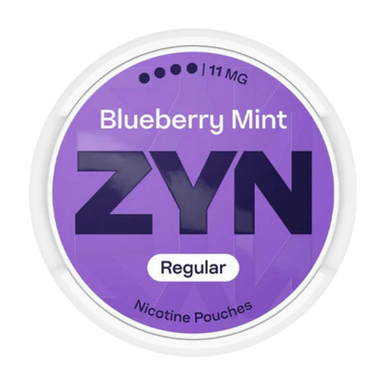
This can is tagged berry and declares 13.5mg. ZYN Black Cherry, in stock at £19.99, is tagged cherry and declares four figures — 1.5mg, 3mg, 6mg and 11mg — all at the same price. ZYN Blueberry Mint, in stock at £19.99, is tagged mint and berry and declares 11mg.
So the one genuine, recorded flavour distinction among the three is that the blueberry listing carries a mint tag and the other two do not. That is not interpretation; it is what our data says. It means that can has a cooling element declared on it and these two do not, which is the largest difference on the shelf and the easiest one to act on.
Between this can and the black cherry one, the recorded difference is a single word each: berry against cherry. That is the whole of it. By convention, cherry means a sweet stone fruit — rounder, lower in acidity, closer to preserve. Berry covers the currant-and-bramble direction, which conventionally carries more sharpness. We can tell you what those two words usually signal in food naming, and we have. What we cannot do is give you a finer comparison between the two cans, because our record gives us no basis for one. Anything more specific would be a tasting note we made up, and we would rather say plainly that we do not have it. If you want to know which of the two you prefer, buying both is the only honest route and we are not going to dress that up as a recommendation.
The rest of the shelf
ZYN Cool Mint X, in stock at £19.99, is the pure cooling option — no fruit component at all, and the furthest point from this can within the brand's range. If you want a second can that tastes nothing like your first, that is the one.
ZYN Citrus, in stock at £19.99, takes sharpness in a different direction entirely. Blackcurrant's acidity is dark and slightly resinous; citrus acidity is bright and clean. Two sharp flavours that share almost nothing, which makes this a more interesting companion to the current can than it first appears.
ZYN Coffee Mini, in stock at £19.99, is the only roasted flavour in the brand's range as we carry it, and it is also a mini format — a physically smaller portion. That is two variables changing at once, which is worth knowing before ordering it as a comparison.
ZYN Guava Spice X, in stock at £19.99, is the brand's most compound flavour idea on our shelves, pairing a tropical fruit with a spice direction. Where Blackcurrant Forest builds depth out of one fruit family, this one builds it out of two unrelated ones.
The number, and where our filing puts it
At 13.5mg this is the highest declared figure on any ZYN listing we hold. And yet the listing sits on our Medium Strength shelf alongside 134 others. That is worth flagging because it looks like a contradiction and is actually just our housekeeping showing through.
Our bands — low, medium, strong and extra strong — are shelves we made so that browsing works. The boundaries between them are ours, not an industry scale, and another retailer sorting the same figures would draw the lines somewhere else. A band name is a navigation aid. The figure on the lid is the fact.
And on what that figure means: it is a declaration printed on the can by the manufacturer, which we reproduce. It is not a dose, not a recommendation and not a quality grade. A can with a larger number is not a better or more advanced product than one with a smaller number. We cannot tell you which declared strength is appropriate for you, because that turns entirely on your own existing use and is not a judgement any shop can make from a listing page.
How people actually buy these, over time
The second thing worth spending real space on is the buying rhythm, because it is the practical question behind almost every message we get and it is almost never addressed on a product page.
The single can against the multi-can pack
Our catalogue mixes the two arrangements freely, and the headline prices are therefore not comparable without checking what sits underneath them. Nordic Spirit Blueberry at £4.49 and Velo Strawberry Ice at £4.19, both in stock, are single-can prices. 77 Strawberry at £39.90 and XQS Berrynana Twist at £39.90, both in stock, are at the other end. Nothing about £4.19 against £39.90 tells you which is better value until you know the quantity behind each, and in this listing's case we cannot tell you the quantity at all.
That is an awkward thing for a shop to admit on a £19.99 listing, and it is still the right thing to say. The pack field on this record is empty. Do not assume five cans because the sibling listings are five cans. Check the page.
Reordering, and the gap people misjudge
The pattern we see is that people underestimate how quickly a can empties and over-estimate how quickly a reorder arrives, and the two errors compound. Someone works through most of a can, notices it is getting low, orders, and then has two or three days with nothing while the parcel is in transit. Because there is age verification and a signature element involved, delivery is rarely same-day and can be slower than a general parcel if nobody is in to receive it.
The fix is boring and works: reorder when you open your last can rather than when you finish it. That single habit removes the gap entirely, and it costs nothing because you were going to buy the thing anyway. It is not a sales technique — it is the same advice anyone would give about anything bought regularly and delivered rather than picked up.
Keeping a spare, and what to make the spare
A spare can serves two purposes. The first is the obvious one: coverage while a reorder is in transit. The second is variety, and that is the one people discover later. A single flavour in constant rotation stops registering — the palate adapts to whatever it always gets — and a second can in a different direction is the standard fix.
If the spare is meant to be a contrast, take it out of the brand's mint corner or out of the wider catalogue's mint listings. If it is meant to be more of the same at a different price point, the berry shelf gives you plenty. Fumi Blackcurrant at £27.90, in stock, is the most direct like-for-like we hold — the same lead fruit from a different maker, without the "forest" element in the name. SYX Blueberry at £29.90, in stock, moves to the softer, rounder dark berry. Pablo Silver Edition Blue Raspberry at £39.90, in stock, takes the berry idea in the confected direction that "blue raspberry" conventionally signals, which is a long way from a currant's sharpness.
Three berry-shelf listings that would otherwise be on that list are unavailable, and it is worth saying so rather than sending you to them blind. Edge Strawberry at £14.95 is not currently in stock. Klint Blueberry at £36.90 is not currently in stock. Rush Berry Ice Pro at £19.99 is not currently in stock. The pages are live and tell you what we carry when we carry it; none of the three can be ordered today.
Buying the same thing repeatedly, and when not to
One more honest note on rhythm. People who settle on a can tend to reorder it without reconsidering, which is fine, and they also tend to keep reordering it for a while after it has stopped doing anything for them, which is less fine because it is money spent on a thing that has gone flat by familiarity. If a flavour has stopped registering, rotating is cheaper than increasing anything, and it is the only lever we are willing to describe. We are not going to suggest any other adjustment, because that would be advice we are in no position to give.
The format, briefly but properly
A pouch is a small soft sealed rectangle with rounded ends, about the footprint of a short stick of chewing gum and thinner. It has a little give. You take one out with finger and thumb and place it between the upper lip and the gum line; there is no preparation, no unwrapping, nothing to activate and no waiting stage.
Once seated it stays put. The first few minutes are when you are most aware of it and when most people nudge it once into the position that suits their own mouth. After that the awareness fades. It does not need chewing or holding. Speech is unaffected. How long anyone keeps one in varies enormously and is not something our record holds, so we will not put a figure on it.
The can is a shallow cylinder with a press-fit cap, and the cap has a second, shallow compartment underneath it. That compartment is a holding place for used pouches when there is no bin to hand — it is a staging post, not a destination. It holds several. Emptying it is the maintenance job everybody skips and a can left full for a week is genuinely unpleasant to open. Used pouches then go in general waste: not down a drain, not in a food-waste caddy, not on the ground. The empty can is plastic and goes wherever your council says plastic of that sort goes, which we cannot answer for your postcode.
The can as an object
Worth a little more on the container, since it is the part you handle several times a day and the part that determines whether owning a can is convenient. It is a shallow cylinder, roughly the diameter of a small jar lid and about as deep as two coins stacked. It disappears into a coat pocket, a bag pocket or a glovebox without noticeable bulk and weighs almost nothing.
The cap is a press fit rather than a screw thread. That makes it fast to open one-handed, and it also makes how firmly it seats a genuinely consequential thing that nobody publishes a specification for. A cap that seats well stays shut in a bag and on a car seat through a roundabout. One that seats loosely does not, and a can that has quietly opened among your other belongings is an annoying and wasteful discovery. There is no figure we can quote on this — our record holds price, declared strength, flavour tag and stock position, and nothing about lid tension — but the variation between makers is real and you notice it within a day of owning a can.
The face of the cap carries the brand, the flavour name and the declared figure, and the order in which those three appear matters more than it sounds. If you keep two or three cans, the lid face is the only part you ever look at, because the cans sit stacked in a drawer or a bag pocket and you identify one by reading the top. A lid that puts the flavour name small and the branding large costs you a second every time, which adds up in a way nobody anticipates when buying.
Keeping the can in condition
Short section, because there is not much to it, and important, because the failure mode is irreversible.
Keep the cap seated. That is most of the advice. The press fit seals, and a can left open overnight loses condition and goes flat. Push the lid home rather than resting it on.
Keep it out of heat and direct sunlight. A car in summer is the worst place available to anyone; a windowsill is second. A drawer, bag pocket or cupboard at room temperature is entirely fine. Some people keep opened cans in a fridge — our record does not say whether the manufacturer suggests that, so we will describe the practice without endorsing it. Cold storage preserves a can in reasonable condition; it does not restore one that has already dried out.
Because we do not know the pack quantity on this listing, we cannot tell you how many cans will be sitting unopened after your first. If it turns out to be more than one, keep the unopened ones sealed and together somewhere cool and dark, and open them one at a time rather than breaking every seal at once to compare smells. An unopened can keeps considerably better than an opened one.
Ordering it, and the age check
The listing is in stock as our record stands. Stock moves continuously and the live status on the page is the authority — a sentence written once in a description is a snapshot, nothing more.
This is an 18+ product. We sell it only to adults aged 18 or over who already use nicotine. Age verification is part of the order process, and ID may be requested on delivery; a courier can decline to hand over a parcel if it is not produced. That is the system working rather than failing, and it is worth arranging for someone who can provide ID to be at the address rather than finding out on the doorstep.
Delivery timings, carriers and charges live at checkout and in our delivery information, not in a product description that could be out of date by the time you read it.
One thing the age check does change, and it is the practical reason the reordering advice above exists: a parcel that requires a check is a parcel that can fail on the doorstep and go back to the depot. That turns a two-day wait into a five-day one through nobody's fault. If you are ordering to an address where you will not reliably be in, a work address or a neighbour who can produce ID is worth arranging before you order rather than after the first attempt has already failed. We would rather set that out here than have it come as a surprise.
Navigating 76 berry listings without losing an afternoon
The berry shelf is one of the larger ones we keep, and a shelf that size is only useful if you know how to cut it down. A few notes on doing that, since this listing is one of the 76 and most people arriving here came through that shelf.
The first cut is the fruit itself. "Berry" covers at least four distinct directions in practice: the sharp currants, the rounder blue and bilberries, the soft reds like strawberry and raspberry, and the confected blue-raspberry style that does not correspond to any actual fruit. Our tag does not separate those, so the product names are doing all the work. A can named for blackcurrant at £27.90 and one named for strawberry at £4.19, both in stock, sit on the same shelf and taste nothing alike.
The second cut is whether a cooling element is declared. Names carry this openly more often than tags do — "ice", "frosty", "arctic", "cool" in a product name are all signalling it. This listing's name carries none of those and its tag carries no mint, which is as close to a definite answer as our data gives.
The third cut is the pack arrangement, which as set out above is where headline prices stop being comparable. That is the cut most people skip and the one that actually decides what a purchase costs them.
If that still leaves too much, crossing the berry shelf with a strength band is the quickest way down. The medium listings hold 135 items on their own, so the intersection of the two shelves is a considerably smaller set than either.
Routes back to this page
This listing is filed in three places: among the berry-tagged listings, on the brand's own shelf, and in the medium band despite carrying the brand's highest declared figure, for the filing reasons set out above.
Beyond that, everything we stock is the top of the tree, the other bands — strong and extra strong — are the fastest narrowing if you already know the figure you want, and the larger brand shelves like Pablo's range and Cuba's range are the better entry point for anyone who browses by maker.
Questions, answered as far as the record allows
How many cans do I get for £19.99?
We do not hold that figure for this listing. The pack-size field on our record is empty, and rather than assume it matches the brand's other listings we would rather tell you it is missing. The listing page itself and the product labelling are the authority. If quantity is material to your decision, and at this price it reasonably is, confirm it on the page before ordering rather than relying on a description.
Does "Forest" mean it comes from somewhere?
No. "Forest" is a flavour convention. Attached to a fruit name it signals the mixed dark-berry idea — blackberry, bilberry and their relatives presented as a group. It is describing how a flavour is built, not where anything was grown or produced. We hold no origin information for this listing and would not publish any unverified.
What is the difference between this and the black cherry can?
Recorded: one flavour tag each, berry here and cherry there. That is genuinely all our data distinguishes. By convention, cherry signals a sweeter, rounder stone fruit and berry signals the sharper currant-and-bramble direction. Beyond that convention we have no basis for a finer comparison and we are not going to invent one. The declared figures also differ — 13.5mg here, four figures from 1.5mg to 11mg there — but that is a number, not a taste.
Is there a cooling element in this one?
Not according to our record. This listing carries the single tag berry, with no mint tag. If a cooling note is what you are after, the blueberry-and-mint listing at £19.99 carries both tags and is in stock, and the Velo strawberry ice can at £4.19, also in stock, declares it in its name. Those tell you openly; this one does not.
Why is a 13.5mg can on the medium shelf?
Because our strength bands are browsing shelves with boundaries we set ourselves, not an industry-standard scale. This listing carries the highest figure of any ZYN can we hold and still lands in the medium band under our own filing. Treat the band as a navigation aid and the figure on the lid as the fact. Another retailer sorting the same numbers would draw the lines in different places.
Which strength should I choose?
There is no choice on this listing — it declares one figure, 13.5mg. And more generally, we cannot tell you which declared figure is appropriate for you. That depends on your own existing use and is not something a shop can determine from a product page. The number is a manufacturer's declaration that we reproduce accurately; it is not a dose, not a ranking and not a recommendation, and a larger number does not mean a better can.
How long does the flavour last?
We do not hold that information and we will not estimate it. Duration varies substantially between individuals and between occasions, and the informal range people report is wide enough that any single number would mislead. Our record covers price, declared strength, flavour tag and stock position. The flavour fading is the usual prompt to take one out, and where that falls is something you learn with a can rather than from a page.
What is the closest thing you stock to this?
The Fumi blackcurrant listing at £27.90, in stock, is the nearest like-for-like — the same lead fruit from a different maker, without the mixed-berry element in the name. After that, the SYX blueberry can at £29.90, in stock, moves to a rounder dark berry, and the 77 strawberry listing at £39.90, in stock, moves to a soft red one. None of the three is the same product and we are not going to suggest any is interchangeable with it.
Are all the berry options you carry available?
No, and we would rather say so than let you find out by clicking. The Edge strawberry can at £14.95, the Klint blueberry one at £36.90 and the Rush berry ice pro listing at £19.99 are all currently unavailable. Their pages remain live so you can see what we carry when we carry it, but none can be ordered today. Everything else named on this page is in stock as our record stands.
Can I keep an opened can in a fridge?
People do it. Our record does not tell us whether the manufacturer suggests it, so we will describe the practice rather than recommend it. What holds reliably is that a lid left off costs a can more condition than ambient temperature ever will, and that cold storage preserves rather than restores. Keep the cap properly seated and the can away from heat and sunlight, and the fridge question becomes largely academic.
Where is this made?
We cannot tell you. Our record holds no manufacturing or origin detail for this listing, and repeating something read elsewhere that we cannot verify would be worse than admitting the gap. The can's own labelling is the authoritative source for anything of that kind. The same applies to the "Forest" in the name, which as set out above refers to the flavour and not to origin.
Why do your prices range from £4.19 to £39.90 for similar things?
Mostly pack arrangement, and partly that different brands price differently. The Nordic Spirit blueberry listing at £4.49 and the Pablo blue raspberry one at £39.90, both in stock, are not the same quantity of the same kind of thing. Comparing headline figures without checking what sits behind them is the commonest self-inflicted error in a catalogue this size, and it is one our own listings make easy to fall into.
Is this the strongest can you sell?
No. It is the highest declared figure on any ZYN listing we hold, which is a much narrower statement. The catalogue as a whole runs well above it, which is why we keep separate strong and extra strong shelves at all. We are stating that as arithmetic, not as a selling point — a higher figure is not an upgrade, and we are not going to present it as one.
What should I keep alongside it for variety?
Something outside the dark-fruit family, since that is where contrast comes from. Within the brand, the cool mint listing at £19.99 and the citrus one at the same price, both in stock, are the two furthest points from this can. If you would rather stay in fruit but change the register entirely, the guava and spice listing at £19.99, in stock, is the brand's most compound flavour on our shelves.
Do you sell single cans of this?
We cannot tell you, because the pack field on this record is empty. It is the same gap covered at the top of the page and it is the one thing about this listing we would most like to be able to answer. The listing page carries the live arrangement. Elsewhere in the catalogue both patterns exist side by side — the XQS berry listing at £39.90 and the Nordic Spirit one at £4.49, both in stock, are priced on completely different bases.
The wording we are required to carry
Nicotine is an addictive substance. This product contains nicotine.
It is sold only to adults aged 18 or over who already use nicotine. We do not sell to anyone under 18, and age verification forms part of the ordering process. ID may be requested on delivery, and the courier may decline to release the parcel if it cannot be produced.
This product is not a licensed stop-smoking medicine and is not offered, described or intended as one. It is not intended for non-smokers, for anyone who does not already use nicotine, for anyone under 18, or for anyone who is pregnant or breastfeeding.
We make no health or medical claim about this product in any direction, and nothing on this page should be read as advice on whether to use nicotine or in what quantity. We cannot advise you on which declared strength is appropriate for any individual.
Keep out of reach of children and pets. Every factual statement above — the £19.99 price, the 13.5mg declared figure, the berry tag, the in-stock position and the missing pack size — comes from our own catalogue record, and where we hold nothing the page says so rather than guessing.
To summarise
A single-strength listing at £19.99, declaring 13.5mg, tagged berry, in stock, with an unknown pack quantity that you should confirm on the listing itself. Both words in the name describe flavour: blackcurrant names a sharp dark fruit and "forest" signals the mixed dark-berry family behind it, neither of them saying anything about origin. It is the highest declared figure we hold from this brand and it still sits in the medium band because our shelves are housekeeping rather than a scale. Against the black cherry can the only difference our data records is one word, and we have said so rather than improvise a comparison we cannot support.
More from ZYN
More medium strength pouches
More berry pouches
Where this sits
ZYN Blackcurrant Forest Nicotine Pouches appears in these categories. Browse them, or jump to something close.
You might also like