Home / Medium Strength / 77 Black Tea Nicotine Pouches
77 · 10.4mg
Read the full guide
77 Black Tea Nicotine Pouches
£39.90
✔ In stock — ready to ship
100% tobacco-free
Free over £20
Same-day dispatch
Secure checkout
This is the listing page for 77 Black Tea Nicotine Pouches. Our record gives the price as £39.90, gives one declared strength of 10.4mg, and marks the product as not currently in stock. It holds no flavour tags against the can at all — the field is empty — and it files the product on only two shelves, one for strength and one for brand. That is a shorter fact list than most products on this site carry, and rather than disguise the fact we have built this page around it.
Everything below comes from that record, from a description of the object, or from a comparison against other cans we sell. Where our data runs out, the page says so. That happens more often here than on a typical listing, for the reasons above, and each time it happens we would rather write the gap down than fill it with something plausible. A guess that reads well is still a guess, and on a nicotine product it is a guess with consequences.
The full guide to 77 Black Tea Nicotine Pouches
4,874 words on how it eats, who it suits, how to serve it and what to put beside it.
The Black Tea can, and the short list of facts behind it
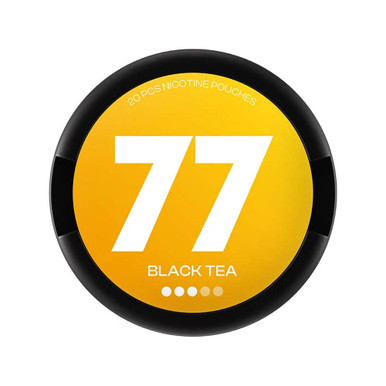
Physically, there is nothing unusual about the packaging. It is the familiar shallow disc of a tin, lid on top, printing on the lid face giving the brand, the flavour name and the strength figure. Lift the lid and the pouches are arranged flat, edge to edge, in a single layer. The lid itself is not solid: its underside is a recessed well, which is where used pouches go until you reach a bin. We describe the tin in this much detail because it is one of the few things about this product we can describe without qualification.
The product is age-restricted and is listed for adults aged 18 or over who already use nicotine. The complete wording on that sits in its own section near the bottom.
Black tea, taken purely as a taste
The flavour field in our record for this can is blank. That is worth stating before the description rather than after it, because it changes what the next few paragraphs are: they are a description of what the name on the lid points at, not a reading of a tag we hold. The manufacturer has named the flavour Black Tea, and that name carries a fairly narrow set of expectations.
Black tea, as a flavour idea, is built on tannin. It is a drying character more than a sweet one — the faint pucker across the middle of the tongue that brewed leaf tea leaves behind. Underneath that there is usually a malty, slightly bready depth, and around the edges a woody, dried-leaf note. It is a savoury-leaning flavour in a category where almost everything else is sweet-leaning, and of the flavour families we stock it sits nearer to coffee than to anything on the fruit or mint shelves, without being the same thing as coffee either.
What the name does not promise is equally useful. There is no cooling word in it, so nothing about the name suggests the cold, sharp layer that "Ice", "Arctic" or "Freeze" put on the front of other cans. There is no fruit word in it, so there is no berry or citrus sitting on top. There is no qualifier like bergamot, lemon or milk, so the name is pointing at plain brewed black tea rather than at a flavoured version of it. All of that is inference from the name, and we present it as inference.
The aroma of an open can, in our experience of handling stock, follows the same shape as the taste: dry leaf rather than sugar, closer to a tea caddy than to a sweet shop. That, again, is a description rather than a measurement. Flavour is subjective, this one more than most, because savoury flavours divide people much more sharply than fruit ones do. Some people find a tea pouch the most interesting thing on a shelf and some find it the least appealing, and neither group is wrong.
One consequence of the empty flavour field is practical rather than descriptive, and it belongs here: because we hold no flavour tags, this can does not appear on any of our flavour shelves. There is no tea grouping on the site, and the product has not been filed into a nearest-neighbour bucket to compensate. If you are browsing by flavour you will not find it that way, and the brand page is the only route to it.
10.4mg as a printed number
One strength is declared on this listing: 10.4mg per pouch, as given by the manufacturer. There is no second option, no higher or lower version of the can in our data, and no price variation to go with one.
A milligram figure is a manufacturer's declaration about content. It is genuinely useful for one job — putting products in order and letting somebody who already knows the bracket they buy in filter down to it — and it is genuinely poor at another, which is predicting how a given can will read. Flavour weight, pouch size, how cold the flavour is and how long somebody keeps a pouch seated all change the impression, and not one of them appears in the number. A savoury can and a heavily cooled fruit can at identical declared figures are not going to strike anybody as equivalent.
Our own filing puts 10.4mg inside the medium strength shelf, which currently holds 135 listings and is the largest of our three strength bands. The bands are our convention for sorting the catalogue, not an industry standard and not the manufacturer's own label. Above the medium band we run a strong shelf and an extra strong shelf, and the split between them exists to make filtering possible rather than to grade anything.
We do not tell customers which figure to buy. We do not know what anybody currently uses, we are not qualified to advise on it, and any retailer steering an individual toward a particular strength is doing something it should not. The number is printed on the lid, it is repeated on the listing, and the choice belongs to the person making it.
The same figure, eleven different cans: how this sits on the medium shelf
The most useful thing we can do with a can that carries no flavour tags is put it next to the products it shares a shelf with and let the differences be the description. Everything named in this section sits near this one in our catalogue, and the prices are the prices we list.
Start with the money, because it is the widest spread on the shelf and the thing people underestimate. Here are the neighbours we would put against this can, in price order:
| Can | Our price |
|---|---|
| Velo Bright Spearmint | £4.19 |
| Nordic Spirit Blueberry | £4.49 |
| Edge Spearmint | £14.95 |
| UBBS Cherry | £19.95 |
| Fumi Blackcurrant | £27.90 |
| SYX Apple Kiwi | £29.90 |
| White Fox Double Mint | £34.90 |
| Klint Arctic Mint | £36.90 |
| Pablo Silver Edition Blue Raspberry | £39.90 |
| XQS Arctic Freeze | £39.90 |
| 77 Black Tea | £39.90 |
Nearly a tenfold spread from one end to the other, and the honest explanation for most of it is not in our hands. Different listings cover different quantities, and where our record does not tell us what a given price covers, we cannot reconcile the two ends of that table for you. What the table does show accurately is that this can sits at the top of its shelf on price, sharing that position with the Pablo and XQS listings.
Flavour, against the same neighbours
Set the prices aside and the more interesting comparison is what kind of flavour each can is doing. Seven of the ten neighbours above are mint-led, cooled or fruit-and-cooled: the Velo spearmint can and White Fox Double Mint at £34.90 are straight mints of different weights, Klint Arctic Mint at £36.90 is a cold one, and XQS Arctic Freeze at £39.90 is named for the cold rather than for anything else. That is the shape of the shelf as a whole, and it is why a tea flavour is unusual on it.
The fruit contingent — Nordic Spirit Blueberry at £4.49, UBBS Cherry at £19.95, Fumi Blackcurrant at £27.90, SYX Apple Kiwi at £29.90 and Pablo Silver Edition Blue Raspberry at £39.90 — covers most of the berry and orchard ground between them. None of them is doing what this can is doing. On a shelf of 135 listings, the number of savoury or infusion-style flavours is small, and that scarcity is the single most accurate thing anyone can say about where Black Tea sits.
Reading a shelf by the names on it
Something worth knowing if you are comparing cans on a category page rather than one at a time: the second word in a pouch name is usually doing more work than the first. The neighbours listed above are a decent sample of the conventions, and once you can read them the shelf becomes much faster to scan.
Cooling words are the most consistent signal. Arctic, Ice and Freeze all indicate that a cold layer has been put on the front of whatever else is in the can, and the position of the word tells you how central it is — a can named Arctic Freeze is announcing the cold as the whole flavour, while a fruit name followed by Ice is announcing fruit with cold behind it. Klint's Arctic Mint puts the cold in front of a mint that would already read as cool, which is a doubling rather than a contradiction.
Intensity words are the second group. Double, as in White Fox Double Mint, refers to the flavour construction rather than to the strength figure, and this is the single most common misreading we get asked about — a word like Double or Bright on a lid is not a claim about the milligram number, which is printed separately for exactly that reason. Bright Spearmint is the same kind of word: it is describing the character of the mint, pulling it toward the lighter, sweeter end of the family rather than the heavy menthol end.
Then there are edition words. Silver Edition, on the Pablo blue raspberry can, is a manufacturer's sub-range label — it tells you which line within a brand you are looking at, and nothing whatsoever about flavour, strength or quantity. We carry it through into our listing titles because it is part of the product name, not because it means anything we can explain.
Against all that, Black Tea is about as plain as a pouch name gets. There is no cooling word, no intensity word and no edition word. It is a flavour name and a flavour name only, which is unusual on this shelf and is the reason the name carries more descriptive weight here than it would on most listings.
What the comparison cannot settle
A comparison of this kind has limits worth naming. We are comparing our own listings using our own data: names, prices, our strength bands and our flavour tags. We are not comparing declared strengths across brands, because the neighbour entries in our data carry price and name but not strength, and we are not going to reach for figures we have not got in front of us. We are also not ranking any of these cans against each other on anything other than price and flavour family. Which one is better is not a question with a factual answer, and it is not one we are going to pretend to settle from behind a counter.
The pouch in the hand and in the mouth
The format question comes up constantly and deserves a proper answer rather than a line. A pouch from this kind of can is a small, soft, dry rectangle — closer to a folded paper sachet than to anything wet — with rounded ends so that nothing catches. It weighs almost nothing. The three phases below are how people generally describe using one, and they are descriptive rather than instructional.
The first minute
Seated between the lip and the row of the upper jaw, a fresh pouch feels more present than it will in five minutes' time. There is a distinct sense of something being there. The flavour arrives fairly quickly in that opening stretch, and with a tea flavour in particular the dry, tannic quality is most noticeable early. Some people move a pouch once or twice in the first minute to settle it; after that it tends to stay put on its own.
The long middle
This is most of the time a pouch spends in place and the least eventful part of it. The pouch softens, the sense of bulk drops away, and the flavour settles into something steadier and quieter than the opening. People talk, work and drink with one seated; whether you eat with one in is a matter of personal preference and we have no view worth publishing on it. Nothing needs doing during this stretch, which is the practical characteristic of the format that distinguishes it most from anything involving a device.
The end of it
Flavour fades before anything else does, and for most people the fading is the cue. How long that takes varies far too much between individuals for us to print a number — a few minutes at one end, most of an hour at the other, and the same person will not be consistent across a week. Removal is a fingertip job. The used pouch goes into the recess in the lid, which holds several before it needs dealing with, and that recess is the whole reason the format works on a journey or anywhere without a bin to hand. Empty it into general waste. Never into a drain, a plant pot or the side of a road.
Two things belong at the end of a format section like this one. The first is that used pouches are small, pale and easy to lose sight of on a desk or in a car door, which is a genuine reason to put them back in the tin rather than down. The second is that the tin should be shut and kept away from children and animals, in the house and in the car, for exactly the same reason.
Where Black Tea falls inside the 77 line-up
We list 29 products from this brand, and the 77 brand page is where all of them sit together. The defining feature of that shelf is that it does not vary on price: every 77 listing we carry is £39.90, so there is no cheaper end of the brand to move to and no premium tier. Choosing between them is flavour work and nothing else.
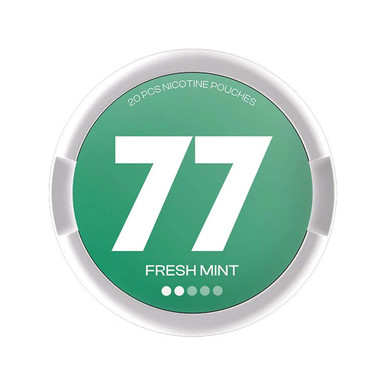
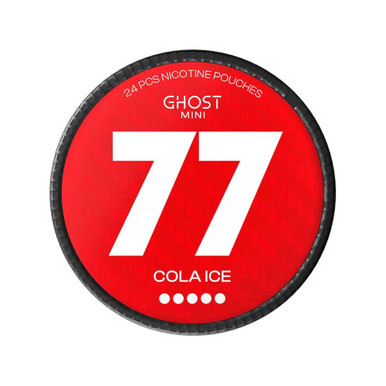
Inside those 29, this can is at the odd end. The bulk of the brand's range as we stock it is mint, fruit, cola and dessert territory. 77 Apple Mint pairs orchard fruit with a cool layer; the Forest Fruits can works the darker berry side; 77 Cola Ice and 77 Cola Vanilla take the cola idea in a cold direction and a softer one respectively. All four are £39.90, like everything else here. Black Tea is the can that steps outside that set entirely, and it is one of the few places in the brand's range on our shelves where a flavour is not built on sweetness.
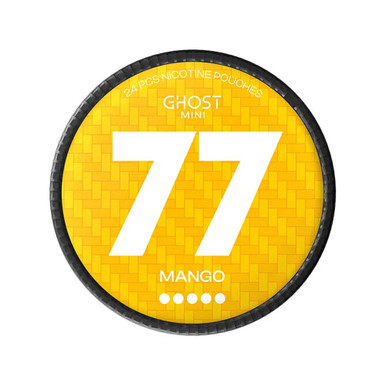
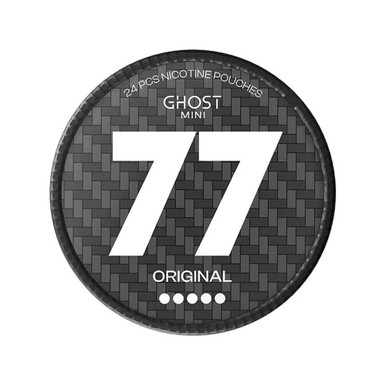
The brand also runs a mini sub-line here, listed as Ghost. 77 Ghost Mini Mango and the Ghost Original Mini can are both £39.90 as well. If format rather than flavour is the thing you would change about this product, that sub-line is where the brand's own answer sits, and it is a more honest pointer than pretending this listing has a size choice.
Running a savoury can alongside something else
Most people keep more than one can going. With a flavour like this one the reason is a little different from usual: a savoury, tannic flavour is not something many people want as the only thing in rotation, and the second can tends to be chosen as a contrast rather than as a variation on a theme. Two patterns come up repeatedly.
The first is savoury paired with cold. A tea flavour and a straightforwardly cold can are about as far apart as the shelf allows while staying in the same strength band, and the contrast is the point — the Klint can at £36.90 or the XQS one at £39.90 are the obvious candidates, with the £34.90 White Fox mint sitting between them in character. All three are within a few pounds of this listing, so the rotation does not change what an order costs.
The second is savoury paired with sweet fruit, which is the more common arrangement. Fumi Blackcurrant at £27.90 and the £19.95 UBBS cherry can are both dark, jammy fruit flavours that sit well against a dry one, and the SYX apple and kiwi listing at £29.90 is the sharper, lighter version of the same idea. If cost is the deciding factor in a second can rather than flavour, the Nordic Spirit blueberry listing at £4.49 is the cheapest route into a fruit flavour anywhere near this shelf, and the gap between £4.49 and £39.90 is wide enough that a good number of people keep one of each for that reason and no other.
Staying inside the brand is the third option and the least contrasting one. Everything on the 77 shelf is the same price, so a second 77 can costs exactly what this one does; the Cola Vanilla listing is probably the brand's nearest thing to a sweet counterweight to a tea flavour, and its Apple Mint can is the brand's lightest. Neither is doing anything like what this can does, which is precisely why they work beside it.
Keeping a can you already have
Since this listing is not currently available, the storage question here is mostly about a can already sitting in a drawer rather than one arriving in a parcel. The principles are the same either way and there are not many of them.
- Press the lid fully home after each use. A tin left ajar in a bag pocket is the usual reason a flavour reads flat.
- Keep it away from heat and sunlight. Car dashboards in summer and windowsills are where cans suffer; a drawer or a cupboard is unremarkable and fine.
- Deal with the lid recess before it fills. Used pouches left in the top of a tin for days are unpleasant to open onto.
- Keep the tin closed and well out of reach of children and pets, full or part-used.
People often ask whether a can should go in the fridge or the freezer. Our record carries no storage instruction for this listing, so we are not going to issue one. If the can itself says something about how to keep it, the can outranks anything written here. What we can say without inventing is that a shut tin somewhere cool, dry and shaded is how the format is normally kept and that nothing about it demands more than that.
One strength, one price, and a gap in the data
There is no decision to make inside this listing. The record holds a single variant, a single declared strength of 10.4mg and a single price of £39.90, so there is no ladder to climb and no saving to weigh up.
The gap is quantity. Our data does not record how many cans £39.90 covers for this product. Some listings on the site do carry that number and this one does not, which is a hole in our record rather than a statement about the packaging. We are not going to divide the price by a number we have made up in order to produce a per-can figure, because a fabricated unit price is worse than no unit price. If that number matters to your decision — and at this price point it reasonably might — it is a fair question to put to us rather than to infer from this page.
Buying it, and the two checks around the order
The immediate answer on buying is that you cannot, at the moment. Our record marks this product as out of stock, and an unavailable listing cannot be added to a basket however thoroughly it is described. We do not run a waiting list, we do not take back-orders on it, and we are not able to give a restock date we have not been given ourselves. The listing page is the live position; this page is a description.
When a nicotine product is available, ordering runs through two checks that are not optional. The first is the age check at checkout: everything here is sold to adults aged 18 or over, and an order that does not clear the check does not ship. The second happens at the door, because ID may be requested on delivery — and if nobody at the address can produce it, the courier does not hand the parcel over. That is a condition of selling age-restricted goods rather than a courier's discretion, and it is worth thinking about where a parcel goes before ordering, since an age-restricted product is not something to leave sitting in a porch.
Mixing brands and flavours in one basket makes no difference to any of this; a single order clears a single check. Our usual returns terms apply across the site, with the obvious point that an opened can cannot go back on a shelf.
How to reach this page again
There are only two routes, and the second is the one you want. By strength, this can is on the medium band with its 135 listings. By brand, it is on the 77 page. There is no third route, because the empty flavour field means the product is not on any flavour shelf — so browsing for a tea flavour will not surface it, and neither will any of our fruit or mint groupings.
If you are working across brands rather than within one, the Pablo shelf and the Cuba range are the two nearest brand pages of comparable size, and the complete listing index carries everything we sell in one place.
Things people ask about this listing
Why does it have no flavour category?
Because the flavour field in our product record is empty for this can. We file products onto flavour shelves from that field, so a blank field means no shelf. We have not invented a tag to fill the space, and we have not filed it under a rough approximation such as dessert or coffee, because that would put inaccurate information into the catalogue. It is a gap in our data and it is visible on the site as one.
What does it taste like?
Our honest answer is that the name is the only flavour information we hold, and the name points at plain brewed black tea: a dry, tannic character with a malty depth behind it, and none of the cooling or fruit elements that other names in the range signal. That is a description of what the name denotes, offered as such. The can itself is the authority on its own flavour, and tea is a divisive thing on a pouch shelf.
Is it sweet?
We cannot give you a composition answer, because we do not publish ingredient or technical detail for any nicotine product on the site. As a matter of flavour impression rather than content, a tea flavour is built around dryness rather than around sugar, which is what makes it read differently from almost everything sharing its shelf. Anything more precise than that would be us making claims about what is inside the pouch, which we do not do.
Is it in stock?
No. Our record marks it unavailable, and the listing page is the live source if that changes. We have no restock date to give you, we do not keep a notification list for individual cans, and we would rather say all of that plainly than leave the impression that something is on its way.
How many pouches are in a tin?
Not something our record holds, so not something we will print. The count is stated on the packaging by the manufacturer and that is where to read it. Publishing a number we cannot stand behind would be worse than the gap.
How many cans does £39.90 cover?
Our data does not say for this listing. Some products on the site record a can count and this one has none against it. Rather than divide the price by an assumption, we would rather tell you the field is empty and let you ask us or check the listing.
What does 10.4mg mean?
It is the manufacturer's declared nicotine content per pouch, printed on the can and repeated on our listing. It is a sorting figure. It tells you where a product sits relative to others carrying a number, and it does not describe how a can will strike any particular person, because flavour weight, pouch size and how long one is kept in all affect that and none of them are in the figure.
Which strength is right for me?
We cannot answer that, and we would not want a shop that did. We do not know what you use, we hold no information about you, and advising an individual on a nicotine strength is outside what a retailer should be doing. The strength bands exist on the site so that somebody who already knows their bracket can filter to it quickly, and that is the extent of what we offer on the question.
Is there a stronger or milder version of this can?
Not in our data. This listing holds one variant at 10.4mg. Other products in the catalogue do carry more than one declared strength, but this is not one of them, and we have no information about versions of it that we do not stock.
Where is it made, and by whom?
We do not hold that information and we are not going to guess at it. Our record carries the brand name and nothing about manufacture, origin or corporate ownership. The packaging carries whatever the manufacturer chooses to state, and that is the only source worth relying on for it.
Can I order it alongside other products?
Not while it is unavailable — an out-of-stock line cannot join a basket. In general, mixing brands, flavours and strengths in one order is normal and does not complicate anything: one basket, one age check at checkout, one parcel, and the same possibility of an ID request at the door.
Is a tea flavour weaker than a mint one?
No, and the two things are not connected. Flavour character and declared strength are separate properties of a can: a savoury flavour can read as quiet on the tongue while carrying the same printed figure as a cold mint that reads as loud. That difference in impression is about the flavour, not about the number, and it is one of the main reasons we say a milligram figure is a sorting key rather than a description.
Will you get it back in?
We do not know, and we would rather say that than imply otherwise. Availability on an individual line depends on supply we do not control, our record shows it as unavailable, and we have not been given a return date. The listing page is the only live answer. Nothing else on the site fills the same flavour slot, so there is no honest substitute for us to point you at.
Do you publish ingredients for it?
No, not for this product and not for any nicotine product we list. We describe flavour as taste and aroma, we publish the facts our record holds, and we leave composition, technical specification and anything else printed on the packaging to the manufacturer's own labelling, which is the authoritative source for it.
Compliance information for this product
Nicotine is an addictive substance.
77 Black Tea Nicotine Pouches are offered only to adults aged 18 or over who already use nicotine, and on no other basis. We operate an age check at checkout and do not sell to anyone under 18. ID may be requested on delivery, and a parcel will not be handed over where it is requested and cannot be produced by an adult at the address.
This product is not a licensed stop-smoking medicine and carries no authorisation of that kind. It is not intended for non-smokers, for anyone who does not already use nicotine, for under-18s, or for anyone pregnant or breastfeeding. Nothing on this page constitutes medical advice, and nothing on it should be read as encouragement to anyone to begin using nicotine or to choose any particular strength.
Store the can closed and out of reach of children and pets, and put used pouches in general waste. Every product fact stated above — the name, the brand, the price, the declared strength, the empty flavour field and the stock position — is taken from our own record for this listing. Where the record holds nothing, this page says so instead of estimating, and the manufacturer's labelling governs anything printed on the packaging.
To sum up
77 Black Tea is the savoury outlier on a shelf of mints and fruits: a dry, tannic, malty flavour idea in a format where almost everything else leans sweet or cold. It is £39.90 like every other listing on the brand's 29-product page, it carries one declared strength of 10.4mg inside our medium band, and it is out of stock as this was written. It is also the one can in this range with an empty flavour field, which is why it appears on no flavour shelf and why this page has said "we do not hold that" more times than most. If the tea idea is what interests you, nothing else we currently stock is doing the same job; if the £39.90 is the sticking point, a £4.19 Velo can sits at the opposite end of the same shelf.
More from 77
More medium strength pouches
More 77 pouches
Where this sits
77 Black Tea Nicotine Pouches appears in these categories. Browse them, or jump to something close.
You might also like