Home / Medium Strength / SYX Apple Kiwi Nicotine Pouches
SYX · 12mg · 10-can pack
Read the full guide
SYX Apple Kiwi Nicotine Pouches
£29.90
✔ In stock — ready to ship
100% tobacco-free
Free over £20
Same-day dispatch
Secure checkout
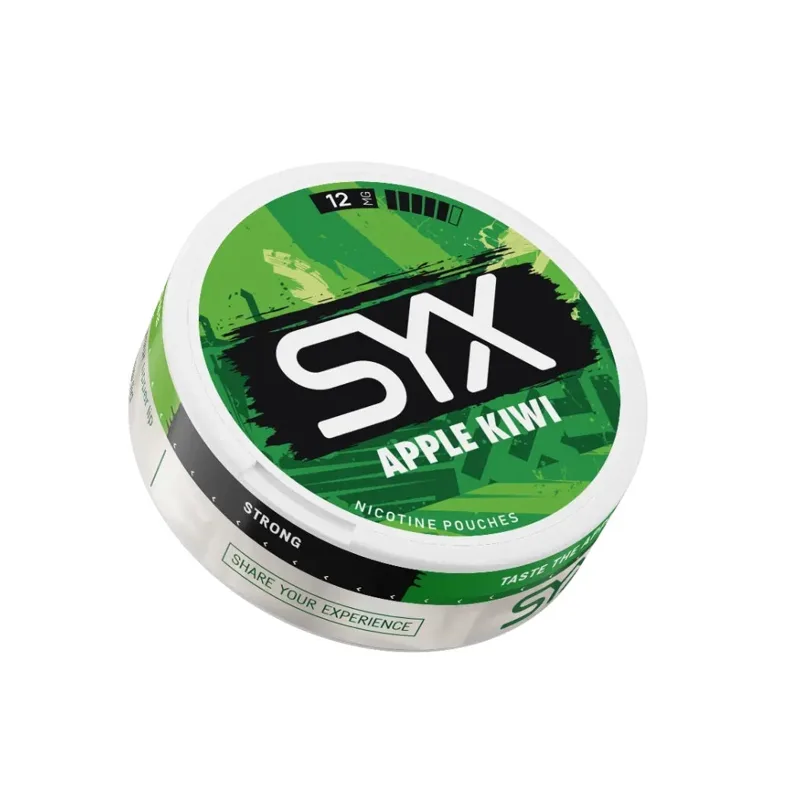
This page belongs to SYX Apple Kiwi Nicotine Pouches. The brand is SYX, the product name we hold is Apple Kiwi, and the price is £29.90. There is one declared strength on the record, 12mg, with one purchase option at that figure. The quantity is 10 cans, which works out at £2.99 per can. The listing is marked in stock. We hold one photograph, and one flavour tag: tropical.
That last item does not match the product name, and rather than quietly ignoring the discrepancy we are going to deal with it early, because it affects how you find this can and how you should read anything we say about it. The section after next is about exactly that.
The full guide to SYX Apple Kiwi Nicotine Pouches
5,102 words on how it eats, who it suits, how to serve it and what to put beside it.
SYX Apple Kiwi: the listing in full
Everything on this page is either description of the format, arithmetic on the price and quantity, comparison against other listings on our own shelves, or an explicit note that we do not hold something. We publish no ingredient lists, we do not explain what a pouch does once it is in use, and we make no statement in any direction about anyone's wellbeing. Where the record is blank or inconsistent, we say so.
Ten cans at £2.99 each: what kind of purchase this is
The quantity is the first practical thing to settle, because £29.90 on its own tells you very little. Ten cans at £29.90 is £2.99 a can, which is towards the lower end of the per-can figures across this catalogue, and it means this listing is a stocking-up purchase rather than a trial.
That distinction matters more than it sounds. A single can is a small, recoverable decision — if it turns out not to suit you, you have spent a few pounds. Ten cans of one specific listing at one specific declared figure, with no option to mix inside the pack, is a commitment to getting through them. Our record holds exactly one variant on this line: 12mg at £29.90. There is no smaller pack of this product on our shelves and no larger one.
For comparison, Nordic Spirit Tropical Mix is £4.49 and in stock, and Velo Peach Ice is £4.19 and in stock. Prices in that region nearly always mean a single can. Against £2.99 a can here, those look expensive per unit and are far cheaper at the till, and which of those facts matters depends entirely on whether you already know you want ten of something. Neither is better value in the abstract; they answer different questions.
The other six SYX listings are all priced at £29.90, identical to this one. Our sibling records carry a price and a stock flag for each but no can count, so we are not going to state a per-can figure for any of them or assume they are also packs of ten. That assumption would be easy and unverified, which is exactly the kind of number we do not print. Their own pages are where to check.
A flavour tag that does not match the name
The only flavour tag we hold against this listing is tropical. The product name is Apple Kiwi. Those two things do not agree, and we are not going to pretend they do.
Take it apart. Kiwi can reasonably be filed as tropical. Apple, by any ordinary reading, cannot — it is an orchard fruit and it sits in a different family from the pineapples and mangoes and passion fruits the word tropical usually covers. So a can named for an apple and a kiwi has been filed under a tag that covers one half of its name and not the other. That is a tagging decision inside our own system, made by us, and it is not a description of the product by its manufacturer.
The consequence for you is concrete. Because tropical is the only tag on the record, this listing appears on the Tropical shelf, which holds fifty-eight products. It does not appear on any apple shelf, because we hold no apple tag against it, and it does not appear on a kiwi shelf, because we hold no kiwi tag either. If you browse our flavour shelves looking for apple, you will not find this can, and that is a limitation in our filing rather than anything about the pouch.
We are flagging it rather than smoothing it over because a shop that quietly reconciles its own inconsistencies is a shop whose facts cannot be checked. The tag is what it is; the name is what the manufacturer printed; and where the two disagree, the can's own labelling is the authority on what the product is. An adult who already uses this line will know which of the two descriptions is closer to the truth, and our database does not.
How a fruit note gets built in a dry pouch, and what that means for two fruits
This deserves a proper section, because a composite fruit name like Apple Kiwi is doing something more complicated than a single-fruit name, and understanding the general mechanics is useful even though we hold no tasting record for this specific can.
Start with what a dry pouch has to work with. There are two channels only: the aroma that comes off the can when the lid comes away, and the taste in the mouth while a pouch is in. That is it. There is no third channel, nothing carried on anything else, and no way for a flavour to be suggested by association. Everything the flavour name promises has to be delivered by taste and by the smell of an open can, which is a narrower pair of channels than most flavoured products have available. It is the reason pouch flavours tend to be built as bold, recognisable shapes rather than subtleties: a note that would read as delicate elsewhere frequently reads as absent here.
Now the axes a fruit note is built along. The first is sweetness against sharpness. A fruit can be presented at the sweet, jammy, confected end — closer to a sweet-shop version of the fruit than to the fruit itself — or at the sharp, acidic, green end that reads as the fruit just before it ripens. Most fruit pouch names land somewhere along that line, and where they land is the single biggest determinant of whether people describe a can as "realistic" or "candied". The second axis is body: whether a note is thin and bright, arriving quickly and not lasting, or thick and rounded, slower to arrive and staying longer. The third, present in a great many listings but not implied by this one's name, is a cooling character layered over the fruit.
Apple is unusually variable on the first axis, because "apple" covers at least two different flavour targets. A green-apple construction is sharp, tart, high and bright; a red-apple or apple-juice construction is sweeter, rounder and much less acidic. Those read as different flavours to most people, and a name that says only "apple" does not tell you which of the two is intended. Kiwi, meanwhile, is a naturally awkward note to build: the fruit's own character is soft-sour with a faintly grassy, seedy edge behind it, and most of that edge is very difficult to render. What usually survives is the soft-sour part, which can read as generic green fruit if it is not carefully placed.
Put two fruits in a name and a structural question follows: which one leads and which one supports. Conventionally the first-named fruit carries the top note and the second fills in behind it, which would put apple in front and kiwi as the body. But that is a convention about how names get written, not a rule, and plenty of listings across this catalogue invert it. We do not hold a tasting record for this can, so we cannot tell you which fruit leads, how sweet or sharp the apple has been built, or how much of the kiwi's grassy edge survives. We are describing the space the flavour sits in, not the point it occupies. Anyone wanting the latter has the can in front of them and we do not.
One more general note about the aroma channel. The smell of an open can and the taste in use are related but not the same, and it is common for one to be markedly stronger than the other. A can that announces itself clearly on the lid coming off does not necessarily carry that intensity through, and a modest-smelling can sometimes does more in the mouth than expected. We hold no measurement of either for this listing, and we would rather state the general pattern than invent a specific.
The six other SYX listings, and the shape of the range
The SYX shelf holds nine products. This page is one, and the six we link are all in stock at £29.90, which makes the brand very easy to reason about: within SYX, the choice is flavour and nothing else, because price does not vary.
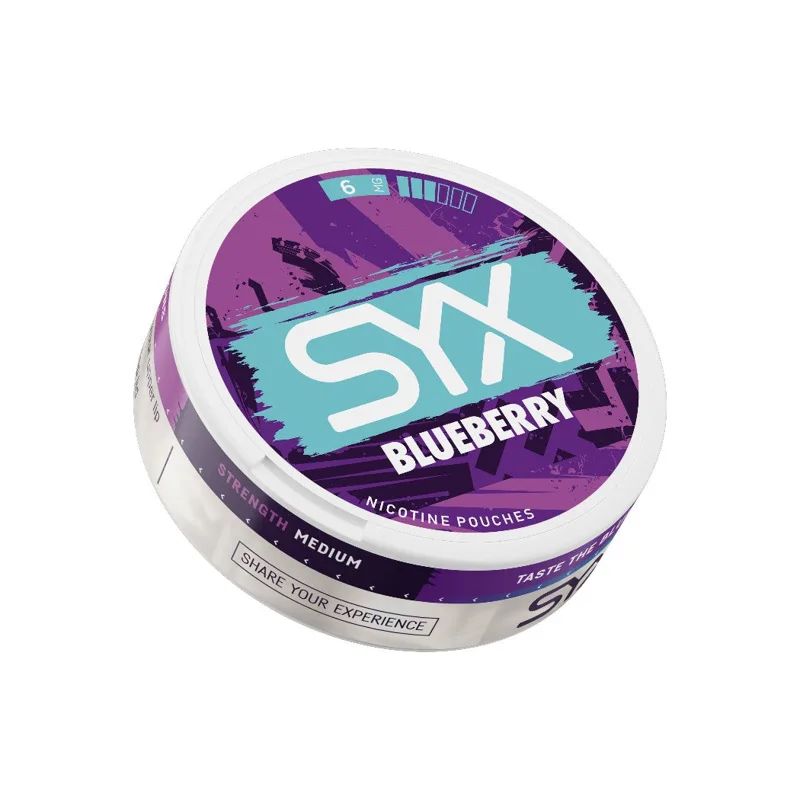
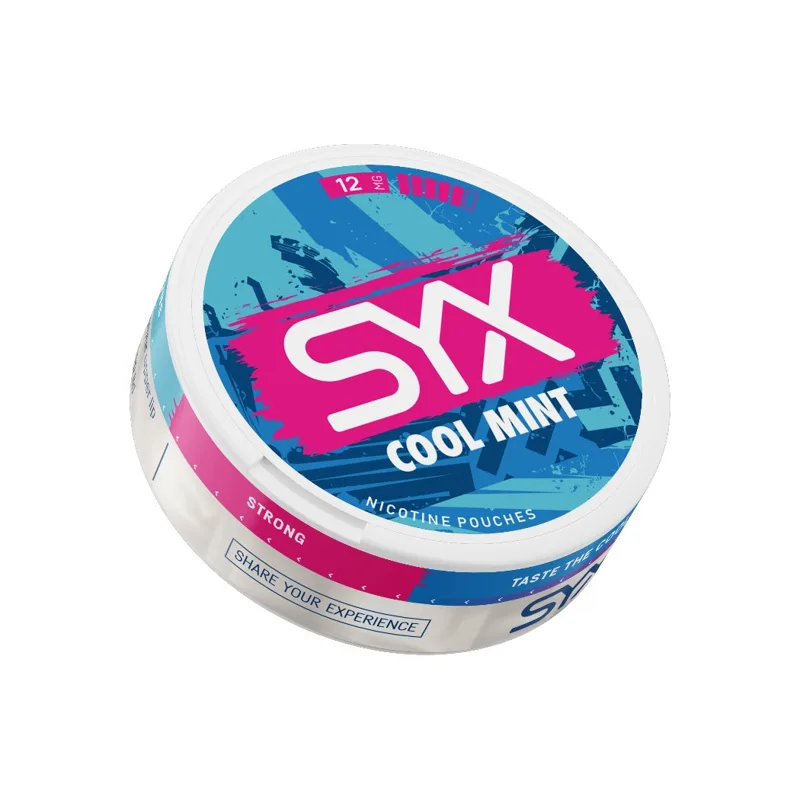
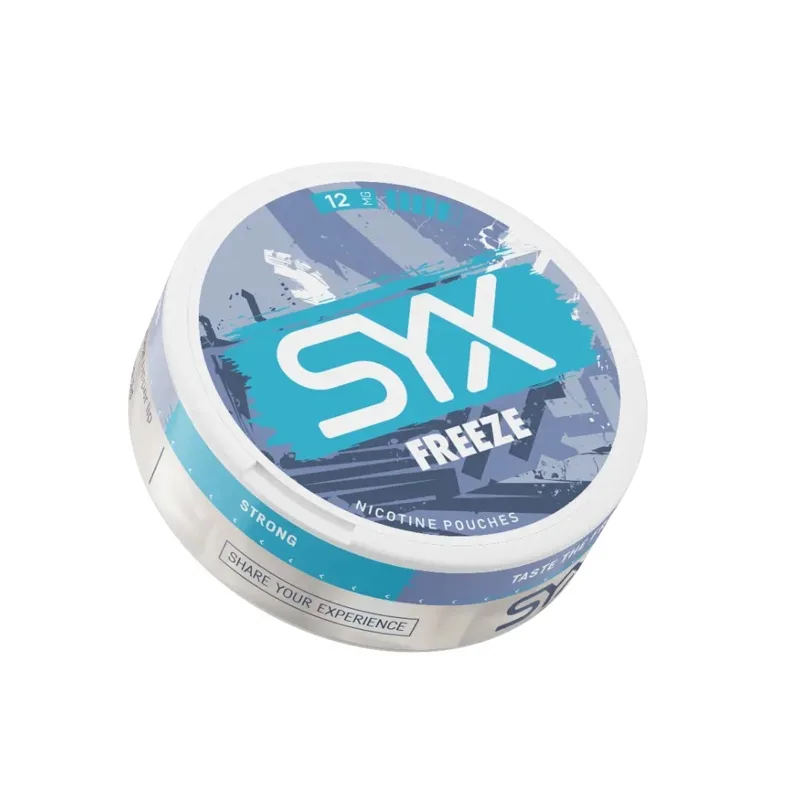
The flavour spread across those six is weighted heavily towards mint. SYX Cool Mint, SYX Peppermint and SYX Spearmint are three separate mint listings, which between them cover the main divisions of that family — peppermint reading sharper and more medicinal in general use of the word, spearmint softer and sweeter, and a name like Cool Mint sitting somewhere in between with the cooling character foregrounded. SYX Freeze is the fourth listing in that general territory, where Freeze is the manufacturer's name and the cooling note is what the name is about rather than a fruit.
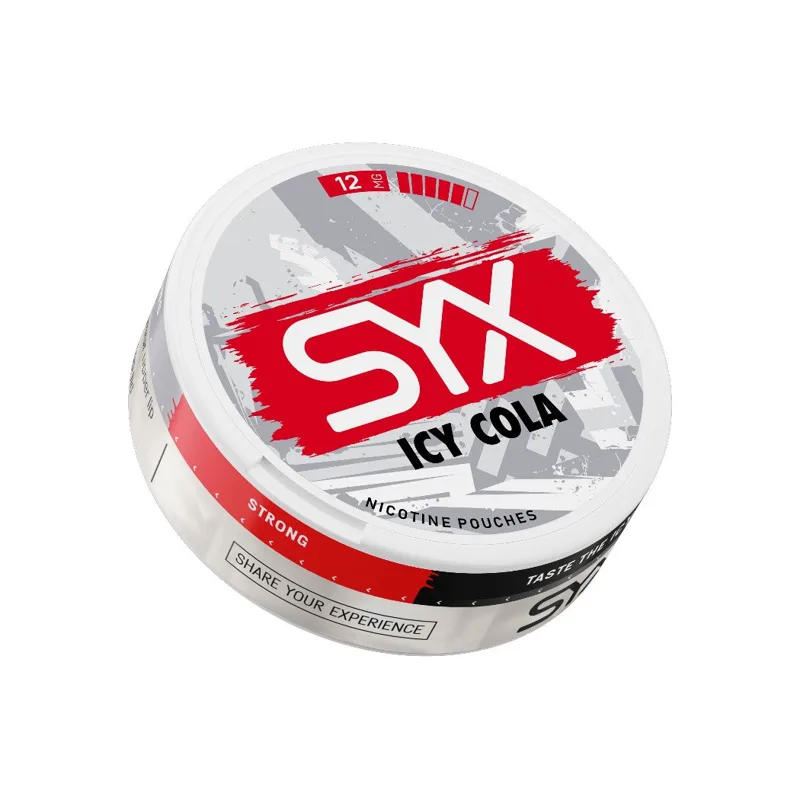
Away from mint there are two. SYX Blueberry is the other fruit listing on the shelf, and berry is generally built rounder and jammier than either half of this can's name. SYX Icy Cola is the confectionery-soda entry, with Icy signalling a cooling note over the cola.
So this listing is one of only two straightforwardly fruit-led cans among the seven we can see, and the only one naming two fruits. That is a genuine fact about how the brand's range sits on our shelves. It is not a recommendation, and we are not going to describe any listing on that shelf as the best of them — we hold price, flavour name, stock and, on this page only, a can count. None of that supports a ranking and we are not going to construct one.
Reordering, and the case for keeping something in reserve
Buying ten cans at a time changes the rhythm of ordering rather than removing it, and people settle into one of two patterns.
The first is ordering on empty: the pack runs down, the last can opens, the order goes in. It is the simplest version and it works right up until something interrupts it. Stock across this catalogue genuinely moves. Every SYX listing is available today, but two of this page's nearest neighbours are not — Klint Apple Mint at £36.90 and Pouch Nurdz Nurdz Peach Blue Razz at £19.99 are both marked out of stock, and that is an ordinary state of affairs rather than an unusual week. Ordering on empty means accepting that occasionally you will wait.
The second pattern is ordering while a can or two remains — placing the next order when the pack is down to its last couple rather than its last one. It costs nothing and it absorbs a dispatch delay or a bank holiday without any drama. If you buy in tens at all, this is the version that causes fewer problems.
The reserve can is a related habit and a slightly different one. The logic is that a spare does not need to be the same product: a single can from elsewhere in the catalogue, kept unopened, covers a gap without committing you to ten more of anything. The single-can listings linked earlier, at £4.19 and £4.49, are the obvious candidates for exactly that role, and the point of the arrangement is that it removes urgency from reordering rather than adding anything to what you use.
The less obvious consequence of buying in tens is that it is a storage decision made in advance. Ten cans arrive together whether or not there is a sensible place for them, so the storage notes further down are worth reading before the parcel turns up rather than after.
12mg on the label, and the bracket it lands in
The 12mg is the manufacturer's declared figure, recorded by us as given. It does one job in our system: it decides which strength bracket the listing files under. Here that is Medium Strength, which holds a hundred and thirty-five products and is the widest of our brackets by some margin.
What the number is good for is comparison and navigation. You can hold one listing's declared figure against another's, and you can narrow several hundred products into a browsable subset. In a catalogue this size that is genuinely useful, and it is the whole reason the brackets exist.
What it does not do needs saying plainly. It does not describe an experience, and we are not going to translate it into one, because that would be a claim about effects and we make none. Our record does not tell us how the manufacturer arrived at the figure or what it is declared per, and we are not going to invent that detail to make the number look more solid. It is not reliably comparable between brands, because two manufacturers printing the same figure have not necessarily measured or defined the same quantity. And it is not a grade — a higher figure is not a better can and a lower one is not a lesser can.
Our brackets run from a low band through Medium Strength, Strong and Extra Strong. Written out like that they look like a sequence, and a sequence invites the idea of a starting point and a destination. That is not how we think about the catalogue and it is not how the shelves are meant to be read. They are drawers. There is no direction of travel through them, no can that represents an advance on another, and nothing on this site describes a listing as something to be earned, tested against or worked up to. We cannot advise which declared strength suits any individual. We hold nothing about any reader that would make such advice meaningful, and advice about nicotine is not a shop's to give.
It is also worth noting that a bracket is a band rather than a value. A hundred and thirty-five listings sit in Medium Strength, and their declared figures fall within a range rather than matching one another. If the figure matters to you, the individual listing is where to read it, every time.
The can, the pouch, and getting rid of one
The object is a small cylinder with a lid, the pouches stacked in the lower compartment. Most cans in this category carry a shallow second compartment in the lid — the catch compartment — whose only purpose is somewhere to put a used pouch when a bin is not within reach. Our record holds one photograph and no specification, so whether this can has one is settled by the object rather than by us, though it would be unusual if it did not.
A pouch is a small sealed sachet. It goes between the lip and the gum and stays there; it is not chewed, not bitten through and not swallowed. How long people keep one in ranges from a few minutes to well over half an hour, and we are not going to publish a typical duration because we hold no data on it and the spread between individuals is real. Any guidance from the manufacturer will be on the packaging.
Our record does not state a portion count per can. It gives ten cans and a price and nothing about the contents of each one. A portion count is exactly the kind of figure that gets copied onwards once a shop publishes it, so we are not publishing one we have not verified.
Used pouches go in general waste — not a sink, not a lavatory, not a food-waste caddy, and not the ground. The lid compartment is the interim solution and wants emptying at the next bin rather than filling up over a week. Cans go back closed, stand upright where practical, and stay out of reach of children and pets, which is the most important handling instruction attached to any product of this kind.
Storing ten cans, and keeping the open one right
A pack of ten is a storage question before it is anything else, and the nine unopened cans and the one in use want slightly different attention.
Unopened cans want dark, dry and roughly room temperature: a drawer, a cupboard, a lidded box. What they do not want is heat, and heat is the single thing that most reliably shortens the useful life of a can. A windowsill in summer, the shelf above a radiator, a glovebox, the warm corner of a kitchen — warmth accelerates every change a can undergoes, and it does so whether or not the lid has ever been off. Flavour is the first thing to suffer, because the lighter, brighter part of a fruit note is the part that goes first. A fruit-led can stored warm for months will tend to read duller and more generically sweet than a cool-stored one, and on a can named for two fruits that is a real loss rather than an abstract one.
Cold is a far smaller problem than heat. A can brought straight out of cold storage and opened will sometimes carry condensation on the inside of the lid, which is worth wiping rather than leaving to sit, but nothing about cool storage does any harm.
The open can is where habits count. Lid properly on between uses, not resting loosely. A dry-style pouch left exposed loses what little free moisture it holds and becomes papery and slow, and there is no fixing it — adding water produces a worse pouch rather than a revived one. A moist-style pouch left lying on its side lets liquid settle to one edge so the stack goes uneven, which standing the can upright prevents outright at no cost.
With ten cans, order is the whole discipline: open them in the sequence they arrived, keep the unopened ones together so you can tell which is which, and work through the pack steadily rather than leaving the last two in a drawer for a year. Our record holds no date marking or shelf-life figure — the packaging carries it — so that is the practical substitute for a number we do not have.
Neighbours on the shelf, and how they differ
The listings nearest this one come from the tropical tag and the medium bracket, and they are worth going through with their prices because the differences are mostly brand, quantity and flavour family rather than anything mysterious.
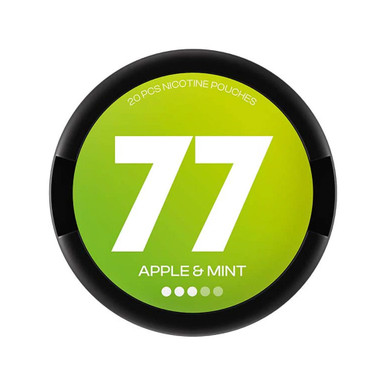
For the apple side of the name, Fumi Green Apple at £27.90 is the closest thing we stock to a single-fruit apple listing, and its name is explicit about which apple construction is intended in a way that this can's is not. Cuba Black Apple Juice at £39.90 goes the other way, naming apple as juice rather than as a sharp green note, so between those two you have the two ends of the apple axis described earlier, both in stock. 77 Apple Mint at £39.90 is apple with a mint note over it, which is a different proposition again and available.
For the tropical tag itself, the Nordic Spirit listing named earlier is the cheap single-can route in at £4.49. For stone fruit and berry, XQS Fizzy Peach at £39.90 leans confectionery — fizzy being a sweet-shop reference rather than a fruit one — and Pablo Silver Edition Blueberry Peach Ice at £39.90 is the two-fruit-plus-cooling construction that this can's name does not include, which makes it a useful contrast if you want to understand what a cooling layer adds to a fruit pair. Both are in stock.
One neighbour is not a nicotine listing by its title: Denssi Tropical Fury Energy Pouches at £39.90 is filed with the word Energy where the rest of these say Nicotine, and that difference in the title is meaningful enough that you should read its own page rather than assume it is the same kind of product as this one. It shares the tropical tag with this listing, which is why it turns up as a neighbour. We are not going to characterise what is in it from this page.
Two neighbours cannot be ordered today, and it is better to know now than at the basket: the Klint apple-and-mint listing at £36.90 and the Pouch Nurdz peach listing at £19.99, both linked in the reordering section above, are marked out of stock. For browsing rather than clicking through individually, the Cuba shelf and the Pablo shelf account for several of the listings above, with Pablo holding the concentration of low-priced single cans.
What there is to decide
On this listing itself, very little, and it is better to say so than to manufacture a choice. One declared figure, 12mg. One price, £29.90. One quantity, ten cans. No size options, no strength options and no alternative pack on the record.
The real decisions are elsewhere. Whether ten cans of one flavour is the commitment you want, given that there is no smaller pack of this product — the single cans linked above are the alternative if not. Whether you want the fruit pair or one of the six mint and cola listings at the identical £29.90 on the same brand shelf. And whether the apple-tagging problem matters to you enough that one of the explicitly named apple listings is a better fit than a can filed under tropical.
We are not going to make any of those calls for you, and nothing on this page suggests that anybody begin using nicotine or use more of it than they already do.
Ordering, delivery and the age check
Add the pack to the basket and an age check runs before checkout completes. We sell only to adults aged 18 or over, the check covers every listing on the site without exception, and an order that fails it is not dispatched.
At the door, ID may be requested, and where it is requested and no adult at the address can produce it, the parcel is not handed over. With a ten-can pack it is worth having the order sent somewhere an adult will be present with identification available rather than to an address where a parcel would be left unattended. The courier's own rules on attended delivery are theirs, we do not publish them, and what the driver asks on the day sits with the driver within that framework.
Finding this page again
Three shelves hold this listing: the brand shelf at nine products, the Medium Strength bracket at a hundred and thirty-five, and the Tropical shelf at fifty-eight. Note again that none of those is an apple shelf, so if apple is the word you would naturally search for, the brand shelf is the reliable route back rather than flavour browsing.
If you are weighing this against the rest of SYX, the brand shelf is the efficient page, since all seven listings sit there at the same £29.90. If you want the wider flavour context, the Tropical shelf is the one, with the caveat that it is filed by tag rather than by fruit name. And if you would rather ignore the filing entirely, everything we stock is browsable in a single list with stock status shown, which is the most honest view of what can actually be ordered on a given day.
Questions we are asked about this can
Why is it tagged tropical when it is called Apple Kiwi?
Because tropical is the only tag entered against it in our record, and we are not going to hide the mismatch. Kiwi can reasonably be filed as tropical; apple cannot, by any ordinary reading. It is a filing decision in our system rather than a description from the manufacturer, and its practical effect is that this can appears on the Tropical shelf and on no apple shelf at all.
Is £29.90 for one can?
No. Our record gives ten cans, so it works out at £2.99 each. That is towards the lower end of the per-can figures across the catalogue. Plenty of listings elsewhere at a few pounds are single cans, and plenty carry no can count on our record at all, so the quantity is always worth reading before two prices are compared.
Do the other SYX listings also come as ten cans?
We cannot tell you. All six we link are £29.90, the same price as this listing, but our sibling records carry a price and a stock flag without a can count, so assuming they are packs of ten would be a guess. Each listing's own page is the place to check, and we would rather leave the gap visible than fill it.
Is the apple sharp or sweet?
We do not hold a tasting record for this can, so we cannot say. Apple is genuinely ambiguous as a flavour name — a green-apple construction is tart and bright, an apple-juice construction is sweeter and rounder, and they read as different flavours. The name does not resolve it and neither can we. The can's own labelling is the authority.
Which of the two fruits leads?
We do not know. Convention in flavour naming puts the first-named fruit in front, which would mean apple leading and kiwi filling in behind, but that is a convention about writing names rather than a rule about building flavours, and plenty of listings invert it. Without a tasting record we are not going to state it as fact.
What does 12mg mean?
It is the strength the manufacturer declares, which we record and use to decide which bracket the listing appears on — here, Medium Strength. It allows comparison of declared figures between listings. It does not describe an experience, we do not explain what it does, and it is not a ranking. Our record does not say how the figure was arrived at, so we publish no interpretation of it.
Which strength should I pick?
We cannot advise on that. We hold no information about any individual reader, and a recommendation about nicotine is not something a shop should be giving. The brackets are a filing system for finding things, not a route to follow in either direction, and nothing here presents a higher or lower figure as better.
Is there a cooling note in this one?
The name does not include one, and our single flavour tag does not indicate one either, so we have nothing to go on. Plenty of listings across the catalogue name a cooling note explicitly — the Pablo listing in the neighbours section is an example of fruit with cooling on top — and this one does not. That is an observation about the name rather than a statement about the product.
How many pouches are in a can?
Our record does not say. It gives a can count for the pack and nothing about the contents of each can, so we are not going to print a portion count we have not verified — it is the sort of number that gets repeated onward once a shop publishes it. The packaging states it.
Can I buy a single can of this?
Not on our shelves. This listing has one purchase option, the ten-can pack at £29.90, and there is no smaller version of this product in our catalogue. If a single can is what you want, the two listings at £4.19 and £4.49 linked above are examples of listings priced that way, though they are different products from different brands.
Is one of the neighbours a caffeine product rather than a nicotine one?
One of them is titled Energy Pouches rather than Nicotine Pouches, which is a real difference in how it is filed, and its own listing is the place to read what it actually is. We are not going to characterise its contents from this page, because the information on our record here is its title, price and stock and nothing else. It shares the tropical tag, which is why it appears as a neighbour.
Why do two of the neighbours link to pages I cannot buy from?
Because a fair amount of the catalogue is unavailable at any given time, and hiding those listings would make the shelves look fuller than they are. We flag stock on every link we make so that you know before you click — the Klint listing at £36.90 and the Pouch Nurdz listing at £19.99 are both out of stock, and everything else linked from this page is currently available.
The compliance wording for this listing
Nicotine is an addictive substance.
SYX Apple Kiwi Nicotine Pouches are sold only to adults aged 18 or over who already use nicotine. An age check is applied before checkout completes, we do not sell to anyone under 18, and ID may be requested on delivery. Where it is requested and no adult at the delivery address can produce it, the parcel is not handed over.
This product is not a licensed stop-smoking medicine and holds no authorisation of that kind. It is not intended for non-smokers, for anyone who does not already use nicotine, for anyone under 18, or for anyone who is pregnant or breastfeeding. Nothing on this page is medical advice, nothing on it suggests that anybody take up nicotine, and nothing on it recommends a declared strength as suitable for any person or situation.
Keep cans closed and out of reach of children and pets, and dispose of used pouches in general waste. Every product fact above — name, brand, price, declared strength, can count, flavour tag, stock status — comes from our own record for this listing, and where that record is silent or inconsistent this page says so rather than tidying it up. The manufacturer's labelling on the packaging is the authority for anything printed on the can.
The short version
SYX Apple Kiwi is a ten-can pack at £29.90, or £2.99 each, declaring 12mg, currently in stock, and filed under a single flavour tag of tropical that covers the kiwi in its name and not the apple — so you will not find it by browsing for apple. The 12mg puts it in our widest bracket, Medium Strength, which is a band for finding things rather than a rung on anything. On flavour, we can describe the space a two-fruit name occupies but not the point this can sits at, because we hold no tasting record and will not write one. The brand shelf holds six more SYX listings at the identical price if mint or cola suits better, and the explicitly named apple listings above are the alternative if the tagging on this one is the problem.
More from SYX
More medium strength pouches
More tropical pouches
Where this sits
SYX Apple Kiwi Nicotine Pouches appears in these categories. Browse them, or jump to something close.
You might also like