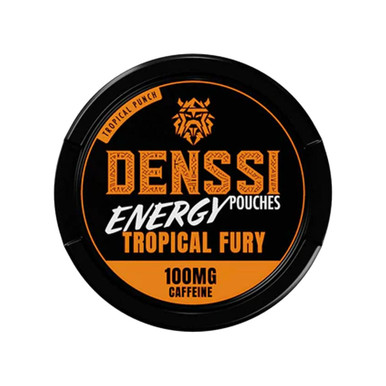
Home / Energy Pouches / Denssi Tropical Fury Energy Pouches
Denssi
Read the full guide
Denssi Tropical Fury Energy Pouches
£39.90
✔ In stock — ready to ship
100% tobacco-free
Free over £20
Same-day dispatch
Secure checkout
Denssi Tropical Fury Energy Pouches are listed here at £39.90 as a single line, available at the time of writing, with one option showing against it. Before anything about flavour, the contents need stating without ambiguity: this can contains no nicotine. It is a caffeine pouch. It is not a nicotine product, it is not snus, and the nicotine-specific information that sits on most of the product pages in this shop has no application here whatsoever.
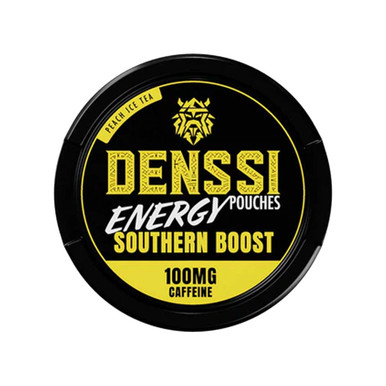
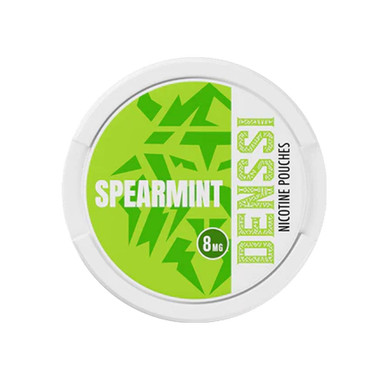
That warning goes first because the packaging will not help you. Denssi put everything they make into one style of container, so the pot holding this one is the same diameter, depth and finish as the pot holding their mint and berry nicotine cans. The lid works identically. The pouches inside are indistinguishable by touch — the same slim white shapes with the same dry surface. In a drawer with the labels facing down, there is no way to tell them apart, which is an argument for storing the two kinds separately and for looking at a label before you open anything.
The full guide to Denssi Tropical Fury Energy Pouches
4,859 words on how it eats, who it suits, how to serve it and what to put beside it.
First, what is in this pot
The name is worth a sentence too. Fury is decoration, the same kind of decoration that puts thunder and lightning on the front of soft drinks, and it is not a description of anything. Energy is partly the maker's product-line name and partly the flavour family the can belongs to, in the way "cola" or "citrus" names a family. We file the can on the energy pouch shelf and under the energy flavour group, ten listings, because that is where customers looking for this taste will go hunting for it. Filing something under a word is a cataloguing decision. It is not a statement about what a product does, and this page makes no statement about what this product does for anybody.
What remains is a great deal of useful detail: how it tastes, how it behaves in the mouth, how the container works, how it compares with the rest of the shelf, how to keep one in good order and how to buy it. All of that is below.
The pouch and the pot, practically
The pouch is a slim white rectangle with softened corners, in the format that has become standard across this whole category rather than the fatter traditional portion. It goes under the upper lip and is pressed flat with the tongue so that it lies along the lip rather than balling up. Seated properly it sits still and stays put; seated carelessly it folds, and the remedy for that is to take it out, flatten it and put it back.
Fresh from the pot it feels dry and a little stiff. It relaxes after a minute or so, and that is roughly when the flavour begins to make itself known — there is a short lag at the start with any dry pouch, and it is not a fault.
How long anyone keeps one in is a personal habit. We are not going to publish a figure, because a number printed by a shop reads like an instruction, and this is not a page that instructs. What we can describe is how the flavour runs, since that tends to be what decides it: on this can the sweetness is strongest early, the acidity holds through the middle, and the tail is comparatively plain. Once the tail arrives there is not a great deal left to stay in for, and in practice that is the point most people take one out.
The lid deserves proper attention because it is the most practically useful part of the object. It is built in two parts: the well underneath holds the untouched pouches, and the underside of the lid forms a shallow tray with a floor of its own, intended for spent ones. A used pouch goes into the tray, the lid presses shut, and the whole thing travels in a pocket until you reach a bin. Capacity is modest — three or four spent pouches before the lid starts refusing to seat, which is the can's own way of saying it needs clearing. Emptying it as a daily habit rather than when it jams keeps the pot pleasant to open.
Spent pouches go into general waste. They are not for sinks, drains, pavements or the footwell of a car. The empty pot is a small piece of plastic and goes wherever your local authority takes that grade.
Opening a new pot
A can arrives sealed. Once the seal is off, the pouches stand on edge in the well, packed tightly enough that the first one takes a bit of persuading out and every one after it comes easily. That is the entire extent of the learning curve.
We get asked how many pouches a can holds. Our listing does not state a pouch count and we are not going to estimate one. A retailer's estimate becomes a number customers plan around, and a quiet change at the factory then makes us wrong without anybody noticing. The container carries the maker's own figures on the base and the back of the label, and that is where to read them. If the count matters before you order rather than after, ask us and we will tell you what the listing covers instead of guessing.
It is worth paying attention to the first pouch from a fresh pot, because it sets the benchmark for what that particular can is supposed to taste like. Three weeks later, when you are wondering whether the flavour has faded or whether you have simply grown used to it, that memory is the only reference you have. Most people cannot separate those two explanations after the event, which is one reason the storage section further down is written at the length it is.
The tasting note: four dials
Flavour names are sales copy and they tell you very little. A more useful way to place a can you have never opened is to describe it on a few independent dials, so you can position it against cans you already know. Four cover most of what matters in a pouch: how much sugar character it carries, how much acid, how much bitterness underneath, and how much chill. Here is this can on each.
Sugar: high, and immediate
The sweetness is the first thing that registers and it is not subtle. It reads as confectionery sweetness rather than fruit sweetness — the sugared, slightly synthetic register of tropical boiled sweets and squash concentrate rather than anything you would cut open in a kitchen. It is at its loudest in the opening minutes and drops away steadily after that, so the can you taste at the start is measurably sweeter than the one you are tasting ten minutes later. Anyone who finds sugary profiles cloying should read that as a warning rather than a recommendation; anyone who finds plain cans thin will read it the other way.
Acid: moderate to high
Acid here means tang, the quality that stops sweetness collapsing into syrup. Tropical fruit flavourings usually carry a good deal of it — pineapple and passionfruit in particular are built on acidity — and this can is no exception. Because the acid holds steady while the sugar recedes, the middle phase of a pouch tastes noticeably sharper than the opening did, even though nothing has been added. That shift is the most interesting thing the flavour does. It is also the reason this can reads as juicy rather than as flat sweetness.
Bitterness: low to moderate
There is a dry note sitting under the fruit, of the citrus-pith sort rather than the coffee sort. It is present rather than prominent, and it mostly shows itself late, once the sugar has gone and the acid has thinned out. Some people take that as the flavour having depth and others take it as the flavour dying; it is neither, it is simply the floor of the profile becoming audible once everything above it has quietened. Compared with the sharper citrus corner of this same line, the bitterness here is softer and rounder.
Chill: low
There is a faint freshness threaded through the fruit and nothing more than that. This is not a cold can and it is not trying to be. Put it next to anything in the maker's freeze-named range — Brain Freeze at £39.90 is the extreme example — and the difference is not a matter of degree but of category. If cold is the property you buy for, this is the wrong end of the shelf, and the section further down on the Denssi range explains where the right end is.
How one pouch changes from start to finish
Reading the dials as fixed values is slightly misleading, because they do not all hold still. A pouch of this can moves through three recognisable phases, and knowing the shape of that is more useful than any single adjective.
The opening phase is the sweetest and the shortest. Sugar and fruit arrive together and dominate everything else, and the dry note at the bottom is completely hidden underneath them. The middle phase is the longest by a wide margin and it is where the character actually lives: the sugar drops away while the acid stays where it is, so the same pouch tastes progressively sharper without anything having changed. The closing phase is plain. The fruit thins, the tang softens, and what remains is a mild dry finish with very little sweetness left in it.
Because the interesting stretch is the middle, this is not a can that rewards taking a pouch out early, and it is not one that has much left to offer at the very end either. That is a description of how a flavour behaves over time, not a suggestion about how long anyone should do anything. The decision stays with the person holding the pot.
| Phase | Sugar | Acid | Dry note |
|---|---|---|---|
| Opening | Dominant | Present behind the sugar | Hidden |
| Middle | Receding | Steady, increasingly obvious | Beginning to show |
| Close | Largely gone | Thinning | The main thing left |
Putting the four together
The overall shape is a loud, sugary, juicy can with a mild dry finish and almost no cold in it. That is specific rather than middle-of-the-road. The aroma, incidentally, matches: lift the lid and what comes off the pouches is sweet, fruity and quite forward, more sugared than fresh, with the tang detectable behind it. On the breath afterwards the trace is light, sweet and short-lived — less persistent than a heavy berry and much less obvious than a menthol.
What "tropical" actually names
"Tropical" is a composite rather than a fruit. Nobody grows a tropical. As a flavour convention it means a blend somewhere in the region of pineapple, mango, passionfruit and citrus, with the proportions varying by maker and rarely disclosed, and the result is generally sweeter and more acidic than a berry flavour and less sharp than a straight lemon or lime. That is the family this can belongs to, and it is offered purely as a taste reference so you know what you are buying into.
The individual components are worth knowing, because they explain why two cans both labelled tropical can taste so unlike each other. Pineapple brings the acid and a slightly resinous edge. Mango brings body and roundness and almost no sharpness. Passionfruit brings a musky, seedy tang that is unmistakable when it is there and often missing altogether. Citrus is the common thinner, used to lift a blend that would otherwise sit heavy. A maker who leads with mango produces something soft and thick; a maker who leads with pineapple and citrus produces something bright and cutting. This can leans towards the second of those descriptions, with enough body underneath that it does not read as purely sharp.
That also explains the disappointment people sometimes report when moving between tropical cans from different houses. The word on the label is the same and the blend underneath it is not, and no catalogue can tell you the proportions because they are rarely published. The practical response is to treat each tropical can as its own thing rather than as a version of a standard recipe.
Our catalogue keeps a shelf for it: 58 tropical listings, which is a substantial corner of the shop and a good place to browse if the family interests you more than this particular can does. Most of what sits there is a nicotine product, so it is worth keeping the distinction in mind while you look — the shared flavour word does not mean a shared contents list.
Where this can falls within the Denssi range
Denssi are one of the better-represented makers on this site, with twelve listings on the Denssi brand page. The range only makes sense once you see that it is really two separate product lines sharing one pot design, and confusing the two is the single most common mistake customers make with this brand.
The energy line, which is where this can lives
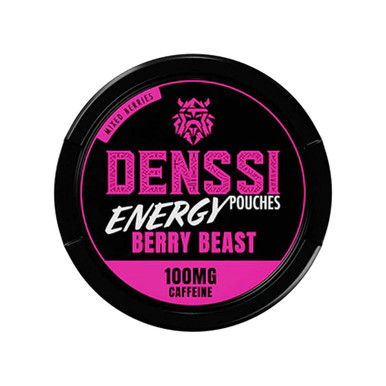
This is the smaller of the two halves and the one that contains no nicotine. Alongside this can sit Denssi Berry Beast Energy Pouches and Denssi Chaos Cola Energy Pouches, both at £39.90, plus two further cans in the same line at the same price. Every one of them is a caffeine pouch, every one comes in the identical pot, and the difference between them is which corner of the sweet-and-tangy space they occupy.
Within that set, this can is the juicy, tropical-fruit entry. The berry-named can in the line pushes red fruit forward and reads as rounder and jammier. The cola-named one is the biggest departure of the group, bringing a spiced, vanilla-ish register that has far less acid in it and almost none of the sugared-tropical quality. If you want the whole line in one view, that five-listing shelf holds all of it, which makes this an unusually easy range to work through in full.
The nicotine line, which is a different proposition entirely
The larger half of the brand's shelf space here goes to nicotine pouches, and those are built around a completely different idea: take a fruit or a mint and lay a firm cooling element underneath it. Denssi Mango Freeze Nicotine Pouches at £39.90 is the closest of them to this can on fruit alone, since mango sits inside the tropical family, but the cooling on it changes the character of the whole thing. The Blueberry Freeze can takes the darker berry direction, the Brain Freeze tin makes the cold the entire point, and the Cold Mint listing is the plain unfruited mint of the range. All of them are £39.90 and all of them contain nicotine, which this can does not.
Which of the two halves you are holding
Since both lines share a pot, the only reliable check is the front of the label. That matters less if you buy one kind and more if there are several cans in a household. Keeping the two lines in different places — different drawers, different bags, different shelves — takes no effort and removes the problem entirely. It is dull advice and it is the most useful thing in this section.
Cans people keep beside this one
A loud sweet flavour is the kind you tire of fastest, and the usual remedy is variety rather than volume. What follows are cans from our own shelves with a stated reason for each, and one caution attached to the lot of them: everything named below is a nicotine product, while this can is not. Treat them as flavour comparisons rather than as substitutes, and read their own pages for what they actually are.
Staying inside the tropical family, Nordic Spirit Tropical Mix Nicotine Pouches at £4.49 is the cheapest way on our shelves to taste how a different maker handles the same blend, and Elf Bar Pineapple Nicotine Pouches at £29.90 narrows the blend down to a single fruit, which is instructive if you want to work out which part of the tropical mix you actually like. UBBS Peach Passion at £19.95 pairs a soft stone fruit with a sharper one, and Velo Peach Ice at £4.19 takes the same fruit in the cold direction instead.
For a sharper change of gear, the apple and green-fruit cans cut against sugar more effectively than another tropical would. SYX Apple Kiwi at £29.90 and Killa Apple Nicotine Pouches at £33.50 both lead with crisp acidity, Cuba Black Apple Juice Nicotine Pouches at £39.90 takes a rounder pressed-apple line, and 77 Apple Mint at £39.90 adds a herbal edge on top of the fruit. Fumi Fiery Peach Nicotine Pouches at £27.90 sits between the two camps.
For something genuinely unlike this can rather than adjacent to it, Pablo Exclusive Banana Ice at £3.85 is about as far from a sugared tropical blend as the fruit shelf goes while remaining a fruit, and our mint category is where to look when the sweet register has stopped registering altogether and nothing fruity will fix it.
Looking after a pot
Pouches are robust in most respects and vulnerable in exactly one: they dry out. A pouch that has lost its moisture turns stiff and papery, gives up its flavour slowly and runs out early, and feels worse in place. Every piece of care advice below is aimed at that single problem.
Close the lid properly, every time. It sounds too obvious to print and it remains the most common reason a can disappoints, because an open pot in a warm room loses moisture quickly. Keep the container somewhere cool and out of direct sunlight — a cupboard, a drawer, an inside pocket. Avoid the places that get hot: dashboards, windowsills, parcel shelves, radiator tops. Heat is what turns a slow process into a fast one, and a pot left in a car on a warm day can age more in an afternoon than it would in a month indoors.
Keep the tray in the lid clear. Spent pouches sitting up there are pressed against fresh stock every time the can closes, passing moisture and used-up flavour into pouches you have not touched yet. A few days of that dulls the top layer; a week of it dulls the lot.
Check the date printed on the base of your own pot, and treat it as the answer rather than anything stated here. Cans sit in drawers for months and stock moves at different speeds, so the only date that governs your container is the one on your container. Where the pot and this page disagree about anything at all, the pot is right.
One line, one price
There is very little to choose on this product and inventing options would be dishonest.
It is listed once, at £39.90, with a single option against it, labelled 100mg. That label is what our catalogue carries, and reproducing it is the whole of our involvement with the figure. We are not going to interpret the number, break it down, convert it or describe it as large or small — a retailer editorialising on a content figure is exactly how a piece of information turns into persuasion. The packaging is the authority on what is in the pot. It was printed by the people who made the product, it travels with it, and it does not go stale the way a web page does.
One comparison is worth explicitly ruling out. Most cans in this shop show a milligram figure that refers to nicotine content. The figure on this caffeine listing and a nicotine figure are not two points on one scale — they measure different substances in different categories of product, and setting them side by side produces a number pair that means nothing. Nobody is stronger than anybody in that comparison, because the comparison does not exist.
Our listing also does not state how many cans come in a pack. Rather than guess, the honest position is that we do not publish a per-pack can count for this product. The basket line at checkout describes exactly what you are buying, and that is the line to read if quantity decides your order.
Ordering, delivery and age
Buying is the ordinary process: add the can, check the basket line reads as you expect, pay, wait for the courier. Working-day orders go out on our standard dispatch schedule, and the confirmation email is the first record to check if anything looks wrong. If a pot turns up crushed, split or with a lid that will not seat, tell us rather than living with it.
On age, this product sits in a slightly unusual position and we would rather be precise about it than vague. This can does not contain nicotine, so nicotine age rules are not the reason it sits behind a check. It is sold, however, from a shop whose main trade is nicotine products, and the site is age-gated and operated as an adult retailer accordingly. That gate covers every page here, this one included. Separately from any of that, it is not a product for children, and we do not sell to them.
Where an order also contains nicotine products — likely enough, given what else sits on this maker's own shelf — the whole order becomes an 18+ order and the courier may ask for identification before handing it over. Keeping ID to hand saves a failed delivery. Our delivery pages hold the current detail on couriers, timings and acceptable identification, and they take precedence over anything written here.
Routes onward from this page
If you arrived from a search and want to see what surrounds this listing, a few directions are worth taking.
The narrowest is the energy pouch category, five listings, which is the complete line in one screen. Beside it, the tropical flavour shelf at 58 listings is the widest view of this taste family, and the energy flavour index at ten listings pulls in the nicotine cans from other makers that carry the same flavour word. Widest of all is the full shop index, which is everything we carry.
By maker, all twelve Denssi listings is the page that matters most here. Around it, the Cuba shelf, the Pablo brand page and Iceberg's listings are the neighbouring ranges people browse next.
Questions we get about this one
Is there nicotine in this?
No. Denssi Tropical Fury Energy Pouches contain no nicotine. It is a caffeine pouch, it is not snus, and the nicotine information carried across most of this shop does not apply to it. The pot is identical to the maker's nicotine cans because it is the same pot, which is precisely why the label rather than the shape is the thing to check when several are in a drawer together.
How much caffeine is in a pouch?
Our listing shows one option labelled 100mg, which is the label as our catalogue records it. We are not going to interpret that figure, break it down per pouch or call it high or low, because a shop editorialising on a content figure is how numbers stop being facts. The packaging carries the maker's own information and is the authority. If you need that detail before ordering rather than after, ask us first.
What does "Fury" mean?
It is decoration in a product name, nothing more. We print the name the manufacturer gave the product and we are not going to build a meaning around it. Naming in this category runs to weather, animals and superlatives, and none of it describes an outcome. If a word on a label seems to be promising you something, treat that as marketing rather than as information.
Does it taste like real tropical fruit?
Not really, and very little in any category does. What you get is the confectionery version of tropical — sugared, juicy, with a tang behind it, closer to squash concentrate or a tropical boiled sweet than to anything cut open in a kitchen. That is a description of the flavour rather than a complaint about it, since the sweet-shop version is generally what people mean when they say they like tropical.
How cold is it?
Barely cold at all. There is a light freshness threaded through the fruit and that is the extent of it. If you are used to the freeze-named cans from the same maker, expect the chill to be effectively absent here — the difference is not a matter of degree. Anyone buying specifically for a cooling sensation is looking at the wrong half of this brand's shelf.
Is it the same kind of product as the nicotine pouches you sell?
Only in shape. Same style of pot, same slim pouch, same tray in the lid, same position under the lip. What is inside differs, which makes it a separate category of product with separate labelling and separate rules. Treat the physical resemblance as a manufacturing convenience rather than as evidence that the two are interchangeable, and read whichever pot you are holding.
How many cans do I get for £39.90?
Our listing does not state a per-pack can count, so we are not going to invent one. The basket line at checkout describes precisely what the order covers and is the thing to read before paying. If the number decides your purchase, check it there, or ask us and we will tell you what the listing covers rather than producing a figure that merely sounds plausible.
Is there a bigger or smaller version?
Not on our shelves. There is one listing at £39.90 and no second version of it. The change available is a change of flavour rather than a change of size — the Berry Beast can at the same price moves to red fruit, and the Chaos Cola can moves further still into a spiced register.
Can I buy it in the same order as nicotine products?
Yes, one basket and one delivery. Note that a basket containing any nicotine product makes the whole order an 18+ order, and the courier may ask for identification on that basis even though this particular can is not a nicotine product. If your order is mixed, plan for the check rather than being caught out by it.
Is it suitable for children?
No. This is not a product for children and we do not sell to them. It is equally unsuitable for anyone who is avoiding caffeine, whatever their reason. If either applies, this is not the can for you and there is nothing further for us to add.
How should it be stored?
Lid shut, somewhere cool, out of direct sun and away from warm surfaces. Heat is what dries the pouches out, and a dried pouch goes stiff and loses its flavour early. Keep the tray in the lid clear so spent pouches are not pressed against fresh ones. The date on the base of your pot is the one that applies to your pot.
Why does it taste different from another tropical can I bought?
Because "tropical" names a blend rather than a fruit, and the proportions differ from maker to maker and are almost never published. A blend led by mango comes out soft and thick; one led by pineapple and citrus comes out bright and sharp. Both are honestly labelled tropical. The practical approach is to treat each can as its own recipe rather than expecting a standard one, which is also why trying a single-fruit can alongside a blend is useful.
My last pot went stiff and tasted weak. What went wrong?
Almost certainly moisture loss, and almost certainly heat or a lid that was left off. A dried pouch feels papery between the fingers, releases its flavour slowly and finishes early. It cannot be brought back, and there is no rehydration trick worth repeating. Keep the lid shut, keep the pot cool and out of the sun, and keep the lid tray empty so spent pouches are not sitting against fresh stock.
Do you know who makes it or where?
We hold what the listing holds: a brand, a product name, a price and a flavour family. We do not hold manufacturing or origin details for this product and we are not going to invent a country, a factory or a history to fill the gap. The packaging is the next place to look, and if it is silent too, nobody at this end of the transaction has the answer.
Compliance, plainly put
There is no nicotine in this product. It is a caffeine pouch, and nothing written above describes a nicotine product.
It is not suitable for children and it is not suitable for anyone avoiding caffeine, for whatever reason they are avoiding it. Whether caffeine is something you personally should be consuming is a question for a qualified medical professional rather than for a retailer; we do not give medical advice and nothing on this page is any.
Check the can. The label carries the manufacturer's own information, including content and date markings, and where the pot and this page contradict one another, the pot is correct.
Nothing here encourages anyone to take up pouches of any kind, and nothing here invites anyone to begin using nicotine products. This shop sells nicotine products to adults and is age-gated and operated on that basis; any order containing them is an 18+ order and identification may be requested at delivery.
Summing up
Denssi Tropical Fury Energy Pouches are a single £39.90 listing: a caffeine pouch containing no nicotine, in the standard slim format, in a pot with a tray in the lid, carrying a sweet, juicy, mildly dry tropical flavour with very little chill in it. That is the honest whole of it, and what it does for any given person is not something this page will be describing.
If the flavour shape suits, the rest of the line sits on the energy pouch shelf; if it is the fruit family you are after rather than this particular can, the tropical shelf has 58 other places to start.
More from Denssi


More tropical pouches
More denssi pouches

Where this sits
Denssi Tropical Fury Energy Pouches appears in these categories. Browse them, or jump to something close.
You might also like