Home / All Pouches / Mango
Mango Nicotine Pouches
Sixteen listings in our catalogue carry the flavour tag mango, and this shelf is all of them. Eight can be ordered today. The other eight cannot — this is one of the thinnest shelves on the site for availability, and it is better said at the top than discovered at the basket. Listing prices run from £3.85 to £39.90 and declared strengths from 6 mg to 50 mg, across ten brands: 77, Cuba, Denssi, Edge, Fumi, Iceberg, Killa, Pablo, Rush and Velo.
The other thing to know is that our tag is coarser than the lids. Mango arrives here blended with pineapple, coconut, banana and strawberry, chilled, frozen, iced and described as fiery — and several of those words have no tag behind them at all. What this shelf can separate and what it cannot is set out below. Our guide to what a pouch is covers the format itself if that is the open question.
Energy PouchesLow StrengthMedium StrengthStrongExtra StrongPabloCubaIcebergKilla77ZYNVeloFumiNordic SpiritXQSRushDenssiUBBSSYXClewMaggiePouch NurdzElf BarWhite FoxKlintSiberiaEdgeMintBerryTropicalCitrusWatermelonCherryStrawberryColaMangoGrapeSweetEnergyCoffee



Related categories
Other ways into the range.
Mint 148Berry 76Tropical 58Citrus 25Watermelon 23Cherry 20Strawberry 19Cola 17Grape 14Sweet 12Energy 10Coffee 9
Half this shelf cannot be ordered today
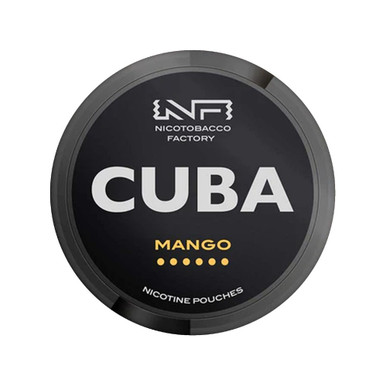
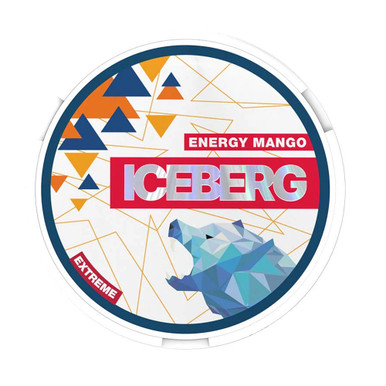
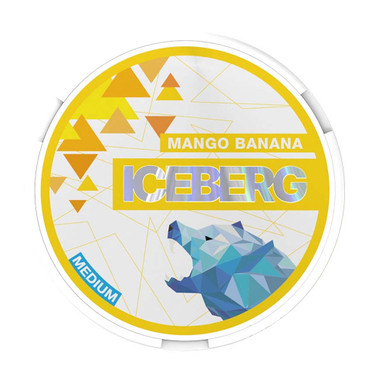
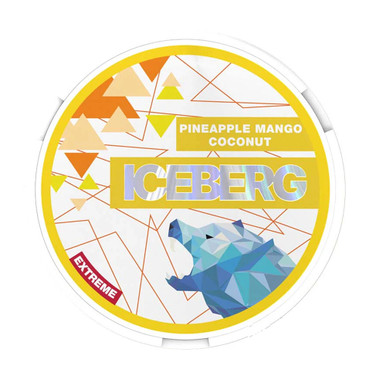
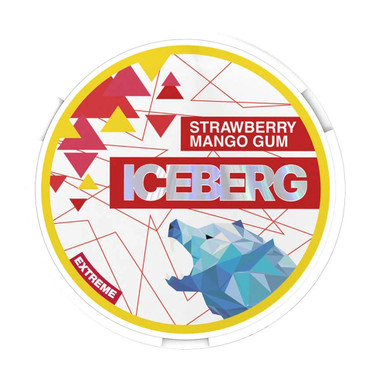
Eight of the sixteen listings here are out of stock: Cuba Black Mango at £39.90, Edge Mango at £14.95, Iceberg Energy Mango, Iceberg Mango Banana, Iceberg Pineapple Mango Coconut and Iceberg Strawberry Mango Gum at £39.90 each, and both Rush listings at £19.99.
That is every Iceberg listing on this shelf, both Rush listings, the only Edge one, and one of the two Cuba cans. Their pages stay up because the detail on them is still worth reading when you are comparing, but nothing can be added to a basket from any of them. We hold no restock dates and will not estimate any.
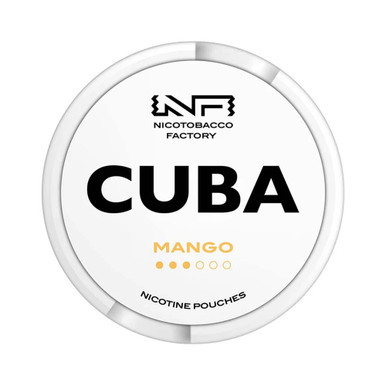
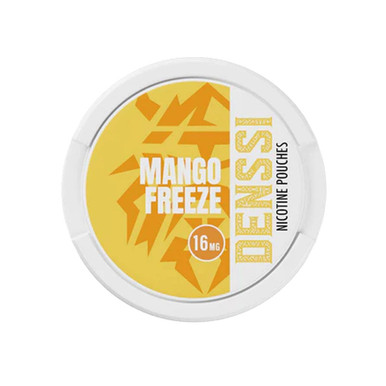
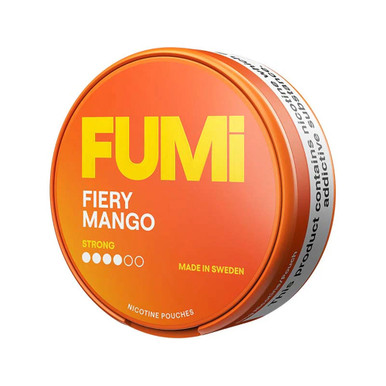
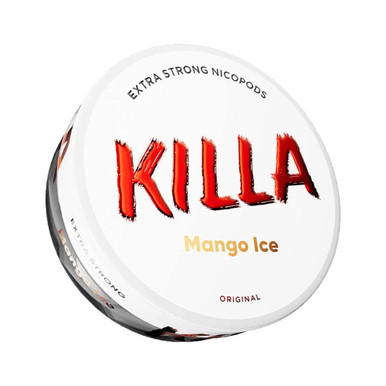
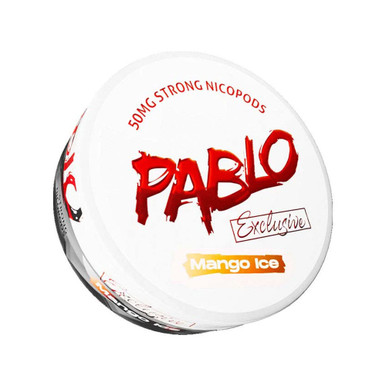
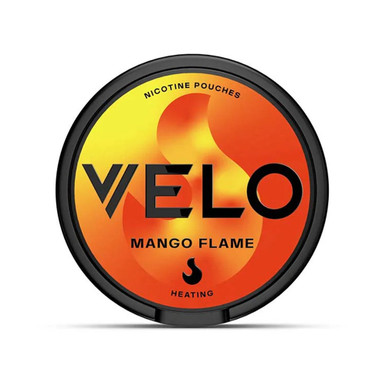
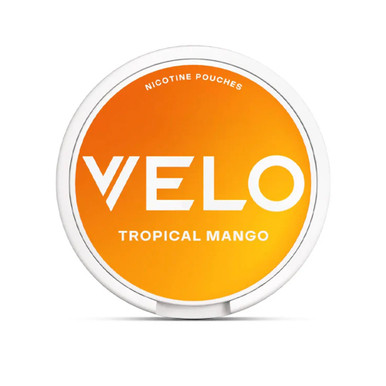
The practical consequence is that this page shows a range and offers you half of it. If a brand is what brought you here rather than the fruit, the brand shelf is the honest view: the Iceberg shelf and its 40 listings shows what that maker does currently have, which four unavailable mango cans obviously do not. The eight you can order are the 77 mini listing, Cuba White Mango, Denssi Mango Freeze, Fumi Fiery Mango, Killa Mango Ice, Pablo Exclusive Mango Ice, Velo Mango Flame and Velo Tropical Mango.
What these cans are, as objects in a pocket
Strip away the names and this shelf is one object repeated sixteen times: a small round tin with a lid that turns or clicks back into place, holding pre-portioned pouches. The lid is made to reclose because it doubles as somewhere to put a used pouch until a bin appears — that is the reason for the design, rather than a nicety. The guide we keep on the format goes through it properly.
The one listing that names its format
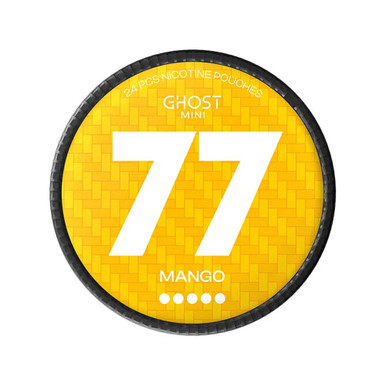
77 Ghost Mini Mango at £39.90 puts "Mini" in the title, which on the face of it describes the object rather than the taste. It is the only listing on this shelf that does, and it is one of the few in stock.
Here is the awkward part: we hold no format field. "Mini" exists in that product's name and nowhere in the data that builds these shelves, so there is nothing to browse, filter or sort by. If a smaller portion is what you are after, you cannot search for it on this site — you would be reading titles one at a time, and only the makers who put the word in a title would show up at all. That is a real, physical distinction a shopper might reasonably want, recorded only as part of a string. We would rather say so than let the absence of a filter imply the absence of the thing.
What our filing does not record about the can
Can diameter, how many pouches are inside, whether the portion is a long slim strip or a shorter, fatter one — none of that is in our catalogue for most of this shelf. It lives on the can and on the product page. Thirteen of these sixteen listings have no recorded can count at all, so for the large majority we cannot even answer "how many tins is that?" from our own data.
Words that look like specifications generally are not. "Ghost", "Exclusive", "Freeze", "Flame", "Light" and "Pro" are all product-line names their makers chose. They are not sizes, not portion specs and not grades we assign. There is a related artefact worth knowing: the Killa mango listing has a web address carrying the words "extra strong" while its product title does not. That is a leftover in the address, not a grade, and our strength shelves take no notice of it.
Keeping a can in good condition
The practical notes are unremarkable and hold across the shelf. A tin rides flat and untroubled in a jacket pocket and less happily in a tight trouser pocket. Press the lid fully home before it goes in a bag, or it will open in there. Keep cans out of a hot car and off a sunny windowsill — heat and direct sun do a sealed tin no favours while it sits in storage. And keep them somewhere nobody under 18 can reach, which is a condition of having them in the house rather than a suggestion.
What the mango tag gathers, and what it misses
Every listing here has been tagged mango by us, working from the product name and the maker's own description. All sixteen carry at least one flavour tag, so none of this shelf is filed blind — though that is not true of the catalogue as a whole, which matters and is covered further down.
Six tags appear across these listings: mango on all of them, plus berry, energy, mint, strawberry and tropical. A listing sits on every shelf whose tag it holds, so several cans here appear elsewhere on the site too. The Iceberg strawberry-and-mango listing carries the strawberry tag and turns up on the strawberry shelf and its 19 listings, and its berry tag puts it among the 76 listings on the berry shelf as well. Shelf counts overlap; adding them up double-counts.
The cooling group
Five listings carry a cooling word: two say "Ice", three say "Freeze". They pick up the mint tag alongside mango, which is how a mango can ends up counted among the 148 listings on the mint shelf. It is the single commonest second tag on this shelf.
Read it carefully. A mint tag on a mango listing does not mean the can is minty the way a mint can is. Our vocabulary holds one word for a cooling element and applies it wherever one is indicated, so "Ice" and "Freeze" from three different makers all collapse into the same tag. It records that something cooling is part of the product. It says nothing about how much, and it is not a claim that the five resemble one another.
The heat words we cannot file at all
Two listings run the other way. Fumi Fiery Mango at £27.90 and Velo Mango Flame at £4.19 both put a heat word on the lid, and our catalogue holds no tag for that — no heat tag, no spice tag, nothing. Both are filed under mango and nothing else that touches the word in question.
So whatever "Fiery" and "Flame" refer to on those two cans, our filing does not record it and no shelf on this site gathers it. We cannot tell you whether the two makers mean the same thing by their two different words, and we are not going to guess. It is the sharpest example on this shelf of the taxonomy being coarser than the products: two cans whose names announce something specific, filed as though the word were not there. If it is the reason you are interested, the product pages and the cans are where the answer lives.
Blends, and the halves that vanish
Four listings pair mango with something else. The strawberry one is filed under both fruits, as above. The pineapple-and-coconut listing picks up tropical, which is the broadest word we hold — it gets you to 58 tropical-tagged listings, but it does not mean pineapple and it does not mean coconut, and we should not pretend it does. Velo Tropical Mango at £4.19 carries the same tag with the word already in its title.
Then there is the Iceberg mango-and-banana listing, where our vocabulary simply has nothing. There is no banana tag. That half of the product is invisible to every shelf on the site, so the can reaches you through the mango tag or not at all. It is also out of stock, which compounds the problem: unbrowsable and unorderable at once.
The energy tag on this shelf
One listing here, Iceberg Energy Mango, carries the energy tag. It is worth being clear that this is a flavour tag in our filing rather than a statement about what is in the can — that listing is a nicotine pouch, as its product title says, and none of the sixteen listings on this shelf is a caffeine product. We make no claim about what that tag implies beyond how we file it. The listing is currently unavailable in any case.
Prices from £3.85 to £39.90, and why the gap is not what it looks like
The spread here is wide and easy to misread, so the important point first: a listing price is not a per-can price, and for 13 of these 16 listings our catalogue records no can count at all.
The figure under a photograph may cover a single tin or a multi-can pack, and for the large majority of this shelf we do not hold the number that would tell you which. Sorting the grid low to high sorts listings. It does not sort value, and treating it as if it does is the commonest way to misjudge a page like this one. Only three listings here carry a recorded can count; for the other thirteen, the pack description and the can itself are the source, not us.
The shape of the shelf, so the clusters are visible: the Pablo Exclusive listing sits alone at £3.85; both Velo listings are £4.19; the Edge one is £14.95; both Rush listings are £19.99; Fumi is £27.90; Killa is £33.50; and eight listings share £39.90 — the 77 mini can, both Cuba listings and all four Iceberg ones, plus the Denssi listing. Six of those eight at the top price are out of stock, which is why the orderable part of this shelf looks cheaper on average than the shelf as a whole.
That last point deserves a sentence of its own. Stock state is skewing the price picture here. If you sort the eight orderable listings by price you get a very different distribution from sorting all sixteen, and neither ordering tells you cost per can. Open a listing, read what is in the pack, and only then compare.
"Light", "Pro" and other words that are not a scale
This shelf carries an unusually clean example of a naming trap. Rush Mango Freeze Light and Rush Mango Freeze Pro are the same brand, the same flavour words and the same listing price of £19.99, separated only by the last word on the lid. Both are out of stock at the moment.
"Light" and "Pro" are that maker's product names. They are not a scale we assign, not tiers on this site, and not something we hold a field for. We cannot tell you that "Pro" is a step above "Light", or that either is for a more experienced anyone — there is no such ladder here and we would not be in a position to place you on one if there were. What our filing holds is the declared milligram figure for each can, shown on each product page, and that figure is the only strength information we have about either.
The same caution applies to "Ghost", "Exclusive", "Gold" and anything else that reads like a rank. Where a maker's name and our milligram-based filing point in different directions, it is the milligram figure that decided which shelf a can sits on.
Declared strengths on this shelf
Declared strengths across these sixteen listings run from 6 mg to 50 mg per pouch. Two points about those figures, and no more than two.
First, they are label information. The figure is what the maker declares on the can; we reproduce it and file by it. We do not test it, adjust it or verify it, and we present it as a number rather than as guidance.
Second: we cannot advise which strength suits anyone. We are a shop, we do not know you, and there is no figure on this shelf we could responsibly point anybody towards. A larger number is not a better can, not a higher grade and not something to work up to. Our strength shelves sort on the declared figure alone — Medium Strength holds 135 listings, Strong holds 132 and Extra Strong holds 98 — and they are the place to go if the mg figure rather than the fruit is what you are working from.
Where mango sits among the shelves
Flavour is one of three axes we file on. Brand and strength are the other two, and you combine them by moving between shelves rather than by stacking filters. Among flavour shelves, mango at 16 listings is the smallest of this group. Mint leads at 148, berry follows at 76, then tropical at 58, citrus at 25, watermelon at 23, cherry at 20, strawberry at 19, cola at 17 and mango here.
Tropical is the shelf this one overlaps with most, both through shared tags and because the broader word catches blends this shelf files under mango. Strawberry, berry and mint each share at least one listing with this page. If a brand rather than a fruit is what you are following, three of the makers here keep their own shelves — Pablo, with 56 listings, Cuba, with 47, and the Iceberg one already linked — and given that half this shelf is unavailable, those are likely to be a more productive route today. The full catalogue is there when you would rather see everything at once.
When to browse another way
Flavour browsing works when our tag matches what you want. Its limits are unusually visible on this shelf, so here they are.
- When the word you care about has no tag behind it. Fiery, Flame, banana, pineapple and coconut all appear in titles here, and none of them is a tag. No shelf on the site gathers any of them. You would be reading titles rather than filtering.
- When you want a format rather than a flavour. "Mini" appears in one title and in no field anywhere, so there is no way to browse by portion size at all.
- When stock is the deciding factor. With eight of sixteen unavailable, and four of those from one maker, a brand shelf gives a far truer picture of what can actually be ordered.
- When a listing carries no flavour tag at all. Every can here has one, but that is not true across the catalogue. A listing with no flavour tag appears on no flavour shelf whatsoever and cannot be reached by flavour browsing in any form — only through the full catalogue, a brand shelf, or the search box. It is the main reason we would not describe flavour browsing as exhaustive.
Ordering, delivery and age checks
Everything on this shelf is age-restricted and sold to adults only. Age is verified at checkout and the carrier may ask for ID again at the door; a delivery is refused if nobody who can prove they are 18 or over is there to receive it, and nothing is left with a neighbour on that basis. Stock state on this page reflects the catalogue at the moment you load it. An unavailable listing cannot be ordered and we cannot take payment against one. There is no waiting list on individual listings and no notification we can set up, so on a shelf this thin, checking back is the only method we can honestly offer.
The notes we are required to give you
These are age-restricted nicotine products, sold only to adults aged 18 or over who already use nicotine. Nicotine is an addictive substance. They are not a licensed stop-smoking medicine and are not offered, described or intended as one. They are not intended for non-smokers, non-nicotine-users, anyone under 18, or anyone who is pregnant or breastfeeding. We make no health or medical claim about any listing on this page, in any direction. ID may be requested at checkout and again on delivery.
Frequently asked questions
Why can I only order half the cans on this shelf?
Eight of the sixteen listings are out of stock at the moment: all four Iceberg ones, both Rush ones, the Edge listing and one of the two Cuba cans. We hold no restock dates for any of them and will not guess at one. Their pages stay up because the detail is still useful for comparison, but nothing can be added to a basket. The eight that can be ordered are spread across 77, Cuba, Denssi, Fumi, Killa, Pablo and Velo.
What do "Fiery" and "Flame" mean on these two cans?
We cannot tell you. Our catalogue holds no heat tag and no spice tag, so whatever those two makers mean by their words, our filing does not record it and no shelf on the site gathers it. Both listings are filed under mango alone. We are not going to invent a description, and we cannot tell you whether the two makers mean the same thing as each other. The product pages carry their own descriptions, and the cans carry the rest.
Is there a pineapple, coconut or banana shelf?
No. We hold no tag for any of the three. The pineapple-and-coconut listing picks up the broad tropical tag, which is the nearest thing our vocabulary has, but tropical does not mean pineapple and does not mean coconut. The mango-and-banana listing has nothing at all on its banana side, so it reaches you through the mango tag or not at all — and it is also out of stock, which makes it doubly hard to find.
Why is a mango can showing up on the mint shelf?
Because it carries a cooling word in its name and our vocabulary has one tag for that. Five listings here say "Ice" or "Freeze", and all of them are tagged mango and mint, so they appear on both shelves. The tag records that a cooling element is part of the product. It does not mean the can is minty in the way a mint can is, it says nothing about how much, and it is not a claim that the five are interchangeable.
Rush Mango Freeze Light and Rush Mango Freeze Pro — which is stronger?
"Light" and "Pro" are words in the maker's product names, not a scale we assign and not tiers on this site. Both listings are £19.99 and both are currently out of stock. The only strength information we hold for either is the declared milligram figure on its product page, and we would not present one as a step up from the other regardless of what the figures say. There is no ladder here for you to be placed on.
Which strength should I buy?
We cannot advise on that. We are a shop, we do not know you, and there is no figure we could responsibly point anyone towards. Declared strengths on this shelf run from 6 mg to 50 mg per pouch, and each product page carries the figure its maker declares for that can. Treat those as label information and nothing more. A higher number is not a better product, not a rank and not something to progress to.
Why do prices run from £3.85 to £39.90?
Chiefly because a listing price is not a per-can price. For 13 of these 16 listings our catalogue records no can count at all, so the headline figure may cover a single tin or a multi-can pack and we do not hold the number that would settle it. Stock skews the picture too: six of the eight listings at the top price are unavailable, so the orderable part of the shelf looks cheaper than the shelf itself. Open a listing before comparing.
Can I browse by pouch size, or find other mini cans?
No. One listing here puts "Mini" in its title, but we hold no format field, so the word exists in a product name and nowhere in the data that builds these shelves. There is nothing to filter or sort on. Can diameter, pouch count and portion shape sit on the can and on the product page rather than in our catalogue — which is also why thirteen of these sixteen listings have no recorded can count.
One listing is tagged "energy". Does it contain caffeine?
Not on this shelf. The Iceberg energy-mango listing is a nicotine pouch, as its product title states, and none of the sixteen listings here is a caffeine product. Energy is a flavour tag in our filing, which means it describes how we have categorised the listing rather than what is inside the can. We make no claim about what the tag implies beyond that. The listing is unavailable at the moment in any case.
A web address says "extra strong" but the product name does not. Which is correct?
Neither, as a specification. Words left in a URL are an artefact, not a grade we assign, and our strength shelves ignore them completely. The only strength information we hold for any listing is the milligram figure its maker declares, shown on the product page. Where a product name, a web address and a shelf appear to disagree, the declared figure is the one that decided where the can sits.
Does every can on the site appear on a flavour shelf?
No. All sixteen listings here carry a flavour tag, so this shelf is complete in that sense, but elsewhere in the catalogue some listings carry none at all. A listing with no flavour tag appears on no flavour shelf and cannot be found by browsing flavours in any way. Those cans are reachable only through the full catalogue, a brand shelf, or the search box, which is why we would not describe flavour browsing as a complete view of what we stock.
Who are these sold to?
Adults aged 18 or over who already use nicotine, and nobody else. Age is verified at checkout and the carrier may ask for ID again on delivery; the delivery is refused if no one who can prove their age is there to receive it. Nicotine is an addictive substance. If you are under 18, nothing on this site is available to you and no part of this page is written for you.
Keep looking
Mint · Berry · Tropical · Citrus · Watermelon · Cherry · Strawberry · Cola · Grape · Sweet