Home / Extra Strong / Pablo Exclusive Mango Ice Nicotine Pouches
Pablo · 50mg
Read the full guide
Pablo Exclusive Mango Ice Nicotine Pouches
£3.85
✔ In stock — ready to ship
100% tobacco-free
Free over £20
Same-day dispatch
Secure checkout
This page covers Pablo Exclusive Mango Ice Nicotine Pouches, listed at £3.85. Against this listing our record carries one declared strength, 50mg, two flavour tags — mint and mango — one product image, and a stock status reading in stock at the time of writing. Unlike a good many listings on this site, the tags here agree with the name on the lid, which makes this one of the more straightforward pages we write.
Everything below is one of three things: a description of the object, a comparison with other cans on our own shelves, or a plain statement that our data does not contain something you might reasonably want. We do not publish ingredient, composition or technical information for nicotine products. We do not describe anything that happens once a pouch is in place. We make no statement in any direction about anybody's wellbeing, and we carry no ratings or testimonials, so nothing here is presented as a popular verdict. Those constraints remove a lot of the material a product page might otherwise use, and what remains is the tin, the taste, the shelves, the price and the gaps.
The full guide to Pablo Exclusive Mango Ice Nicotine Pouches
4,851 words on how it eats, who it suits, how to serve it and what to put beside it.
Pablo Exclusive Mango Ice: what our record holds
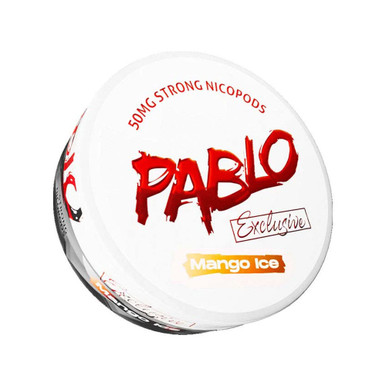
The can is a shallow round tin. The lid is a friction fit — thumb under the rim to open, a firm press to close — and its underside is a shallow well, which is the catch compartment for used pouches. The pouches themselves sit in a ring in the base: small, soft-edged, dry to the touch, white. There is nothing to charge, nothing to assemble, and no second piece of equipment involved. A pouch goes under the upper lip, sits there quietly, and is taken out by hand.
This is an adult nicotine product, listed and sold on the basis that the buyer is aged 18 or over and already uses nicotine. The full wording sits in its own section towards the foot of the page, and nothing above it is addressed to anyone else.
Mango with a cold layer, described as taste
Mango is a heavy fruit to build a flavour around. It is defined as much by weight and texture as by taste — thick, soft, resinous, with a sweetness that has very little acid in it and a distinctive perfumed note at the top that is the part most people actually recognise. A flavour that aims at mango has to reproduce that perfumed top note, because without it the result reads as generic sweet fruit.
This one keeps the perfume. The mango arrives first and reads as ripe rather than green, with the roundness and low acidity you would expect, and it is more tropical than confectionery — closer to the fruit than to a mango sweet, though not all the way there. Underneath and slightly behind it sits the cooling element that the name declares, and the relationship between the two is the whole character of this can.
Cold over a heavy fruit does something specific: it cuts the weight. A mango flavour on its own can feel thick and slightly cloying by the middle of a pouch, and a cooling layer under it lifts the whole thing and gives it a cleaner finish than the fruit would have alone. That is why the combination is so common across the catalogue, and it is why our mango grouping — a small shelf at 16 listings — is dominated by cans with a cold element declared in the name rather than by plain mango ones.
The aroma from a freshly opened tin is the fruit first and the cool a beat behind, which is the same order in which they turn up in the taste. As a pouch goes on, the fruit thins before the cool does, so the later part is cleaner and less sweet than the opening. This can is filed under both the mint grouping, our largest flavour shelf at 148 listings, and the mango one, and in this instance both tags are doing honest work.
It is worth adding what this can is not, because mango appears in several guises across the shelves. It is not a mixed tropical flavour — there is no pineapple brightness and no passionfruit acid layered over the top, and our record lists two tags rather than a fruit medley. It is not a confectionery mango either, of the kind that reads like a sweet rather than a fruit. And it is not an intensely cold can with a fruit note attached; the balance runs the other way round, with the fruit in front and the cool supporting it. Anyone arriving here from a plain mint shelf should expect the fruit to be the dominant impression rather than the cooling.
As always: this is a description by people who stock the can, not a specification from the people who made it, and taste is personal. The filing is the only part that comes straight out of the record.
The format itself: portion, position and duration
More questions reach us about the format than about any flavour, and most of them come from people comparing one can against another rather than from anyone new to the object. This section deals with the format on its own terms — what the portion is like, how it sits, how long people keep one in and what happens at the end — and it is the longest part of this page for that reason.
The portion
A pouch out of this tin is a small soft rectangle with rounded corners, dry to the touch rather than damp, and light enough to disappear in a closed hand. Our record does not carry a portion count for this listing, so we cannot tell you how many are in the tin, and we are not going to estimate — the figure is printed on the packaging, and so are the weight of a single pouch and the dimensions of the can. Where a number is stamped on the tin and absent from our data, the tin is where to read it.
What we can say about the portion is comparative rather than numerical. Makers across our shelves offer what they variously call standard, slim and mini formats, and those names are not standardised between brands, so a slim from one maker and a slim from another are not necessarily the same object. Klint Arctic Mint at £36.90 and Edge Mint at £14.95 are both worth looking at if portion format is the variable you care about most, because their listings describe their own formats and ours does not describe this one beyond what is on the can.
How it sits
A pouch goes under the upper lip and rests against the gum, and it stays where it is put. The first thing most people register with a fresh one is that it feels slightly bulkier than it looked in the tin. That impression settles within a minute or two as the pouch takes the shape of the space it is in, and after that it is largely unremarkable to hold in place. People talk normally with one in. People drink with one in. Some eat with one in and some take it out first, which is a personal preference rather than a practice, and we are not going to write it up as guidance.
Position is a matter of habit. Most people settle on one side and stay there; some move a pouch across at intervals. Neither is a technique and we are not going to present either as one.
How long people keep one in
There is no single answer and an invented figure would be worse than none. The honest range is wide: some people take one out inside ten minutes, others leave one seated for the better part of an hour, and the same person varies across a day and across cans. On this particular can there is a wrinkle worth knowing, which is that the fruit and the cool fade at different rates. The mango thins first, which means the late part of a pouch reads cooler and cleaner than the early part. A number of people treat that shift as their own signal to change rather than working to a clock.
We do not publish a recommended duration, and we will not. We do not have one, the manufacturer's labelling is the place any such guidance would properly come from, and a shop that invented a figure would be doing something it has no standing to do.
Taking one out, and the lid well
Removal is a matter of hooking the pouch with a fingertip. It then goes into the well in the underside of the lid, which holds several used pouches before it needs emptying. That well is the single feature that makes the format workable where there is no bin within reach — a train, a car, a queue, the middle of a job — and it is a compartment rather than a sealed chamber, so a can carried in a pocket is best carried the right way up.
Emptying it means tipping the contents into general waste. Not a sink, not a plant pot, not a car window. Used pouches are small and pale and very easy to lose track of on a worktop or a console, which is the plain practical reason a household with children or pets in it keeps the tin closed and out of reach rather than left out.
The tin, as something you live with
Almost everything people notice about a can over a fortnight is about the container rather than the contents. The lid is the main part of that. A friction fit has no thread to align and no hinge to break, which means the only way it works loose is if it was not pushed home in the first place, and a lid balanced on the base rather than seated is the usual explanation for a pocket with loose pouches in it. Closing the can with the same deliberate press every time — including the time you are in a hurry — is the single habit that prevents it.
The top face carries the maker's name, the flavour and the declared figure, and that layout matters more than it sounds once you own more than two cans. Tins get stored stacked, in a drawer or a glovebox, and the lid face is the only part you can see from above. A range that prints the flavour clearly on the top is a range you can work through without picking each tin up and turning it over, and the Pablo Exclusive cans are consistent about this across the line.
Physically, a can of this shape is rigid enough for a jacket pocket, a bag or a glovebox, but it is not armoured. A tin in a back pocket under a person's full weight will eventually go out of round, and a lid distorted once never seats properly again. Temperature does more damage than impact does, which is the subject of the storage section further down.
50mg on the lid, read as a number and nothing else
The figure printed on this can is 50mg, and it is the only strength this listing is offered in. We publish it because it is on the can and because it is the field people sort the catalogue by.
It is the manufacturer's declaration and not a measurement of ours. Our record stores it as the text 50mg and holds nothing about the basis on which it is declared; rather than assume a convention and print the assumption as a fact on a nicotine product's page, we point at the labelling on the can, which is the authority for it.
The site sorts listings into strength bands so that a catalogue this size can be filtered. This one sits on the extra strong shelf, which holds 98 listings, and we also run a medium band and a strong band. Those are filing drawers, not a ranking. They are not a sequence to move along, a bigger number is not an achievement, and nothing on this site is framed as something to work up to. A different figure on a lid is a different figure on a lid.
We cannot tell you which strength suits you. We hold no information about any individual customer, we are not qualified to advise on it, and we are not going to do it by implication either — not by describing one band in warmer words than another, and not by treating any figure as a default. What we will do is publish every declared figure we hold in the same format across every listing so that comparisons are like for like.
Moving between cans on our shelves: what changes and what does not
Most people who buy from us end up moving between brands rather than staying with one, and the useful thing to understand before doing that is which variables actually move. Four things change between listings — the brand, the format, the declared figure and the price — and they change independently, which is why comparing two cans by a single number so often misleads.
What changes when only the flavour moves
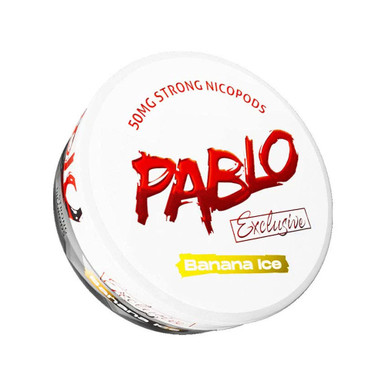
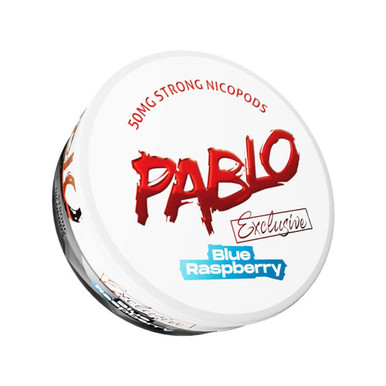
The narrowest move is inside one maker's range. Across the Pablo Exclusive line the tin is the same, the price is a flat £3.85, and the declared figure is the same on every listing, so moving from this can to Pablo Exclusive Banana Ice or Pablo Exclusive Blue Raspberry changes exactly one thing. That is the cleanest comparison available anywhere on the site, because nothing else is moving to confuse the result.
What changes when the brand moves
Between makers, almost everything moves at once. The tin is a different tin, the portion may be a different size, the declared figure is likely different, and the price is very likely different. The clearest illustration on our shelves for this listing is Killa Mango Ice at £33.50 — the same flavour idea, mango with a cold layer, from a different maker at a very different listed price. It is the single most direct like-for-like on flavour we can point you at, and it is also a demonstration of how little the flavour name tells you about anything else.
Two more in the cold-mint direction, where cross-brand differences show up plainly: Clew Cool Mint at £39.90 and Denssi Cold Mint at £39.90 are both plain cold mints with no fruit in them, and reading their two listings side by side is a quicker education in what varies between makers than any paragraph we could write. Elf Bar Cool Storm at £29.90 is a third version of the same idea at a third price point.
One to mention with a warning attached: Iceberg Black Mint at £39.90 belongs in that comparison, but it is currently out of stock, so the listing is readable rather than buyable at the moment.
What a price difference does and does not tell you
The listings named on this page run from £3.85 to £39.90, and that spread is far too wide to be about flavour or quality. Our record does not store what quantity each price covers, which means a straight comparison of two prices is not a comparison of value and we are not going to present one as though it were. The Edge mint can at £14.95 and Fumi Dark Spice at £27.90 sit at two more points on that ladder, and the honest instruction is the same for all of them: read each listing page for what it says it includes before comparing the numbers.
What changes when the format moves
Format is the variable people underestimate, partly because the vocabulary around it is not standardised. Makers describe their own portions as standard, slim, mini or some house term of their own, and none of those words carries a fixed meaning across brands. A mini from one maker and a mini from another may be noticeably different objects, and our record does not store a format field at all, so we cannot sort the catalogue by it for you or tell you how this can compares to another on that axis.
What we can do is point at listings whose own pages describe their format and let you read them. That is a less satisfying answer than a comparison table would be, and it is the accurate one. Where format matters to you more than flavour does, it is worth reading two or three listings before ordering rather than assuming that a familiar word means the same thing on every shelf.
The one thing that changing format does not change is any of the rest: the declared figure still comes from the maker, the tin still has a lid well in it, and the age check at checkout still applies. A smaller portion is a different object, not a different category of product, and nothing on this site treats it as a step in any direction.
What does not change
Across every nicotine listing on this site, some things are constant. All of them are 18+ products sold only to adults who already use nicotine. All of them arrive as a tin with pouches in it. All of them require an age check at checkout. All of them carry a declared figure from their maker that we publish as given, without interpretation. And on none of them will you find us advising a strength, comparing products on anything other than brand, flavour, format and price, or making a claim about what a pouch does for anybody. That consistency is the point: it means the differences you see between two of our pages are real differences between two cans.
The move people find most jarring
For what it is worth, the change people comment on most is not a change of brand but a change of flavour architecture — going from a fruit-with-cool can like this one to a plain cold can, or the other way. The presence or absence of fruit alters the whole shape of the experience far more than a change of maker does. 77 Apple Mint at £39.90 is a useful middle step, since it is fruit with cool like this listing but built on a sharp light fruit rather than a heavy sweet one, and Cuba Black Apple Juice at £39.90 goes the other way and drops the cooling element while keeping the fruit.
This can's place on the Pablo shelf
The Pablo brand page holds 56 listings, which makes it one of the largest single-maker shelves we run, and the Exclusive line makes up most of it. The line's consistency is its most useful feature for anyone comparing: one declared strength per listing, a flat price of £3.85, the same tin throughout, and the flavour as the only moving part.
Within that line, this can belongs to the fruit-with-cooling group rather than the plain fruit group or the plain mint group, and that group is well represented. If you want to see how another maker organises a range of comparable size, the Cuba shelf is the nearest equivalent we run. If you would rather not filter at all, the full catalogue is browsable in one index.
What people keep beside it for variety
Two or three cans in rotation is the ordinary pattern, and the reason is simple enough: a flavour you have a great deal of becomes less distinct the more of it you have. Because every can in the Pablo Exclusive line sits at the same price with the same declared figure, a rotation built inside the range changes one variable at a time and costs the same as buying one flavour repeatedly.
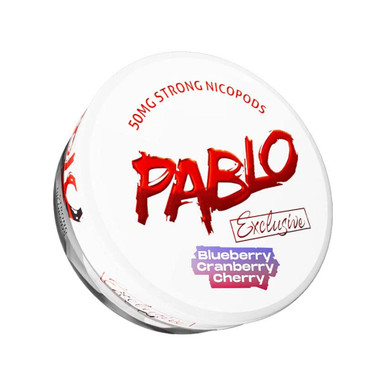
Nearest to this can: Pablo Exclusive Blueberry Peach Ice at £3.85 is the same architecture — fruit under a cold layer — with two fruits instead of one, and it is the closest sibling this listing has. The Blueberry Cranberry Cherry can, same price, keeps the fruit stacking but drops the declared cooling, which makes it a good way to find out how much of this can you actually like is the cold part.
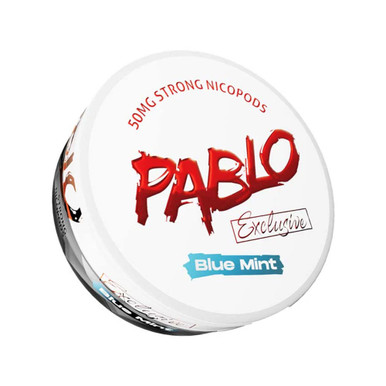
Further out: the Blue Mint can at £3.85 removes the fruit entirely and gives you the cool on its own, and Pablo Exclusive Bubblegum leaves the fruit shelf for confectionery. All of the Pablo listings named on this page are marked in stock as this was written.
Keeping a tin in good condition
Three things shorten the life of a can and all three are avoidable. Heat is the first: a dashboard in summer or a car standing in the sun is a worse place than anywhere indoors. Humidity is the second, which is why a bathroom shelf is a poorer choice than it appears. A lid that has not been pressed home is the third, and it is the one that actually costs people a tin, usually at the bottom of a bag.
Some people keep an opened can refrigerated on the basis that it holds the flavour longer. We have not tested that and will neither endorse nor dismiss it. The manufacturer prints storage guidance on the packaging, and that guidance outranks anything written on a shop's web page, including this one.
Beyond that: keep the tin closed when it is not in use, keep it out of reach of children and pets, do not decant the contents into an unlabelled container, and put used pouches into general waste rather than leaving them on a surface. A can treated that way behaves the same on its last day as on its first.
What there is to decide on this listing
Very little, and saying so is more useful than inventing a decision. There is one declared strength, 50mg, one price, £3.85, and our record shows no can count and no multipack variant, so there is no pack-size choice to make here at all. Some listings elsewhere in the catalogue genuinely do offer one; this is not one of them.
What remains is the choice between this can and a different can, which is what the comparison sections above exist for. The strength shelves will sort by declared figure, the flavour shelves by taste family, and the brand pages hold everything else constant while the flavour changes. We will not tell you which to prefer, and the reason is set out in the strength section above.
Ordering, delivery and the age check
This listing is marked in stock as this page was written, and the listing page itself is the live position rather than this sentence. Checkout is ordinary and the price on the listing is the price you pay.
Age verification is not a formality. We sell only to adults aged 18 or over, an age check runs at checkout, and ID may be requested on delivery. Where it is requested and no adult at the address can produce it, the parcel will not be handed over — worth bearing in mind before sending an order to a workplace reception or a neighbour.
Our standard returns policy applies, subject to the obvious limit that an opened can of a consumable cannot be resold. There is no way to test a flavour without opening the tin, which is the difficulty stated plainly, and the practical answer most people arrive at is to treat a first can of anything unfamiliar as a small experiment rather than a stock-up.
Where this page sits on the site
Four shelves lead here, which is one more than most listings have. The 98-listing extra strong band is the broadest. Pablo's own page is the route for browsing by maker. The mint grouping is our largest flavour shelf at 148 listings and holds anything with a cool element declared against it. And the mango shelf is one of our smallest at 16 listings, which makes it the most efficient way to see the whole of this flavour family in one screen.
If none of those routes suits how you shop, the full index of everything we stock is the place to start. In general the flavour shelves are the most useful entry point when you already know what you want a can to taste of, and the strength shelves when you are comparing declared figures across makers.
Questions we are asked about this listing
How many pouches are in a can?
We do not hold that figure. Our record has no portion count against this listing, and rather than estimate we will point you at the packaging, which states it. If you need the number confirmed before ordering, ask us and we will look at a can rather than guess at one.
Does 50mg mean per pouch?
Our record stores the declared strength as the text 50mg and does not store the basis of the declaration. We are not going to fill that gap with an assumption on a nicotine product's page. The labelling on the can is the authority, and it is worth reading before you buy if the basis matters to you.
How strong is the cooling compared with a plain mint can?
Less prominent, because the cool here sits under a heavy fruit rather than standing on its own. Our record does not grade cooling and we have no scale for it, so that is a description rather than a measurement. For the cool on its own from the same maker at the same price, the Blue Mint listing is the direct comparison.
Is the mango sweet or sharp?
Sweet and low in acid, which is characteristic of the fruit. If you want a sharp fruit with a cool layer instead, the apple-and-mint listings on our shelves are the nearer thing, and if you want mango without the cold element you will find the mango shelf is small and mostly made up of cans that declare cooling in the name.
Which strength should I pick?
We cannot answer that. We hold no information about any individual, we are not qualified to advise, and a shop steering that choice on a product page would be overstepping. We publish the declared figures consistently so that listings can be compared; the choice is yours to make.
What is in the pouches?
We do not publish ingredient, composition or technical information for this or any nicotine product on the site. The manufacturer's labelling on the can carries that and is the authoritative source for it.
Is there a multipack of this?
Not on this listing. Our record shows a single configuration at £3.85 with no can count and no multipack variant against it. If that changes, the listing page will reflect it before this paragraph does.
Why is this £3.85 when other cans are £39.90?
Because the two numbers are not describing the same quantity, and our record does not store what quantity each price covers. Treating them as directly comparable would mislead, so we have not done it anywhere on this page. Read each listing for what it says it includes.
Can I travel with a can?
National rules on bringing nicotine products across borders vary widely, and some countries restrict or prohibit them outright. We do not hold a list of those rules and will not guess at one. Check the destination's published requirements and the carrier's before you travel.
Do you publish scores or customer opinions?
No. There is no scoring system on this site and we do not write testimonials, so nothing on this page is presented as anybody else's verdict. Everything above is either a field from our own product record, a description written by people who stock the can, or a comparison with other listings we hold.
What if the flavour is not for me?
An opened can cannot be resold, so a returns policy will not help with a preference. The practical answer is that a first can of an unfamiliar flavour is an experiment, and at £3.85 this is a cheaper experiment than most of what sits on our shelves.
The notices we are required to carry
Nicotine is an addictive substance.
Pablo Exclusive Mango Ice Nicotine Pouches are sold only to adults aged 18 or over who already use nicotine. An age check runs at checkout, we do not sell to anyone under 18, and ID may be requested on delivery; where it is requested and no adult at the address can produce it, the parcel will not be handed over.
This product is not a licensed stop-smoking medicine and carries no authorisation of that kind. It is not intended for non-smokers, for anyone who does not already use nicotine, for anyone under 18, or for anyone who is pregnant or breastfeeding. Nothing on this page is medical advice, and nothing on it should be read as a suggestion that anybody begin using nicotine or select any particular strength.
Keep the can closed and out of reach of children and pets, and dispose of used pouches in general waste. Every product fact above — brand, name, price, declared strength, flavour tags, stock status — comes from our own record for this listing. Where the record holds nothing, we have said so rather than estimating, and the manufacturer's labelling on the can is the authority for anything printed on the packaging.
The short version
Pablo Exclusive Mango Ice is a ripe, low-acid mango with a cooling layer under it, listed at £3.85 in one declared strength of 50mg and in stock as this was written. Both its flavour tags agree with its name, which is not true of every listing we hold. It sits in the extra strong band, on the Pablo shelf of 56 listings, and on both the 148-listing mint grouping and the 16-listing mango shelf. The most direct comparison we stock is Killa Mango Ice at £33.50 for the same flavour idea from another maker, and the closest sibling is Blueberry Peach Ice at the same £3.85. Everything we know about this can is above, and everything we do not know, we have said we do not know.
More from Pablo
More extra strong pouches
More mint pouches
Where this sits
Pablo Exclusive Mango Ice Nicotine Pouches appears in these categories. Browse them, or jump to something close.
You might also like