
Home / Extra Strong / Iceberg Black Mint Nicotine Pouches
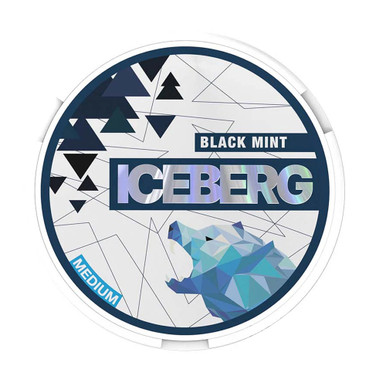
Iceberg · 20mg–50mg · 10-can pack
Read the full guide
Iceberg Black Mint Nicotine Pouches
£39.90
✔ In stock — ready to ship
100% tobacco-free
Free over £20
Same-day dispatch
Secure checkout
The listing on this page is Iceberg Black Mint Nicotine Pouches, a pack of ten cans at £39.90, offered in two declared strengths — 20mg and 50mg — both at that same price. The flavour recorded against it is mint. Those are the facts our product record holds, and this page is written from them rather than around them.
Start with the awkward part. We show this product as out of stock at the time of writing. The description that follows is a description of the can; it is not an invitation to order something we cannot currently send. Stock changes, and the product page is the live position rather than this text, so if the basket button is unavailable when you arrive then the page is right and this paragraph is simply explaining why.
The full guide to Iceberg Black Mint Nicotine Pouches
5,211 words on how it eats, who it suits, how to serve it and what to put beside it.
What Iceberg Black Mint is, and what we can currently do about it
Second, the marker that belongs near the top rather than buried at the bottom: this is an age-restricted nicotine product, sold only to adults aged 18 or over who already use nicotine. Nothing here is written to persuade anyone to consume anything, and the full compliance wording has its own section further down.
Ten cans at £39.90 is £3.99 a can. That division is ours, and it is there so the listing can be set fairly against the single-can products on the rest of the site. £39.90 is the figure that matters at checkout when a pack is available.
A word about the name, because it invites a misreading. Black here is a label — part of how the manufacturer distinguishes this can from the others it makes, in the same way a maker might use a colour word across a line. It is not a statement about where the product comes from, what is in it, or anything else. Our record carries one flavour tag against this listing and that tag is simply mint. What the word black is doing on this lid is the manufacturer's own labelling convention, and it is not something our data explains. We are not going to invent a meaning for it.
Reading 20mg and 50mg as label information
Two declared figures are offered on this listing, 20mg and 50mg, and both are reproduced here exactly as our record gives them. They are label information: the nicotine content the manufacturer declares and prints on the can. We publish them because anyone buying an age-restricted product is entitled to know what the can declares before they buy it, and for no other reason at all.
We will not steer that choice, and it is worth being explicit about why. A larger declared figure is not a better can, a more advanced can, or a can for a more experienced person. It is a larger number on a lid. Describing a higher figure as a step up, an upgrade or an accomplishment would be dishonest and irresponsible, and we do not do it on any page on this site. Nor will we attach a figure to a type of person, an occasion or a circumstance. Those are questions about nicotine and a shop page is the wrong place for them; a pharmacist or a doctor is the right place.
What is fair to explain is how the figure drives our shelving, since that part is genuinely useful for getting around the site. We sort listings into bands by declared strength so that a catalogue this size can be browsed. Both figures here place this product in the Extra Strong band, which currently holds 98 listings. Beneath it sit the Strong band and the Medium Strength band, the latter with 135 products in it. Those bands are filing, not a route map, and their existence is not a suggestion that anyone travel between them in any direction.
One practical note: the two figures cost the same. £39.90 either way means price offers no signal at all between them, which we think is the correct position for a shop to hold.
Mint as a taste and an aroma
Mint is the largest flavour family on this site by a wide margin and the one where the differences between cans matter most, because the word covers several genuinely distinct tastes.
At one end sits spearmint: softer, rounder and faintly sweet, the mint of chewing gum rather than of toothpaste. At the other sits peppermint, sharper and more astringent, with a bite to it. Running alongside both is the menthol-style cool, which is less a flavour than a sensation of coldness that can be layered onto either. A can described simply as mint could be built at any point along that spread, and two cans carrying the same single word can taste substantially unlike one another.
Our record does not tell us where this particular can sits on that spread. It says mint and stops. The product name adds the word black, which in general labelling practice tends to signal a darker or deeper reading of a flavour rather than a lighter one — but we do not hold Iceberg's own explanation of the term, so treat that as a convention rather than a fact about this can. The packaging is the authority.
Aroma on opening
A mint can announces itself immediately when the lid comes off. The aroma is sharp, clean and high, and it carries further across a room than a fruit or roasted can does. It is the most recognisable smell in this category and the hardest to mistake for anything else. Mint cans are also the ones most likely to be noticed by someone else in a room, which is worth knowing if that matters to you.
How a mint note behaves as a pouch goes on
Flavour in a dry pouch is most defined early and thins from there. Mint has a particular pattern: the cool sensation usually outlasts the taste. So a mint pouch tends to become quieter in flavour while still reading as cold for a while afterwards. That is why people describe mint cans as lasting longer than fruit cans even when nothing about the product suggests they should — what is lasting is the cool, not the mint.
What we cannot tell you about the flavour
We do not know whether this can is spearmint-led, peppermint-led or built around a menthol-style cool, and we will not guess. That is the single most useful thing a mint listing could state and it is the thing our record omits. If the distinction matters to you — and for most people who buy mint cans regularly it does — the can's own labelling is where the question is settled, not this page.
The Iceberg range on our shelves
The angle this pack asks for is where this can falls within its brand's range and what separates one listing in that range from another. We can name part of that range directly, so we will start there and widen out to the shelf afterwards.
Our record holds six same-brand cans against this listing, and the first thing to say about all six is a stock warning rather than a description: every one of them is out of stock at the time of writing, exactly as this can is. They are linked below because they are the closest comparison we hold and because each page carries its own figures, not because any of them can be ordered today. We stock 40 Iceberg listings in total and they all sit on the Iceberg shelf, where availability moves listing by listing, so that is the better place to check what can actually be bought.
The nearest neighbour by name is Iceberg Black, which carries the same Black line name at the same £39.90 but without the mint word after it — our record holds no flavour tag against that one at all, which makes this listing the described half of the pair. Iceberg Black Currant is the third can in the range using the word, £39.90 again, and its name points in a fruit direction rather than a cool one. Both are unavailable at present, as noted.
Away from the Black name, the same-brand set covers the fruit and confectionery corners of the range at an identical £39.90 apiece: the Iceberg Berries can for a plain fruit direction, Iceberg Apple Lemon Pineapple for a three-fruit one, Iceberg Bubble Gum for the confectionery end of things, and the Iceberg Arasaka listing, whose name carries no flavour word in it at all. If you are rotating away from a cool can, those four are the ones in the brand that move furthest from mint — though none of them is in stock as this is written either, so treat the set as a map of the range rather than as a shopping list.
The shape of a forty-listing range
What can be said usefully is how a range of that size tends to be organised and how to read it. Forty listings under one brand name generally spread across three broad groups: the cool and mint listings, the fruit listings, and a smaller set of confectionery or novelty directions that belong to neither. Those groups are how the flavour shelves cut across the brand, and the brand page is where you can see which listings fall where, each with its own price and declared figures.
This can belongs to the first group. It is a cool listing rather than a fruit one, which puts it in the part of the range people usually treat as the baseline — mint tends to be the can someone keeps constantly and the fruit cans the ones they rotate through. That is a pattern in how people buy rather than a claim about the product.
What separates one listing in a range from another
Within a single brand, the usual variables are flavour direction, declared figure and occasionally format, and they matter in that order for most people. Price frequently does not vary at all inside a range; on this brand's ten-can packs, £39.90 recurs. Where price is constant across a range, moving between listings is purely a decision about flavour, which makes the range easier to navigate than most.
On who each listing suits — and we mean this strictly in the sense of taste, because that is the only sense in which we will use the word — the split is straightforward. Someone who wants one consistent clean note will be looking at the cool listings. Someone who wants something sweet and changeable will be in the fruit group. Someone who finds both of those dull will be in the confectionery corner. None of those preferences is more advanced than another and we would not describe them that way.
How the Iceberg shelf compares with our other brand shelves
Forty listings makes this one of the larger brand ranges we carry, and it is worth comparing that against how other makers are represented here. The Pablo range and the Cuba range are both substantial enough to browse on their own terms, with their own internal groupings, and both have listings priced quite differently from Iceberg's ten-can packs — Pablo Exclusive Banana Ice at £3.85 is a single-can listing, which is a completely different kind of purchase from a ten-can box.
Brands with fewer listings tend to be easier to hold in your head and harder to stay within. A forty-listing range is the opposite: more to learn, but less reason to leave it. Neither is better. It simply changes how you shop.
One more thing a big range does not imply: an order. Forty listings under a single label is a shelf, not a ladder. There is no beginning and no end to it, no entry point and no destination, and nothing in the range is graded against anything else in it. People occasionally read a large range as a progression to be worked through, and we want to be clear that no such progression exists here and we are not supplying one. Pick by the flavour words and read the declared figure as the content statement it is.
That is also why the brand shelf is a better tool than a page's own suggestions, even on a page such as this one that names its siblings directly. A product page can name a handful of stablemates. The shelf shows all forty at once with their prices and declared figures alongside, which is the comparison most people are actually trying to make when they land on a brand.
The format, briefly but honestly
A pouch is a small white sachet that sits under the upper lip, between lip and gum, running along the gum line. It is not chewed and it is not swallowed. Once placed it stays put through talking and drinking, and most people stop noticing it as an object within a minute or two. Most users settle on one side of the mouth and stay there out of habit.
How long anyone keeps a pouch in varies far too widely between individuals for a single figure to mean anything, and it is not in our record. The flavour fading is the cue most people use rather than a clock. We are describing what people do; how long you keep a pouch in is your decision and not something we are going to shape.
The can is a squat plastic tin with a press-on lid, and most cans of this type carry a shallow compartment in the lid for used pouches. Our record does not confirm that for this specific can, so we will not assert it — you will see the moment you pick one up. Our record also does not hold a pouch count per can or a pouch weight, and those are two of the most-asked questions we cannot answer from our data. Both, where declared, are printed on the can.
Disposal is simple and worth stating firmly. A used pouch goes in a bin: not down a sink, not into a drain, not onto a verge, and never left anywhere a child or an animal could reach it. The lid compartment, on cans that have one, is for carrying a spent pouch to a bin rather than for keeping it.
Buying rhythm: one can, a roll of ten, and the spare
The second angle here is how people actually buy, which is a more practical subject than it sounds and one that shop pages usually skip entirely.
The difference a ten-can pack makes
Buying ten cans of a single flavour is a different decision from buying one. It is a commitment to that flavour in a quantity that will last, and it removes the question of reordering for a while. Against that, it is a larger single outlay and it is ten cans of one thing — if you turn out not to get on with the flavour, you have nine more of it.
The usual advice people give one another, and it is sensible, is to know a flavour before buying it ten at a time. This site carries single-can listings at much lower headline prices — Edge Mint at £14.95 and the Pablo single can at £3.85 are examples of listings priced very differently from a multi-can box — and the pack arrangement, not the product being dearer, is what explains most of the gap between a £3.85 listing and a £39.90 one. Divide this pack by ten and you are at £3.99 a can.
The table below sets the nearby listings out by what the price actually buys, because that is the comparison people most often get wrong when they are deciding how much to order at once. The prices are from our record; the notes are ours.
| Listing | Listed price | What you are comparing |
|---|---|---|
| This listing, Iceberg Black Mint | £39.90 | Ten cans — £3.99 each — out of stock today |
| Pablo Exclusive Banana Ice | £3.85 | A single can, the smallest commitment named here |
| Edge Mint | £14.95 | A cool listing at a much lower headline price |
| Fumi Dark Spice | £27.90 | Ten cans of something a long way from mint |
| Elf Bar Cool Storm | £29.90 | Another maker's cool listing |
| Killa Banana Ice | £33.50 | A sweet direction with a cool edge |
| Klint Arctic Mint | £36.90 | Cool-led, close to this listing on price |
| Denssi Cold Mint | £39.90 | Same headline price, different maker |
Two rows in that table share a headline price with this one and neither is the same object. That is the whole lesson: a matching price signals nothing about a matching product, and the cheapest row is cheap because it is one can. Check the pack arrangement before you compare any two prices, on this page or anywhere else on the site.
How people reorder in practice
The common pattern with a ten-can pack is that people do not reorder until they are close to the end of it, and then order in the same quantity, because the arithmetic per can is better and the delivery is one event instead of several. The less common pattern, and the one that causes problems, is running the box to empty before ordering anything — at which point delivery time becomes a problem rather than a detail.
The practical habit that avoids that is ordering when a couple of cans remain rather than when none do. That is not a sales pitch, it is the same logic anyone applies to anything bought in bulk, and it matters a bit more here than usual because stock on any given listing can be unavailable — as this one currently is — and the alternative you would have reached for may not be there the day you need it.
Keeping a spare, and what a spare should be
People who buy in packs often keep one can of something else entirely as a spare, and the reasoning is worth explaining. A spare that duplicates what you already have solves nothing when the box runs out. A spare from a different brand or a different flavour family covers both the gap and the taste fatigue that comes from meeting the same flavour repeatedly.
For a mint-led box like this one, a contrasting spare usually means something fruit or confectionery-led rather than another cool can — Cuba Black Apple Juice at £39.90 and Fumi Dark Spice at £27.90 both sit well away from mint, the second of them about as far away as our shelves go. A like-for-like spare, if consistency matters more to you than variety, would be another cool can such as Clew Cool Mint at £39.90.
What a multi-can pack does to storage
The last consequence of buying in tens is that nine cans are sitting somewhere while you use the first. That is covered properly in the storage section below, but the short version is that a sealed can keeps far better than an opened one, so the correct arrangement is to open one and leave the rest in the box. That is the main practical argument for a pack over nine separate purchases.
What people keep alongside a cool can
Rotating between two unlike cans keeps both reading as themselves, and mint is the flavour most often used as one half of that pair because it is assertive enough not to be overshadowed by whatever it follows.
For a contrast, the fruit and confectionery listings are the place to look — Killa Banana Ice at £33.50 is a soft, sweet direction with a cool edge, and the Cuba apple listing at £39.90 is a sharp, juicy one. 77 Apple Mint at £39.90 splits the difference by pairing fruit with a cool note in one can rather than making you rotate between two.
For a comparison rather than a contrast, the other mint listings are where the interesting differences live. Denssi Cold Mint at £39.90, Klint Arctic Mint at £36.90 and Elf Bar Cool Storm at £29.90 are three makers' answers to broadly the same brief, and having two of them side by side is the clearest way to understand how much room there is inside the word mint. The mint shelf, with 148 listings on it, is the place to see the whole spread at once.
Keeping cans in decent condition
Pouches are dry goods. Heat, direct light and an open lid are what cost you flavour, in that order.
Keep cans somewhere cool, dry and out of the sun — a cupboard or a drawer rather than a windowsill or a shelf above a radiator. The classic mistake is a car glovebox in warm weather: heat drives off the aromatic part of a flavour quickly, and a can that has cooked for an afternoon comes back flatter and stays that way. Nothing brings it back.
Keep the lid pressed shut. A friction-fit lid is a reasonable seal when it is properly home and a poor one when it is sitting half-lifted, and a day of that costs more than a week of correct storage saves. Cans carried loose in a bag alongside keys and coins are the usual culprits; a fixed pocket solves it.
With a ten-can box, open one and leave the other nine sealed until each is needed. We hold no shelf-life figure or best-before date for this product, so we publish none — whatever the manufacturer prints on the packaging is the figure to go by. Keep the box out of reach of children and animals, and keep cans out of the fridge unless the packaging specifically says otherwise, because condensation is not something you want on a dry product.
What there is to choose between here
This listing offers one decision: 20mg or 50mg. There is no pack-size choice, since ten cans is the only arrangement we hold, and no price consequence, since both figures are £39.90.
We will not guide that decision. Recommending a strength to a person is advice about nicotine, which is not a shop's job and not within our competence. What we can do is state the facts cleanly: two declared figures from the manufacturer's own labelling, both at the same price, both filed in the Extra Strong band, both printed on the can. If you already know which you want, the variant selector on the product page is where you pick it. If you do not, that conversation belongs with a pharmacist.
If pack size rather than strength is the sticking point, several listings on this site are sold as single cans and some are named above. Every product page states its own pack arrangement, which is worth checking before comparing any two prices on this site.
Ordering, delivery and the stock position today
As this is written the listing is out of stock, so the practical answer right now is that it cannot be ordered. The product page carries the live position and will update before this description does. Our record describes no reservation, waiting list or backorder mechanism, so we are not going to imply one exists. Checking the page is the only reliable method.
When stock is available, the process is the standard one for an age-restricted product. Age confirmation is required at checkout, orders may be verified before dispatch, and photographic identification may be requested by the courier on delivery. No adult at the door means no handover, and that is applied strictly rather than as a formality. Orders are dispatched from within the UK.
If a parcel is going to a workplace, make sure someone over 18 will be there to take it. A parcel that cannot be handed to an adult goes back, and a returned ten-can box is a more irritating problem to unpick than a returned single can.
Where to find this page again
Three shelves carry this listing. By declared figure it sits on our Extra Strong shelf with 97 others. By maker it is on the Iceberg brand page with the other 39 listings we hold. By flavour it is on our mint listings, which at 148 products is the biggest flavour shelf on the site and consequently the one that needs the most filtering to be useful.
That last point is worth a sentence. A shelf of 148 is not a shortlist, and combining it with a strength band or a brand shelf is how you get it down to something readable. Everything we stock is the broadest entry point if none of the three shelves is getting you where you want to be.
Questions people ask about this listing
When is it coming back into stock?
We do not know and we will not make up a date. Our record shows the current position and says nothing about future deliveries, and an invented restock date is worse than an honest blank because it makes people wait on a promise nobody made. The product page reflects stock as it changes. Checking it is the only dependable approach.
What does the word black mean on this can?
It is part of the manufacturer's naming, and our record does not explain it. It is not an origin claim and not a statement about contents. Colour words in product names are ordinarily used to distinguish one listing from another within a maker's line, and often to signal a darker reading of a flavour, but we do not hold Iceberg's own definition and will not supply one on their behalf.
Is this spearmint or peppermint?
Our record says mint and nothing more precise, so we cannot tell you. That is genuinely the most useful thing a mint listing could state and it is missing from our data. The can's own labelling is where the question gets answered. We would rather leave it open than pick one and be wrong for half the people reading.
How many pouches are in each can?
Not a figure we hold for this product. Pouch counts vary between manufacturers and between formats inside a single manufacturer's range, so an estimate would be a guess dressed as information. Where a count is declared it is printed on the can. We would like that figure on the listing and we do not currently have it, which is worth saying rather than glossing over.
Is 50mg the strongest thing you sell?
It is among the higher declared figures on our shelves, and we are not going to build a league table out of that. A declared figure is a content statement printed by a manufacturer, not a ranking or a badge, and the highest number in a catalogue is not the best product in it. We list figures so people know what a can declares; we attach nothing further to them.
Are the other Iceberg cans named on this page available?
No. Not one of the six same-brand listings named further up is in stock at the time of writing, and neither is this one. They are linked because they share the brand and the £39.90 price and because each has its own page carrying its own declared figures, which makes them the most direct comparison on the site — not because any of them is an order you can place today. Forty Iceberg listings sit on the brand shelf in total and stock moves across it listing by listing, so the shelf is a more reliable thing to check than any single product page.
Does it have a cooling sensation as well as a mint taste?
Cool and mint usually travel together, but our record does not confirm the presence or intensity of a cooling character on this particular can, so we are not going to state it as fact. Mint cans vary considerably on that axis — some are built around it, some barely touch it. The packaging is the authority and it is the only place we would send anyone for that detail.
Can I mix strengths across the ten cans?
No. You select one declared figure and all ten cans in the pack are that figure. Buying both would mean two separate orders. The same applies to flavour — a pack is ten cans of Black Mint rather than an assortment, which is exactly why knowing a flavour before buying ten of it is sensible.
Will a mint can spoil the taste of the next one?
Mint lingers, and it lingers more assertively than most flavours on our shelves. People who rotate a mint can with something delicate quite often find the mint still faintly present underneath the next one, which is why mint tends to be used as the reset can rather than the one that needs resetting. That is a plain observation about taste and nothing more, and it cuts both ways depending on which order you take them in.
Does a can need to be kept upright?
It is a sensible habit rather than a requirement. A can stored upright keeps its contents settled and its lid seated; one rattling about on its side in a bag is the one that turns up with a half-lifted lid. Our record says nothing about storage orientation and we are not going to dress a habit up as an instruction — but if you carry a can daily, giving it a fixed pocket is the single most useful thing you can do for it.
Where is it manufactured?
Not in our record, so not on this page. Country of manufacture and importer details are printed on the packaging, which is the only place we would point anyone. We do not publish that kind of fact from inference, and a guess about origin is precisely the sort of thing that ends up repeated as though it were true.
Is this one right for me?
We cannot answer that and will not attempt it. We sell cans to adults who already use nicotine and we are not qualified to assess anybody's individual circumstances. Questions about nicotine and your own health should go to a pharmacist or a doctor, who can actually answer them properly.
Compliance, in full
This product is sold only to adults aged 18 or over who already use nicotine. We will not knowingly sell it to anyone else. Age confirmation is required at checkout, orders may be verified before dispatch, and photographic identification may be requested by the courier at the point of delivery.
Nicotine is an addictive substance. That sentence appears here because it is true and because the description of an age-restricted nicotine product has no business omitting it or hiding it in small print.
This is not a licensed stop-smoking medicine and it is not offered, described or intended as one anywhere on this site. It is not intended for non-smokers, for anyone who does not already use nicotine, for anyone under 18, or for anyone who is pregnant or breastfeeding. We make no health, medical or safety claim about this product in any direction. Questions about nicotine and your own health belong with a pharmacist or a doctor; we sell cans, and we do not hold that expertise.
The short version
Iceberg Black Mint is a ten-can pack at £39.90 — £3.99 a can — declared at 20mg and 50mg for the same money, carrying a mint flavour our record does not specify further. It is currently out of stock. It is filed in the Extra Strong band, it is one of forty Iceberg listings we hold, and it sits on the largest flavour shelf on the site. Our record holds six same-brand cans against it and all six are named above at the same £39.90 — every one of them out of stock as well, which is why the brand shelf remains the place to check what can actually be bought. Where a fact is missing — the mint variety, the pouch count, the cooling character, the meaning of the word black, the restock date — we have said so instead of filling the space. The can and the manufacturer's labelling on it outrank everything written above.
More from Iceberg

More extra strong pouches
More mint pouches
Where this sits
Iceberg Black Mint Nicotine Pouches appears in these categories. Browse them, or jump to something close.
You might also like