
Home / Extra Strong / Iceberg Arasaka Nicotine Pouches

Iceberg · 20mg–50mg · 10-can pack
Read the full guide
Iceberg Arasaka Nicotine Pouches
£39.90
✔ In stock — ready to ship
100% tobacco-free
Free over £20
Same-day dispatch
Secure checkout
This page belongs to Iceberg Arasaka Nicotine Pouches. Our record gives a price of £39.90, two declared strengths of 20mg and 50mg at that same price, a pack made up of 10 cans, and a stock position of out of stock at the time of writing. It also gives a flavour field, and that flavour field is empty.
The empty field is the most important thing on this page, so it goes first rather than being tidied away somewhere near the bottom. Most of our listings carry one or two flavour tags — mint, berry, citrus and so on — and those tags are what the flavour sections of a product page are built out of. This listing has none. Not an unusual tag, not a vague one: none. And the product name does not fill the gap either. Arasaka is a name rather than a description. It does not point at a fruit, a herb, a drink or a temperature, and there is nothing in it we can honestly unpack into a taste.
The full guide to Iceberg Arasaka Nicotine Pouches
4,890 words on how it eats, who it suits, how to serve it and what to put beside it.
Iceberg Arasaka: the record, and the blank field in the middle of it
What that means in practice is that this page cannot tell you what this can tastes like, and it is not going to pretend otherwise. Writing a confident paragraph about a dark, brooding, complex character would be easy, would read well, and would be invented. We would rather publish a page that is plainly missing a section than one that fills the gap with fiction, because the flavour description is the part of a product page a reader is most likely to act on. The can, the format, the pack, the two figures on the lid and the comparisons across our shelves are all real and all covered below. The taste is not, and the packaging is where to look for it.
Everything here is written for an adult who already uses nicotine and is comparing listings. The full statement of who this product is and is not for is in its own section at the foot of the page.
What arrives: ten cans, one price, two figures
The purchase here is a pack of ten cans rather than a single tin, and the £39.90 covers the ten. That works out at a shade under four pounds a can, which is the arithmetic most people do at this point and which we would rather do in the open than leave implied. The same £39.90 is attached to both the 20mg and the 50mg variant, so the declared figure on the lid does not move the price in either direction.
One thing our record does not say is how the ten cans are presented — whether they arrive as a shrink-wrapped roll, in a printed sleeve, or loose in a box. We hold the number and not the packaging format, and we are not going to describe a sleeve we cannot confirm exists. The number ten is the fact; the wrapping around it is not in our data.
The individual can is the standard shallow tin: a round body a little over a centimetre deep, a lid that lifts clear and presses back on over a lip, and a printed face carrying the brand, the product name and the milligram figure. The lid face is doing real work in a ten-can purchase in particular, because a stack of identical tins in a cupboard is only navigable if you can read the top of one without lifting it.
Inside, pouches sit flat in a ring. Each is a small soft rectangle with rounded corners, dry to the touch, and light. We do not publish a pouch count per can, and we will not estimate one; that number is printed on the packaging and borrowing a figure from another brand's tin would be a guess dressed up as information. The same goes for pouch weight and tin dimensions.
The format in use, and the well in the lid
A pouch sits under the upper lip and stays put once it is placed. For the first minute or so it reads as slightly bulkier than it looks, then settles and takes the shape of the space it is in, after which it is largely unremarkable. People talk and drink with one seated. Some eat with one in and some take it out first; that is a preference and not a rule, and we are not going to manufacture a rule about it.
Duration varies enormously and there is no correct figure. Some people change after ten minutes, some leave one seated for the better part of an hour, and the same person will do both within a single day depending on what else is going on. The flavour — whatever it is on this particular can — will not hold level across that time. Flavourings in this format arrive early, run through a middle stretch and then thin out toward a background impression. A lot of people use that fading as the cue to change rather than watching a clock. That is an observation about habit, not an instruction.
One practical point applies to a ten-can purchase more than to a single tin: nine sealed cans sit somewhere while one is in use, and only the working tin gets its lid handled. Press-fit lids seat a little more loosely after repeated opening, which is normal rather than a fault, but it does mean the tin in use is the one to keep upright in a bag rather than face-down in a coat pocket. A well-used tin carried lid-down is the usual way a pocket ends up with loose pouches in it, and it is an avoidable annoyance rather than an inevitable one.
Removal is a fingertip job. Used pouches go into the shallow well in the underside of the lid, which is what that hollow is there for, and it takes several before it needs turning out. That compartment is the reason the format works in a car, on a train or at a desk with no bin to hand. When it is full, the contents go in general waste — not down a sink, not into a plant pot, not out of a window. With ten cans in the house rather than one, the disposal habit matters more than usual, simply because there are more tins circulating and more chances for one to be left open on a worktop.
20mg and 50mg: two numbers, and what they are
This listing carries two declared strengths, 20mg and 50mg, both at £39.90. These are the manufacturer's declared figures per pouch and they are printed on the lid. We publish them because they are on the can and because they are what the site filters on.
Beyond that, we want to be precise about what these figures are not. They are not a scale of quality. The 50mg variant is not the better can, the upgraded can, the serious can or the one anybody has progressed to; it is the one with a different number stamped on the lid. We do not describe a higher figure as an improvement, we do not suggest anyone should be moving between them in either direction, and we will not tell you which of the two is appropriate for you, because that is not a judgement a shop is in a position to make about a person it has never met. The two numbers are label information and this page treats them as exactly that.
What is worth explaining is the filing consequence, because it catches people out. This listing sits on the Extra Strong shelf, which holds 98 listings, and it sits there as a whole. A product with a 50mg figure attached to it is filed by the top number, which means the 20mg variant of this listing is reachable through the Extra Strong shelf rather than through the Strong grouping or the medium band where a standalone 20mg listing would sit. If you filter by strength and expect to find this can under a lower band, that is why it is not there. It is a quirk of how a multi-strength listing has to be filed under a single shelf, not a statement about either variant.
Both figures share one price, so there is no cost consequence to the choice either. The £39.90 is the £39.90 whichever number is on the lid.
Building a rotation around a can whose flavour we cannot describe
Most people who buy pouches run two or three cans rather than one, and rotate between them. The usual reason given is that a single flavour becomes less distinct the more consistently it is used and a different one alongside it resets that. With a ten-can pack the question sharpens, because ten cans of one thing is a lot of one thing, and the people buying at that quantity are generally the ones who most want a second option in the drawer.
This section has an unusual constraint attached to it. Normally a pairing section reasons from the flavour of the can on the page: you have something sharp, so here is something round; you have something cold, so here is something warm. With an empty flavour field that reasoning is not available, and building it on a guess would undo everything said at the top. So this section does the reverse. Rather than pairing outward from Arasaka, it lays out the flavour territory around it, so that whatever is actually in the can, you can see what sits either side of it and pick accordingly once you know.
The Cuba Black neighbours, which dominate the list
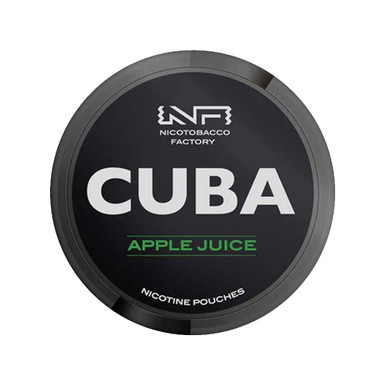
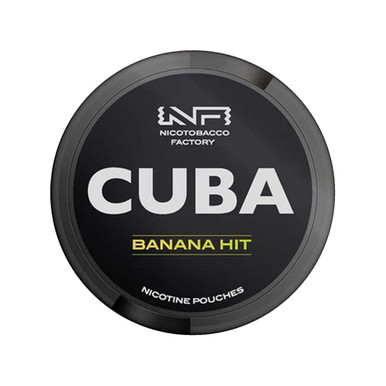
Six of the ten neighbouring listings our pack holds for this product come from the Cuba Black line, all at £39.90, which is the same price as this pack. That makes them unusually clean comparisons on cost, and between them they cover a wide spread of flavour ideas. Cuba Black Blueberry and Cuba Black Cherry are the two dark-fruit entries, the first rounder and jammier by reputation of the fruit itself, the second sharper and stonier. Cuba Black Apple Juice points its apple at pressed juice rather than at whole fruit, which is a sweeter and less green reading of it. Cuba Black Banana Hit is the soft, heavy, low-toned fruit in the set and the one least like any of the others.
Away from fruit, Cuba Black Cola takes the soft-drink route, which is its own flavour family and behaves differently from a fruit can in a rotation because it is sweet without being fruity. Cuba Black Cold Dry and Cuba Black Double Fresh are the two cold entries of the six, and their names are the only description we have of them — dry and cold in one case, doubled freshness in the other. We are reading those from the product names rather than from a tasting, and we flag that rather than presenting it as more than it is.
The three outliers
The remaining neighbours are less alike and more useful for that reason. Maggie Original Jamaican Cherry Tonic Wine at £39.90 has the most specific name of anything in this comparison set, pointing at cherry and at a tonic-wine character, which is a darker and less straightforwardly sweet idea than a plain fruit can. Siberia Mini at £39.50 is the one entry here where the name describes the format rather than the flavour; mini refers to the pouch size, which is a different variable from anything else on this page and the one to look at if the physical portion is what you would change. Pablo Exclusive Banana Ice at £3.85 is the outlier on price rather than on flavour — it is a single-can listing rather than a ten-can pack, which is the whole of why the number is so different, and it is the cheapest way on this page to put a second, cold, soft-fruit option next to a pack you have already bought.
Two ways people actually arrange this
Broadly there are two patterns. The first is to buy the ten-can pack and pair it with a single can of something deliberately different, which is where the £3.85 listing above earns its place — the outlay is small, it answers the variety problem, and nothing is wasted if the pairing turns out not to work. The second is to buy two multi-can packs at the same price point and alternate between them by week rather than by hour, which suits people who already know what they want and are buying at quantity on purpose.
Neither pattern is one we are recommending. They are the two arrangements that the shape of our catalogue makes obvious, and which one is sensible depends entirely on how much you already know about what you want — which, on a can with no flavour tag, is less than usual. The Cuba brand shelf and Pablo's listings are the two places to look at the full set of options behind the specific names above.
Cool, sweet, sharp and bitter: a vocabulary, and the point where it stops working
The most useful thing a shop can give somebody comparing cans is not another adjective but a consistent way of reading them. Four axes cover most of what distinguishes one pouch flavour from another, and once you have them, product names across the whole catalogue become easier to interpret. They are worth setting out here even though — and this is the honest caveat that runs through the section — we cannot place this particular can on any of them.
Cool
The cool axis is about the cooling sensation a flavouring carries, independent of whether the can tastes of fruit, mint or anything else. It is the axis that separates cans most reliably, because a cooling layer sits on top of everything else and changes the reading of whatever is underneath it. On our shelves the names usually say it outright — ice, freeze, frost, cold, arctic, polar. Among the neighbours listed above, the cold entries are the two Cuba Black cans whose names carry it and the Pablo banana listing with ice in its name. A can with no temperature word anywhere in its name is more often than not a warm one, though that is a pattern rather than a rule and it fails often enough to be worth checking.
Sweet
Sweetness is the axis people underestimate, because it varies more between fruit cans than the fruit does. A cola can and a berry can may both be sweet, but the sweetness behaves differently: soft-drink sweetness is broad and flat, fruit sweetness is brighter and carries acid with it, and confectionery sweetness — gum and sweet-shop flavour ideas, of which there are a good number across the catalogue — is the most forward of the three. Where somebody says a can is too sweet or not sweet enough, this is usually the axis they mean rather than the flavour itself.
Sharp
Sharpness is acidity and it is what stops sweetness becoming cloying. Citrus carries the most of it, followed by the sharper berries — blackcurrant, raspberry, sour cherry — and then the orchard fruits. Banana, coconut and cola sit near the bottom of this axis, which is why they read as heavy or round even when they are not especially sweet. Sharpness is also the axis most affected by the age and storage of a can, because the light, bright top notes are the first thing to fade in a tin that has been left somewhere warm.
Bitter
Bitterness is the least common of the four and the most divisive where it does turn up. It shows in coffee and tea flavour ideas, in some herbal and liquorice ones, in tonic-style flavours like the cherry tonic wine listing named above, and as a faint back-end note in a number of cans that are not otherwise built around it. Most fruit cans have none of it at all. It is worth having in your vocabulary because it is the thing people are usually reaching for when they say a can tastes grown-up or dry.
A fifth thing the four axes miss
The axes describe a can at one moment. They do not describe how it reads over the length of a single pouch, and that is a real difference between products that two people can otherwise describe identically. Some flavourings arrive at full volume and then drop away quickly, so the first few minutes are the whole of the experience and the rest is a long tail of not very much. Others come up more gradually, hold a plateau for a long stretch and fade late. Two cans that sit in the same place on all four axes can behave completely differently in this respect, and it is the reason people sometimes prefer one of two apparently similar products without being able to say why.
There is a second dimension the axes miss, which is how a can reads on the tenth day rather than the first. Any flavour used consistently becomes less distinct, and the ones that fade fastest in the mind are usually the simplest — a single-note fruit or a plain cold can. More complicated blends tend to hold interest for longer and can become tiring for a different reason, which is that a busy flavour is more noticeable when you did not want to notice it. Neither pattern is better. Both are worth knowing about before committing to ten cans of anything, which is the practical point for this listing.
Where Arasaka falls on these four
We do not know. That is the straight answer and it is the only one available. There is no flavour tag on the record, the product name is a name rather than a description, and placing it on even one of the four axes would mean inventing the information. We could tell you it is cold, or dark, or sharp, and any of those might turn out to be right, and we would have no basis for any of them.
What the four axes are good for here is the step after you find out. The packaging carries the flavour description; once you have read it, the vocabulary above lets you place this can against everything else on our shelves in a consistent way, and the neighbours listed in the previous section give you a reference point on each axis. That is a less satisfying section than a tasting note would be. It is the version that does not require us to make something up.
This listing's position in the Iceberg range
The Iceberg brand shelf carries forty listings, which makes it one of the largest single-brand groupings we run. Arasaka is one of the more unusual entries on it for exactly the reason this whole page keeps returning to: most of the brand's listings arrive with a flavour name that says something, and this one arrives with a name that says nothing.
Our record for this product does not carry a list of named sibling cans with prices attached, which means this section cannot do what the equivalent section does on some other pages — set five or six specific Iceberg products side by side with their figures. Rather than assemble that list from memory and risk printing a price or a strength that has moved, we point at the shelf itself. Forty listings is a browsable number, and the shelf shows current prices and current stock rather than a snapshot written into a page.
Two structural notes about that shelf. It spans several strength bands, so browsing the brand and browsing the Extra Strong grouping will return overlapping but different sets. And the brand shelf is where a flavour-named sibling is easiest to find, which is a practical point if the blank flavour field on this listing is the thing putting you off it.
Keeping ten cans in good order
Storage advice for a single tin is trivial. For a ten-can pack it is worth a proper paragraph, because the failure modes are different when most of what you have bought is sitting unopened for weeks.
The three things to avoid are heat, direct sunlight and an unseated lid. A windowsill, a car dashboard and the top of anything that gets warm are the usual culprits, and heat is the one that does the most to a flavouring over time — the lightest and brightest notes go first, which is the same point made on the sharp axis above. A cool dark cupboard, a drawer away from a radiator or a box on a shelf all do the job. Some people keep cans in a fridge; our record carries no manufacturer storage instruction for this product, so we will neither recommend refrigeration nor rule it out, and the packaging is where an actual instruction would be printed.
With ten cans specifically, keep the unopened ones together and separate from the one in use. It reduces the number of tins moving around, it keeps the pack from being spread across three rooms, and it makes the stock position obvious at a glance. Keep the lid seated on the open can between uses; it is a press-fit and it works, and a tin left open all afternoon is a tin whose contents have dried at the edges.
The non-negotiable part: store cans closed and out of reach of children and pets, and do not leave the pack in an open bag on the floor. The same applies to used pouches in a lid well, which is a reason to empty it rather than let it accumulate.
Ordering, stock and the checks that apply
Price is £39.90 for the ten-can pack at either declared strength. The stock flag on this listing at the time of writing reads out of stock, and our record holds that flag against the product rather than against each variant separately — so we cannot tell you that one of the two figures is available while the other is not. If you came here to order, the listing will not let you today.
We do not publish a restock date because we do not hold one. A page that guesses a date and then quietly moves it is worse than a page that says it does not know. Checking the listing again, or browsing the brand's other forty listings and the shelves linked through this page, are the two things available in the meantime.
On the checks: this is an 18+ product and age verification applies to the order. Identification may be requested on delivery, and where the carrier asks and it is not produced, the order is not handed over. That is a legal requirement rather than a shop preference, it applies to every order regardless of history, and it applies to a ten-can pack exactly as it applies to a single tin.
Where to go from this page
The useful exits are the shelves. By brand, Iceberg's forty listings are the nearest thing; by strength, this can sits on the Extra Strong shelf, with the Strong band and the medium band below it, and all three are filters rather than a progression. The full catalogue is the place to start if you would rather sort on price or availability than browse a category.
If what you actually want is a can whose flavour is stated rather than blank, any of the named neighbours above does that, and the two large brand shelves — Cuba's listings and the Pablo shelf — are the widest sets of flavour-named cans we hold at these price points.
Questions this listing raises
What does Arasaka taste like?
We do not know and we will not invent it. The flavour field on our record is empty and the name is not descriptive. This is the one question about this product we cannot answer, and it is a significant one — which is why it is stated at the top of the page as well as here. The packaging carries the flavour description. If knowing before ordering matters to you, and for most people it does, a flavour-named can is the more sensible purchase.
Is a blank flavour field a mistake in your data?
Possibly. It could be a gap in our record, or it could reflect a product whose name simply does not map onto a flavour tag. We cannot tell from the record which of those it is, and we would rather show you the blank and explain it than fill it in to make the page look complete. If the field is later populated, this page will say something different.
How many cans come in the pack?
Ten, at £39.90 for the pack. That is recorded rather than inferred. What is not recorded is how those ten are presented — roll, sleeve or box — so we describe the count and not the wrapping.
Why does the 50mg cost the same as the 20mg?
Because that is the price our record holds against both variants. We do not set manufacturer pricing and we do not have an explanation to offer beyond the fact itself. The practical consequence is that the figure on the lid carries no cost implication on this listing, so the choice between them is not a budget question.
Which of the two strengths should I get?
Not a question we will answer. We publish the declared figures because they are printed on the can, and we do not make recommendations about which one any individual should be buying. A higher number is not a better product and we do not present it as one. If you already buy pouches, you already know what figure you buy.
Why is the 20mg version on the Extra Strong shelf?
Because a listing is filed once, and a listing carrying two figures is filed by the higher one. The whole product sits on the Extra Strong shelf as a result, including its 20mg variant. It is a cataloguing consequence rather than a description of the lower variant, and it is worth knowing if you filter by strength and cannot find this can where you expected it.
Is it a mint can or a fruit can?
Unknown, for the same reason as the first question. It carries no flavour tag at all, so we cannot even tell you which family it belongs to, let alone where it lands within one. Any can on our shelves whose flavour matters to you should be one with a flavour tag on it, and this one has none.
How many pouches are in each can?
Not held in our record and not something we will estimate. Counts vary between brands and sometimes between products within a brand, so a number taken from a different tin would be a guess. The packaging states it.
Is it back in stock soon?
We have no restock date. The record carries a stock flag and nothing else, and the flag currently reads out of stock. We would rather leave this unanswered than publish a date we cannot stand behind.
Do you have a picture that shows the flavour description?
Our record holds a single image for this listing, and a single product image generally shows the lid face rather than the small print. We are not going to tell you that a photograph answers the flavour question when we cannot confirm that it does.
Is a ten-can pack better value than buying singles?
On a straight per-can basis, £39.90 across ten cans is under four pounds each, and most single-can listings on our shelves sit above that. Whether that makes it better value depends on something we cannot know, which is whether you would actually get through ten cans of a flavour you have not yet identified. A cheaper unit price on a product that sits in a cupboard is not a saving. That is the honest framing, and it is the reason the single-can listings named above are worth a look alongside this one rather than instead of it.
Can I buy just one can of this?
Not through this listing. Our record holds one purchase shape for this product, a pack of ten at £39.90, and no single-can variant. If a single tin is what you want, the sub-£5 listings named in the pairing section above are single cans, and the brand and strength shelves linked through this page will show you which other listings are sold that way.
Do people rate this one well?
We do not publish ratings, reviews or sales rankings, and nothing on this page is written to suggest a can is popular or well thought of. What you get here is the record, a description of the format, an honest account of what is missing from the record, and comparisons with other listings on our shelves.
The legal position on this product
This is an 18+ product, sold only to adults who already use nicotine. It is not offered or presented to anyone else.
Nicotine is an addictive substance.
This is not a licensed stop-smoking medicine and it is not sold as one. It is not intended for non-smokers, for people who do not already use nicotine, for anyone under 18, or for anyone pregnant or breastfeeding. Nothing on this page suggests that anybody should begin using nicotine, and nothing on it makes any claim about health, safety or harm in any direction.
Age verification applies to every order. Identification may be requested on delivery and an order will not be handed over without it where it is asked for. Keep cans, packs and used pouches out of reach of children and pets.
To summarise
Iceberg Arasaka is a ten-can pack at £39.90, available on our record in a 20mg and a 50mg declared figure at the same price, filed on the Extra Strong shelf, and currently flagged out of stock. Its flavour field is blank and its name is not descriptive, which means this page can describe the format, the pack, the figures and the shelves around it, and cannot describe the taste. That is the accurate account of what we hold, and the shelves linked above are the better place to go if a stated flavour is what you are after.
More from Iceberg


More extra strong pouches
More iceberg pouches



Where this sits
Iceberg Arasaka Nicotine Pouches appears in these categories. Browse them, or jump to something close.
You might also like