Home / Extra Strong / Cuba Black Double Fresh Nicotine Pouches
Cuba · 43mg
Read the full guide
Cuba Black Double Fresh Nicotine Pouches
£39.90
✔ In stock — ready to ship
100% tobacco-free
Free over £20
Same-day dispatch
Secure checkout
This listing is for Cuba Black Double Fresh Nicotine Pouches. It is priced at £39.90, it is declared at a single strength of 43mg, and the flavour we hold on record for it is mint. Those four facts — name, price, strength, flavour — are the whole of the product record behind this page. Everything below is either a description of the object, a comparison with other cans on our shelves, or a plain statement that we do not hold a particular piece of information. We would rather leave a gap visible than fill it with something we cannot stand behind.
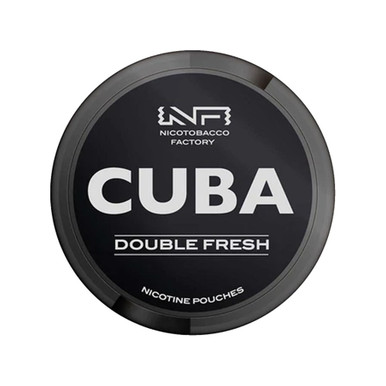
The can is the standard round pouch tin. It is a shallow plastic cylinder, roughly the diameter of a drinks coaster and deep enough to hold a single layer of pouches laid flat in a ring. The lid lifts off and presses back down. On the top of that lid you get the brand, the product name and the strength figure, which is the only part of the can most people ever read, because it is the part facing upwards when the can is sitting on a shelf or in a drawer with four others.
The full guide to Cuba Black Double Fresh Nicotine Pouches
5,691 words on how it eats, who it suits, how to serve it and what to put beside it.
The Double Fresh can, and what is actually in front of you
Cuba Black is the line name. Double Fresh is the flavour name within that line. It is worth being clear about one thing early, because the question comes up: Cuba here is a brand name and nothing more. It is not a statement about where the product is made, where anything in it comes from, or who makes it. We do not hold manufacturing or origin information for this product, we are not going to guess at it, and nobody should read the word on the lid as a factual claim about a country. If origin matters to you, the manufacturer's own labelling on the can is the place to look, and it is the only authoritative source for it.
We list this can as in stock at the time of writing. Stock moves, and the live position on the listing itself is always more current than a sentence written into a description. We do not publish a pouch count for this can, because our product record does not carry one. The same applies to pouch weight, can dimensions and format designation. If it is stamped on the packaging and not in our data, the packaging is where you read it.
One piece of housekeeping before anything else. This is an age-restricted nicotine product, sold only to adults aged 18 or over who already use nicotine. The full compliance wording sits in its own section at the foot of this page, and it is worth reading if you have not bought from us before.
The pouch in the hand: portion, seat and the lid compartment
A nicotine pouch is a small sealed pouch that you place in your mouth, between the lip and the gum, and leave there. It is not chewed, it is not sucked like a sweet, and it is not swallowed. That description covers every product on this site, Cuba or otherwise, and it is the reason the format section of one of our pages reads much like the next: the format genuinely is the same.
The mechanics take about three seconds. Lid off, one pouch out, lid back on. The pouch goes in at the front of the mouth — most people put it under the top lip, some prefer the bottom — and the lip holds it in place. It will stay where you put it until you move it. If it sits uncomfortably in one position you can shift it to the other side, and if it sits uncomfortably in every position, that is the point at which to take it out. Comfort with this format is individual, it varies between people and between cans, and nothing about a pouch requires anyone to persist with one that is not sitting right.
How long people keep one in varies far too widely for an average to be worth printing. Some take one out after a few minutes. Others leave one in for the better part of an hour. The reason usually given for taking one out is that the taste has gone, which with a mint pouch happens the way it happens with chewing gum: gradually, then completely. We do not set a time, we cannot tell you what yours should be, and any usage guidance the manufacturer prints on the can is the guidance to follow rather than anything inferred from a web page.
The lid does a second job. Cuba cans, like most pouch cans, have a catch compartment moulded into the top — a shallow chamber that sits above the main body where the fresh pouches are. Used pouches go in there. It is not a sophisticated piece of design; it is a lid with a gap under it. What it buys you is somewhere for a used pouch to go when there is no bin in reach, which is the difference between a tidy pocket and an untidy one. It fills up. Empty it more often than feels necessary, because a compartment packed to the brim stops the lid seating flat, and a lid that does not seat flat is the start of most of the problems described further down this page.
Disposal is general waste. A used pouch goes in a bin — not down a sink, not down a toilet, not out of a car window. The can is a plastic tin and goes in with household plastics to whatever extent your council accepts them, which varies by authority and is not something we can answer for a particular postcode.
On portion size: our record does not carry a format designation for this can, so we are not going to tell you whether the pouches inside are slim, regular or anything in between. The can will tell you, and the manufacturer's description of its own product is worth more than our inference from a photograph. What we can say is that every pouch in a given can is the same as every other pouch in that can. Once you have had one, the rest hold no surprises.
Double Fresh, described as taste and aroma
The flavour we hold on file for this product is mint, and the flavour name on the can is Double Fresh. Those two things are doing different jobs. "Mint" is our classification — it is why this can appears on the mint flavour shelf alongside 147 other listings. "Double Fresh" is the manufacturer's name for its own flavour, and names like that are descriptive rather than technical.
Taken as taste: this reads as mint. Cool, green, unmistakably in the mint family, without a fruit note behind it and without a spice cutting across it. The word "double" in the name points at intensity rather than at two distinct flavours — you should not expect to be able to pick out two separately identifiable things and name them. What you get is a mint character that arrives at the cool end of the family rather than the sweet, herbal end.
The aroma, taking the lid off, is the same thing in a smaller dose. Mint comes off an open can before anything else does, and with a can named for freshness it comes off fairly readily. That is worth knowing if you keep cans in a shared drawer, because an open mint can perfumes a small enclosed space more than a fruit can does.
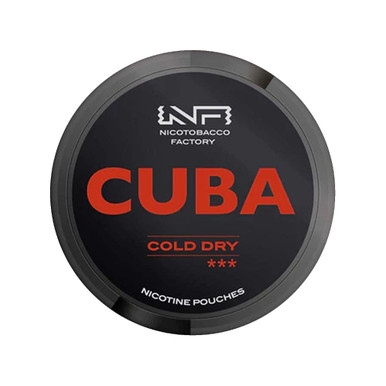
Mint is not one flavour, and this is the single most useful thing to understand before choosing between mint cans. The word covers a spread: at one end a sweet, rounded, almost confectionery mint; in the middle a plain green spearmint reading; at the other end a cold, sharp, frost-forward character where the coolness is the dominant impression and the herbal note sits behind it. Double Fresh sits toward the cold end of that spread. It is not the sweetest mint on our shelves and it does not present as a spearmint. If you want a comparison point in the same brand, Cuba Black Cold Dry at £39.90 is the other can in this line whose name points squarely at the cold, dry reading rather than at a fruit.
Beyond that we stop. We do not publish flavour composition, we do not list what produces a given note, and we are not going to describe how the flavour is made. Our record holds a one-word flavour classification and a product name, which is what this section is built from. The can carries the manufacturer's own declarations and it is the authoritative source for anything of that kind.
43mg on the lid: what the number is and what it is not
This listing carries one declared strength: 43mg. There is no second variant, no milder version of this flavour on this page, and no price difference to weigh up, because there is only one price — £39.90.
Taken literally, the figure is the strength declaration the manufacturer prints on the can, expressed in milligrams, and we reproduce it exactly as given. We do not convert it, scale it, or restate it in any other unit. We do not explain what it does or how it behaves once a pouch is in use, because that is pharmacology and this is a product listing. What the number is useful for is comparison: it is a common yardstick that lets you place one can against another on a shelf, and that is the whole of how it is used on this site.
We sort the catalogue into three strength bands. There is a medium band for the lower declared figures, a strong band in the middle, and an extra strong band at the top, which currently holds 98 listings. At 43mg, this can is filed in the extra strong band, and it sits high within it rather than at its threshold. That is a statement about where a number falls in a sorted list. It is not a recommendation, it is not a statement that the number suits anyone, and we will not tell any individual which band to buy from. We are a shop; the choice of strength is not ours to make and we do not hold the information that would be needed to make it responsibly.
If you want to see the spread for yourself rather than take a sentence for it, the three band pages are the fastest route. The medium and strong shelves carry the cans with lower declared figures; the extra strong shelf carries this one and the 97 others at the top of the range. Sorting by strength is the one comparison the site does well, precisely because the number is printed and objective.
Keeping a can usable: dryness, damp, heat and the lid that does not shut
This is the part of a pouch page that most people skip and then wish they had not, so it gets the long treatment here. Nothing in this section is a health statement or a claim about the product. It is about the physical condition of an object you have paid £39.90 for, and how to stop that object going off before you have finished it.
Dry and moist are not fault states. Pouches come out of the can at a moisture level the manufacturer chose. Some products are made deliberately dry; others carry more moisture from the outset. A drier pouch tends to feel firmer when you first place it and takes a beat longer to soften; a moister one feels softer from the start. Neither is a defect and neither is a sign of age on its own. Cuba Black Cold Dry, elsewhere in this line, has the word in its name precisely because dryness is a characteristic of the product rather than a problem with it. What matters is not whether a pouch is dry but whether it is drier than it was when you bought it, which is a different question and the one this section is actually about.
The lid is the whole of the seal. A pouch can has no foil, no inner membrane and no clever closure. It has a lid that presses onto a rim. That is it. Everything that goes wrong with a can over time goes wrong through that rim. If the lid is on properly, the contents hold their condition for a long time. If it is not — if it is sitting a millimetre proud because the catch compartment is stuffed with used pouches, or because a pouch has worked its way up under the rim, or because the lid was pressed on at an angle in a hurry — then the can is effectively open, and it will dry out from that point on. Most "this can went dry on me" stories are lid stories.
Heat is the other one. A can left on a windowsill in summer, on a dashboard, on top of a radiator, or in a coat pocket next to a hot car vent is being cycled between temperatures all day. Warmth encourages moisture to leave the pouches and condense on the underside of the lid, and each cooling cycle puts some of it back unevenly. The practical result over a week or two is a can where the top pouches feel different from the ones underneath. Keeping a can at ordinary indoor room temperature, out of direct sun, avoids the entire problem. There is nothing exotic about it: a drawer, a cupboard shelf, a bedside table away from the window.
Cold and the fridge. People ask about refrigerating cans. Some users do it, particularly with mint products, on the basis that a cold can is pleasanter to open. We do not recommend it and we do not warn against it, because we do not hold manufacturer guidance on storage temperature for this product and we are not going to invent any. What is worth knowing is the practical downside rather than any claimed benefit: a can moved between a cold fridge and a warm room repeatedly will collect condensation on the inside of the lid each time, and condensation is moisture landing where you did not choose to put it. If you do keep a can cold, keeping it cold consistently is less disruptive than moving it back and forth.
Rotation, if you keep several. Anyone who buys cans in more than ones ends up with a small stack, and a stack has an oldest can in it. The simple discipline is to put new cans at the back and take from the front. It costs nothing and it means the can that has been sitting longest is the one you open next rather than the one you find in six months. If you keep several flavours open at once — a mint and a fruit, say — the same applies within each line.
What a tired can is like. An older can that has been stored badly is not dangerous and we are not suggesting otherwise. It is disappointing, which is a different complaint. The flavour is shorter and flatter, the pouch feels stiffer than a fresh one from the same product, and it tends to go quiet sooner. That is the honest description of the failure mode: you lose the back half of the experience you paid for. It is entirely avoidable with a lid pressed down properly and a can kept out of the heat.
The catch compartment again. It earns a second mention here because it is the most common cause of a lid that will not seat. Empty it into a bin when you are near one. A compartment holding six or seven used pouches is holding the lid up, and a lid held up is a can drying out. The tidy habit and the preservation habit are the same habit.
Out of reach of children and pets, always. That is not a storage tip, it is a condition of keeping this product in the house at all, and it appears again in the compliance section below because it matters more than everything else in this section put together. A can is small, it rattles, and it looks like a container of sweets to anyone who cannot read the lid. It belongs somewhere that a child cannot reach and a dog cannot nose open.
43mg against the rest of the shelf: what else sits at the top band
A strength figure on its own tells you very little. It becomes useful the moment you can place it against the other cans in a shop, which is the point of this section. What follows is a comparison of listings we actually stock, by declared strength, brand and price. It contains no advice about which to buy, because that is not a judgement we are in a position to make.
Start with the obvious neighbours. Killa Banana Ice at £33.50 is filed in the same extra strong band and carries the band's name in its own product slug, which tells you where the brand positions it. It is a fruit-and-cool can rather than a straight mint, so the comparison is a strength comparison rather than a flavour one. Klint Arctic Mint at £36.90 is closer in flavour territory — a mint reading in the cold, arctic-named family, at a price a few pounds under this listing. Between those two and this can you have three different brands, three different prices and a shared position near the top of the sorted strength list.
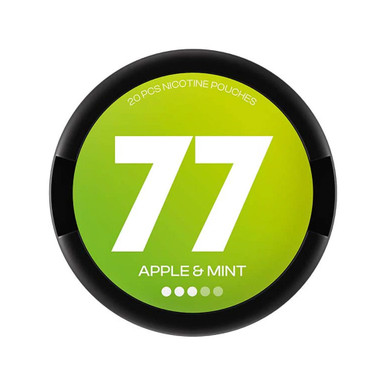
Same price, different brand, is the other comparison worth making, because £39.90 turns out to be a common price point across our shelves. 77 Apple Mint is £39.90, and it is a mint with an apple note laid across it — the same money, a different reading of mint. Clew Cool Mint is also £39.90 and sits in the plain cool-mint territory rather than the doubled-up one. Denssi Cold Mint at £39.90 is a third take on the same idea from a third brand. If you laid those three and this can side by side you would have four cans at identical money, all classified as mint, all reading differently, which is roughly the state of the mint shelf as a whole.
Then there is the other end of the price spread, which is where this comparison earns its keep. Edge Mint at £14.95 and Elf Bar Cool Storm at £29.90 are both mint-family cans at materially less money than this one. Pablo Exclusive Banana Ice at £3.85 sits lower still — the cheapest thing in this comparison by a wide margin, and a fruit-and-ice can rather than a mint. We are not going to explain the price differences, because we do not hold the manufacturers' cost or pack information that would make such an explanation honest. What we will say plainly is that a price difference between two cans on our shelves is not evidence of anything about either of them beyond the price.
Outside mint entirely, the same 43mg-and-above territory holds cans that taste nothing like this one. Fumi Dark Spice at £27.90 is in the dark, spiced flavour family. Maggie Original Jamaican Cherry Tonic Wine at £39.90 is a cherry-and-tonic-wine reading and is about as far from a cold mint as our catalogue goes while staying at the same money. If your reason for looking at the top of the strength range has nothing to do with wanting mint, those two show how wide the flavour spread is up there.
The honest summary of this whole comparison: at 43mg this can is in crowded company. There are 98 listings in the extra strong band and 148 on the mint shelf, and a good number of cans sit in both. What distinguishes this one from its neighbours is its brand, its price and the particular cold-forward reading of mint described above. It is not distinguished by its strength, because at the top of the range the strength is the thing everything has in common.
What people keep beside it for variety
Almost nobody who uses this format keeps only one can. Flavour fatigue with a single mint is the ordinary reason — a flavour you have had four times in a day stops registering as clearly by the fifth. What people do about it is keep a second can of something unlike the first, and rotate.
Within the same line, the obvious partners are the fruit cans, all of them at £39.90 and all at the same declared strength, which keeps the comparison purely about flavour. Cuba Black Apple Juice is the orchard-fruit reading, sweet rather than cold. Cuba Black Cherry takes the stone-fruit direction with more sharpness in it. Cuba Black Blueberry is the berry option in the line, rounder and darker than the cherry. Cuba Black Banana Hit is the soft, creamy-sweet end of the fruit set and about as far from a cold mint as this line goes on flavour alone. Cuba Black Cola is the soft-drink reading rather than a fruit at all.
Outside the brand, a mint-and-something rotation is easy to assemble from the cans already mentioned. Pairing this with the Elf Bar cool can at £29.90 gives you two cold readings from two brands, which is a narrow rotation but a cheap one to assemble. Pairing it with the Maggie cherry tonic wine can gives you the widest flavour gap available at the same £39.90.
If you would rather browse than take a suggestion, the full catalogue is the place to start, and the flavour and brand shelves narrow it down from there.
Where Double Fresh falls in the Cuba range
We currently list 47 Cuba products on the Cuba brand page, which makes it one of the larger single-brand shelves on the site. The Black line, which this can belongs to, accounts for a substantial part of it, and within the Black line the pattern is consistent: a single declared strength of 43mg and a price of £39.90 across the flavours, with the flavour name doing all of the differentiating.
That consistency is genuinely useful when you are choosing. Because the money and the number do not move between Cuba Black cans, a choice within the line is a flavour choice and nothing else. Double Fresh and Cold Dry are the two cans whose names point at cold rather than at fruit. The rest of the line — apple juice, banana, blueberry, cherry, cola and the others on the brand page — spread across fruit and soft-drink territory.
The brand page is also where to look for the other Cuba lines we stock, which carry different names on the lid. We are not going to characterise lines we have not described elsewhere on this page, because the product records are what we work from and they differ line by line. The shelf shows what is listed and what each one costs, which is more reliable than a summary written in advance of a stock change.
One strength, one price: what there is to decide
On some listings this section is a real decision. On this one it is short, and it would be dishonest to make it longer than it is.
This product is offered in one declared strength, 43mg, at one price, £39.90. There is no milder version of Double Fresh on this page and no larger or smaller pack option in our record for it. The cans-per-pack field in our data is empty for this listing, which means we do not publish a can count and will not estimate one. What you are buying is what the listing shows at the price the listing shows.
So the only real choice attached to this page is between this can and a different can. That choice can be made three ways, and all three are just filtered views of the same catalogue: by strength, using the band pages; by flavour, using the mint shelf and its 148 listings; or by brand, using the Cuba shelf and its 47. If price is the constraint, browsing a shelf and reading the figures is more use than any paragraph we could write, because prices on the shelf are live and a paragraph is not.
Ordering, delivery and the age check
Ordering works the way it does everywhere on this site. The can goes in the basket at £39.90 and you check out. Stock status shown on the listing is live; if this can has gone out of stock between this description being written and you reading it, the listing will say so and the basket will not let you buy it.
Age verification is not optional and it is not a formality. We sell only to adults aged 18 or over. There is an age check at checkout, and ID may be requested on delivery. If a courier asks and no adult at the address can produce identification, the delivery will not be completed and the parcel goes back. That is the single most common reason a delivery fails on an order of this kind, and the way to avoid it is simply to have ID to hand on the delivery day and to make sure whoever is in the house knows the parcel is coming.
Delivery timescales, carriers and postage costs are set out in our delivery information rather than on a product page, because they apply across the site and change independently of any one listing. We will not quote a delivery window here that might be out of date by the time you read it.
A practical note on order size: because the price is the same for every can in the Cuba Black line, adding a second flavour to an order is a straightforward arithmetic exercise rather than a judgement call. Several people order this alongside one fruit can from the same line for exactly that reason — the basket total is predictable and the rotation described above is ready-made.
Finding this page again, and what sits around it
This listing is reachable from three shelves, and they are the three worth bookmarking if you come back regularly. It sits on the extra strong strength page with 97 other listings, on the mint flavour page with 147 others, and on the Cuba brand page with 46 others. Between them those three views cover almost every way somebody arrives at a can like this.
Above them sit the wider navigation points: the whole catalogue in one list, and the other two strength bands — the strong shelf and the medium shelf — for the cans with lower declared figures. The Pablo brand page is worth knowing as a separate destination because Pablo pricing runs very differently from Cuba's, as the £3.85 Banana Ice listing mentioned earlier shows.
Questions we are actually asked about this can
Is Cuba Black made in Cuba?
We do not know, and nobody can tell from the lid. Cuba is a brand name applied to a range of nicotine pouch products. It is not a declaration of origin and should not be read as one. Our product record holds no manufacturing location, no company details and no country of origin for this listing, and we are not going to guess at any of them. Whatever the manufacturer declares on the can itself is the authoritative source for that information.
How many pouches are in the can?
We do not publish a pouch count for this product, because our record does not carry one. That field is empty, and rather than estimate from a photograph we are telling you it is empty. The can is printed with the manufacturer's own declarations and is the place to read the count. It is the same answer we give for pouch weight, can dimensions and format designation — if we do not hold it, we say so.
What does "Double Fresh" mean?
It is the manufacturer's flavour name for this can, and our record classifies the flavour as mint. Read as a description, "double" points at intensity rather than at two separable flavours you could name individually. What you get is a mint reading that sits at the cold end of the mint family rather than the sweet or herbal end. We do not hold or publish any information about flavour composition, so a flavour name and a one-word classification is genuinely all we have.
How strong is 43mg compared to your other cans?
43mg places this listing in our extra strong band, which currently holds 98 listings, and it sits high within that band rather than at its lower edge. That is a statement about sorting, not about effect. We do not describe what any strength does, we do not compare strengths on those terms, and we will not tell you whether a figure is suitable for you. The band pages let you see the spread and make your own comparison.
Which strength should I buy?
We cannot answer that and we will not try. Recommending a strength to an individual would mean making a judgement about that person, and a shop is not in a position to make it responsibly. What we can do is show you the figures: the medium, strong and extra strong shelves sort the whole catalogue by declared strength, every listing prints its own figure, and the comparison is yours to make.
Is there a milder version of this flavour?
Not on this listing. This page carries a single declared strength of 43mg and no other variant. Whether any other Double Fresh product exists elsewhere in the world is not something our record covers. What we stock is what appears on the Cuba shelf, and the strength band pages will show you whether a mint can with a lower declared figure exists in our range — Edge Mint at £14.95 is one of the mint-family listings sitting outside the top band.
How long should I keep a pouch in?
There is no answer we can give you that would be honest. People differ enormously — a few minutes at one end, most of an hour at the other — and any average we printed would be misleading for most readers. The usual reason people take one out is that the flavour has finished. Whatever usage guidance the manufacturer prints on the can is the guidance to follow; we do not add our own on top of it.
My last can went dry. What happened?
Almost always the lid. A pouch can has no seal other than the lid pressing onto the rim, so a lid that is not fully seated leaves the can effectively open. The usual culprit is a catch compartment packed with used pouches holding the lid proud, or a pouch caught under the rim. Heat is the second cause — windowsills, dashboards, radiators. Storing a can at ordinary room temperature out of direct sunlight, and emptying the compartment regularly, prevents nearly all of it.
Can I keep the can in the fridge?
Some people do. We do not hold manufacturer storage guidance for this product, so we are not going to recommend it or advise against it. The practical point worth knowing is that moving a can repeatedly between cold and warm places produces condensation inside the lid each time, which puts moisture back into the can unevenly. If you keep a can cold, keeping it consistently cold is less disruptive than moving it in and out.
Is it in stock?
At the time this description was written, yes. Stock changes constantly and the listing page itself is the live position — if it has gone out of stock, the page will say so and you will not be able to add it to a basket. If a particular can is unavailable, the quickest sideways move is the mint shelf for a similar flavour or the Cuba shelf for the same brand in a different flavour at the same price.
Do you publish the ingredients?
No. We publish name, brand, flavour classification, declared strength, price and stock status, and that is the entirety of what we hold. Ingredient information, technical specification and any similar detail come from the manufacturer's own labelling, printed on the can, which is the authoritative source. We will not paraphrase that labelling second-hand on a product page, because a paraphrase of a legal declaration is worth less than the declaration itself.
What if I do not like it?
Taste is individual and we cannot predict yours. If a cold mint turns out not to suit you, the site is built to let you move sideways quickly: Clew Cool Mint at the same £39.90 is a different brand's reading of a similar idea, and the fruit side of this line — Blueberry among them — costs exactly the same to try. Our standard returns policy applies to this listing as it does across the site.
Legal and compliance information
Nicotine is an addictive substance.
This product is sold to adults aged 18 or over who already use nicotine, and on no other basis. We do not sell to anyone under 18. There is an age check at checkout, and ID may be requested on delivery — if it is requested and no adult at the address can produce it, the delivery will not be completed.
Cuba Black Double Fresh Nicotine Pouches are not a licensed stop-smoking medicine and are not authorised or intended for any such purpose. This product is not intended for non-smokers, for anyone who does not already use nicotine, for anyone under the age of 18, or for anyone who is pregnant or breastfeeding. Nothing on this page is medical advice. Nothing on this page should be read as an encouragement to begin using nicotine, or as a recommendation of any particular strength for any particular person.
Keep this product out of reach of children and pets. Every product fact stated above — name, brand, price, declared strength, flavour classification and stock status — comes from our product record for this listing. Where our record does not hold something, we have said so on this page rather than estimating it. The can itself, and the manufacturer's labelling printed on it, is the authoritative source for anything on the packaging.
To close
Cuba Black Double Fresh is a single-strength can at 43mg and a single price of £39.90, classified as mint and reading toward the cold end of that family. It is filed on the extra strong band, on the mint shelf and on the Cuba brand page, and the rest of its line — Cold Dry, Apple Juice and the rest — sits at the same money and the same declared figure, which makes a move within the line a flavour decision and nothing more. Store it with the lid pressed down and out of the heat and it will last as long as it is going to. Everything we hold about this product is on this page, and everything we do not hold, we have said we do not hold.
More from Cuba
More extra strong pouches
More mint pouches
Where this sits
Cuba Black Double Fresh Nicotine Pouches appears in these categories. Browse them, or jump to something close.
You might also like