Home / Extra Strong / Cuba Black Blueberry Nicotine Pouches
Cuba · 43mg
Read the full guide
Cuba Black Blueberry Nicotine Pouches
£39.90
✔ In stock — ready to ship
100% tobacco-free
Free over £20
Same-day dispatch
Secure checkout
This page covers Cuba Black Blueberry Nicotine Pouches: brand Cuba, line Black, flavour classified on our records as berry, declared strength 43mg, price £39.90. One variant exists on this listing — 43mg at £39.90 — and our record marks it as in stock at the time of writing.
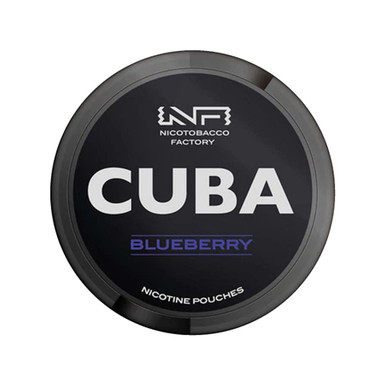
The can is the familiar round tin used across most of this category: shallow, circular, wide enough to sit in a palm, with a lid that lifts clear and presses back on. The face of the lid carries the brand, the line name, the flavour and the strength figure, which is the practical reason the printing matters — if you keep more than one can in a bag or a drawer, the top of the lid is the only part you ever look at. Inside, pouches sit in a ring. The upper part of the can is the catch compartment for used pouches.
The full guide to Cuba Black Blueberry Nicotine Pouches
5,180 words on how it eats, who it suits, how to serve it and what to put beside it.
What this can is
Our record for this listing holds one product image, the price, the strength, the flavour classification and the stock status. It does not hold a pouch count, a weight, a dimension, a manufacturer, a country or a date, so you will not find any of those on this page. Where our data is empty we say it is empty rather than filling it in, and the printed can remains the authoritative source for anything the manufacturer has stamped on the packaging.
Black is a line name within the Cuba range and we treat it as nothing more than that — a label identifying a group of cans on a shelf. It is not a description of origin, and nothing on this page should be read as a claim about where the product comes from.
This is an adult nicotine product sold to over-18s who already use nicotine. Nicotine is an addictive substance. The full compliance section is at the foot of the page.
The pouch, handled
Size and feel
These are standard-format pouches rather than minis. A standard pouch is a small soft rectangle with rounded ends — shorter than a fingernail is long, a little thicker than folded card, soft enough to compress gently between finger and thumb without falling apart. We do not publish millimetre dimensions for this product because our record does not carry any, and an invented measurement would be worse than an absent one.
The difference between a standard pouch and a mini is genuinely noticeable in use, and where a listing is a mini format we flag it on that listing. This one is not flagged that way, so treat it as a standard can. Beyond that distinction we hold no physical measurements for this product at all, and the printed can is the place to look for anything the manufacturer has specified.
Where the pouch sits
The pouch goes between lip and gum, usually the upper lip, and stays there. That is the entire operation. There is no device, nothing to charge, nothing to press, nothing to hold and nothing to carry except the can. Most people settle on a side out of habit and keep to it; some move it across during the time it is in. We have no view on which is preferable and no advice to give.
Seated properly, a pouch lies flat rather than rolling. How much a pouch shifts about varies between brands and is one of the real differences between cans — it is also one of the things a product page cannot honestly tell you, ours included. You find out by opening one.
Time in, and the catch lid
The range people generally talk about for this format runs from around twenty minutes to about an hour, with plenty of variation on either side. We do not publish a figure for this can, there is no correct duration, and nothing here is a recommendation about timing or quantity. What is true of dry pouches as a format is that the flavour is at its most defined early and tapers over the time the pouch is in, so the tail end tastes quieter than the start.
The lid's upper section is the catch compartment: somewhere for a used pouch to go when a bin is not to hand. It is a stopgap, not storage — emptying it when you pass a bin is the sensible habit. Used pouches go in general waste, never down a drain or a toilet, and never anywhere a child or an animal could reach them. That last point is the one piece of handling guidance on this page that is not optional.
Blueberry as a taste and an aroma
Our flavour field for this listing holds one entry, berry, and the name on the lid narrows it to blueberry. Blueberry is a specific and slightly awkward flavour to describe honestly, because the fruit it is named after is one of the quietest things in the fruit bowl.
A blueberry flavour reads as soft, rounded and evenly sweet. It has less acidity than almost any other berry note on the shelf — there is no sharp front edge on it, nothing that makes you wince, and the sweetness arrives as a single smooth block rather than in stages. Where a red berry lands bright and a blackcurrant lands sour, blueberry lands gently and stays level.
Underneath that there is a faintly powdery, almost floral quality — the part of a blueberry that tastes of skin rather than juice. That is the note that makes a blueberry recognisable rather than just "sweet purple", and it is also what separates it from a candy grape or a generic mixed-berry. It sits in the middle of the taste rather than the front or the back.
The finish is the other distinguishing feature, and it is a finish by absence. Blueberry ends cleanly and quickly. There is no drying, faintly astringent grip of the sort that a blackberry note leaves behind, and no lingering sour tail of the sort a blackcurrant has. The taste arrives, sits, and goes, which is exactly why some people keep a blueberry can as their everyday one: it is the least demanding of the dark fruits.
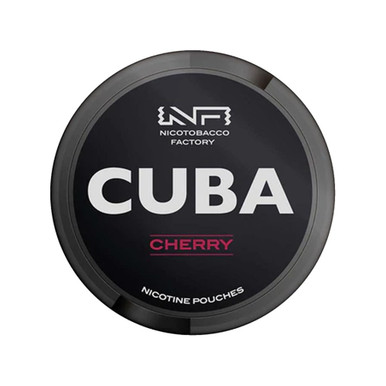
Set against the line's cherry can, the contrast is sharper still, because cherry is a stone fruit rather than a berry in flavour terms — syrupy, aromatic, with a sweet-sour bounce and a faint kernel edge at the back that blueberry has nothing like. Blueberry is the quiet one of that group; the cherry can at the same £39.90 is the loud one.
The aroma off an open can is sweet and jammy but restrained. Dark fruit aromas generally sit lower than citrus or mint ones, and blueberry sits lower than most dark fruits. You will smell it when the lid comes off, and you will not smell it across a room.
The usual caveat: the description above is our honest account of the flavour family and the name on the lid, not a specification handed to us by the manufacturer. Our record holds "berry" and nothing more granular. Taste also varies between people more than anything else on a product page, and two people can disagree about the same can in good faith.
How a fruit note gets built into a dry pouch
This is the part of the page worth spending time on, because "blueberry flavour" is a shorthand for something that is genuinely constructed, and understanding how flavours are built in this format explains most of the differences you notice between cans.
Before anything else, the limit: we do not publish composition. We do not hold and will not print what any product contains or how it is produced, and nothing below is a description of contents. This section is about flavour as a perceived thing — the shape of the taste — which is the only part of it we can honestly discuss.
A flavour is a shape, not a single note
Any recognisable flavour, in any medium, has a structure: something that arrives first, something that forms the body, and something that is left at the end. Perfumers call these top, heart and base, and food people use their own vocabulary, but the idea carries across. When a flavour reads as "obviously blueberry", it is because all three parts point at the same fruit.
In a dry pouch the structure is compressed. The whole thing happens in the mouth, over a longer stretch than a mouthful of food and with far less going on than in a drink. There is no temperature to work with, no texture beyond the pouch itself, no carbonation, no chewing. The flavour has to do its identification work with very little supporting cast, which is why pouch flavours tend to be drawn in bolder lines than the real fruit would be.
Why fruit notes are exaggerated rather than literal
A literal reproduction of a real blueberry would be nearly undetectable in this format. Real blueberries are mild, watery and mostly texture — pick one apart and there is not much taste to find. So blueberry flavours are not built from the average blueberry; they are built from the memory of one, which is a much louder thing.
That memory is usually closer to blueberry jam, blueberry in a muffin, or the blue sweets of childhood than to the fruit itself. That is a deliberate choice, and it is why blueberry flavours across every category taste more of each other than they do of the bush. It is also why blueberry notes read as sweet and rounded rather than fresh and sharp — the reference point being reproduced is a cooked or confected one.
You can taste the same decision being made differently by other brands. Clew's blueberry at £39.90 and Killa's blueberry at £33.50 are the same nominal fruit built by different hands, and the differences between three blueberry cans are usually differences of which reference the flavour is aiming at rather than differences of how much flavour there is.
Single fruits against blends
A single-fruit can has one job and a narrow way to do it. A blend has an easier time being interesting and a harder time being identifiable. The Elf Bar blueberry and raspberry can at £29.90 is a clean illustration: the raspberry supplies the sharp front edge that a blueberry deliberately lacks, so the blend has more attack, and in exchange it is less obviously a blueberry.
Black Forest Berries in the same line at £39.90 goes further in that direction — a composite dark-fruit picture rather than a single named fruit, which is a different design brief altogether. A blend of that kind does not have to be recognisable as any one fruit; it has to be recognisable as a mood.
What the base fruit does to the whole thing
Compare across fruits and the pattern becomes clear. Fumi's blackcurrant at £27.90 is built around a fruit with a genuinely sour signature, so its flavour has a spine that a blueberry never needs. 77 Strawberry at £39.90 is built around a fruit whose signature note is unmistakable even in small amounts, so it can be drawn lightly and still read correctly. Pablo's blue raspberry at £3.85 is built around a flavour that does not exist in nature at all — "blue raspberry" is a confectionery invention, which means there is no real fruit to be faithful to and the whole construction is free-standing.
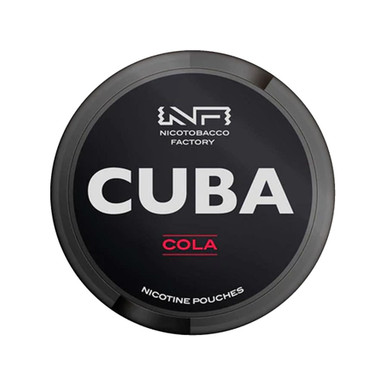
And some flavours are not fruit at all, which changes the task completely. The Maggie tonic wine can at £39.90 is aiming at something composite and adult rather than a single note, and the cola can in this line is aiming at a flavour everybody recognises instantly but almost nobody could describe from memory. Cola is one of the hardest things in the category to build because the audience knows exactly what it should taste like.
Why the same flavour name tastes different between brands
Two cans with the same word on the lid frequently taste nothing alike, and that is not a fault. The word is a category, not a specification. There is no standard definition of what a blueberry pouch ought to taste like, no scale it is measured against, and no requirement that two manufacturers aim at the same reference. When someone says they prefer one brand's blueberry to another's, that is usually what they mean.
It also means our flavour shelves are a starting point rather than a promise. The berry shelf holds 76 listings, and those 76 cans agree on a word and not much else.
Reading the 43mg figure
The declared strength on this listing is 43mg, held in our record as a single value with a single price attached. We do not hold the basis on which the figure is expressed, and we will not guess — the can's own labelling is where that is properly read.
What the figure does on our site is decide the shelf. We file listings into three bands, and 43mg puts this can in the extra strong band, which currently holds 98 listings. The other two bands are the strong shelf and the medium shelf. Those bands are a navigation tool. They are not a ranking, not a ladder to work along, and not advice.
We do not tell anyone which strength to buy, we do not describe any figure as suitable or unsuitable for any person, and there is nothing on this page that should be read as a recommendation about strength. This listing in any case offers one figure only.
Where a pouch can and cannot go
The second thing worth covering properly is setting, because the format's defining practical characteristic is that it is unobtrusive — and because being unobtrusive is very frequently confused with being permitted, which is a mistake worth heading off.
What the format actually is, physically
A pouch in place is not visible to anybody who is not looking closely. There is no device in the hand, nothing held to the mouth, nothing to put down on a table, nothing that lights up, nothing that makes a sound, nothing to charge, nothing to exhale and nothing produced that anyone else can see. The can goes in a pocket. That is the whole physical description, and it explains why people describe the format as discreet.
Those are facts about an object, and that is all they are. They are not a claim about anything else, and this page makes no comparison between this product and any other kind of product on any grounds other than the physical ones just listed.
Discreet is not the same as allowed
Here is the important part. Whether you may use a nicotine product somewhere is decided by whoever runs the place, not by whether anyone would notice. Those are separate questions and they have separate answers.
Employers set workplace policies, and a great many of them cover nicotine products specifically rather than only covering what happens outdoors. Transport operators set their own rules and publish them. Airlines set theirs, and they vary between carriers and between routes. Venues, hospitals, schools, stadiums, sites and licensed premises all set their own. Some of those rules cover pouches explicitly, some cover nicotine products generally, and some do not mention them at all — in which case you are reading a silence rather than a permission.
We do not know the rules of any particular workplace, carrier, venue or site, and we cannot advise you on them. We have no visibility of them, they change, and getting it wrong is your problem rather than ours, which is precisely why we will not guess. If you want to know whether a place permits a nicotine product, the answer is with that place — an employer's policy document, a carrier's conditions of carriage, a venue's terms of entry — and not with an online shop.
The settings people ask about
The questions we get tend to cluster around the same handful of environments: offices and workplaces where the day is long and stepping outside is inconvenient; trains and long journeys; flights, particularly long ones; and working environments where leaving a task part-done is impractical. We understand why they get asked. We are still not in a position to answer any of them, for the reason given above.
What we can be useful about is the mundane logistics. A can is small and pocketable and does not require anything else to be carried with it. A used pouch has to go somewhere, and in an environment with no convenient bin the catch lid is what you have — which means the catch lid gets emptied later rather than never. Cabin luggage rules, customs allowances and import limits on nicotine products differ by country and by carrier, and again we do not hold that information; the carrier and the destination's own authorities are the source. Taking a nicotine product across a border without checking the local position first is a decision worth making deliberately.
Around other people
Two practical courtesies that have nothing to do with rules. A can left on a desk, a table or a kitchen counter is a nicotine product left where anybody might pick it up, including somebody's child — cans belong in a pocket or a bag, not on open surfaces. And a used pouch left on a plate, in a glass, in a plant pot or on a windowsill is an unpleasant thing for somebody else to deal with. General waste, and out of reach.
The Black line, shelf by shelf
Cuba's brand page carries 47 listings, which makes it one of the bigger single-brand shelves on the site. The Black line runs through a large part of it, and the notable feature of the line as we list it is its uniformity: the single-flavour Black cans sit at £39.90 with a declared 43mg apiece.
That uniformity is genuinely useful. Moving between cans in this line is a flavour decision and nothing else — no price difference to weigh, no strength trade-off, no change of format. Across the catalogue as a whole that is unusual, since price and strength move around a great deal between brands.
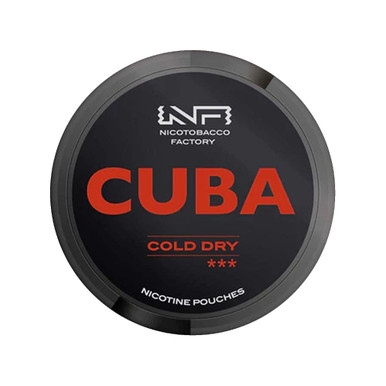
The line spreads across most of the flavour directions we file. Black Apple Juice is the bright orchard-fruit end — juicier and lighter than anything in the dark-fruit group. Black Banana Hit is the soft, creamy, low-acid direction, and is about as far from a sharp fruit as the line goes. Black Double Fresh leaves the fruit shelf for a cold register entirely. Black Cold Dry is the can our record holds with no flavour classification at all — a name rather than a fruit — and is the one to look at if you want something from this line that is not a flavour in the usual sense.
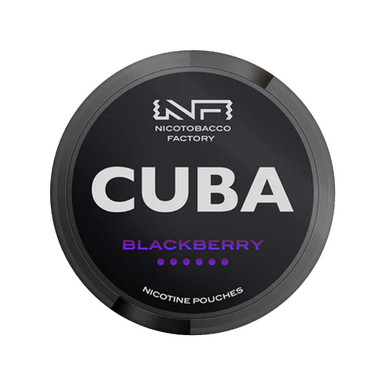
Within the dark-fruit group, blueberry is the gentle one. The line's blackberry can is the darker and drier reading of a similar idea, with a faintly astringent finish this can does not have, and the cherry can is sweeter and more aromatic than either. All three are on the brand shelf if you want to compare the listings side by side.
Keeping a second can on the go
Running two or three cans at once is ordinary practice, and the usual reason is flavour fatigue: any single taste gets less interesting the longer you stay with it, and a blueberry — being the least demanding of the dark fruits — is a flavour people tend to stay with long enough for that to happen.
If you want a near neighbour so the change is small, the Clew can at the same £39.90 is the most direct like-for-like on the list, and the Killa version at £33.50 is the same fruit for several pounds less. If you want a sharper version of the same colour, blackcurrant at £27.90 is the obvious step and is the cheapest of the dark fruits here.
If you want a deliberate contrast so the two cans never blur into each other, the cola can at £39.90 does it from inside the same line at the same price, and the Maggie tonic wine can does it more unusually. Nordic Spirit's blueberry at £4.49 is on the list too, and sits in a different strength band from this one.
One listing on that shelf that is not the same kind of product at all: Denssi Berry Beast is an energy pouch listing rather than a nicotine one. It appears near this can because of the berry flavour and the £39.90 price, not because it is comparable. Read its own page before adding it to anything.
A general warning about price comparison across this list, because the numbers invite a wrong conclusion. Our records carry no cans-per-pack figure for most listings, this one included. A £39.90 listing and a £3.85 listing are not necessarily the same quantity of product, and we cannot tell you the ratio because the field is empty in our data. Compare listings on their own pages, and read the can.
Looking after an open can
Cool, closed, out of the sun. A can in a drawer, a cupboard or a bag pocket keeps perfectly well. A can on a windowsill in July, on a dashboard, above a radiator or in a parked car does not — heat is what flattens a flavoured pouch, and a can that has been through a few hot days reads duller than a fresh one.
Press the lid down properly every time. A can left ajar dries at the edges and loses its aroma first, and with a blueberry the aroma is already the quietest part of the product, so there is less to lose before there is nothing left. Keep it upright where you can, so the catch compartment stays separate from the unused pouches.
Some people keep cans in a fridge. We neither advise it nor advise against it — our record carries no storage instruction for this product, and the printed can is where a manufacturer instruction belongs. The only practical note is that a can going back into a fridge should be closed and dry, because condensation does a dry-format can no favours.
Keep the can out of reach of children and pets, and keep it out of the places household food lives. A tin with a fruit name on the lid should be stored like a nicotine product, not like a sweet tin, because that is what it is.
What there is to choose between on this listing
Very little, and it is more honest to say so than to imply a decision. There is one variant — 43mg at £39.90 — with no lower or higher version of this can on our shelves and no multi-can option on this page. The only choices in front of you are whether you want this flavour and what you want beside it.
If 43mg is not the figure you were after, the route is a different band rather than a different version of this can: the strong shelf and the medium shelf hold different products entirely. We have no view on which band anyone ought to be browsing.
Some listings in the catalogue are sold as multi-can packs and say so on the listing. This one does not, and our record holds no cans-per-pack value for it, so we cannot tell you what £39.90 covers in units. That is a gap in our data, stated as a gap.
Buying it, and what happens at the door
Our record shows this listing in stock at the time of writing. Stock moves, and the listing itself is the live answer rather than this paragraph.
Buying is the same as everywhere else on the site: basket, checkout, age check. This is an 18+ product and an age verification step operates at checkout. We do not sell nicotine products to anyone under 18 in any circumstances, and no part of that process is skippable.
ID may be requested on delivery. If it is asked for and no adult at the address can produce it, the delivery will not be completed and the parcel goes back. Worth knowing in advance if the parcel is heading to a workplace, a neighbour or a collection point where the recipient is not the person who ordered it.
Baskets can mix freely across brands, flavours and strength bands — cans from different shelves travel together, and there is no minimum per brand. Standard delivery and returns terms apply to this listing exactly as they do across the catalogue.
How to get back here
Three routes lead to this page. By strength, it is filed among the 98 listings in the top band. By brand, it sits on the Cuba shelf with 46 other cans. By flavour, it is one of 76 berry listings.
Crossing two of those filters is the quickest way through a catalogue of this size — pick the flavour family first, then the band, then compare prices on the tiles. The full catalogue is there to browse in one go if you prefer, and the Pablo brand page is a reasonable example of what another manufacturer's shelf looks like laid out the same way.
Questions about this can
How many pouches does a can hold?
We do not know. The pouch count field in our product record for this listing is empty, and we do not fill empty fields with estimates. The printed can is where that number is properly read. If you see a count quoted for this product elsewhere, treat it with the caution you would give any unsourced figure, because it did not come from us.
What does £39.90 get me?
This listing at 43mg. What we cannot tell you is how many cans or pouches that represents, because our record holds no cans-per-pack figure. That gap matters most when you compare this against listings priced at a few pounds — those are not obviously cheaper versions of the same thing, and ranking listings by the number on the tile will mislead you.
How is this different from the cherry can in the same line?
Only by flavour: both are £39.90, both declared at 43mg, both the same line and format. As a taste, blueberry is soft, evenly sweet and low in acidity with a clean, quick finish. Cherry is a stone-fruit note — syrupy, more aromatic, with a sweet-sour bounce and a faint kernel edge at the back. Blueberry is the quieter of the two by a distance.
Is this the same as other brands' blueberry cans?
No, and there is no reason it would be. A flavour name is a category rather than a specification, and different manufacturers aim at different reference points for the same fruit. Clew and Killa both list blueberry cans, at £39.90 and £33.50 respectively, and they are separate products rather than versions of this one. Which you prefer is not something we can predict.
What is the 43mg figure telling me?
It is the declared strength as our record holds it and as it appears on this listing. Its practical effect here is that it files the can in the extra strong band, the highest of the three bands we sort listings into. We do not hold the basis on which that figure is expressed — the can's labelling covers that — and we do not interpret strength figures for individuals.
Can you recommend a strength?
We do not answer that question. We give no advice on strength selection and describe no figure as suitable for any person or situation. This listing offers one strength in any event, so there is no choice within it.
Can I use this at work, on a train or on a flight?
We genuinely cannot tell you. The rules are set by your employer, the operator, the carrier or the venue, they differ from one to the next, and they change. A pouch being unobtrusive is not the same as it being permitted, and we will not imply otherwise. Check the relevant policy or conditions directly. For international travel, carrier rules and the destination country's own position on nicotine products are the things to check before you pack.
How long does a pouch stay in?
Usually somewhere between roughly twenty minutes and an hour, with wide variation. There is no correct duration, we publish no figure for this product, and none of this is a recommendation. The general characteristic of the dry format is that flavour is strongest early and fades through, so the second half is noticeably quieter than the first.
What is in it, and how is it made?
We do not publish composition or production information for any product on this site. The manufacturer's labelling on the can is the correct and authoritative place for that, and it is the only place we would point you.
Where is it made?
We do not hold that information and will not guess. Our record for this listing carries brand, line, flavour classification, strength, price and stock status — no manufacturer, no address, no country, no dates. The line name is a brand label and says nothing about origin.
Is it in stock?
Our record marks it in stock at the time of writing, but stock is the fastest-moving thing on any product page. The listing itself is the live position and is more reliable than this sentence. Where a can is unavailable we say so on its page rather than letting it sit quietly in a basket.
Can I mix this with other products in one order?
Yes. Baskets can mix brands, flavours and strength bands without restriction. The one thing worth checking as you go is what each listing actually is — some cans in the catalogue, the Denssi energy pouch range among them, are not nicotine products, so the flavour name on a tile does not tell you what kind of product you are adding.
The compliance section, in full
Nicotine is an addictive substance.
This product is sold only to adults aged 18 or over who already use nicotine. We do not sell to anyone under 18. An age verification step operates at checkout, and ID may be requested on delivery — if it is requested and cannot be produced by an adult at the address, the delivery will not be completed.
Cuba Black Blueberry Nicotine Pouches are not a licensed stop-smoking medicine and are not authorised or intended for any such purpose. This product is not intended for non-smokers, for people who do not already use nicotine, for anyone under 18, or for anyone who is pregnant or breastfeeding. Nothing on this page is medical advice, and nothing on it should be read as encouragement to begin using nicotine or to use any particular strength.
Keep this product out of reach of children and pets, and dispose of used pouches in general waste where they cannot be reached. Every factual detail above — name, brand, price, declared strength, flavour classification and stock status — comes from our product record for this listing. Where that record is empty we have said so rather than estimating. The can and the manufacturer's own labelling are authoritative for anything printed on the packaging.
To finish
Cuba Black Blueberry is the gentlest of the line's dark-fruit cans: evenly sweet, low in acidity, with a faintly powdery middle and a finish that ends cleanly rather than lingering. It lists at £39.90 in a single declared 43mg, sits on the top strength band, on the berry shelf and on the Cuba brand page, and has near neighbours in Clew's blueberry can and Killa's if you want to hear the same fruit interpreted differently. Everything we hold on this product is on this page, and everything we do not hold is marked as such.
More from Cuba
More extra strong pouches

More berry pouches
Where this sits
Cuba Black Blueberry Nicotine Pouches appears in these categories. Browse them, or jump to something close.
You might also like