Home / Extra Strong / Cuba Black Forest Berries Nicotine Pouches
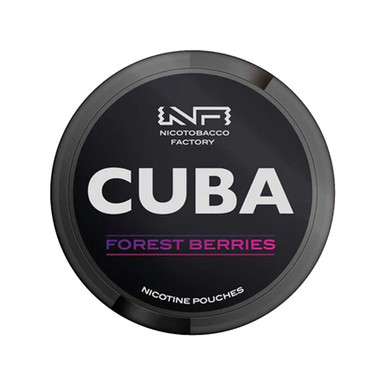
Cuba · 43mg
Read the full guide
Cuba Black Forest Berries Nicotine Pouches
£39.90
✔ In stock — ready to ship
100% tobacco-free
Free over £20
Same-day dispatch
Secure checkout
This page covers Cuba Black Forest Berries Nicotine Pouches at £39.90, declared at a single strength of 43mg, with a flavour we classify as berry. That is the product record in one sentence. Everything that follows is a description of the object, a comparison with other cans we stock, or a plain admission that a piece of information is not held. There is no fourth category on this page.
Physically it is the round pouch tin that every product on this site comes in: a shallow plastic cylinder with a press-on lid, the pouches laid flat inside in a single ring, and the brand, flavour and strength figure printed on the top of the lid where you can read them without opening anything. That last detail sounds trivial until you own four cans, at which point the top of the lid becomes the only part of the packaging you ever look at.
The full guide to Cuba Black Forest Berries Nicotine Pouches
5,159 words on how it eats, who it suits, how to serve it and what to put beside it.
Forest Berries: the listing, stripped of everything it is not
Two words on the name, because people ask. Cuba is the brand. Black is the line within that brand. Neither word tells you anything about where this product is made or what is in it. We do not hold manufacturing or origin information for this listing, we will not invent any, and the name on the lid should not be read as a claim about a country. The manufacturer's own labelling on the can is the authoritative source for anything of that sort, and it is printed there rather than here for a reason.
"Forest Berries" is the manufacturer's flavour name. Our record classifies it with the single word berry, which is what puts this can on the berry flavour shelf alongside 75 other listings. The two labels are doing different work: one is marketing copy printed on a tin, the other is a category tag used to sort a catalogue. Neither is a full description of a taste, which is why there is a long section further down this page devoted to describing the taste properly.
We list this can as in stock at the time of writing, and the listing page itself carries the live position. We do not publish a pouch count, a pouch weight, can dimensions or a format designation, because our record holds none of those. Where we do not hold something, this page says so rather than estimating.
Before anything else: this is an age-restricted nicotine product for adults aged 18 or over who already use nicotine. The full compliance wording has its own section at the foot of the page.
How the format works, minus the mystique
A nicotine pouch goes in the mouth, between the lip and the gum, and stays there. It is not chewed, not sucked, not swallowed. That is the entire format, and it is identical across every brand on this site, which is why this section reads similarly from one product page to the next — the sameness is real rather than lazy.
In practice: lid off, one pouch out, lid back on. Most people place it under the top lip; some prefer the bottom. The lip holds it and it stays put until moved. You can shift it from one side to the other if it becomes uncomfortable in one spot, and if it is uncomfortable everywhere, taking it out is the correct response. Comfort with this format is individual. It varies between people, and it varies between cans of different products. Nothing about a pouch obliges anyone to persist with one that does not sit right.
How long people keep one in ranges from a handful of minutes to the better part of an hour, and printing an average would misrepresent most of that range. The reason usually given for taking one out is that the flavour has finished, which with a berry pouch tends to be a fade rather than a cliff — the sharp edge goes first, the sweetness lingers a little, and then there is nothing. We do not set a time and we cannot tell you yours. Whatever usage guidance the manufacturer prints on the can is the guidance that applies.
The lid carries a catch compartment — a shallow chamber moulded under the top, separate from where the fresh pouches sit. Used pouches go in there when there is no bin within reach. It fills up quickly and wants emptying more often than feels necessary, because a packed compartment holds the lid proud of the rim and a lid that does not seat properly is a can slowly going dry. Disposal itself is straightforward: used pouches go in general waste, never down a sink or a toilet. The can is plastic and goes in with household recycling to whatever extent your local authority takes it, which varies by council and is not something we can answer for an individual address.
A note on carrying a can about, since the format invites it. The tin is pocket-sized and it is not sealed against crushing — it is plastic with a press-on lid, and a can at the bottom of a bag under a laptop will eventually acquire a lid that no longer sits flat. Cans travel best upright and travel worst loose among heavy objects. If a can is going to live in a coat pocket, the coat pocket is fine; if it is going to live under everything else in a rucksack, expect the lid to suffer. None of that affects whether the product works, only how long the can keeps the pouches in the condition they left the shop in, which is covered at more length further down this page.
Berry, as a taste rather than as a category
"Berry" is a wide word. Our catalogue uses it to cover everything from a single-fruit blueberry through to mixed dark-fruit blends, which means the flavour tag alone will not tell you what a particular can is like. What follows is a description of taste and aroma, and nothing else.
This reads as a mixed dark berry rather than as a single identifiable fruit. The impression is of the darker end of the berry spectrum — the blackcurrant, blackberry, dark-red side — rather than the bright, light strawberry-and-raspberry side. Mixed berry flavours generally work by blending, and a blend is by design harder to take apart into named components than a single-fruit flavour is. If you are the sort of person who wants to point at a pouch and say "that is a blackcurrant", a mixed berry can will frustrate you; if you want a fruit character without a single fruit dominating, this is the shape of thing you are looking for.
On the aroma: taking the lid off gives you the same dark fruit character at lower volume. Fruit cans generally perfume an open drawer less aggressively than mint cans do, which matters if you keep several open at once and do not want them influencing each other.
What we will not do is go further than the taste. We do not publish flavour composition, we do not describe how a flavour is produced, and we hold no ingredient information for this product at all. A flavour name on a lid and a one-word classification in a database is the totality of what we have, and the four-axis section further down is an honest attempt to get more use out of that than a list of adjectives would.
What people keep beside it: building a rotation around a dark berry
Very few people who use this format keep a single can. The reason is not complicated and it is not a claim about the product: a flavour you have had five times in a day stops registering as sharply by the sixth. The ordinary response is to keep two or three cans that are genuinely unlike each other and move between them. This section is about how to build that rotation around a dark berry can, using cans we actually stock and their actual prices.
The easy mistake is pairing berry with berry. A mixed dark berry and a single blueberry are closer together than they look on paper, and a rotation between two cans in the same flavour family does less work than people expect. It is not wrong — plenty of people do exactly that and are happy — but it is worth knowing before you spend the money that you are buying variety within a narrow band rather than variety proper.
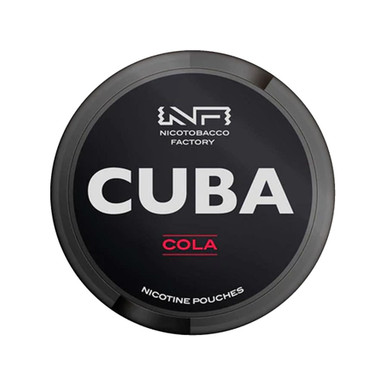
Within this line, the widest gaps are the obvious ones. Every Cuba Black can sits at £39.90 and at the same declared 43mg, so a move within the line costs the same and changes nothing except the flavour, which makes it the cleanest kind of comparison available on this site. Cuba Black Cold Dry is the furthest thing from a dark berry in the line — the name points at a cold, dry reading rather than at fruit at all, and that is about as much contrast as you can buy without leaving the brand. Cuba Black Cola is the soft-drink direction rather than a fruit, which is a different axis of contrast again. Cuba Black Banana Hit goes soft, creamy and sweet where this can goes dark and sharp. Those three are the ones to look at first if contrast is the point.
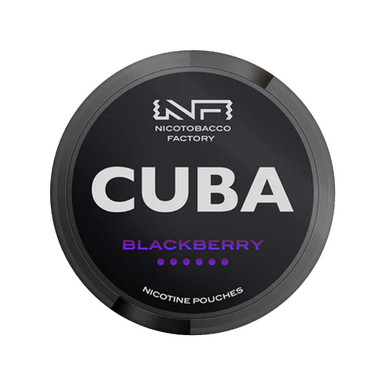
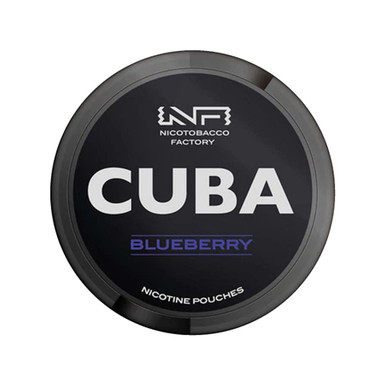
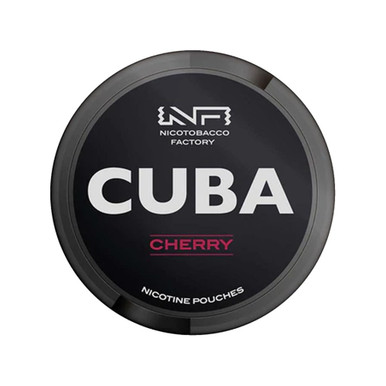
Within the line, the near neighbours are worth naming too, because sometimes people want a small step rather than a large one. Cuba Black Blueberry is the single-fruit version of roughly this territory — the same dark-ish berry idea narrowed to one fruit. Cuba Black Cherry takes the stone-fruit direction, sharper and more defined than a blend. Cuba Black Apple Juice moves to orchard fruit, lighter and sweeter than either. All three are £39.90 and all three are 43mg, so the only thing that changes is what is on the lid.
Outside the brand, the useful pairings are the ones that cost less. Pablo Exclusive Blue Raspberry at £3.85 is by a wide margin the cheapest can in this comparison, and it takes the bright, sweet-sharp raspberry direction rather than the dark one — a genuinely different reading of fruit at a fraction of the outlay. Fumi Blackcurrant at £27.90 is a single dark fruit done on its own, which is the most direct comparison you can make against a blend. Elf Bar Blueberry Raspberry at £29.90 is a two-fruit blend rather than a broader mix, sitting between the single-fruit cans and this one.
At the same £39.90, the cross-brand options are the fairest comparison of all, because the money is identical and only the product changes. 77 Strawberry is the light, bright end of berry — about as far from a dark mixed berry as the berry shelf goes while still being berry. Clew Blueberry is another brand's single-fruit blueberry at the same price. Maggie Original Jamaican Cherry Tonic Wine is the oddest thing in this comparison and the most interesting as a rotation partner: a cherry-and-tonic-wine reading that does not sit neatly in the fruit category at all.
Two listings in this comparison need a caveat. Denssi Berry Beast Energy Pouches at £39.90 is a berry-flavoured pouch but a different type of product from this one, and its own listing states what it does and does not contain — read that page rather than assuming it works like this one. Siberia Mini at £39.50 is a smaller-format can rather than a flavour alternative, and is listed here because people looking at the top of the strength range often end up comparing the two. Nordic Spirit Blueberry at £4.49 and Killa Blueberry at £33.50 complete the blueberry comparison at two very different prices.
A sensible starting rotation, if you want one spelled out without any recommendation attached to it: this can plus one thing from a different flavour family entirely. Which family is a matter of taste and we have no basis for choosing for you. The shelves are the better tool anyway — the berry shelf if you want to stay in this territory, and the full catalogue if you do not.
Reading 43mg as a figure on a lid
One declared strength appears on this listing: 43mg. There is no second variant of Forest Berries here, no milder option, and consequently no price comparison to make — there is one price, £39.90, attached to one strength.
The figure is the manufacturer's strength declaration in milligrams, reproduced exactly as given. We do not convert it into any other unit, scale it, or restate it. We also do not explain what it does, because explaining what nicotine does once a pouch is in use is pharmacology and this is a shop listing. The number's practical use on this site is comparative: it lets you place one can against another in a sorted list, and that is precisely how we use it.
Our catalogue divides into three strength bands. The medium band holds the lower declared figures, the strong band sits in the middle, and the extra strong band holds the top of the range with 98 listings currently in it. At 43mg this can is filed in the extra strong band and sits well inside it rather than at its lower boundary. That sentence describes where a number falls in a sorted list. It is not advice, it does not say the figure suits anybody, and we will not tell any individual reader which band to buy from — we do not hold the information that would make such a recommendation responsible, and it is not a shop's job to make it.
Cool, sweet, sharp, bitter: plotting this can on four axes
Adjectives are cheap and taste is hard to write about, so it is worth using a framework that forces some precision. Four axes cover most of what people actually want to know about a flavoured pouch before they buy it, and each one can be described honestly without claiming anything. Everything in this section is about taste and aroma. None of it is a claim about the product.
Sweetness: high, and doing most of the work
Mixed berry flavours are built on sweetness, and this one is no exception. Sweetness is the first thing you notice and the last thing to leave. It is a fruit sweetness rather than a confectionery one — closer to dark fruit than to boiled sweets — but there is no serious argument for calling this a dry or restrained flavour. If you have been working through mint cans and find fruit cans cloying, that is the axis that will tell you whether this one suits you, and the honest answer is that it sits high on it.
Sharpness: present, and the thing that keeps it upright
Dark berries carry acidity, and a berry flavour with no sharpness reads as syrup. There is enough here to give the sweetness an edge and to stop the whole thing collapsing into flatness — the tang you associate with blackcurrant and blackberry rather than the mouth-puckering sourness of a sour sweet. It shows early, sits alongside the sweetness rather than behind it, and it is the first characteristic to fade as a pouch runs down. On a scale from flat to fierce, this lands somewhere in the middle and slightly toward the sharper side.
Coolness: low, and deliberately so
This is the axis that separates fruit cans from each other more than any other, and it is where the fruit shelf splits in two. A great many fruit pouches carry a cooling character laid across the fruit — the cans with "ice" or "freeze" in the name announce it explicitly. Forest Berries does not carry that in its name and does not read as a cold can. The fruit is presented on its own. If you want fruit with cool over the top of it, the "ice"-named cans elsewhere on our shelves are the ones to look at rather than this one; the Elf Bar two-fruit can and the Killa blueberry can are two places to start that comparison.
Bitterness: low, but not absent
Dark fruit flavours carry a faint bitterness at the back — the skin-and-pip character that distinguishes a blackcurrant from a strawberry. It is present here in small measure and it becomes more noticeable as the sweetness fades, which is the usual pattern with berry pouches: what you are left with at the end is drier and slightly more bitter than what you started with. Some people find that the most interesting part; others take the pouch out at that point. Neither is wrong and we are not going to tell you which you will be.
How the four readings shift from start to finish
The four axes above describe a moving picture rather than a still one, and that is worth spelling out because it is the part people find surprising the first time. A berry pouch does not hold one flavour steady and then stop. The sharpness shows earliest and leaves earliest. The sweetness arrives with it, holds longer, and thins out gradually rather than cutting off. The faint bitterness that sits behind both becomes proportionally more noticeable as the other two recede, not because there is more of it but because there is less of everything else. Coolness, being absent here, does not enter the picture at any stage.
The practical consequence is that a berry can tastes like two slightly different things depending on when you are paying attention. Judging one on the first thirty seconds will give you a sweeter, sharper impression than judging it at the end will. If you are comparing this can against another brand's blueberry at the same £39.90 or against a single-fruit blackcurrant at £27.90, comparing them at the same point in their run is the only comparison that means anything. That is not advice about how to use the product; it is a note about how to compare two of them fairly.
What the four axes do not cover
Intensity, longevity and mouthfeel all matter and none of them is on this list, because we do not hold data that would let us describe them honestly for this specific can. We are not going to estimate how long a flavour lasts, because it depends on the individual as much as the product. We are not going to describe pouch texture as a general rule either, since our record carries no format designation for this listing.
Where this can sits on the Cuba shelf
We currently list 47 Cuba products on the Cuba brand page. The Black line accounts for a good share of that, and its internal logic is simple: one declared strength of 43mg across the line, one price of £39.90 across the line, and flavour as the only variable. Nothing else moves.
That makes the Black line unusually easy to shop. On most brand shelves you are weighing flavour against price against strength simultaneously. Here, two of those three are fixed, so choosing between Blueberry, Cherry, this can, or any other flavour in the line is a taste decision and only a taste decision. Whatever else can be said about the line, that is a genuine convenience.
Cuba lists other ranges beside Black, carrying different names on the lid. We are not going to characterise those here, because we would be writing from a general impression rather than from the records behind each listing. The brand page shows what is currently listed, at what price, which is more reliable than a description written before the last stock change.
Keeping a can in the condition you bought it in
Nothing in this section is a claim about the product. It is about protecting something you paid £39.90 for.
The lid is the entire seal. A pouch can has no foil and no inner membrane — just a lid pressing onto a rim. Nearly every "my can dried out" story traces back to that rim: a catch compartment stuffed with used pouches holding the lid proud, a pouch caught under the edge, or a lid pushed on at an angle in a hurry. A can with a lid not fully seated is, functionally, an open can.
Heat is the second cause. Windowsills in summer, car dashboards, the top of a radiator: all of them cycle a can between temperatures repeatedly, which moves moisture out of the pouches and onto the underside of the lid, then back in unevenly. Ordinary indoor room temperature, out of direct sunlight, avoids the whole problem — a drawer or a cupboard shelf is all it takes.
People ask about the fridge. Some users refrigerate cans; we neither recommend it nor advise against it, because we hold no manufacturer storage guidance for this product and will not invent any. The practical point is that moving a can repeatedly between cold and warm produces condensation inside the lid each time. Consistency is less disruptive than movement, whichever temperature you settle on.
If you keep several cans, put new ones at the back and take from the front. It is a trivial habit and it means the oldest can gets opened next rather than found a year later. And keep every can out of reach of children and pets, always — a pouch tin is small, it rattles, and it reads as a container of sweets to anyone who cannot read the label.
One variant, one price: what is actually being chosen
This listing offers a single declared strength, 43mg, at a single price, £39.90. There is no second strength and no alternative pack size in our record for it — the cans-per-pack field is empty, which means we do not publish a can count and will not guess at one.
So the decision attached to this page is not "which version of this", it is "this or something else". The site gives three ways to make that comparison, and all three are filtered views of the same catalogue: by strength, using the band pages; by flavour, using the 76-listing berry shelf; or by brand, using the 47-listing Cuba shelf. If price is the binding constraint, reading prices off a shelf beats reading a paragraph, because the shelf is live.
Buying it, and what the courier will ask for
The can goes in the basket at £39.90 and you check out as normal. The stock status on the listing is live; if it has sold out since this description was written, the listing will say so and the basket will not accept it.
Age verification applies to every order containing this product and it is not a formality. We sell to adults aged 18 or over only. There is an age check at checkout, and ID may be requested on delivery. If the courier asks and nobody at the address can produce identification, the delivery will not complete and the parcel goes back — which is far and away the most common reason an order like this fails. Having ID to hand on the delivery day, and making sure whoever is in knows the parcel is coming, prevents it.
Delivery timescales, carriers and postage are set out in our delivery information rather than on a product page, because they apply site-wide and change independently of any single listing. Quoting a window here that might be stale by the time you read it would not help anyone.
How to get back to this page
Three shelves lead here, and between them they cover most of the routes people take. This can sits on the extra strong strength page with 97 others, on the berry flavour page with 75 others, and on the Cuba brand page with 46 others.
Above those sit the broader entry points: every listing in one place, plus the strong band and the medium band for cans with lower declared figures. The Pablo brand page is worth knowing separately, because Pablo's pricing runs on an entirely different scale from Cuba's — the £3.85 Blue Raspberry listing mentioned earlier is the clearest illustration of that on this page.
Questions we get about this one
Which berries is it meant to be?
The can says "Forest Berries" and our record classifies the flavour as berry. Neither tells you which fruits are involved, and we do not hold a component list. Read as a taste, it presents as a mixed dark berry rather than a single identifiable fruit — the blackcurrant and blackberry side rather than the strawberry side. If you want a single named fruit instead of a blend, the blueberry can in the same line is the direct alternative at the same price.
Is it a cold or an "ice" flavour?
No. Nothing in the name or in our record points at a cooling character, and it does not read as a cold can. Fruit pouches split fairly cleanly into those that carry cool over the fruit and those that present the fruit on its own, and this belongs to the second group. Cans that do carry it generally say so on the lid with words like "ice" or "freeze", which makes that particular distinction one of the easier ones to shop for.
Does the name mean it comes from Cuba?
No. Cuba is a brand name and Black is the line name within it. Neither is a statement of origin, and we hold no manufacturing or origin information for this product in our record. We are not going to estimate it. If that detail matters to you, the manufacturer's labelling on the can is where it would be declared, and that labelling is the authoritative source.
How many pouches come in a can?
We do not publish that, because our product record does not carry it. Rather than count pouches in a photograph and present the result as a fact, we are telling you the field is empty. The same applies to pouch weight, can dimensions and format designation. The printed can carries the manufacturer's own declarations and is the place to read any of it.
Where does 43mg sit against your other cans?
It places this listing in the extra strong band, which holds 98 listings, and it sits comfortably inside that band rather than at its edge. That is a sorting statement and nothing more. We do not describe what a strength does, we do not compare strengths on those terms, and we will not say whether a figure is suitable for any particular person. The band pages let you see the spread and draw your own conclusions.
Can you tell me which strength to buy?
No, and we would be doing you a disservice by pretending otherwise. Recommending a strength means making a judgement about an individual, and we hold nothing that would let us make that judgement properly. What we can offer is the data: every listing prints its declared figure, and the three band pages sort the catalogue by it.
Is there a version of this at a lower strength?
Not on this listing, which carries 43mg and nothing else. Whether such a product exists anywhere is outside what our record covers. Within our range, if you want a berry-flavoured can that is not in the top band, the strength shelves are the place to look — Nordic Spirit Blueberry at £4.49 is one example of a berry-family listing at a very different price point and a different position in the range.
How long should a pouch stay in?
We cannot give you a number that would be true for you. The range across people runs from a few minutes to most of an hour, and any average would misrepresent the majority of that spread. People usually take one out when the flavour has finished. Any usage guidance the manufacturer prints on the can is the guidance to follow — we do not layer our own advice on top of it.
Why is the Pablo can £3.85 and this one £39.90?
We do not know, and any explanation we offered would be a guess dressed up as a fact. We hold no cost, pack or supply information from the manufacturers, and a price difference between two listings on our shelves is evidence about the prices and nothing else. Both figures are printed on their listings and both are live. Compare them directly on the catalogue if price is what is driving your decision.
Is the Denssi Berry Beast can the same kind of product?
No. Denssi Berry Beast is listed as an energy pouch rather than a nicotine pouch, and its own product page sets out what it contains and what it does not. It appears in comparisons on this page because it is berry-flavoured and the same £39.90, not because the two products are interchangeable. Read that listing on its own terms before adding it to a basket alongside this one.
Is it in stock right now?
It was at the time of writing. Stock moves constantly and the listing page holds the live answer — if it has sold out, the page will say so and the basket will not take it. If you need a sideways move, the berry shelf covers the same flavour territory across brands, and the Cuba shelf covers the same brand and price in a different flavour.
Do you list ingredients or technical detail?
No. We hold and publish name, brand, flavour classification, declared strength, price and stock status. That is the complete list. Ingredient information and technical specification come from the manufacturer's labelling printed on the can, which is the authoritative source for them. We will not restate a legal declaration second-hand on a web page, because our paraphrase would carry none of the authority of the original.
Compliance and legal notice
Nicotine is an addictive substance.
This product is sold to adults aged 18 or over who already use nicotine, and on no other basis. We do not sell to under-18s. An age check runs at checkout and ID may be requested on delivery; if it is requested and no adult at the address can produce it, the delivery will not be completed.
Cuba Black Forest Berries Nicotine Pouches are not a licensed stop-smoking medicine and are not authorised or intended for any such purpose. This product is not intended for non-smokers, for anyone who does not already use nicotine, for anyone under 18, or for anyone who is pregnant or breastfeeding. Nothing on this page constitutes medical advice, and nothing on it should be read as encouragement to begin using nicotine or as a recommendation of any strength for any person.
Keep this product out of reach of children and pets. Every product fact on this page — name, brand, price, declared strength, flavour classification and stock status — is taken from our product record for this listing. Where the record holds nothing, the page says so instead of estimating. The can and the manufacturer's labelling printed on it are the authoritative source for anything appearing on the packaging.
The short version
Cuba Black Forest Berries is a mixed dark berry can at a single declared 43mg and a single price of £39.90. It sits high on sweetness, has enough sharpness to stay upright, carries no cooling character and only a trace of bitterness at the end. It is filed on the extra strong band, the berry shelf and the Cuba brand page, and because every can in its line costs the same and carries the same figure, moving to Cherry, Apple Juice or anything else in the range is a flavour decision and nothing else. Everything we hold is on this page; everything we do not hold, we have said we do not hold.
More from Cuba
More extra strong pouches
More berry pouches
Where this sits
Cuba Black Forest Berries Nicotine Pouches appears in these categories. Browse them, or jump to something close.
You might also like