Home / Extra Strong / Siberia Mini Nicotine Pouches
Siberia · 33mg · 10-can pack
Read the full guide
Siberia Mini Nicotine Pouches
£39.50
✔ In stock — ready to ship
100% tobacco-free
Free over £20
Same-day dispatch
Secure checkout
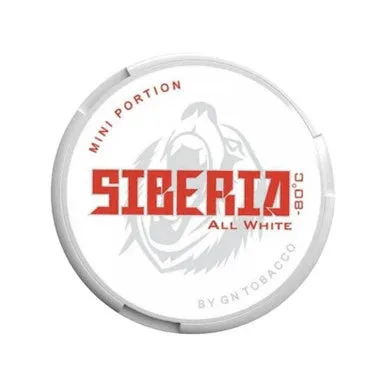
This page covers Siberia Mini Nicotine Pouches. The brand we hold is Siberia, the product name on the listing is Mini, and the price is £39.50. Our record gives one declared strength, 33mg, and one purchase option at that figure and that price. The listing is marked in stock. It is recorded as 10 cans, which is the detail that does most of the work on this page. We hold one product photograph.
Our flavour field for this listing is empty. Not "unflavoured" — empty. There is no tag in it at all, which is a different statement, and one we will come back to at length further down rather than papering over.
The full guide to Siberia Mini Nicotine Pouches
5,001 words on how it eats, who it suits, how to serve it and what to put beside it.
Siberia Mini: the record behind this listing
Everything on this page comes from that record or from general description of the format. We do not publish ingredient lists, we do not explain what a pouch does once it is in use, and we make no statement in any direction about anybody's wellbeing. Where the record is blank, this page says so. There is rather more blank space on a Siberia listing than on most, and pretending otherwise would be the easier page to write and the wrong one.
Ten cans at a time: how this listing is actually sold
The single most practical fact here is the quantity. This listing is ten cans for £39.50, which works out at £3.95 per can. That is a sleeve, not a single can, and it changes what kind of purchase this is.
A sleeve of ten is a stocking-up purchase. It is bought by an adult who already uses this particular can regularly, who knows they will get through ten, and who would rather place one order than five. It is not a small commitment and it is not a casual one — you are buying a fixed quantity of one specific listing, with no option to mix formats or strengths inside the sleeve, because our record holds exactly one variant on this line: 33mg at £39.50.
Compare that to how the rest of the catalogue prices. Pablo Exclusive Banana Ice is £3.85 and in stock, and a price in that region nearly always means a single can. Set against this listing's £3.95 per can, the two are within a few pence of each other on a per-can basis while being wildly different at checkout: £3.85 buys you one thing to try, £39.50 buys you ten of a thing you already know. Neither number is better value than the other in the abstract; they are answers to two different questions.
The practical warning is the one we repeat across the site: read the quantity before you compare prices. A £39.90 line and a £3.85 line are usually not two prices for the same amount of product, and our record does not always hold a can count, so on some listings we cannot do that arithmetic for you. On this one we can, which is why the per-can figure is stated above.
Reordering, and the awkwardness of running out
Buying in sleeves changes the rhythm of reordering rather than removing it. People who buy ten cans at a time tend to fall into one of two patterns, and it is worth knowing which one you are in before the sleeve is gone.
The first pattern is ordering on empty. The sleeve runs down, the last can opens, and the order goes in. It is the simplest approach and it works until something interrupts it — a dispatch delay, a bank holiday weekend, or the listing going out of stock between one order and the next. Stock across this catalogue moves. This listing is available today; Iceberg Arasaka, sitting on the same shelves at £39.90, is not, and that is an ordinary week rather than an unusual one. Ordering on empty means accepting that some of the time you will be waiting.
The second pattern is ordering with a can or two still in hand — placing the next order when the sleeve is down to its last couple rather than its last one. It costs nothing extra and it absorbs a delay without drama. If you order sleeves at all, this is the version that causes fewer problems, and it is the reason people who buy in tens often also keep one can of something else entirely as a spare.
On the spare: the logic of a spare can is that it does not need to be the same thing. A single can from elsewhere in the catalogue, kept unopened in a drawer, covers the gap between sleeves without committing you to another ten of anything. A £3.85 or £4-ish single can is the usual choice for exactly that reason. We are describing how people buy, not recommending a purchase, and nothing here is a suggestion to buy or use more than you already do — if anything, the point of the second pattern is that it removes the panic from the process rather than adding to it.
The other thing sleeves do is fix your storage problem in advance. Ten cans is ten cans whether or not you have somewhere sensible to put them, and they arrive all at once. The storage section below is worth reading before the parcel does rather than afterwards.
Five format names, one line
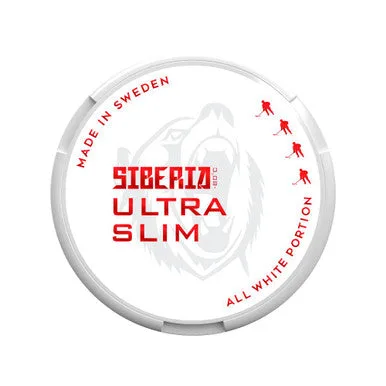
The Siberia shelf holds five listings, and this page is one of them. The other four are Siberia Original at £39.50, Siberia Slim at £21.95, Siberia Super Slim at £39.50 and Siberia Ultra Slim at £39.50. All four are in stock at the time of writing.
Those five names — Mini, Original, Slim, Super Slim, Ultra Slim — are format names. They describe the shape and footprint of the pouch, not different products with different characters. This is the most important thing to understand about the range and the thing most often got wrong: Mini and Original and Slim are not three grades of the same idea arranged from gentle to severe. They are the same line in different physical proportions.
We do not hold measurements. Our record carries no millimetres, no pouch weight and no portion dimensions for any of the five, so we are not going to print figures we cannot stand behind. What we can say is what the names are for. A name like Slim conventionally refers to a narrower, longer pouch and a name like Mini to a shorter, more compact one, and the practical consequence is about where a pouch sits and how noticeable it is under the lip — not about anything else. The can's own labelling is the authority on the actual dimensions.
The declared figure on this listing is 33mg. On the other four listings, each page carries its own declared figure, and you should read it there rather than assuming it from this one. What we will not do is arrange the five into an order and invite you to move along it. There is no progression here, nothing to advance through, and no format that is a more serious version of another. Choosing between them is choosing a pouch shape.
Why the word Siberia is not telling you anything
Siberia is the manufacturer's own name for the range. It is a brand word printed on a lid. It is not a statement about where anything is made, it is not a claim about conditions, climate or character, and we are not going to spin it into one. Our record holds a brand name and a product name; it holds no production location, and we do not publish one.
We are saying this explicitly because a strong brand word invites writers to fill space with atmosphere, and atmosphere on a nicotine product page is how untrue things get written. There is no regional story on this page, because we do not have one, and anything we composed would be invention. If there is a statement about origin to be had, it will be on the packaging, and the packaging is the authority.
The same restraint applies to the brand's general reputation. We are aware that ranges at the upper end of declared figures accumulate a certain amount of talk. We are not going to trade on it. A can is not more impressive for having a larger number on it, using one is not an accomplishment, and we are not going to write a word that frames any listing on this site as a challenge, a proving ground or something to be handled. That framing does not belong on a product page and it is not information.
An empty flavour field, and what that actually means
Our flavour tagging for this listing is blank. It is worth separating the three things that could mean, because they are not the same and only one of them is true here.
It could mean the product is unflavoured. We are not saying that, because we do not know it. It could mean the product's flavour does not fit any tag we operate. Also possible, also not something we know. What it actually means is the third thing: nobody has entered a tag against this listing in our record, and we hold no information in that field. That is a gap in our data, not a fact about the pouch.
The consequence for you is concrete rather than philosophical. This listing does not appear on any of our flavour shelves. If you browse by mint, by fruit, by coffee or by anything else, it will not be in the results, because the tag that would put it there does not exist. The only shelves it appears on are the Extra Strong bracket, which holds ninety-eight products, and the brand shelf. That is the whole of its filing.
Because the field is empty, we are not going to write a tasting note. Describing a taste we hold no record of would be making it up, and a fabricated tasting note is worse than a blank one — it reads as authority and it is not. The can's own labelling is where the manufacturer states what the product is, and an adult who already uses this line will know it better than our database does. All four of the other Siberia listings carry the same empty field, so this is a characteristic of how the range sits in our records rather than a quirk of this one page.
33mg on the record: what the number is for
The 33mg is the strength the manufacturer declares for this product. We carry that figure through to our record, and we use it for one purpose: deciding which strength bracket the listing files under. On that basis it sits in Extra Strong. That is a sorting decision within a catalogue, and it is the entire extent of what we do with the number.
The figure lets you compare one listing's declared strength against another's, and it tells you where a can will turn up when you browse by bracket. Both of those are genuinely useful in a catalogue of several hundred lines. Beyond that, the honest list of what it does not do is longer than the list of what it does.
It does not describe an experience. We are not going to translate it into a sensation or an intensity, because that would be a claim about effects and we do not make those. Our record does not tell us on what basis the manufacturer arrived at the figure or what it is declared per, and we are not going to invent that. It is not strictly comparable across brands, since two manufacturers printing the same number have not necessarily defined or measured the same thing. And it is not a quality ranking: a larger number is not a better can and a smaller one is not a lesser can, and nothing in how we arrange these shelves should be read as ordering our stock from worse to better.
Our brackets run Medium Strength, Strong and Extra Strong, alongside a low bracket. They are filing labels. They are not steps, there is no direction of travel through them, and we are not going to present any can as a destination. We cannot advise which declared strength suits any individual, and that is not a formality — we do not hold the information about any reader that such advice would require, and it would be advice about nicotine, which is not ours to give. An adult who already uses these products is better placed to judge their own habit than a product description will ever be.
An inventory of what we do not hold
It is easier to trust the facts on a page when the gaps are listed rather than hidden, so here is the full set of things a reasonable adult might want from this listing that our record simply does not contain.
We do not hold a flavour tag, as set out above. We do not hold pouch dimensions, pouch weight or portion count per can. We do not hold a date marking or any shelf-life figure. We do not hold a production location, and we hold nothing about the manufacturer beyond the brand name itself. We do not hold the basis on which the 33mg figure is declared. We do not hold a restock date for any listing on the site, including the ones currently unavailable. We hold one photograph and no second view of the can.
On each of those, the packaging is the authority and the manufacturer is the source. We would rather print this list than let a well-written paragraph imply we know more than we do. It also explains why this page spends its length on quantity, price, format names, storage and the shape of our own shelves: those are the areas where we actually have something checkable to say, and a page built out of them is more use than a page built out of atmosphere.
What people keep alongside this for variety
An empty flavour field makes this listing an unusual anchor for a two-can rotation, and that is precisely why the pairing question comes up. If you cannot tell from our record what this tastes of, you also cannot pick a complement by contrast with it in our system. What people do instead is pick the second can on its own merits, and the shelves this listing shares give a reasonable spread to choose from.
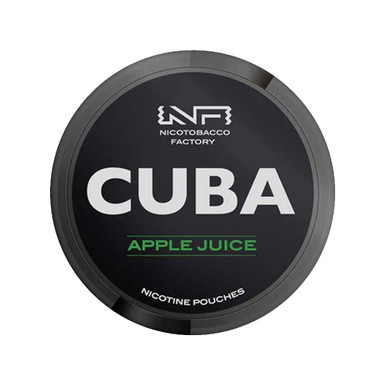
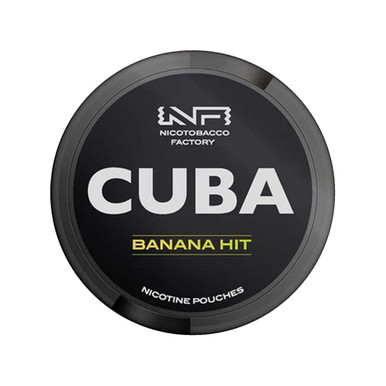
The largest cluster of neighbours is Cuba's Black range, all in stock at £39.90, and it is unusually well spread across flavour families. Cuba Black Apple Juice is the orchard-fruit end, apple read as juice rather than as a sharp green note. Cuba Black Cherry is the darker, rounder stone-fruit option beside it. Cuba Black Blueberry is the berry entry, generally softer and jammier in character than cherry. Cuba Black Banana Hit takes the same range in a creamier, less acidic direction, and the Pablo banana listing mentioned earlier is the cheaper single-can route to a similar flavour family if you would rather not commit.
Away from fruit, Cuba Black Cola is the confectionery-soda option, which sits oddly beside fruit and squarely against mint. Cuba Black Cold Dry and Cuba Black Double Fresh are the two cooling-led listings in the group, both £39.90 and available, and between them they cover the part of the catalogue people usually reach for as the counterweight to anything sweet.
The outlier worth naming is Maggie Original Jamaican Cherry Tonic Wine at £39.90, in stock, where the whole of that phrase is the manufacturer's flavour name rather than our description of it. It is the most specific flavour name in this group of neighbours, and it exists here because it shares a shelf, not because we are claiming anything about how it compares.
One in this group cannot be bought today: the Iceberg listing linked earlier is £39.90 and marked out of stock, so treat it as something to note rather than something to order. Beyond these, the full Cuba shelf and the Pablo pages are the two brand shelves that account for most of the spread above, and either is a more efficient way to browse the pairing question than working through neighbours one at a time.
The pouch and the can, in use
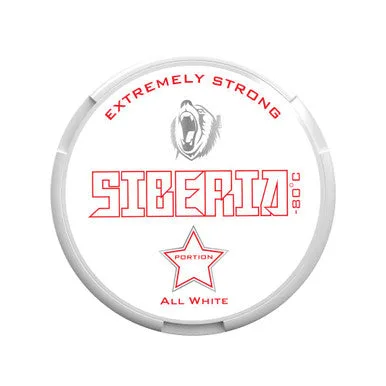
Practically, this is a small cylindrical can with a lid. The pouches stack inside the lower compartment, and cans in this category usually carry a shallow upper compartment in the lid for holding a used pouch until a bin is available. Our record holds one photograph and no specification, so the can in your hand is the authority on whether this one has that compartment; the large majority of cans we stock do.
A pouch is a small sealed sachet, placed between the lip and the gum and left there. It is not chewed and it is not swallowed. How long people keep one in varies from a few minutes to well over half an hour, and there is no standard duration for us to quote — the manufacturer's packaging carries any guidance there is. Because this listing is a Mini format, the footprint under the lip differs from the other four Siberia formats, and that difference in how a pouch sits is the practical reason someone picks one format over another.
Used pouches go in general waste. Not down a sink, not in food waste, not on the ground. The lid compartment exists so that there is somewhere to put one in the meantime, and emptying it at the next bin rather than letting it fill is the whole of the routine. Keep cans closed when not in use, upright where practical, and out of reach of children and pets — that last one being the most important handling instruction on any listing of this type.
Storing ten cans
A sleeve is a storage question in a way that a single can is not. Nine unopened cans and one in use want slightly different handling, and getting it wrong is the most common way a bulk order disappoints.
Unopened cans are robust but not indifferent. Keep them somewhere dark, dry and roughly at room temperature — a drawer, a cupboard, a box at the back of a shelf. What they do not want is heat: a windowsill, the top of a radiator, a car in summer, the warm corner near an appliance. Warmth accelerates every change a can is going to undergo over time, and it does so whether the can is open or not. Cold is far less troublesome than heat, though a can taken straight from a fridge and opened will sometimes show condensation inside the lid, which is worth wiping rather than leaving.
The can in use is the one that needs the discipline. Keep the lid properly closed between uses. A dry-style pouch left exposed loses what little free moisture it has and becomes papery and slow; a moist-style one left on its side lets liquid settle unevenly through the stack. Standing a can upright keeps the stack level and keeps anything loose at the bottom where it belongs. Neither problem is fixable once it has happened, and adding water to a dried-out pouch is not a remedy — it is a worse pouch.
With ten cans, the useful habit is rotation: open them in the order they arrived rather than reaching for whichever is nearest, and keep the unopened ones together so you can tell which is which. The manufacturer's date marking on the packaging is the only shelf-life figure worth going by and our record does not hold it, so the practical rule is simply to work through a sleeve steadily rather than leaving the last two cans sitting for a year.
Choosing between the five Siberia listings
The choice within this range is narrower than it looks, and pricing is the clearest axis. Three of the five — this listing, the Original and the Super Slim — are £39.50. The Ultra Slim is also £39.50. The Slim is £21.95, which is the one genuine outlier.
That difference is a quantity difference rather than a discount. This listing is ten cans at £39.50, or £3.95 each. The Slim listing is recorded as five cans at £21.95, which is £4.39 each. So the Slim line costs less at checkout and slightly more per can, and it commits you to half as much of one format. For the Super Slim and Ultra Slim listings, our sibling records do not carry a can count, so we cannot give you a per-can figure and will not guess — their own pages are where to check.
Beyond price and quantity, the difference between the five is the pouch's shape and where it sits. It is not intensity, it is not seriousness, and it is not a sequence. If you already use one of these formats, the reason to read another listing is that you want a different footprint under the lip, or a different quantity at checkout. We cannot tell you which format suits you, and we are not going to imply that any of them is the proper one to be using.
Ordering it, and what happens at the door
Add the sleeve to the basket and the site applies an age check before checkout will complete. We sell only to adults aged 18 or over, the check applies to every listing without exception, and orders that fail it are not dispatched.
On delivery, ID may be requested at the door, and where it is requested and no adult at the address can produce it, the parcel is not handed over. With a ten-can sleeve that is worth planning for: this is a parcel with some value in it, and having it sent somewhere an adult will be present with identification to hand is more sensible than having it left unattended. We do not set the courier's rules on attended delivery and we do not publish their internal policy, so what the driver asks for on the day sits with the driver within that framework.
Where this page sits, and where to go next
Two shelves hold this listing and that is all: the brand shelf, five listings deep, and the Extra Strong bracket, ninety-eight deep. Because the flavour field is empty, there is no third route in — you will not arrive at this page from a flavour shelf.
From here, the brand shelf is the right next step if the format question is what you are weighing, since all five listings are on it with their prices. The Extra Strong bracket is the right step if you want to see what else shares this listing's declared-figure range, and it is by far the wider of the two. If you would rather see the catalogue without any bracket at all, everything we stock is browsable in one place, stock status included, and it is the honest way to see how much of the range is available at any given moment.
Questions we get about this listing
Is £39.50 for one can or ten?
Ten. Our record gives a can count of 10 for this listing, which works out at £3.95 per can. That is unusual enough across the catalogue to be worth stating plainly, because a good number of listings at roughly this price are single cans and a good number of others carry no can count on our record at all. Always read the quantity before comparing two prices.
What does it taste of?
We do not hold a flavour tag for this listing — the field in our record is empty — so we are not going to describe a taste. That is a gap in our data rather than a statement that the product is unflavoured, and we are not going to convert one into the other. The manufacturer's labelling on the can is where the product's own description sits, and it is the authority.
Which is stronger, Mini or Original?
Both listings carry the same declared figure of 33mg on our record, and the difference between them is the pouch format rather than the declared strength. We are not ranking them, and we would not present one as a stronger version of the other even if the figures differed. Each listing's own page carries its own declared figure, which is where to read it.
Is Mini the small one?
Mini is the manufacturer's format name, and names of that kind conventionally refer to a shorter, more compact pouch. We do not hold measurements for any of the five Siberia formats, so we are not going to publish dimensions. What the name affects is the pouch's footprint and how it sits, not anything else about the product.
What does 33mg mean?
It is the strength the manufacturer declares, which we record and use to decide which strength bracket the listing appears on — here, Extra Strong. It allows comparison of declared figures between listings. It does not describe an experience, we do not explain what it does, and it is not a ranking. Our record does not say how the figure was arrived at, so we do not publish an interpretation of it.
Which strength should I choose?
We cannot advise on that, and we are not going to imply an answer by arranging our shelves as a ladder. We hold no information about any individual reader, and a recommendation about nicotine is not ours to give. What we can do is state each listing's declared figure accurately and tell you which bracket it files under, which is what the shelf pages are for.
Does Siberia tell me where it comes from?
No. It is the manufacturer's own name for the range, and it is not a statement about origin. We hold a brand name and a product name on our record and nothing about production location, and we do not publish what we do not hold. Any origin statement there is would be on the packaging.
Can I mix formats within the ten?
No. This listing is a single record with one variant — 33mg at £39.50 — and the sleeve is ten cans of this format. If you want more than one format, that means separate listings at their own prices, which are set out in the section on the five Siberia pages above, and three of the four others are also £39.50.
How should I store ten cans?
Somewhere dark, dry and around room temperature, kept together so you can work through them in order. Heat is the thing to avoid, more than light and much more than cold. The one in use wants its lid properly closed between uses and wants standing upright rather than lying on its side. Keep all of them out of reach of children and pets.
Is the Slim listing cheaper?
At checkout, yes — £21.95 against £39.50 — but that is because it is recorded as five cans rather than ten. Per can it works out slightly higher, £4.39 against £3.95. Whether the smaller commitment or the lower per-can figure matters more is entirely your call, and we are not going to make it for you.
How long should a pouch stay in?
There is no standard figure and we are not going to invent one. Habits vary from a few minutes to well over half an hour, and the variation is genuine rather than us being evasive. If the manufacturer offers guidance it will be on the packaging. We hold no data on typical duration and will not publish an estimate dressed as one.
Why does this listing not appear on any flavour shelf?
Because our flavour field for it is empty, and the flavour shelves are built from that field. With no tag entered, there is nothing to file it under, so browsing by mint or fruit or anything else will not surface it. The only two shelves it appears on are the brand shelf and the Extra Strong bracket. That is a consequence of our data rather than anything about the product itself.
Everything on this page is in stock — is that usual?
For this range at the moment, yes: all five Siberia listings are marked available. Across the wider catalogue it varies a great deal, and the Iceberg listing linked above is a current example of one you cannot order. We flag stock on every link we make for exactly that reason rather than letting you find out at the basket.
Compliance wording for this product
Nicotine is an addictive substance.
Siberia Mini Nicotine Pouches are sold only to adults aged 18 or over who already use nicotine. An age check is applied before checkout completes, we do not sell to anyone under 18, and ID may be requested on delivery. Where it is requested and no adult at the delivery address can produce it, the parcel will not be handed over.
This product is not a licensed stop-smoking medicine and carries no authorisation of that kind. It is not intended for non-smokers, for anyone who does not already use nicotine, for anyone under 18, or for anyone who is pregnant or breastfeeding. Nothing on this page is medical advice, nothing on it suggests that anybody begin using nicotine, and nothing on it recommends one declared strength or format over another for any person.
Keep cans closed and out of reach of children and pets, and dispose of used pouches in general waste. Every product fact above — name, brand, price, declared strength, can count, stock status — is taken from our own product record, and where that record is blank, this page says so rather than estimating. The manufacturer's labelling on the packaging is the authority for anything printed on the can.
In brief
Siberia Mini is a ten-can sleeve at £39.50, or £3.95 a can, with one declared figure of 33mg, no flavour tag on our record, and an in-stock flag. Mini is one of five format names on a single line, and the difference between those formats is the shape of the pouch and how it sits, not how demanding any of them is. The 33mg is the manufacturer's declared number and it decides which shelf the can files under; it is not a ranking and we will not tell you which figure suits you. Buying ten at a time is a stocking-up decision, so it is worth reading the storage notes above and thinking about a reorder before the last can rather than after it.
More from Siberia
More extra strong pouches
Where this sits
Siberia Mini Nicotine Pouches appears in these categories. Browse them, or jump to something close.
You might also like