Home / Extra Strong / Siberia Slim Nicotine Pouches
Siberia · 33mg · 5-can pack
Read the full guide
Siberia Slim Nicotine Pouches
£21.95
✔ In stock — ready to ship
100% tobacco-free
Free over £20
Same-day dispatch
Secure checkout
This page is for Siberia Slim Nicotine Pouches. Our record gives the brand as Siberia, the product name as Slim, the price as £21.95, the declared strength as 33mg with one purchase option at that figure, the quantity as 5 cans, and the stock position as available. We hold one photograph. The flavour field is empty.
Two of those figures set this listing apart from the rest of its brand, and they are the two worth fixing in mind before anything else. It is the only one of the five Siberia listings not priced at £39.50, and it is the only one recorded as five cans rather than ten or an unstated number. £21.95 across five cans is £4.39 a can — slightly more per unit than the ten-can listings, considerably less at the till, and half the quantity of one format to commit to. That is a fact about how much product the price buys. It is not a recommendation, and it is not a suggestion that a smaller quantity is where anyone ought to begin.
The full guide to Siberia Slim Nicotine Pouches
4,891 words on how it eats, who it suits, how to serve it and what to put beside it.
Siberia Slim: what our record contains
Everything below is drawn from that record, from general description of the format, from arithmetic on the price, or from comparison with other listings on our own shelves. We publish no ingredient lists, no account of what a pouch does in use, and no statement about anybody's wellbeing in any direction. Where our record is blank, this page says so rather than filling in.
What "Slim" is describing
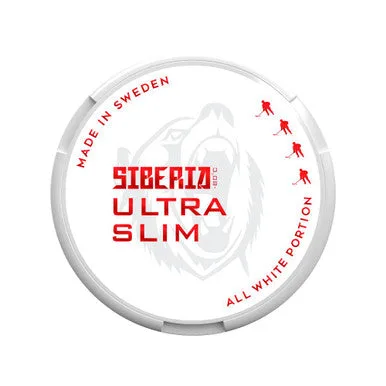
Slim is a format name the manufacturer prints on the can. It describes the physical proportions of the pouch. Conventionally a name of that kind means a narrower and longer sachet rather than a shorter, squarer one, and on this brand's shelf it sits within a small family of such names: Slim here, then Super Slim and Ultra Slim as separate listings.
We hold no measurements. No millimetres, no pouch weight, no dimensions at all, for this listing or for any of the four others. So we are not going to publish a figure, and we are not going to tell you how much narrower a Super Slim is than a Slim, because we would be composing the number. The can's own labelling is the authority on its dimensions.
What the shape affects is placement. A narrower pouch has more room to sit along the length of the lip and can generally be positioned further back or moved from one side to the other with less adjustment; a broader one occupies more of the space it is put in and tends to stay where it is put. Some people find a narrow format sits still more readily because there is less of it to shift; others find the opposite. That is the whole of the honest difference, and it is a genuine one — it is why an adult who already uses this line might read a second listing on this shelf.
What the shape does not affect is the number on the label. On our record this listing, Siberia Mini and Siberia Original all declare 33mg. Three format names, one figure. So the format names cannot be a scale of anything other than shape, and anyone reading them as a sequence of severity is reading something that is not there. We are not going to arrange them into an order, we are not going to describe any of them as a more serious version of another, and we will not frame moving between them as progress.
How long a pouch stays in, and what portion size has to do with it
The mechanics are the same across the format regardless of brand. The pouch is a small sealed sachet. It is placed between the lip and the gum and left there. It is not chewed, not bitten through, and not swallowed. It comes out in one piece and goes in general waste.
On duration, there is no standard figure and we are not going to supply one. Habits across the people who buy these products range from a handful of minutes to well beyond half an hour, and that spread is real rather than a way of dodging the question. Where the manufacturer offers guidance, it is on the packaging, and that is where to read it.
Portion size and duration are related in one narrow, practical sense that we can state without straying into claims: a pouch you are more aware of is a pouch you are more aware of for as long as it is in. A broader-footprint format occupies more room and some people therefore take one out sooner than they would a narrower one; others notice no difference at all and keep their habit unchanged across formats. We hold no data on which of those is more common, so we are reporting the range of what people say rather than asserting a pattern.
The can matters to this too. Ten cans or five, the object is a small cylinder with a lid, the pouches stacked in the lower compartment, and — on the large majority of cans in this category — a shallow upper compartment in the lid for a used pouch until a bin is available. Our record holds one photograph and no specification, so whether this can has that compartment is settled by the object rather than by us. Emptying it at the next bin instead of letting it accumulate is the entirety of the routine, and cans should go back closed, stand upright where possible, and stay out of reach of children and pets. That last point is the most important handling instruction on any listing of this type and it is not a formality.
Our record does not state how many pouches a can holds. It states five cans and a price. A portion count is precisely the kind of figure that gets copied onward once a shop prints it, so we are not printing one we have not verified. The packaging states it.
Moving from one can to another: what actually changes
This is the question the site gets most often in one form or another — someone already uses a can and is considering a different one — and it deserves a proper answer rather than an encouraging one. Here is what genuinely changes when you move between listings on our shelves, and, just as importantly, what does not.
The pouch shape changes, and you will notice it. Moving between formats within one brand is the most predictable kind of move, because the format name is the only thing varying. Going from this listing to Siberia Super Slim at £39.50 or Siberia Ultra Slim, also £39.50, changes the proportions and nothing else that we hold a record of. Going to one of the ten-can listings changes both the shape and the quantity at checkout.
The price model changes, sometimes drastically. Within the Siberia shelf, which holds five listings and is currently available in full, four are £39.50 and this one is £21.95. Step outside the brand and the variation gets much wider. Cuba Black Cherry is £39.90, Cuba Black Blueberry is £39.90, and Pablo Exclusive Banana Ice is £3.85. Those are not three prices for the same amount of product. A price under about five pounds almost always indicates a single can; a price near forty usually indicates several. Our record does not always hold a can count, so on some listings we cannot do the arithmetic for you and you have to read the quantity yourself. This is the most common source of confusion across the whole catalogue and it has nothing to do with the products themselves.
Flavour information appears or disappears. This listing has no flavour tag, so it carries none of that information at all. Move to almost any Cuba or Pablo listing and you get a flavour name and a tag. Move back and you lose them. That means a move away from this can is often a move into a much better-documented part of the catalogue, and a move towards it is a move into a page like this one, which tells you about quantity, format and price and cannot tell you about taste.
Availability changes without warning. All five Siberia listings are orderable today. Iceberg Arasaka, sitting on the same bracket at £39.90, is not — it is marked out of stock, and we flag that here so you do not discover it at the basket. Any plan that involves moving between cans has to survive one of them being unavailable on the day, which is a practical argument for not letting your last can run out before ordering the next thing.
And here is what does not change: the declared figure does not become comparable. Two brands printing the same number have not necessarily measured or defined the same quantity, and we do not know what basis either of them used. So a move between brands at an identical declared figure is not a like-for-like move, and we are not going to describe it as one. Neither is a bracket a guarantee of equivalence — ninety-eight listings share the Extra Strong bracket, and they fall within a band rather than matching one another. The bracket is a way of narrowing a large catalogue. It is not a promise about anything.
The practical conclusion people tend to reach on their own is the sensible one: when moving to something unfamiliar, a single can or the smallest quantity available costs less to be wrong about than a sleeve of ten. That is a statement about outlay and waste, not about consumption, and we are not suggesting anybody buy or use more of anything than they already do.
The empty flavour field, and what it costs you
Our flavour field for this listing holds nothing. So does the field on all four of its siblings, which makes it a characteristic of how this range sits in our data rather than a single missing entry.
A blank field is a fact about our record and not about the product. It does not mean the pouch is unflavoured. It does not mean its character resists description. It means no value has been entered, so we have nothing to report, and a shop with nothing to report should say so. Writing a tasting note in that situation would be inventing one, and an invented tasting note is worse than a missing one because it arrives with the authority of a product page behind it.
The cost to you is navigational and concrete. Our flavour shelves are generated from that field, so this listing appears on none of them. Filtering by mint, fruit, cola, coffee or anything else will not surface it, even within the bracket it belongs to. It appears on two shelves only: the brand shelf and the Extra Strong bracket. If you came here, you came by brand, by bracket, or because you already knew the name.
Where the product's own description exists, it is printed on the can, and the manufacturer's labelling is the authority. An adult who already uses this line knows it better than our database does, and we would rather admit that than pretend otherwise.
33mg as a number on a label
The 33mg is the manufacturer's declared strength, recorded by us as given. It has exactly one job in our system: it determines which strength bracket the listing appears on, which here is Extra Strong. Nothing else consumes it.
Its useful function for a shopper is comparison and navigation — you can hold one listing's declared figure against another's, and you can narrow several hundred products down to a browsable set. That is worth having. Everything beyond it is where care is needed.
The number does not describe an experience, and we will not translate it into one, because that would be a claim about effects and we make none. Our record does not tell us how the figure was arrived at or what it is declared per, and we are not going to supply that to make it look more solid. It is not strictly comparable between manufacturers, for the reason set out above. And it is not a grade: a higher figure is not a better can, a lower one is not an inferior can, and the brackets on this site are not arranged from worse to best.
Our bands run Low, Medium Strength, Strong and Extra Strong. They are drawers, not rungs. There is no implied direction through them, no can that is a destination, and nothing on this site frames a listing as something to be handled, tested against, earned or worked up to. That vocabulary appeals to something other than the product and it has no place on a page like this.
We cannot advise which declared strength suits any individual. We hold nothing about any reader that would make such advice meaningful, and advice about nicotine is not a shop's to give. What we do instead is state the figure accurately, say which bracket it files under, and stop there.
Siberia as a name, not a place
Siberia is the manufacturer's own name for this range. It is a word on a lid. It is not a statement about where the product is made, it is not a description of conditions or climate, and we are not going to convert it into either. Our record holds a brand name and a product name; it holds no production location and no company detail, and we do not publish what we do not have.
We say this explicitly because a strongly flavoured brand word is an invitation to write atmosphere, and atmosphere on a nicotine page is how invented facts get in. There is no regional colour on this page. If an origin statement exists, it is on the packaging.
The same applies to the range's general standing. Ranges sitting at the upper end of declared figures accumulate reputation, and a shop can lean on that reputation without writing a single verifiable word. We would rather not. Nothing here presents the use of any listing as a feat, a qualification or a mark of anything at all.
The five listings, side by side
The brand shelf holds five products, all currently in stock. This page is the £21.95 five-can listing. The Mini and the Original are both £39.50 for ten cans, which is £3.95 each, and both declare 33mg on our record. The Super Slim and Ultra Slim listings are both £39.50, and our sibling records carry a price and a stock flag for them but no can count and no declared figure — so we are not going to state either from this page, and their own listings are where to read them.
That gives you two things to weigh and only two. The first is outlay and quantity: £21.95 for five here against £39.50 for ten on two of the others, with the remaining two unstated. The second is the pouch's proportions, which is what the format names describe. Neither is a ranking. If you already use a format on this shelf, the reason to read another listing is that you want a different shape or a different amount of it, and we are not going to tell you which.
What people keep beside a can from this range
Because this listing carries no flavour tag, it makes an odd anchor for a rotation — you cannot pick a contrast to something our record does not describe. In practice people choose the second can on its own terms, and the bracket this listing shares supplies a reasonably wide set to choose from, most of it from Cuba's Black range at £39.90 and in stock.
Cuba Black Apple Juice puts apple in the direction of juice rather than a sharp green note. Cuba Black Banana Hit is the creamier, lower-acid option in the same group, and the Pablo banana listing mentioned earlier covers that flavour family as a single can at £3.85 for anyone not wanting to commit forty pounds to it. Cuba Black Cola is the soda-confectionery entry, which pairs badly with fruit and well against anything cooling.
For cooling itself, Cuba Black Cold Dry and Cuba Black Double Fresh are the two names in the group built around it, both £39.90 and available, and between them they cover what most people reach for as the counterweight to a sweet can. The most specifically named listing in the set is Maggie Original Jamaican Cherry Tonic Wine at £39.90 — that whole phrase is the manufacturer's flavour name rather than our description of it — and it appears here because it shares a shelf, not because we are claiming a resemblance to anything.
To browse rather than click through one at a time, the Cuba shelf holds most of the above in one place and the Pablo shelf is where the low-priced single cans are concentrated.
Condition, and what changes when you rotate between cans
Storage advice usually assumes one can. If you are moving between listings, you are more likely to have two or three cans open at once, and that is where cans go off condition — not through neglect exactly, but through being the one that is not currently in use.
The failure is simple. An open can sitting at the back of a drawer for six weeks while another is in daily use will be drier and flatter than it was. A dry-style pouch loses what little free moisture it holds and turns papery and slow. That is not reversible, and adding water to it produces a worse pouch, not a revived one. A moist-style pouch left lying on its side instead of standing upright lets liquid settle to one edge and the stack goes uneven. Standing every can upright, lid firmly on, costs nothing and prevents the second problem outright.
Heat is the thing that does the most damage and the thing most easily avoided: keep cans out of sun, off windowsills, away from radiators and out of a warm car. Cold is a far smaller concern, although a can taken out of cold storage and opened straight away will sometimes carry condensation inside the lid, which is worth wiping rather than leaving to sit.
With five cans, order matters. Open them in the sequence they arrived rather than reaching for whichever is nearest, and keep the unopened ones together so you can tell. Our record holds no date marking or shelf-life figure — the packaging carries it — so the practical rule is to work through a pack steadily rather than leaving the last of it in a drawer for a year while a rotation of other cans goes past it.
One photograph, and what it will not show you
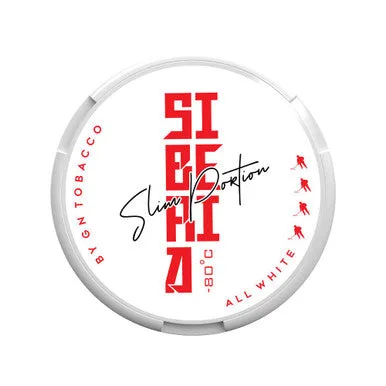
Our record holds a single image for this listing, and it is worth being clear about the limits of that, because a product photograph does a lot of unearned work on shopping pages.
One image will generally show you the front of the can and the printing on the lid. It will not show you the base, where any date marking is likely to be. It will not show the inside, so it does not answer whether this can has a catch compartment in the lid, nor how the pouches sit in the stack. It gives no reliable sense of scale — a can photographed alone against a plain background could be almost any size, and there is nothing in the frame to measure it against. And it certainly does not show a pouch, so it is no help at all on the question of proportions that the format name raises.
We are not going to describe what a second or third photograph would show, because we do not have one. If the visual detail matters to you, the object itself is the only reliable source, and the packaging carries the printed information. A photograph on a shop page is a way of confirming you are looking at the right product, and on this listing that is all it should be relied on for.
What a price on this site does and does not tell you
Prices across this catalogue range from under four pounds to around forty, and that spread looks dramatic until you understand what is being priced. Then it mostly disappears.
The largest single factor is quantity. A listing priced near forty pounds is usually several cans; a listing priced near four is usually one. This page is an intermediate case — five cans at £21.95 — which is exactly the kind of listing where guessing from the price alone goes wrong. Where our record holds a can count, as it does here, we publish the per-can figure so that the comparison can be made properly. Where it does not, we say we cannot, and the listing itself is where to look.
Brand accounts for some of the rest, as do format and pack configuration. What the price does not indicate is quality, and we are not going to imply that it does. A more expensive listing is not a better can, and a cheaper one is not a compromise. We are a shop with a catalogue and a set of prices; we are not running a ranking, and we would rather you compared quantities and read each listing's own facts than infer a hierarchy from the numbers at the top of the page.
Ordering, the age check and the doorstep
Add the pack to the basket and an age check runs before checkout can complete. We sell only to adults aged 18 or over, it applies to every listing on the site without exception, and an order that fails it is not sent.
On delivery, ID may be requested at the door, and if it is requested and no adult at the address can produce it, the parcel is not handed over. It is worth having an order sent somewhere an adult will be present with identification available rather than to an address where a parcel would be left unattended. The courier's own rules on attended delivery are the courier's, we do not publish them, and what the driver asks for on the day sits with the driver within that framework.
Routes to this page
Two, and no more. The brand shelf, which lists all five formats with their prices, and the Extra Strong bracket, which is much wider at ninety-eight listings. There is no flavour route in, for the reason set out above, so if you want to find this page again the brand shelf is the reliable way.
If what you want is the format comparison, the brand shelf is where every alternative sits with its price attached. If you want to see the range of listings declaring in the same band, the bracket is the page. And if you would rather ignore both and look at the catalogue as it stands, everything we stock is browsable in a single list with stock status shown, which is the most honest picture of what can actually be ordered on any given day.
Questions about this listing
Why is this cheaper than the rest of the brand?
Because it is a smaller pack. Our record gives five cans at £21.95, where two of the other listings are ten cans at £39.50. Per can that is £4.39 here against £3.95 there, so the lower price at the till comes with a slightly higher unit cost and half the quantity. It is a quantity difference rather than a discount, and it is not a suggestion about where anybody should begin.
How narrow is a Slim pouch?
We do not hold measurements for it or for any of the other four formats in the range, so we are not going to publish a figure. Slim is the manufacturer's format name, it refers to the pouch's proportions, and the practical consequence is placement — where along the lip a pouch will sit. Dimensions, if stated anywhere, are on the packaging.
What is the difference between Slim, Super Slim and Ultra Slim?
The names differ and our record does not tell us by how much. All three are format names describing pouch proportions. We hold no measurements for any of them, so we cannot rank them or quantify the gaps, and we are not going to imply an order beyond what the names themselves say. Each listing's own page carries its price and stock; the packaging carries its dimensions.
Is it stronger than the Original?
Both declare 33mg on our record, so there is nothing between them on that measure. The difference is the pouch's shape. We would not describe one format as a stronger version of another in any case, because a declared number is not a description of an experience and we do not rank our stock.
What does it taste of?
We hold no flavour tag for this listing, so we cannot say. The field is empty in our record, which is not the same as the product being unflavoured, and we are not going to turn one into the other. The manufacturer's description on the can is the authority. All five listings in this range share the same blank field.
Which strength should I be using?
We cannot advise on that, and the brackets on this site are not laid out as a route to follow. We hold no information about any individual reader, and a recommendation about nicotine is not something a shop should offer. We state declared figures accurately and file listings into bands so they can be found; the rest is not ours.
Is there a smaller pack than five?
Not within this brand — five cans is the smallest quantity on the shelf, and the other listings are ten or unstated. Elsewhere in the catalogue there are single cans, some well under five pounds, and one of them is linked in the neighbours section above. Reading the quantity on each listing before comparing prices is always worth doing.
Does Siberia mean it comes from somewhere in particular?
No. It is the manufacturer's own name for the range and not a statement about origin. Our record holds a brand name, not a place. We do not publish production locations because we do not hold them, and we are not going to read a geography out of a brand word. The packaging is where any such statement would appear.
How many pouches are in each can?
Our record does not say. It gives five cans and a price and nothing about the contents of each can, so we are not going to publish a portion count we have not verified — it is the sort of number that gets repeated once a shop prints it. The packaging states it.
If I move from another brand at the same declared figure, will it be the same?
We cannot tell you that. Two manufacturers printing the same number have not necessarily measured or defined the same thing, and we do not know what basis either used. A shared bracket means declared figures fall in the same band, not that two cans are equivalent. The bracket is a navigation tool, and treating it as a promise of sameness is reading more into it than it holds.
Can I keep several cans open at once?
People do, particularly when they are rotating between listings. The practical catch is that the can not in use is the one that goes off condition — drier and flatter after weeks in a drawer. Keeping every can upright with the lid firmly on, out of heat and sun, is the whole of the precaution, and working through the oldest first keeps it from happening at all.
Is everything on this shelf really in stock?
All five Siberia listings are marked available at the time of writing, which is better than the position across much of the catalogue. The Iceberg listing linked above is a current example of a neighbour you cannot order. We do not publish restock forecasts, so each page's own stock flag is the most current answer we have.
Required notices for this product
Nicotine is an addictive substance.
Siberia Slim Nicotine Pouches are sold only to adults aged 18 or over who already use nicotine. An age check runs before checkout completes, we do not sell to anyone under 18, and ID may be requested on delivery. Where it is requested and no adult at the delivery address can produce it, the parcel is not handed over.
This product is not a licensed stop-smoking medicine and holds no authorisation of that kind. It is not intended for non-smokers, for anyone who does not already use nicotine, for anyone under 18, or for anyone who is pregnant or breastfeeding. Nothing on this page is medical advice, nothing on it suggests that anybody take up nicotine, and nothing on it presents a declared strength or a format as suitable for any particular person.
Keep cans closed and out of reach of children and pets, and put used pouches in general waste. Every product fact above — name, brand, price, declared strength, can count, stock status — is taken from our own record for this listing, and where that record is blank this page says so rather than estimating. The manufacturer's labelling on the packaging is the authority for anything printed on the can.
The short of it
Siberia Slim is five cans at £21.95, or £4.39 each, declaring 33mg, with no flavour tag on our record and stock available. It is the smallest pack and the lowest outlay on a shelf where the other four listings are £39.50, and that is a fact about quantity rather than a recommendation. Slim is a format name about the pouch's proportions, and the proof that format names are not a scale of anything else is that this listing, the Mini and the Original all declare the same figure. If you are moving between cans, the things that genuinely change are shape, price model, flavour documentation and availability — and the thing that does not change is that a declared number from one manufacturer is not interchangeable with the same number from another.
More from Siberia
More extra strong pouches
Where this sits
Siberia Slim Nicotine Pouches appears in these categories. Browse them, or jump to something close.
You might also like