Home / Extra Strong / Cuba Black Cold Dry Nicotine Pouches
Cuba · 43mg
Read the full guide
Cuba Black Cold Dry Nicotine Pouches
£39.90
✔ In stock — ready to ship
100% tobacco-free
Free over £20
Same-day dispatch
Secure checkout
This page covers Cuba Black Cold Dry Nicotine Pouches. The brand is Cuba, the line is Black, the declared strength is 43mg and the price is £39.90. There is one variant on the listing — 43mg at £39.90 — and our record shows it in stock at the time of writing.
This can differs from the rest of the line in one respect that shapes the whole of this page: our product record holds no flavour classification for it. The flavour field is empty. Every other can we list in this line has a fruit or a flavour family attached to it in our data; this one has a name and nothing else. We are not going to fill that gap with a guess, so you will find a section below explaining what we do and do not know rather than a tasting note we invented.
The full guide to Cuba Black Cold Dry Nicotine Pouches
5,244 words on how it eats, who it suits, how to serve it and what to put beside it.
What this listing is
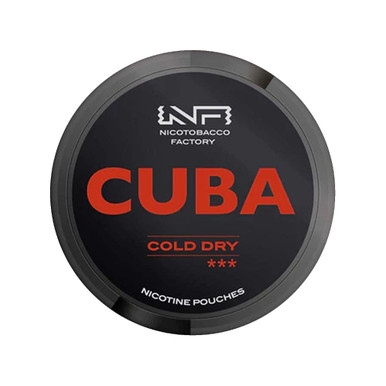
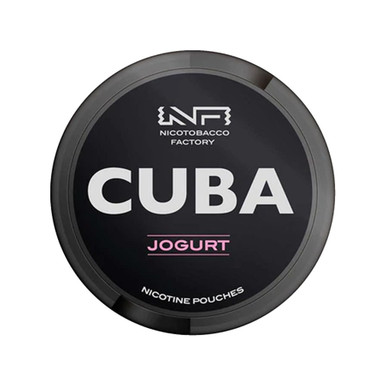
The can is the standard round tin used across this category: shallow, circular, wide enough to sit in a palm, with a lid that lifts clear and presses back on. The lid face carries the brand, the line, the product name and the strength figure. Pouches sit inside in a ring, and the upper section of the can is the catch compartment for used ones. We hold one product image for this listing.
What our record does not carry, beyond the flavour: no pouch count, no weight, no dimensions, no manufacturer, no country, no dates. None of those appear on this page because we do not hold them, and the printed can remains authoritative for anything the manufacturer has stamped on the packaging. "Black" is a line name identifying a group of cans on a shelf, and neither it nor the brand name says anything about origin.
An adult nicotine product, sold to over-18s who already use nicotine. Nicotine is an addictive substance. The full compliance wording has its own section at the foot of this page.
The pouch, as an object
These are standard-format pouches rather than minis. A standard pouch is a small soft rectangle with rounded ends — shorter than a fingernail is long, a little thicker than folded card, firm enough to hold its shape and soft enough to compress gently between finger and thumb. We publish no millimetre figures because our record holds none, and an invented measurement would be worse than an absent one. Where a listing is a mini format we flag it: the Siberia Mini can at £39.50 is one we mark that way, and it is a noticeably smaller article in the hand.
The pouch goes between lip and gum, usually the upper lip, and stays there. There is no device involved, nothing to charge, nothing to press, nothing to hold and nothing to carry beyond the can itself. Most people settle on one side out of habit and stay with it; some move it across during the time it is in. We have no view on either and no advice to offer.
The range people generally describe for this format runs from roughly twenty minutes to about an hour, with a good deal of variation either side. We publish no figure for this can, there is no correct duration, and nothing here is a recommendation about timing or quantity.
The upper section of the lid is the catch compartment — somewhere for a used pouch to go when there is no bin to hand. It is a stopgap rather than storage. Used pouches belong in general waste, never down a drain or a toilet, and never anywhere a child or an animal could reach them. That is the one piece of handling guidance on this page that is not optional.
The flavour question, answered honestly
Here is the position, stated plainly: we do not hold a flavour description for this product and we are not going to write one.
Our record for every listing carries a flavour classification drawn from our product data. For the other cans in this line those fields are populated — berry, cherry, cola and so on. For this one the field is empty. We have no manufacturer tasting notes, no flavour family, and nothing in our data that would let us tell you what it tastes like. Writing a description anyway would mean inventing it, and an invented tasting note on a product page is exactly the sort of thing that should not be there.
What we can tell you is what the words on the lid conventionally mean in this category, clearly labelled as convention rather than as a statement about this particular can.
"Dry" is a format descriptor rather than a taste. Pouches are broadly made in drier and moister styles, and the distinction is about the physical character of the pouch rather than about flavour — a dry pouch feels different in the hand and behaves differently once it is in. Most of the cans on our shelves, including the rest of this line, are dry-style products. A product name that includes the word "dry" is generally drawing attention to that characteristic.
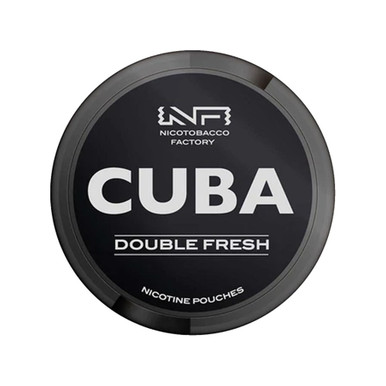
"Cold" in a pouch product name conventionally signals a cooling character rather than a fruit or a confectionery note. That is what the word usually indicates across the category. We cannot confirm that it is what it indicates here, because our flavour field is empty and a name is not data. If the cooling register is specifically what you want from a Cuba Black can and you want it confirmed before you buy, Black Double Fresh at £39.90 is the can in this line that our records do classify, and it sits at the same price and the same declared strength.
The honest summary: this is a listing where we know the brand, the line, the name, the price, the strength and the stock position, and do not know the taste. The can and the manufacturer's own labelling are the place to find out.
Keeping a can in condition: the long version
Since this is a can where we cannot spend the page on flavour, it is worth spending it on something more useful instead. Storage is the part of owning a pouch can that people get wrong most often, and it is entirely within your control.
Why dry pouches and moist pouches behave differently
The broad split in this category is between drier and moister products, and the two respond differently to being left about. A moister pouch has more to lose to the air and tends to make its condition obvious fairly quickly. A drier pouch is more stable in that respect but is not immune — what a dry pouch loses to a badly closed lid is the top end of its aroma, which goes quietly and without any dramatic change in appearance. The result is a can that seems fine and reads flat.
That is the practical reason to take lid discipline seriously with dry cans in particular. There is rarely an obvious moment when a poorly kept dry can becomes a poorly performing one. It simply gets less interesting, and unless you have a fresh can to compare it against, you may not notice.
Heat is the main problem
If there is one thing to take from this section, it is that heat does more damage to a pouch can than anything else in ordinary domestic life. A can that has sat on a sunny windowsill through a warm afternoon, on a dashboard in traffic, on top of a radiator, on a shelf above a cooker or in a parked car in July has had a harder time than a can that has been opened and closed fifty times in a cool drawer.
The failure mode is not dramatic. Nothing melts and nothing visibly changes. What happens is that a flavoured pouch reads progressively duller and flatter, and the parts of a flavour that go first are the light, volatile parts that gave it definition. Repeated heating and cooling is worse than one warm afternoon, which is why the car is the worst place of the lot — a car does the cycle every day.
Cool is the whole instruction. A drawer, a cupboard, an inside pocket, a bag. Nothing more elaborate is required.
Light, air and the lid
Direct sunlight is worth avoiding for the same reason as heat, and usually arrives with it. A can stored out of the light is a can stored out of most of the heat.
Air is the other one, and it is entirely a question of the lid. Press it down properly every time — not most times. A can that spends a day in a bag with the lid seated loosely will dry at the edges, and the pouches nearest the rim will suffer first. If you have ever found the first pouch out of a can noticeably different from the one you had yesterday, an unseated lid is the most likely reason.
Keep the can upright where you can, so the catch compartment stays separate from the unused pouches. A used pouch rolling around among fresh ones is unpleasant and avoidable.
Fridges, freezers and humidity
Some people keep cans in a fridge. We neither advise it nor advise against it. Our record carries no storage instruction for this product, the printed can is where a manufacturer's instruction belongs, and we are not going to issue guidance we have no basis for.
What we will say is mechanical rather than advisory. Anything that comes out of a fridge and goes back in repeatedly will attract condensation, and moisture arriving at a dry-format can from outside helps nothing. If a can does live in a fridge, it should go back closed and dry. Freezing is not something we hold any information about and not something we would suggest.
The same logic covers bathrooms. A steamy room is a humid room, and a cupboard in a bathroom is a worse home for a can than a drawer in a bedroom. It is a small thing, but it is free to get right.
Travel and carrying
A can in a coat pocket or a bag is fine and is how most cans live. The two things worth thinking about are heat and crushing: a can in a back trouser pocket gets sat on, and a can in a bag with a laptop gets pressed. The tin is reasonably sturdy but the lid is the weak point, and a lid that no longer seats properly turns into the air problem described above.
If you are travelling further, carrier rules, cabin luggage restrictions and the import position on nicotine products in other countries are all things we do not hold information about and cannot advise on. Those are questions for the carrier and for the destination country's own authorities, and they are worth asking before you pack rather than at a border.
How long a can keeps, and how you would know
We do not publish a shelf life for this product, because our record does not carry one. Any date marking applied by the manufacturer will be on the can, and that is the authority on the question.
The practical test people use is comparison: a can that has been open a long time is best judged against a fresh one, because gradual change is very hard to detect from the inside. We are not in a position to tell you when a can should be replaced, and we are not going to invent a timescale.
The catch compartment, and keeping it sensible
The used-pouch compartment is the part of the can people neglect, and it is the part that most affects whether a can is pleasant to open. It is designed as a temporary holding place, not a long-term one. Pouches left in it for days sit directly above the unused ones with only a thin partition between them, and the result is a can that smells of yesterday rather than of itself.
The habit worth forming is emptying it whenever you pass a bin rather than whenever it is full. It takes no time, it keeps the can civilised, and it avoids the situation where a full catch lid means a used pouch has nowhere to go and ends up somewhere it should not.
Running more than one can at once
People who keep two or three cans on the go often keep them in the same place, which is fine, but it is worth keeping them the same way up and in a spot where the lid printing is visible. The printing on the lid face is the only part of a can you see when it is in a drawer, and with several cans from the same line — identical tins with different words on them — the lid is the only way to tell them apart without picking each one up.
That is a more practical point than it sounds for this line in particular, because the Black cans are visually consistent and it is easy to open the wrong one.
Where a can should not live
Out of reach of children and pets — not on a coffee table, not on a desk edge, not in a car door pocket, not in an open bag on the floor. Away from where food and drink are kept: a tin is a tin, and a nicotine product on a shelf with snacks or in a kitchen drawer with sweets is a genuinely bad idea in a house with anyone else in it. This is the part of the section that is not a matter of taste or preference.
The 43mg figure, as information
43mg is the declared strength as our record holds it, attached to the one variant on this listing. We do not hold the basis on which that figure is expressed and we will not guess — the can's own labelling is where that is properly read.
On our site the figure decides a shelf. We sort listings into three bands, and this one falls in the extra strong band, currently 98 listings, above the strong shelf and the medium shelf. The bands exist to narrow a large catalogue. They are not a ranking, not a progression and not advice.
We do not tell anyone which strength to buy, and we describe no figure as suitable or unsuitable for any person. Nothing on this page is a recommendation about strength, and this listing carries one figure in any case.
Coming to this can from a different pouch
A fair proportion of the questions we get about a can like this one come from people who already use pouches and are moving between products — a different brand, a different format, a different line — and want to know what will be different in the hand. That is a practical question with practical answers, and this section covers them.
To be clear about the scope: everything below compares one pouch product with another pouch product. Nothing here is a comparison with any other kind of product, and no claim of any sort is attached to any of it.
Standard against mini
The most noticeable physical difference between pouch products is size, and it is the one people underestimate. A mini is not a slightly smaller standard pouch; it is a different object, and it sits differently. If you are used to one and pick up the other, that is the change you will register first, before flavour and before anything else. This listing is a standard format. The Siberia Mini listing is one of the cans we mark as mini, and the two are not interchangeable in feel.
Drier and moister styles
The second difference is the character of the pouch material itself. Drier products feel different between the fingers and sit differently once in place; moister ones behave differently again. Neither is better and we make no claim in either direction — it is a preference, and it is the kind of preference people hold strongly once they have settled on one.
The practical consequence of a drier product is mostly in storage rather than in use, and that is covered at length above.
How a pouch seats, and why it varies
Pouches differ in how much they move about once in place. Some sit flat and stay where they are put; others shift. This depends on the shape and the give of the individual product, and it is genuinely one of the main things that separates brands in daily use.
It is also something no product page can honestly tell you in advance, ours included, because it is not in our data and it varies between production runs. Anyone who states confidently how a pouch you have never tried will seat is guessing.
Flavour intensity and the arc of the time
Across dry pouches generally the flavour is most defined early and tapers across the time the pouch is in. People arriving from a different brand often notice the shape of that arc more than its peak — how quickly it climbs, how long the middle holds, how far it falls. Different products do it differently, and it is a real difference rather than a marketing one.
For this particular can we cannot tell you where the arc sits, for the same reason we cannot tell you the taste: our record holds no flavour data for it at all.
The can and the lid
Cans are opened and closed hundreds of times, and the lid decides whether that is a pleasant or an irritating experience. A lid that seats cleanly and opens without a struggle matters more day to day than almost anything written on a product page. So does how tightly the pouches are packed into the ring, which decides whether the first one out is easy or fiddly.
Neither is something we hold data on, and both vary. It is the sort of thing you find out by opening a can, and it is one of the honest reasons people keep buying a brand they have got on with.
Price per can is not the comparison it looks like
The last practical difference is commercial rather than physical. Our records carry no cans-per-pack figure for most listings, including this one, so a £39.90 listing and a £3.85 listing are not necessarily the same quantity of product. We cannot tell you the ratio, because the field is empty in our data.
Anyone moving between brands on price alone should read each listing on its own page rather than ranking tiles by the number printed on them. It is the single most common way to get an unpleasant surprise in a catalogue this size, and it is worth stating plainly rather than leaving the numbers to imply something untrue.
Where this can sits in the Cuba range we carry
The Cuba brand page holds 47 listings, one of the larger single-brand shelves on the site, and the Black line accounts for a good part of that. The defining feature of the line as we list it is its flatness: the cans sit at £39.90 with a declared 43mg apiece, so moving between them is purely a flavour decision with no price or strength trade-off attached.
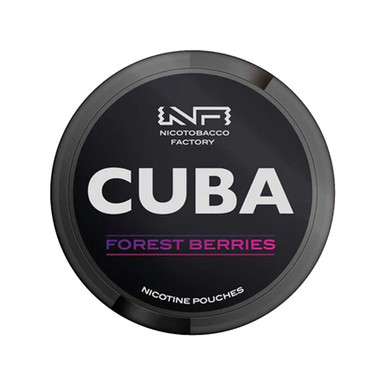
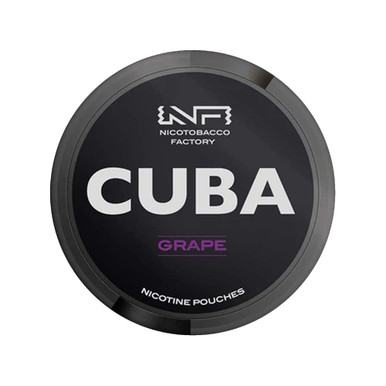
The fruit end of the line is broad. Black Peach at £39.90 is the soft stone-fruit direction, Black Grape at £39.90 is the sweeter, more confected one, and Black Raspberry at £39.90 is the bright, sharp-edged red berry. Black Forest Berries at £39.90 is a blend rather than a single fruit — a composite dark-fruit picture instead of one named berry — and Black Lollipop at £39.90 is openly a confectionery flavour rather than a fruit one.
Within that, Black Apple Juice is the crisp orchard end, Black Banana Hit is the creamy low-acid one, Black Blueberry is the quiet dark fruit and Black Cherry is the loud stone fruit with a sour lift in the middle. Black Cola leaves fruit behind entirely for a layered flavour with a dry bitter floor, and Black Double Fresh is the line's cold register.
This can is the one we cannot place on that map, and we would rather say so than pretend otherwise. Everything else in the line has a flavour classification in our data. This one has a name.
Cans to keep beside this one
Keeping two or three cans on the go is ordinary practice, and the usual reason is that any single taste gets less interesting the longer you stay with it. Since the Black line is flat on price and strength, adding a second can from it costs the same as the first and changes nothing except the flavour.
If you want something clearly defined to sit beside a can whose profile we cannot describe, the sensible approach is to pick a flavour we can describe, so at least one of your two cans is a known quantity. The raspberry can is the brightest of those, the peach the softest, and the forest berries blend the darkest and most composite.
From outside the brand, Pablo Exclusive Banana Ice at £3.85 pairs a soft fruit with a cold note, and the Maggie Original Jamaican Cherry Tonic Wine can at £39.90 is the most unusual flavour construction on this list by a distance. The Siberia Mini at £39.50 is worth noting as a change of format rather than a change of flavour.
If you would rather browse than be pointed anywhere, the full catalogue is open and the Pablo brand page is a reasonable example of another manufacturer's shelf laid out the same way.
The single option on this page
Almost nothing, and it is more honest to say so than to imply a decision exists. One variant: 43mg at £39.90. There is no lower or higher version of this can on our shelves and no multi-can option on this page.
If 43mg is not the figure you were after, the route is a different band rather than a different version of this can — the strong shelf and the medium shelf hold different products entirely. Every can in this line carries the same figure, so moving around inside the line will not change it. We have no view on which band anyone should be browsing.
Some listings in the catalogue are sold as multi-can packs and say so on the listing. This one does not, and our record holds no cans-per-pack value for it, so we cannot tell you what £39.90 covers in units. A gap, stated as a gap.
Placing an order for this can
Our record shows this listing in stock at the time of writing. Stock moves faster than page copy, so the listing itself is the live answer.
Buying works as it does across the site: basket, checkout, age check. This is an 18+ product and an age verification step operates at checkout. We do not sell nicotine products to anyone under 18 in any circumstances, and no part of that process can be skipped.
ID may be requested on delivery. If it is requested and no adult at the address can produce it, the delivery will not be completed and the parcel goes back. Worth knowing before the driver arrives, particularly where a parcel is going to a workplace, a neighbour or a collection point and the person receiving it is not the person who ordered it.
Baskets mix freely across brands, flavours and strength bands with no minimum per brand, and standard delivery and returns terms apply to this listing as they do to everything else we list. Given that we cannot describe this can's flavour, it is fair to say that buying it is a less informed decision than buying a can we can describe — that is a straightforward consequence of the data gap, and we would rather you knew it before checkout than after.
Getting back to this listing
Two shelves lead here rather than the usual three, and the missing one is the reason. By strength, this can is filed in the 98-listing top band. By brand, it sits among the 47 Cuba listings. There is no flavour shelf entry for it, because we hold no flavour classification to file it under — which means browsing by flavour will not find this can at all.
That is worth knowing if you are looking for it later. The brand page and the strength band are the two routes back, and the full catalogue is the third if you would rather scroll than filter.
Questions this can raises
What does it taste like?
We do not know, and we will not invent an answer. Our product record holds no flavour classification for this listing — the field is empty, unlike every other can in the line. We have no manufacturer tasting notes and nothing in our data that would support a description. The can and its printed labelling are the place to find out. We would rather give you that answer than a plausible-sounding paragraph we made up.
Does "Cold" mean it is a mint or a menthol can?
We cannot confirm it. In this category the word "cold" in a product name conventionally signals a cooling character rather than a fruit, but a name is not data and our flavour field for this listing is empty. If a confirmed cold register within this line is what you want, Black Double Fresh is the can our records do classify, at the same £39.90 and the same declared 43mg.
What does "Dry" refer to?
Conventionally, the physical style of the pouch rather than a taste. Pouches are broadly made in drier and moister styles, and the distinction is about the character of the product in the hand and in use rather than about flavour. Most cans on our shelves are dry-style products. As with "cold", that is a general convention in the category rather than a confirmed statement about this specific listing.
Is there a pouch count for this can?
We do not know. The pouch count field in our record is empty for this listing, and we do not fill empty fields with estimates. The printed can is where that figure should be read. Any count quoted for this product elsewhere did not come from us and deserves the caution due to any unsourced number.
What does £39.90 buy?
This listing at 43mg. What we cannot tell you is how many cans or pouches that represents, because our record carries no cans-per-pack figure. That gap matters when you compare this against listings priced at a few pounds — they are not obviously cheaper versions of the same thing, and ranking listings by the price on the tile will mislead you.
How is it different from the other cans in the line?
Price and declared strength are identical across the line at £39.90 and 43mg, so the difference is flavour — and this is the one can whose flavour we cannot describe, because our data does not carry it. The rest of the line runs from bright fruit through soft fruit and blends to a confectionery flavour, a cola and a cold can, all at the same price and the same figure.
What does the declared strength refer to?
It is the declared strength as our record holds it and as it appears on this listing. Its practical effect on our site is to file the can in the extra strong band, the highest of the three we operate. We do not hold the basis on which the figure is expressed — the can's labelling covers that — and we do not interpret strength figures on behalf of individuals.
Do you give strength guidance?
We do not answer that. We give no advice on strength selection and describe no figure as suitable for any person or situation. This listing offers one figure in any case, so there is no choice within it.
How should I store it?
Cool, closed, out of direct sun, and out of reach of children and pets. A drawer, a cupboard or a bag pocket is fine; a dashboard, a windowsill in summer or a warm car is not. Press the lid down properly every time, since air reaches a badly closed can quickly. Beyond that we hold no manufacturer storage instruction for this product, and anything printed on the can takes precedence over this page.
How long does a can keep?
We do not publish a shelf life, because our record does not carry one. Any date marking applied by the manufacturer will be on the can and is the authority on it. We are not going to invent a timescale, and we would treat any figure quoted for this product by a third party with caution.
How long do people keep a pouch in?
Generally somewhere between about twenty minutes and an hour, with wide variation either side. There is no correct duration, we publish no figure for this product, and none of this is a recommendation. The general characteristic of the dry format is that flavour is strongest early and tapers through — though for this can we cannot tell you what is tapering.
What is in it, and where is it made?
We do not publish composition or production information for any listing on this site, and we hold no manufacturing or origin data for this one — no manufacturer, no address, no country, no dates. The brand and line names on the lid are labels, not statements about origin. The manufacturer's own labelling on the can is the correct and authoritative source.
Can I order it today?
Marked in stock at the time of writing. Stock changes faster than page copy, so the listing itself is the reliable answer. Where a can is unavailable we say so plainly on its own page rather than letting you find out at checkout.
Compliance notes for this listing
Nicotine is an addictive substance.
This product is sold only to adults aged 18 or over who already use nicotine, and on no other basis. We do not sell to anyone under 18. An age verification step operates at checkout, and ID may be requested on delivery — if it is requested and cannot be produced by an adult at the address, the delivery will not be completed.
Cuba Black Cold Dry Nicotine Pouches are not a licensed stop-smoking medicine and are not authorised or intended for any such purpose. This product is not intended for non-smokers, for anyone who does not already use nicotine, for anyone under 18, or for anyone who is pregnant or breastfeeding. Nothing on this page is medical advice, and nothing on it should be read as encouragement to start using nicotine or to use any particular strength.
Keep this product out of reach of children and pets, and dispose of used pouches in general waste where they cannot be reached. Every factual detail above — name, brand, price, declared strength and stock status — comes from our product record for this listing. Where that record is empty, including the flavour classification, we have said so on this page rather than estimating. The can and the manufacturer's own labelling are authoritative for anything printed on the packaging.
Closing note
Cuba Black Cold Dry is listed at £39.90 in a single declared strength of 43mg, filed on the top strength band and on the Cuba brand shelf, and it is the one can in the line that our records carry with no flavour classification at all. We have spent this page on the things we can tell you honestly — the format, the storage, what changes when you move between pouch products, and where the can sits on our shelves — rather than on a tasting note we would have had to invent. If you want a Cuba Black can whose flavour we can describe, the cold register is Double Fresh and the fruit end runs from the sharp raspberry to the soft peach, all at the same price and the same figure. Everything we hold on this product is above, and everything we do not hold has been marked as such.
More from Cuba
More extra strong pouches
More cuba pouches
Where this sits
Cuba Black Cold Dry Nicotine Pouches appears in these categories. Browse them, or jump to something close.
You might also like