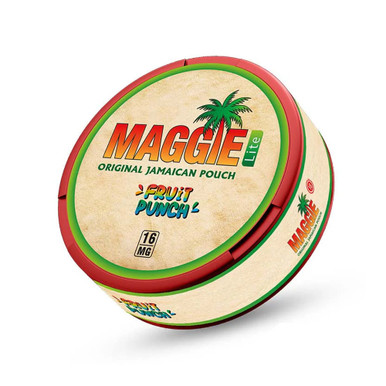
Home / Extra Strong / Maggie Original Jamaican Cherry Tonic Wine Nicotine Pouches
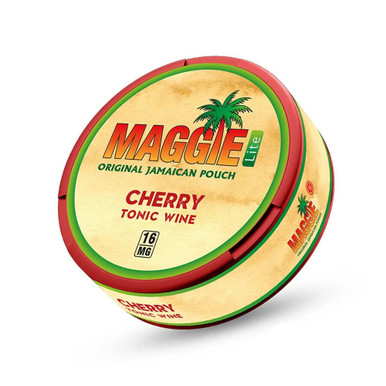
Maggie · 16mg–60mg
Read the full guide
Maggie Original Jamaican Cherry Tonic Wine Nicotine Pouches
£39.90
✔ In stock — ready to ship
100% tobacco-free
Free over £20
Same-day dispatch
Secure checkout
Maggie Original Jamaican Cherry Tonic Wine Nicotine Pouches is a Maggie listing priced at £39.90. Our record holds two declared strengths against it, 16mg and 60mg, and both variants are listed at that same £39.90. The single flavour tag we hold is cherry. The listing is marked in stock at the time of writing, and we hold one product image for it. Our record does not state how many cans come in a pack — that field is empty, and we are not going to fill it with a guess.
Before anything else, one point of fact that the name makes necessary: this is a nicotine pouch product. It is not a drink of any description. Nothing about it is consumed the way a drink is consumed, and the words in the product name that sound like a drink are a flavour reference and nothing more. We will come back to that properly in the next section, because it is the single most misread thing about this listing and it deserves more than a line.
The full guide to Maggie Original Jamaican Cherry Tonic Wine Nicotine Pouches
5,341 words on how it eats, who it suits, how to serve it and what to put beside it.
Maggie Original Jamaican Cherry Tonic Wine: the record in full
Beyond the facts in the first paragraph, our record holds nothing. No ingredient list, no composition data, no pouch count, no can dimensions. Everything written below is a description of the object and the format, a comparison against other listings whose prices and tags we can quote, or an explicit statement that we do not hold something. There is no fourth category on this page, and where a reasonable question has an answer we would have to invent, we say we do not have it instead.
This is an adult nicotine product, listed on the basis that anyone buying it is aged 18 or over and already uses nicotine. The full wording on that has its own section further down the page.
What the name is doing, and what it is not
"Original Jamaican Cherry Tonic Wine" is a flavour name. Like a great many flavour names across this category, it borrows from a drink that people already know the taste of, because borrowing is a quicker way to communicate a flavour than describing it from scratch. That is the whole of the mechanism. The name tells you roughly what taste to expect. It does not tell you what the product is, and it does not describe the product's contents.
So, plainly, and without hedging: this product has nothing to do with alcohol. The word wine appears in the name as part of a borrowed flavour reference. It is not a statement about what is in the can, it does not indicate that this product contains or resembles an alcoholic drink in any respect, and nothing on this page should be read as connecting it to alcohol in any way. If you came to this listing expecting a beverage of any kind, this is not that, and the listing is not going to become that further down the page.
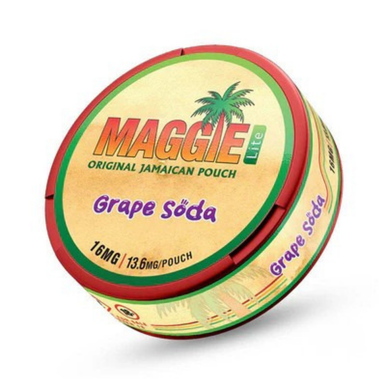
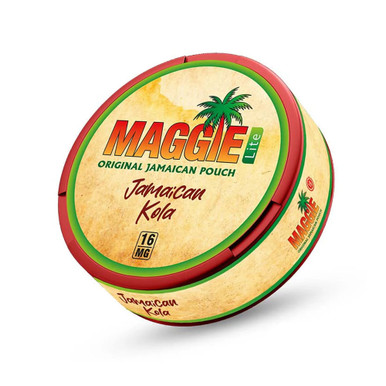
The same applies across the brand's naming. Several of the Maggie listings we hold take their names from drinks — the brand's Grape Soda can, the Kola can and the Fruit Punch can among them, all at £39.90 — and every one of those is a nicotine pouch listing using a drink name to signal a flavour. It is a consistent naming style rather than a series of separate oddities, and once you know the pattern the range reads straightforwardly.
What the borrowed name usefully communicates here is a particular kind of cherry: dark, deep and sweet rather than fresh and sharp, with a slightly syrupy quality and a faint bitter edge underneath it. That is the taste the reference is pointing at, and it is the reason the name says tonic wine rather than simply cherry. We are describing a flavour direction, not the contents of a bottle.
Cherry, taken purely as a taste
One flavour tag sits against this listing: cherry. It is a tag we use on 20 listings across the site, and it covers a wider range of tastes than the single word suggests, so it is worth splitting up.
Cherry at the fresh end is bright, tart and short — the sharp end of the fruit, with acidity at the front and not much weight behind it. Cherry at the dark end is the opposite: heavier, sweeter, rounder, more like the concentrated form of the fruit than the fruit itself, and with a faint bitterness that sits underneath the sweetness rather than cutting across it. The name on this can points firmly at the second of those. Dark cherry, sweetened, with a little bitterness giving it some structure.
That is an inference drawn from the name and the tag, and we are labelling it as one. Our record holds the word cherry and no tasting note below it. We are not going to invent a more precise description and present it as something we know, because you would be entitled to hold us to it.
On aroma: opening a can of any strongly flavoured pouch gives a concentrated hit of scent that is more intense than the taste that follows, because aroma accumulates in the sealed headspace of a tin and releases all at once. With a dark sweet flavour that gap tends to be wide — cans like this smell sweeter on opening than they taste in use. That is normal across the category and not specific to this listing.
Flavour over time is not level. It arrives quickly, holds at a recognisable strength for a stretch, and then thins to something closer to a background note than a taste. With dark sweet flavours the sweetness usually fades before the deeper notes do, so the tail end reads drier than the opening. Whether you find that progression pleasant is your business and we have no opinion to offer on it.
Two figures on one listing: 16mg and 60mg
This listing carries two declared strengths, 16mg and 60mg, and both variants are priced identically at £39.90. Those are the two numbers printed on the labels of the two versions, and they are the only strength information our record holds.
We need to be careful and clear about what that means, so here it is in the plainest terms available. These are label figures. They are what the manufacturer declares and prints, and we use them to file the listing into a strength band. That is the entire role they play on this page. They are not a rating, they are not a quality score, and they are not a scale that anyone is meant to move along.
We cannot advise which strength suits you. Not "we would rather not", not "it depends" — we simply cannot, because doing so would mean giving an individual person advice about nicotine, and that is not something anybody writing a product page is in a position to do responsibly. That applies to the 16mg variant, it applies to the 60mg variant, and it applies to any comparison between them. If you are weighing the two up, the answer does not come from us.
Three further things worth stating precisely, because the 60mg figure attracts assumptions. First, a higher declared number does not make a can better. It is a different label figure on a different version of the same flavour, and nothing about it is an upgrade. Second, the higher figure is not a goal. There is no ladder here, nothing to work toward, and no version of this product that represents progress over another. Third, the same declared figure on two different brands does not make two products equivalent, because pouch size, moisture, flavour and format all differ and the number describes none of them.
On our shelves, this listing is filed under the extra strong band, which holds 98 listings. It is worth understanding how that filing works: a listing with more than one variant gets filed by the range it spans, so a page carrying both 16mg and 60mg sits in that band because of the upper figure, not because both versions belong there. The band is a filing convenience. It is not a description of every variant on the page, and it is certainly not a recommendation.
The other bands exist for the same filing purpose and nothing else. The medium band and the strong band sit below the extra strong grouping in the filing order, and each holds listings whose declared figures fall in those ranges. Browsing between them is a way of narrowing a catalogue. We are not presenting it as a route anyone should travel.
The can as an object
Set the flavour aside for a moment, because the physical thing is worth describing on its own terms and it is the part people handle every day.
A can in this format is a shallow round tin, a little wider than a bottle cap is across and not much deeper than a stack of a few coins. It sits flat in a palm. The lid lifts clear and presses back down onto a lip, with enough resistance that it stays shut in a coat pocket or a bag and not so much that it needs two hands and a table. That resistance is a small detail that matters a great deal in practice: a lid that pops open in a bag is a genuine nuisance and a lid too stiff to work one-handed is worse.
The face of the lid carries the brand, the flavour name and the strength figure. That last item earns its place. When several cans are stacked in a drawer you read the tops rather than picking each one up, and with a listing like this one — where the same flavour exists at two declared figures and the cans will look closely related — the number printed on the lid is the only quick way to tell one from the other. If you keep both variants in the house, that printed figure is doing the work of preventing a mix-up.
The underside of the lid is not flat. It is a shallow well with a lip around it, and that well is the catch compartment. It is the most useful piece of design on the tin and the feature people most notice the absence of when it is missing. A used pouch goes into the well, the lid presses back down, and the whole business is over in two seconds without a bin, a tissue or a flat surface. The well holds several before it needs emptying, which is exactly what makes the format workable on a train, in a passenger seat, or in a meeting room.
Inside, the pouches sit arranged in a ring, flat and even. Our record does not hold the portion count — the pack size field on this listing is empty and there is no pouch count against it either. We are not going to estimate either number. If we printed a figure you would use it to work out what £39.90 is buying you, and a guess cannot bear that weight. The count is printed on the can, the packaging is the authority, and where our data is silent we say so.
On what fits in a pocket: a single tin of this pattern goes into a jacket pocket, a jeans pocket or a small bag without any thought. It makes a visible circle in a tight trouser pocket and no impression at all in a coat. Two cans stack neatly and travel as well as one. Beyond two, a pocket stops being the right answer and a bag becomes it. That is about as far as an honest description of portability goes, and anything more enthusiastic would be padding.
The tin is not sealed once it has been opened, which is worth remembering. The lid is a closure, not a seal, and the main practical consequence is that an open can left ajar does not stay in the condition it started in. That belongs properly in the storage section below, but it follows from the shape of the object so it is worth saying here.
The pouch, once it is out of the tin
A pouch from this can is a small soft rectangle with rounded corners, dry to the touch rather than damp, and light enough to lose track of in a closed hand. It goes under the upper lip, usually toward one side, and stays where it is put. Most people find a fresh one feels bulkier than it looked in the tin and that the bulk stops registering within a minute or two as it settles into the shape of the space.
How long one stays in has no single honest answer. The reported range runs from under ten minutes to the better part of an hour, varies between people, and varies for the same person across a day. We are not going to print a recommended duration, because a duration recommendation is a consumption recommendation and that is not ours to make. Descriptively, most people change a pouch once the flavour has thinned out, on the straightforward basis that a pouch with nothing left in it is not doing anything.
Removal is a matter of hooking it with a fingertip, and the used pouch goes in the lid well. Empty that into general waste reasonably often. Used pouches do not go down a sink, a drain or a toilet, and a catch compartment that has been full for a week is not pleasant to open.
What sits beside this on the cherry shelf
The cherry flavour shelf holds 20 listings, and this can is one of them. Since this is the section where we do the comparing, here is the neighbourhood laid out on the facts we actually hold: name, brand, price and stock.
At the same price point, Cuba Black Cherry and XQS Black Cherry are both £39.90, matching this listing exactly. Both names point at the dark end of cherry rather than the fresh end, which makes them the nearest things on our shelves to this can in flavour direction as well as price. If you want a straightforward alternative in the same territory without changing what you spend, those two are the obvious places to look.
A step down in price: Killa Exclusive Cherry Cola at £33.50 puts cherry against a cola note rather than leaving it alone, SYX Wild Cherry at £29.90 sits in the middle of the cherry range on both price and naming, and Fumi Chilled Cherry at £27.90 pairs the fruit with a cold note. Each of those is a different treatment of the same fruit, and each is a smaller outlay than this listing.
At the low end, UBBS Cherry at £19.95, Velo Cherry Ice at £4.19 and Pablo Exclusive Blueberry Cranberry Cherry at £3.85 are the three cheapest cherry-tagged listings in this comparison set. Those headline prices are not directly comparable with £39.90 unless you have checked what each listing contains, which is the standing warning on every price comparison on this site: our catalogue mixes per-can and multi-can pricing and the numbers do not announce which is which.
Two more worth flagging for different reasons. Siberia Mini at £39.50 turns up next to this listing on price and format rather than flavour — it is a mini-format can rather than a cherry one, so it answers a different question. And Iceberg Cherry Apricot Gum at £39.90 would be the most unusual cherry pairing in the set, putting apricot alongside it, except that our record marks it out of stock, so it is a note for later rather than an option today. That is the only listing in this comparison currently unavailable; everything else named above is marked in stock.
The honest limitation on all of this: we are comparing names, brands, prices, tags and stock status, because those are the facts we hold. We are not telling you how any two of these taste against each other, because that would require asserting something our data does not support. Where two cans share a tag, they share a tag. Where a name points in a direction, the name points in a direction. Anything more confident would be fiction, and a fictional comparison is worse than none the first time a reader checks it.
If you would rather do the comparing yourself, our cherry grouping puts all 20 in one place, and our extra strong shelf filters the catalogue by declared figure instead of by fruit.
The Maggie range on our shelves
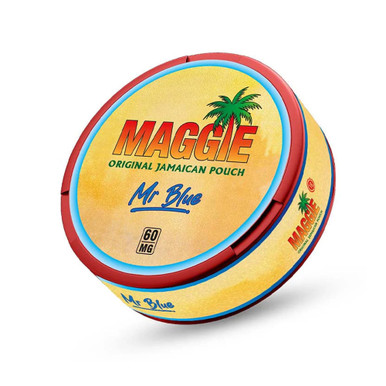
The Maggie brand page holds seven listings, and our record names six of them as siblings to this one: Fruit Punch, Grape Soda, Kola, Mr Blue, Summer Fruits and Sweet Plantain. Every single one is listed at £39.90, identical to this page, and our record marks all six as in stock.
Flat pricing across a whole range is unusual enough on our shelves to be worth pointing out. It means swapping between Maggie flavours changes nothing about the order except the flavour: the total does not move, and there is no cheaper or dearer corner of the brand to hunt for. If you buy from this brand regularly that removes a variable from every order you place.
The naming runs to a pattern, as noted above. Several of the range take their names from drinks and the rest name fruits directly. Summer Fruits and Sweet Plantain are straightforward fruit names; Grape Soda, Kola and Fruit Punch borrow from drinks; Mr Blue names nothing in particular and we hold no tag that would let us say what it tastes of, so we will not pretend otherwise. All of them are nicotine pouch listings regardless of what the name sounds like.
Where the flavour tags are concerned, our data across this brand is thinner than the names suggest. This listing carries the single tag cherry. Some of the siblings carry one tag, and at least one carries none at all, which means our shelves cannot file it under any flavour grouping. We are not going to assign tags from product names to fill the gaps. The brand page is the place to see the whole range, and each product page states what our record holds for that listing.
What people keep alongside this one
Most people who buy pouches regularly keep more than one flavour in the house, for the ordinary reason that a taste you have had continuously for a fortnight stops registering as a taste at all. A dark sweet cherry is a distinctive flavour and it tires faster than a neutral one does.
The usual approach is to hold something with no overlap at all. Within the brand, the Sweet Plantain can at £39.90 is about as far from dark cherry as the range goes, and the Mr Blue listing at the same price is the range's wildcard since we hold no flavour tag against it. Outside the brand, the Pablo blueberry, cranberry and cherry can at £3.85 is the cheapest way on this page to keep a second berry option to hand, and the Velo cherry can at £4.19 is barely more.
Two practical notes on running more than one flavour. First, keep them visibly apart. Cans in this format look near-identical from above and the lid print is all that distinguishes them, so the most common complaint about rotating flavours is picking up the wrong tin rather than anything to do with taste. Second, if you keep both the 16mg and 60mg versions of this listing in the house, that same warning applies with more force, because those two cans will look more alike than any two different flavours do. The printed figure on the lid is the only thing telling them apart, and it is worth reading it every time rather than reaching by memory.
Keeping a can in good order
Storage is undemanding and mostly a matter of not doing anything obviously wrong.
Keep the lid properly shut between pouches. The lid is the only barrier between the contents and the air, and a can left open on a worktop overnight will not be in the same condition in the morning. Pouches in these tins are drier than they look and drying out further is the usual way a half-used can deteriorates.
Keep cans out of direct sunlight and away from anything warm. A car dashboard in summer, a windowsill and a shelf above a radiator are the same mistake in three different rooms. A drawer, a cupboard or a bedside table is fine. Nothing here needs refrigeration and we are not going to suggest it, because our record says nothing about storage temperature and inventing a guideline is exactly the failure this page is written to avoid. The manufacturer's labelling on the can is the authority on storage, as on everything else printed there.
If there is a date marking, it is on the packaging rather than in our system, so read the can rather than asking us to confirm one. And the tin, opened or not, belongs out of reach of children and pets. That is a condition of having it in the house rather than a tip about tidiness.
Choosing between the two versions
The listing gives you one decision to make and it is between two variants: 16mg and 60mg, both at £39.90. Price is not a factor, because the price is the same. Flavour is not a factor either, as far as our record goes — one tag, cherry, against the listing as a whole.
So the only difference between the two variants that we can point to is the declared figure on the label, and as set out above, we cannot tell you which of those suits you. That is not evasion. It is the one question on this page that a shop giving an answer would be doing something it should not.
What we can do is state plainly what is and is not true about the choice. Neither variant is the standard version and neither is the special one. The 60mg version is not an upgrade, not a step forward and not what the 16mg version leads to. They are two label figures on two versions of one flavour, filed on the same page at the same price. If you already know which figure you buy, this listing has it; if you do not, that is not a gap this page can fill for you.
On pack size there is no choice to make either, because our record does not state one. The pack size field on this listing is empty. We cannot tell you whether £39.90 buys a single tin or several, and we are not going to guess. If that matters to your decision — and it reasonably might, at this price — the listing page itself and the packaging are where the answer lives, and asking before you order is sensible.
Ordering, the age check, and delivery
This listing is marked in stock, so ordering it works normally. Both variants sit on the same page at £39.90 and the strength is selected on the listing rather than on separate pages.
Every nicotine listing on the site is sold only to adults aged 18 or over who already use nicotine. We operate an age check at checkout and ID may be requested on delivery. Where it is requested and no adult at the address can produce it, the parcel goes back rather than being left. That applies to every order regardless of history, and no account status skips it.
Delivery costs, carriers and timings are kept on the delivery information pages, which is where they stay current. A delivery paragraph written into a product description goes stale quietly and misleads people for months afterwards, so we do not write one here. Returns follow the standard policy, with the unavoidable caveat that an opened can cannot be resold — which is the structural reason we suggest a cheaper listing in the same flavour family when you are testing unfamiliar territory rather than a full-price one.
For anything about a specific order rather than about the product, the site's contact route is the right one. We cannot answer order questions from a product page.
Where this page sits in the catalogue
Three shelves hold this listing. The extra strong grouping holds it on the declared figures, among 98 listings. The seven Maggie listings hold it by brand. The cherry shelf holds it by fruit, among 20. Which route you use depends on whether you shop by figure, by brand or by taste, and all three lead back here.
Above those sit the wider hubs. Everything we stock is the whole catalogue in one view and takes filters for strength, brand and flavour together, which is usually faster than working one shelf at a time. Two brand hubs come up repeatedly in the comparisons above and are worth knowing directly: the Cuba range, where the Cuba dark cherry can lives, and the Pablo range, which is a deep lineup with several of the lowest headline prices in this comparison set.
The two remaining strength shelves, the medium band and the strong band, are the other filing categories, and between them and the extra strong grouping the whole catalogue is covered. Again: filing categories, built from declared numbers, and nothing more than that.
Questions we are actually asked
Does this contain alcohol, or have anything to do with it?
No. The words tonic wine in the name are part of a borrowed flavour reference, in the same way that Grape Soda and Kola in the same range borrow from drinks. The name signals a flavour direction — a dark, sweet cherry — and says nothing about what is in the can. This is a nicotine pouch listing. Nothing on this page connects the product to alcohol and it should not be read as doing so.
Is this something you consume like a drink?
No. It is a pouch product in a tin, used the way every other pouch listing on this site is used: one goes under the upper lip and stays there, and the used one goes in the well under the lid. The drink reference is confined entirely to the name. If the name is what brought you here, it is worth reading the format section above before you order.
Why are two strengths shown on one page?
Because the listing has two variants, 16mg and 60mg, both at £39.90. Those are the figures declared and printed on the two versions of the can. We show both because both exist. The page is filed under the extra strong band on the basis of the range it spans, which is a filing convention rather than a description of each variant.
Which strength should I get?
We cannot tell you, and we are not going to try. Recommending a nicotine strength to an individual is advice we are in no position to give, and there is no version of the answer that would be responsible coming from a shop. Both variants cost the same £39.90, so price is not steering the decision either way. A higher number is not better, is not an upgrade and is not a target of any kind.
How many cans do I get for £39.90?
We do not know. The pack size field on our record for this listing is empty, which means we hold no figure for it. We are not going to estimate, because you would use the estimate to judge whether the price is reasonable and our guess cannot carry that. The packaging and the listing page are where to establish it, and it is a fair thing to ask about before ordering.
How many pouches are in a can?
Also not something we hold. The count is printed on the can and the packaging is the authority for it. The same goes for pouch weight and the exact dimensions of the tin. Where our data is silent we say so rather than filling the gap, and on this listing our data is silent on both the pack size and the portion count.
What does it taste of, exactly?
Our record holds one tag: cherry. From the tag and the name, the direction is dark and sweet rather than fresh and sharp, with a faint bitterness underneath. That is as precise as we can be honestly, because a one-word tag is genuinely all we have. A more detailed tasting note from us would be invention dressed up as information.
Is it the same as the other dark cherry cans you stock?
No, and we cannot tell you how they differ in taste. Cuba Black Cherry and XQS Black Cherry are separate products from separate brands with their own records, both at £39.90. They share a flavour tag with this listing and that is the extent of what we can say connects them. Two cans sharing a tag is not evidence they taste alike.
What is in the pouches?
We do not publish ingredient, composition or technical information for this or any other listing. The manufacturer's labelling on the can carries it and is the authoritative source. This is a site-wide position, not a gap specific to this page, and we will not paraphrase a label we did not write.
Do the Maggie flavours all cost the same?
The six our record names do — every one is listed at £39.90, the same as this page, and all six are marked in stock. The brand page shows seven listings in total and we are not going to assume the seventh matches, so check that one on its own page. Consistent pricing across a range makes swapping flavours simpler, since the order total does not change.
Is anything in your cherry comparisons unavailable?
One. Iceberg Cherry Apricot Gum at £39.90 is marked out of stock on our record, so although it is the most unusual cherry pairing in the set it is not orderable at present. Everything else named in the comparison section is marked in stock at the time of writing, and each product page carries its own current status, which is the one to rely on.
Can I try it before committing?
There is no way to sample a pouch flavour without opening a tin, which is a limitation built into the product rather than into our returns policy — an opened can cannot be resold. The practical workaround people use is to buy a cheaper listing in the same flavour family first. On the cherry shelf, the Velo cherry listing at £4.19 is the smallest outlay named on this page.
The legal wording, in full
Nicotine is an addictive substance.
Maggie Original Jamaican Cherry Tonic Wine Nicotine Pouches are sold only to adults aged 18 or over who already use nicotine. We operate an age check at checkout, we do not sell to anyone under 18, and ID may be requested on delivery. Where it is requested and no adult at the delivery address can produce it, the parcel will not be handed over.
This product is not a licensed stop-smoking medicine and holds no authorisation of that kind. It is not intended for non-smokers, for anyone who does not already use nicotine, for anyone under 18, or for anyone who is pregnant or breastfeeding. Nothing on this page is medical advice, nothing on it suggests that anybody begin using nicotine, and nothing on it recommends either of the two declared strengths as suitable for any person or circumstance.
Keep the can closed and out of reach of children and pets, and put used pouches in general waste. Every product fact above — name, brand, price, declared strengths, flavour tag and stock status — comes from our own product record for this listing. Where the record holds nothing, including the pack size and the portion count, we have said so rather than estimating, and the manufacturer's labelling on the can is the authority for anything printed on the packaging.
The short version
Maggie Original Jamaican Cherry Tonic Wine is a nicotine pouch listing, not a drink and nothing to do with alcohol; the name borrows from a drink to signal a dark, sweet cherry flavour, and cherry is the only tag we hold. It is £39.90 with two declared strengths on the label, 16mg and 60mg, at the same price, and we cannot advise which suits anyone. Our record does not state the pack size. It sits on the extra strong band, on the Maggie brand page alongside six siblings at the same price, and on the cherry shelf with 19 others. The closest neighbours on price and naming are the XQS dark cherry can and Cuba Black Cherry, both £39.90. Everything we know is on this page, and everything we do not know, we have said we do not know.
More from Maggie
More extra strong pouches
More cherry pouches
Where this sits
Maggie Original Jamaican Cherry Tonic Wine Nicotine Pouches appears in these categories. Browse them, or jump to something close.
You might also like