Home / Medium Strength / UBBS Cherry Nicotine Pouches
UBBS · 11mg · 5-can pack
Read the full guide
UBBS Cherry Nicotine Pouches
£19.95
✔ In stock — ready to ship
100% tobacco-free
Free over £20
Same-day dispatch
Secure checkout
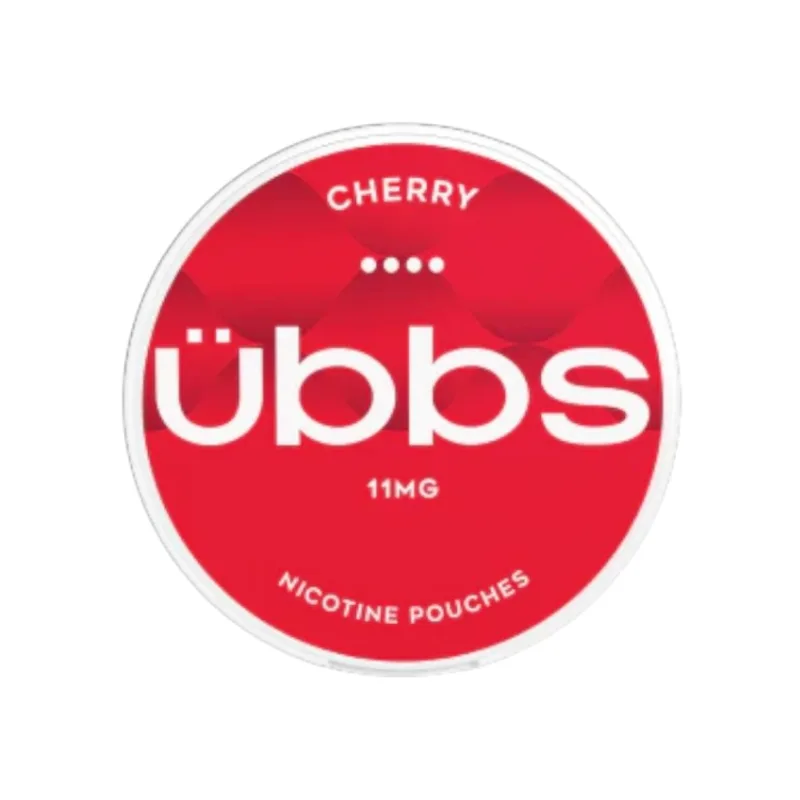
UBBS Cherry Nicotine Pouches. Brand UBBS, product name Cherry, flavour tag in our catalogue cherry. One declared strength only: 11mg. Price £19.95 for a pack of 5 cans, which is £3.99 a can. One image on file, and our record shows the listing available as this is written.
A single-strength listing is worth noticing because it makes this page shorter in one respect than most. There is no variant table to read, no ladder to choose a rung on, and no decision to make beyond whether you want the can. Eleven milligrams is what UBBS declares and the only figure on offer. Plenty of listings on this site present two or three; this one presents one, and that is a genuine simplification rather than a limitation being dressed up.
The full guide to UBBS Cherry Nicotine Pouches
5,339 words on how it eats, who it suits, how to serve it and what to put beside it.
UBBS Cherry: the figures first
The five-can pack is standard across every UBBS listing we carry. It is the middle arrangement on this site — we also handle single tins and packs of ten — and it means the £19.95 headline needs dividing before it can be compared with anything. £3.99 a can is the figure that travels. Put £19.95 beside the £4.19 on a single-tin listing and the single tin looks five times cheaper, which is the arithmetic going wrong rather than a bargain appearing.
The tin is the usual shallow round type: lid off, lid back on, printing on the face carrying brand, flavour and the declared figure, pouches in a ring inside, and a shallow upper compartment for used ones. Five of those come in the pack.
Not held in our record and therefore not printed here: pouch count, pouch weight, pouch format, tin dimensions, manufacturer, country, dates, moisture level, and any flavour description beyond the single tagged word. Blank fields get named as blank on this site. The can's own labelling outranks everything on this page.
Sold to adults aged 18 or over who already use nicotine. Nicotine is an addictive substance. The full compliance wording has its own section near the end.
Cherry, plainly named — and what the name does and does not settle
This can is called Cherry, with nothing in front of it. No "wild", no "black", no "ice". An unqualified fruit name is a meaningful choice in this category and it sets a particular expectation, so it is worth unpacking properly.
The taste a plain cherry name points at
Unqualified cherry conventionally aims at the confected fruit rather than the orchard one — the glacé cherry, the cherry cordial, the red sweet. As a taste that means sweetness arriving first and staying, with body to it rather than thinness: closer to the weight of a syrup than the flatness of plain sugar. Through the middle there is a modest lift of acidity, enough to stop the sweetness turning heavy but not enough to be the main event. And at the back sits the note that makes cherry identifiable at all — a faint kernel character, the almond-adjacent edge that in the real fruit belongs to the stone rather than the flesh. Strip that out and you have an anonymous red sweetness that could be any soft fruit; leave it in and the flavour has an ending rather than a fade.
As an aroma, a plain cherry is forward. Cherry is a volatile, aromatic fruit and a cherry tin tends to announce itself when the lid comes off — sweet, faintly syrupy, slightly sharp, and recognisable immediately rather than after thought. A quiet berry tin does not do that.
Worth being clear on one structural point: cherry is a stone fruit and not a berry, and it does not behave like one. Stone-fruit flavours are rounder through the middle, more aromatic in the nose, and carry that kernel edge at the back which berries simply do not have. If you have come here from the brand's berry listing expecting a variation on a theme, this is a change of direction rather than a change of shade.
The wild cherry question, from this side of it
We stock a can called SYX Wild Cherry at £29.90, and anyone comparing it with this one deserves a straight answer about the difference. Here is the straight answer, which has two halves.
The first half: as label language, "wild" and plain are not the same claim. "Wild" in front of a fruit name conventionally steers away from the confected reading and towards the darker, less domesticated one — smaller fruit, less sugar, more acid, more aromatic depth, and a woody or faintly bitter edge that the sweet-shop version has had bred out of it. So on names alone you would expect this can to be the sweeter and rounder of the two and the SYX can to be the sharper, drier and more aromatic. That is what the words conventionally do.
The second half, which matters more: our catalogue records both cans with the identical flavour tag — cherry — and holds nothing that would distinguish them. No tasting note, no sweetness or acidity figure, no manufacturer flavour statement, nothing. Both sit together on the cherry shelf among its twenty listings, filed without any distinction between the two namings. So the expectation set out above is an expectation drawn from how words are used on labels, and we cannot confirm that either can delivers it. Whether SYX has actually built a darker cherry, or whether "Wild" is doing decorative work on a lid, is not something our data answers, and we are not going to assert it in either direction.
The differences we can stand behind between the two are the recorded ones: two different brands, 11mg here against 6mg and 12mg there, a five-can pack at £19.95 here against ten cans at £29.90 there — £3.99 a can against £2.99. Those are facts about the listings. The flavour nuance is a reasonable guess about the contents, and it stays labelled as a guess.
For completeness, the shelf holds a third naming convention too. ZYN's black cherry can at £19.99 and the XQS black cherry listing at £39.90 both use "black cherry", which conventionally points at dark and sweet rather than dark and sour — nearer the wild reading than the glacé one without being the same target. And the cherry can in Cuba's Black line at £39.90 is a different trap again: there "Black" is the name of the product line and "Cherry" is the flavour, so the two words are not one phrase at all. Four namings, one tag in our system. That is the true state of the information, and it is why the twenty-can cherry shelf rewards reading the lids rather than trusting the filing.
Storage: heat, air, moisture, and keeping five cans usable
The longer of this page's two main sections is storage, which sounds like a footnote and is not. A can kept badly is a worse product than the same can kept well, and with a five-can pack there is more of it to get wrong.
Dry pouches and moister ones behave differently
Pouches are not uniform in how dry they are. Some are made distinctly dry, and the material inside stays loose and powdery in the tin. Others are made noticeably moister and feel softer and more compact in the hand. This is a real variation within the format and it has consequences for storage: a drier pouch has less to lose to evaporation but is more prone to going dull as its aromatic top notes escape, while a moister one changes texture more obviously if it dries out, becoming firmer and less pleasant to hold in place.
Our record does not state which of the two this listing is. There is no moisture field, we hold no manufacturer specification, and we are not going to infer it from the brand's other cans or from a photograph. What follows therefore applies to the format broadly, and the can's own labelling takes precedence if it says something specific.
Heat is the main enemy
Warmth does more to a can than anything else on this list. It drives off the aromatic part of a flavour, and in a cherry can the aromatic part is carrying most of the identity — the sweet, slightly sharp lift you notice when a lid comes off is exactly the fraction that goes first. A heated can does not become weaker in any sense worth discussing; it becomes vaguer, which for a flavour that depends on being recognisable is arguably the worse outcome.
In practice: keep the pack somewhere cool and stable. The back of a cupboard is right. A windowsill in summer, the top of a warm appliance, a radiator shelf and the glovebox of a parked car are all wrong, and the glovebox is the classic mistake because a car in July gets far hotter than people estimate. With a five-can pack the cost of that mistake is five times what it would be with a single tin.
Air, and the discipline of the lid
An unopened tin is sealed and holds its condition well. An opened one is a container with a lid, and the lid is the whole of the technique: press it properly closed every time, not most times. A lid left resting ajar leaves dry pouches sitting in open air, and what escapes is the top of the flavour rather than the base of it. The result is a can that tastes flatter and less specific than the last one you opened, and the explanation is almost always the lid rather than the product.
This is the practical argument for opening a five-can pack one tin at a time. A pack broken into at random ends up with three tins part-used simultaneously, each quietly losing its top notes, and by the time you reach the last of them none is reading as intended. Working through them singly costs nothing and is the difference between five good cans and five mediocre ones.
Light, damp, and the things people try
Direct sunlight is worth avoiding for the same reason warmth is, and a sunlit shelf is warm as well as bright. Damp is a smaller issue but not nothing: a bathroom cabinet is a humid place and not a sensible home for a pack. Keep tins upright, which keeps the contents settled and stops loose material collecting in the catch compartment.
Two things people try that are not worth doing: refrigerating and freezing. Neither is called for, both introduce condensation when the tin comes back to room temperature, and condensation is the one thing genuinely capable of ruining a dry pouch. There is also no need to decant pouches into another container — the tin is the correct container and the catch lid is part of why.
The tin that travels
If one can lives in a coat or a bag while the other four stay home, accept that the travelling one has a harder life: warmer, handled more, opened in a hurry, and lidded carelessly more often. That is fine, and it is better than dragging the whole pack around. If your carried tin ever seems duller than the one you last opened at home, the storage is the likely explanation rather than a bad batch.
Our honest limit on this subject
We hold no manufacturer storage instruction for this listing and no expiry or best-before information. Everything above is general practice for the format, offered because it is genuinely useful, and none of it is an official direction from anyone. If the can carries storage wording, follow the can.
The format in practice
A pouch sits between the upper lip and the gum, off to one side. It goes in dry, softens a little, stays where it is put, and is neither chewed nor swallowed. Moving it across to the other side during use is ordinary. Most people find the opening minutes the most noticeable — both the taste and the simple presence of the object — and stop registering it shortly after.
Flavour follows an arc rather than a plateau: loudest at the start, steadier through the middle, thinner at the tail. With a cherry can the tail is the revealing part. A well-built cherry keeps its kernel edge and some acidity to the end; a thin one collapses into unspecified sweetness halfway through. That is the single most useful thing to attend to when comparing two cans whose tiles read identically, and it is why the differences between cherry cans show up late rather than early.
How long anyone keeps a pouch in varies far too much between individuals for us to publish a number. Some people are done in ten or fifteen minutes, others considerably longer, and plenty vary it without thinking. A figure printed by a shop starts to look like an instruction, and instruction on this subject is not ours to give. Flavour is not a reliable clock either, since the taste fades well before anything else changes.
The catch compartment in the lid is for used pouches, and it is the most quietly useful feature of the design: it means a used pouch has somewhere to go when no bin is to hand. Empty it into a bin at the first opportunity. Used pouches do not go down a sink or a drain and they do not go on the ground. Wash your hands before handling pouches, keep the lid shut between uses, and do not leave an open tin within anyone else's reach — a pouch can is a small, ordinary-looking object and it is not suitable for anyone under 18 or for anyone who does not already use nicotine.
The 11mg figure, and what a figure is
Eleven milligrams is a declared label figure: the manufacturer's own statement, printed on the tin, reproduced here unchanged. We do not test it and we do not convert it into anything that sounds more meaningful. It identifies the product reliably. It does not predict how the can will read to any particular person.
Two things follow from there being only one figure. The first is that this listing needs no internal decision — there is no ladder here, so the choice is binary: the can or not the can. The second is that 11mg is a slightly unusual number to see on a lid. A great deal of our catalogue runs on sixes, tens, twelves and twenties, and UBBS has chosen eleven. We have no explanation for that and are not going to invent one. It is the declared figure and it is printed accurately.
We cannot advise whether this strength suits you. We do not know what you already use, we have no way of finding out, and no honest reasoning connects a number on a tin to a recommendation for a named individual. Nor will we imply an answer by calling 11mg moderate, sensible or a good middle — those words smuggle in a judgement we have no standing to make. It is a figure. You are the only person with the context to read it.
On our filing: this listing sits on the Medium Strength shelf with 135 others, placed there on its 11mg figure. Since it has only one figure, the shelf and the can agree for once — which is not true of every listing, because we file multi-strength listings on their highest number and a shelf name therefore describes the top of a range rather than everything inside it.
Moving between cans on our shelves: what changes and what does not
The second main section is about switching between listings, because almost nobody buys one can forever and the category makes changing harder than it looks.
What genuinely changes: the declared figure means less across brands than within one
Within a single listing, a strength ladder is internally consistent — a brand's 6mg and 12mg are built in relation to each other. Across brands, two cans carrying the same printed number are two separate manufacturers' declarations about two separately built products, and the figure is not a common currency. This can's 11mg and another brand's 11mg are not interchangeable claims, and treating them as equivalent is the most common error people make when they change brand. We publish the figures because they are facts. We do not present them as a scale you can move along between manufacturers, because they are not one.
What changes more than people expect: the physical format
Pouch size and moisture vary between listings and they affect the experience of a can substantially — how it sits, whether it is noticeable, whether it stays put. Two cherry cans of identical declared strength can feel like different products for no reason other than one being slim and dry and the other broad and moist. Our record does not hold format for this listing or for most others, which means this is a variable you can only assess by reading the can or by trying it. It is also the variable most likely to explain why someone got on badly with a can whose flavour they liked.
What changes without warning: what a flavour name promises
Flavour naming is not standardised across this catalogue and there is no body that makes it so. "Cherry" here, "Wild Cherry" on the SYX listing, "Black Cherry" on two others and "Cherry Cola" on another are five different naming decisions by five different brands, and our single-word tagging flattens most of that. Moving between cherry cans is therefore not a small step. Fumi's Chilled Cherry at £27.90 and Velo Cherry Ice at £4.19 add a cold register that changes the fruit rather than accompanying it — the sweetness gets pushed back, the entry sharpens, the finish reads longer. Killa's Cherry Cola at £33.50 brings a root-and-spice bitterness in behind the fruit, which is a far more assertive use of bitterness than a kernel edge. The 77 cola-and-cherry can at £39.90 attempts the same pairing from another direction, although our record shows that one unavailable at present, so read it as a comparison rather than an option.
What changes most: the money, once you divide it
Per-can cost across the cherry shelf spans a wide range and the headline prices conceal it entirely. This listing is £3.99 a can in a pack of five. The SYX can is £2.99 in a pack of ten. Velo's is £4.19 for what is plainly a single tin. The XQS and Cuba cans sit at £39.90 a listing and their pack arrangement is stated on their own pages, not here — we are not going to compute a per-can figure for a pack size our record does not give us. The rule that survives all of this: compare per can, and get the pack arrangement from each product page before comparing anything at all.
What does not change at all
Several things stay constant whichever can you move to, and they are worth stating because they are the parts people stop checking. The physical routine is the same across every listing we sell. The tin design and the catch lid are effectively universal. The age restriction is identical on every page, and so is the ID check on delivery. Our inability to advise you on strength does not vary by brand — it is not a UBBS-specific silence. And the honest limits of our data travel with you: we hold no pouch counts, no origins and no tasting notes on the next can either. Changing listing changes the product; it does not change what a shop is in a position to tell you.
A practical way to change
If you are moving away from this can, the cheapest sensible method is to change one variable at a time and to do it on the smallest pack available. Change flavour while holding brand and format steady — the UBBS range below is built for exactly that — or change brand while holding flavour steady, which is what the cherry shelf offers. Changing brand, flavour, format and declared figure simultaneously and then trying to work out what you did not like is a common and expensive mistake, and the single tins on our shelves exist partly to make it avoidable.
Where this can sits in the UBBS range
We carry twelve UBBS listings and all of them are £19.95 for five cans, so within this brand cost is fixed and the only variables are flavour and declared figure. Six are set out here; the UBBS brand page holds the full twelve, and the gap between those numbers is flagged so the six below are not mistaken for the whole range.
The cold listings are three and they are not interchangeable. UBBS Peppermint at £19.95 is the rounder, sweeter mint; the spearmint can at the same price is the softer and more herbal of the two mints; and UBBS Menthol, again £19.95 is the most direct cold of the three, menthol being a single assertive character rather than a herb note with sweetness around it.
Two listings sit outside both fruit and mint. UBBS Cola Ice at £19.95 is a cola character with a cold edge laid over it — caramel-and-spice rather than fruit — and it is the nearest thing in the range to this cherry can in terms of sweetness while being nothing like it in flavour family. UBBS Coffee at £19.95 is the range's genuine outlier and the only listing here declaring 4mg, low enough that it files on a different strength shelf from everything else the brand gives us. It is dark, bitter and roasted with no fruit sweetness at all.
The closest thing to a sibling for this can is UBBS Peach Passion at £19.95, which keeps the sweet aromatic character and moves from stone fruit into stone-fruit-and-tropical. It is the listing in this set someone who likes this one is most likely to get on with, on flavour family alone. The brand also lists a berry can, which our record currently shows as unavailable — worth knowing before you go looking for it.
Cans people keep beside a cherry one
Rotation is a real pattern: a flavour met constantly stops registering as a flavour, and a second can that reads differently keeps both of them interesting. This is about variety in what you already buy, not about buying more.
The usual second can is a cold one, because it is the largest available contrast. Edge Spearmint at £14.95 is the least expensive cold listing in this comparison set and Klint Arctic Mint at £36.90 the dearest, with the UBBS mints sitting between them at £19.95 if you would rather keep the brand and the pack size constant.
Staying in cherry and changing only the temperature is the other common move, and the Velo cherry tin at £4.19 is the cheapest way to test it because it is a single can rather than a pack. If you would rather browse whole collections, the Cuba range and the Pablo listings are two of the larger brand shelves, and the full catalogue is the place to start from nothing. The strength shelves are the third route: the Strong shelf holds 132 listings and Extra Strong sits above it, both filed on top declared figures, and both better arrived at deliberately than by drifting up from a medium-strength page.
Choosing: pack size, since strength is fixed
With one declared figure there is no strength decision to make on this listing, which leaves pack size and price as the only real variables — and they are worth thinking about properly.
Five cans at £3.99 each is a middling commitment. It is more than a trial and less than a stockpile, which makes it a reasonable size for a flavour you have not had before: enough to know whether you actually like it rather than whether you liked the first tin, and not so much that being wrong is expensive. Against the ten-can packs on our shelves it is the smaller bet at a higher per-can cost, and against the single tins it is the larger bet at a lower one. That trade-off is the whole of the decision, and which side of it you want is not something we can work out for you.
One honest note on the arithmetic: a lower per-can figure obtained by buying more cans is only a saving if the cans get used. Ten of something you tire of is not cheaper than five of something you do not.
Ordering, delivery and the age check
Ordering is straightforward. There is one strength, so add the pack to the basket and check out; five cans of 11mg arrive. Nothing needs configuring and there are no variants to get wrong.
This is an age-restricted product sold only to customers aged 18 or over, and photographic ID may be requested on delivery. If that check cannot be completed the parcel does not get handed over. Order in your own name, to an address where an adult can take delivery, and do not arrange for a nicotine product to be left with a neighbour or in an unattended porch.
Delivery windows, carriers and charges are set out on the site's own delivery pages, which are the authoritative source; paraphrasing them here would only risk a contradiction. Stock is the thing a product page should carry, and our record currently shows this listing available — the tile on the brand or flavour shelf is where to check whether that still holds.
Where this page sits on the site
Three shelves lead here. By declared strength, the medium shelf and its 135 listings. By brand, the twelve UBBS listings together. By flavour, the cherry shelf and its twenty cans — small enough to read end to end, which is why cherry comparison is practical in a way that comparing across seventy-six berry listings is not.
The hub pages are the broader routes: the whole catalogue, the three strength shelves, and the larger brand collections. The thing to remember about the cherry shelf is the one this page opened with: it files plain cherry, wild cherry, black cherry and cherry-cola listings together without distinguishing them, so the shelf gets you to the right twenty cans and the names on the lids are then all there is to go on.
Questions we get
How is this different from the SYX Wild Cherry can?
On recorded facts: different brand, 11mg here against 6mg and 12mg there, five cans at £19.95 against ten at £29.90. On flavour, conventionally "wild" points at a darker and sharper reading and a plain name at a sweeter, more confected one — but our catalogue tags both simply as cherry and holds nothing that would confirm the contents differ that way. We have told you what the words usually mean and stopped short of claiming it about either can.
Is there a stronger version of this can?
Not on this listing — 11mg is the only figure UBBS declares for it, and there is no variant to select. Other cherry listings on our shelves carry different figures, and those figures are each manufacturer's own declaration rather than points on a shared scale, so they are not directly comparable with this one. We are not going to point you upward, and the shelves are there if you want to look.
Is the £19.95 for one can or five?
Five, which is £3.99 each. It is the most common misreading on the site, usually because the previous page someone looked at was a single tin. Check the pack arrangement on each product page before you compare two prices — a five-can pack and a single tin are not competing figures.
How many pouches are in a can?
Not recorded, so we cannot tell you. With a five-can pack it materially affects how long the pack lasts, so it is a real gap rather than a trivial one, and we would still rather leave it empty than borrow a number from a different brand's tin. The labelling on the can should state it.
Are these dry or moist pouches, and slim or standard?
Our record holds neither moisture level nor format for this listing, and we are not going to infer them from the brand's other cans. Both affect how a can feels in use more than most people expect. The can's labelling is the place to look, and if either is a deciding factor for you it is worth checking before buying five.
Is 11mg a strong pouch?
We are not going to characterise it. Calling a figure strong, moderate or gentle is a judgement dressed as information, and it would also imply a comparison across brands that declared figures do not support. Eleven milligrams is the number UBBS prints on the lid. What it means for you is something only you have the context to judge, and a qualified healthcare professional is the right person for anything touching your own circumstances.
Does it taste like a cherry sweet or like real cherries?
Our record does not say, and the honest answer is that the name points at the confected reading rather than the orchard one — plain cherry flavours in this category generally do. That is an expectation from naming convention rather than a description of the contents, and taste varies between people more than anything else on a product page. We hold no tasting note for this can.
Who makes UBBS, and where does it come from?
Our record carries no manufacturer, no country and no dates, so we publish none. UBBS is a brand name on a lid and says nothing about origin. It would be easy to write something plausible here, and we would rather the gap stayed visible than fill it with a guess.
Can I keep an opened can for a long time?
We hold no expiry or best-before information, so we cannot give you a period. What we can say is that an opened tin loses its aromatic top notes to the air over time and a cherry flavour depends on those notes to stay recognisable, so an old opened can tends to read as vague rather than as anything worse. Keeping the lid properly closed and the tin somewhere cool is the practical answer.
Should I put them in the fridge?
No reason to, and a reason not to: bringing a cold tin back to room temperature invites condensation, and moisture is the one thing genuinely capable of spoiling a dry pouch. A cool, dark cupboard does everything a fridge would and none of the harm. Our record carries no manufacturer storage instruction, so treat that as general practice for the format.
Everything you linked — is it all in stock?
Almost. The 77 cola-and-cherry can is shown as unavailable in our record, and we flagged it where it appears rather than leaving you to find out at the basket. Everything else linked from this page shows as available at the time of writing. Stock moves, so the tile is always a better answer than this paragraph.
Compliance, in full
- An adult product, sold only to customers aged 18 or over, and intended for adults who already use nicotine.
- Nicotine is an addictive substance.
- This is not a licensed stop-smoking medicine, and it is not offered, described or intended as one. It is not intended for non-smokers, for anyone who does not already use nicotine, for under-18s, or for anyone who is pregnant or breastfeeding.
- We make no health or medical claims for this product, in any direction, anywhere on this page.
- Photographic ID may be requested on delivery, and without it the parcel will not be handed over.
- Keep cans away from children and from anyone who does not already use nicotine. Used pouches go in a bin.
- For anything concerning your own circumstances, a qualified healthcare professional is the right person to ask. We are a shop and we cannot advise you.
Last word
UBBS Cherry is a five-can pack at £19.95 — £3.99 a can — at a single declared 11mg, tagged cherry, filed on the medium shelf, one of twelve UBBS listings that all cost the same, and currently showing as available. Single-strength, fixed price, no configuration: it is one of the simpler listings we carry.
The complications are in the naming rather than the product. Our shelf files four different cherry conventions under one word, we hold no tasting note for any of them, and we have told you where the expectation set by a label stops and where our evidence stops — which is earlier than most shop pages would admit. The tin in your hand is the better authority, and its own labelling outranks every sentence above.
More from UBBS
More medium strength pouches
More cherry pouches
Where this sits
UBBS Cherry Nicotine Pouches appears in these categories. Browse them, or jump to something close.
You might also like