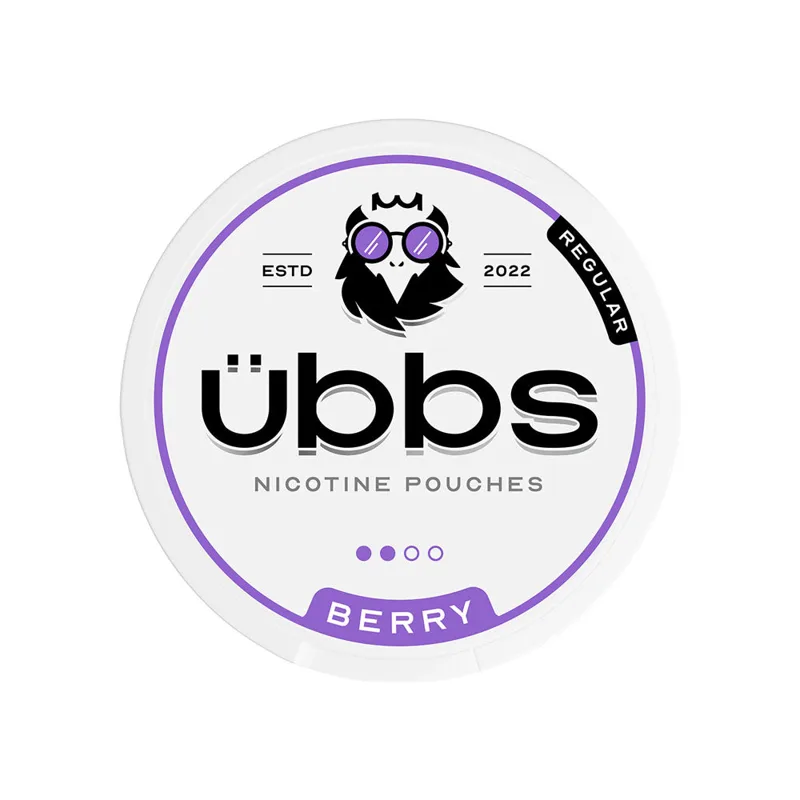
Home / Medium Strength / UBBS Spearmint Nicotine Pouches
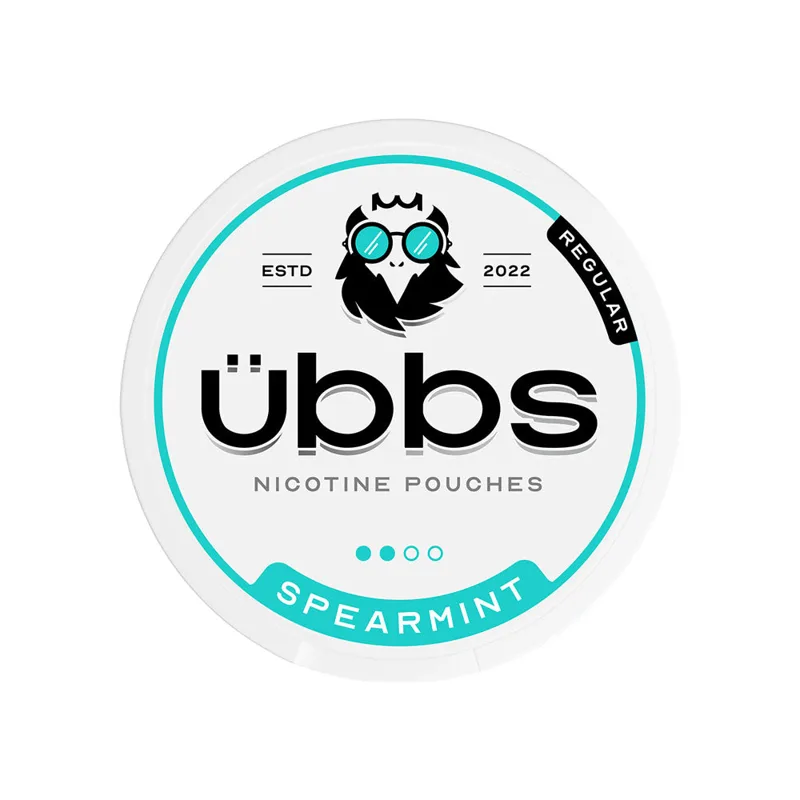
UBBS · 6mg–11mg · 5-can pack
Read the full guide
UBBS Spearmint Nicotine Pouches
£19.95
✔ In stock — ready to ship
100% tobacco-free
Free over £20
Same-day dispatch
Secure checkout
UBBS Spearmint Nicotine Pouches is a 5 can pack at £19.95 — £3.99 a can — offered in two declared strengths, 6mg and 11mg, both at that same price. The flavour tag in our catalogue is the single word mint. One image on file. The listing is in stock as this is written, which is worth stating at the top since a good deal of this catalogue is not.
Two declared figures is the middle of the three arrangements UBBS uses with us. The brand's peach and passion listing carries one figure; its menthol and peppermint cans carry three each. This one sits between them with a pair, and both of them land it on our medium-strength shelf, which runs to 135 listings and is the largest of the three strength bands we sort declared figures into.
The full guide to UBBS Spearmint Nicotine Pouches
4,979 words on how it eats, who it suits, how to serve it and what to put beside it.
The listing, as our record has it
The blank fields, listed rather than glossed over: pouches per can, pouch weight, pouch format, tin dimensions, a producer, a country, any date, and any flavour description beyond the one tag. None of those exist in our record. The can's printed labelling answers all of them and it arrives in the box, which is an unhelpful answer before you order and a complete one afterwards.
Spearmint as a flavour word
Spearmint occupies the soft end of the mint family. As a flavour name it describes something rounder and sweeter than its relatives — leafy, faintly grassy, more herbal than confectionery, with a gentler cooling character rather than an immediate cold edge. The aroma associated with it is closer to a crushed leaf than to a lozenge, and it tends to read as warmer than the word "mint" alone might suggest, in the sense that the sweetness arrives alongside the cool rather than behind it.
It is the mint most people describe as mild, though mild is a slippery word and worth unpacking. Spearmint is not usually less flavourful than its relatives; it is less sharp. The distinction matters because someone looking for a quieter can and someone looking for a less pronounced flavour are asking for different things, and spearmint answers the first question more reliably than the second.
Against the other two mints in this range
UBBS sells three mint-tagged cans through us and, as flavour names, the three are not interchangeable. UBBS Peppermint at £19.95 names the sharp, brisk, faintly peppery corner of the family — the cold with an edge on it — and it is the one of the three that reaches a declared 20mg. UBBS Menthol, also £19.95, names the cooling character itself, which conventionally means the cold presented plainly, without either the confectionery sharpness of peppermint or the leafy sweetness of spearmint; it runs to 14mg. This can stops at 11mg.
So on the brand's own naming, the trio maps onto three recognisably different points: sharp, plain-cold, and soft-sweet. That is what the three words mean in ordinary flavour language, and it is the most that can honestly be said.
Where our information runs out, stated bluntly
All three of those cans carry the identical flavour tag in our catalogue: mint. One word, the same on each. There is no tasting note behind it, no cooling scale, no intensity figure, no ingredient detail and no comparison of any kind. On our data alone, the three are distinguishable only by the name the manufacturer printed on the lid and by the ladder of declared figures each one carries.
We are not going to invent a difference to give three pages three personalities. If you want to know how this brand's spearmint actually compares with its peppermint on the palate, the only instrument that will tell you is your own, with both cans to hand — and we can tell you they cost the same and come in the same five-can arrangement, so the experiment costs nothing but the second pack. Where a shop claims more precision than its records contain, the precision is decoration.
Storage, condition and what ruins a can
This is the part of owning a five-can pack that actually determines whether the fifth can is as good as the first, and it gets a long section here because it is practical, checkable and nobody writes it down.
Dry pouches and moist pouches
Cans in this category come in two broad conditions. Some are noticeably dry to the touch and stay that way; others are moist from the moment the lid comes off. The difference is a manufacturing choice and it changes how a can behaves over time: a dry can is mostly at risk of losing flavour, while a moist can is also at risk of drying out and changing texture. Our record does not tell us which of the two this listing is, so this page will not tell you either — but the can will announce it within seconds of opening.
Why it matters practically: the storage advice below is the same for both, but the failure mode differs. A dry can that has been badly kept goes flat. A moist can that has been badly kept goes stiff and tacky, and the flavour thins at the same time. Knowing which sort you have tells you what to look for.
Heat, which is the main culprit
Heat does more damage than anything else and it does it invisibly. A tin left on a dashboard, on a radiator shelf, on a sunlit windowsill or on top of a warm appliance will lose flavour and change in texture while looking completely normal from the outside — there is no bulge, no discolouration, nothing to warn you until you use one. The car in summer is the single most common way a perfectly good can is wasted, and a glovebox is not meaningfully cooler than the rest of the cabin.
Cool, dark and dry is the whole of the instruction, and a kitchen cupboard away from the oven, a bedroom drawer or a cool shelf all qualify. A windowsill does not, even a north-facing one in summer, and neither does the shelf above a radiator that is only warm for four months of the year — a can that sits there from November to March has had a long slow bake.
Damp, and why a bathroom cabinet is a poor idea
Humidity is the less obvious half of the problem. A bathroom cupboard cycles through steam several times a day, and a tin that is opened and closed in that environment is taking on moisture it was not designed to hold. For a dry can that is straightforwardly bad; for a moist one it is less predictable but no better. A bedroom or a hallway drawer is a better home than any room with a shower in it.
The lid, and what "closed" actually means
A lid that is resting on a can is not a closed can. The most common reason a lid fails to seat properly has nothing to do with the lid: it is the used-pouch compartment underneath it, overfilled to the point where the lid sits proud by a couple of millimetres. That gap is enough to leave the contents effectively open to the air for however long it goes unnoticed, which is usually days.
So the single most useful storage habit is emptying that compartment regularly — daily is easy to remember, whenever you empty your pockets. It keeps the lid seating, and it stops the can smelling of used pouches rather than of what is printed on the label. A can that has been carried for a week with a full catch compartment smells wrong the moment it is opened, and the flavour you notice first is the wrong one.
Travelling with a can
A tin rides well in a coat pocket or a bag pocket and badly loose in a rucksack with keys, where the lid gets worked partly open by abrasion and the can spends the day ajar. A tight trouser pocket is the other common way a can gets damaged, since the tins are not built to be sat on. If you carry one habitually, a fixed pocket that always holds it is better for the can and better for remembering where it is.
The refrigeration question
Some people keep moist cans in a fridge, and it comes up often enough to deserve a straight answer. Ours is that we do not hold this brand's storage guidance, so we will neither endorse the practice nor dismiss it, and making up a manufacturer's instruction would undermine everything else on this page. Read the labelling on the tin and do what it says. Where the label is silent on refrigeration, a cool dark cupboard is the option nobody argues about.
How to tell a can has had a bad life
The signals are mostly at the point of use rather than on the shelf. Flavour that is noticeably thinner than the same can was a fortnight ago, a texture that has gone stiff or tacky where it was not, a tin that smells of the catch compartment rather than the label — those are the practical indicators. None of them is dramatic, which is why a spoiled can is usually discovered rather than spotted.
The condition a pack arrives in
Storage starts before you have the pack, and that part is outside everyone's control — a parcel can sit in a warm van for a day or on a doorstep in the sun for an afternoon. There is not much to be done about the van, but there is something to be done about the doorstep: taking a delivery in rather than leaving it out is worth more in July than any cupboard you put it in afterwards. This is also one of the reasons couriers cannot leave an age-restricted parcel unattended, which turns out to be convenient for the contents as well as legally required.
If a pack has plainly had a hot journey, there is no test we can offer you and no claim we would make about what heat does or does not do to it. What we would say is that the first can out of the sleeve is the one to judge the rest by, and that a can which tastes thinner than you expected on day one has probably told you something about the journey rather than about the flavour.
The four cans you are not using yet
A five-can pack means four tins sitting unopened while you work through the first. Leave them in their sleeve, in a cupboard, and open one at a time — there is nothing to be gained by breaking all five open, and a sealed can keeps better than an open one by a wide margin. Keeping the sleeve also makes the pack easier to store somewhere sensible, which matters for the other reason storage matters: five cans of an adult nicotine product belong out of reach of children and animals, in a high cupboard or a drawer rather than on a kitchen worktop.
The format in practice
Each pouch is a small sealed portion. It goes between the lip and the gum — the upper lip for most people — and then it stays there, unchewed, unopened and not swallowed. There is nothing to adjust once it is in place, and the first few uses of any new can are mostly about finding the side and position that suit your own mouth, which varies between people far more than between brands.
How long anyone keeps one in is individual. Some take a pouch out after ten minutes, others leave it considerably longer, and the flavour arc is the thing most people use as an informal timer: clearest early, tapering after that. For a softer mint the taper tends to be gradual rather than abrupt. We do not publish a recommended duration, a number per day or an interval between pouches — that is dosage guidance and a retailer has no standing to offer it. The manufacturer's printed instructions cover anything of that kind.
Used pouches go into household waste in a closed bin. Not flushed, not down a sink, not dropped outdoors, and never left on a table, a windowsill or a car console where a child or an animal could reach one. The compartment under the lid is a temporary holder for a handful until you reach a bin, and it is not a storage solution for a day's worth.
The format is quiet, needs no equipment, and leaves nothing behind, which makes it easy to use without anybody noticing. That is not permission. Employers, venues, airlines and transport operators each set their own rules about products of this kind, those rules vary between organisations and countries, and it is for them to state them and for you to check. We do not summarise other people's policies, because we would summarise them wrongly.
What the 6mg and 11mg figures are
They are label information: the figures the manufacturer declares for each variant, reproduced exactly as given. Both variants of this listing cost £19.95 for five cans, so the number on the lid has no effect on what you pay and there is no commercial pressure built into the page in either direction.
Eleven is an unusual figure to see printed, in a catalogue where a great many cans run on sixes, tens, twelves and twenties. We have no explanation for the brand's choice and are not going to construct one — it is simply the declared figure, and it is the same 11mg that appears on the brand's menthol and peppermint listings, making it the common ground across all three of the range's mints.
We cannot advise you on which of the two figures suits you, and we are not going to imply an answer. Not by general rule, not relative to whatever you use now, not after a few questions. A higher declared figure is not a better can; a lower one is not a lesser can. The number describes a declaration on a label and nothing else, and if the question matters in your circumstances it belongs with someone qualified to answer it rather than with a shop.
For orientation only, the shelves above this listing's band are the strong grouping and the extra strong listings. Those bands are a filing convenience of ours so that declared figures can be browsed across brands; they are not an industry standard, and a can sitting near a boundary could reasonably have been filed either side of it.
Moving between cans on our shelves
Almost nobody who uses this format sticks to one listing indefinitely, and the useful question is what actually changes when you move — especially between two cans that both say mint on the lid.
Between one mint and another
Our mint shelf holds 148 listings, which makes it the largest flavour grouping we run and the least precise. It contains cans that announce an arctic character in their names and cans named for the softer end of the family, all under one heading, so two listings from the same shelf can be a long way apart. Moving "within mints" is not a small move, and the shelf will not warn you which direction you are going in — only the lid names will.
Among the listings our pack puts nearest this one, Velo Bright Spearmint at £4.19 and Edge Spearmint at £14.95 are the two that name the same corner of the family as this can, which makes them the nearest comparisons on naming alone. White Fox Double Mint at £34.90 and SYX Cool Mint at £29.90 name the broader middle, and Klint Arctic Mint at £36.90 and XQS Arctic Freeze at £39.90 both announce the cold end plainly. All are in stock.
What a declared figure does not carry across
The number is set by each manufacturer by their own method, and our catalogue has no basis for treating one brand's figure as equivalent to another's. Reading across as though they share a scale is the commonest mistake in this category and we would rather say so than let the strength shelves imply otherwise. The shelves sort; they do not translate.
What the price does not tell you either
Our pack carries each neighbouring listing's price and stock flag, and not its can count. So Nordic Spirit Frosty Berry at £4.49 looking dramatically cheaper than this £19.95 pack, and 77 Apple Mint at £39.90 looking dramatically dearer, are both comparisons we cannot actually make — a £39.90 pack holding ten cans is cheaper per can than this one, and a £4.49 listing holding a single tin is dearer per pouch than it looks. Two clicks into each page settles it. An inference from a headline price settles nothing.
The format may change, and often does
Slim against wider, dry against moist — both vary by brand and sometimes within a brand, and we do not hold the field for any of these listings. Physical format is where people most often notice a difference when they move between brands, and it is the reason the sensible way to try something unfamiliar is alongside something familiar rather than instead of it.
What does not change at all
The handling is identical everywhere: a sealed portion, placed, left alone, removed, binned. The lid-and-compartment arrangement is close to universal. The storage rules in the long section above apply to every can on our shelves regardless of brand or price. And the legal position does not vary by so much as a word between listings — 18 or over, age verified at the order, ID possibly requested at the door.
Two neighbours that are not mints at all
For completeness, the pack puts two deliberately different listings beside this one. Fumi Dark Spice at £27.90 goes in a dark, spiced direction — about as far from a leafy mint as our shelves reach — and Pablo Silver Edition Blueberry Peach Ice at £39.90 stacks two fruits over a cold base. Both are available, and the wider Pablo shelf is one of the larger brand groupings we carry if that second one interests you.
Where this sits in the UBBS range
Twelve UBBS listings sit on the brand's shelf, and every one of them is £19.95 for five cans. That uniformity is genuinely convenient: within this brand, the choice is flavour and declared figure, with no price consequence whatsoever.
This can is the softest-named of the brand's three mints and the one with the shortest ladder of the three. Next to those three sits UBBS Cola Ice at £19.95, a cola flavour over a cold base rather than a mint, which is the range's bridge between its cold and sweet halves.
On the sweet side, UBBS Cherry at £19.95 is the stone-fruit listing and UBBS Peach Passion at the same price is the tropical one — filed under tropical rather than under peach, and carrying a single declared 4mg, the lowest figure in the brand's range with us. UBBS Coffee at £19.95 is the roasted outlier and the one can in the range that shares nothing with this page's subject. All of those are currently available; the brand's salted caramel listing is not, which is why it is named here rather than recommended.
Keeping a second can on the go
Two or three open cans is the norm among people who use this format regularly, and the reason is practical rather than indulgent: a single flavour held continuously stops registering, and a contrasting can keeps both distinct. It also means a late delivery is an inconvenience rather than a problem.
If this soft mint is the main can, the usual companion is something that shares nothing with it — the brand's coffee pack at the same price is the in-house choice, and the Fumi dark spice listing is the nearest equivalent from another brand in our pack. For a sweet contrast rather than a dark one, the cherry can and the Pablo blueberry and peach listing are the two nearest options.
If you would rather run two mints, the honest guidance is the guidance already given: our tags cannot separate them, so the lid names are all you have to go on. The Velo spearmint can names the same corner as this one; the Klint arctic listing names the opposite end. The Cuba shelf is worth a look as well, since that range leans darker than most of ours and offers a genuine contrast rather than a variation.
Buying, the age check and delivery
Ordering is short: choose 6mg or 11mg, add the £19.95 pack, check out. Both variants are the same price and the same five-can arrangement, so the only thing your choice changes is the figure printed on the lids.
You must be 18 or over to buy this. Age is verified as part of the order process, and ID may be requested on delivery. Couriers can refuse to hand an age-restricted parcel to anyone unable to produce identification, and they are not permitted to leave one in a porch or with a neighbour, so please do not put a driver in the position of having to say no.
Buying a five-can pack and passing cans to anyone under 18 is an offence rather than a favour. This is sold to adults who already use nicotine, for their own use, and that is the entirety of who it is for.
Where this page sits on the site
Three filings locate this listing: the mint flavour shelf at 148 listings, the medium strength grouping at 135, and the UBBS page holding the brand's other eleven cans. The full catalogue sits above all three and is the right place to start when you have not yet decided what you are narrowing towards.
Stock changes week to week, and a shelf tile carries the live availability flag while a product description carries whatever was true when it was written. If you are checking whether something can be ordered today, the shelf is the faster and more reliable answer.
Questions we are asked about this can
How is this different from your menthol and peppermint cans?
On our data, it is not — all three carry the identical single tag mint, with nothing behind it, so the only stateable differences are the name on the lid and the ladder of figures. This one offers 6mg and 11mg; the menthol listing adds a 14mg and the peppermint a 20mg. As flavour words, spearmint is conventionally the softer and sweeter of the three, but that is what the word means rather than something we know about this tin.
Is spearmint the mildest mint you sell?
We cannot rank our cans by intensity because we hold no measurement of it for any listing on the site. Spearmint is conventionally the gentler name in the family, and several of our listings announce a colder character in their names, but a name is a naming decision and not a scale. Anybody who has ranked these cans has done it with their own palate rather than from our catalogue.
Is £19.95 the price of one can?
No — it covers all 5 cans, which works out at £3.99 each. It matters most when this page sits beside a listing priced at four or five pounds, because those are very likely single tins and the two figures count different things. Our pack does not carry other listings' can counts, so read each page's own numbers rather than inferring value from a headline.
Which of the two strengths should I buy?
We cannot tell you, and that is a settled position rather than a dodge. A retailer is not in a position to advise anyone on which declared nicotine figure is appropriate for them, and a shop that offers to is overstepping. The listing declares 6mg and 11mg at one price, the label is authoritative on what each means, and the question belongs with somebody qualified.
How many pouches are in a can?
Not held, so not printed. Counts in this category commonly sit in the teens or low twenties and vary by brand and format, but a range is not an answer and you would be planning around a guess. The can carries its own count on the labelling, and with five in the pack, opening the first settles it for all of them.
Are these dry or moist pouches?
Our record does not say, and it is one of the more frustrating gaps because it genuinely changes how a can behaves over time. The storage section above is written to cover both conditions for that reason. You will know which you have within seconds of taking the lid off the first tin.
Does the fifth can taste as good as the first?
It should, if the four you are not using have been kept sealed, cool and dry — which is the entire argument for the storage habits described above. A pack that has lived on a windowsill or in a car through a warm month is a different proposition, and the loss is gradual rather than sudden, so it tends to be noticed by comparison rather than at the moment it happens.
Can I keep a can in the car?
You can, and in summer it is the most reliable way to spoil one. A parked car gets far hotter than the air outside and the glovebox is no cooler than the rest of the cabin. In winter it is a much smaller issue. If a car can is a habit you want to keep, treat the one in the car as the working can and keep the unopened ones indoors.
Who makes UBBS and where?
We do not hold a manufacturer or a country for this listing, so we cannot tell you. Our record carries the brand name, the price, two declared strengths, the pack size, one flavour tag, one image and a stock flag — that is genuinely everything in it. Whatever origin information is legally required to appear will be on the packaging itself.
Are all the listings linked from this page available?
Every product linked above is shown as available in the pack this page was written from. The one UBBS can that is not available is the brand's salted caramel, which is why it is mentioned in the range section rather than offered as an alternative. Availability moves faster than descriptions get rewritten, so treat a shelf tile as the current answer.
Can I use one at work or on public transport?
That is for your employer and the operator to state, not for us, and the rules differ between organisations and countries. The format being unobtrusive is not the same as being permitted. Check the policy that applies where you are rather than relying on a shop page to have summarised it correctly, because we have not tried to.
Can I buy a single can instead of five?
Not on this listing — five cans at £19.95 is the only arrangement our record holds for it. Some listings elsewhere are priced like single tins; the Velo spearmint at £4.19 and the Nordic Spirit frosty berry at £4.49 both sit in that bracket, though their own pages are where you should confirm what each price actually buys.
Does the pack have a date on it?
Our record holds no dates of any kind for this listing — no production date, no best-before, nothing. If the tin carries one it will be printed on the can, which is the only place to look. We are not going to state or imply a shelf life we have no information about, and the storage advice above is written on the general principle that cool and sealed is better than warm and open rather than on any figure.
Should I decant them into something smaller?
People occasionally ask about moving a few pouches into a smaller container for a night out. The obvious practical objection is that whatever you decant into is not sealed the way the tin is, so the contents dry or soften faster. The less obvious one is that an unlabelled container holding an adult nicotine product is exactly the thing you do not want lying around a house or a bag where somebody else might find it. The tin it came in is labelled, sealed and lidded, and it is already pocket-sized.
What do I do with the empty tin?
Tip the used pouches into household waste in a closed bin first. Whether the tin itself can go in your recycling depends on your local scheme and on what it is made of, and your council's own guidance is the only authority on that — we cannot tell you which bin it belongs in where you live.
The compliance notices
This product is sold only to adults aged 18 or over who already use nicotine. Age is verified during the order process and ID may be requested on delivery.
Nicotine is an addictive substance. That applies to the 6mg variant of this listing exactly as it applies to the 11mg, and it is the most important sentence on the page.
UBBS Spearmint is not a licensed stop-smoking medicine, and we make no medical, therapeutic or cessation claim for it of any kind. It is not intended for non-smokers, for anyone who does not already use nicotine, for anyone under 18, or for anyone who is pregnant or breastfeeding. Nothing on this page is medical advice, and nothing on it is addressed to a person who does not already use nicotine.
Keep cans and used pouches out of reach of children and animals, and do not supply the product to anyone under 18. Where our record is silent — and this page has listed several places where it is — the manufacturer's printed labelling on the can governs.
To finish
Five cans at £19.95, £3.99 apiece, in 6mg and 11mg at one price, tagged mint, filed on the medium shelf, in stock. Spearmint as a flavour word means the softer, leafier, sweeter end of the mint family; our catalogue does not confirm where this particular can lands, and we have said so rather than filling the gap with something that reads well.
Keep it cool, dry and closed and the fifth can will be the equal of the first. If you would rather look elsewhere, the brand's other listings are all the same price, the mint shelf is 148 deep, and the whole catalogue is one click away.
More from UBBS
More medium strength pouches
More mint pouches
Where this sits
UBBS Spearmint Nicotine Pouches appears in these categories. Browse them, or jump to something close.
You might also like