Home / Medium Strength / 77 Grape Ice Nicotine Pouches
77 · 10.4mg
Read the full guide
77 Grape Ice Nicotine Pouches
£39.90
✔ In stock — ready to ship
100% tobacco-free
Free over £20
Same-day dispatch
Secure checkout
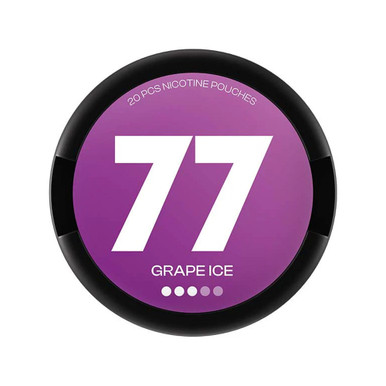
This page describes 77 Grape Ice Nicotine Pouches. The brand is 77, the product name is Grape Ice, the declared strength is 10.4mg, the price on this listing is £39.90, and two flavours are recorded against it: grape and mint.
One thing before anything else, because it changes how you read the rest of this page. This listing is currently marked out of stock. We publish that state rather than quietly removing the page, because a product description is useful whether or not you can put the item in a basket today — you may be deciding whether to wait for it, or working out what else on the shelf resembles it, or simply confirming what you bought last time. All three of those are covered below. What we will not do is imply availability we do not have.
The full guide to 77 Grape Ice Nicotine Pouches
4,915 words on how it eats, who it suits, how to serve it and what to put beside it.
Grape Ice from 77: the listing as it stands
Everything factual here comes from our product record, which carries brand, product name, price, declared strength, flavour and stock, and nothing beyond that. It holds no pouch count, no portion weight, no dimensions, no dates, no manufacturing detail. Where this page needs one of those it will say that we do not hold it, and it will say so more than once, because the alternative is filling a gap with something invented.
The can is a pouch tin of the ordinary sort: shallow, round, a lid that lifts clear and presses back down, branding and the declared figure printed on the top so that the can can be told apart from others without opening anything. That last detail matters more when a can carries a decimal figure, as this one does, because 10.4 is harder to remember than a round number.
This is an age-restricted nicotine product for adults who already use nicotine. The full wording sits in its own section at the bottom of the page.
Grape with a cold note: the taste in two parts
The flavour field for this listing holds two entries — grape and mint — and the product name puts them in a particular relationship: the fruit is the noun and Ice is the modifier. Described as taste and aroma only, that is a fruit flavour with a cold note laid across it rather than a mint flavour with fruit in it, and the difference between those two constructions is the whole character of the can.
The grape half
Grape as a flavouring is not quite the same thing as grapes are. It tends towards the darker, sweeter, slightly confectionery reading of the fruit — full and round rather than sharp, with a distinct perfumed quality behind it that grape shares with very few other fruits. It is closer in family to a blackcurrant than to an apple, and it reads as sweet rather than tart. Where a berry flavouring is usually thin and bright, grape is usually thick and dark. That is the flavour family, described as a category rather than quoted from the maker, because we do not hold a tasting note from them.
The ice half
Ice on a pouch can is a convention rather than an ingredient statement, and with mint recorded as the second flavour on this listing the convention is doing what it usually does: putting a cool, green note across the fruit. As taste, it reads as coolness on the tongue and a slight sharpness at the edges of the grape — it cuts the roundness of the fruit and stops it reading purely as sweetness.
The aroma tells you the same story in the same order. Open a plain fruit can and you get the fruit; open an iced one and the cold note is usually what arrives first, with the fruit behind it. That ordering is often the quickest way to tell an iced can from a plain one without reading the lid.
Why the combination matters when you are comparing cans
Grape appears on our shelves in both forms, and the gap between them is larger than the shared word suggests. Our grape shelf holds fourteen listings at the time of writing, which makes it one of the smaller flavour shelves on the site — grape is a flavour people go looking for specifically rather than stumble into. Because this can also records mint, it appears on the mint shelf as well, which runs to 148 listings and is by a distance the largest flavour category we keep. A can that sits on both is a can that is doing two things at once, and that is worth knowing before you compare it with something that only does one.
10.4mg, and what a decimal on a lid means
This listing carries one declared strength, 10.4mg, at £39.90. The figure is the nicotine content declared by the manufacturer for each pouch, printed on the can and reproduced by us exactly as we receive it. It is a label value. This section explains what the value is; it is not advice, and nothing in it is a suggestion about which figure anyone should be looking at.
The decimal is the first thing people ask about, so: 10.4 is simply the figure the maker declares, and a declared figure does not have to be a round number. Round numbers on other cans are not more accurate or more official than this one — they are just rounder. We publish 10.4mg because that is what we were given, and rounding it to 10mg on this page would be editing a manufacturer's declaration, which is not ours to do.
As a number it behaves like a number: a listing declared at a larger figure carries a larger printed figure, and one declared lower carries a smaller one. That ordering is real and it compares printed labels. It does not describe anything anyone experiences, and we will not translate it into one.
The caution that matters more: makers declare these figures in different ways and against different portion formats, so the same number on two different brands' cans is two independent declarations that happen to coincide, not a statement that the cans are equivalent. We publish each maker's own figure and do not convert between them, because we do not hold the technical detail that would make a conversion honest.
Our shelves file listings into declared-strength bands purely so that people who already know their figure can filter to it. This can sits on the Medium Strength shelf, which holds 135 listings. The Strong shelf holds 132, and the Extra Strong shelf holds the higher declared figures. Those pages are a filing system. They are not a ranking and they are not a route anyone is being pointed along.
Portion, placement and the plain mechanics
A nicotine pouch is placed in the mouth, between the lip and the gum, and left there. It is not chewed and it is not swallowed. That is the whole of the format and it does not vary by brand or flavour.
In practice: lid off, one pouch out, lid back on. It goes in at the front of the mouth, usually under the top lip, held in place by the lip. It stays where it is put and can be moved if it becomes uncomfortable in one position. If it is uncomfortable in every position, take it out — comfort is individual and nothing about the format asks anybody to persist.
How long people keep one in varies so much that an average would be misleading rather than helpful: minutes at one end of the range, the better part of an hour at the other. The reason usually given for taking one out is that the flavour has gone, and with a two-part flavour like this one that tends to happen in two stages rather than one — more on which in the next section. We set no time and cannot tell you what yours ought to be; the manufacturer's guidance on the can is the guidance that applies.
On portion size we hold nothing. No weight, no dimensions, no format designation for this listing. The can carries whatever the maker publishes. What we can say is that every pouch in a given can matches every other, so the first one out shows you the rest.
The lid on a can of this type has a shallow catch compartment built into it, separate from the body where the unused pouches sit. Used pouches go there when no bin is to hand. It fills and wants emptying before it reaches the point where the lid will not seat. Disposal itself is general waste — a bin, not a sink or a toilet. The tin is plastic and goes to household recycling as far as your council accepts that grade, which differs by area and is not something we can answer for a specific address.
Condition: what a can loses, and how fast
Storage is the part of owning a pouch can that people think about least and notice most. On a can like this one it has a specific consequence, because a two-part flavour does not degrade evenly. That is the thread running through this section.
Flavour is the first thing storage takes
When a can has been kept badly, flavour is what goes first, and on an iced fruit can the cold note generally fades before the fruit does. What you are left with is the grape without much of the edge that was cutting it, which reads as a flatter, sweeter can than the one you opened. People describe this as the can tasting different rather than tasting weaker, and that description is accurate — the balance has shifted rather than the whole thing dropping away.
The cause is nearly always air. Every time the lid comes off, the inside meets room air; a lid pressed down until it seats limits that exchange to a few seconds, and a lid resting on top does not limit it at all. The single most useful habit with any pouch can is seating the lid properly every time, and the most common reason a lid will not seat is a catch compartment that needs emptying.
What we do not hold about shelf life
We are asked how long a can keeps, and the honest answer is that we do not hold that information. Our product record carries no best-before date, no shelf-life figure and no date code interpretation for this or any other listing. Whatever date marking the manufacturer applies is on the packaging, and that is the only source for it. We will not publish a rule of thumb, because a rule of thumb about a date is a made-up date.
What we can say without straying is the practical observation: an unopened can kept cool and dry is in better condition than an opened one kept anywhere, and an opened can kept cool and dry is in better condition than an opened one kept warm. That is a statement about storage rather than about shelf life, and it is as far as we can honestly go.
The fridge question, and condensation
Plenty of people keep unopened cans in a fridge. We do not hold this manufacturer's storage instructions, so we will neither recommend it nor advise against it, and the can's own labelling outranks this page either way. There is one mechanical point worth knowing if you do: a cold tin brought into a warm room collects condensation on the outside, and a tin opened while it is still cold brings that damp air inside with it. If a can has been in a fridge, letting it come up to room temperature before opening it is the ordinary way people avoid that. It is a physics observation, not a product claim.
Summer, radiators and parked cars
Heat does the most obvious damage and the list of offenders is always the same: a dashboard, a sunlit windowsill, a shelf above a radiator, an airing cupboard, a car boot in July. Hours at those temperatures leave a can noticeably different from one kept in a drawer. Cool, dry and out of direct sunlight is the entire instruction; no special container is needed and nothing has to be bought. A car is not storage, and a coat that lives on a radiator is not either.
Keeping a can while you wait for this one
Because this listing is out of stock as this page is written, there is a specific storage situation worth naming: the can you bought before it went. If you are rationing a can because you cannot currently replace it, the storage matters more than usual — an open can kept properly holds its condition far better than one kept on a kitchen worktop, and if a can is going to sit part-used for a few weeks, a cool dark drawer is where it should sit. And whatever else you do with a can, keep it out of reach of children and animals. A drawer or a closed cupboard is storage; a worktop or an open bag is not.
Coming to this can from a different one
This section is for people already using pouches who are moving from one can to another — a different brand, a different flavour construction, a different declared figure. It is a set of practical differences with no claim attached to any of them, and it is not addressed to anyone who does not already use nicotine. Nothing here is an invitation to start.
If your last can was a plain mint
The most noticeable change is that there is a fruit in the foreground. A plain mint reads as one thing with one register; an iced fruit reads as two things in sequence — the cold note and then the grape, or in some mouthfuls the other way round. People coming from plain mints often describe iced fruit cans as busier, which is a fair description of the construction rather than a judgement of it. If that turns out to be more than you want, the plainer route is a mint with no fruit in front of it, and the SYX Cool Mint can at £29.90 is one such listing on our shelves.
If your last can was a plain fruit
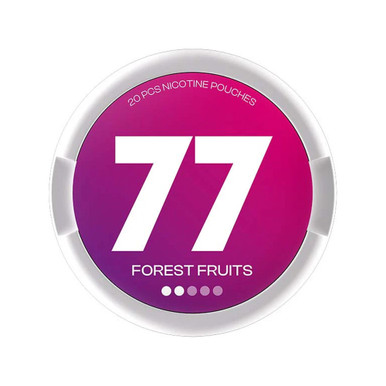
Then the change is the opposite one: a cold note has been added to a fruit you already know. It is the same modification you would notice moving between any plain fruit and its iced version anywhere on the shelf, and it usually reads as the fruit being cut rather than covered. If the cold note is the part you do not want, the fruit-only listings in the brand are the place to look — 77 Forest Fruits at £39.90 is the mixed-berry option with no ice word in its name.
If your last can was another maker's grape
Grape is a flavour with a fairly wide spread between makers, and our shelves carry several readings of it at different prices. Pablo Silver Edition Grape Ice is £39.90 — the same price as this listing and the same fruit-plus-ice construction, from a different brand. Killa Grape Ice is £33.50 and is the same construction again at a lower listed price. Elf Bar Grape Ice at £29.90 is a third. Four cans, one fruit, one modifier, four separate manufacturers' interpretations — which is exactly why "I like grape" is not enough information to pick a can, and why we list all of them rather than nominating one.
If your last can carried a different figure
Read the figure on each listing rather than assuming the brand carries one. Declared figures are not uniform across the 77 range — this listing is 10.4mg, and other cans wearing the same brand mark carry their own figures, which means two 77 listings can sit on entirely different strength shelves of ours. This is the single most common thing people get wrong when moving between cans in the same range. We publish the figure on every listing for that reason.
If the can itself is unfamiliar
Cans differ between makers in small ways that only matter once you are holding one. Lids vary in how firmly they seat — some click positively, others are a quieter push fit, and the amount of pressure needed is not consistent across brands. Catch compartments vary in depth, which changes how often they need emptying. The way pouches are laid out inside varies too, and on a full can the first pouch is sometimes harder to lift out than the rest simply because there is no gap to get a fingertip into. None of that is a defect in any of them and none of it is worth worrying about; it is just the set of small adjustments anybody makes in the first day with an unfamiliar tin.
The one habit worth carrying across from whatever you used before is the lid. Whatever the mechanism, press it until it seats rather than resting it on top, and empty the catch compartment before it stops the lid seating. That single habit covers most of what goes wrong with a can, on any brand, in any flavour.
What we cannot answer for you
Several questions come up at this point that we will not attempt. We cannot tell you how one can will compare with another in use. We cannot tell you which figure is appropriate for you. We do not give medical, health or dosage advice of any kind, and we do not describe effects. What we can do is set brand, flavour, declared figure and price side by side, which is what this page has been doing throughout, and let you take it from there.
The 77 line-up, briefly
The 77 shelf holds twenty-nine listings at the time of writing, and one fact simplifies browsing it enormously: on every 77 listing linked from this page the price is £39.90. There is no money to weigh against taste within this brand, only flavour and declared figure.
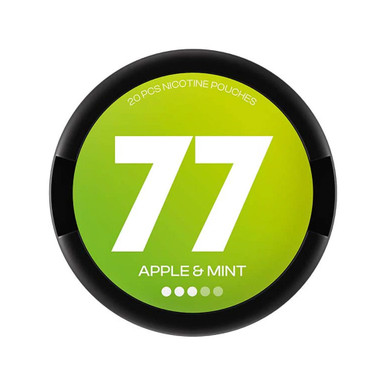
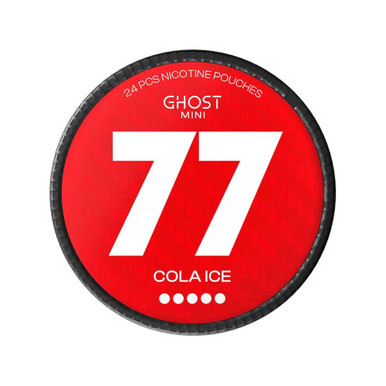
The range divides reasonably neatly. On the fruit-and-mint side, 77 Apple Mint at £39.90 is the nearest structural relative to this can — a named fruit with a mint behind it, the same idea as Grape Ice with a different fruit in front. On the pure fruit side, the Forest Fruits can at £39.90 is the mixed-berry option. On the confectionery side, 77 Cola Vanilla at £39.90 is a cola with vanilla and 77 Cola Ice at the same price is the cold reading of cola — which, structurally, is the same fruit-plus-ice pattern as this can applied to something that is not a fruit.
The range also carries a Mini format, worn by listings including 77 Ghost Mini Mango at £39.90, with mango recorded as its flavour, and 77 Ghost Original Mini at the same price, for which our flavour field is empty — a blank its own page explains at length rather than papering over. Each carries its own declared figure on its own page, so check those rather than assuming they match this listing before treating either as a substitute.
What else the grape and mint shelves hold
With this listing out of stock, the useful question is what sits near it, and there are two directions to go: keep the fruit and change the maker, or keep the cold note and drop the fruit. Which of those makes sense depends on which half of the name you came here for, which is not something we can work out for you — but the two routes lead to noticeably different shelves, so it is worth deciding before you start clicking.
Staying with grape
The three other grape listings named above — at £39.90, £33.50 and £29.90 — are the direct neighbours, and the full grape shelf holds fourteen listings in total if you want to see the rest in one place. Prices across those fourteen vary, and since our data holds no can counts, comparing them on headline price alone is not a comparison worth much. Read what each listing contains first.
Staying with the cold note
If the ice is what you are after rather than the fruit, the mint shelf is where to go. Klint Arctic Mint is £36.90 and sits at the cold end. SYX Cool Mint is £29.90. Edge Spearmint at £14.95 and Velo Bright Spearmint at £4.19 both take the spearmint reading rather than the frosted one, which is a sweeter and softer version of mint than an arctic-styled can. The mint shelf as a whole holds 148 listings, so anything specific you are after is likely to be somewhere in it.
Going somewhere else entirely
Three listings for contrast rather than similarity. Nordic Spirit Frosty Berry at £4.49 puts a cold note on a berry rather than on a grape, which is the same construction with a different fruit at a very different price. UBBS Cola Ice at £19.95 applies the ice idea to cola. And Fumi Dark Spice at £27.90 goes furthest from this can of anything on the page — no fruit, no mint, a darker flavour idea altogether. If you want a rotation where the second can tastes nothing like the first, that is the direction.
Browsing by maker instead, the Pablo shelf and the Cuba shelf are the other two large single-brand ranges we keep.
Between 10.4mg and the rest of the shelf
There is only one variant on this listing: 10.4mg at £39.90. No second declared figure, no second pack size, and our record carries no can count either — so we cannot tell you on this page whether that price buys one tin or several, and we will not deduce it from the number. The listing states the unit and the basket restates it before payment.
If 10.4mg is not the figure you want, the honest answer is that this listing does not carry another. Within the brand, other listings carry their own declared figures, which are printed on their own pages. Across the site, the strength bands are the fastest route: Medium Strength holds 135 listings, Strong holds 132, and Extra Strong holds the higher declared figures. We will not suggest which band anybody should be on.
Buying a listing that is currently out of stock
The practical position is straightforward. This listing is marked out of stock as this page is written, which means it cannot be added to an order at the moment. We leave the page up because the information on it is still true and because people want to know what a can was before deciding what to buy instead.
The stock indicator on the listing is the live answer, not this paragraph. If you are reading some time after publication, look at the listing above rather than trusting a sentence written weeks or months ago. Stock states on this site are maintained; an out-of-stock mark is a fact we publish rather than something we hide behind a working basket.
When it is orderable, buying works as it does anywhere else here: the listing goes in the basket and postage is applied at checkout according to the service selected rather than the can chosen. Age verification is the part worth reading rather than skimming. These are 18+ products sold only to adults who already use nicotine, checks may apply at the point of ordering, and ID may be requested on delivery — a courier is entitled to ask and entitled to refuse the handover if nobody of age is present. If the parcel is going to a workplace or a neighbour, make sure someone over 18 will be there to take it.
Where the site files this can
Four routes lead back here, which is more than most listings have, and it is a direct consequence of the flavour field carrying two entries.
By declared figure it sits on the Medium Strength band with 134 other listings. By maker it is one of twenty-nine on the 77 brand page. By fruit it is one of fourteen on the grape page. And because mint is recorded against it too, it also appears among the 148 listings on the mint page — which is worth knowing if you browse by mint and wonder why fruit cans keep appearing there.
Above all of those, the whole catalogue is the place to start when you do not yet know what you are looking for.
Straight answers to the usual questions
Why is 10.4 not a round number?
Because that is the figure the manufacturer declares, and declared figures are not obliged to be round. A round number on another can is not more official or more precise than this one. We publish what we are given without adjusting it, since rounding a manufacturer's declared value on a product page would be editing their labelling, which is not ours to do.
Is this a mint can or a fruit can?
Both entries are in the flavour record, and the name puts the fruit first with Ice as the modifier — a grape flavour with a cold note across it rather than a mint with fruit added. As a result the listing appears on both our grape shelf and our mint shelf. Which of the two you notice more is not something we can answer for you.
When will it be back in stock?
We do not hold a restock date for this listing, and we would rather say so than offer a guess dressed up as an estimate. The stock indicator on the product page is the current state and it updates when the state changes. Nothing on this page should be read as a promise that it will return.
How many pouches are in the can?
Not a figure in our data. Our record holds brand, name, price, declared strength, flavour and stock, and a pouch count is not one of those fields. The can itself carries the number. We will not publish an approximate one — an approximate pouch count is an invented figure with a hedge in front of it.
Does £39.90 buy one can or a pack?
We cannot tell you from our record, which carries no can count for this listing. Working it out from the price would be inventing a fact about what you are paying for. The listing states the unit and the basket restates it before payment; either is a better source than this page.
How long does a can keep?
We do not hold shelf-life information, best-before dates or date-code guidance for any listing, so there is no honest number for us to give. Whatever date marking the manufacturer applies is on the packaging. What we can say is the ordinary storage point: cool, dry, out of direct sunlight, lid seated, and an unopened can kept that way is in better condition than one that has not been.
Should I keep it in the fridge?
Some people do with unopened cans, and we will neither recommend it nor advise against it, because we do not hold this manufacturer's storage guidance. If you do, the one mechanical point is condensation: a cold tin opened in a warm room brings damp air inside, so people usually let a can come up to room temperature first. The can's own labelling takes precedence over anything here.
How does 10.4mg compare with the figure on another can?
Only as two printed labels, one larger than the other. That is the only comparison we can make, and it is a comparison between declarations rather than between experiences. We cannot tell you how any figure will be experienced, we cannot tell you which suits you, and we do not give that sort of guidance. Our strength shelves file listings so they can be found; they are not a scale anyone is being pointed along.
How does it compare with another brand's Grape Ice?
On the facts we hold: same fruit, same modifier, different manufacturer, and prices that differ — £39.90 here, against £39.90, £33.50 and £29.90 on the three others linked above. Each carries its own declared figure on its own page, and those figures are not interchangeable. How the flavours themselves compare is a matter for the cans rather than for us.
Can I use it anywhere?
That depends on where you are, and it is not a question a product page can answer for every venue, workplace or country. Rules vary by premises and by jurisdiction, including rules about carrying these products across borders. Check locally rather than relying on us.
Will you recommend a can?
We will tell you what each listing carries — brand, flavour, declared figure, price — and how one compares with another on those fields. We will not recommend a strength to a person, and we give no medical, health or dosage advice. Everything on this page is product information rather than a recommendation about consumption.
Required notices
This is an 18+ product. We sell it only to adults who already use nicotine, and to nobody else.
Nicotine is an addictive substance. That applies to this can exactly as it applies to every nicotine product listed on this site.
This product is not a licensed stop-smoking medicine. It is not intended for non-smokers, for anyone who does not already use nicotine, for under-18s, or for anyone pregnant or breastfeeding. Nothing on this page should be read as a suggestion that anyone begin using nicotine.
ID may be requested on delivery. Age verification applies to the order and to the handover, and a courier may refuse to complete a delivery where age cannot be confirmed. Keep the can stored securely and out of reach of children and animals.
In summary
77 Grape Ice is a 10.4mg listing in the 77 range at £39.90, recording grape and mint as its flavours, filed on our Medium Strength band and on both the grape and mint shelves, and currently marked out of stock. Where we hold a fact it is on this page; where we do not — pouch counts, portion sizes, can counts, dates, restock timings — we have said so plainly rather than filling the gap. The can itself outranks this page on every point of detail.
More from 77
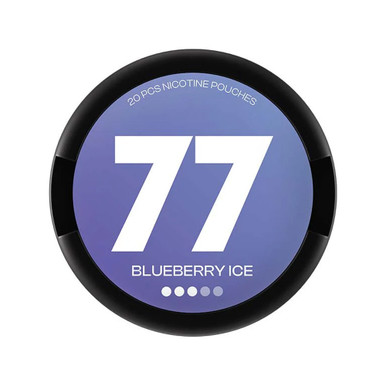
More medium strength pouches
More mint pouches
Where this sits
77 Grape Ice Nicotine Pouches appears in these categories. Browse them, or jump to something close.
You might also like