Killa · 16.5mg
Read the full guide
Killa Grape Ice Nicotine Pouches
£33.50
✔ In stock — ready to ship
100% tobacco-free
Free over £20
Same-day dispatch
Secure checkout
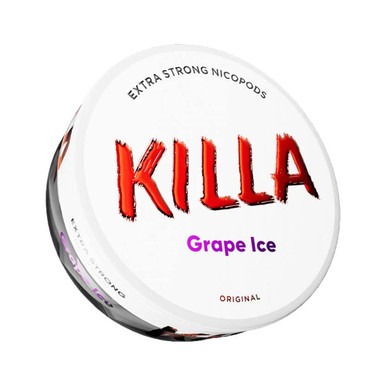
Killa Grape Ice Nicotine Pouches sit on this catalogue at £33.50. The label declares one figure, 16.5mg, and there is exactly one variant behind the listing — that figure at that price, with no second size and no alternative strength attached. Our data flags the product as in stock as this page is written and holds a single photograph of the can.
That is everything. Product pages of this length usually hint at more knowledge than they have, so it is worth being blunt about the position: the facts above are the facts, and the several thousand words below either work with them, describe the category around them, or say plainly where our record stops. There are four places where it stops, and each is named where it comes up.
The full guide to Killa Grape Ice Nicotine Pouches
5,001 words on how it eats, who it suits, how to serve it and what to put beside it.
The whole of our record for Killa Grape Ice
A phrase in the web address that is not on our shelf label
This page lives at an address containing the words extra strong, and our own strength band for the can reads Strong. That looks like a contradiction and it is worth clearing up immediately rather than letting it sit.
The address is derived from naming that came with the product. Our shelf band is our own filing decision, applied consistently across 385 listings. The two are produced by different processes and they do not always agree, and when they disagree we are not going to quietly edit one to match the other. What we can say is what each one is: the band is our label, and the phrase in the address is not.
We hold nothing from the manufacturer explaining what it intends extra strong to mark on this range, so there is no interpretation on offer here. It is not a measurement, it is not a grade, and it does not modify the declared figure printed on the can, which is 16.5mg regardless of what words travel alongside it. Where a word and a number disagree, the number is the one with a definition behind it.
The same caution applies to the brand name itself. Killa is a trade name — the word the maker puts on its tins — and it describes a company's identity, not the contents of a can. It is filed as a brand and treated as nothing else, which is why the product appears on the brand's own shelf, which holds 31 listings.
Two flavour tags for a two-word name
Our classification holds two terms for this can: grape and mint. Only one of those words appears in the product name, which needs explaining.
The grape tag is straightforward — grape is named on the lid. It files the can on our grape shelf, which is one of the narrower flavour groupings on the site at 14 listings.
The mint tag is doing something less obvious. The second word in the name is Ice, not mint, and our classification records cooling constructions under the mint heading because that is where people look for them. The result is that this can also sits on the mint shelf, the largest flavour grouping we run at 148 listings, without the word mint appearing anywhere on the product. If you arrived here from a mint search and were expecting spearmint, that is the explanation. The tag records a cool element, not a herb.
Whether the can contains an identifiable mint note alongside the cooling, we do not know and will not assert. The name says Ice. Our tag says mint. Those are two different statements and this page is not going to merge them into one.
How a flavour like this is built in a dry pouch
The most interesting thing about flavour in this format is the constraint it works under, and describing that constraint is more useful than any adjective we could apply to this specific can.
What the format has to work with
A pouch is dry, small and static. It does not heat, it does not move and it releases whatever it releases slowly over a long period rather than in a burst. Every other way of delivering a flavour — a drink, a sweet, anything cooked — has heat, volume or agitation available. This has none of them.
That constraint shapes what flavours work. Notes with a strong aromatic component tend to carry well in a static format, because aroma travels upward without needing any help. Notes that rely on texture or temperature do not translate at all: there is no way to make something taste creamy in a pouch, because creaminess is a mouthfeel and the format has no mouthfeel to offer beyond the pouch itself.
Making a fruit recognisable
A recognisable fruit note in this format is assembled rather than extracted. Real fruit is a combination of sweetness, acidity, aroma and a set of specific compounds that the brain reads as that fruit and no other. A construction has to supply enough of those markers to be identified, and it has to do it in a way that survives being released slowly for an extended period rather than all at once.
That is why fruit notes in this category often read as slightly more emphatic than the fruit they name. A construction that matched real fruit exactly would fade to nothing within minutes of being placed. What is built instead is a version with the identifying markers pushed forward, so that something recognisable is still present in the second half of the interval. Whether that reads as accurate or as artificial is entirely a matter of personal taste, and both reactions are common.
Grape, which is a harder note than it looks
Grape is one of the more difficult fruits to build convincingly, and the reason is worth knowing. Most people's reference point for a grape flavour is not a grape. It is a set of confectionery and drink conventions that settled decades ago around a particular aromatic profile — floral, slightly perfumed, and noticeably different from the fruit you buy in a shop.
The consequence is that "grape" as a flavour name is ambiguous in a way that "strawberry" is not. A grape construction can aim at the fruit, which reads as lighter, wetter and more acidic, or at the convention, which reads as sweeter, rounder and distinctly perfumed. Both are legitimate and they taste quite different from each other. Our record does not tell us which one this can is aiming at, and the name does not either.
What can be said about the family in general: grape sits high on sweetness, low on bitterness, moderate on sharpness, and it carries an unusually strong aromatic top note — which is exactly the characteristic that survives well in a dry format. That is probably why grape appears as often as it does in this category despite being a narrow shelf on our own site.
What a cooling element does to a fruit
Cooling is not a taste. It is a sensation that runs underneath a taste, and its effect on a fruit note is structural rather than additive. A cool element stretches a flavour out, making it feel longer and thinner. It lowers the apparent sweetness without removing any of it, because cold and sweet compete for attention. And it puts a clean edge on the finish where a warm fruit note would otherwise trail off.
Paired with grape specifically, a cooling element tends to pull the construction away from the perfumed confectionery end and towards something crisper. Whether it does that here, we cannot say. The pairing is common enough across the category that its general behaviour is well understood, and that general behaviour is all this paragraph is describing.
Why flavour fades, and what fading actually is
Every pouch eventually goes flat, and people generally use that as the signal to take one out. What is happening is simply that the available flavour has been released. It is not deterioration and it is not a fault, and the interval before it happens differs between constructions — aromatic notes often seem to fade faster because the top end goes first, leaving the base behind.
A cool element usually outlasts the fruit alongside it, which is why the last part of a fruit-and-ice pouch often reads as mostly cool. That is characteristic of the construction rather than a flaw in any particular can.
The limits of all of the above
Everything in this section describes a category and a set of conventions. None of it describes what is inside this can, because we hold no manufacturer tasting note and we do not write our own. We are not going to tell you what this tastes like. A shop inventing flavour descriptions for products it has not been given notes for is producing fiction, and a fluent description is no more accurate than a blank one.
The pouch, the lid, and where the used one goes
The pouch is a small soft sachet with a fabric-like covering. It is placed between the lip and the gum and left there. It is not chewed and not swallowed, and pouches are used one at a time. That is the mechanic in full.
Portion formats have a rough shared vocabulary: slim portions are long and flat and follow the gum line; minis are shorter and thicker; standard portions sit between them. The choice affects where the bulk sits rather than the quantity involved, and most people settle on a preference quickly. Our record carries no format designation for this listing — that is the second place our data stops — and the can answers it immediately.
The can is a short, wide cylinder, roughly a large coin in footprint, and its lid normally contains a shallow second chamber walled off from the fresh pouches below. That chamber holds finished pouches until a bin is available. Empty it into a household bin. Not a sink, not a lavatory, not a drain of any kind, and not out of a window. Pouches should not enter plumbing, and the chamber is what makes that easy to comply with rather than an inconvenience.
How long a pouch is kept in is a personal pattern and no figure is published here, because a figure on a retailer's page would read as instruction. What is fair to describe is the sequence: in, until the flavour has gone, then out by hand and into the lid.
16.5mg, and the three drawers we file into
The declared figure is 16.5mg, reproduced exactly as our record holds it. It is a specification the manufacturer publishes about the product and prints on the packaging. It belongs to the can. It is not a rating, not a score, and not a statement about anyone.
We sort listings into three bands so the catalogue can be narrowed. This can goes in the Strong band with 131 others. The Medium band is below it and the Extra Strong band above. The ordering follows the size of the declared figures and carries no other meaning whatsoever — a can in a higher drawer is not better made, better value or more worth having than one in a lower drawer.
That point is worth labouring slightly because the words invite the wrong reading. Nothing in this catalogue is arranged as a progression. There is no route through it, nothing to work up to, and no sense in which a larger printed figure represents having got somewhere. It is a filing system, of the same kind as sorting footwear by size. Where the number is not your axis, the catalogue with no strength filter on it at all is usually the better way in, since flavour and brand are how most people actually choose.
Figures also do not convert between manufacturers. Each company reaches its declared number by its own method, so similar numbers on cans from different houses do not make those cans equivalent. Within one brand the comparison is firmer, and every other Killa listing carries its own figure on its own page, which is where to read it.
We cannot advise which strength suits any individual, and we are not going to try. That is a description of our position rather than a formality. We run a catalogue. We do not know who is reading, and the question is not one that a retailer can answer for a person. It belongs with someone qualified to answer it.
Buying rhythm: one can, a spare, and the reorder
This is the practical half of the page. How people actually buy in this category is a real subject and one that product descriptions usually skip entirely.
Single cans against larger quantities
Two buying patterns dominate. Some people buy one can at a time, close to when they need it, which keeps stock fresh and spreads the cost evenly. Others buy in larger quantities less often, which means fewer orders and fewer delivery charges but more product sitting in a cupboard. Neither is better and the trade-off is the ordinary one between convenience and holding stock.
The argument for buying small is condition. Cans do not improve while they wait, and a large purchase stored badly loses more than the buyer saved. The argument for buying larger is that availability in this category is not guaranteed, and a single-variant listing that goes out of stock has no fallback size.
The count we do not hold
Our record has no pack count for this listing, and no portion count either. That is the third and fourth places our data stops, and together they are the most awkward gap on the page, because they block the comparison people most often want. We cannot tell you whether £33.50 covers one can or several, and we cannot tell you how many pouches a can holds, so we cannot produce a per-can or per-pouch figure from this page.
We are not going to infer either number from the price, or from what a neighbouring product does, because an inferred figure presented confidently is worse than an admitted gap. The listing itself and the basket at checkout are where the quantity becomes concrete, and on a purchase of this size it is worth looking before ordering.
The spare can
People who use this format regularly tend to keep more than one can in circulation, and usually not in the same place. One lives in a bag or a pocket and travels; another sits in a drawer at home and does not. The travelling can takes the wear — warmth, pressure, the occasional lid popped open in a rucksack — and gets used up first, while the stationary one stays in better condition simply by being left alone.
The other reason for a spare is that running out is annoying in proportion to how routine the habit is. A second can removes the problem entirely and costs only the price of a can you were going to buy anyway.
When people reorder
Most people reorder on a rhythm rather than on an inventory check, and the rhythm is usually set by the first time they ran out unexpectedly. Ordering when a can is roughly two-thirds gone rather than when it is empty absorbs an ordinary delivery window without any planning. That is a description of a common pattern, not a schedule we are proposing.
A flat price inside one brand
Every Killa listing on our shelves is £33.50, including this one. That flatness has a real consequence for buying rhythm: within this brand, ordering two different cans costs the same as ordering two of the same can. There is no price penalty for variety and no discount for consistency, so the decision is purely about what you want.
What we are not going to do
We are not going to suggest a quantity, a frequency or a rate of use, and nothing above should be read as doing so. The patterns described are how people in this category tend to organise purchases, which is retail information. How much anyone uses is not our business and not something a shop should have a view on.
The Killa shelf, as we hold it
Thirty-one listings carry this brand, all at the same price. The range is broad across flavour families, which makes it one of the easier brand shelves to move around inside.
The fruit side is where this can's relatives are. Killa Blueberry at £33.50 is a darker berry with skin character behind it, which is a different shape from grape entirely. Killa Apple, same price, is orchard fruit — crisper and more acidic, and one of the few families that competes with grape on aromatic lift. Killa Banana Ice is the closest structural match in the brand to this can, since it is also a fruit paired with a declared cooling element, though banana is a heavy rounded note where grape is light and perfumed.
Outside fruit, Killa Bubblegum is the most openly confectionery name the brand puts on our shelves, and it is worth noting that bubblegum and the conventional grape flavour come from the same lineage of sweet-shop constructions. Killa Cola brings a spiced, faintly bitter edge that no fruit can in the range has, and Killa Cappuccino is the brand's only coffee-family listing with us and the furthest from this page in every direction.
Those listings each carry their own declared figures on their own pages. We do not restate another product's label from here.
Grape elsewhere, and cool elsewhere
Because this can sits in two flavour families, there are two obvious directions to look in for something alongside it.
Staying with grape: Elf Bar Grape Ice at £29.90 is the closest direct comparison we stock, matching both halves of the construction under a different maker's name and coming in £3.60 cheaper. Pablo Gold Edition Grape Ice at £19.95 does the same at a considerably lower listed price, and Rush Grape Ice Extreme at £19.99 is the third. Three cans, three houses, one construction — the differences between them will be in how each maker builds the grape note, which is precisely the thing described earlier and precisely the thing we cannot report for any of them.
Going towards the cool side instead, the mint shelf is where the contrast lives. Clew Cool Mint and Denssi Cold Mint, both £39.90, are cool-forward by name with no fruit attached. Cuba Ninja Ice Cool at the same price is a third in that group. Klint Avalanche Mint at £36.90 names itself in the same direction, and Edge Mint at £14.95 is the plainest name and the lowest price among the mints here by a wide margin. Fumi Fiery Mint at £27.90 is the odd one out, since a warm word next to a cool one describes a genuinely unusual construction rather than a variation on the others.
For a fruit that keeps the cool element but changes the fruit completely, 77 VB Edition Mini Arctic Berry at £39.90 swaps grape for berry and holds everything else roughly constant.
If browsing suits you better than following links, the Pablo shelf and the Cuba listings are two of the broader brand groupings we run.
Keeping a can in usable condition
Put the lid back on. That single instruction prevents most of the damage a can suffers, and the reason it needs stating is that the damage is invisible. A can left open overnight looks identical in the morning and simply has less in it.
Warmth does the same thing more slowly. Dashboards, sunlit sills, bags left near radiators — a fortnight of warming and cooling pulls moisture out of a can, and moisture is where the flavour lives in a dry format. A drawer or a cupboard away from heat is enough; the requirement is a steady shaded spot, not a cold one.
Fridge storage is something some people do in hot weather. We have no manufacturer guidance saying it is intended for this product, so it is reported as a practice rather than endorsed as one. Any instruction printed on the can overrides this page in every case.
A dried-out can does not recover. The pouches feel firmer, the flavour is shorter, and there is nothing useful to be done except store the next one properly. On dates: cans carry manufacturer markings and those are the only reference, since our catalogue holds no date information at listing level.
The most important storage point is not about condition at all. Keep cans out of reach of children and away from anyone the product is not intended for. That includes the lid chamber, which is why it should be emptied into a bin rather than left to fill up in a can that gets put down around a house.
What there is to choose here
One declared figure, 16.5mg. One price, £33.50. One variant. Nothing to configure.
The limitation that creates is that you cannot adjust within the product. On a multi-variant listing, a reader can hold the flavour and move between figures. Here the only available change is to a different product, which means using the strength bands. We are not going to indicate a direction along those bands, either way, for the reasons given earlier on this page.
Pack size is not a choice on this listing either, because we do not know what the pack is. That gap is set out in full above and it is the one thing on this page we would most like to be able to fix.
Ordering, delivery and proof of age
The listed price is £33.50. Ordering is the ordinary sequence — basket, review, checkout. Delivery options, charges and timescales appear at checkout rather than here, because they depend on the order and the destination, and any figure printed on a product page would be wrong for some readers.
This is an age-restricted product. Sales are to adults aged 18 or over only. Checks may be applied at the point of order and ID may be requested on delivery before a parcel is handed across. A courier refusing to release a parcel where age cannot be confirmed is the system doing its job. We will not knowingly supply an order placed for anyone under 18.
On stock: our record shows this as available at the time of writing, but a page written in advance is not a live feed. The listing is authoritative and, on a single-variant product, there is no second size to fall back on.
Where this page sits
Four shelves hold this can, which is more than most listings get. The brand shelf collects the rest of the range under the same maker. The Strong band collects everything filed into the same strength drawer. The grape shelf is a narrow grouping of 14, and the mint shelf is the widest flavour grouping on the site at 148 — this can is on both, for the reasons given earlier.
Above all of them sits the full catalogue, which is the right place to start when you do not yet know which axis you want to browse along. Every brand shelf behaves the same way as this one's, so the structure is learnable from any single page.
Questions about this listing
Why is this on the mint shelf when it is a grape flavour?
Because our classification records cooling constructions under the mint heading, and the second word of the name is Ice. The tag is recording a cool element rather than a herb, and the can is filed on both the grape and mint shelves as a result. It is a filing convention rather than a statement that the can contains spearmint or peppermint. If you came from a mint search expecting a plain mint, this is not one, and the mint shelf holds plenty that are.
Why does the web address say extra strong when the shelf says Strong?
The address carries naming that came with the product; the band is our own filing, applied across the whole catalogue. The two were produced separately and they do not always match. Rather than edit one to agree with the other, we would rather say which is which. Neither changes the declared figure on the label, which is 16.5mg and is the only part of this with a definition behind it.
What does grape taste like in this format?
We do not hold a tasting note for this can and we do not write our own, so the specific answer is not available here. What can be said generally is that grape flavours in this category aim either at fresh fruit, which is lighter and more acidic, or at the long-established confectionery convention, which is sweeter and noticeably perfumed. Those two are quite different from each other and the name does not tell you which one a can has gone for.
Does the Ice mean it is cold?
It means a cooling element, which is a sensation rather than a temperature. The can is not cold and the pouches are not chilled. Cooling in this category is a construction that produces a cool feeling alongside the flavour, and it tends to make a fruit note read as longer, thinner and less sweet than the same fruit without it. How pronounced it is here we do not know and cannot say.
How many pouches are in the can?
Not something our record holds. We will not estimate it from the price or from a comparable can, because an estimate stated confidently is worse than an acknowledged blank. Cans in this format usually print a portion count on the label and that printed figure is reliable. If the count matters to your decision, check the listing or the can rather than working from an assumption we have not supplied.
Is £33.50 for one can?
We cannot tell you — the pack count is missing from our record for this listing. Prices in that region on this site sometimes cover a single can and sometimes a sleeve of several, so the figure alone does not settle it. The basket at checkout shows precisely what quantity is being purchased, and that is the place to confirm it. It is a real gap in what we hold rather than a reluctance to say.
What does 16.5mg mean?
It is the strength figure the manufacturer declares for this product, printed on the packaging and reproduced on our listing. That is the whole of what we can tell you. We do not interpret it, we do not translate it into an expectation, and we do not set it against figures from other manufacturers, because different companies arrive at their declared numbers by different routes and there is no shared unit between brands.
Is that a lot?
Our catalogue files it in the upper of three bands, which describes our shelving and nothing else. It is not a verdict on the product and it is certainly not an answer about a person. We cannot advise which strength suits anyone, and attempting it would take a shop well past what a shop is in a position to say. Anyone with a question about their own use should raise it with someone qualified.
How does this compare with the other grape cans you stock?
By price we can tell you exactly: this is £33.50, the Elf Bar version £29.90, the Pablo version £19.95 and the Rush version £19.99. By flavour we cannot, because we hold no tasting notes for any of them and writing four comparative descriptions would be inventing three more problems. The differences between them will be real, since each maker builds a grape note its own way, but they are not differences our data captures.
What is the compartment in the lid for?
Used pouches. Most cans in this format have a shallow chamber inside the lid, kept apart from the fresh pouches below, and it holds finished ones until you reach a bin. Empty it into a household bin — never a sink or a drain. It is a small feature that carries a lot of practical weight, because a used pouch away from home otherwise has nowhere appropriate to go for an hour at a time.
How should I keep it?
Lid on, somewhere cool and shaded, out of reach of children. Warmth and an open lid are the two things that dry a can out and account for most cans that go flat before they are finished. Any storage instruction printed on the can takes priority over anything written here. We hold no shelf-life or date information at listing level, so the marking on the can is the only date reference there is.
Can you tell me where it comes from?
No. We hold no origin or manufacturing information for this listing and we are not going to infer any from the brand name or the packaging. Anything you read elsewhere assigning an origin on the basis of how a can is named is reading in something that is not there. The can and the manufacturer are the only reliable sources for that question, and we would rather leave it unanswered than fill it in.
Legal and compliance
This product is for adults aged 18 or over who already use nicotine. We do not sell to anyone under 18 and we will not knowingly supply an order placed on behalf of someone under 18. Age checks may be applied when an order is placed, and ID may be requested on delivery before a parcel is released.
Nicotine is an addictive substance.
This product is not a licensed stop-smoking medicine and makes no medicinal claim of any kind. It is not intended for non-smokers, for anyone who does not already use nicotine, for under-18s, or for anyone who is pregnant or breastfeeding. Nothing on this page is medical advice, and nothing on it is a suggestion that anyone should use nicotine or should pick any particular declared figure. Questions about your own use belong with a qualified healthcare professional rather than a retailer.
Keep out of reach of children and away from animals.
To close
Killa Grape Ice is a single-variant listing at £33.50 with a declared figure of 16.5mg, tagged in our catalogue under grape and mint, and filed on the Strong band despite the words in its web address. We hold no tasting note, no format designation, no portion count and no pack count for it, and every one of those blanks is stated above rather than filled with something plausible. The brand name is the manufacturer's word and has been treated as a name and nothing more. The label on the can carries whatever is left.
More from Killa
More strong pouches
More mint pouches
Where this sits
Killa Grape Ice Nicotine Pouches appears in these categories. Browse them, or jump to something close.
You might also like