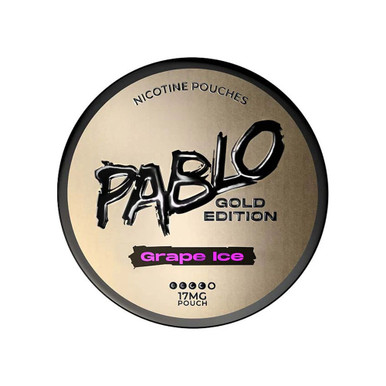
Pablo · 17mg
Read the full guide
Pablo Gold Edition Grape Ice Nicotine Pouches
£19.95
✔ In stock — ready to ship
100% tobacco-free
Free over £20
Same-day dispatch
Secure checkout
This page covers Pablo Gold Edition Grape Ice Nicotine Pouches, listed at £19.95 with one declared strength of 17mg, a single variant at that figure, and two flavour tags against it rather than the usual one: grape and mint. Our stock flag reads available at the time of writing, and the cans-per-pack field is empty. That is the complete record.
The two-tag detail is worth pausing on because it is unusual and because it actually means something. Most cans in this line carry a single flavour word, and where two of them carry the same single word our data cannot separate them at all. This one is different: the record itself says grape and mint, which tells you the can is built from a fruit and a cold element rather than from one or the other. It is a small thing, but it is one of the few places on a page like this where a distinction comes out of the data instead of out of somebody's reading of a name.
The full guide to Pablo Gold Edition Grape Ice Nicotine Pouches
5,081 words on how it eats, who it suits, how to serve it and what to put beside it.
The listing itself, before any description of it
Gold Edition is the manufacturer's own line name and nothing more. We store it as part of the product title. It is not a grade, it is not a rating, and we hold nothing that would let us say a tin bearing it is built to a higher standard than a tin that does not. Anyone treating the word as a quality signal is filling a gap we are choosing to leave empty.
Four shelves carry this listing, one more than most: the strong band at 132 listings, the Pablo brand page at 56, the grape grouping, which is a narrow shelf at 14 listings, and the mint shelf, the widest we keep at 148. The second flavour tag is why it appears in two flavour groupings instead of one, and it explains something that otherwise looks like a filing error: a grape can showing up on a mint shelf. In our tagging, a cold element in the name lands in the mint family, whether or not a herb is the point of the can.
Sold to adults aged 18 or over who already use nicotine. Full wording at the foot of the page.
The tin, the pouch and the routine around it
The article is the standard shallow round tin of this category: a lift-off lid, an internal lip it presses down onto, and a printed lid face carrying brand, line, flavour and declared figure. That printing earns its place the moment more than two tins share a drawer, because from then on you read the tops rather than turning each one over.
Pouches sit flat in a ring inside. The lid's underside is a shallow well with a rim around it, and that well takes used pouches when there is nowhere else to put them. It holds several before it needs emptying, which is the single feature that makes the format practical away from a bin.
The pouch count is not in our record. It is printed on the packaging, and a number invented here would do nothing except argue with a printed one. The same is true of the weight of a single pouch and the outside diameter of the tin. Where the packaging speaks and our data does not, the packaging is the authority.
The pouch itself is a small soft rectangle with rounded corners, dry to the touch and light enough to vanish in a closed hand. Portion sizes differ across this category — some lines are deliberately built slimmer, and a handful are sold specifically as a compact format — but our record does not state where this one falls, so we are not going to place it on a scale we would have to invent. Two seconds of handling settles the question better than a sentence from us could.
A pouch goes under the upper lip and stays put without being held or adjusted. Most people report that a fresh one feels bulkier than it looked in the ring and that the impression settles inside a minute or two. After that it is unremarkable, and normal talking and drinking carry on around it. Whether to eat with one in is a personal preference and we are not going to convert a preference into a rule.
On duration we publish nothing, because a number from a shop reads as an instruction however carefully it is phrased. The honest range is wide — around ten minutes at the short end, the better part of an hour at the long end, with the same person varying across a single day. Nor is the taste level across that period. With a two-part flavour such as this one there is an additional wrinkle worth knowing: the two components do not fade together. A fruit note and a cold note thin at different rates, so what the can reads as at minute twenty is not simply a quieter version of what it read as at minute two.
Removal is done with a fingertip, the used pouch goes in the lid well, and the well's contents go into general waste when it fills. Not a sink, not a drain, not a plant pot. Spent pouches are small and pale and easy to lose on a desk, which is the practical reason to keep the tin closed and out of reach of children and pets between uses.
17mg, read as a printed figure and nothing else
The declared strength on this can is 17mg. The manufacturer prints that value on the packaging and supplies it to us, and we publish it exactly as supplied. It is a label declaration — not a score, not a rank, not a quality indicator, and not a measure of anything about how the tin is put together.
Since this brand attracts the framing constantly, here it is plainly: a larger figure is not an accomplishment, not a level and not a direction of travel. Catalogues order numbers because ordering is how catalogues work, and ours is no exception, but a sort order is filing rather than a recommendation to move along it.
The figure also describes very little of what a person actually wants to know. It says nothing about taste, nothing about moisture, nothing about portion size, and nothing about how this tin relates to a differently branded tin printed with the same value. Two such tins remain two separate products. Our record holds no comparative field at all, so a page on this site that places two figures side by side is placing two printed numbers side by side and making no claim about the gap between them.
The bands are navigation. Medium, strong and extra strong sort listings by the figure the manufacturer declared and by nothing else, and this one sits on the middle shelf of the three. We cannot advise which strength suits anyone. That is the position rather than a formality — we do not know who is reading, we hold nothing about any individual, and a shop page is the wrong setting for that conversation. The range of declared figures across the whole catalogue is visible on the main index.
Where this lands on the cool, sweet, sharp and bitter axes
This section takes the flavour apart on four axes, which is a more useful way of describing a taste than a paragraph of adjectives. Everything in it is a reading of the name and the two tags in our record, offered as a reading. We hold no tasting panel, no flavour specification and no measurements, and if that is disappointing it is at least accurate.
Cool: present and structural
The cold element is in the name and confirmed by the second tag, so this is the one axis where the record and the name agree without interpretation. Expect cooling as a component rather than as a garnish — a broad, even coldness that arrives early and sits across the mouth rather than concentrating in one spot. In a two-part flavour the cold usually serves a structural purpose as well as a sensory one: it gives the can something to be once the fruit note has thinned, which is why the arrangement is so common across this category.
What we cannot tell you is how much cold. There is no scale in our data, no comparative figure, and no way for us to say whether this sits above or below any other cold can on that axis. Cans vary enormously on that point and the only way to place one is to have it.
Sweet: the dominant axis, in the confectionery register
Grape as a flavour word in this category almost never means a table grape and never means anything to do with wine. It means the purple confectionery grape — the flavour of a boiled sweet or a soft drink rather than of fruit off a vine. That is not a criticism; it is simply which reading of the word the category has settled on, and a can named grape that tasted of an actual grape would be the surprising one.
Read that way, sweetness is the leading axis here. Expect a broad, rounded, slightly syrupy sweetness with a recognisable purple-fruit character sitting on top of it — bright rather than deep, simple rather than layered. The aroma from a freshly opened tin follows the sweetness: the fruit reads clearly, with the cold element barely registering as a smell at all, which is normal and tells you nothing about how much cooling is in the pouch.
Sharp: modest, and mostly a function of the cold
There is not much genuine acidity in a confectionery grape note. What sharpness registers in a can like this usually comes from the cold element rather than from the fruit, because a cooling impression reads as brightness and can be mistaken for acidity when the two arrive together. Cans built on a citrus or a berry sit considerably higher on this axis. If pronounced sourness is the thing you are after, this flavour family is not where it lives, and we would rather say so than let the name carry an implication it does not support.
Bitter: low, and worth explaining
An actual grape carries bitterness in the skin and the pips, and it is part of what makes the real fruit interesting. A confectionery grape note leaves that out almost entirely, which is the main reason the flavour reads as simpler than the fruit it is named after. Expect very little bitterness, and expect the sweetness to be doing most of the work without much to push against it. In practice that is why the cold element matters so much in this particular pairing: with no bitterness to give the fruit structure, the cooling is what stops the sweetness from reading as flat over a long stretch.
How the four axes interact
Describing a flavour axis by axis is useful for comparison and misleading if taken too literally, because the axes are not independent of one another. A strong cold impression makes a sweetness read as cleaner than the same sweetness would read on its own. A low bitterness makes a sweetness read as higher than it measures. And both effects change over the time a pouch is in place, because the components fade at different rates, so a can that starts out balanced can finish noticeably sweeter or noticeably colder depending on which half thins first.
That is the practical reason two cans with identical axis descriptions can be quite different objects, and the reason we are describing structure rather than issuing scores. A score implies a measurement. What we have is a name, two tags and a working familiarity with what this flavour family generally does, and pretending otherwise would be the easiest lie on the page to tell.
The honest limit on all four
Two tags and a name are a thin basis for a tasting note, and we would rather present the reasoning than pretend to authority. Impressions vary between people and between tins. What we have described is what the flavour family generally does and what the two tags imply about the structure of this particular can — nothing here is a measurement, and the tin in your hand overrides all of it.
What to keep alongside it, and why
Rotation is the norm in this category, and the reason is mundane: any single taste becomes less distinct with continuous use, and a second can of a different character resets that in a way a second can of something similar does not. So the useful question is not what is best, it is what is different enough to be worth having.
Other readings of the same fruit
Grape is a narrow shelf here — 14 listings against 148 on the mint shelf — so the same-fruit options are easy to enumerate. Elf Bar Grape Ice at £29.90 is in stock and pairs the same fruit with the same kind of cold element, which makes it the closest thing we carry to a like-for-like comparison from another house. Killa Grape Ice at £33.50, also in stock, is the same arrangement again from a third maker. Putting two or three same-named cans from different manufacturers next to each other is the single most instructive thing you can do in this category, because it shows how much of a can's character comes from the house rather than from the word on the lid.
One same-fruit listing needs a warning attached before you click it. Rush Grape Ice Extreme is priced at £19.99, within pennies of this can, and takes the same fruit-and-cold arrangement. Our record currently marks it out of stock, so that page can be read but not ordered from today. We would rather tell you here than let you discover it at the basket.
The other same-fruit listing is the interesting one. Pablo Exclusive Grape Ice is the same brand, the same fruit and the same cold element, in a different line, at £3.85 against this can's £19.95. It is in stock. We cannot explain the difference between those two prices: the cans-per-pack field is empty on both, so our record holds nothing that would tell you whether the gap is about quantity, tin size or line pricing. That is an unsatisfying answer and it is the only honest one available. Its declared figure is not held in this record either, so its own page is where to read it.
Pairing away from the fruit
If the point of a second tin is contrast, the cold family is the obvious place to go, because it keeps one familiar element and drops the other. Clew Cool Mint and Denssi Cold Mint are both £39.90 and both in stock — two plain cold mints from different houses, useful as a straight counterweight to a sweet fruit. Cuba Ninja Ice Cool at £39.90, in stock, comes from one of the larger ranges we stock, and the Cuba brand page holds the rest of it if you want to see how broad a single maker's catalogue can get.
Edge Mint at £14.95 is the least expensive can named anywhere on this page and is in stock, which matters if the aim is variety without doubling the spend. Fumi Fiery Mint at £27.90, in stock, is the most interesting name of the group because it sets a warm word against a cold one, and the 77 VB Edition Mini in arctic berry at £39.90, also in stock, differs as an object as well as a taste since it is sold as a smaller-format tin.
There is also a case for pairing across formats rather than across flavours. A smaller-format tin alongside a standard one gives you a choice of two different physical objects rather than two different tastes, and for some people that turns out to be the more useful variation — a different portion is a bigger change than a different fruit. Our record does not give portion dimensions for any of the cans named here, so we cannot compare them numerically, but the listings that describe themselves as mini or compact are declaring something about the object that a flavour word does not.
A note on how to pair, rather than what to pair
Two principles hold up better than any specific recommendation. The first is that the second tin should differ on more than one axis — a different fruit at the same sweetness in the same cold arrangement is barely a change at all, whereas a plain cold mint against a sweet cold fruit is a genuine one. The second is that a rotation of two is usually enough, and a rotation of five mostly produces stale tins at the back of a drawer. Neither of those is advice about consumption; both are observations about what happens to cans people buy and then do not get round to.
Where this sits in the Pablo range we hold
Pablo is among the larger names on our shelves, with 56 listings collected on the brand page. It reaches us split into lines, Gold Edition among them. A line is a family label; we hold no manufacturer documentation setting out what any of them is meant to signify, so we will not characterise the intent behind one.
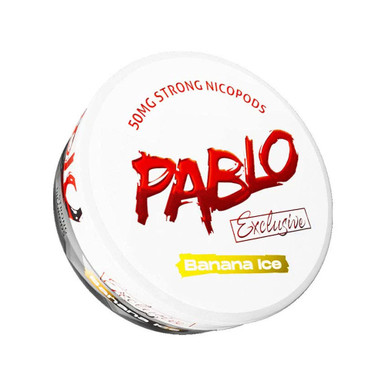
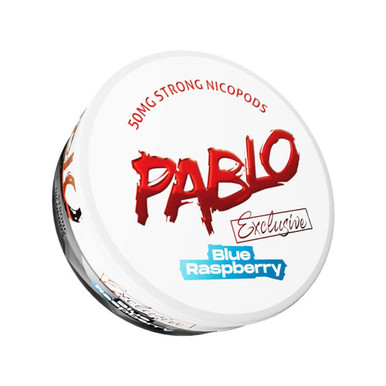
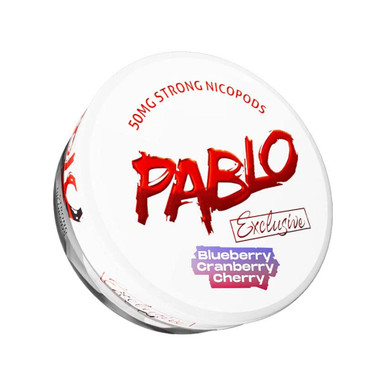
The sibling listings our record offers here all come from the Exclusive line at £3.85, and they show how wide the flavour spread inside a single line can be. Blue Raspberry is a bright berry in the same confectionery register this can's fruit belongs to. Blueberry Peach Ice is the closest structural match among them, being two fruits under a cold layer rather than one. The Blueberry Cranberry Cherry can puts three fruits together with the cranberry supplying the tartness that a grape note lacks, Banana Ice sets a soft creamy fruit against cold, and Bubblegum leaves fruit behind altogether for a sweet-shop flavour. All five are marked in stock, all five are £3.85, and none of their declared figures is held in this record.
What we will not do is rank the lines against each other. There is no evidence in our data for Gold Edition being finer or coarser than any other Pablo line, and the difference in listed price proves nothing while we cannot say what quantity either price covers.
Keeping a tin in the state it arrived in
The lid is a press fit rather than a seal, which is the right trade for something opened repeatedly every day and the wrong one for keeping air out. Moisture leaves a pouch over time and never comes back, so a tin left with its lid sitting crooked reads duller and shorter a fortnight later than it did on arrival. Closing it fully, right around the rim, is the entire fix.
Warmth works faster than air does. A tin in a hot car, in a pocket hung against a radiator, or sat on a laptop that has been running all afternoon will change, and cooling it afterwards does not reverse it. A sweet fruit note tends to show that before a cold one does, which is directly relevant to a can built on this pairing: the fruit half is the half that suffers first. Sunlight through glass counts too. Cool, dark, dry and closed is the whole specification and a drawer satisfies it.
We hold no expiry date, batch date or best-before value, so whatever the manufacturer prints on the can governs. With several tins in hand, work the oldest first and keep the rest sealed, since an unopened tin is far more forgiving than an open one. On refrigeration we hold no guidance and take no position, except to note that a cold tin carried into a warm room collects condensation on the outside and is better opened once it has reached room temperature. Empty the catch well regularly rather than letting spent pouches sit above the fresh ones.
What there is to choose on this listing
One variant: 17mg at £19.95. There is no second declared figure, no alternative tin and no bundle attached. Wanting a different number means going to a different listing, not choosing differently on this one.
On quantity, the empty cans-per-pack field is a real blank and we will not reason backwards from the price to a unit count, because that is guessing with arithmetic attached. The packaging states what is in the package; the basket states what is in the order. Neither of those is this page. The only genuine decision left is how many to order at a time, which is largely a storage question and is covered immediately above.
Ordering, delivery and the age check
The tin goes into the basket at the listed price, the checkout collects a delivery address, and an age check runs as part of that process. Nothing is sold to anyone under 18, and the check does not get waived because an order is small.
ID may be requested on delivery. Where it is requested and no adult at the address can produce it, the parcel will not be handed over. That is worth planning for if the delivery address is a workplace, a neighbour, or anywhere a parcel might be taken in by somebody other than the person who ordered it.
Timings and courier arrangements sit on the checkout pages rather than here. That is deliberate: a delivery promise written into product copy is out of date within weeks and then misleads people who trusted it. The stock flags quoted on this page are the position at the time of writing and can change without the page changing, which applies equally to everything in the full catalogue.
Where a tin may be used is not ours to state
This question comes up often enough to deserve a straight answer, and the straight answer is that we do not have one. We are a shop. We hold a product record — title, brand, price, declared figure, tags, stock position — and nothing whatever about where anyone is permitted to use what they have bought.
Rules about use in a particular place are set by whoever runs that place. An employer sets them for a workplace. An operator sets them for a station, an aircraft or a coach. A venue sets its own, a hospital sets its own, and a landlord may set them for a let. Those rules differ from one organisation to the next, they are revised without anybody telling us, and none of them are published to us in any form. Anyone offering you a single national answer is guessing at it.
So the practical route is to ask the organisation concerned rather than to read a product page. It is a short question and it gets a definitive answer from the only people whose answer actually counts.
Carrying a tin out of the country is the same problem with more at stake. What may be brought into a destination is set by that destination's own law, we do not hold it, and we are not going to summarise it from memory. That is a check to make before travelling rather than at the border.
Routes back to this listing
Four shelves lead here, which is one more than most cans get. The grape shelf is by far the fastest at 14 listings — short enough to take in at a glance, and the right route if the fruit is what you are tracking. The Pablo listings are the most direct if brand is the thing, with all 56 grouped by line.
The mint grouping also contains this can, by virtue of the second tag, but at 148 listings it is the slowest route of the four and the least specific. The strong band is broader still in character if not in count, collecting 132 listings from every brand and flavour family whose declared figure falls in that range, with medium and extra strong either side of it. If none of those matches how you browse, everything we stock is one index that can be narrowed down.
Things people ask about this can
Why does a grape can appear on the mint shelf?
Because it carries two flavour tags, grape and mint, and our shelves are built from tags. The cold element in the name is filed into the mint family in our system whether or not a herb is the point of the can, which is a tagging convention rather than a claim that this tastes of mint. It is also the reason this listing shows up on four shelves while most show up on three.
Does it taste of actual grapes?
Our reading is no, and that is true of grape as a flavour word across this whole category. It means the purple confectionery grape — the character of a boiled sweet or a soft drink — rather than fruit off a vine. That is an observation about the flavour family rather than a fact from our record, which holds only the tag.
How much cooling is in it?
We cannot say. The second tag confirms a cold element is present; nothing in our data quantifies it, and there is no scale we could place it on even if we wanted to. Cans vary widely on that axis and the only reliable way to know is to have the can.
Why is this £19.95 when the same flavour in another Pablo line is £3.85?
We do not know, and we are not going to guess. The cans-per-pack field is empty on both listings, so the record contains nothing that explains the gap. It could be quantity, tin size, or pricing that differs between lines for reasons we are not told. Publishing the blank is the only accurate option.
Is "Gold Edition" a premium range?
Nothing we hold supports calling it that. It is the manufacturer's own name for a line, stored by us as part of a title. It carries no grade, and the price difference between lines is not evidence in either direction while the quantity behind each price is unknown to us.
Is 17mg strong?
It is the figure the manufacturer declares, and it places this listing on our strong shelf. We will not characterise it further, because calling a number high or low is the first step toward advising a person, and we cannot advise which strength suits anyone. It is label information about a product, not a judgement about a reader.
How many pouches are in the tin?
Not something we hold. The count is printed on the packaging and absent from our record, so a figure from us would be a guess standing next to a printed fact. The can also settles the weight of an individual pouch, which we do not hold either.
Which fades first, the fruit or the cold?
We have no measurement, so this is observation rather than data: in cans built on a fruit-and-cold pairing, the two components generally thin at different rates rather than together, and people commonly report the fruit becoming indistinct while some cold impression remains. How that plays out in any particular tin is not something we can tell you.
Is there a version of this without the cold element?
Not on this listing, which is published with both tags and one variant. The grape shelf is the place to look for other readings of the fruit, and at 14 listings it is quick to scan. We do not hold a matched no-cold version of this specific product and we would rather say so than point you at something that is not the same thing.
How long should a pouch stay in?
There is no should, and we will not publish a figure. The genuine range runs from about ten minutes to the better part of an hour, and the same person varies within it across a day. A duration printed by a retailer reads as instruction, and instructing anyone on this is not something we are in a position to do.
Does an open tin lose the fruit before the cold?
As a handling effect, a sweet note generally shows deterioration before a cold one does, so a tin left open, warm or in sunlight tends to read as having lost its fruit character first. That is about how the tin has been kept rather than a fault in the product. Closed, cool and dark is the whole of the maintenance.
Is everything on this page in stock?
Almost. Every listing named above was marked available when this was written with one exception: the Rush grape listing, which our record flags as out of stock and which is marked as such where it appears. Stock changes without pages changing, so the listing itself is always the live position.
Is there a mint without a fruit attached in the brand's other line?
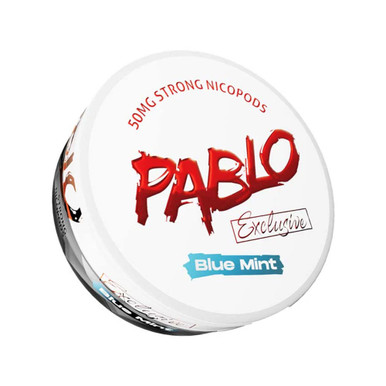
Yes. Pablo Exclusive Blue Mint at £3.85, in stock, is the one can in that line not already named elsewhere on this page, and it is a mint with no fruit in the name at all. As with the rest of that line, our record holds no pack size for it and no declared figure, so its own listing is where to read those. Whether £3.85 and £19.95 are measuring the same kind of unit is the same open question set out further up this page.
The compliance wording, in full
Nicotine is an addictive substance.
Pablo Gold Edition Grape Ice Nicotine Pouches are sold only to adults aged 18 or over who already use nicotine. An age check runs at checkout, nothing is sold to anyone under 18, and ID may be requested on delivery. Where it is requested and no adult at the address can produce it, the parcel will not be handed over.
This product is not a licensed stop-smoking medicine and is not offered, described or intended as one. It is not intended for non-smokers, for anyone who does not already use nicotine, for anyone under 18, or for anyone pregnant or breastfeeding. Nothing on this page is medical advice, and nothing on it should be read as a suggestion that any person begin using nicotine or select any particular declared figure.
Keep the tin closed and out of reach of children and pets, and put used pouches in general waste. Every product fact above — name, brand, price, declared strength, flavour tags and stock state — comes from our own record for this listing. The manufacturer's labelling is the authority for anything printed on the packaging, and where our record holds nothing we have said so rather than estimating.
In summary
Grape Ice is a sweet confectionery grape with a cold element, and it is one of the few cans on this site where that structure is confirmed by the record rather than inferred from a name, because two flavour tags sit against it instead of one. It is listed at £19.95 with a declared figure of 17mg, filed on four shelves, and marked available as this was written. The nearest comparisons we stock are the Elf Bar reading of the same pairing at £29.90 and the Killa version at £33.50, both in stock. What we know is above; what we do not know, we have said we do not know.
More from Pablo
More strong pouches

More mint pouches
Where this sits
Pablo Gold Edition Grape Ice Nicotine Pouches appears in these categories. Browse them, or jump to something close.
You might also like