Home / Extra Strong / Pablo Exclusive Blue Mint Nicotine Pouches
Pablo · 50mg
Read the full guide
Pablo Exclusive Blue Mint Nicotine Pouches
£3.85
✔ In stock — ready to ship
100% tobacco-free
Free over £20
Same-day dispatch
Secure checkout
This is the listing for Pablo Exclusive Blue Mint Nicotine Pouches. Our product record holds six things about it: the brand is Pablo, the product name is Exclusive Blue Mint, the price is £3.85, there is a single declared figure of 50mg, the flavour tag is mint, and it is in stock at the time this page was written. That is the lot. Everything that follows is a description of the object, a comparison against other cans on our own shelves, or an admission that a particular piece of information is not something we hold.
The admissions are not filler and they are not false modesty. A product description can always be made longer, and there are only two ways to do it: find more out, or make more up. We have gone as far as our records allow and then stopped. Where you read that we do not know something, that is the actual position rather than a rhetorical device.
The full guide to Pablo Exclusive Blue Mint Nicotine Pouches
5,025 words on how it eats, who it suits, how to serve it and what to put beside it.
Blue Mint: the record, in full, before anything else
Two structural points before the detail. There is one declared figure on this line, so there is no variant to choose between — one version, one price. And the product name contains a word that our flavour tagging does not account for, which gets a section of its own below rather than a footnote.
Housekeeping: this is an adult nicotine product, sold only to people aged 18 or over who already use nicotine. The compliance wording at the foot of this page is not decoration.
The tin, the lid and the mechanics of the format
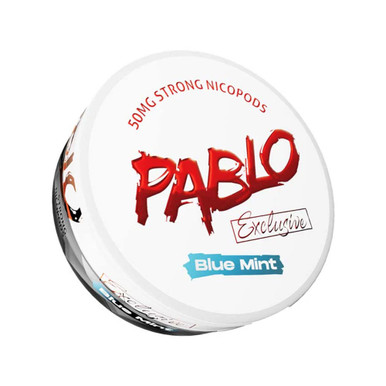
The physical object is the round pouch can that this whole category has standardised on: a shallow cylinder somewhat wider than a bottle cap, with a lid that lifts clear of the body and presses back down onto it. The printed face of the lid carries the brand, the product name and the declared figure, and that printing is the practical means of telling one can from another across a drawer without opening anything. With a single-figure line there is no risk of picking up the wrong version of the same product, which is a small convenience worth having.
Inside, the pouches lie flat in a ring around the floor of the tin. They are soft and slightly yielding, shaped to sit along the curve rather than stack as a block. Set into the top of the lid is a second, shallower compartment — the catch — intended for pouches you have finished with, so a used one has somewhere to go when there is no bin within reach. It is built into the can rather than sold separately, and on a tin this size it will take a handful before it wants emptying.
In use a pouch sits under the lip against the gum and stays there without being held. It is not chewed, not swallowed, and mostly not fiddled with once settled. How long anyone keeps one in is entirely personal, varies widely, and is not a number we are going to supply — we have no basis for a recommendation and providing one would be both useless and inappropriate. Anything the manufacturer says on the subject is printed on the can and its packaging.
Disposal is simple: into the catch if there is no bin to hand, and from the catch into general waste. Never down a sink, a toilet or a drain. Emptying the catch reasonably often does the can itself a favour too, for reasons covered at length in the storage section further down — a full compartment holds the lid fractionally open, and a lid that is fractionally open is not a lid that is closed.
One tag, and a word in the name it does not explain
Our flavour record for this can holds a single tag: mint. One word, nothing alongside it. That tag is why the product appears on the mint shelf, which at a hundred and forty-eight lines is the largest flavour shelf we run, and why it appears on no other flavour shelf at all.
Single-tag cans are the cleanest thing to shelve and, generally speaking, the clearest thing to read before buying. A can tagged for one family is telling you where it sits without qualification. Cans carrying two tags — a fruit and a mint, say — are announcing a compound construction, and they turn up on two shelves accordingly. This one does not.
Which brings us to the word that does not fit. The product is named Blue Mint, and blue is not a flavour our tagging recognises. Across this category the word conventionally codes for a berry — blueberry most often, blue raspberry sometimes — and cans using it usually carry a berry tag to match. This one carries no berry tag. Our record gives mint and only mint.
We are not going to resolve that for you, because resolving it would mean inventing something. There are several ordinary explanations — the word could refer to a colour on the packaging, it could be part of the manufacturer's naming style for the line, or it could describe a flavour element that our tagging has simply not captured. We hold no information that would let us choose between those. What we can tell you is the shelving consequence, which is concrete: if you are browsing by berry, this can will not appear, because it carries no berry tag. If you are browsing by mint, it will. Whatever blue means here, it is not doing any work in our filing.
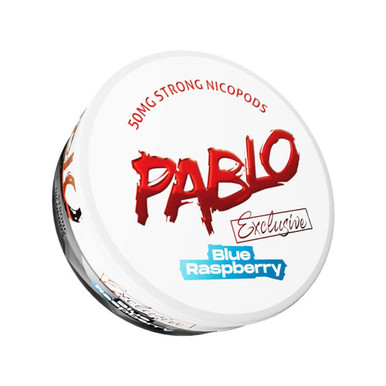
The can's own printed labelling is the authoritative source for anything Pablo publish about the flavour, and we would point you there rather than write a paragraph reverse-engineered from a colour word. If you want a Pablo Exclusive can where a berry is named and tagged, Exclusive Blue Raspberry at the same £3.85 carries a berry tag explicitly — same price, same line, and the tag matches the name in a way it does not here.
The shelf comparison: this can against the rest of the extra strong band
This section does what a product page can genuinely do — set a can beside the others we stock — and then is honest about where that comparison runs out.
What the shelf is
The extra strong band holds ninety-eight lines at the time of writing, and this can is one of them. The band is a filing label: cans land on it because of where their printed declared figure falls, in the same way books land on a shelf because of where a letter falls in the alphabet. It is not a category of merit, not a tier, and not somewhere anyone is invited to progress to. Lower printed figures file on the strong band and the medium band. That is the whole of what the three names mean.
The limit of the comparison, stated plainly
Here is the thing that most shelf comparisons quietly skip. Our records on this page do not carry the declared figures for the other cans listed below. We can tell you a can is on our shelves, what it costs, which brand it belongs to, which flavour family it is tagged for and whether it is in stock. We cannot tell you, from here, what number is printed on its lid. So a sentence comparing this can's 50mg against another can's figure is not a sentence we are in a position to write. Each product's own listing carries its own declared figure, and that is where to look.
That leaves four axes on which we can compare honestly: price, brand, flavour tag and availability. They are more useful than they sound.
Comparing on price — with a large caveat
This can is £3.85. Most of the cans it sits near on the shelves are priced very differently: Edge Mint at £14.95, Fumi Dark Spice at £27.90, Elf Bar Cool Storm at £29.90, Killa Banana Ice at £33.50, Klint Arctic Mint at £36.90, and several at £39.90.
Those numbers look like a straightforward ranking and they are not one. Our record holds no cans-per-pack figure for this product or for any of those, which means we cannot tell you whether a given listing is one can or several. A £39.90 listing and a £3.85 listing may not be measuring the same unit at all. We are not going to describe this can as better value on the strength of a comparison we cannot actually make. Open the individual listing and see what it says it is.
Comparing on flavour tag
This is the axis that works properly, because tags are data we hold. Among the mint-tagged cans nearby, Clew Cool Mint at £39.90 and Denssi Cold Mint, also £39.90, both attach a cooling word to a mint name — a convention that signals cooling is a deliberate part of the design rather than incidental. The Klint can does the same with arctic, and the Elf Bar can with storm. Edge Mint is the plainest naming of the group, with no qualifier at all.
Away from mint, the contrasts are more instructive than the comparisons. Fumi Dark Spice names a family this shelf holds very little of — spice rather than fruit or mint — and Cuba Black Apple Juice at £39.90, from the Cuba range, is a straightforwardly fruit-named can. The 77 Apple Mint can, £39.90, is tagged for both apple and mint, so it appears on two flavour shelves where this one appears on a single shelf.
Comparing on availability
One can in this neighbourhood is out of stock and we would rather flag it here than let you reach a basket and find out. Iceberg Black Mint, listed at £39.90, is unavailable at the time of writing. The listing stays up so you can see that the product exists and check back later, but it cannot be ordered today. Everything else named in this section showed as available when the page was written.
What the comparison amounts to
Set against the rest of the shelf, this can is one of the least expensive things on it as listed, it carries a single flavour tag where many carry two, and it belongs to one of the two largest brand ranges we stock. Those are facts about filing and pricing. They are not an argument that you should buy it, and the strength figure it shares with the rest of the band is not a recommendation either — for which see the next section.
50mg, read for what it is
The declared figure printed on this can is 50mg. It is the manufacturer's label, we reproduce it because it is a fact about the product, and on our site it does one job: filing.
The important part is what it is not. A larger declared figure is not a better can, a superior version or an achievement of any kind. We say that directly because the surrounding culture of this category often implies the opposite, and we would rather not join in. There is no ladder on this site. Nothing here frames a figure as a target, a challenge, or something to build toward, and nothing here suggests that moving between figures is progress. A number on a lid is a label for a shelf.
We cannot advise which declared strength suits anybody. We know nothing about the person reading this. We are not qualified to turn a printed number into personal guidance and we do not attempt it. If you already use nicotine and already know which figures you get along with, you hold information this page cannot have. On this particular listing the question is academic in any case, since there is one figure and no choice within it.
A final factual note: declared figures do not translate cleanly between manufacturers. The same number printed by two makers is accurate in both cases and does not necessarily describe an equivalent object, because pouch size, format and construction vary. Treat the figure as that manufacturer's label, not a universal unit.
Storage and condition: what actually happens to a can over time
This is the part of owning a can that people get wrong most often and that costs the least to get right, so it is worth doing properly rather than in three bullet points.
Dry and moist formats, and which this is
Pouch products across the market are not all built the same way. Some formats are notably drier to the touch and some carry more moisture in them, and the two behave differently in storage — a drier pouch is generally more tolerant of time and air, while a moister one has more to lose. That distinction is a real one and people ask about it.
Our record does not state which format this can is. There is no field for it and we hold no specification from Pablo. So we are not going to tell you that this is a dry pouch or a moist one, and any page that does without citing a source is guessing. What we can do is give you storage practice that holds either way, which is what follows. The can's own labelling is where any manufacturer statement on the subject would appear.
The lid is the whole of the seal
The single most important habit is closing the lid fully every time. The join between lid and body is the only barrier between the contents and the surrounding air, and it either seats or it does not. There is no partial state that works.
The usual reason a lid fails to seat is the catch compartment. Used pouches accumulate in it, the compartment fills, and the lid sits a fraction proud without the owner noticing — because a lid a millimetre out still looks shut. That fraction is enough. Emptying the catch is therefore not just housekeeping; it is the main thing standing between a can and a slow decline. If you take one practical point from this page, make it that one.
Heat does more than time
The second habit is keeping cans away from heat. The reliable offenders are entirely predictable: a car dashboard in summer, a windowsill in direct sun, the top of a radiator, the shelf above a cooker, a bag left in a hot car boot. Heat acts on a can faster than elapsed time does, and a can that has spent an afternoon on a dashboard has had a worse day than one that has sat in a drawer for a month.
A drawer, a cupboard, an inside coat pocket, a desk — ordinary room temperature, out of direct sun — are all entirely normal places for a can to live. Nothing exotic is required.
The refrigeration question
People ask whether cans should go in a fridge, and we are going to give the honest answer rather than the confident one: we hold no manufacturer guidance for this line and we are not going to invent any. Some people keep cans cold and some do not. If Pablo publish a storage instruction it will be on the can's own labelling, and that labelling takes precedence over anything written on this page. We would rather say "we do not know" than pass on a piece of folklore as though it were a specification.
The spare can problem
Storage matters far more for an unopened reserve can than for the one in daily use, and this is the part people overlook. A can in use is opened frequently, lives in a pocket or a bag, and gets replaced within a predictable stretch. A spare is different by definition: it sits untouched for weeks or months, and wherever you put it is where it stays. A spare in a glovebox is a spare that has been through every temperature the car has been through. A spare in a kitchen drawer has had a much quieter time of it. If you keep one — and at £3.85 plenty of people do, simply to avoid running out at an awkward moment — choose its home with more care than you would the working can's.
Travel and knocks
A can rattling loose in a bag with the lid half seated is the other common route to disappointment. Cans are not delicate — the tin will survive being sat on — but the lid can be knocked out of position by other contents, and once it is out of position the seal is gone. An inside pocket, a side compartment, anywhere the can is not free to roll, solves it.
Children and animals
This one is not about condition and it is not negotiable. Cans are kept out of reach of children and animals at all times, in every room, whether opened or not, and whether in use or held in reserve. A drawer a child can open is not out of reach.
Pablo on our shelves, and the Exclusive line within it
Pablo's brand page runs to fifty-six lines, which makes it one of the two largest single-brand ranges we carry. The Exclusive line is one group within that, and the six Exclusive cans nearest to this one are all priced at £3.85 and all in stock as this page is written.
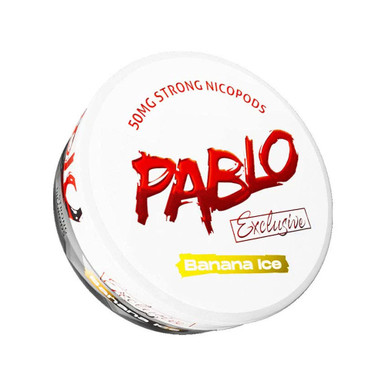
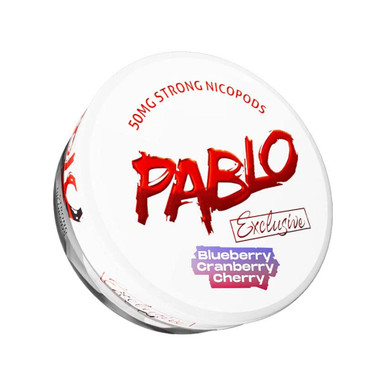
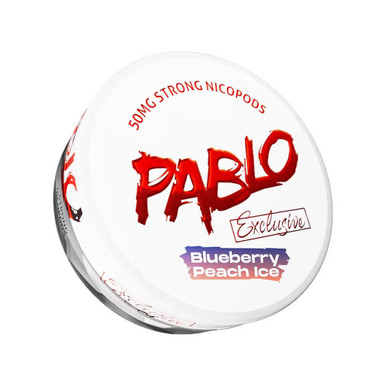
Among the fruit-tagged siblings, Exclusive Blueberry Cranberry Cherry names three fruits outright, which is the most explicit naming in the group and tells you a good deal more up front than a two-word name can. Exclusive Blueberry Peach Ice combines two fruits with a cooling term, giving it a two-part construction and a place on two flavour shelves. And Exclusive Banana Ice is tagged for both mint and tropical, so it shares this can's mint tag while adding a fruit family alongside it — the closest relative to this listing in tagging terms, at the same price.
At the confectionery end of the naming, Exclusive Bubblegum and Exclusive Cherry Cola both take their names from sweet-shop and soft-drink references rather than fruit families — a different naming convention again, and both at the same £3.85. The remaining Pablo lines sit across other editions and other declared figures and are laid out on the brand page.
What people keep alongside a single-tag mint can
Most people who use pouches regularly keep two or three cans in rotation rather than one, for an ordinary reason: a single flavour used continuously stops registering as itself. Alternating between cans that sit some distance apart keeps each of them reading clearly. That is a note about taste, not about quantity — rotation is about variety, not about using more.
Pairing against a single-tag mint can is more straightforward than pairing against a compound one, because there is only one direction to move in: away from mint. The Exclusive line makes that easy, since every can in it costs the same £3.85, so building a pair costs exactly twice one can and involves no trade-off at all. A berry-tagged sibling and a mint-tagged one is the most common arrangement people arrive at.
Crossing brands widens the field considerably. The apple-named cans — the 77 can with its two tags, the Cuba can taking a juice angle on the same fruit — sit a long way from a plain mint. The spice-named Fumi can sits further still, and is one of the few things on our shelves that is neither fruit nor mint. If you want to stay in the mint family but change the register within it, the cooling-named cans from Clew, Denssi, Klint and Elf Bar are all in stock and all take a different linguistic run at the same family. Remember, as always, that the prices on those listings and the price on this one may not be describing the same unit, because the cans-per-pack field is empty throughout.
Choosing, when the listing offers one of everything
There is a single declared figure on this line and no pack-size options, our cans-per-pack field being empty. So there is no choice to make inside this listing whatsoever: one version, one price, add as many as you want and the total simply multiplies.
The real choice, then, is between this can and others, and it is a choice about brand, tag and price rather than about numbers. If a single mint tag is what you want, this is one of the cleanest examples we stock. If you want a berry named and tagged, the Blue Raspberry sibling does that at the same price. If you want the mint tag with a fruit alongside it, Banana Ice carries both. And if you want to browse by printed figure rather than by taste, the three strength bands are there for it — though we would repeat that the bands are filing labels and nothing else.
We will not tell anyone which declared figure to buy, and we will not frame any figure as a goal. That holds across every page on this site.
Ordering, delivery and the age check
Buying is the ordinary process. The can goes into the basket at £3.85 and you check out. There is no variant to pick, because there is one declared figure and one price.
Age verification is neither a formality nor optional. This product is sold to adults aged 18 or over who already use nicotine and to nobody else. Age is checked at the point of purchase and ID may be requested on delivery. If it is requested and an adult at the address cannot produce it, the parcel will not be left — the courier has no discretion on that point, and it applies to one inexpensive can as much as to a large order.
Delivery costs, timings and any thresholds live at the checkout, which is the accurate and current source for all three. Those things change; a page like this does not change with them, and a stale delivery promise in body copy would be worse than no promise at all. Stock is the same story — this can showed as available when the page was written, and the listing itself is what tells you the position at the moment you look.
Finding this page, and getting elsewhere from it
This can is filed in three places: on the Pablo brand page among the other fifty-five Pablo lines, on the extra strong band because of where its printed figure falls, and on the mint shelf because of its single flavour tag. Three routes in, and no berry shelf among them, for the reason set out earlier.
To start wider, the full index of everything we stock sits above every category and all the shelves hang off it. From there the site narrows two ways: by printed figure, through the medium, strong and extra strong bands; or by brand and flavour family through the individual category pages. The mint shelf is the largest flavour shelf we run, and the Pablo and Cuba pages are the two largest brand ranges.
Questions people actually ask
Why is there no berry tag when the name says Blue?
Because our record holds one flavour tag for this can and that tag is mint. The word blue does not appear in our tagging and we hold nothing that explains what it refers to here — it could be packaging colour, a naming style, or a flavour element our tags have not captured. We are not going to pick between those. The practical effect is that the can does not appear when you browse by berry, and it does appear when you browse by mint.
What does it taste like?
We hold no flavour description from the manufacturer, only the mint tag and the product name, so we cannot tell you beyond the family. Mint is what our record says and mint is what we will say. Anything more specific would be a guess presented as a product fact, and the can's own printed labelling is the authoritative source for anything Pablo publish on the subject.
Is 50mg the strongest thing you sell?
We cannot say, because the declared figures for other products are held on their own listings rather than on this page. What we can tell you is that 50mg files this can on the extra strong band, which holds ninety-eight lines. That is a statement about filing. It is not a ranking, and a larger printed figure is not a better product or an achievement of any sort.
Which strength should I choose?
We cannot answer that, and there is no choice on this listing in any event — there is one declared figure. More broadly, recommending a strength to an individual is advice we are not in a position to give, we know nothing about the person asking, and we are not going to imply that any number is a target. If you already use nicotine, what you know about your own preferences outranks anything on this page.
Is this a dry pouch or a moist one?
Our record does not state it and we hold no specification from the manufacturer, so we are not going to guess. The storage advice in this page's storage section is written to hold either way. If the format matters to you, the can and its packaging are where any manufacturer statement would appear.
How many pouches are in a can?
We do not carry a pouch count for this line in our record, so we cannot state one. That figure is printed on the can by the manufacturer and the printed figure is the one to rely on. A short accurate answer is better here than a plausible invented number.
Can I buy a multipack or a roll?
Not from this page, and our cans-per-pack field is empty for this product, so we cannot tell you whether one is sold. This listing is a single can at £3.85. If you want several, add several — the price multiplies and nothing else happens.
Why are other mint cans on your site so much more expensive?
Possibly because those listings are not single cans, but we cannot confirm it, since the cans-per-pack field is empty for them too. That is a genuine gap in our data. We are not going to present this can as better value on the back of a comparison we are unable to make properly — open the listing in question and see what it describes.
How should I store it?
Lid fully closed, catch compartment emptied so the lid can seat, somewhere cool and out of direct sun, away from radiators and dashboards, and out of reach of children and animals. Take extra care over where an unopened spare lives, since it will sit there for a long time. We hold no manufacturer storage instruction for this line, so if the can says something different, follow the can.
Will I be asked for ID?
You may be. Age is verified at the point of purchase and ID may be requested on delivery, and an adult at the address must be able to produce it or the parcel will not be left. This applies to every nicotine product on the site, at every price point, without exception.
Is everything mentioned here in stock?
No. One can named in the shelf comparison is currently unavailable and is flagged where it appears. This can itself showed as in stock when the page was written, but the listing is the live answer and this text is not — stock moves, and a product's own page is the only reliable signal at the moment you look.
How long does an unopened can keep?
We hold no shelf-life figure for this line and will not estimate one. Any date or period the manufacturer publishes will be printed on the can or its packaging, and that printing is the thing to go by. What we can say is the practical point made in the storage section: where a spare can sits matters more than how long it sits, because heat does more to a can than elapsed time does.
What does "Exclusive" in the name mean?
It is Pablo's own line name for a group of their cans, in the same way Silver Edition names a different group. We hold no statement from the manufacturer about what the word is meant to signal, so we are not going to construct one. On our site it is simply part of the product name — it does not affect the price, the declared figure or the shelves the can files on.
Do you publish ingredients?
No. We publish what our record holds — name, brand, price, declared figure, flavour tag and stock — and nothing else. Ingredient lists, technical specifications and regulatory printing belong to the manufacturer and appear on the can and its packaging. Where we hold nothing, this page says so rather than filling the space with something that reads well.
Legal and compliance information
Nicotine is an addictive substance.
This product is sold only to adults aged 18 or over who already use nicotine. We do not sell to anyone under the age of 18. Age is verified at the point of purchase and ID may be requested on delivery; where it is requested and an adult at the address cannot produce it, the delivery will not be completed.
Pablo Exclusive Blue Mint Nicotine Pouches are not a licensed stop-smoking medicine and are not authorised, sold, supplied or intended as one. This product is not intended for non-smokers, for people who do not already use nicotine, for anyone under 18, or for anyone who is pregnant or breastfeeding. Nothing on this page is medical advice, nothing on it recommends a declared strength for any individual, and nothing on it should be read as encouragement to begin using nicotine.
Keep out of reach of children and animals. Every factual statement on this page — the product name, the brand, the £3.85 price, the 50mg declared figure, the single mint flavour tag and the stock position — comes from our own product record for this listing. Where that record holds nothing, this page says so. The can and the manufacturer's own labelling remain the authoritative source for anything printed on the packaging.
To sum up
Exclusive Blue Mint is a £3.85 Pablo can with one declared figure of 50mg and one flavour tag, mint, filed on three shelves and in stock as this was written. The word blue in the name is not reflected in our tagging and we have said so rather than explaining it away. The printed figure is a label and not a rank. Storage comes down to a lid that seats properly and a place that is not hot. If you want the berry-tagged can from the same line at the same price, Blue Raspberry is it, and the rest of what we carry is one step from the main shop index.
More from Pablo
More extra strong pouches
More mint pouches
Where this sits
Pablo Exclusive Blue Mint Nicotine Pouches appears in these categories. Browse them, or jump to something close.
You might also like