Edge · 6mg–16mg · 5-can pack
Read the full guide
Edge Mint Nicotine Pouches
£14.95
✔ In stock — ready to ship
100% tobacco-free
Free over £20
Same-day dispatch
Secure checkout
Edge Mint Nicotine Pouches are listed here at £14.95 for a pack of five cans, in four declared strengths: 6mg, 9mg, 12mg and 16mg. The flavour is mint. At the time of writing the product is recorded as in stock, which on this site means the listing will let you add it to a basket rather than showing you an unavailable line.
Four strengths at one price is the unusual thing about this listing, and it is the first fact worth registering. Every one of the four variants is £14.95. The number printed on the lid changes; the figure at the checkout does not. We will come back to what that means for the way people actually buy the product, because it changes the shape of the decision.
The full guide to Edge Mint Nicotine Pouches
5,225 words on how it eats, who it suits, how to serve it and what to put beside it.
What you are looking at on this listing
The second fact worth registering is the pack. This is not a single tin. Our record holds a cans-per-pack figure of five, so the £14.95 buys five cans of one strength in one flavour — £2.99 each, which is division rather than a sales claim. A five-can pack is a different kind of purchase from a single can, and the whole middle of this page is about what that changes.
Everything stated on this page comes from our own product record: the name, the brand, the price, the pack size, the four declared figures, the flavour word and the stock position. Where the record holds nothing, this page says so rather than filling the space. And before any of it: this is an adult nicotine product, sold to over-18s who already use nicotine. The compliance section at the foot of the page sets out the terms in full.
Handling a can, and what happens to a pouch afterwards
The format first, because it is the same across the whole site and describing it once properly saves describing it badly five times. A nicotine pouch is a small sealed pouch that goes in the mouth, between lip and gum, and stays where it is put. It is not chewed. It is not swallowed. There is no device involved, nothing to charge and nothing to refill.
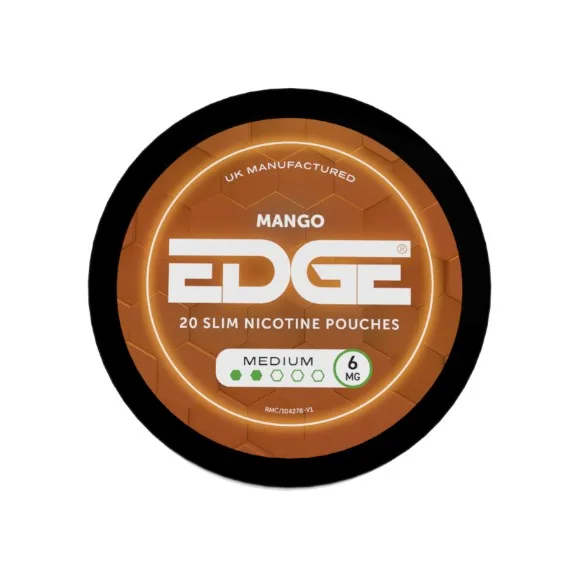
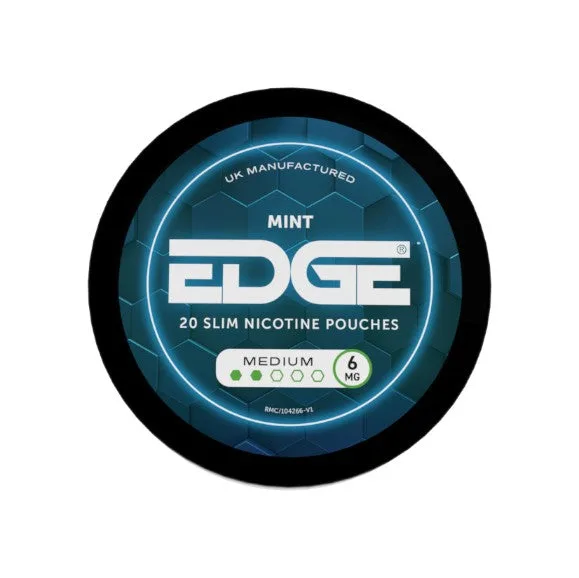
The can is a round tin, shallow, with a press-fit lid. It goes in a pocket flat and it does not have a corner to catch on a lining. The top face of the lid carries the brand name and the flavour, and the strength figure is printed where you can read it without opening anything — which matters a good deal more on this product than on most, because a five-can pack means five identical-looking tins and the printed figure is the only thing that tells you what you are holding.
Inside, the pouches sit in a ring. We do not publish a per-can pouch count. Our record carries the pack size and not the portion count, and rather than borrow a plausible number from elsewhere on the shelf, the honest answer is that the printed can is where that figure lives. The same applies to weight, dimensions and anything else stamped on the packaging.
Most tins of this kind carry a second shallow compartment in the lid for used pouches. It is a small piece of design that makes the can self-contained: a used pouch goes into the lid, and the lid gets emptied into general waste when you next pass a bin. Not down a sink, not down a toilet, and not left anywhere a child or an animal could get at it. A used pouch does not look like anything that ought to be kept out of reach, which is precisely why it needs to be.
How long anyone keeps one in is not a figure we will give. It varies from person to person by an enormous margin, and the reason most often offered for taking one out is that the flavour has gone. Follow whatever usage guidance the manufacturer prints on the can.
Mint as a word on a lid, and mint as a taste
Our flavour record for this can holds one entry: mint. No fruit behind it, no second mint layered over it, no cold word appended to it. One syllable doing all the work — which makes it worth being precise about what the plain word usually delivers, particularly because the same maker also lists a spearmint, and the two are not interchangeable.
Mint used on its own, unqualified, generally reads as the cooler and more assertive side of the mint family. It has a penetrating quality — the flavour arrives quickly, occupies the front of the mouth and carries a clear cooling character rather than a suggestion of one. There is a clean edge to it, something close to sharpness, and at the back of it a faint bitterness of the kind you find in strong mint confectionery. It is not a sweet flavour in the way a fruit is sweet; there is sweetness in most mint flavourings, but it sits underneath rather than on top.
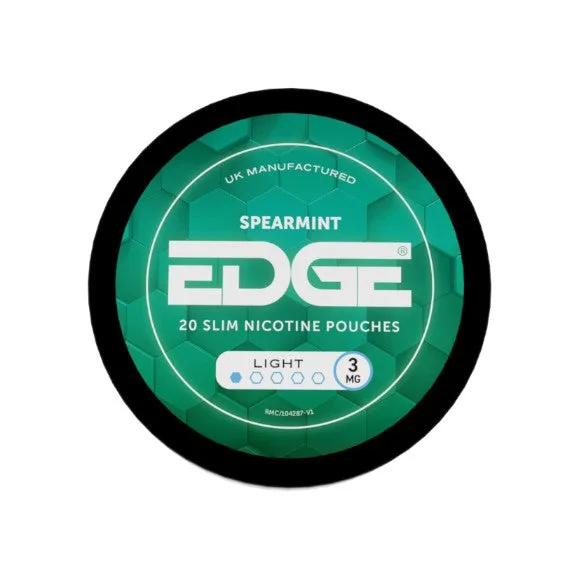
A spearmint, by contrast, is the softer and greener reading: rounder, noticeably sweeter, more leafy and herbal, with much less of the cold bite and effectively none of that bitter back-note. If you put the two side by side, the plain mint is the colder and sharper of the pair and the spearmint is the sweeter and gentler one. Edge Spearmint at the same £14.95 is where that comparison can be made within one brand, which is the cleanest way to make it.
The aroma follows the taste. Take the lid off a plain mint can and the smell is immediate and fairly strong — it fills the space around the open tin in a way a fruit can generally does not. That is worth knowing if the can is going to be opened in a quiet room.
Flavour over time is the other half of the description, and it behaves differently for a mint than for a fruit. A mint tends to arrive at full strength and then recede fairly evenly, with the cooling character outlasting the sweetness — the last stretch of a mint pouch usually reads as cool and faintly bitter rather than as anything sweet. A fruit, by contrast, tends to flatten out into a general sweetness as it goes. Neither behaviour is better than the other and neither is a specification; it is simply what people describe, and it is the reason the point at which a mint stops being interesting is easier to notice than with a fruit.
It is also worth saying what a plain mint is not, because the mint shelf on this site is full of cans that are more than one thing. This is not a double mint, not a mint with a menthol word attached, not a mint with a fruit layered under it and not a mint with a cold-weather adjective in the title. The name is one word, our flavour record holds one entry, and the page is not going to read more into the can than the can says about itself.
One honest caveat. Our catalogue files both this can and the spearmint under the same flavour heading, because the data behind our mint shelf works at the level of the family rather than the individual reading. The heading tells you which family; the can tells you which reading. We hold no tasting description from the manufacturer, so everything above is the general behaviour of the flavour word, not a transcription of a maker's note.
6mg to 16mg: what the four numbers are for
The milligram figure is a declared strength printed by the manufacturer on the can. On this page it functions as a label — the thing that distinguishes one variant of an identical product from another. We are not going to explain what the figure represents, describe what any number does, or suggest that any of the four is appropriate for anyone.
What the numbers are genuinely useful for is filing and reordering. This listing carries the widest ladder of any Edge can we can see from here: four figures spanning 6mg to 16mg. That spread is why the product is filed on the strong band rather than lower down — our banding reflects where a product's declared figures reach, and a ladder that tops out at 16mg lands the whole listing on that shelf even though its lowest variant is a 6. It is a useful illustration of a general point about this site: the band is our categorisation of the listing as a whole, so a can filed under the medium band and a can filed under strong can still share a variant figure between them. The individual listing, with its own ladder printed on it, is always the more precise read.
For reordering, the number is the whole of the identification. If you have a pack on the go and you want the same again, the figure on the lid of the empty can is what you search for. With four variants of one flavour at one price, it is the only thing separating a correct reorder from a wrong one, and it is the reason the basket line is worth reading back before paying.
Above the strong band sits the extra strong shelf, which holds the listings whose declared figures we have filed highest. Several of the cans named further down this page live there. That is information about where things sit on our shelves, and nothing more than that.
Building a rotation around a plain mint can
Almost nobody keeps one flavour and nothing else, and a plain mint is the most common thing for a rotation to be built around. It sits at the centre of the flavour map rather than at an edge, which means practically everything else on the site reads as a change from it — and it also means the changes divide fairly neatly into three kinds. What follows is a description of how people commonly put a set together, not a suggestion that you should buy more.
A sideways move: a different reading of mint
The smallest step is another mint that is not this mint. Within the brand, that is the spearmint can from the same maker, which is the sweeter and greener reading described above and costs exactly the same £14.95 — the one pairing where you can be confident the only variable is the flavour, because the maker, the price and the pack format are all held constant.
Outside the brand, 148 mint listings spread across a range this page can only sketch. Clew Cool Mint and Cuba Ninja Ice Cool are both listed at £39.90, Klint Avalanche Mint at £36.90 sits a little below them, and Denssi Cold Mint is another £39.90 listing with a cold word in the name. The naming is the only guide we can honestly offer to how any of those read — we hold flavour words and prices, not formulations — but a can with cool, cold or arctic in its title is telling you which end of the mint range it is aiming at.
A step further: mint with something else in it
The middle kind of change keeps a mint character but puts something alongside it. Fumi Fiery Mint, listed at £27.90, is named for a mint with a second idea in it. Elf Bar Cool Storm at £29.90 is a cold-named can whose flavour word is not a plain fruit or a plain mint. These are the cans people tend to keep as the second tin in a bag: near enough to the main flavour that the switch is not jarring, different enough to be worth making.
A clean break: something that is not mint at all
The third kind of change is a fruit, and it is the one that gives the most contrast for the least thought. Nordic Spirit Max Frosty Mint at £4.49 is not that — it is another mint and belongs in the first group — but Killa Banana Ice at £33.50, Pablo's Gold Edition blueberry and peach ice can at £19.95 and 77 VB Edition Mini Arctic Berry at £39.90 all are. A berry or a banana next to a plain mint is about as far apart as two cans on this site get while still being the same format.
The practical note on all of this, and it is the unglamorous one: prices in that list run from £4.49 to £39.90, and our record does not hold the pack size behind most of them. A £39.90 listing and a £4.49 listing may well be selling entirely different quantities. Before treating any of those figures as comparable to the £14.95 on this page, read what the individual listing says it includes.
The size and shape of the Edge shelf here
The Edge brand page holds five listings. That is our shelf count, not a statement about the maker's full range — brands make things we do not stock, and what we do not stock does not appear anywhere on this site. Of the five, our record for this product names one other directly, the spearmint. The remaining three are on the brand page and not in this record, so this page will not name them.
Five listings makes Edge one of the smaller brand shelves we carry. The Cuba shelf and the Pablo shelf are both very much larger, running to multiple sub-ranges with their own naming conventions. Neither size tells you anything about the products; it tells you about our buying. What a small shelf does change is how you browse it — five listings can be read in a minute, which is not true of the big brand pages.
The thing the Edge shelf does have, as far as this record reaches, is flat pricing. Both cans we can name sit at £14.95. Across most of this site the price varies with the product, so a shelf where it does not is worth knowing about: it means that within the brand, moving between flavours costs nothing extra, and the only decision left is what you want in your mouth.
It is worth being precise about what a brand page on this site is and is not, because people reasonably expect more from one than it can give. A brand page is a filtered view of our catalogue. It shows the listings we carry from that maker, in whatever strengths and flavours we happen to stock, at our prices. It is not a catalogue of the maker's output, it carries no history of the company, and it does not tell you what has been discontinued or what exists elsewhere. When this page says there are five Edge listings, that is a statement about our shelves on the day the count was taken and nothing more.
The other structural point about brand pages here is that they cut across the strength bands. This listing appears on the Edge page and on the strong shelf at the same time; the spearmint appears on the Edge page and on a different band. So the brand page is the only view that shows you the range as a range, with the strength ladders sitting side by side rather than separated by our filing. If you are comparing two cans from one maker, that is the view to use, and it is a short page to read.
One pack, a spare tin, and how reordering actually goes
This is the section about buying rhythm rather than about the product, and it exists because a five-can pack behaves differently from a single tin in ways that are easy not to think about until the pack arrives.
The commitment a five-can pack represents
Five cans of one flavour at one strength is a real commitment to a flavour. It is not a trial. If mint turns out not to be what you wanted, you have four more cans of it than you would like, and there is no way to buy fewer of this particular listing — our record shows the pack as five, and the listing sells what the listing sells. The honest advice, and it costs us a sale to give it, is that a five-can pack is a thing to buy once you know you get on with a flavour rather than to find out whether you do. If mint is new to you as a pouch flavour, the mint shelf carries listings at every price point on the site, including several that cost a fraction of this one.
What flat pricing across four strengths changes
On most listings, moving up or down a strength ladder has a price attached to it and that acts as a brake on changing your mind. Here it does not: 6mg, 9mg, 12mg and 16mg are all £14.95. Whatever you conclude from that, it removes cost from the decision entirely, and it means the four variants are genuinely four labels on one product rather than a tiered range. It also means a basket containing two different strengths of this can costs exactly twice one pack, with no arithmetic to do.
The spare-tin habit
The commonest pattern with a multi-can pack is that the pack lives at home and one tin lives in a bag or a coat. It works because the can is self-contained — sealed, with its own compartment for used pouches, needing nothing else to go with it. The failure mode of the habit is equally predictable: the tin in the coat gets forgotten, and forgotten tins are how people end up with a half-used can that has dried out in a hot car. The storage section below is the short answer to that.
Reordering without getting it wrong
Two things go wrong on a reorder of a product like this. The first is strength: four identical-looking variants, one price, and nothing but a printed figure to tell them apart. Keep the empty lid until the new pack arrives and match the number. The second is quantity: a five-can pack in a basket looks the same as a single tin in a basket, and the line total is what tells you which you have. Read the basket back before paying.
Whatever reorder or account options exist live at the checkout rather than in our product record, so this page will not describe them. What this page can tell you is that stock moves independently per variant — one strength can sell out while the other three are still available — so a reorder is not guaranteed to find the same figure waiting, and the whole catalogue is picked into one basket if you need to combine it with something else.
Keeping cans in good condition, especially the ones you have opened
With five tins in play at once, storage stops being an afterthought. The unopened cans keep themselves; the opened one is the one that needs a habit attached to it.
Press the lid all the way down every time. A press-fit lid that is resting rather than seated will let a can dry out, and a dried pouch loses its flavour first and its texture second. This is the single thing that determines whether the fifth can in a pack is as good as the first.
Keep cans cool, dry and out of the sun. A drawer or a cupboard is ideal, a bag pocket is fine, and the three things that actually ruin a tin in ordinary life are a car dashboard, a windowsill and a shelf above a radiator. None of them are hard to avoid once you have noticed them. Heat is what does the damage; a cool room does not, though there is no reason to refrigerate anything and condensation on a cold tin brought into a warm room is not helping.
Store tins flat rather than on their edge. The pouches sit in a ring inside and a can kept on its side ends up with everything settled at one end, which makes the first one awkward to lift out. With a five-pack, keeping the unopened tins in their outer packaging until they are needed is the simplest way to keep them together and out of the light.
And the rule that is not a matter of preference: cans belong somewhere children and animals cannot reach. A high cupboard, not a coffee table, not an open bag on the floor. That applies to the lid compartment holding used pouches exactly as much as it applies to a sealed tin.
Picking between the four figures on this listing
The choice here is between 6mg, 9mg, 12mg and 16mg. They are the same flavour, the same pack size and the same £14.95. We are not going to recommend one, and we cannot tell you which is appropriate for you — we do not know you, we hold nothing that would let us judge it, and a shop telling a customer which nicotine strength to buy is not a thing that should happen.
What we can set out is the information bearing on it. The price does not vary, so cost is not a factor. The flavour does not vary, so taste is not a factor. The pack size does not vary, so quantity is not a factor either. The declared figure is the only difference our record carries between the four lines, and the figure printed on the can by the manufacturer is the authoritative statement of it.
On availability: the product is recorded as in stock, but stock on individual variants moves independently. If the figure you are looking for is not showing, that is a stock position and not a nudge from us toward a different number. The other three may still be there, and the wider mint shelf holds 148 listings if you would rather move sideways than up or down.
Checkout, delivery and proving your age
Ordering is the same as for anything else here: pick the strength variant on the listing, add it to the basket, check out. The basket line shows the strength and the price. With four variants at one price and five cans to a pack, that line is doing more work than usual, so read it.
This product is age-restricted. There is an age check at checkout and it is not a formality. ID may be requested on delivery. If it is requested and there is no adult present to produce it, the courier will not complete the delivery and the parcel goes back — a wasted journey for the driver and a delay for you. Keeping ID to hand on the delivery day is the whole of the preparation needed. We do not sell to anyone under 18 in any circumstances.
Orders are picked from across the whole site, so there is no separate checkout per brand and nothing stopping a basket from containing this pack, a single tin from another maker and something from a different shelf entirely. Prices across the catalogue vary very widely — the listings named on this page alone run from £4.49 to £39.90 — so the basket total is the figure to check rather than a remembered price.
How to get back to this listing
There are four routes to this page and the quickest one depends on what you remember about the can.
If you remember the maker, the five-can Edge shelf shows everything from it on one screen. If you remember the flavour, our mint shelf is where this can is filed with every other mint we carry. If you remember the number on the lid, this listing lives among 132 listings we file as strong, with the medium band below it and the extra strong shelf above.
If you remember none of it, everything we stock hangs off the top of the site, and the larger brand pages — Pablo and Cuba among them — are the natural places to browse when you have no particular can in mind. The filing overlaps on purpose: a listing with two flavour words appears on both flavour shelves, and a listing with a wide ladder can be reached from more than one strength band.
Things people ask about this particular pack
Am I buying one can or five?
Five. Our record holds a cans-per-pack figure of five for this listing, so £14.95 is the pack price and five tins of one strength is what arrives. That works out at £2.99 a can as simple division. The listing page and the basket line are the authoritative statement of what is included at the price shown — if they ever disagree with this page, believe them rather than us.
Why is 16mg the same price as 6mg?
Because that is how the product is priced. All four variants are listed at £14.95, with no premium on the higher declared figures and no saving on the lower ones. It is not the case everywhere on this site; plenty of listings do move in price between variants. On this one the number on the lid and the number at the checkout are unconnected.
How many pouches are in a can?
We do not hold that figure. Our record carries the pack size but not the portion count inside each tin, and rather than take a plausible number from another brand we would rather say plainly that we do not know it. The printed can carries that information along with everything else on the manufacturer's own labelling, and it is the authoritative source.
What is the difference between this and the spearmint version?
Flavour, and only flavour as far as our record reaches. Both are Edge, both are £14.95. The plain mint is the colder, sharper reading with a faint bitter edge behind it; a spearmint is the sweeter, greener, softer one with much less cold to it. We hold no manufacturer tasting notes for either, so that is the general behaviour of the two flavour words rather than a quotation. The strength ladders differ between the two listings — read each page for its own numbers.
Which of the four strengths should I buy?
Not a question we will answer. We hold four declared figures at one price in one flavour, and that is the whole of the information we have. We do not know you, we cannot assess what is appropriate for any individual, and recommending a nicotine strength is outside what a shop should be doing. The figures are on the listing and the choice is yours.
Is it actually in stock?
It was recorded as in stock when this page was written. The listing itself is the live position, and stock on each of the four variants moves independently — one figure can be unavailable while the other three are fine. If the page will let you add your variant to a basket, it is there; if it will not, it is not, and no amount of description on this page changes that.
Can I buy two different strengths in one order?
Yes. They are separate variants and both go in the same basket, and because all four are £14.95, two packs come to exactly twice one pack. Check the basket lines before paying, because two packs of the same flavour at the same price look near-identical on screen and the strength figure is the only thing telling them apart.
Do you publish ingredients or technical specifications?
No. We publish the name, brand, price, pack size, declared strengths, flavour and stock position, and that is everything we hold. Ingredient lists and technical detail come from the manufacturer's labelling, printed on the can, and we will not paraphrase a label second-hand on a product page. If that information is what you are after, the can is where to read it.
Is the mint can stronger-tasting than a fruit one?
As a matter of taste rather than anything else, a plain mint is generally the more assertive flavour in the mouth than a fruit is — it arrives faster and carries a clear cooling character. That is a description of flavour and nothing else, and it says nothing about the declared figure on the lid, which is a separate matter entirely. A 6mg mint and a 6mg fruit carry the same printed number and taste nothing alike.
Why is this filed as strong when it starts at 6mg?
Because our banding follows where a listing's declared figures reach, and this one reaches 16mg. The band describes the listing as a whole rather than each variant on it, which is why a 6mg option can appear on a shelf labelled strong. It is a quirk of filing rather than a statement about any individual can, and it is the reason we keep pointing at the listing itself: the ladder printed on the page is precise in a way a category heading cannot be.
Do the five cans in a pack have to be the same strength?
Yes, as the listing is sold. Each variant is a separate line with its own declared figure, and a pack is five cans of that one figure in that one flavour. If you want two different numbers, that is two packs and two basket lines, which comes to exactly twice £14.95 since the price does not move between variants. Mixing within a single pack is not something the listing offers.
What if I open the pack and do not like it?
Then you have five cans of a flavour that is not for you, which is the honest risk of a multi-can pack and the reason this page says so twice. Our standard returns policy applies as it does across the site, and an unopened pack is a different proposition from an opened one. If mint is untested for you, a cheaper single listing from the mint category is the low-cost way to find out before committing to five tins.
Legal and compliance information
Nicotine is an addictive substance.
Edge Mint Nicotine Pouches are sold to adults aged 18 or over who already use nicotine, and on no other basis. We do not sell to under-18s. An age check applies at checkout, and ID may be requested on delivery; if it is requested and cannot be produced by an adult receiving the parcel, the delivery will not be completed.
This product is not a licensed stop-smoking medicine and is not authorised or intended for any such purpose. It is not intended for non-smokers, for anyone who does not already use nicotine, for anyone under 18, or for anyone who is pregnant or breastfeeding. Nothing on this page is medical advice, nothing on it is a recommendation to begin using nicotine, and nothing on it recommends any particular declared strength to any particular person.
Keep this product out of reach of children and animals, including used pouches stored in the lid compartment. Every factual statement above — name, brand, price, pack size, declared strengths, flavour and stock position — comes from our own product record for this listing. Where information is absent from that record, this page has named the gap rather than filling it. The can and the manufacturer's labelling are authoritative for anything printed on the packaging.
To sum up
Edge Mint is the plain mint can on a five-listing brand shelf: £14.95 for five tins, four declared figures from 6mg to 16mg at that one price, in stock at the time of writing and filed on the strong shelf because of where the top of its ladder reaches. The flavour is the colder, sharper reading of mint rather than the sweeter one, which is the whole of what separates it from its spearmint sibling at the same price. The pack size is the thing to think about hardest before ordering, because five cans is a commitment to a flavour rather than a way of testing one. Everything we know about it is above; everything we do not know has been named as a gap.
More from Edge
More strong pouches

More mint pouches
Where this sits
Edge Mint Nicotine Pouches appears in these categories. Browse them, or jump to something close.
You might also like