Clew · 5mg–20mg · 10-can pack
Read the full guide
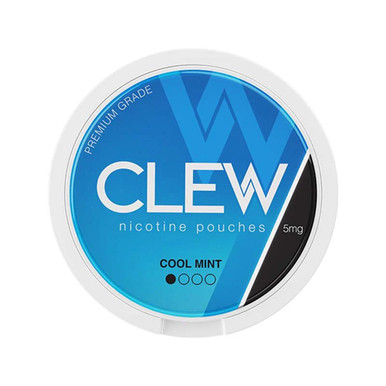
Clew Cool Mint Nicotine Pouches
£39.90
✔ In stock — ready to ship
100% tobacco-free
Free over £20
Same-day dispatch
Secure checkout
Clew Cool Mint Nicotine Pouches is a ten-can listing at £39.90, offered in 5mg, 10mg, 15mg and 20mg declared strengths, all four of them at that one price. Our record files the flavour as mint. Stock shows as available at the time this was written. That is the complete set of facts we hold on this product, and this page is assembled out of those facts, out of comparisons with cans on our own shelves, and out of straightforward admissions where our record is silent.
Before anything else: this is an adult nicotine product, restricted to people aged 18 or over who already use nicotine. The full wording sits in its own section further down, and nothing written here is intended to encourage anyone to consume anything.
The full guide to Clew Cool Mint Nicotine Pouches
5,063 words on how it eats, who it suits, how to serve it and what to put beside it.
The Cool Mint can, described
The tin is the familiar round pouch can — low, plastic, a lid that lifts clear and presses back down, small enough to disappear into a coat pocket. Brand and flavour are printed on the lid, the declared figure appears where Clew has chosen to put it, and ten identical tins arrive together as a box. A ten-can order is a storage question as much as a purchase, and since storage is the main subject of this page we will come to it properly rather than in passing.
Ten cans for £39.90 works out at £3.99 apiece. We have done that division ourselves so this listing can be set beside the single-can products elsewhere on the site; the figure you actually pay is £39.90. A pouch count per can is not something our data carries, so we will not state one — read it off the tin.
Cool Mint, and what separates it from the other two mints here
Clew keeps three mints on our shelves and they are not three names for the same flavour. This is the point at which most product copy gives up and calls all of them "refreshing", so it is worth doing properly, because the differences are real and they are the main thing a customer buying across the range needs to know. Everything in this section is taste and aroma. Nothing else is being claimed.
Cool Mint is the broad, central reading of mint. It leans towards peppermint rather than the leafier side of the family, and its defining feature is that the cooling character arrives as a wide wash across the whole mouth rather than as a narrow point. The mint flavour itself sits just behind that coolness — present, recognisable, confectionery in style rather than herbal. The sweetness is real but restrained; it rounds the flavour off instead of sitting on top of it as a separate layer.
The aroma on opening is cold and slightly sugary, the smell of a mint sweet rather than a mint leaf. It is clean and fairly quiet compared with, say, a citrus can, which announces itself across a room. Lift the lid on this and you get a short, cold, minty note that does not carry far.
Against the menthol can
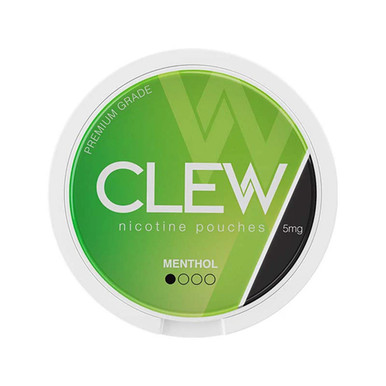
Clew Menthol, at the same £39.90, is the narrow version of the same territory. Where this can gives you a broad cool with mint behind it, the menthol can gives you something much more focused and much more austere — a sharp, almost crystalline cold with a faintly camphorous edge, the kind of note that catches slightly at the back of the nose when the lid comes off. It is markedly less sweet. If Cool Mint tastes like a cold mint sweet, the menthol reading tastes like the cold itself with the mint standing some way behind it.
The practical upshot is that people who find this can a little soft go to the menthol, and people who find the menthol can too stark come back here. They are not a ladder, they are two different flavours, and the price is identical so nothing but taste is at stake in moving between them.
Against the spearmint can
Clew Spearmint, also £39.90, goes the other way entirely. Spearmint is the green, herbal, leafy reading of mint — warmer, distinctly sweeter, and with only a mild cooling element to it. Its aroma is soft and grassy where this one is cold and sugary. Put the three cans side by side and the spread is obvious: spearmint is the mint that tastes like a plant, menthol is the mint that tastes like a temperature, and Cool Mint sits between them with a foot in each.
That middle position is why this is the can people reach for when they want mint without committing to either extreme. It is not a compromise in the negative sense; it is a distinct flavour that happens to sit in the centre of its family.
The wider mint shelf
Our mint listings run to 148 products, which is by a long way the biggest flavour group we keep, and that number exists because mint is not one flavour but a spread. Within it you will find frost readings, double-mint readings, herbal readings and mint blended with fruit. This can sits near the middle of that spread rather than at either edge.
The format, handled quickly
A nicotine pouch is a small sealed pouch that goes in the mouth and stays there. It is not chewed, not swallowed, and the description applies to everything on this site regardless of brand. It sits at the front, between lip and jaw, usually under the top lip, held by the lip itself and nothing else. It can be moved about; if it is uncomfortable in every position it should come out.
How long anyone keeps one in ranges from a few minutes to the better part of an hour, and the usual trigger for removing it is that the taste has finished. We publish no average because we hold no data and an invented figure would be worthless. The usage guidance Clew prints on the tin is the guidance that applies.
The lid carries a shallow catch compartment above the main chamber, and used pouches go in there. It holds three or four before the lid stops sitting flat, so it wants emptying sooner than most people bother to. Used pouches belong in general waste; the tin is plastic and goes with household recycling to whatever degree your council accepts it, which varies by authority and is not something we can resolve for your address. Our data carries no format designation for this listing, so we will not tell you whether these are slim or regular — every pouch in a given tin matches the others, whatever size they are.
Cool Mint's place on the Clew shelf
The Clew shelf carries eight listings. Six siblings are linked from this page and this can makes seven; the eighth is visible on the shelf itself, and we would rather send you there than describe a product whose details are not in front of us.
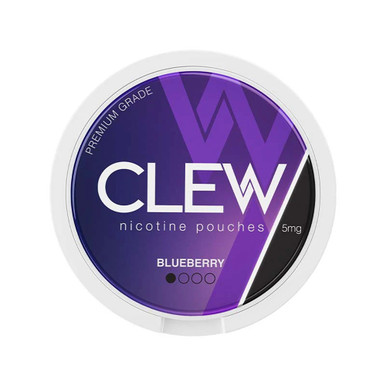
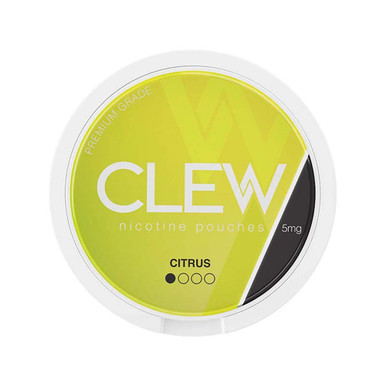
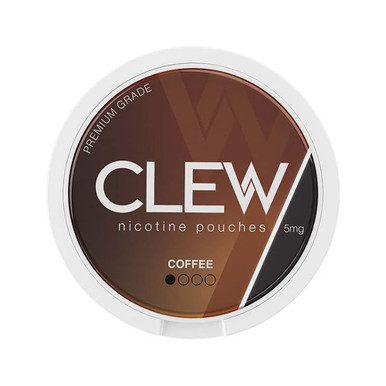
The range splits three-three-plus-one. Three mints, described above. Three fruits — a berry, a melon and a citrus. And one outlier, the coffee can at £39.90, which belongs to neither group and is the one people buy when they want the second tin in the house to have no relationship whatsoever to the first.
Every Clew listing we hold is £39.90, which is the most useful structural fact about the range. Price does not vary across it, so choosing between eight cans is a pure flavour exercise with no money in the decision at all. That is unusual on this site, where prices run from a few pounds to the high thirties depending on what a given listing contains.
Ten tins, a cupboard, and keeping them usable
Storage is the subject worth taking at length on this listing, because a ten-can pack turns a trivial question into a real one. One can lives in a pocket and gets used up. Nine cans sit somewhere for weeks, and where they sit matters more than most people assume.
A dry pouch is still a pouch that can dry out further
Pouches come in two broad conditions across the market: some are built dry to the touch and some noticeably moist. That is a format characteristic of the product rather than anything we can state for this listing, since our record does not describe it, and the tin will tell you which you have. What is worth understanding either way is that both conditions are conditions — meaning they can change with time and handling, and the direction of change is always the same. A moist pouch dries out. A dry pouch gets drier.
Practically, a dried-out pouch is one that feels stiffer than it did and whose flavour has flattened. It is not a dramatic failure and nothing alarming happens; it is just that the can is no longer what it was when you opened it. The rate at which that happens is governed by how often the lid comes off, how warm the tin gets, and how long it sits between uses. None of those are things we can quantify for you, and any specific figure on this page would be a guess in a smart coat.
Heat is the one thing that really matters
If there is a single storage rule worth following, it is to keep tins away from heat, and specifically away from repeated heat cycling. The worst places are the obvious ones once you list them: a car in summer, whether the glovebox, the door pocket or the centre console; a windowsill that gets direct sun for part of the day; a kitchen cupboard directly above a hob or beside an oven; a bag left leaning against a radiator; a coat pocket hung over a heater to dry.
What makes cycling worse than steady warmth is that a tin going hot, then cold, then hot again puts the contents through the same swing each time. A flavour is a volatile thing — the aromatic top of it is the first part to go, and heat is what drives it off. A mint reading like this one has a good deal of its character in that top note, so it is among the flavour families where the loss is most noticeable.
The right place is dull and unglamorous: a cupboard or drawer indoors, at room temperature, out of direct light, away from anything that heats up. A bedroom drawer is fine. A kitchen cupboard on an outside wall away from the cooker is fine. The fridge is not required and we are not going to recommend it, because we hold no information suggesting it does anything useful and a cold tin brought out into a warm room collects condensation on the outside.
The open can versus the nine that are not
Treat those two populations differently. The can in use is going to degrade at whatever rate your habits dictate, and the only thing within your control is pressing the lid fully home each time rather than resting it on top. A lid that is merely balanced is a lid that is open, and the difference over a fortnight is real.
The nine unopened cans should be left exactly as they arrived. Whatever seal or wrap the manufacturer has applied is doing a job, and stripping all ten out of their packaging at once so they stack more tidily in a drawer is a small convenience bought at a genuine cost. Open them one at a time, as you get to them.
It is also worth keeping them together rather than scattering tins around the house, the car and a work bag. Cans distributed across several locations get forgotten, and a forgotten can is a can that has been sitting somewhere warm for three months. One box, one cupboard, one place to look.
Damp, cold and physical damage
Damp is less discussed than heat and worth a mention. A bathroom shelf is a poor home for a pouch tin, since the whole room cycles between steam and dry several times a day. So is a windowsill above a sink. Neither will destroy anything, but they are worse than a bedroom drawer for no compensating benefit.
Cold is largely a non-issue at the temperatures a British house or car actually reaches. A tin left in a cold car overnight is not damaged by the cold itself; it is the following afternoon in the sun that does the work.
Physical damage is more mundane. These are plastic tins, not armour. A can carried loose at the bottom of a bag with keys will eventually crack a lid or lose one, and a cracked lid is a tin that no longer seals, which brings you back to the drying problem. If you carry one daily, a pocket or a pouch in a bag beats loose in the main compartment.
Lids are also the part people lose. A lid balanced on a desk while a tin sits in a hand is a lid that ends up on the floor, behind a radiator or in a bin, and a pouch can without its lid is effectively finished — there is no seal, the catch compartment is gone, and the whole thing becomes an open dish. With a ten-can pack this matters slightly less than it would with a single can, because a spare tin is sitting in the cupboard, but it is still a needless way to lose one. The habit worth having is the boring one: take the lid off, take the pouch out, put the lid straight back on, then deal with the pouch.
Dates, and the limit of what we can say
Clew prints a date on the can. That printed date is the reference, we do not hold it in our data, and we will not estimate one. For an opened tin there is no meaningful figure anybody can give, because it depends entirely on the room, the season and how often you have been into it. Anyone who quotes you a precise shelf life for an opened can of pouches is making it up.
Four declared figures at one price
This listing shows 5mg, 10mg, 15mg and 20mg, each at £39.90. The milligram number is the nicotine content Clew declares for one pouch. We print it exactly as the manufacturer gives it, we do not measure or verify it ourselves, and where our page and the tin ever disagreed, the tin is the authority.
The four figures order themselves as numbers do, and that ordering is the entire comparison we can offer within this product. It compares printed declarations, not experiences, and it is not a suggestion about which to buy. We do not know you and picking on a customer's behalf is not a shop's job.
Between brands the comparison weakens further, because each manufacturer declares against its own format and its own conventions. Two cans showing the same number are two separate statements by two separate parties, not a shared measurement, and we do not normalise between them because we hold none of the technical detail that would make that honest.
Our strength shelves are a filing system for filtering, not a ranking. This listing is filed under the Strong band, which holds 132 products, and it does not simultaneously appear on the Medium Strength shelf or the Extra Strong shelf, even though its declared figures cover a wide span. A listing lives on one strength shelf here. When the band and the printed figure seem to sit oddly together, the printed figure is the manufacturer's declaration and the band is our own housekeeping.
Arriving at this can from a different one
A large share of the questions we get come from people who already use pouches and are moving between products — a different brand, a different pack arrangement, a different flavour house. The differences between one can and another are more numerous than people expect, and none of what follows is a claim about anything. It is a list of the ways two cans of pouches can differ from each other.
The tin itself is not standard
Pouch cans look alike from two feet away and are not identical. Diameter varies, depth varies, the depth of the catch compartment varies considerably, and the force needed to get a lid off ranges from a light thumb push to something that needs two hands. Lids that were designed for a firm seal are the ones that resist. None of that is a quality signal in either direction; it is just that a can you have used for six months has trained your hands, and a new one has not.
Count of pouches per tin is the other variable, and it is the one that quietly breaks people's mental arithmetic on price. A can from one brand and a can from another need not hold the same number. Since our record does not carry pouch counts, this is one of those places where we cannot help and the printed can can.
A declared figure does not travel between brands
This is the single most common misunderstanding we encounter, and it is worth repeating in its own right. Somebody used to a particular figure from one manufacturer will often assume the same number from another manufacturer is the same thing. It is not necessarily. Each company declares against its own format under its own conventions, and the numbers are not published on a shared scale.
We are not going to dress that up as guidance, because there is no guidance we could honestly give. The only thing to do is read the can in front of you as its own statement rather than as a continuation of the last one.
Pack arrangements differ enormously
On this site alone, listings run from a single can at a few pounds up to ten-can packs at £39.90, and the headline price tells you nothing until you know which you are looking at. Nordic Spirit Max Frosty Mint at £4.49 and this listing at £39.90 are not a cheap option and an expensive one — they are different quantities of product, and comparing the two numbers without opening both pages produces a completely false picture.
The habit worth forming is to check the pack arrangement before the price on any listing, here or anywhere. Edge Mint at £14.95 and Klint Avalanche Mint at £36.90 are both mints and both sit at prices that mean nothing until you have looked at what sits behind them.
Flavour names are not a standard either
Brands do not coordinate their vocabulary. One company's "cool mint" and another's can be built quite differently, and words like ice, freeze, frost, cold and arctic are marketing names rather than defined terms. Denssi Cold Mint at £39.90, Elf Bar Cool Storm at £29.90 and Cuba Ninja Ice Cool at £39.90 all name a cold reading of mint, and all three are their own construction rather than versions of a single agreed recipe.
The same applies within a flavour family that is not mint at all. Killa Banana Ice at £33.50 and Pablo Gold Edition Blueberry Peach Ice at £19.95 both use "ice" on a fruit, meaning a cold edge has been put on something sweet — but what that amounts to in each case is specific to the product, not to the word.
Format size, and why a familiar can feels different
Pouch size varies between manufacturers and so does the feel of the material against the lip. A can that feels bigger in the mouth than the one you are used to is usually a format difference rather than anything else. Since we do not hold format designations, this is a matter for the tin and for your own experience of it, and it is the reason people who move brands often buy one can before committing to a larger pack.
Cans people keep alongside this one
Most repeat orders here are two or three products in rotation rather than the same can bought over and over, on the simple basis that a taste encountered constantly stops registering. The reasons below come from nothing but flavour, brand and price in our own catalogue.
Within the brand, the easiest second can is one of the other two mints, since both are £39.90 and both are recognisably different from this one — the menthol for a sharper, colder register, the spearmint for a greener and sweeter one. For a break from mint altogether, Clew Watermelon at £39.90 is the softest fruit in the range, Clew Blueberry at the same price is the darker fruit, and Clew Citrus is the sharp, acidic option that has nothing in common with a cool mint at all.
Outside the brand, people generally either stay cold or leave cold entirely. Staying cold means the mint listings already named, plus Fumi Fiery Mint at £27.90, which puts a warm, spiced edge against the cold one and is therefore a different idea rather than the same idea repeated. Leaving cold means fruit: 77 VB Edition Mini Arctic Berry at £39.90 is a berry from a mini-can line, so check the format on its own page before assuming it matches anything here.
If you would rather look at a whole range than pick listings one at a time, the Pablo range and the Cuba range are each collected on their own page with prices and declared strengths shown on the cards.
Choosing a figure, and the ten-can commitment
All four declared strengths cost £39.90, so there is no financial element to the choice between them. On many listings elsewhere the higher figures cost more, and people carry that assumption across; on this one they need not.
Pack size is where the real commitment lies. Ten cans of one flavour at one declared figure is a decision that does not unmake itself, and if the can turns out not to be the mint you wanted, the other nine are still that mint. That is the plain risk of a multi-can pack and it would be dishonest to write around it.
People manage it in obvious ways, none of which are our recommendation: buying a single-can mint from another brand first to work out which reading of mint they actually want, or buying ten of a flavour already known and leaving the declared figure as the only variable, or splitting a pack with somebody else. As for which of the four figures to choose — that is not a question we will answer. The numbers are listed, they cost the same, and the can's own labelling is the thing to read.
Ordering, delivery and proving your age
The buying process is unremarkable. Pick the declared strength on the listing page, add it to the basket, and the basket sets out what you are buying and what it costs before anything is confirmed. £39.90 is the ten-can pack. If a live field on the listing ever contradicts a sentence written here, the listing page is the current and correct one.
Stock shows on the listing as well. We hold this as available at the time of writing, but a description is not a live feed and the product page governs. Where something has sold out, the page will say so rather than quietly accept an order we cannot fill.
Age verification is a legal condition rather than a formality. This product is 18+ only. Checkout requires an age confirmation, orders may be checked before they are dispatched, and the courier may ask to see photographic identification at the door. If there is no adult there to take it, the parcel goes back. That applies to every nicotine order we send without exception.
Orders travel in plain outer packaging, which is a statement about packaging and nothing more. Carriers, costs and timings live in our delivery information, since they apply across all orders and change independently of any single product page.
Getting back to this listing
Four routes lead here. By brand, it is on the Clew shelf with seven siblings. By flavour, it is one of 148 mint listings. By declared band, it sits in the Strong group. And if filtering is not your preference, the complete catalogue is on one page to scroll.
Category pages here are plain filtered lists showing what we hold, with price and declared strengths on each card. Nothing is ranked or promoted and the running order carries no meaning at all — it is simply the order the shelf produces.
Questions we get about this can
What is the difference between this and the menthol can?
As taste and aroma: this one is a broad cooling wash with a confectionery mint behind it and a restrained sweetness. The menthol can is narrower and sharper — a focused cold with a faintly camphorous edge and noticeably less sweetness. Both are £39.90 and both come in the same four declared figures, so nothing but flavour separates them commercially. Which you prefer is a matter of taste and not something we can decide for you.
And the difference from spearmint?
Larger than the gap to menthol. Spearmint is the green, herbal, leafy reading of mint: warmer, sweeter, with only a mild cooling element. This can is cold-led with a sweeter, more confectionery mint character. Held side by side they do not read as versions of one flavour. People who want mint without much cold generally go to the spearmint; people who want cold go the other way.
Is £39.90 for one can or ten?
Ten. The listing is a ten-can pack and £39.90 is the price for the pack, which is £3.99 a tin by our own division. Your basket states the quantity before you pay and is the authority on it. Single-can listings exist elsewhere on the site at much lower prices, and the £4.49 and £14.95 products mentioned above are examples of that different kind of listing.
How many pouches in a can?
Not in our data, so we will not state it. Our record holds the price, the four declared strengths, the flavour, the brand, the ten-can pack size and the stock status, and nothing about pouch counts. The tin is printed with it.
Are these dry or moist pouches?
We do not hold that characteristic for this listing and will not guess at it. Pouches across the market come both ways and the tin will describe what you have. Whichever it is, the whole can is consistent — there is no mixture inside a single tin.
How should I store the nine I am not using?
In a cool, dry indoor cupboard or drawer, left in whatever packaging they arrived in, kept together rather than scattered, and away from heat and direct sun. That is general housekeeping for a plastic tin with a flavour in it rather than advice of any other sort. We have no basis for recommending a fridge and do not.
How long does an opened can keep?
Nobody can give you a figure that means anything, and we are not going to make one up. It depends on how often the lid comes off, how warm the tin gets and how long it sits. The manufacturer's printed date on the can is the reference point that exists; anything beyond that is your own judgement.
Does the strength affect the flavour?
Our record does not tell us, so we cannot say. What it does tell us is that all four declared figures carry the same flavour word — mint — and the same price. Whether Clew builds the flavour identically across the four is a question for the manufacturer rather than for us, and we are not going to assert either way.
Which should I buy, 5mg or 20mg?
We will not answer that. We hold nothing about you that would make an answer meaningful, and describing one figure as gentler or more suitable would be exactly the sort of steer a shop has no business giving. Both figures are printed, both cost £39.90, and the can's labelling is what to read.
Where are they made?
We do not publish that. Origin and manufacturing details are not in our record for this listing and we will not reconstruct them from a brand name. They appear on the packaging together with importer information, which is the proper place for them.
Why is a can with a 5mg option filed under Strong?
Because a listing has to sit on one strength shelf and this is the one it sits on. Our shelves sort listings into bands as a filtering convenience, and a single listing carrying four declared figures cannot occupy four shelves at once. That is a fact about our filing rather than about the product. If the band label and the number printed on the tin appear to disagree, the number on the tin is the manufacturer's declaration and it is the one that counts.
Can I recycle the tins?
They are plastic, so household plastics recycling to whatever extent your council accepts that grade — which differs by authority and is not a question we can answer for a postcode. Used pouches themselves are general waste and belong in a bin rather than a sink or a drain. A ten-can pack leaves you with ten empty tins eventually, and a fair number of people keep one or two for small odds and ends.
The compliance section
We sell this only to adults aged 18 or over who already use nicotine, and to nobody else. Age confirmation is required at checkout, orders may be verified before they leave us, and photographic ID may be requested by the courier at the point of delivery — no adult to receive it means no delivery.
Nicotine is an addictive substance. That belongs in plain sight on a page like this one, not tucked into a footer in small type.
This product is not a licensed stop-smoking medicine and is not presented as one anywhere on this site. It is not intended for non-smokers, for anyone who does not already use nicotine, for under-18s, or for anyone who is pregnant or breastfeeding. We make no health, medical or safety claim about it in any direction whatsoever. If you have a question about nicotine and your own circumstances, a pharmacist or a doctor is the right person to ask — we run a shop and hold no such expertise.
Closing note
Clew Cool Mint is a ten-can pack at £39.90 with four declared strengths at a single price, carrying the central, cooling-led reading of mint — broader and sweeter than the menthol can in the same range, colder and less herbal than the spearmint. It is filed in the Strong band, it belongs to a flavour shelf of 148 products, and it sits within an eight-listing brand range priced flat throughout. Where our record is silent — pouch counts, format, moisture, origin, dates — this page says so rather than filling the gap. The tin and Clew's own printing on it outrank anything written here.
More from Clew
More strong pouches
More mint pouches
Where this sits
Clew Cool Mint Nicotine Pouches appears in these categories. Browse them, or jump to something close.
You might also like