Clew · 5mg–20mg · 10-can pack
Read the full guide
Clew Spearmint Nicotine Pouches
£39.90
✔ In stock — ready to ship
100% tobacco-free
Free over £20
Same-day dispatch
Secure checkout
Clew Spearmint Nicotine Pouches is a ten-can pack priced at £39.90, available in four declared strengths — 5mg, 10mg, 15mg and 20mg — all four at that same price. Our catalogue records the flavour as mint. The listing shows as available at the time of writing. That is everything our record contains for this product. Every other sentence on this page is a description of the object, a comparison with a can we also stock, or an admission that something is not in our data.
One thing before the description: this is an adult nicotine product for people aged 18 or over who already use nicotine, and the compliance wording has its own section at the bottom of the page. None of what follows is written to encourage anyone to consume anything.
The full guide to Clew Spearmint Nicotine Pouches
4,885 words on how it eats, who it suits, how to serve it and what to put beside it.
Clew Spearmint at a glance
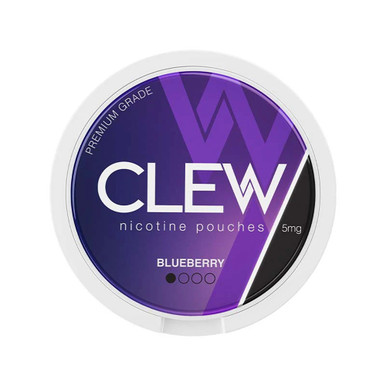
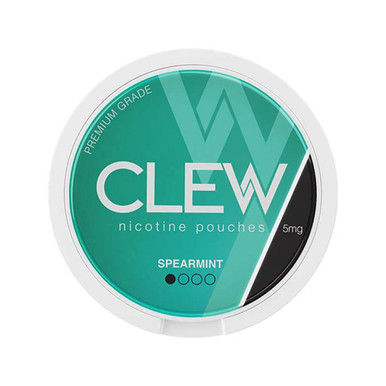
The tin is the ordinary round pouch can in plastic — shallow, palm-sized, with a lid that lifts clear and presses back down. The brand name and the flavour word are on the lid; the declared figure appears wherever Clew has printed it. A pack means ten of those tins arriving together, which is a box, so buying this listing involves deciding where nine cans are going to sit for a while as well as what you want to taste.
The per-tin figure, if it helps you compare this with the single cans we sell, is £3.99 — our own division of £39.90 by ten, not a price the manufacturer quotes. £39.90 is what you actually pay. The number of pouches in a can is not recorded in our data at all, so we are not going to state one; the printed tin answers that.
Spearmint described: green rather than cold
Spearmint is the mint that tastes like a plant. That is the shortest honest summary of it, and the rest of this section unpacks what it means as taste and aroma. No other kind of claim is being made here or anywhere on this page.
The defining character is herbal. Where the colder readings of mint lead with a cooling sensation and let the mint sit behind it, spearmint leads with the leaf — a soft, green, faintly grassy flavour with a rounded body to it. The cooling element is present but mild and short-lived, more of a background freshness than a temperature event. If you are expecting cold, this is not the can that supplies it, and that is a design decision by the flavour rather than a shortcoming.
The aroma
Open the lid and the smell is soft and sweet, closer to a crushed leaf or a spearmint chew than to anything icy. It is a low, warm aroma that spreads slowly and does not carry far across a room. Set beside the sharper mints, the difference at the lid is immediate: those go upward and catch at you, this one sits in the hand and has to be brought closer.
The sweetness
Spearmint carries noticeably more sweetness than the colder mints do, and it is a rounder kind of sweetness — it sits with the herbal note rather than under it, which is why the flavour reads as warm despite belonging to the mint family. That sweetness is the main reason people who find cold mints severe tend to land here.
It is also the reason spearmint divides opinion. The herbal-sweet combination reads as pleasantly green to most people and as faintly soapy to a minority, and that second reaction is consistent enough to be worth mentioning on a product page rather than glossing over. If spearmint has always struck you that way in other products, a ten-can pack is unlikely to change your mind.
How it behaves through a pouch
The sweetness and the herbal note fade at roughly similar rates here, so the flavour tends to get quieter rather than changing character as it goes. That differs from the colder mints, where the cold outlasts the mint and the taste narrows towards the end. We hold no timing figures for this product and will not invent any — how long a pouch stays interesting varies from person to person, and when somebody takes one out is their own business.
Against the other two mints in this range
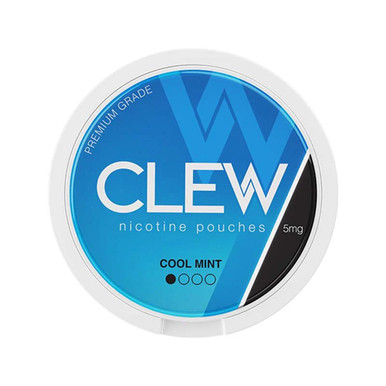
Clew keeps three mints on our shelves and they are three different tastes, not three names for one. Clew Menthol at £39.90 is this can's opposite: narrow, sharp, cold-led, camphorous at the edges and barely sweet at all. Clew Cool Mint, also £39.90, sits between the two — a broad cooling wash with a confectionery mint behind it and a moderate sweetness, closer to the middle of the family than to either end.
Laid out as a spread: this can is the herbal, sweet, warm pole; the menthol is the cold, dry, austere pole; the cool mint is the middle. Since all three cost £39.90 and carry the same four declared figures, moving between them involves nothing but taste. That is unusually clean, and it is why people who buy across this brand tend to own two of the three.
On the wider shelf
Our mint listings number 148, the largest flavour group we keep, and within it spearmint occupies a recognisable corner. Most of that shelf leans cold — frost, ice and arctic constructions dominate it — so a genuinely herbal mint is a smaller subset than the total suggests.
The format in outline
A nicotine pouch is a small sealed pouch that goes in the mouth and stays there; it is not chewed and it is not swallowed. It sits at the front, between lip and jaw, usually under the top lip, held there by the lip and nothing else. It can be moved about, and if it is uncomfortable everywhere it should come out rather than be persevered with.
Duration ranges from a few minutes to most of an hour depending entirely on the person, and the usual trigger for removing one is that the taste has finished. We publish no average because we have no data and an invented number would be worthless. Clew prints usage guidance on the can and that is what applies.
The lid has a shallow catch compartment above the main chamber for used pouches. It takes three or four before the lid stops closing flat, so it needs emptying sooner than most people bother with. Used pouches are general waste and belong in a bin rather than a sink or a drain; the tin is plastic and goes with household recycling to whatever extent your council takes that grade. Our record carries no format designation, so we will not tell you whether these are slim or regular — the tin says, and every pouch within a single tin matches the rest.
Coming from a different can: the questions people actually ask
A large share of what gets asked about a listing like this comes from people who already use pouches and are moving across from a different product — another brand, another pack arrangement, another flavour house. The questions repeat, so here they are with straight answers. Nothing in this section is a claim about anything; it is a description of the ways two cans of pouches differ from each other.
"Why does this tin feel different in my hand?"
Because pouch cans are not standardised. Diameter, depth, wall thickness and the depth of the catch compartment all vary between manufacturers, and so does how hard a lid is to remove — some come off with a light thumb push, others want a proper grip and occasionally two hands. A lid that resists is usually one designed to seal firmly, which is not a fault. What is really going on is that six months with one brand has trained your hands for that brand, and a new tin has not yet.
"Why is the pouch count different from what I'm used to?"
Because there is no convention on it. One manufacturer's can and another's need not hold the same number, and the figure is not something you can infer from the size of the tin. Since our record does not carry pouch counts for this listing, this is a question we genuinely cannot answer — the printed can can, and it is the only reliable source.
"The declared figure is the same as my old can, so is it the same?"
Not necessarily, and this is the most common misreading we encounter. Each manufacturer declares its figure against its own pouch format under its own conventions. A number from one company and the same number from another are two separate statements by two separate parties, not two readings from a shared scale. We publish exactly what each manufacturer publishes and we do not convert between them, because we hold none of the technical detail that would make such a conversion honest. Read the can in front of you as its own statement rather than as a continuation of the last one.
"Why is the price so different from what I was paying?"
Almost always because the pack arrangement is different, not because one product is dear and another cheap. On this site listings run from single cans at a few pounds up to ten-can packs at £39.90, and a headline price means nothing until you know which kind you are looking at. Nordic Spirit Max Frosty Mint at £4.49 and this listing at £39.90 are not a budget option and a premium one — they are different quantities. Edge Mint at £14.95 and Klint Avalanche Mint at £36.90 sit at two more points again, and in every case the product page is where the arrangement is stated. Check that before comparing any two numbers.
"Will a flavour called spearmint taste like the spearmint I had before?"
Possibly not, and this is worth being blunt about. Flavour names are not coordinated between brands. Words like mint, cool, ice, freeze, frost and arctic are each company's own naming rather than defined terms, and spearmint in particular gets built quite differently from one flavour house to the next — some lean sweeter, some greener, some put a cold edge on it that a traditional spearmint would not have. Denssi Cold Mint at £39.90, Cuba Ninja Ice Cool at the same price and Elf Bar Cool Storm at £29.90 all name a cold reading of mint, and all three are separate constructions rather than versions of one agreed recipe. The same is true across the herbal end.
"Does the pouch sit differently?"
It may. Pouch size and the feel of the material against the lip vary between manufacturers, and a can that seems bigger or firmer in the mouth than the one you know is usually a format difference and nothing more. We do not hold format designations, so this is a matter for the tin and for your own experience of it. It is also the reason people moving brands often buy a single can somewhere before committing to a ten-can pack of anything.
"Is there anything I need to do differently?"
No. The format is the format: lid off, pouch out, lid on, pouch under the lip, used pouch into the catch compartment or a bin. None of that changes between brands. What changes is the tin, the count, the flavour build, the declared figure and the price, which is exactly the list above. Anyone telling you a technique is required for one brand and not another is overcomplicating a simple object.
Clew's range, and where spearmint falls in it
The Clew shelf holds eight listings. Six siblings are linked from this page and this one makes seven; the eighth is on the shelf itself, and we would rather send you to the live page than write about a product whose details are not in front of us.
The shape of the range is three mints, three fruits and one outlier. The three mints are covered above. The fruits are Clew Blueberry, Clew Watermelon and Clew Citrus, each £39.90 — respectively a dark berry, a soft melon and a sharp, acidic citrus, which between them cover most of the fruit spectrum. The outlier is Clew Coffee at the same price, roasted and bitter, belonging to neither group.
Flat pricing is the range's most useful structural feature. Every Clew listing we hold is £39.90, so choosing between the eight is purely a flavour exercise with nothing financial attached. That is not the case across the site as a whole, where the price of a listing depends heavily on what it contains.
The cans people keep alongside this one
Repeat orders here are typically two or three cans in rotation rather than the same one bought over and over, for the straightforward reason that a taste met constantly stops registering the way it did at first. Every reason below comes from flavour, brand or price in our own catalogue.
Within the brand, the natural second can depends on which direction you want to travel. Going colder means the cool mint or, further still, the menthol — both £39.90, both recognisably unlike this one. Leaving mint altogether, the citrus is the sharpest contrast available in the fruit group, the watermelon the softest, and the blueberry the darkest. The coffee can is the largest single jump the brand offers.
Outside the brand, people who like a herbal, sweeter mint usually pair it with something that contrasts rather than something similar. Fumi Fiery Mint at £27.90 puts a warm spiced edge against a mint character, which is a different idea rather than a hotter or colder version of the same one. On the fruit side, Killa Banana Ice at £33.50 and Pablo Gold Edition Blueberry Peach Ice at £19.95 both take sweet fruit and add a cold finish, giving a rotation that swings between herbal-warm and fruity-cold.
77 VB Edition Mini Arctic Berry at £39.90 is a berry from a mini-can line, so its format differs from a full-size can and its own page is the place to check that before assuming anything carries across. And for whole ranges rather than individual listings, the Cuba range page and the Pablo range page each gather their line into one filtered view with price and declared figures shown on the cards.
Keeping ten tins in condition
A single can looks after itself. Ten is a different proposition, because most of them are going to sit somewhere for weeks before they are opened, and the way you handle that determines what the last tin in the box is like when you get to it.
Rotation, and knowing which tin is which
The useful habit with a multi-can pack is simply to work through it in order rather than opening tins at random and leaving half-used ones about the house. One open can at a time, finished before the next is started. It sounds obvious and it is routinely ignored, usually because one tin ends up in a coat, another in a car and a third in a drawer, and then none of them is anybody's current can.
Keep the box itself rather than throwing it out and stacking loose tins in a cupboard. It keeps the unopened ones together, it keeps them upright, and it makes it obvious how many are left. Where a manufacturer has printed a date on the outer packaging as well as on the cans, keeping the box keeps that visible too.
Telling when a tin has been sitting too long
A pouch that has been stored badly or for a long time does not do anything alarming; it just becomes less than it was. The signs are consistent across brands. The pouch feels stiffer and drier between the fingers than a fresh one. The aroma on opening is weaker, and for a herbal flavour like this one the green note is usually the first thing to go quiet. The taste arrives flatter and finishes sooner.
None of that makes a can unusable and none of it is a safety matter — it is a description of an aromatic product losing its top notes over time, which is what aromatic products do. If a tin from the back of a cupboard is disappointing, that is generally why, and the fix is storage rather than anything else.
Heat, light and the places tins should not live
Warmth is what drives the aroma off, and repeated warming and cooling does it faster than steady warmth. The offenders are predictable: a car in summer, a sunlit windowsill, a shelf above a radiator, a cupboard immediately over a hob or beside an oven. A bathroom is a poor choice too, less for the heat than for the fact that the whole room cycles between steam and dry several times a day.
What you want instead is dull: an indoor cupboard or drawer at room temperature, out of direct light, away from anything that heats up. A bedroom drawer does the job perfectly well. The fridge is not necessary, we have no basis for recommending it, and a chilled tin brought into a warm room collects condensation on the outside for no gain.
Travel, and the tin that lives in a bag
A can carried daily has a harder life than the nine in the cupboard, and the practical risks are physical rather than thermal. Loose in a bag with keys, a lid cracks or distorts; a tin that will not close properly stops protecting what is inside it, which brings you straight back to the drying problem. A pocket in the bag, or a jacket pocket rather than a trouser one, solves most of that.
A tin with used pouches in the catch compartment is top-heavy and no longer sits flat on its side, so it wants to travel upright. On longer journeys the sensible thing is to empty the compartment before you set off rather than after you arrive. If you are travelling abroad, the rules on carrying nicotine products vary by country and we are not in a position to advise on them; that is a question for the destination's own customs guidance rather than for a product page.
The lid does most of the work
Of everything in this section, the single most effective habit is pressing the lid fully home every time rather than resting it on top. A balanced lid is an open can, and over a fortnight the difference is real. Lids are also the part people lose — set down on a desk while the tin is in hand, they end up on the floor or in a bin, and a pouch can without its lid has no seal and no catch compartment, which effectively finishes it. Take the lid off, take the pouch out, put the lid straight back on, then deal with the pouch. It is a boring habit and it works.
What we cannot tell you
Clew prints a date on the can and that printed date is the reference for an unopened tin. We do not hold it in our data and we will not estimate one. For an opened tin nobody can give a figure that means anything, because it depends on the room, the season and how often the lid has come off. Anyone quoting a precise shelf life for an opened can of pouches is guessing.
The declared figures on this listing
Four numbers are declared here — 5mg, 10mg, 15mg and 20mg — and all four are £39.90. The milligram figure is the nicotine content Clew declares for one pouch and prints on the can. We reproduce it exactly as given, we do not measure or adjust it, and if this page and the tin ever disagreed the tin would be right.
As numbers they order themselves as numbers do, and that ordering is the whole of the comparison available within this product. It compares printed declarations rather than experiences, it is information rather than guidance, and it is not a suggestion about which to buy. We hold nothing about you, and choosing on a customer's behalf is not a shop's job.
Our strength shelves exist so that somebody who already knows the figure they want can filter to it. This listing is filed on the Strong shelf, which holds 132 products, and it does not also appear on the Medium Strength shelf or the Extra Strong shelf, since a listing sits on one band here. Where a band name and a printed number seem to disagree, the printed number is the manufacturer's declaration and the band is our filing.
Choosing between the four, and ten of one thing
Because the four variants cost the same, nothing financial rides on the choice between them, which is worth stating since plenty of listings elsewhere do charge more for higher declared figures and people carry that assumption across.
The pack size is where the commitment sits. Ten cans is ten cans of one flavour at one declared figure, and if it is not the can you wanted, the remaining nine are still that can. For spearmint specifically that matters a little more than it might elsewhere, because this is a flavour with a genuine split in it — the herbal-sweet character that most people like is the same character a minority find soapy, and a ten-can pack is a firm way to find out which camp you are in.
How people manage that is their own affair, and none of the following is our advice: some buy a single-can spearmint from another brand first, some buy ten of a flavour they already know and leave the declared figure as the only variable, some split a pack with somebody else. On which figure to choose, we will not answer. The four are printed, they cost the same, and the can's own labelling is what to read.
Ordering, delivery and the age check
The process is ordinary online retail. Choose the declared strength on the listing page, add it to the basket, and the basket sets out what you are buying and what it costs before anything is confirmed. £39.90 is the ten-can pack. Where a live field on the listing contradicts a sentence written here, the listing is current and this page is not.
Stock status appears on the listing as well. We record this as available at the time of writing, but a description page is not a live feed and the product page governs. If it has sold out, the page will say so rather than quietly accept an order we cannot fill.
Age verification is a legal condition of sale and not a formality. This product is 18+ only. Checkout requires an age confirmation, orders may be verified before they are dispatched, and the courier may ask for photographic identification at the door. If there is no adult present to receive the parcel, it will not be left. That applies to every nicotine order we send, without exception.
Orders travel in plain outer packaging. That is a statement about packaging and nothing is being built on top of it. Carriers, costs and timings sit in our delivery information, since they apply across all orders rather than to any individual listing.
Finding this page again
Four routes lead back here. By brand, it sits on the Clew shelf with seven siblings. By flavour, it is one of 148 mint listings. By declared band, it is filed in the Strong group. And if filtering is not how you prefer to shop, the entire catalogue sits on a single page to scroll through.
The category pages are plain filtered lists of what we hold, with price and declared strengths on each card. Nothing is ranked, nothing is promoted, and the running order carries no meaning at all — it is simply the order the shelf produces.
Questions we get about the spearmint can
How different is this from the cool mint can?
Substantially. This is the herbal reading of mint — green, leafy, clearly sweeter, with only a mild cooling element. The cool mint can leads with a broad cold sensation and puts a confectionery mint behind it. Both are £39.90 and both carry the same four declared figures, so nothing but taste separates them. Which you prefer is your call and not something we can decide for you.
Is it cold at all?
Mildly, and briefly. There is a freshness to it in the way all mint flavours carry one, but it is not built around cold the way the menthol can in this range is, and anybody buying it expecting an icy character will find it is not that. If cold is the point for you, the colder listings named on this page are the ones to look at instead.
Why does spearmint taste soapy to me?
That reaction is common enough to be worth acknowledging rather than dismissing. The herbal-sweet combination that makes spearmint what it is reads as green and pleasant to most people and as soapy to a minority, and it appears to be a consistent difference between individuals rather than a difference between products. If spearmint has always struck you that way elsewhere, this can is unlikely to be the exception.
Is £39.90 the price of a single tin?
No — it buys ten. This listing is a ten-can pack, which works out at £3.99 a tin by our own division. Your basket states the quantity before payment and is the authority on it. Single-can listings do exist on this site at much lower prices; the £4.49 and £14.95 products named above are examples of that different kind of purchase.
How many pouches are in each can?
Not something we hold. Our record has the price, the four declared figures, the flavour, the brand, the ten-can pack size and the stock status, and no pouch count. It is printed on the tin. We would rather admit the gap than publish a number that proved wrong across ten tins.
Do the four strengths taste the same?
All four carry the same flavour word on our record and the same price. Whether Clew builds the flavour identically across the four declared figures is a manufacturing question our data does not answer, so we will not assert it in either direction. The cans are the place to look.
Which strength should I buy?
We cannot tell you, and we are not going to imply an answer by calling one figure mild or suitable. We hold nothing about you that would make such a suggestion meaningful, and steering a customer toward a particular number is outside what a shop should be doing. All four are listed, all four are £39.90, and the labelling on the can is the thing to read.
Is this a slim pouch?
Our record does not carry a format designation for this listing, so we will not state one. Formats vary between manufacturers and the tin is printed with its own. Whatever it turns out to be, every pouch inside a single can is identical to the others.
Where is it made?
We do not publish that. Country of origin and manufacturing detail are not in our record for this listing and we are not going to infer them from a brand name. Those details are on the packaging together with importer information, which is the correct place for them and the only place we would point anyone.
How long will an unopened tin keep?
Go by the date Clew prints on the can. We do not hold that date in our data and we will not estimate one. For an opened tin no honest figure exists, because it depends on how warm it has been, how often the lid has come off and how long it has sat between uses.
Can I recycle the tins?
They are plastic, so household plastics collection to whatever extent your local authority accepts that grade — which differs by council and is not something we can answer for an address. Used pouches themselves are general waste and belong in a bin, not a sink or a drain. Ten cans eventually leaves you with ten empty tins, and a good few people keep one or two for small odds and ends.
The compliance section
We sell this only to adults aged 18 or over who already use nicotine, and to nobody else. Age confirmation is required at checkout, orders may be verified before they leave us, and photographic ID may be requested by the courier on delivery — without an adult present to receive it, the parcel is not handed over.
Nicotine is an addictive substance. That sits here in plain type because it is true and because it belongs in any honest description of a product like this rather than in a footnote.
This is not a licensed stop-smoking medicine and it is not offered as one anywhere on this site. It is not intended for non-smokers, for anyone who does not already use nicotine, for under-18s, or for anyone who is pregnant or breastfeeding. We make no health, medical or safety claim about this product in any direction whatsoever. If you have a question about nicotine and your own circumstances, a pharmacist or a doctor is the person to ask — we are a shop and hold no expertise of that kind.
Last word
Clew Spearmint is a ten-can pack at £39.90 in four declared strengths at one flat price, carrying the herbal, sweeter, warmer reading of mint rather than the cold one — the furthest of this brand's three mints from its menthol can, and a clear step from its cool mint. It is filed in the Strong band, it belongs to a mint shelf of 148 listings, and it sits in an eight-can range where nothing costs more than anything else. Where our record is silent — pouch counts, format, origin, dates — this page says so instead of filling the gap. The tin, and what Clew has printed on it, outranks everything written above.
More from Clew
More strong pouches
More mint pouches
Where this sits
Clew Spearmint Nicotine Pouches appears in these categories. Browse them, or jump to something close.
You might also like