Clew · 5mg–20mg · 10-can pack
Read the full guide
Clew Watermelon Nicotine Pouches
£39.90
✔ In stock — ready to ship
100% tobacco-free
Free over £20
Same-day dispatch
Secure checkout
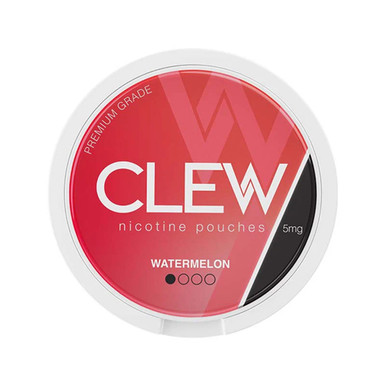
This page is for Clew Watermelon Nicotine Pouches. The brand is Clew, the flavour is watermelon, the listed price is £39.90, and the listing covers a pack of ten cans. Four declared strengths are held against this product — 5mg, 10mg, 15mg and 20mg — and all four are listed at the same £39.90. We show it as in stock at the time of writing, with a single product image.
Those are the facts we hold, and they are the only facts that will appear on this page. Everything else below is one of three things: a description of the object itself, a comparison with other cans on our shelves, or a plain statement that a piece of information is not something we have. We would rather leave a gap visible than fill it with something we have made up.
The full guide to Clew Watermelon Nicotine Pouches
5,312 words on how it eats, who it suits, how to serve it and what to put beside it.
Clew Watermelon: what is actually in the listing
The arithmetic on the pack, since people ask: ten cans at £39.90 works out at £3.99 a can. That is division, not a special offer, and it is worth saying out loud because prices across this site are not all quoted on the same basis. Some listings are single cans, some are multipacks, and a low number next to a product name does not automatically mean a cheaper can. Where we know the pack count, as we do here, we print it.
The can is the usual shallow round tin that every pouch brand uses: a lid that lifts off and presses back on, a body deep enough to hold the pouches lying flat in a ring, and a diameter that fits comfortably in a closed hand. Clew prints the flavour and the strength figure on the lid, which is the part you actually read when there are three or four different cans in a drawer. If you keep more than one strength in the house, the lid is doing more work than the rest of the packaging put together.
One piece of housekeeping before the rest: this is an age-restricted nicotine product, sold only to adults over 18 who already use nicotine. The full compliance wording is in its own section at the foot of the page, and it is not decorative.
Watermelon, written down as a taste and nothing else
The flavour list we hold for this product has exactly one entry on it: watermelon. Not watermelon and mint, not watermelon with an ice finish, not watermelon layered under a berry. One word, and the can is named after it.
Watermelon as a flavour is easier to recognise than it is to describe, which is a problem for anyone writing a product page honestly. It is a light flavour rather than a heavy one. The sweetness is thin and watery rather than syrupy — closer to the juice that runs off a cut slice than to a boiled sweet — and there is a green edge underneath it that comes from the part of the fruit nearest the rind. That green note is the thing that separates a watermelon flavour from a generic pink-fruit flavour. Without it you get sweetness with no address. With it you get something your mouth files as watermelon before you have consciously identified it.
There is a floral quality in real watermelon as well, faint and easy to miss, and flavourings that reach for watermelon usually reach for that too. It reads as slightly perfumed in the nose rather than on the tongue. When you take the lid off a can, the aroma tends to arrive before anything else and tends to read sweeter than the flavour itself does. That gap between what a can smells like and what it tastes like is normal across the whole category and is worth expecting rather than being surprised by.
What we are not going to do is tell you it is refreshing, summery or anything else that is really a mood rather than a taste. Refreshing is not a flavour. Watermelon here is a sweet, light, faintly green fruit character, and how you get on with it depends on whether you like that character, which is not something a product page can decide for you.
How a recognisable watermelon gets built into a pouch
This is the part of the subject worth spending time on, because it explains why two cans with the same word on the lid can taste noticeably different from one another, and why some fruit flavours land better in this format than others.
Start with what the format takes away. A pouch is a small object that sits still in your mouth. There is no heat, no liquid pooling on the tongue, and no chewing. Flavour reaches you slowly and from one fixed spot, and it reaches you for a long time rather than in a burst. Anything a flavour normally borrows from temperature or texture is unavailable. That is a genuinely narrow channel to work through, and it shapes what a flavour has to be in order to survive the trip.
Flavours that survive it well tend to have a strong, simple identity that does not depend on anything else. Mint is the obvious example — cool is a property mint carries on its own, and it arrives whether it has heat behind it or not. Coffee is another: bitter and roasted are both robust, and the profile on Clew Coffee is legible in a way that a delicate flavour would not be. Watermelon is a harder case, because in the fruit itself the flavour is carried largely by water, cold and texture, none of which a pouch has. Bite into a chilled slice and a lot of what you are enjoying is the cold and the way it collapses. Take those away and what is left is quite a faint impression.
So a watermelon pouch cannot simply be a small amount of watermelon. It has to be a constructed impression of watermelon, assembled from a handful of taste cues strong enough to read through a slow, dry, long delivery. In practice that means three jobs. The first is a sweetness that identifies as fruit rather than as sugar in the abstract, and reads light rather than thick. The second is the green rind note, which is what makes the brain say watermelon instead of pink. The third is the faint floral top that stops the whole thing reading flat.
Get the proportions wrong in either direction and it fails in a recognisable way. Too much sweetness and not enough green and you get a soft pink candy flavour that could be strawberry, bubblegum or anything else in that family — pleasant, perhaps, but not watermelon. Too much green and not enough sweetness and you get something that reads vegetal, almost cucumber-like, which is the other classic failure mode. The cans that work are the ones that hold the two in tension.
The second structural problem is duration. A pouch delivers flavour for a long time, and that is an unusual demand. A flavour that is delightful in the first thirty seconds may be tiring at fifteen minutes and unbearable at thirty. Sweet fruit flavours are especially exposed here, because sweetness is the first thing that becomes wearing when it has nowhere to go. This is a large part of why so much of the fruit shelf across the industry arrives with a cooling partner — a mint or a frost element alongside the fruit — and why cans like Denssi Watermelon Freeze put that partnership in the name. The cool acts as a counterweight and gives the palate somewhere else to go.
Clew Watermelon does not do that, as far as our flavour data goes. It is listed as watermelon and nothing else, which means the fruit has to hold the whole span on its own. That is a legitimate design decision and it is the same decision behind Clew Blueberry, the other single-fruit can in this brand's range. Whether it suits you is a matter of what you want from a can over a long sitting, and you can only answer that by trying one.
The third job is consistency from the first pouch in the can to the last. We do not hold manufacturing information for this product, so we cannot tell you anything about how Clew achieves that or how tightly it is controlled. If a can behaves differently at the bottom than at the top, that is something you would observe rather than something we can predict, and we are not going to claim a consistency we have no way of verifying.
The honest summary is this: the word on the lid is a target, not a measurement. Flavour construction in this format is a craft problem with a narrow channel and a long duration, and a watermelon can is a particularly exposed test of it. That is why watermelon is worth talking about at all, and why the twenty-three cans on our watermelon flavour shelf are not interchangeable with each other.
Cool, sweet, sharp and bitter: where this one lands
It helps to have a rough set of axes to place a can on, because "fruity" tells you almost nothing. Four are enough for most purposes: how cool it reads, how sweet it reads, how sharp or acidic it reads, and how much bitterness sits underneath. Every can we stock can be placed loosely on those four, and the placement is more useful than the flavour name.
On cool, Clew Watermelon sits at the low end. Our flavour data lists watermelon alone, with no mint and no frost element named, so there is no cooling partner doing work here. That is the single biggest difference between this can and most of the rest of the fruit shelf. Compare it with Klint Avalanche Mint at £36.90, which is built around cold as its main event, or with the mint end of this brand's own range. If cool is what you are after, this is not the can that delivers it, and we would rather say that plainly than sell you the wrong thing.
On sweet, it sits high — but high in a particular way. Watermelon sweetness is light-bodied. It does not have the density of a cola or a caramel or the jammy weight of a dark berry. So it reads as sweet without reading as heavy, and those are different things. A can can be very sweet and still feel thin, and that is roughly where this one lives. For contrast, a berry pairing like Elf Bar Blueberry Raspberry at £29.90 carries more body behind its sweetness simply because of the fruits involved.
On sharp, it sits low. Watermelon is not an acidic fruit. There is no citrus bite and nothing that makes the sides of your tongue contract. This is the axis where the difference from the citrus family is most obvious: Clew Citrus, the same brand and the same £39.90, is built on exactly the quality this can does not have, and Fumi Fiery Lime at £27.90 sits further out in that direction again. If you find watermelon a bit soft or a bit one-note, sharpness is usually the thing you are missing, and the citrus end of the shelf is where you go looking for it.
On bitter, it sits at or near zero. Fruit flavours in this category rarely carry deliberate bitterness, and nothing in our data suggests this one does. Bitterness is mostly the preserve of coffee, liquorice and tea profiles, which is a different part of the shelf entirely.
Put those four together and the profile is: low cool, high but light sweet, low sharp, no bitter. That is a fairly unusual corner to occupy, because most of what sells in fruit is fruit-plus-cool, and this is fruit on its own. It makes the can straightforward and it makes it exposed. There is nothing else in the mix to hide behind or to break up the sweetness, so you are getting a long, unbroken read of one flavour.
The practical consequence is about how you use the shelf rather than how you use the can. People who like a single-fruit profile often keep one sweet can and one cool can and move between them rather than settling on one for everything. The same four axes explain why: if the sweet axis is getting tiring, the answer is usually something high on cool, not a different fruit. That is a pattern we see in what people actually buy, and it is the reasoning behind the pairings suggested further down this page.
One last note on the axes. They describe taste and aroma only. They are not a ranking, they are not a quality judgement, and they say nothing whatever about strength. A can can be high on every flavour axis and carry a 5mg figure, or flat on all of them and carry 20mg. Flavour and the milligram figure are two separate pieces of information printed on the same lid, and it is worth keeping them separate in your head when you are choosing.
The pouch itself, and what handling one involves
A nicotine pouch is a small sealed pouch placed in the mouth between the lip and the gum and left there. It is not chewed and it is not swallowed. That is the whole of the format and it is identical across every brand on this site.
In practice: lift the lid, take one pouch out, put the lid back on. Most people put it under the top lip at the front, where your own lip holds it in position, and it stays there until you move it. You can shift it from one side to the other if it starts to feel uncomfortable in one spot. If it is uncomfortable everywhere, that is the point to take it out — no product page should be telling you to persist with something that is bothering you.
Pouches come in different physical sizes across the industry — larger flat ones, shorter slimmer ones, and smaller formats usually labelled mini, as in 77 Ghost Mini Mango at £39.90. We do not hold a size classification for Clew Watermelon. The can itself, and the printed packaging, are where that is stated. If pouch size matters to you, and for plenty of people it is the deciding factor, check the can rather than relying on us.
How long people keep one in varies widely and is a personal habit rather than an instruction. Some take it out after a few minutes, some leave it considerably longer. We are not going to publish a recommended duration, because that edges into telling you how much to consume and we have no business doing that. What we can say is that flavour is at its most pronounced early and fades gradually, and most people find the point at which it has gone quiet is a natural time to stop.
Most pouch cans, including this style of tin, have a compartment in the top of the lid intended for used pouches. It is there so you are not looking for a bin at the wrong moment. It is a temporary holding space, not storage — empty it into a bin when you get the chance, and keep used pouches away from children and animals. Pouches go in general waste. They do not go down a toilet or a sink.
What 5mg, 10mg, 15mg and 20mg actually are
The milligram figure on the lid is a declared figure published by the manufacturer for that can. Clew Watermelon is listed here in four of them: 5mg, 10mg, 15mg and 20mg, and all four are £39.90 for the ten-can pack.
What the figure does is order the range. 20mg is the highest declared figure in this product's set and 5mg is the lowest, with 10mg and 15mg between them in that order. That is an ordering and nothing more. It is a number describing the can, in the same way that the flavour word describes the can.
What the figure does not do is tell you how a given can will be for a given person. We are not able to tell you that and we are not permitted to advise on it, so we will not try. We do not recommend a strength, we do not describe any strength as suitable for anyone, and we do not characterise what any figure feels like. If you already use nicotine products, you will have your own reference points, and those are more use to you than anything we could write.
The figure is also only comparable within a consistent basis. Brands declare in different ways and on different bases, and a figure on one brand's can is not automatically the same measurement as the same figure on another's. Our strength shelves — the Medium Strength shelf, the Strong shelf and the Extra Strong shelf — group products by the band we have filed them under, which is a navigational convenience for finding things on this site, not a measurement of any kind. Clew Watermelon is filed under Strong, alongside 132 other cans.
Because all four figures here carry the same price, the strength choice does not carry a cost consequence. That is worth knowing, because on some listings it does. It also means the decision is purely about which can you want, without a price nudging you in a direction.
Clew's shelf: eight cans, one price
Clew runs a compact range. The Clew brand page holds eight cans in total, and the six siblings we list alongside this one are all priced at £39.90, the same as this can. That makes most of the range unusually easy to read: there is no price signalling between those cans, so the differences are purely differences of flavour.
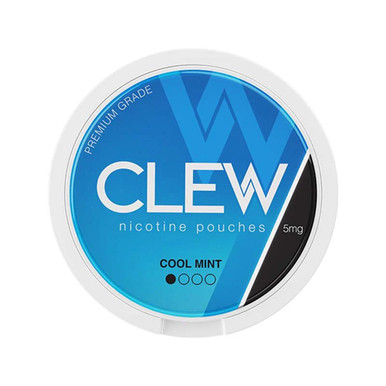
Three of the eight sit in the mint family, and they are not the same thing as each other. Clew Cool Mint is the straightforward cool reading. Clew Spearmint takes the sweeter, softer, more herbal branch of mint. Clew Menthol goes the other way, to the sharp, almost medicinal end where the cooling is the point and the sweetness steps back. People who think they dislike mint have usually only met one of those three.
Two are fruit: this can, and the blueberry can in the same range, which is the darker, rounder, jammier of the two fruits. The citrus entry stands on its own as the sharp one. And the coffee can is the outlier of the whole range, the only one that brings bitterness and roast into the set at all.
That accounts for the six siblings we hold listings for here. The brand page shows eight cans in total, so there is one more than the set described above; rather than guess at what it is or what it costs, we would point you at the shelf itself, which is always current.
If you like this brand's approach and want to see the whole set together rather than one at a time, the full Clew listing is the place to do it, and across the six siblings we list the price is flat, so the only variable you are weighing is flavour.
What people keep alongside a watermelon can
Very few people run one can and nothing else. The common pattern is two or three that differ from each other enough to be worth swapping between, and the useful axis for that is usually cool versus sweet rather than one fruit versus another.
If you want to stay in watermelon but change the treatment, there are several routes. Cuba White Watermelon is the same fruit under a different brand's hand, at the same £39.90, which makes it a clean comparison of how two makers interpret one word. The Denssi watermelon can with the freeze treatment, also £39.90, adds the cooling partner this one deliberately lacks. Killa Exclusive Strawberry Watermelon at £33.50 pairs the fruit with strawberry, which pushes the whole thing further into the soft red-fruit family. And Velo Wintry Watermelon, listed at £4.19, is a fourth reading again — though note that price is for a different pack basis to this one, so it is not a like-for-like comparison of value.
If you want to move away from the fruit entirely for contrast, the cool end is where most people go. Edge Mint at £14.95 and the Klint mint can at £36.90 sit at different points on that axis and at very different prices. Another route is a different fruit with a different shape: the Fumi lime can at £27.90 for sharpness, the Elf Bar berry pairing at £29.90 for weight, the 77 mango in the mini format at £39.90 for a heavier tropical fruit, or Nordic Spirit Max Foresty Berry at £4.49 for a mixed berry profile.
None of that is a recommendation to buy more. It is an answer to a question we get asked often, which is what else is worth looking at next to this, and the honest answer is: something that differs on an axis you can name.
Keeping a can in reasonable condition
Pouch cans do not need special treatment, but a few ordinary things help.
Keep the lid pressed properly shut. A lid sitting slightly proud is the most common reason a can dries out faster than expected, and it usually happens because a used pouch in the lid compartment is stopping it from seating. Clear the compartment and the lid closes as it should.
Keep cans out of direct sun and away from heat. A car windscreen in summer, a radiator shelf, a windowsill — those are the three places cans most often get left and the three places they do worst. A drawer, a cupboard or a bag pocket is fine. Room temperature is fine.
Some people keep cans in the fridge. That is a habit rather than a requirement, and we are not going to tell you it improves anything, because we do not hold storage guidance from the manufacturer for this product. What we will say is that whatever is printed on the can itself takes priority over anything on this page, including any date marking. Read the can.
Buying ten at once means nine of them are stored rather than in use, so it is worth keeping the unopened ones somewhere sensible from the start rather than leaving the box wherever it was unpacked. And as with anything nicotine-related in a household, store them where children and animals cannot reach them. That is not a formality.
Working out which one to order
There are two decisions on this listing and they are independent of each other.
The first is strength: 5mg, 10mg, 15mg or 20mg. We are not able to advise on this and we will not, for the reasons set out above. The figure is a declared number that orders the range, nothing more. If you already have a reference point from products you use, that is the information you should be going on.
The second is quantity, and here the listing makes it simple: this product is sold as a ten-can pack at £39.90, so the pack size is fixed. What is worth thinking about is whether you want ten cans of a flavour you have not had before. Ten is a commitment to a single profile, and watermelon without a cooling partner is a flavour people have strong and divided opinions about. If you have never had this particular can, a sensible approach is to look at whether something similar on the watermelon shelf is available in a smaller quantity first, rather than finding out ten cans in.
If you already know you like it, the flat pricing across the four strengths means there is nothing else to weigh. Pick the figure you want and order it.
Ordering, delivery and proof of age
This is an over-18 product and the order process reflects that. You must be 18 or over to buy, and we sell only to adults who already use nicotine.
Age verification applies at checkout. Depending on the checks, you may be asked for additional confirmation before an order is accepted, and the courier may ask to see identification when the parcel is handed over. If nobody of 18 or over is there to receive it and show ID, the parcel will not be left. That is the rule, it applies whoever you are, and it is worth planning the delivery around rather than being caught out by it.
We show this product as in stock at the time of writing. Stock moves, and the listing itself is always more current than the body text of a page, so treat what is on the product listing as authoritative if the two ever disagree. Prices shown are in pounds sterling.
Nothing on this page is an inducement to buy more than you intend to. We stock a large range because people want choice, not because anyone should be working through it.
Finding your way around from here
This page sits at the intersection of three shelves, and any of them will take you somewhere sensible next.
By brand, Clew's eight cans are the immediate neighbourhood. By flavour, the twenty-three watermelon cans we list gather every interpretation of this fruit we stock in one place, which is the most useful shelf on the site if you already know which fruit you want. By strength band, this can is filed on the Strong shelf, with the medium band below it and the extra strong band above.
Other brand pages are laid out the same way if you want to browse sideways — the Cuba range and the Pablo range are two of the larger ones. And if you would rather not filter at all, the full shop listing puts everything we stock in one place to scroll through.
Questions we are actually asked about this can
Does it taste like real watermelon?
It tastes like a watermelon flavour, which is not quite the same claim. A good one captures the light sweetness and the green rind note that make the fruit recognisable, without the cold and the texture that do a lot of the work when you eat the real thing. Whether this particular can lands for you is subjective and we are not going to pretend otherwise. What we can tell you is that our flavour data lists watermelon alone, with nothing else alongside it.
Is there any mint or cooling in it?
Not according to the flavour information we hold, which lists watermelon and nothing else. If you specifically want the fruit with a cooling element alongside it, that is a different product — the Denssi freeze version names that combination on the can. This one is the fruit on its own.
How many pouches are in a can?
We do not hold a pouch count for this product, so we are not going to guess at one. The can itself carries that information printed on it. What we do hold and can confirm is that this listing is a pack of ten cans at £39.90.
Why are all four strengths the same price?
Because that is how the product is listed. All four — 5mg, 10mg, 15mg and 20mg — are £39.90 for the ten-can pack. We hold no explanation from the brand for its pricing structure and would only be speculating if we offered one. The practical effect is that your choice of strength does not change what you pay.
Which strength should I get?
We cannot advise on that and we are not permitted to. We do not recommend strengths to individuals, we do not describe any figure as suitable for anyone, and we do not characterise what any of them are like. The figures order the range from 5mg at the low end to 20mg at the high end, and that is the whole of what we can tell you.
How long does one pouch last?
It varies by person and by habit, and there is no fixed answer. We do not publish a recommended duration, because that would be telling you how much to consume. Flavour generally reads strongest early on and fades, so many people treat the point where it has gone quiet as the natural end.
Is it a dry pouch or a moist one?
We do not hold moisture or format classification data for this product, so we cannot tell you. That is printed on the can and described by the manufacturer, and the can is where you should read it rather than taking a guess from us.
Where is it made?
We do not hold country of origin or manufacturing information for this product and we are not going to invent it. The packaging carries whatever the manufacturer declares, and that is the only reliable source.
Is this a popular flavour?
We do not publish sales figures, rankings or customer ratings, so we cannot tell you that and would not want to imply it either way. What we can tell you is a fact about our catalogue: we list twenty-three cans under watermelon, which is a substantial flavour shelf by our standards. That says something about breadth of choice, not about what anyone else is buying.
How does it compare with the Cuba watermelon?
Both are watermelon cans at £39.90 from different brands, so the comparison is about interpretation rather than price. The Cuba White version of the flavour is a separate product with its own listing and its own strength options. We cannot give you a tasting comparison of two cans as a fact, because that would be an opinion dressed up as one — but if you want to see how two makers read the same word, those are the two to put side by side.
Can I mix strengths or flavours in one order?
Yes. Each variant is its own listing, so you add whichever ones you want to the basket separately. Plenty of people keep a sweet can and a cool can going at the same time, which is why the cool mint option from the same brand gets bought alongside this one — same brand, same £39.90, opposite end of the flavour range.
Does the lid compartment need emptying?
Yes, and it is worth doing regularly. A full lid compartment stops the lid seating properly, which is the most common cause of a can drying out sooner than expected. Empty it into a bin, keep used pouches away from children and animals, and do not put them down a sink or toilet.
The legal part, which applies to every order
This product is for adults aged 18 or over only. We sell nicotine pouches exclusively to adults who already use nicotine products. Age verification is carried out at checkout, and identification may be requested on delivery — if the person receiving the parcel cannot show that they are 18 or over, it will not be handed over.
Nicotine is an addictive substance. That is a plain statement of fact about the product and it applies to every can on this site, at every strength, including the lowest figure listed here.
Clew Watermelon is not a licensed stop-smoking medicine and is not authorised or supplied as one. It is not intended for non-smokers, for anyone who does not already use nicotine, for anyone under 18, or for anyone who is pregnant or breastfeeding. Nothing on this page should be read as medical advice or as guidance on how much to use. If you have questions about nicotine and your own health, a qualified healthcare professional is the person to ask — not a product page.
Keep all nicotine products out of the reach of children and animals, including used pouches.
In short
Clew Watermelon is a single-flavour can from a small, flat-priced range: watermelon on its own with no cooling partner, sold as ten cans for £39.90 in four declared strengths from 5mg to 20mg, all at the same price. It sits low on cool, high but light on sweet, low on sharp and flat on bitter, which is an unusual and quite exposed corner of the shelf to occupy.
Where we hold a fact — the price, the pack count, the strengths, the flavour, the stock position — it is on this page. Where we do not, we have said so rather than filling the space. If you want to see the alternatives before deciding, every watermelon can we list is one click away, and this brand's other seven cans are another.
More from Clew
More strong pouches

More watermelon pouches
Where this sits
Clew Watermelon Nicotine Pouches appears in these categories. Browse them, or jump to something close.
You might also like