
Cuba · 16mg · 10-can pack
Read the full guide
Cuba White Watermelon Nicotine Pouches
£39.90
✔ In stock — ready to ship
100% tobacco-free
Free over £20
Same-day dispatch
Secure checkout
This is a ten-can pack of Cuba White Watermelon Nicotine Pouches at £39.90, in a single strength of 16mg per pouch, and it is in stock as this page is written. One price, one strength, one pack format — there is no variant table to work through and nothing hidden behind a dropdown.
The three words on the lid each carry information. Cuba is the house, and we list 47 of their cans on the Cuba brand page. White names the line and describes the pouch: a dry, white-material pouch that stays white rather than the moist, darker style that older products in the wider category used. Watermelon is the flavour, and it is an unusually specific one — there is very little ambiguity about what watermelon is supposed to taste like, which makes it easy to judge a can against the name on it.
The full guide to Cuba White Watermelon Nicotine Pouches
4,999 words on how it eats, who it suits, how to serve it and what to put beside it.
Cuba White Watermelon: the listing in full
Ten cans is a roll rather than a single tin, and that changes a few things further down this page, particularly around storage. £39.90 across ten cans is £3.99 a can, which is the only arithmetic this description is going to do for you. We will not be estimating how long a roll lasts anybody, because that depends entirely on the person and is not a shop's business to model.
The tins themselves are standard: shallow, round, a lid that clicks home, and a recessed chamber inside that lid for finished pouches. The pouches are the slim white type, laid in a ring, dry to the touch and flat rather than plump. Nothing about the physical object is unusual, which is exactly what you want from packaging.
Watermelon, as a flavour on a lid
Watermelon is one of the few fruits whose flavour name people can agree on, and that is because most of what we recognise as "watermelon" is not really the fruit at all — it is a particular sweet, slightly green, faintly floral idea of the fruit that confectionery established decades ago and that everybody now shares. A can that tastes like an actual watermelon would taste of very little. A can that tastes like watermelon flavour tastes like this.
The aroma from the tin is bright and sugary with a green edge on top of it. It is a pink-tasting smell, if that makes sense — the sort of sweetness that carries a slight cucumber-ish freshness behind it, which is the part that stops it reading as generic red sweet. It is loud, as Cuba's White flavours generally are. Hold the open can at arm's length and you will still get it.
In the mouth, sweetness arrives immediately and it is a soft, rounded sweetness rather than a sharp one. Watermelon has almost no acidity of its own, which is why watermelon flavours so often feel gentler than berry or citrus ones even when they are just as sweet. This can follows that pattern: there is no tang to speak of and no sour edge, just a broad sweet body with the green, faintly floral note running through it.
Through the middle, the green note becomes more noticeable as the initial sugar rush settles. That is where the flavour is most recognisably watermelon rather than generic fruit. Towards the end the sweetness thins out slowly and the green character is the last thing to go, leaving a clean, mild finish with very little aftertaste.
There is no cooling agent in this one — nothing frosted, iced or mentholated. That is worth flagging because a great many watermelon pouches on the market are built with a chill in them, and some people have only ever had the cold version. This is the warm version, and it is a noticeably softer, sweeter experience as a result. If the cold one is what you are used to, the cans with "freeze", "wintry" or "ice" in their names are where that lives.
Compared with the sharper fruits, this is a low-drama flavour. It does not spike and it does not surprise you. Some people find that restful and keep a watermelon can in permanent rotation for precisely that reason; others find it too gentle after a week and want something with an edge. Both are reasonable.
The format in use
A slim pouch goes behind the top lip and sits flat. There is a short settling period of a few seconds and then it is simply there, requiring nothing. The shape is the reason this format took over the category: a flatter pouch takes up less room and does not push the lip out the way a rounder one does.
The flavour arc runs loud, then steady, then fading. The opening stretch is the most expressive, the middle is the longest, and the tail end trails off rather than stopping. How long anyone keeps a pouch in is individual and we are not going to publish an average dressed up as guidance.
Ordinary activity carries on around it. Talking is unaffected. Cold drinks change nothing; hot drinks speed the whole arc up, so a pouch taken with tea runs its course sooner. Most people take a pouch out before a meal rather than eating around it.
Removal is clean and dry, which is the practical inheritance of the White format. The used pouch goes straight up into the lid compartment. That compartment is the answer to the perennial problem of being somewhere without a bin, and using it is the difference between this format being unobjectionable in shared spaces and being a nuisance. A used pouch left in a cup, a plant pot or on a wall is the single behaviour that gives the whole category a bad name. Empty the lid into a bin when you next pass one.
Keeping a can — and a roll — in good condition
This is the section that actually matters for a ten-can purchase, and it is the part of owning pouches that most people work out too late, usually somewhere around can number eight.
What "condition" means here. A white pouch is supplied dry and it is meant to stay in the state it left the factory in. Everything that goes wrong with a can goes wrong in one direction: it gets drier, and as it does, the flavour reads as flatter and less forward. Nothing dramatic happens, no tin goes off with a bang, and there is no moment at which a can visibly turns. It is a gradual slide, which is exactly why it catches people out — you do not notice the decline, you just find yourself thinking the flavour was better when you started.
Air is the first cause. Every minute a tin spends open is a minute of air across dry material. The lid is the whole defence and it only works when it is properly seated. Resting a lid on top of a can is not closing it. Press it until it clicks, every time, including the times when you are about to take another pouch in ten minutes. This is the highest-value habit in this entire page and it costs nothing at all.
Heat is the second, and it is worse. Warmth accelerates everything. The classic casualties are cans left on a dashboard, cans in a bag in a car boot in summer, cans on a windowsill in direct sun, and cans in a kitchen cupboard directly above an appliance that gets warm. A tin is small and thin-walled; it reaches the temperature of its surroundings quickly and stays there. If you have ever opened a can that smelled faintly flat and tasted washed out from the first pouch, it almost certainly spent time somewhere warm before it got to you.
Where a can should live. Cool, dark, dry, stable and dull. A drawer in a room that does not get much sun. A cupboard away from the oven and the radiator. The middle of a shelf rather than the end nearest the window. There is no clever answer here; the boring option is the correct one.
The fridge question. People ask about this regularly and our answer is that it is unnecessary and slightly counterproductive. A dry pouch is not a perishable food and does not need chilling. Worse, taking a cold tin out into a warm room pulls condensation onto and into it, and moisture arriving where it was not intended is a change in condition rather than a preservation of it. A cool cupboard achieves everything a fridge would, with none of that.
Moisture generally. Bathrooms are a poor home for a tin. So is a gym bag, and so is anywhere that gets steamy. A dry format wants dry air. If a can has got damp, we would not advise trying to do anything clever about it; we sell the product as supplied and we do not recommend adding anything to a pouch, drying one out, or otherwise interfering with it. Use it as it comes or do not use it.
Handling a roll specifically. This is where a ten-can purchase differs from a single tin, and the rule is simple: open one, leave nine sealed. An unopened can keeps its condition far longer than an opened one, so breaking the whole roll open because you have got it home is nine tins beginning to age for no reason. Keep the roll together somewhere cool and take one out at a time.
Rotating stock. If you buy rolls regularly, use the oldest cans first rather than the ones nearest the front. This sounds fussy for a domestic drawer and it is genuinely the difference between never having a stale can and occasionally finding one at the back that has been there since spring. Putting new purchases behind old ones takes two seconds.
The tin you carry. One can lives in a pocket and takes whatever the day gives it, which is fine. A coat pocket is a reasonable environment: cool, dark, stable. A trouser pocket is warmer. A car is worse than both. What you should not do is let the carried can become the whole stockpile — keep the reserve at home in the cool and refill your rotation from it.
The catch compartment again. Used pouches sitting in a lid for a week will make everything underneath them smell stale, and that transfers to fresh pouches. It is a storage issue as much as a hygiene one. Tip it out, wipe the recess dry, carry on.
Recognising a tin that has had a hard life. There are a few honest tells, and none of them requires any expertise. The aroma when you open it is muted rather than loud, which on a can built as loudly as this one is immediately obvious. The pouches feel more brittle than springy between the fingers. And the flavour reads thin from the very first pouch rather than declining across the tin, which is the giveaway that the damage happened before you opened it rather than while you were working through it. If all three are true, the can spent time somewhere warm. There is nothing to be done about it after the fact, which is why the prevention is worth the two seconds it takes.
Transporting a roll. Ten tins travel perfectly well as long as they travel like luggage rather than like a snack. Inside a bag, in the middle rather than in an outside pocket against a warm surface, out of direct sun, and not left in a vehicle overnight in summer or in the boot for a day at the beach. On a long journey the difference between a bag in a cool cabin and a bag in a hot car is very large, and it is entirely within your control. The tins themselves are sturdy; it is the temperature they reach that matters rather than any risk of them being crushed.
The one thing we will not tell you to do. There is a body of folklore about reviving a dry tin by adding something to it, warming it, sealing it with something or otherwise intervening. We do not endorse any of that and we are not going to describe it. The product is sold to be used exactly as it comes out of the can. If a tin has gone past the point of being enjoyable, that is a shame and a lesson about storage; it is not an invitation to experiment on it.
Shelf life. Our catalogue does not hold a best-before date for this product and we are not going to invent one. The can carries whatever date information the manufacturer prints. What we can say from the practical side is that condition is governed far more by how a tin has been kept than by how long it has sat unopened in a cool place.
What 16mg tells you, and what it does not
Every can in this category carries a milligram figure and it is the most over-interpreted number in the business. This one says 16mg per pouch, it is the only strength we list for this flavour, and it comes from the manufacturer's own labelling — we reproduce it rather than measuring anything ourselves.
What the number is for. It exists so that products can be ordered relative to one another. That is a genuinely useful function in a catalogue running to hundreds of cans, and it is why we build shelves around it. This product is filed on the strong shelf, which currently holds 132 listings. Underneath it is the medium shelf, and above it the extra strong shelf. Those three bands let someone with a figure in mind cut a large catalogue down to a browsable size in one click. That is the whole of the job the number does well.
It is per pouch, not per can. Worth stating because it is a common misreading. The figure describes one pouch. It does not describe a tin, a roll, or a purchase, and it does not scale with the number of cans you buy. A ten-can pack at 16mg is not a stronger product than a single can at 16mg.
It is not a flavour scale. Strength and flavour intensity are set independently, and there is no rule tying them together. A can on the medium shelf can carry a far louder flavour than one on the extra strong shelf. This listing is a fair illustration: it is filed under strong, and its flavour is soft, sweet and low-drama. If what you actually care about is how much flavour you get, the milligram figure will not tell you and the description will.
It is not reliably comparable between brands. This is the limit people most often ignore. Different manufacturers do not all arrive at their printed figures by an identical route, so two cans showing the same number from two different houses are not guaranteed to be equivalent to one another. Within a single brand the figure is a much more meaningful ordering than it is across the whole market. Treat cross-brand comparisons as approximate.
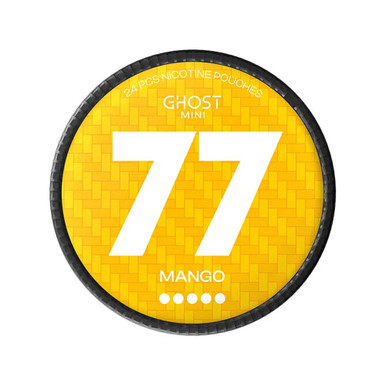
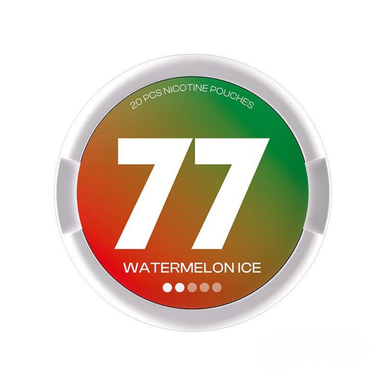
Pouch format affects the picture too. Our shelves carry standard slim pouches and smaller mini-format pouches, and the figure on the can refers to the pouch that is actually in that can. The 77 Ghost Mini mango can at £39.90 is the mini example in this product's neighbour list. A number attached to a smaller pouch and the same number attached to a larger one are not describing the same object, which is another reason to read the format alongside the figure.
Price is not a proxy for strength either. There is no relationship between the two on our shelves. Velo Wintry Watermelon at £4.19 and Klint Avalanche Mint at £36.90 differ in price mostly because of what quantity each listing represents, not because of what is printed on the lid. Anyone using price as a shortcut to strength will get it wrong regularly.
How the number actually gets used when browsing. In practice most people arrive at a shelf with a figure they already know from whatever they have bought before, and they use it as a filter rather than as a target — a way of ruling out two thirds of a catalogue quickly so they can get on with the part they care about, which is almost always flavour. That is a perfectly sensible way to shop and it is precisely what the bands are built for. Where it goes wrong is when the figure stops being a filter and starts being treated as a specification that guarantees an identical experience across every brand on the site. It does not do that, and no retailer's shelf structure could make it do that.
One strength means one fewer decision. It is worth noting that this listing offers no choice at all on this axis, which some people find limiting and others find restful. There is no mild version of this flavour and no stronger one in our catalogue. If 16mg is not the figure you are looking for, the decision is to choose a different flavour rather than a different version of this one, and the shelves are the fastest way to see what is available at other points on the ladder.
What we will not do. We will not tell you which figure suits you, and we will not describe any strength as appropriate for any person or situation. A shop knows what the manufacturer printed; it knows nothing about the individual reading the page. Publishing the number is information. Attaching a recommendation to it would be something else entirely, and we do not do it.
Watermelon across our shelves
Watermelon is a small shelf here — 23 cans in total — and the interesting thing about it is how differently the same fruit gets handled across that handful of products.
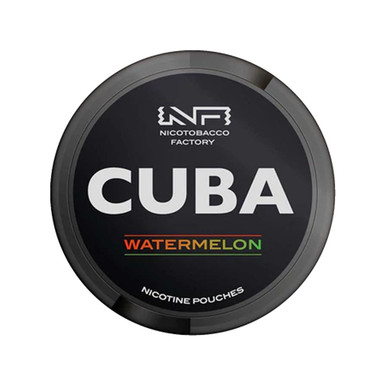
The most direct comparison is within the same house: Cuba Black Watermelon at £39.90 puts the same fruit name in the brand's other line, so if you want to know how a different line treats the same idea, that is the one-variable comparison to make.
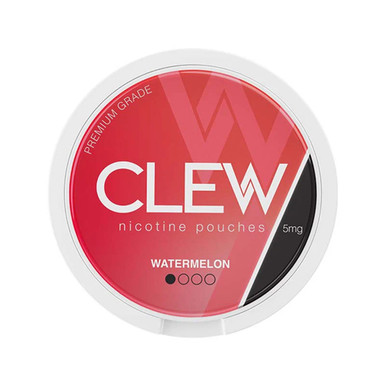
For the same fruit from other houses at a similar price, Clew Watermelon is also £39.90. For the frosted treatment — the version with a cooling character that this can deliberately does not have — Denssi Watermelon Freeze at £39.90 is the obvious reference, and the Velo wintry watermelon can at £4.19 is a cheaper single-can way to try the cold version of the idea. Killa Exclusive Strawberry Watermelon at £33.50 blends it with another red fruit rather than presenting it alone.
That spread — same fruit, other line; same fruit, other brand; cold version; blended version — is a genuinely useful map if watermelon is your flavour and you want somewhere else to go without leaving it.
Where this can sits in the Cuba range
The brand divides across lines and covers most of the available flavour ground without repeating itself, which makes it possible to build a whole rotation inside one house.
Against this can's soft sweetness, the sharper options are Cuba Black Cherry, with its darker stone-fruit depth, and Cuba Black Blueberry, which sits rounder and lower. Cuba Black Apple Juice takes the pressed orchard route and is the most everyday flavour in the range. Cuba Black Banana Hit occupies the creamy confectionery corner and is the least fruit-like of the fruits.
Stepping outside fruit, Cuba Black Cola is built on the soft-drink idea, and Cuba Black Cold Dry is the plain one with no flavour story attached at all — the natural companion to a sweet can, because it resets the palate rather than adding to it. Everything listed in this section is £39.90, the same as this product, so the comparison is about flavour alone. The brand shelf shows the lot in one view.
Cans worth keeping alongside
If you are building a set rather than buying one thing, the useful principle is contrast. A second watermelon is not variety.
For a genuine change of direction, Edge Mint at £14.95 is a plain mint at a considerably lower price than most cans on this page, and the Klint avalanche mint can at £36.90 is the same idea at the other end of the price range. For a sharp fruit rather than a soft one, Fumi Fiery Lime at £27.90 brings citrus acid that this can has none of. For a darker berry, Elf Bar Blueberry Raspberry at £29.90 pairs two berries together. And the 77 Ghost Mini mango at £39.90 changes the pouch format as well as the flavour, which is a useful thing to try at least once.
Different price brackets are worth exploring too — the Pablo shelf sits in a different part of the catalogue and is a sensible place to look if £39.90 is more than you want to spend in one go.
Choosing between the listings
Inside this product there is nothing to decide: 16mg, ten cans, £39.90. Between products, three axes are worth thinking about separately.
Strength band, which the shelves handle — medium, strong, extra strong. Flavour, where the decision that matters most is warm against cold, since that changes the sensation and not only the taste. And quantity, where the thing to watch is that our catalogue lists single cans next to multi-can packs, so a £4.19 listing and a £39.90 listing are usually different amounts of product rather than different values.
On the roll-versus-single question specifically: a ten-can pack is a commitment to one flavour for a while. If watermelon is familiar territory for you, that is straightforward. If you have never had this particular can, there is a fair argument for trying the fruit in a cheaper single-can format first and coming back for the roll if it suits.
Ordering, delivery and age checks
This is an 18+ product and we sell it only to adults who already use nicotine. Age verification is part of placing an order. ID may also be requested when the parcel is delivered, and couriers can refuse to hand a parcel over if nobody present can produce it, so keep something to hand on the day.
Stock status is shown on the listing itself, which is the only place we keep it current. This one is available as the page is written. We do not publish restock forecasts for anything, because we would only be guessing.
Multiple flavours go in one basket perfectly happily, and if you are building the kind of set described above, ordering them together is simpler than placing separate orders. The full catalogue is the place to start if you want to browse before checking out.
Finding this page again
The product is filed in three places: the Cuba brand page alongside the other 46 cans from the house, the strong shelf with the other 131 listings in that band, and the watermelon shelf with the other 22 cans carrying this fruit.
From the catalogue root you can reach any of those in a click, and the strength bands are the fastest filter if the figure on the lid is your main criterion.
Questions people ask
Is this the cold version of watermelon or the warm one?
Warm. There is no cooling agent, no menthol and nothing frosted in this can — the fruit carries it on its own, which makes it softer and sweeter than the iced watermelons on the market. If the cold version is what you are used to, Denssi Watermelon Freeze and the Velo wintry watermelon can are the two linked on this page that do it. The difference is one of sensation as well as flavour.
How many pouches are in each can?
Our catalogue records the pack as ten cans at £39.90 but does not hold a per-can pouch count, so we are not going to state one. That figure is printed on the can. We publish what our own records contain and leave the rest to the label rather than filling the gap with a number that merely looks right.
Can I buy a single can instead of ten?
Not on this listing — the ten-can pack is the only format we carry it in. If you want to try a watermelon flavour in a smaller quantity first, the neighbour links on this page include single-can listings from other brands at much lower prices. They are different products rather than smaller versions of this one, which is worth being clear about before you order.
Does the flavour get weaker towards the bottom of a can?
Not by design, but in practice a tin that has been open for a long time in a warm place will give you a flatter flavour at the end than it did at the start. That is a storage effect rather than a manufacturing one. Keeping the lid properly shut and the tin somewhere cool largely removes it, which is the whole argument of the storage section above.
Should I keep the unopened cans in the fridge?
We would not. A dry pouch is not perishable and does not need chilling, and a cold tin brought into a warm room collects condensation, which is a change in condition rather than a preservation of it. A cool, dark cupboard or drawer does everything a fridge would do here and avoids the moisture problem entirely.
What is the best-before date?
We do not hold date information for this product in our catalogue, so we cannot publish it. The can carries whatever the manufacturer prints. In practical terms, how a tin has been stored matters a great deal more to its condition than how long it has been sitting in a cool drawer unopened.
Is 16mg strong compared with the rest of your range?
It sits on our strong shelf, which is above medium and below extra strong in the way we file things. That is a description of our shelving, not a judgement about how it will suit anyone. The number is per pouch, it is set by the manufacturer, and it is not reliably comparable between brands. We do not advise on strength and will not make an exception here.
Is it the same as the Black watermelon?
They are the same fruit name in two different lines from the same brand, both listed here at £39.90. That makes it an unusually clean comparison if you want to see how a line changes the treatment of a flavour. What we will not do is characterise the difference beyond what our records hold — the two listings are both on the site and the descriptions stand on their own.
Will a used pouch leak in the lid compartment?
A dry white pouch comes out in one piece and does not run, which is the practical reason the compartment works as a carry-bin at all. What it will do is make the tin smell stale if you leave several in there for a week, and that smell reaches the fresh pouches underneath. Empty it and wipe it dry reasonably often.
Can I take a roll abroad with me?
We cannot advise on that. Nicotine pouches are regulated very differently from country to country and some places restrict or prohibit them, and airlines set their own conditions on top of that. Check the destination's rules and the carrier's conditions before you travel. We do not hold that reference and improvising one would be irresponsible.
Why does watermelon taste sweeter than your berry cans?
Because the fruit it is imitating has almost no acidity to it. Berries carry a tartness that cuts through sweetness and gives a flavour its edges; watermelon does not, so a watermelon flavour is nearly all body and very little edge. That is a description of the flavour family rather than a comment on how much sugar-like sweetness any particular can carries, which is not something we hold figures for. If you want the sharper end of fruit, the citrus and berry cans linked on this page go there.
Does a can rattle or take up much room in a pocket?
A full tin is quiet and about the size of a small jar lid in footprint, so it disappears into a coat pocket without comment. As it empties, the remaining pouches have more room to move and a can can become slightly audible when shaken, though not in normal use. The lid stays shut if it has been properly seated; a lid that has only been rested on top is the one that opens in a bag, and that is a genuinely annoying thing to discover.
Is it worth buying the ten-can pack if I am not sure about the flavour?
Honestly, probably not. Ten cans is a lot of one taste to commit to on spec, and we would rather say so than sell you a roll you end up leaving in a drawer. If watermelon is already familiar and you know you like the warm rather than the frosted version, the roll makes sense. If not, the cheaper single-can listings linked above are a lower-cost way to find out, even though they are different brands rather than smaller versions of this product.
Who is allowed to buy this?
Adults aged 18 or over who already use nicotine. Nobody else. Age is verified as part of the order, ID may be requested on delivery, and nothing on this page is addressed to anyone outside that group.
The required notices
Nicotine is an addictive substance. This product contains nicotine and is sold only to adults aged 18 or over who already use it. Age verification forms part of every order and ID may be requested when the parcel is delivered.
It is not a licensed stop-smoking medicine, and no medical, therapeutic or health claim is made for it anywhere on this page. It is not intended for non-smokers, for anyone who does not already use nicotine, for under-18s, or for anyone who is pregnant or breastfeeding. No strength listed here is presented as suitable for any particular person, and nothing above is advice of a medical kind. For that, speak to a qualified professional rather than reading a product description.
To close
Cuba White Watermelon is a 16mg dry white pouch carrying a soft, sweet, faintly green watermelon with no cooling element, sold as a ten-can roll at £39.90 and in stock at the time of writing. It is a low-drama flavour, which is either its best quality or its limitation depending on what you want from a can. If you buy the roll, the one thing worth taking from this page is the storage advice: open one, keep nine sealed and cool, and the tenth will be as good as the first.
More from Cuba
More strong pouches

More watermelon pouches
Where this sits
Cuba White Watermelon Nicotine Pouches appears in these categories. Browse them, or jump to something close.
You might also like