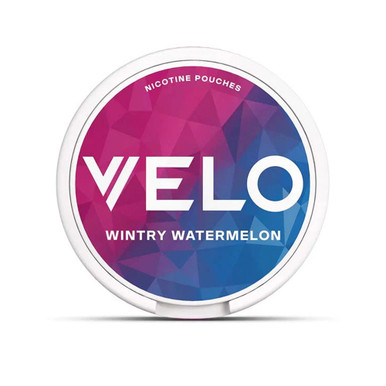
Velo · 10mg–17mg
Read the full guide
Velo Wintry Watermelon Nicotine Pouches
£4.19
✔ In stock — ready to ship
100% tobacco-free
Free over £20
Same-day dispatch
Secure checkout
This is the page for Velo Wintry Watermelon Nicotine Pouches, priced at £4.19. Three declared strengths are held against the listing — 10mg, 14mg and 17mg — and all three are the same £4.19. Our stock field says in stock at the time of writing. One flavour tag is attached to it: watermelon. There is one photograph. That is the whole of our record, and the shortness of that list is the reason this page spends as much time on what we cannot tell you as on what we can.
Start with the most obvious gap, because a careful reader will spot it in the first thirty seconds and we would rather raise it than be caught not raising it. The product is called Wintry Watermelon. The only flavour tag on our record is watermelon. There is no mint tag, no cooling tag, nothing at all corresponding to the first word of the name. On several other listings we carry, a name of that shape comes with a second tag that backs it up. Here it does not. We do not know whether that is a gap in our data or an accurate reflection of the flavour, and rather than choose an interpretation that makes for tidier copy, we are telling you the two things disagree and that the packaging is the authority. If a cool element is important to you, that is a question to settle from the tin rather than from this page.
The full guide to Velo Wintry Watermelon Nicotine Pouches
4,903 words on how it eats, who it suits, how to serve it and what to put beside it.
Wintry Watermelon: the listing and its contents
Everything else below falls into three categories: what the object physically is, how it compares with other cans on our own shelves, and where our information runs out. There is nothing here about what is inside a pouch, nothing about what happens after one goes in, no statement about anybody's wellbeing in any direction, and no view from us on which of the three figures above belongs in anyone's hand. The reader this is addressed to is an adult who already uses nicotine and is choosing between products. The required notices sit in their own section near the bottom.
Watermelon, and a name that promises something our record does not
Taking the fruit first, because that part is at least supported by the data. Watermelon is a quiet fruit to build a flavour on. The real thing is mostly water, the sweetness is gentle, the acidity is low, and the characteristic that actually identifies it is not the sweetness at all but a faint green note near the rind — something in the cucumber family, vegetal rather than fruity. Flavourings divide along whether that green note is kept or removed. Keep it and the flavour reads as fresh fruit, restrained and slightly savoury at the edge. Remove it and you get the confectionery reading: louder, rounder, sweeter, unmistakably a sweet-shop watermelon rather than a fruit one. Both are legitimate and our record does not say which this is.
Now the first word. "Wintry" belongs to the same family of flavour names as ice, frost and arctic, and on this page it is being read the way flavour names are always read: as a description of the character of a taste and the way it sits in the mouth, in the sense that a mint tastes cool or a lemon tastes sharp. It is not a statement about anything the can does to a person and we will not write it as one. What we would normally do next is point at a tag on our record supporting it — and here there is not one. The tag list is a single word long and that word is watermelon.
So what can honestly be said? That the manufacturer has chosen a name suggesting a cool character; that our flavour tags do not corroborate it; and that we cannot tell you which is the better guide. What we will not do is write three paragraphs describing a cool layer we have no record of, because that would be inventing the product's flavour rather than describing it. This is one of the cases where a product description has to stop short, and stopping short is the correct behaviour.
On the shelves, the single tag places this can among the 23 listings we file under watermelon, which is a small and unusually coherent grouping — most of the cans on it are recognisably the same idea taken in different directions. This listing does not appear on our mint shelf, which follows directly from having no mint tag, and that is worth knowing if that shelf is how you normally browse. It simply will not show you this product.
As for aroma: the general pattern across fruit cans of this kind is that the open tin smells sweeter and more strongly fruited than the pouch tastes, and with a light fruit the gap can be noticeable. That is a property of the format rather than a criticism of any product. Everything in this section is a description from a shop that stocks the can, not a specification, and where our paragraphs and the packaging conflict, the packaging is correct.
Placing it on the four axes
The most useful way to talk about a flavour without overclaiming is to take the axes one at a time and say where the thing sits, or say that we cannot. Four axes cover most of what matters in a pouch: cool, sweet, sharp and bitter. This section works through them in order, and it is honest about the fact that our record only supports confident statements on some of them.
The cool axis
This is the axis the product name points at and the one our data says nothing about. Coolness in a flavour is a taste characteristic — the quality that makes a mint read cold on the palate in the same descriptive sense that a chilli reads warm — and it is generally the axis with the widest variation between cans that look similar on a listing. Some products are built with a pronounced cool character sitting over the fruit; some have a modest one underneath it; some have none at all despite a suggestive name. With only a watermelon tag on record, we cannot place this can anywhere on that axis, and any position we asserted would be invented. The tin will tell you within one pouch.
The sweet axis
Here we are on firmer ground, though still generalising from the fruit rather than from data. Watermelon flavours sit in the middle of the sweetness range for fruit cans rather than at the top. The fruit itself is mildly sweet and a flavouring that respects that comes out gentler than a berry or a tropical stone fruit would. Where a watermelon flavour is built for the confectionery reading, it climbs the sweetness axis considerably and starts to resemble a boiled sweet. Which of those two this listing is, we do not know. What can be said is that watermelon is rarely the sweetest thing on a shelf and almost never the least sweet.
The sharp axis
Sharpness — the acid edge that makes a citrus or a green apple bite — is where watermelon sits lowest of all the common fruit flavours. Real watermelon has very little acid in it, and flavourings generally follow suit, which is why watermelon cans tend to read as soft and round rather than bright. This is the clearest structural difference between a watermelon can and a citrus or orchard-fruit one, and it is reliable enough across the flavour family to be worth stating. If sharpness is the quality you are after, this is not the shelf for it, and the cans named later in this page include better candidates.
The bitter axis
Bitterness is present in some flavour families as a deliberate element — coffee, cola and certain herbal notes use it structurally — and is essentially absent as a design goal in fruit flavours. We would not expect bitterness to be part of the intent in a watermelon can. Beyond that we cannot go: our record holds no information about the finish of this product or about anything else on this axis, and the general observation above is about the flavour family rather than about this tin.
What the axes are good for
Set out that way, the exercise does something a paragraph of adjectives cannot: it tells you which questions the listing answers and which it leaves open. This one answers "which fruit" clearly and leaves "how cool" entirely open, which is an unusual profile for a can whose name leads with a cool word. If you already know you like watermelon and the cool element is a detail you are relaxed about, the listing is straightforward. If the cool element is the reason you were interested, this is a can to buy from the tin rather than from the page.
Three figures on the lid
This listing offers 10mg, 14mg and 17mg, all at £4.19. Those are declared amounts per pouch given by the manufacturer, reproduced here exactly as supplied, and price does not vary between them.
Within one product line, three figures from one manufacturer at least share a basis, so the ordering between them is meaningful as an ordering. Across brands the figure travels much less well, because different manufacturers do not necessarily generate or present it the same way and because pouch size, moisture and flavour load vary from product to product. A can from another brand printed 14mg is a can with a matching number, not a can that behaves alike.
What the figure is not, in any context, is a quality score. A three-rung ladder on one listing tends to invite a reading where the top rung is the real version and the bottom one is a reduced edition, and that is not what these numbers mean. They describe a declared quantity, not an experience and not a grade.
And the thing we will not do: we cannot advise which strength suits anyone. Not in general and not for you specifically. We know nothing about your history, we are not qualified to weigh it, and a product page is the wrong venue for that question entirely. We print the figures accurately, we tell you the price is identical across them, and the decision stays where it belongs.
Because the declared range runs to 17mg, the whole listing is filed on our Strong shelf with 132 others, including its 10mg variant. If you browse by shelf, that means the medium grouping will not show you this product even though one of its three variants carries a modest number. Above the Strong shelf sits the Extra Strong grouping. The shelves are a browsing convenience that considers the whole range on a listing, not a numerical sort and certainly not a ranking of what anyone ought to hold.
The tin, and living with it
Physically this is the same shallow round tin the format has settled on: a lift-off lid that presses home with a click, a printed top face carrying brand, flavour and the figure of the variant, and a ring of flat white pouches inside. The printed figure on the lid matters more here than on a single-strength listing, because with three variants available it is the only thing distinguishing one open tin from another. Our record holds nothing about the pouches themselves differing between variants, so we cannot offer any way of telling them apart by eye or touch, and we are not going to invent one. Keeping each variant in its own tin is the whole system.
A single pouch is a small soft-cornered rectangle, dry rather than damp, and light enough to lose on a worktop. We do not hold a pouch count for this listing — that number is on the packaging — and we are not going to approximate it, because approximations published by shops have a habit of being quoted as facts. Tin dimensions and pouch weight are in the same category.
In place, the pouch goes between lip and gum and stays put. The common report is that the first minute is the most noticeable and that it settles after that. People talk, work and drink with one in; eating with one in is a preference rather than a rule and we have nothing useful to add to it. Duration varies enormously — ten minutes and an hour are both ordinary, often from the same person on the same day — while the arc of the flavour is consistent: up early, level for a stretch, then thinning to something faint. Many people change on the fade rather than the clock.
The underside of the lid is a shallow well with a lip, and used pouches go in there. It takes several, which is what makes the tin practical away from a bin, and the contents go to general waste rather than down a drain or into a plant pot. Used pouches are small, pale and easy to lose track of, so the tin belongs closed and out of reach wherever there are children or animals in the house.
Where this can falls in the brand's range
We list twenty-one products from this brand, all visible together on the Velo shelf, and every one of them is £4.19. A range with a single price across every flavour and every declared figure is genuinely uncommon, and it changes the shape of the decision: within this brand, there is no such thing as paying more for a different flavour or a different number, so the only questions left are taste and figure.
The mint corner of the range
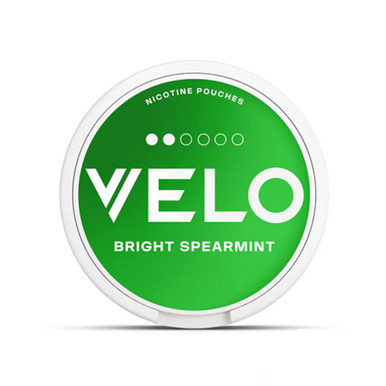
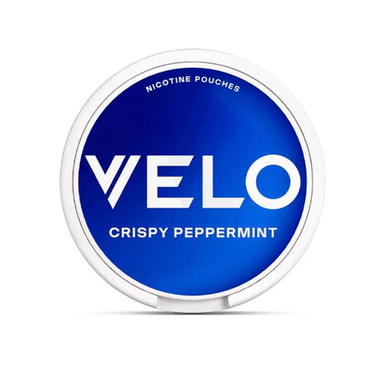
Three listings sit at the mint end. Velo Crispy Peppermint and the Freezing Peppermint can both take the peppermint route, the second one named for the colder reading of that idea, while Velo Bright Spearmint goes to the sweeter spearmint side instead. If the cool element implied by this product's name is what drew you, those three are where the brand puts a cool character on record rather than in a name only — all £4.19, all marked in stock.
The fruit corner
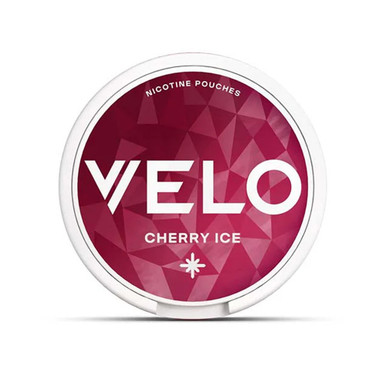
On the fruit side, Velo Cherry Ice is a single named stone fruit and the Icy Berries listing is a berry mix rather than one fruit, so it shares this can's habit of leaving you to find out what exactly is in it. Velo Lime Flame is the outlier — citrus, and named in a direction that suggests warmth rather than cold, which makes it the brand's sharpest option against this can's soft, low-acid profile. All three are £4.19 and in stock on our record.
Who each part of the range is for
Putting it plainly without recommending anything: the mint trio suits somebody who wants the cool character to be the point rather than a modifier. The fruit cans, this one included, suit somebody who wants a recognisable fruit to lead. And the uniform price means moving between those two halves costs nothing, which is why people who shop this brand tend to end up with one of each rather than agonising over a single choice. That is an observation about how the range is structured, not an instruction to buy two tins.
Watermelon elsewhere on our shelves
The watermelon grouping is small enough that a shopper can reasonably look at all of it, and the cans on it differ in interesting ways rather than being variations on one recipe.
Watermelon on its own terms
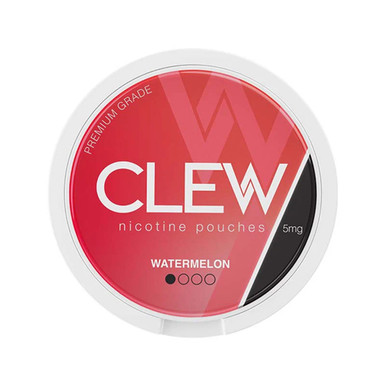
Clew Watermelon at £39.90 and Cuba White Watermelon at £39.90 both take the plain approach, naming the fruit and nothing else, which makes them the most direct comparison available for anybody trying to work out how a watermelon flavour reads without other elements attached. Both are in stock on our record.
Watermelon with something named alongside it
Denssi Watermelon Freeze at £39.90 puts a cool word in the title in the way this listing does, and the Killa Exclusive strawberry and watermelon can at £33.50 pairs the fruit with a second, sweeter and more acidic one — which is the most obvious way to address the low sharpness that watermelon brings on its own. Also on the shelf, Iceberg Watermelon at £39.90 is a further single-fruit take, but our record marks it out of stock, so it is mentioned here for completeness rather than as something to add to a basket today.
Deliberate contrasts
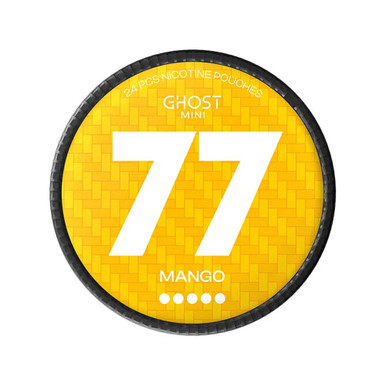
If the point of a second tin is to be nothing like the first, the useful directions from here are sharpness and mint. Fumi Fiery Lime at £27.90 is about as far up the sharp axis as our fruit cans go, and the Elf Bar blueberry and raspberry listing at £29.90 stacks two berries for a darker, denser fruit character. On the mint side, Edge Mint at £14.95 and Klint Avalanche Mint at £36.90 sit at opposite ends of the price line while occupying much the same flavour territory, which is a useful illustration of how little price tells you about what is in a tin. And for something in a different format entirely, the 77 Ghost Mini mango can at £39.90 is described on its packaging as a mini and takes the fruit in a heavier, sweeter direction. All of those except the Iceberg listing are in stock as this is written.
A warning about reading those prices
The figures in this section run from £4.19 to £39.90 and that spread should not be read as a quality ladder. Our record does not carry a can count for most of these listings, including this one, so where one price covers a single tin and another covers a pack of them, the two numbers are not measuring the same thing. Check what a listing contains before comparing it to anything on price. We would rather repeat that than let a low number do persuasive work it has not earned.
Keeping a tin in decent condition
The lid is the seal, and most complaints about a can changing come down to the lid not being properly on. The usual mechanism is mundane: the catch well fills with used pouches, the lid stops seating flush, air moves freely, and the contents drift. Emptying the well before it interferes is the entire maintenance routine for this format.
Beyond that, warmth is what takes flavour out of a tin, and a light fruit note goes before a heavy one does. Dashboards, sunny windowsills, radiator-warmed coat pockets and the shelf above a cooker are the usual offenders. A cool dark drawer solves it. Bathrooms are poor for the opposite reason, since the humidity swings are severe. Products also arrive at different moisture levels by design rather than by accident — drier pouches tend to be less noticeable and slower to release flavour, damper ones more immediate and quicker to fade — and the condition to recognise is a pouch gone stiff and papery, which is a can that has lost moisture it was meant to keep. On refrigeration we hold no manufacturer guidance for this listing and so issue no instruction; if you do keep a tin cold, let it come up to room temperature before opening to avoid condensation, and be aware that nothing cold recovers a can that has already dried out. We publish no shelf life or date — whatever date exists is printed on the can.
One point specific to a listing with three variants: storage problems are easier to misdiagnose when more than one tin is open. If a can reads flatter than you expected, the tempting conclusion is that the variant is different from what you thought, when the far likelier explanation is that the tin spent a fortnight in a warm bag with a lid sitting proud. Before drawing any conclusion about a declared figure, it is worth checking that the tin in question has been kept the same way as the one you are comparing it against. Two cans treated differently are not a fair comparison of anything.
Spares are simpler than people make them. An unopened tin is doing nothing at all, which is precisely what you want from a spare, so the sensible place for one is the same cool dark drawer as the open can rather than a glovebox or the bottom of a rucksack. Working through the oldest first is the whole of the rotation discipline. Where people end up disappointed is almost always where a spare has been carried around half-used for weeks as a convenience, which is the worst of both arrangements.
Choosing between the three variants
Since price is constant, the only variable within this listing is the declared figure. Laid out plainly:
| Declared strength | Price |
|---|---|
| 10mg | £4.19 |
| 14mg | £4.19 |
| 17mg | £4.19 |
That table is information and not a ladder to be climbed. Three rows, one price, one flavour across all three on our record. There is no pack-size option on the listing and our can count field is empty, so we cannot tell you whether £4.19 buys one tin or several — the listing page is where to confirm that before ordering, and it is worth confirming if you are weighing this against a £39.90 can elsewhere on the site. On which of the three numbers to pick, our position is unchanged and will not move: that is not a decision a shop is in a position to make for a person.
Ordering, delivery and the age check
The price shown is £4.19 and our record says in stock, which describes the moment this page was built rather than the moment you are reading it. The live listing is always the more accurate of the two and takes precedence over this paragraph.
This is an age-restricted product, sold only to people aged 18 or over. Identification may be requested on delivery, and the person taking the parcel has to be able to produce it — worth a thought if parcels at your address are normally taken in by a neighbour or a family member. A courier can refuse the handover if the check cannot be met, and that refusal is the process working rather than an error.
Since every listing from this brand carries the same price, adding a second flavour to an order has no effect on the arithmetic. That is a description of how the range is priced and not a nudge about quantity.
Finding this page again
Three routes lead back to this product, one fewer than most listings on the site because it carries a single flavour tag. By declared range it sits in the Strong grouping; by brand it is on the Velo shelf; by flavour it appears on the watermelon shelf and nowhere else. All three are linked above.
The site is deliberately shallow — strength, brand, flavour, then products — and there is no deeper tree underneath. If filtering is not how you prefer to shop, the whole catalogue on one page is there to scan. The Pablo shelf and the Cuba range are the two brand pages most relevant to the comparisons made above, if a particular can named on this page is what you actually came for.
Straight answers to the obvious questions
Is there a cool element in this or not?
We do not know. The name says wintry; our only flavour tag says watermelon and nothing else. Those two do not agree, and we are not going to resolve the disagreement by picking whichever reading makes for better copy. The packaging is the authority. If the cool character is the reason you are interested in this can, treat it as unconfirmed on our data and check the tin.
Why does it not appear on your mint shelf?
Because it has no mint tag on our record, and our flavour shelves are built directly from those tags. That is a consequence of the same gap described above rather than a separate decision. If you browse the mint grouping expecting to find every can with a cool-sounding name in it, you will miss this one, and that is worth knowing about how the shelves work generally.
How does watermelon compare with sharper fruit flavours?
Watermelon sits low on the sharp axis. The fruit has very little acid in it and flavourings generally follow, which is why these cans tend to read as soft and rounded rather than bright or biting. A citrus or an orchard fruit does the opposite. That is a statement about the flavour family and holds up well across it, though it is not a claim about this specific tin, whose exact construction we do not hold.
Are all three strengths the same flavour?
On our record, yes — one flavour tag covers the whole listing and the three entries differ only in the declared figure and not in price. We cannot speak to whether the manufacturer varies the flavour formulation between variants, because that is not something our data would show. If it matters to you, the tins are the place to compare.
Which of the three should I buy?
We cannot tell you. It is not modesty or a legal reflex; it is that matching a person to a number printed on a tin is a judgement about the person, and we know nothing about you. We publish the three figures exactly as given and note that the price is identical across them. The decision is yours to make and anyone offering to make it for you is guessing.
How many pouches are in a tin?
Our record does not hold that number. It is printed on the packaging. We will not estimate it, because an estimate from a shop tends to circulate afterwards as though it were a specification, which is worse than an honest gap.
Why is a 10mg version of this on the Strong shelf?
Because the shelves take account of the whole declared range on a listing rather than each variant separately, and this listing runs up to 17mg. The result looks untidy if you read the shelves as a strict numerical sort. They are a browsing aid; the figure printed on the tin is the fact; where the two seem to disagree, trust the tin.
Is 17mg here equivalent to 17mg from another brand?
They are matching numbers and that is the extent of it. Declared figures come from manufacturers without a guarantee of a common basis, and pouch size, moisture and flavour content vary between products. People who move between brands frequently say that identical figures do not read identically to them. Use the number to narrow a list, not to predict what a can will be like.
Where is it made?
We do not hold that information and will not publish a guess. The fields in our record are name, brand, price, declared strengths, flavour tags, stock and photograph count. Manufacturing location is not among them, and whatever is printed on the packaging is the authoritative answer.
Are the cans you compared it with available?
All but one. The Iceberg watermelon listing named above is marked out of stock on our record and we have flagged that in place rather than letting you find out after clicking. Everything else named on this page showed as in stock when this description was written, though stock moves and the product page itself is always the live answer.
Do you publish ratings for it?
No. We carry no ratings, review counts or popularity indicators on product pages and we do not imply them in prose. What we hold is listed in the first paragraph of this page, and it is a short list by design.
Is this the same product as your other watermelon listings?
No. Each listing on this site is a separate product with its own record, its own brand and its own set of declared figures, and the watermelon shelf linked above holds twenty-three of them. What they share is a flavour tag. They do not share a manufacturer, a format, a price or a recipe, and our record gives us no basis for saying how any two of them compare beyond the tag they have in common. The shelf is a way of finding them, not a claim that they are interchangeable.
Does the tin differ from the brand's other cans?
Only in what is printed on it, so far as our data goes. We hold nothing about tin size, pouch size or pouch texture varying between one listing in this range and another, so we cannot claim a physical difference and will not imply one. The shared £4.19 price across all twenty-one listings suggests a single format sold with different flavours on it, but that is an inference from pricing rather than something we have been told, and the tins are where to check it properly.
Can I mix variants in one tin?
You can physically, and it is a poor idea for a practical reason rather than any other: the printed figure on the lid is the only thing identifying which variant a pouch came from, so combining part-used tins leaves you with a can whose contents you cannot identify. Keeping each variant in its own tin, with its own lid, is the entire filing system this format offers.
The notices we are obliged to carry
This is an age-restricted nicotine product, sold only to adults aged 18 or over who already use nicotine and never to under-18s. Nicotine is an addictive substance. It is not a licensed stop-smoking product and it is not offered, described or intended as one. It is not designed for non-smokers, for under-18s, for anyone who does not already use nicotine, or for anyone who is pregnant or breastfeeding. Nothing on this page is medical advice and nothing on it recommends a strength for any individual. Identification may be requested on delivery, and a parcel may be refused where that check cannot be satisfied. Questions about nicotine and your own circumstances belong with a qualified professional, not with a product description.
Closing
Velo Wintry Watermelon is a £4.19 listing with three declared figures on it — 10mg, 14mg and 17mg, all at that price — carrying a single flavour tag, watermelon, filed on the Strong shelf because of the top of its range, and in stock as this was written. The thing to take away is the mismatch: the name leads with a cool word and our record does not support it with a tag. That may be a gap in our data or an accurate reflection of the tin, and we do not know which. If the fruit is what you want, the listing is clear about that. If the cool element is what you want, buy it from the can rather than from this page.
More from Velo
More strong pouches

More watermelon pouches
Where this sits
Velo Wintry Watermelon Nicotine Pouches appears in these categories. Browse them, or jump to something close.
You might also like