Home / Medium Strength / Velo Crispy Peppermint Nicotine Pouches
Velo · 6mg–10mg
Read the full guide
Velo Crispy Peppermint Nicotine Pouches
£4.19
✔ In stock — ready to ship
100% tobacco-free
Free over £20
Same-day dispatch
Secure checkout
This page describes Velo Crispy Peppermint Nicotine Pouches. Our price is £4.19. Two strengths are declared against the product, 6mg and 10mg, and both variants are listed at that same £4.19, so the figure on the lid does not change the figure on the receipt. Our record marks the product as in stock at the time of writing. The flavour tag we hold against it is a single word: mint.
That is the complete factual base of this page — name, brand, price, two declared figures, stock flag, one flavour tag. Our pack-count field is empty, so we do not hold the number of cans or the number of pouches that the £4.19 covers; both are printed on the packaging and confirmed at checkout. Everything written below is a description of the object and the format, a comparison against other cans on the same shelves of this shop, or a plain note that a piece of information is not ours to give. We do not print ingredient lists, we do not explain what happens once a pouch is in place, and we make no statement about anyone's condition in any direction.
The full guide to Velo Crispy Peppermint Nicotine Pouches
5,200 words on how it eats, who it suits, how to serve it and what to put beside it.
What is on this listing for Velo Crispy Peppermint
This is an adult nicotine product, sold on the basis that the buyer is aged 18 or over and already uses nicotine. The full wording sits in its own section at the foot of the page.
Crispy Peppermint as a flavour name
Velo builds its product names from a taste word and a qualifier, and both halves here are doing ordinary descriptive work. Peppermint is the flavour family: an aromatic herb note, sharp at the top, faintly sweet underneath, drier and more pointed than spearmint. It is the mint of a strong after-dinner mint rather than the mint of chewing gum, and it is the direction most people have in mind when they say a mint is "clean" rather than "sweet".
Crispy is the qualifier, and it is a texture word borrowed for a taste. Applied to flavour it suggests something with a defined edge to it — a note that arrives cleanly, does not blur into sweetness, and finishes without a syrupy tail. That is what the word is doing on the lid. It is worth being explicit that Crispy is a flavour name and nothing more: it is not a claim about what the pouch does, not a description of any sensation it causes, and not a statement about temperature in either direction. Velo chose the word; we print the name Velo chose.
The same applies to a habit of language around this whole flavour family. Peppermint is conventionally described as a "cool" taste, in the way that a chilli is conventionally described as a "hot" taste, and that convention describes the flavour idea rather than the thermometer. When a tasting vocabulary is used on this page it is used in that conventional sense — as a way of placing a taste next to other tastes — and never as a statement that the product chills, warms or causes anything at all.
On aroma, the honest note is short. Open a can of anything in this flavour family and the first thing that reaches you is the aromatic top of the mint, which is more volatile than the body of the taste and reads sharper in the nose than on the tongue. That is a general observation about mint-tagged pouches and not a specific measured claim about this listing. If you want the manufacturer's own account of the flavour, the printed can carries it and outranks anything we could reconstruct from a one-word tag.
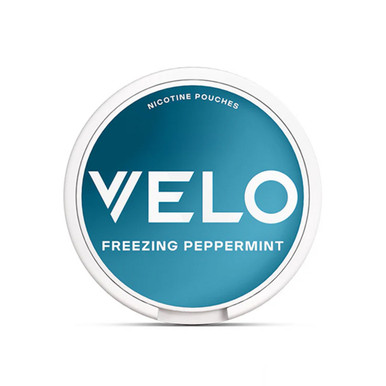
Crispy and Freezing: what our data can separate and what it cannot
We list two Velo peppermint cans, and people reasonably ask what the difference is. The honest answer has two halves, one useful and one unsatisfying, and we will give both rather than smoothing them into a confident paragraph.
Start with the unsatisfying half. Our flavour-tag field holds exactly one word for this can — mint — and it holds exactly the same one word for Velo Freezing Peppermint. Two cans, one identical tag. On our flavour data alone there is no basis whatsoever for telling them apart. We do not hold intensity ratings, tasting notes, sweetness scales or aroma descriptors for any listing on this site, so anyone who tells you our data distinguishes these two cans is reading something into it that is not there. If you want a verified side-by-side flavour comparison, we cannot supply one.
Now the useful half, which is the manufacturer's own vocabulary and our own strength figures. The two names are not interchangeable words. Crispy points at definition and dryness — a mint with clean edges and no syrup to it. Freezing points at emphasis and scale — the more insistent, more heavily stated version of the same flavour family, the one that fills more of the mouth for longer before it thins out. In practice, across mint-named products generally, that distinction tends to show up in three places: how sharp the note is on arrival, how sweet the body is underneath it, and how long the taste holds its shape. A can named Crispy is aimed at the first of those; a can named Freezing is aimed at the second and third. That is an account of what the words mean, offered as such, and not a measurement we have taken.
The second real difference is the declared figures, which are ours to publish because they come straight off the labels. This listing runs 6mg and 10mg. The Freezing can runs 11mg, 14mg and 17mg — three figures, every one of them above both of ours. So the two cans do not overlap at all on declared strength, which makes them different listings in a way that has nothing to do with taste. That is arithmetic from the labels, stated as information and not as a recommendation to pick one over the other.
Put together: the names give you a direction, the figures give you a spread, and our flavour tags give you nothing to choose between. Anyone who wants the finer flavour distinction will get a better answer from the two printed cans than from us, and the only way to settle a taste question properly has always been to taste both.
The tin, the lid and the well underneath it
The can is a shallow round tin of the standard format used across this shop — small enough to close a hand around, flat enough to sit in a pocket without making a shape through the cloth. The lid lifts clear and presses back on; no hinge, no thread. It holds shut well enough in a bag and opens one-handed once you have the knack.
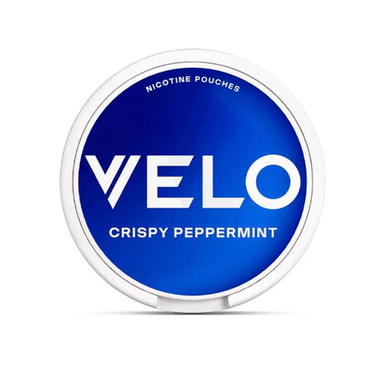
The lid face carries the Velo name, the flavour name and the milligram figure. That figure earns its position on the top because it is what tells cans apart when several are stacked in a drawer and you are reading the lids rather than lifting each one. With two declared strengths on this listing, that matters more here than it does on a single-figure can: if you keep both a 6mg tin and a 10mg tin, the lid is how you tell which is which without opening either.
Inside, the pouches are arranged in a ring, flat, even, pale and soft-edged. The underside of the lid is hollow, a shallow well with a small lip, and that well is the catch compartment. Its purpose is to hold a finished pouch when no bin is within reach: press it in, put the lid back, deal with it later. Used pouches go in general waste — not down a sink, not out of a window, not into recycling. Empty the well when you empty your pockets, before it holds enough to stop the lid sitting flat.
The pouch in practice
A pouch out of this can is a small soft rectangle with rounded corners, dry rather than wet to the touch, light enough to disappear in a closed hand. It sits under the upper lip and stays put. Most people notice that a new pouch feels bulkier than it looked in the tin and that the impression fades within a minute or two as it settles into the shape of the space it is in.
How long anyone keeps one in varies too much for a single figure to be honest. Some take one out inside ten minutes; a commonly reported range is twenty to forty; some go longer. There is no correct duration and we will not print one as though there were. The practical part worth knowing is that the taste is at its most defined early and thins gradually from there, so a first judgement about whether a flavour suits you is better made in the first few minutes than at the end.
Talking is straightforward once a pouch has settled. Drinking is fine, though anything hot passing over a pouch tends to make the taste thin faster than it otherwise would, which is worth knowing if you keep one in through a long mug of tea. Eating with one in is possible and many people do not bother.
Placement is the other thing people work out for themselves in the first day or two. A pouch is usually set under the upper lip towards one side rather than dead centre, and most people settle on a side and stay with it out of pure routine. Moving it about with the tongue is possible but tends to shorten the time before it starts to feel like something you are managing rather than something you have forgotten about. The general advice from anyone who has used the format for a while is the same: put it where it is going, leave it alone, and take it out when you are done with it rather than fiddling with it in between.
Nothing about the format requires any equipment. There is nothing to charge, nothing to refill, nothing to clean and nothing to set down on a table, which is why the whole of the practical instruction for this product fits into a handful of paragraphs and why most of what is worth saying about a given can concerns storage rather than use.
Reading 6mg and 10mg as printed numbers
The two figures on this listing are declared strengths per pouch, printed by the manufacturer and copied into our data unchanged. They are labels, not ratings. A larger number is not a better product, a more advanced product, or a product for a more experienced user, and nothing on this page should be read as implying any of that.
The plainest thing we can say is this: we cannot advise you on which of the two to buy. Not directly, not by hint, not by tone. A shop with a data table is in no position to judge what suits a particular person, and a strength figure does not turn into a recommendation because it is surrounded by careful prose. If you want guidance of that kind, it has to come from a source qualified to give it, and that is not us.
What we can do is place the figures on our own shelves as arithmetic. Both variants of this listing are filed on our medium-strength shelf, which holds 135 cans and is the largest of the three strength shelves. Above it sit the strong shelf and the extra-strong shelf. Those shelves are a filing system built from printed numbers: a can lands on one because of what its label says, not because we have formed a view about it.
Within Velo, the 6mg variant here is the lowest declared figure we hold for the brand, and the 10mg matches the single figure on several other Velo listings. So this one listing spans from the bottom of the brand's range to its middle, which is unusual — most of the Velo cans we carry declare either one figure or three, not a low pair like this.
Keeping a can in good condition: damp, heat and the state of a dry pouch
These are dry pouches. Dry is the condition they are designed to be in and the condition they behave predictably in, and nearly every complaint we hear about a can going off is a story about moisture or heat. Both are easy to avoid once you know what you are avoiding, so this section is worth more of your attention than the flavour paragraphs above it.
Moisture is the first and the commoner problem. Air carries water, and an open tin left in a humid room will take some of it up. The rooms that do this are the obvious ones: a bathroom, a kitchen near a kettle or a sink, a utility room with washing drying in it, a car with wet coats in the back. What you notice afterwards is a change in the pouches themselves. A damp pouch feels heavier and softer coming out of the ring, sits differently once placed, and — the part people mind most — gives up its flavour faster and flattens earlier than a dry one from the same can. It has not become dangerous; it has become worse.
The fixes are unglamorous. Press the lid fully home every single time rather than resting it on. Dry your hands before opening a tin, because wet fingers put water straight into the ring. Do not leave a can open on a worktop while you do something else; a can that is open for ten minutes in a steamy kitchen has had ten minutes of steam. If you carry a tin in a bag that also carries a water bottle, put the tin in a different pocket. And if one pouch in a can has gone noticeably limp compared with its neighbours, that pouch is past its best and belongs in a bin rather than in your mouth — the rest of the ring is usually fine.
Heat is the second problem and it works differently. Where damp changes how a pouch behaves, warmth mostly attacks the flavour, and in a mint-tagged can the aromatic top of the flavour is the first thing to suffer because it is the most volatile part of it. The classic places a can gets cooked are a glovebox or a dashboard in summer, a windowsill in direct sun, a coat pocket hung over a radiator, and a bag left in a hot car boot. A tin that has spent an August afternoon on a dashboard will very often taste flatter and duller than one from the same order kept in a drawer, and there is no recovering it afterwards.
So: cool, dry, out of direct sunlight. A bedroom drawer, a kitchen cupboard away from the hob and kettle, an inside pocket of a bag rather than an outside one. That is the whole instruction and it applies to every can in everything we stock, not just this one.
On refrigeration, people ask and we will answer factually. Some keep cans in a fridge and prefer them that way. Nothing about that is wrong, but be aware of the trade: a tin taken in and out of a cold fridge into a warm room repeatedly will collect condensation on the metal, and condensation is moisture, which lands you back in the first half of this section. If you do it, take the can out and leave it closed until it has come up to room temperature before opening it.
What we cannot tell you is how long a can keeps. Best-before or expiry dating is printed on the packaging by the manufacturer and is not held in our product record, so any shelf-life figure from us would be invented. Read the can. We also cannot tell you how a can that has been badly stored compares with a fresh one in any measurable way, because we do not test products and do not hold that kind of data.
Two more practical points. First, an opened can and an unopened can are not in the same state — once the seal on a new tin is broken, the pouches are exposed to whatever air the tin is opened into from then on, so an open can in rotation deserves better treatment than a spare in a cupboard. Second, and more seriously than any of the above: cans should be kept where children and animals cannot reach them. A closed drawer or a high cupboard, not a coffee table, not a car door pocket, not a bag left open on the floor.
Moving between cans on our shelves: what changes, and what does not
People rarely stay on one can. They rotate, they try something on a whim, they buy two and keep both in a drawer. Because our catalogue runs across a lot of brands at a lot of prices, it is worth setting out plainly what actually differs when you move from this Velo tin to another, and — just as usefully — what does not.
Price is the difference that confuses people most, and it is usually not measuring what they think. This can is £4.19. Other listings in the same corner of the catalogue read £14.95 for Edge Spearmint, £19.95 for UBBS Cola Ice, £29.90 for SYX Cool Mint, £34.90 for White Fox Double Mint, £36.90 for Klint Arctic Mint and £39.90 for XQS Arctic Freeze. Those figures are not nine different prices for the same thing. Our pack-count field is empty across these listings, which means we genuinely do not hold what each price covers and cannot calculate a per-can figure for you. The listing page and the checkout state what you are buying. Treating a £39.90 line as ten times dearer than a £4.19 line, without checking that, is the single easiest mistake to make on this site.
Format varies more than the photographs suggest. The tin is broadly the same object everywhere — round, lift-off lid, catch well underneath — but the portion inside is not standardised. Some brands run a slim, longer pouch; some a shorter, thicker one; some a noticeably smaller mini format. In day-to-day use that difference is more noticeable than most flavour differences, because it changes how the thing sits rather than how it tastes. We do not record portion dimensions for any listing, so the can and the brand's own material are where to find them.
Declared figures do not travel between brands as cleanly as a number implies. Each manufacturer declares according to its own approach, and two cans printing the same milligram figure are not thereby equivalent. Our strength shelves sort listings by the number on the label and by nothing else, so the 135 cans filed as medium have a printed figure in common rather than a tested property. Compare labels as labels. Do not read our shelf names as a verdict on how two cans stand next to each other.
Flavour tags are coarse, and this is where our data is thinnest. A single word like mint covers an enormous amount of ground — it is the tag on this can and also on cans that taste nothing like it. The mint shelf holds 148 listings, which should tell you how little the word narrows things down. When a can carries two tags it tells you slightly more about how it was built, which is the case for Velo Icy Berries, tagged both mint and berry, or Pablo Silver Edition Blueberry Peach Ice at £39.90 in the fruit-plus-mint corner. Even then, two tags are two tags and not a tasting note.
What does not change is everything practical. The housekeeping is identical across every brand we carry: keep it dry, keep it cool, press the lid shut, use the well, general waste, out of reach of children. The age rules are identical. The way a pouch sits and settles is broadly the same object-to-object. And the fact that we will not advise you on strength does not change either — that holds on the Pablo shelf and the Cuba shelf exactly as it holds here.
Where this can sits in Velo's own line
We carry twenty-one Velo listings, gathered on the Velo shelf, and every one named in this section is priced at the same £4.19 as this can, which takes price out of the comparison entirely.
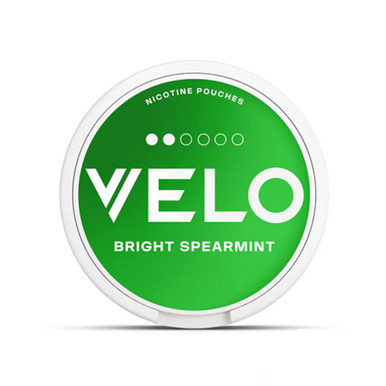
On the mint side, Velo Bright Spearmint is the other pole from this one: spearmint rather than peppermint, rounder and sweeter in character, softer at the edges. It is in stock. The Freezing Peppermint can, discussed at length above, is the brand's most emphatic mint statement at 11mg, 14mg and 17mg, and is also available.
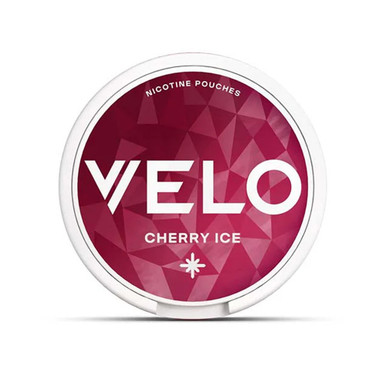
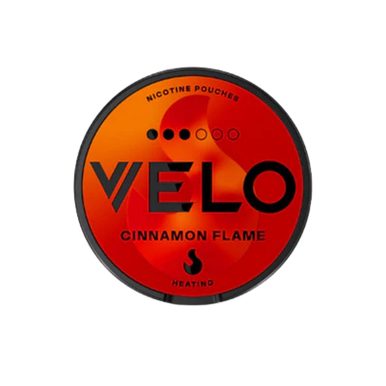
On the fruit side, Velo Cherry Ice takes the dark-fruit route and is in stock. The Icy Berries can carries both a mint and a berry tag and runs 10mg, 14mg and 17mg, which makes it the natural next stop for anyone who likes a mint spine under a fruit note. Velo Lime Flame is the citrus corner at a declared 8mg, and Velo Mango Flame is the tropical one; both are available, and in both cases the series word Flame is a flavour name rather than any suggestion of heat.
Among that group, this listing is the plainest statement of straight peppermint the brand makes at the lower end of its declared range, and the only one of the six to offer a 6mg option at all.
Cans people keep alongside it
Rotation is the norm rather than the exception, because one taste held for weeks becomes wallpaper. If you want to stay in the same flavour family, the mint listings named above are the obvious neighbours, and the Klint mint can at £36.90 and White Fox Double Mint at £34.90 are two of the more emphatic ones we carry; both are in stock.
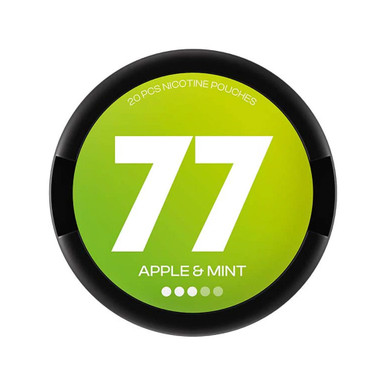
If you want a break from mint entirely, the contrast options are wide. Fumi Dark Spice at £27.90 goes somewhere completely different, into warm spice territory, and is the sharpest change of direction on this list. Nordic Spirit Frosty Berry at £4.49 is the closest listing here to this can's own price and takes the berry-plus-mint route. 77 Apple Mint at £39.90 sits orchard fruit against a mint tag. The UBBS cola can at £19.95 is the confectionery corner of the catalogue. All four are marked in stock.
Each of those is a different flavour, not a substitute, and the reason to keep two cans is precisely that they do not taste the same. We are describing what is on the shelf and what it costs, not telling you to buy more of it.
Choosing between 6mg and 10mg
The choice on this listing is narrow and clean: two declared figures, one price. Because both variants cost £4.19, price cannot help you decide, and because we will not advise on strength, neither can we. That leaves the label, the printed can, and your own judgement.
What we will say is procedural rather than advisory. If you keep both variants in the house, label discipline matters — the lid figure is the only thing distinguishing two otherwise identical tins, and cans get mixed up in drawers. And if you order both in one go, check which variant is in the basket before checkout, because the identical price means a mistake will not show up in the total.
Ordering, delivery and the age check
Our listed price is the price charged, and what that price covers is stated on the listing and confirmed at checkout rather than estimated here. Delivery options, costs and timings are presented during checkout, because those are the terms that actually apply to your order; a description page is the wrong place to promise a timescale.
Age verification is not a formality. This is an 18+ product, orders are placed on the basis that the buyer is aged 18 or over, and ID may be requested on delivery. A courier who asks and is not satisfied will not hand over the parcel. Nothing on this page is addressed to anyone under 18 or to anyone who does not already use nicotine.
Where this page sits on the site
This listing appears in four places. It belongs to Velo's own shelf with the rest of the brand. It is filed on the medium-strength listing on the strength of its declared figures. It sits among the 148 cans on our mint shelf, which is the largest flavour category we run. And it appears in the full catalogue, which is the widest view available.
If you browse by figure, strong and extra strong are the two shelves above medium, and they are filing categories rather than league tables.
Questions people ask about this can
What is the difference between this and the Freezing Peppermint can?
Two things we can state and one we cannot. We can state the declared figures: 6mg and 10mg here, against 11mg, 14mg and 17mg there, with no overlap. We can state that the manufacturer's own names point in different directions — definition and dryness against emphasis and scale. What we cannot state is a flavour difference from our data, because both cans carry the identical single tag mint and we hold no tasting notes at all.
Is "Crispy" describing a texture in the mouth?
It is a flavour name. Crispy is a texture word used about taste, in the way a wine might be called crisp, and it points at a clean-edged note without a syrupy finish. It is not a claim about how the pouch physically feels, and it is not a claim that the product causes any sensation. The pouch itself is a soft, dry rectangle, the same format as the rest of the range.
Which strength should I choose?
We cannot tell you, and we are not going to imply an answer. A shop holding a table of label figures is not in a position to judge what suits any particular person, and the fact that both variants cost £4.19 removes even the price as a tiebreaker. The figures are printed on the cans and listed above; the decision is yours, and any real guidance needs a source qualified to give it.
How many pouches are in a can?
We do not hold that number. Our pack-count field for this listing is empty, which also means we cannot tell you whether £4.19 covers one tin or more. Both are printed on the packaging and stated at checkout. We would rather leave the gap visible than fill it with an estimate that turns out to be wrong when the parcel arrives.
My can has gone soft and tastes flat. What happened?
Most likely moisture, heat, or both. An open tin in a bathroom or beside a kettle takes up damp from the air, and damp pouches feel heavier and give up flavour sooner. Warmth, especially in a car or on a sunny windowsill, mostly costs you the aromatic top of the flavour. Neither is recoverable. Keep the can closed, cool, dry and out of sunlight, and open it with dry hands.
Can I keep cans in the fridge?
People do, and it is a matter of preference rather than something we need a view on. The practical caution is condensation: a tin repeatedly moved from cold to warm collects moisture on the metal, and moisture is the thing most likely to spoil the pouches. If you refrigerate, let the closed can come up to room temperature before opening it.
How long does an unopened can last?
We do not hold that information. Best-before or expiry dating is printed by the manufacturer on the packaging and is not carried in our product record, so any figure from us would be made up. Read the date on the can. We also do not test products, so we cannot tell you how much a badly stored tin differs from a well-kept one in any measurable way.
Why do other mint cans cost so much more than £4.19?
Very often because they are not the same quantity. Our pack-count field is empty across most listings, so we cannot calculate a per-can price for you, and comparing a £4.19 line directly with a £39.90 line is comparing two numbers whose units we do not hold. What each price covers is stated on the individual listing and at checkout, and that is the only reliable place to check it.
Does the 6mg can taste different from the 10mg can?
We do not hold anything that would let us answer that. Both variants carry the same product name and the same single flavour tag in our data, and we hold no tasting notes, no intensity scales and no comparative testing of any kind. The declared figures differ; whether anything else does is not something our record can tell you, and we will not guess at it.
What do I do with a pouch when I have finished with it?
General waste, and the hollow well under the lid is there to hold it until you reach a bin. That is the whole purpose of the well: press the used pouch into it, put the lid back on, and empty it when you next empty your pockets. Do not put them down sinks or drains, and do not drop them outdoors. Left to build up, they will stop the lid sitting flat, which is the usual prompt to clear it.
Does having two cans open at once cause any problem?
Only a practical one. Two open tins age at whatever rate their storage dictates, so a can left in a car and a can kept in a drawer will not be in the same condition after a fortnight even if they were bought together. If you keep both the 6mg and the 10mg tin in rotation, the lid figure is the only thing distinguishing them once they are out of the packaging, so keep them somewhere you will read the lid rather than reach blindly.
Am I allowed to use one at work or on public transport?
Not our rules to state. Employers set their own site policies, venues set their own conditions, and transport operators set conditions of carriage; every country also sets its own law on nicotine products, including on bringing them across a border. We hold no information about any of those and would be guessing on someone else's behalf. Check the written policy, ask the venue, read the operator's terms, and check the destination before travelling.
Legal notice and compliance
This product is for adults aged 18 or over who already use nicotine. We do not sell to anyone under 18, and ID may be requested on delivery; a courier who is not satisfied will not complete the handover.
Nicotine is an addictive substance. Nothing elsewhere on this page qualifies that statement or should be read as softening it.
This product is not a licensed stop-smoking medicine and is not offered, described or intended as one. It is not intended for non-smokers, for anyone who does not currently use nicotine, for anyone under 18, or for anyone who is pregnant or breastfeeding. We make no health or medical claim of any kind, in any direction, and we give no dosage advice. Nothing here is an encouragement to anybody to begin using nicotine.
Keep cans out of reach of children and animals. Questions about your own circumstances belong with a qualified professional, not with a shop.
To close
Straight peppermint, two declared figures at 6mg and 10mg, one price of £4.19 for either, one flavour tag, and a stock flag currently reading available. The storage section above is the part of this page most likely to be worth something to you in a month's time, because a dry tin kept cool is the difference between a can behaving as it should and a can that disappoints you halfway down.
If you want to look further, the 148 cans on the mint shelf are the obvious place, and the rest of the Velo range is a single click from here.
More from Velo
More medium strength pouches
More mint pouches
Where this sits
Velo Crispy Peppermint Nicotine Pouches appears in these categories. Browse them, or jump to something close.
You might also like