Velo · 10mg–17mg
Read the full guide
Velo Mango Flame Nicotine Pouches
£4.19
✔ In stock — ready to ship
100% tobacco-free
Free over £20
Same-day dispatch
Secure checkout
This page describes Velo Mango Flame Nicotine Pouches. Our record holds a short list of facts about it and nothing more: the brand is Velo, the product name is Mango Flame, the price is £4.19, the declared strengths are 10mg, 14mg and 17mg, and the single flavour word attached to it is mango. All three strengths are the same £4.19. The listing is available as this is written. Everything below is built from that list, from comparisons with other cans on our own shelves, or from a plain statement that something is outside what we know.
One piece of housekeeping before the description. This is an adult nicotine product, sold only to people aged 18 or over who already use nicotine. The full wording on that has its own section at the foot of the page, and nothing on this page is an encouragement to anybody to consume anything.
The full guide to Velo Mango Flame Nicotine Pouches
5,171 words on how it eats, who it suits, how to serve it and what to put beside it.
Velo Mango Flame: what the listing actually says
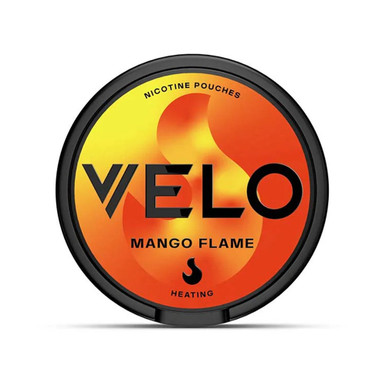
What arrives is a single can. Our record does not carry a multi-can figure for this listing, so £4.19 buys one tin rather than a roll or a box, and £4.19 is the whole of the price — there is no per-can arithmetic to do here, which is not true of a good deal of the rest of the catalogue. The can is the ordinary round pouch tin: a shallow plastic cylinder that sits under a palm, with a lid that lifts clear and presses back on. Velo prints the brand name, the product name and the strength figure on it in whatever layout Velo has chosen. We hold one photograph of the product, so if you want to see the can from more than one angle, the photograph we have is the limit of what this site can show you.
We do not publish a pouch count per can for Mango Flame. That field is empty in our record, and rather than reach for a number that sounds plausible we will say directly that the printed can is where you read it. The same goes for the pouch format designation — slim, regular or otherwise. It is not in our data and we are not going to state it.
Mango as a taste, and what the word Flame is doing in the name
The flavour word on our record is one word: mango. That is the whole of it. There is no secondary tag, no mint tag, no spice tag, nothing else recorded against this can at all. So the honest description of the flavour is a description of mango as a taste family, plus an admission of where our information stops.
Mango sits at the soft, heavy end of the fruit spectrum. Where a citrus flavour leads with acid and a berry flavour leads with a tart edge, mango leads with weight — a thick, rounded sweetness with a slightly resinous character behind it. That resinous quality is the part that distinguishes a mango flavouring from a generic tropical one. It is what stops mango tasting like sugar syrup and it is also what some people dislike about it, because taken too far it reads as perfumed rather than fruity. Whether Velo has pitched theirs towards the juicy side or the perfumed side is not something our record tells us, and the only way to find out is the can itself.
The aroma on opening the lid is where a mango flavouring announces itself most clearly. It is a warm smell rather than a sharp one, and it fills a small room faster than most people expect. Mint-family cans announce themselves too, but they do it with a top note that reads as cold; mango does it with something closer to ripeness. If you share a desk, a cab or a small kitchen with anybody, that difference is worth knowing before you open the first can, and it is a description of a smell and nothing else.
Now the name. Flame is a flavour name. It is the word Velo has chosen to put on the can, in the same way the word Ice appears on other cans in the range, and it describes the character of the taste and the feel in the mouth as the manufacturer has branded it. It is not a statement about heat. Nothing in this product is hot, nothing warms, and we are making no claim about temperature or about any sensation this can produces. If you read Flame as a promise of chilli, our record gives you no support for that reading: the only flavour word we hold is mango, with no spice element recorded at all. Read Flame as branding on a lid, because that is all we can honestly tell you it is.
The same logic applies across the shelf. Velo Lime Flame at £4.19 carries the same Flame word with a different fruit in front of it, and the pairing of those two names is the clearest evidence that Flame is a range label rather than a description of anything happening in a mouth. Velo uses Ice the same way on other cans. These are naming conventions, and on this site they are treated as such.
How long the flavour lasts we cannot give you as a number. It fades. In a dry pouch the flavour is at its most defined in the early part and thins from there, and the point at which a person decides there is nothing left worth tasting is individual enough that any average we quoted would be invented. We hold no timing data for this can and will not manufacture any.
If you want to see what else on this site carries the same flavour word, the mango flavour shelf gathers sixteen listings with the prices laid out side by side. It is a plain filtered page. Nothing on it is ranked and the order means nothing.
The pouch in practice: size, position, duration, disposal
The format is where most of the real, useful detail about a page like this lives, because the flavour is one word and the format is the thing you actually own. A nicotine pouch is a small sealed pouch, soft between the fingers, that a person places in the mouth and leaves there. It is not chewed and it is not swallowed. None of what follows is specific to mango — it is specific to the format, and it is the same for every can on this site.
Getting the first one out
Pouch lids are built to open one-handed and most people have the knack inside a can or two: a thumb under the lip of the lid, a short push, and it comes clear. Inside, the pouches lie flat in a ring around the base of the tin, which makes the first one slightly fiddly to lift and every one after it easy. A dry pouch does not cling to the can or to its neighbours. Turn an open can upside down and the entire contents leave at once, which is a mistake almost everybody makes exactly once and then never again.
Where it sits
The pouch goes at the front of the mouth, tucked between the lip and the jaw, most often under the top lip. The lip holds it. Nothing else holds it and it does not stick to anything — the shape of the space is what keeps it in place, which is why it stays where it is put while you talk and why it moves if you do something energetic with your face.
It can be moved deliberately. People shift a pouch from one side to the other, or from the top lip to the bottom, and that is ordinary handling rather than a sign of anything being wrong. If a pouch feels awkward in one position, another position is worth trying before concluding the product does not suit you. If it feels wrong everywhere, take it out. Nothing about this format requires anybody to persist with a pouch that is uncomfortable, and there is no reason to.
Speech is the question people ask most often. A pouch under the top lip shows as a slight fullness to anyone looking for it, and it changes the shape of a handful of consonants for the first minute or so, until you stop noticing. That is a description of a small object sitting in a mouth. It is not a claim about how discreet the product is or about how anybody else will react, and we will leave it there.
How long people keep one in
It varies enormously, and any average figure we published would be a guess in a suit. The range people describe runs from a few minutes to the better part of an hour. The reasons people give for taking one out are usually that the taste has gone flat, that the pouch has started to register as an object rather than a background presence, or simply that they have finished with it.
We do not set a duration, we do not suggest one, and we are not in a position to do either. Whatever usage guidance Velo prints on the can is the guidance that counts, and it is printed there because the manufacturer is the party entitled to give it. Our part in this is selling you the can and telling you what it is.
The catch lid and the used pouch
Most pouch cans, these among them, have a shallow compartment moulded into the top of the lid, walled off from the chamber where the unused pouches sit. Used pouches go in there. It is an unglamorous, entirely practical piece of design that exists because a used pouch needs to go somewhere when there is no bin within reach, and because carrying one loose in a pocket is an unpleasant experience for everyone concerned.
The compartment is smaller than people expect. Three or four used pouches fill it, and at that point the lid stops seating flat and the can starts to feel wrong in the hand. Empty it earlier than seems necessary. A can whose lid will not close properly is a can that will eventually open in a bag, and the contents of a bag are rarely improved by that.
Disposal is general waste: a bin, not a sink, not a lavatory, not the verge of a road. The can is plastic and goes into household recycling to whatever extent your local authority accepts that grade, which differs by council and is not something we can answer for your postcode.
The number on the can: 10mg, 14mg and 17mg
Three figures are declared against this listing. All three cost £4.19. The figure is printed by Velo and it is a declaration about the can, made in milligrams, using whatever measurement basis the manufacturer has used. It is not a dose, it is not a score, and it is not a rating of quality. We publish it because it is on the can and because you are entitled to see it before you order.
A higher figure is not a better product and we are not going to present it as one. The three cans here are the same flavour word at three declared numbers, priced identically, and the only sensible way to read that is as a choice rather than a ladder to climb. We cannot tell you which of the three suits you. That is not modesty — it is that we have no information about you, no basis on which to form a view, and no business forming one. Anybody who does have a view about what suits a particular person, including a medical professional, is a better source than a product page.
The other thing worth stating plainly is that figures are not portable between brands. A number on a Velo can and the same number on a can from another manufacturer are two separate declarations made by two separate companies, and our record does not tell us that the two were arrived at the same way. Comparing them arithmetically looks like precision and is not. When you move between brands, the figure is a label you are reading, not a measurement you are matching.
One oddity in our own filing is worth being honest about. This listing sits on our Strong shelf, which holds one hundred and thirty-two listings, even though its lowest declared figure is 10mg — the same figure that puts single-strength cans elsewhere on the Medium Strength shelf. That is because our shelving follows the top of a listing's declared range rather than the bottom, and this range runs to 17mg. It is a filing convention, not a statement about the 10mg can, and if you came here from a shelf page expecting every figure in the tin to be a high one, that is why.
Against the rest of the shelf: how this can compares at the same strength
This is the part of the page worth reading if you already know what mango tastes like and are really asking what else the same money, or the same declared figure, would get you here. We can do that comparison properly, because prices and figures are exactly the kind of fact we hold.
On price, this is at the cheap end of the catalogue
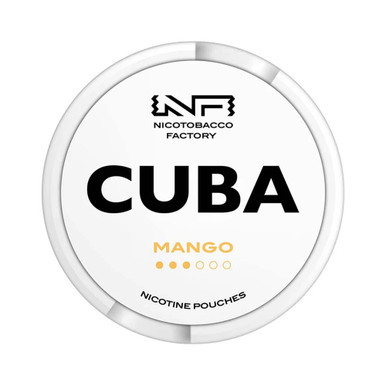
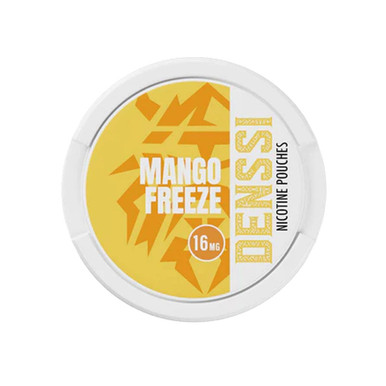
£4.19 is a single-can price and it is low against most of what we stock. The mango-adjacent listings in our records run a long way above it: the 77 Ghost Mini mango listing at £39.90, Cuba White Mango at £39.90, Denssi Mango Freeze at £39.90 and Killa Mango Ice at £33.50. All four are in stock as this is written.
Before you read those numbers as an eight-fold difference in value, note what we do not know. Our fact pack does not carry a can count for any of those four listings, and prices in that range usually indicate a listing that is not a single tin. We are not going to assert that they are multi-can packs, because our record does not say so — but we are also not going to invite you to conclude that a £39.90 listing is nine times the price of this one for the same object. Open the listing and read what it says it contains. That is the only reliable route, and it is one click.
Within Velo, the price question does not arise at all. Every Velo listing in our record is £4.19, including Velo Tropical Mango, which is the other mango-family can the brand has on our shelves. Choosing between two Velo cans is therefore a choice about flavour words and declared figures and nothing else, which is a cleaner comparison than most of the catalogue allows.
On the declared figure
At the 10mg end, this can shares a number with a large part of the catalogue, including several of the Velo siblings further down this page. At 17mg it sits in company that is filed further up. If you want to see the range above, the Extra Strong shelf collects the listings whose declared figures go higher still; that is offered as navigation, not as a suggestion that higher is somewhere to head. Plenty of people read the ladder the other way round and never leave the bottom of it, and nothing about this site is designed to move anybody up it.
On flavour, at the same money or the same figure
If mango is the fixed point and you are comparing across brands, the four mango listings above are the direct neighbours. If the price is the fixed point, the honest answer is that nothing else in this pack matches £4.19 except the Velo range itself — Edge Mint at £14.95 is the next closest and it is a mint rather than a fruit. Beyond that the comparison set runs through Fumi Fiery Lime at £27.90, Elf Bar Blueberry Raspberry at £29.90, Klint Avalanche Mint at £36.90 and Clew Blueberry at £39.90, all in stock as this is written and all a different proposition on price.
Two of those names deserve the same treatment we gave Flame. Fiery, in Fumi Fiery Lime, is a brand's flavour word, and Freeze, in Denssi Mango Freeze, is another. Neither is a claim by us about temperature or sensation, and we have no information about either beyond the words on the listing.
Where this can falls in Velo's range on our shelves
The Velo shelf holds twenty-one listings. Mango Flame is one of them, and the six siblings named on this page are six more; the remainder are on the shelf itself, which is the right place to look at them, because we would rather send you to a live page than describe listings that are not in the fact pack in front of us.
What the shelf shows immediately is that Velo's range here is heavily weighted towards mint and towards cool-named fruit. Velo Crispy Peppermint and Velo Freezing Peppermint are both peppermint cans at £4.19, and the difference between them, on the evidence of our record, is entirely in those two adjectives — we hold the same single flavour word for both and no separate tasting note to tell them apart. Velo Bright Spearmint at £4.19 is the spearmint entry, which is a distinct note from peppermint rather than a milder version of it: spearmint reads sweeter and rounder, peppermint sharper.
On the fruit side, Velo Cherry Ice and Velo Icy Berries are both £4.19 and both carry an Ice or Icy word in the name. Mango Flame is the outlier in that company — a fruit can whose range word is Flame rather than Ice — and if you have been buying the cool-named cans and want the same fruit weight without that naming convention, this is the one Velo has put there. That is an observation about names on lids, which is the only kind of observation our record supports.
What people keep alongside a can of this
People who buy one flavour rarely buy only one flavour. The usual pattern is two or three cans in rotation, and the reason given is almost always the same: a single taste stops registering as a distinct taste when it is the only one you meet. Whether that is worth doing is a matter of preference, and here is what the shelves make available if you want to.
The closest thing to a variant is Velo Tropical Mango, linked above, which keeps the fruit family and changes the framing. After that, the honest suggestion is to move sideways rather than sit within mango: the two peppermints and the spearmint above are as far from a heavy tropical fruit as the Velo range goes, and at £4.19 each they cost the same as this can. Across brands, the mango neighbours already linked are the like-for-like options, with Killa Mango Ice at £33.50 the cheapest of them and the three £39.90 listings level with each other on price.
If you would rather browse than be pointed, everything we stock is one page, and the brand shelves narrow it fast — the Pablo shelf and the Cuba brand shelf are the two largest brand collections on the site and both carry fruit ranges of their own.
Keeping a can in usable condition
Pouch cans are not delicate, but they are not indestructible either, and the failure modes are predictable enough to be worth listing. Keep the lid on. That is the whole of the advice in one sentence, and everything else is a version of it.
Heat is the main enemy of a dry pouch, and the specific place people get caught out is a car. A closed car in summer reaches temperatures that no can of anything should sit in, and a tin left on a dashboard for an afternoon will not be what it was. A warm airing cupboard does the same thing more slowly. Somewhere cool and dry, out of direct sun, is the whole specification — a drawer, a cupboard, a bag pocket that does not sit against a window.
A lid left off is the other common way a can goes wrong. A dry pouch dries further in open air, and a pouch that has dried out is a pouch whose flavour arrives thinner and leaves sooner. It does not become dangerous; it becomes disappointing. Press the lid down properly each time, and empty the catch compartment often enough that it can still seat flat, because those two things are the same problem in the end.
Pressure and crushing are worth a mention because of how these cans travel. A tin at the bottom of a rucksack under a laptop will eventually deform, and a deformed tin does not close. If a can rides in a bag every day, put it in a pocket of the bag rather than the main compartment. On a can with a full complement of pouches this is a minor matter; on a nearly empty can with a crowded catch lid it is the difference between a closed tin and a loose one.
Whatever storage wording Velo prints on the can is the wording that governs, and it is on the can for the same reason the usage guidance is. Our storage notes above are general to the format, not specific instructions from the manufacturer, and we are not presenting them as such.
Choosing between the three figures we list
There are three cans here — 10mg, 14mg and 17mg — and one price, £4.19, which removes cost from the decision entirely. That is unusual and it is worth saying explicitly, because on a lot of listings the strength choice is also a money choice and here it is not.
What we will not do is tell you which one to buy. We cannot advise on that. We do not know what you already use, we hold no information about you, and a product page is the wrong instrument for that decision even if we did. What we can do is describe the shape of the choice honestly: the three cans carry the same single flavour word, the same price and the same format, and differ in a number printed by the manufacturer. Nothing in our record indicates that the flavour is built differently at different figures, and nothing indicates that it is built the same either — we simply hold one flavour word for the listing as a whole.
There is no pack-size choice to make. Our record shows no multi-can option for Mango Flame, so a single tin is the only unit available, and people who want a spare buy two tins rather than a roll. If a multi-can listing appears later it will be on the Velo shelf, which is the page that stays current.
Ordering, delivery and the age check
Buying is the ordinary process: choose the declared figure you want, add the can to the basket, pay. All three figures are £4.19, and the price you see on the listing is the price of the can. Anything to do with postage is set out at checkout, where it belongs, rather than being described loosely on a product page where it would go out of date.
Age verification is not optional and is not a formality we apologise for. This is an 18+ product. Our checkout requires you to confirm you are 18 or over, and identification may be requested on delivery. If you are not able to produce it, the delivery can be refused and returned. That is the arrangement, it applies to every order, and it applies regardless of how many times you have ordered before.
Stock, finally, moves. The availability statements on this page describe the position at the time of writing, and the live listing is always the authority. If a can you want is unavailable when you get there, the flavour and brand shelves linked throughout this page are the fastest way to find what is on hand instead.
Finding this page again, and what sits next to it
Four routes lead here. The Strong shelf holds this listing by declared range; the Velo shelf holds it by brand; the mango shelf holds it by flavour word; and the full shop page holds it along with everything else. Any of the four will bring you back, and the brand shelf is usually the quickest if you already know you want Velo.
The shelves are plain filtered lists. They are not curated, not ordered by preference, and carry no recommendation in their sequence. A listing appearing near the top of a shelf means nothing beyond the sort order that shelf happens to use, which is worth knowing because people do read position as endorsement and here there is none to read.
Questions we are actually asked
Does Flame mean this can is hot or spicy?
No. Flame is the flavour name Velo has printed on the can, and it describes taste and mouthfeel as a piece of branding. It is not a claim about heat, and we are making no claim about any sensation this product causes. The only flavour word in our record for this listing is mango, with no spice or chilli element recorded at all. If you want to know whether Velo has built any warm or spiced note into the taste, the can and the manufacturer's own material are the places to look, because our data does not say.
Why do all three strengths cost the same?
Because that is what our record shows: 10mg, 14mg and 17mg are each £4.19. We do not set manufacturer pricing and cannot explain the reasoning behind it, so we will not invent one. In practical terms it means the choice between the three figures is not a budget decision — the money is identical whichever you pick, and the difference is only the number printed on the can.
How many pouches are in the can?
We do not know, and we are not going to guess. That field is empty in our record for this listing. The count is printed on the can itself, and the manufacturer's own material will carry it. It is a fair question and the honest answer is that we do not hold the information.
Is this the same as Velo Tropical Mango?
They are two separate listings at the same £4.19 price, both in the mango family, and our record gives one flavour word each. It does not give us a tasting note for either, so we cannot tell you how the two differ in the mouth. What we can say is that the names differ in exactly the way Velo's naming conventions differ across the range, and that both are on the Velo shelf if you want to look at them side by side.
Which strength should I buy?
We cannot advise on that, and we will not. We have no information about you and no basis for a view, and a strength is not something a shop should be steering. What we can give you is the factual position: three declared figures, one price, one flavour word, one format. If you want guidance on nicotine use, a healthcare professional is the appropriate source and a product page is not.
Does a bigger number mean a better can?
No, and we would not put it that way at all. The milligram figure is a declaration printed by the manufacturer about the can, not a quality score. A 17mg can is not a better or a more advanced version of a 10mg can; it is a can with a different number on it. Nothing on this site is arranged to move people towards higher figures, and reading the range as a progression to work through is a reading we do not encourage.
Why is a 10mg can filed under Strong?
Because our shelving follows the highest declared figure in a listing's range, and this range tops out at 17mg. The result is that the 10mg can here appears on the Strong shelf while some other 10mg cans, with no higher figure above them, sit on the Medium Strength shelf. It is a filing convention on our side and it says nothing about the individual can. Read the figure on the variant you are buying rather than the shelf you found it on.
Where is this made?
We do not hold that information and will not state it. Our record covers name, brand, price, declared strengths, flavour word and availability, and country of origin is not among them. The can and Velo's own material are where that is published.
Can I keep an open can for weeks?
We hold no shelf-life figure for this product, so we cannot put a period on it. What we can describe is the general behaviour of a dry pouch: kept cool, dry and properly lidded, a can stays much as it was for a long while, and a can left open, warm or in a car changes faster and tastes thinner for it. Any dating or storage wording printed on the can overrides everything in this paragraph.
Is it in stock right now?
It was when this page was written, and every availability note here carries that caveat. The live listing is the only reliable answer, since stock changes without the description changing with it. If it has gone, the mango flavour shelf and the Velo brand shelf are the two fastest places to see what is actually on hand.
Do you sell a multipack of this one?
Not according to our record. There is no multi-can option listed for Mango Flame, so £4.19 buys one tin and people wanting a spare buy two. Several other brands in the catalogue do list multi-can products at higher prices, which is part of why a straight price comparison across listings can mislead unless you check what each one contains.
What happens to the used pouch?
It goes in the catch compartment in the lid until you reach a bin, then into general waste. The compartment holds three or four before the lid stops closing flat, so it wants emptying more often than most people bother to. Not down a sink, not out of a window. The empty tin itself is plastic and goes into household recycling as far as your council accepts that grade, which varies by area and is not something we can look up for you.
The required notices
Nicotine is an addictive substance. This product contains nicotine and is sold only to adults aged 18 or over who already use nicotine. We do not sell it to under-18s.
It is not a licensed stop-smoking medicine and is not offered, described or intended as one. It is not intended for non-smokers, for people who do not already use nicotine, for anyone under 18, or for anyone who is pregnant or breastfeeding. Nothing on this page is medical advice, and nothing on it is a statement about health, safety or harm in any direction.
Proof of age may be requested when your order is delivered, and a delivery may be refused if it cannot be produced. If you have any question about nicotine use and your own circumstances, ask a healthcare professional rather than a shop.
In short
Velo Mango Flame is a single can at £4.19, declared at 10mg, 14mg or 17mg for the same money, carrying one flavour word: mango. Flame is a name on a lid. The pouch count, the format designation and the country of origin are not in our record and we have not invented them. If mango is what you are after, the shelf that gathers it is one click away, and if it is not, the Velo shelf holds twenty other cans from the same brand at the same price.
More from Velo
More strong pouches


More mango pouches

Where this sits
Velo Mango Flame Nicotine Pouches appears in these categories. Browse them, or jump to something close.
You might also like