Velo · 11mg–17mg
Read the full guide
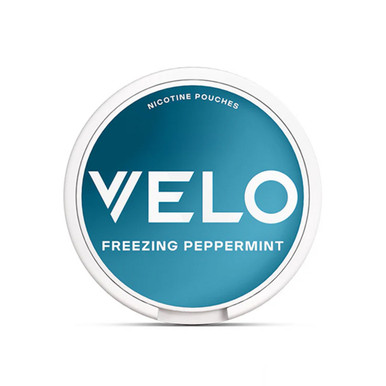
Velo Freezing Peppermint Nicotine Pouches
£4.19
✔ In stock — ready to ship
100% tobacco-free
Free over £20
Same-day dispatch
Secure checkout
Velo Freezing Peppermint Nicotine Pouches is listed here at £4.19. Three strengths are declared against it — 11mg, 14mg and 17mg — and all three variants carry that same £4.19, so the figure on the lid makes no difference to the total. Our record shows the product in stock at the time of writing. One flavour tag is held against it: mint.
Three declared figures is the widest spread we hold for any Velo listing, and it is the detail that most distinguishes this product from its siblings on paper. What we do not hold is a pack count: that field is empty, so we cannot tell you how many pouches are in the tin or whether £4.19 buys one can or more than one. Both numbers are printed on the packaging and confirmed at checkout, and we would rather say so than produce a figure from nowhere.
The full guide to Velo Freezing Peppermint Nicotine Pouches
5,086 words on how it eats, who it suits, how to serve it and what to put beside it.
The listing in front of you
Before the description proper, a note on what this page will and will not do. It describes an object, places it among other objects on the same shelves, and tells you plainly where our information runs out. It does not list ingredients, does not explain anything that happens after a pouch is placed, and makes no statement about anybody's condition in any direction whatever. Where an obvious question has an answer we would have to invent, the answer given is that we do not hold it.
This is an adult nicotine product, sold on the basis that the buyer is aged 18 or over and already uses nicotine. The full wording is in its own section at the foot of the page.
What 11mg, 14mg and 17mg are, as figures
Each of those numbers is a declared strength per pouch, printed by the manufacturer and copied into our record without alteration. They are labels. They are not scores, not grades, and not a ladder that anyone is expected to climb. A higher figure is not a better can, a more serious can, or a can for a more committed user, and nothing written here should be read as suggesting any of that.
To be completely direct about the limit of our role: we cannot advise you on which of the three to buy, and we will not hint at it. A shop holding a table of label figures has no basis for judging what suits any particular person, and prose does not turn a number into a recommendation. Guidance of that sort needs a source qualified to give it, which a retailer is not.
What we can do is show where those figures fall in our own filing. All three variants are shelved on our strong shelf, which holds 132 listings. Beneath it sits the medium shelf with 135, and above it the extra-strong shelf. Those three shelves sort by the number printed on the can and by nothing else — a listing arrives on one because of what its label says, not because we have assessed anything.
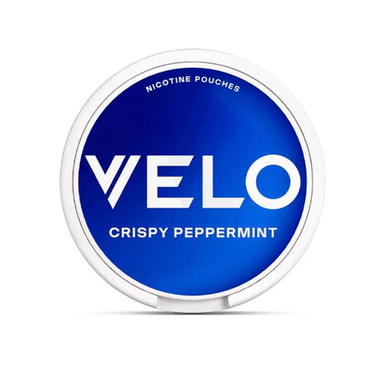
Within Velo, this is the only listing we carry that declares three figures none of which appear on any of its siblings, and the 11mg variant is the lowest of the three rather than a continuation of the range below. Velo Crispy Peppermint, the brand's other peppermint can, declares 6mg and 10mg — both beneath every figure here, with no overlap at any point. That is arithmetic off two labels, offered as information, not as a reason to prefer either.
How a recognisable flavour gets built into a dry pouch
A pouch is a dry object, and that shapes what a flavour can be in a way that is worth understanding before any tasting note makes sense. There is no liquid, nothing heated, nothing aerosolised. What you have is a small dry portion sitting still in one place, releasing its taste slowly over a long stretch of time rather than delivering it all at once. Every flavour decision a manufacturer makes has to work inside that constraint.
The first consequence is that a flavour in this format is spread across time rather than concentrated in a moment. In something you drink or chew, a flavour arrives whole and is gone. Here it arrives in stages: an opening that is at its most defined in the first minutes, a body that holds for a good while after that, and a long tail where the taste has thinned down to an outline of itself. Any can worth its price has to hold together across all three stages, and it is usually the tail that separates cans people repurchase from cans they finish out of stubbornness.
The second consequence is that a recognisable note has to be constructed from more than one impression. "Mint" is not one taste. What people identify as mint is at least three things arriving together — a herbal green quality, a sharp aromatic top that reads as much in the nose as on the tongue, and a faint sweetness underneath holding the other two in place. Take away the sweetness and the herbal quality reads as bitter; take away the aromatic top and what is left is closer to grass than to mint. Getting the proportions right is the whole of the work, and it is why two cans carrying the same one-word tag can taste so unlike each other.
Fruit notes are built on the same principle with different components. A berry idea needs a sweetness reference and an acid edge, and without the acid it reads as flat and confected rather than as fruit. A citrus idea leans harder on the sharp side and needs a bitter trace to stop it tasting like squash. A coffee idea is nearly the opposite problem — it needs a controlled bitterness as its spine, because coffee without bitterness is not coffee at all, and bitterness is the hardest thing to hold steady across a long slow release. Cans that attempt coffee, cola, caramel or spice are attempting something structurally harder than a mint, which is one reason mint dominates this category and why the mint shelf runs to 148 listings while every other flavour shelf is a fraction of that.
The third consequence is that names in this category are doing the work a photograph cannot. You cannot see a flavour, and a pale pouch in a ring looks identical regardless of what it tastes of, so the name on the lid carries almost all of the communication. That is why brands reach for adjectives of intensity and texture — words like Crispy, Freezing, Avalanche, Storm, Frosty — and it is why we spend so much of this page pinning down what those words are and are not.
The fourth consequence is about the opening moment, which is the one part of the experience that happens before anything is placed at all. Lifting the lid on a mint-tagged tin releases the most volatile part of the note into the air, and that is why the can smells sharper than the pouch tastes. It is also why a tin that has been left open, or stored warm, announces itself less when you open it than a fresh one does — the part that reaches your nose is precisely the part that warmth and time take away first. None of that is a claim about quality; it is a description of how a volatile top note behaves, and it applies equally to a citrus can or a spice can, both of which lose their opening aroma before they lose their body.
The fifth is the one people find counter-intuitive. A flavour that is very emphatic at the start is not automatically the flavour that lasts longest. The two properties are separate and can pull against each other, because a note built to announce itself has to put more of its character into the opening stage, and a note built to hold its shape has to keep something back. Manufacturers make that trade deliberately, and it is another reason names in this category reach for intensity words: an intensity word tells you which end of the trade the can was aimed at, in the absence of anything else that could be printed on a lid. It does not tell you the can succeeded, and we have no basis for saying whether any listing did.
One thing we cannot do is tell you how any of this is achieved. We do not publish ingredient information, we do not describe the make-up of a pouch, and we hold nothing in our record about how any manufacturer constructs a note. Everything in this section is a general account of what flavour has to do inside a dry, slow-release format. It is not a description of what is in this can, and it should not be read as one. For anything printed about the product itself, the can is the authority.
Placing this one: cool, sweet, sharp and bitter as a tasting grid
People who taste things for a living tend to describe them by position rather than by adjective — where something sits on a few axes relative to other things in the same family. Four axes cover most of what is useful in this category: cool, sweet, sharp and bitter. Before using them, one piece of housekeeping that matters more here than anywhere else on the page.
"Cool" on this grid is a taste-vocabulary term, in exactly the way "hot" is a taste-vocabulary term when applied to a chilli. It describes a family of flavour impressions that people have always labelled that way. It is not a statement that this product lowers any temperature, chills anything, or causes any physical sensation of cold. The same goes for the word Freezing on the lid: it is a flavour name chosen by the manufacturer, in the same series of intensity words as the Crispy on its sibling, and it is not a claim about cold or about anything the pouch does. We print the name Velo printed, and we read it as a name.
With that stated, here is the grid honestly filled in, and it is important to be upfront about the source. Our product record holds one word — mint — and no intensity ratings, no tasting notes, no comparative testing and no aroma descriptors, for this listing or any other. So what follows is a reading of the flavour family and of the manufacturer's own naming, offered as such. It is not a measurement and we are not going to dress it up as one.
On the cool axis, peppermint sits at the far end of the mint family as a matter of flavour convention — it is the reading of mint that the whole vocabulary of "clean" and "sharp" attaches itself to, further along than spearmint, which sits closer to the sweet corner. A name in the intensity series suggests the manufacturer aimed at the emphatic end of that convention rather than the gentle one.
On the sweet axis, mint cans across this category generally sit low. Sweetness in a mint is structural rather than decorative — enough to stop the herbal quality reading as bitter, not enough to make it a confection. That is the opposite of, say, Killa Banana Ice at £33.50, where a soft tropical fruit puts sweetness much nearer the front of the impression, or Elf Bar Cool Storm at £29.90, which pairs a mint direction with a fruit sweetness rather than leaving mint on its own.
On the sharp axis, this is where the peppermint family lives. The aromatic top of a peppermint is the sharpest thing in the mint category, and it is what people are describing when they say a mint has bite. Other listings do sharp differently: the 77 VB Edition Mini Arctic Berry at £39.90 gets its sharpness from a berry acid rather than a herbal top, which is a different sensation on the tongue even though both would be called sharp.
On the bitter axis, mint cans generally sit low to moderate, and where bitterness appears it is usually at the tail rather than the opening — the outline left behind after the sweetness has gone. Bitterness is not a flaw in a mint; a mint with none at all tends to taste synthetic. It becomes a flaw only when it arrives early, and that is far more often a storage problem than a formulation one.
Set against the brand's other peppermint, the grid reading is that the two are aimed at different points on the same axes rather than at different flavours — one at definition and dryness, the other at emphasis and duration. Our data does not confirm that, and we want to be unambiguous about it: the flavour tag is identical on both cans, so nothing in our record separates them. The names separate them, the declared figures separate them, and beyond that the only honest way to settle it is to taste both. We are not going to manufacture a distinction we cannot evidence.
The can, the lid and the catch well
The tin is the standard shallow round can used throughout this shop: small enough to close a hand around, flat enough that it does not print a shape through a shirt pocket. The lid lifts clear and presses back on, no hinge and no thread, firm enough not to come loose in a bag.
The lid face carries the brand, the flavour name and the milligram figure, and on a listing with three declared strengths that last item is doing real work. If you keep more than one variant in the house, the lid is the only thing distinguishing two otherwise identical tins once the outer packaging has gone, so it is worth getting into the habit of reading the top rather than reaching blind into a drawer.
Inside, the pouches sit in a ring, flat and even. The underside of the lid is hollow — a shallow well with a lip — and that is the catch compartment, there to hold a finished pouch until you reach a bin. Used pouches go into general waste: not down a sink, not out of a car window, not into a recycling stream. Empty the well before it holds enough to stop the lid sitting flat.
What using one is actually like
A pouch from this can is a small soft rectangle with rounded corners, dry to the touch, light enough to vanish in a closed hand. It goes under the upper lip and stays where it is set. The bulk is noticeable for the first minute or two and then is not, as it settles into the shape of the space it occupies.
Duration varies far too much between people for us to print a number and call it typical. Ten minutes is common; twenty to forty is more common; some go longer out of routine. What is worth knowing, and follows directly from the flavour-construction section above, is that the taste is most defined at the start and thins steadily, so the first few minutes are where a judgement about whether a can suits you is best made.
Talking and drinking with one in place are both straightforward. Hot drinks tend to shorten the flavour's life, which is worth knowing if you habitually have one in over a long mug of tea. Beyond that, there is nothing to operate — nothing to charge, refill, clean or set down on a table — which is why so much of what there is to say about any given can concerns storage rather than use.
The rest of the Velo range on our shelves
We carry twenty-one Velo listings on the Velo shelf, all at the same £4.19, which conveniently removes price from every comparison below.
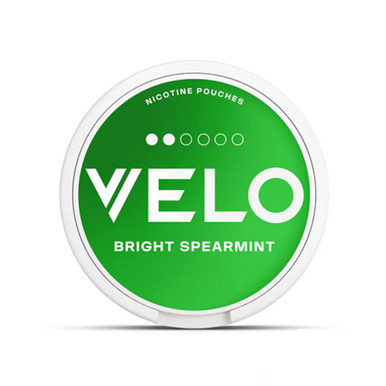
The Crispy Peppermint can is the direct sibling discussed throughout this page, at 6mg and 10mg, and it is in stock. Velo Bright Spearmint is the other end of the mint family — spearmint rather than peppermint, rounder and sweeter on the grid above, sitting further into the sweet corner and much lower on sharp. It is available.
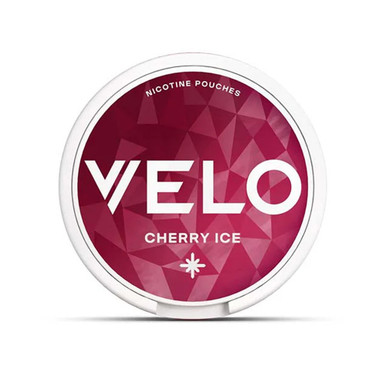
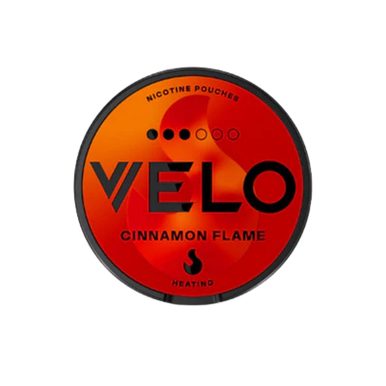
On the fruit side, Velo Icy Berries is the nearest crossover, carrying both a mint and a berry tag and declaring 10mg, 14mg and 17mg, so two of its three figures match two of this can's exactly. It is in stock. Velo Cherry Ice takes the dark-fruit route on its own. Velo Lime Flame at a declared 8mg is the citrus option, and Velo Mango Flame is the tropical one; both are available, and in both cases Flame is a flavour name in the same series as Freezing rather than any suggestion of heat.
Cans kept alongside this one for variety
Most regular buyers keep two or three cans in rotation, because a single taste held for weeks stops registering. If you want to stay inside the mint family, the catalogue is generous: Klint Avalanche Mint at £36.90, Denssi Cold Mint at £39.90, Clew Cool Mint at £39.90 and Cuba Ninja Ice Cool at £39.90 are four listings aimed at broadly the same emphatic corner of the grid, all currently in stock, and every one of those names is an intensity word rather than a description of anything the product does.
At a much lower price point, Edge Mint is £14.95 and Nordic Spirit Max Frosty Mint is £4.49, the latter being the closest listing here to this can's own price; both are available. For a mint that goes somewhere unexpected, Fumi Fiery Mint at £27.90 sets a spice idea against the mint rather than leaving it clean, which on the grid above means adding a warm note to the sharp one — again, a flavour description and not a temperature claim.
For a genuine change of direction rather than a variation, the fruit listings mentioned earlier are where to look. Nothing in this paragraph is a suggestion to buy more; it is a map of what is on the shelf and what it costs.
It is worth saying what those prices do and do not mean, because the spread on this page is wide — £4.19 at one end and £39.90 at the other — and it is easy to read that as a nine-fold difference in the same thing. It is not, or at least we cannot tell you that it is. Our pack-count field is empty across these listings, so we do not hold what each price covers and cannot produce a per-can figure for any of them. A higher price on this site frequently reflects a larger quantity rather than a dearer tin. The individual listing and the checkout are where the quantity is stated, and checking there before comparing two numbers is five seconds well spent.
What the strong shelf actually holds
Since this listing lives on the strong shelf, it is worth being clear about what that shelf is, because shelf names of this kind invite a misreading. It is a filing category containing 132 listings whose printed figures fall inside a band we set for sorting purposes. It is not a quality tier, not a rank, and not a statement that its contents have anything in common beyond a number on a label.
That matters more than it sounds, because declared figures do not travel cleanly between brands. Each manufacturer declares according to its own approach, and two cans printing the same number are not thereby equivalent in any respect we could verify. When you move from a Velo tin to a listing from another brand on the same shelf, you are moving between two labels that happen to sort into the same bracket. Our shelf has put them next to each other; it has not judged them.
The shelf also mixes formats. Pouch size is not standardised across brands — some run a slim, longer portion, some a shorter, thicker one, some a distinctly smaller mini format — and in daily use that difference is more noticeable than most flavour differences, because it changes how the thing sits rather than how it tastes. We hold no portion dimensions for any listing, so the can and the brand's own material are the place to look. Between the strong shelf, the medium one and the extra-strong one, roughly four hundred listings sort themselves purely on printed numbers, and that is the whole logic of the system.
Keeping a can as it should be
Dry pouches want to stay dry, and the two things that ruin a tin are moisture and warmth. An open can left in a bathroom, beside a kettle or in a car with wet coats takes up damp from the air, and damp pouches feel heavier out of the ring and give up their flavour earlier than dry ones. Press the lid fully home every time, open tins with dry hands, and keep the can away from sinks and steam.
Warmth mostly costs you flavour, and in a mint-tagged can it costs you the part that matters most: the aromatic top is the most volatile element of the note, so it is the first thing to thin out. A glovebox in summer, a windowsill in sun, a pocket against a radiator — all of them will leave a can duller than it should be, and none of it is recoverable afterwards. A drawer or a cupboard away from the hob is all that is required.
People ask about fridges. Some keep cans cold and prefer them that way; it is a preference rather than a matter for us. The caution is condensation — a tin repeatedly moved from cold to warm gathers water on the metal, which returns you to the moisture problem — so let a closed can come up to room temperature before opening it.
What we cannot tell you is shelf life. Best-before or expiry dating is printed by the manufacturer and is not held in our record, so any figure we offered would be fabricated. Read the can. And keep tins where children and animals cannot reach them: a closed drawer or a high cupboard, not a coffee table and not a car door pocket.
Choosing between the three declared figures
All three variants are £4.19, so price cannot break the tie, and we will not break it for you. That is not evasiveness dressed as principle — it is the one thing a shop genuinely must not do on a product like this. The figures are on the listing and on the cans; the choice is yours.
The useful things we can say are administrative. Check which variant is in the basket before you pay, because identical pricing means a wrong selection will not show up in the total. If you keep more than one variant at home, read the lid figure rather than trusting which tin is nearest. And if you are ordering alongside other Velo cans, remember that the whole brand shelf is the same £4.19, so the basket total tells you the number of items and nothing about which strengths are in it.
Buying it, and the age check
The listed price is the price charged, and what it covers is stated on the listing and at checkout rather than estimated on this page. Delivery options, costs and timings appear during checkout, which is where the terms that actually apply to your order are set out.
Age verification is real and not a formality. This is an 18+ product, orders are placed on the basis that the buyer is aged 18 or over, and ID may be requested on delivery. A courier who asks and is not satisfied will not hand the parcel over. Nothing on this page is written for anyone under 18 or for anyone who does not already use nicotine.
Where to go from this page
This listing sits in four places at once: on the brand's own shelf, on the 132 cans filed as strong, among the 148 listings tagged mint, and in the complete catalogue. If you browse by figure rather than by flavour, the medium shelf and the extra-strong shelf are the two either side, and both are filing categories rather than rankings.
By brand, the Pablo shelf and the Cuba shelf are two of the larger ones and are where several of the cans named above live.
Questions we are actually asked
Does "Freezing" mean it makes my mouth cold?
No. Freezing is a flavour name chosen by the manufacturer, part of a series of intensity words used across this category, and we print the name as given. It is not a claim that the pouch chills anything or causes any physical sensation of cold. Where this page uses words like cool, it is using the ordinary tasting vocabulary for a flavour family, in the same way a chilli is described as hot.
How is this different from the Crispy Peppermint can?
Two differences we can evidence and one we cannot. The declared figures do not overlap at all: 11mg, 14mg and 17mg here against 6mg and 10mg there. The manufacturer's names point at different intentions — emphasis and duration against definition and dryness. But both cans carry the identical single flavour tag mint in our record, and we hold no tasting notes, so nothing in our data separates them on flavour. Tasting both is the only honest resolution.
Which of the three strengths should I buy?
We cannot say, and we will not imply an answer through phrasing. A retailer holding a table of printed label figures has no basis for judging what suits a particular person, and all three variants cost the same £4.19, so price offers no steer either. The figures are printed on the cans. Any real guidance on that question needs to come from a source qualified to give it.
Why is the mint shelf so much bigger than the others?
We can tell you the number but not the reason with any authority. The mint shelf holds 148 listings, far more than any other flavour category we run, and that reflects what manufacturers make rather than any decision of ours. One reasonable observation is that mint is structurally easier to build well in a slow-release dry format than something like coffee or cola, which need a bitterness or a confectionery sweetness held steady over a long stretch. That is a general remark, not a claim about any particular can.
How many pouches come in a tin?
We do not hold that figure. The pack-count field on this listing is empty, which also means we cannot tell you whether £4.19 covers one can or several. Both numbers are printed on the packaging and stated at checkout. We would rather leave a visible gap on the page than fill it with a guess that turns out wrong when your parcel arrives.
What is in the pouch?
We do not publish ingredient information for any listing on this site, and we hold none in our product record. The packaging carries whatever the manufacturer is required to state, and that is the place to read it. This applies to every can we sell, not just this one, and it is a deliberate limit on what this page is for rather than an oversight.
Do the three variants taste the same as each other?
Our record cannot tell you. All three carry the same product name and the same single flavour tag, and we hold no comparative tasting information, no intensity scales and no testing of our own. The declared figures differ; whether anything else differs is not something we know, and we are not going to speculate about it in either direction.
My can tastes duller than the last one. Why?
The commonest explanation is storage rather than the can itself. Warmth thins the aromatic top of a mint first, so a tin that has sat in a car, on a sunny windowsill or against a radiator will very often read flatter than one kept in a drawer. Moisture is the other culprit and tends to make pouches feel heavier and give up flavour sooner. Neither is reversible. We also do not batch-test, so we cannot investigate a specific can for you.
Can I bring these into another country?
That depends entirely on the country and it is not something we track. Rules on nicotine products differ sharply between jurisdictions and have changed in several places in recent years — some restrict sale, some restrict import, some restrict possession. We are a UK shop describing a UK listing. Check the current position for the specific destination and the operator carrying you before you travel, rather than relying on anything written here.
Is it all right to use one at work or in a venue?
Those rules belong to whoever controls the place you are standing in. Employers set site policies, venues set their own conditions, and transport operators set conditions of carriage. We have no visibility into any of them and would be guessing on somebody else's behalf if we answered. Read your employer's written policy, ask the venue directly, and check the operator's terms.
Why does this page describe flavour so carefully and so little else?
Because flavour, format and price are the only things we are in a position to write about. We do not make health statements in any direction, we do not publish ingredients, we do not advise on strength, and we do not invent facts about manufacture or origin. That leaves the object, the taste vocabulary, the shelves and the honest gaps — which is a narrower page than some would like, and the only kind worth publishing on an age-restricted product.
Legal notice and compliance
This product is for adults aged 18 or over who already use nicotine. It is not sold to anyone under 18, and ID may be requested on delivery; a courier who is not satisfied will not complete the handover.
Nicotine is an addictive substance. Nothing else on this page qualifies that or should be read as softening it.
This is not a licensed stop-smoking medicine and is not offered, described or intended as one. It is not intended for non-smokers, for anyone who does not currently use nicotine, for anyone under 18, or for anyone who is pregnant or breastfeeding. We make no health or medical claim of any kind, in any direction, and we give no dosage advice whatever. Nothing here is an encouragement to anyone to begin using nicotine.
Keep cans out of the reach of children and animals. Questions about your own circumstances belong with a qualified professional rather than with a retailer.
Last word
A peppermint can at £4.19, three declared figures of 11mg, 14mg and 17mg at the same price, one flavour tag, currently available. The name is an intensity word and not a description of anything the product does, and our record holds nothing that would let us separate it from the brand's other peppermint on taste — which is an awkward thing for a shop to admit and the accurate thing to say.
If you want to compare across the category, the mint listings are the widest view, and the Velo range is one click away.
More from Velo
More strong pouches

More mint pouches
Where this sits
Velo Freezing Peppermint Nicotine Pouches appears in these categories. Browse them, or jump to something close.
You might also like