Home / Medium Strength / Velo Bright Spearmint Nicotine Pouches
Velo · 6mg–14mg
Read the full guide
Velo Bright Spearmint Nicotine Pouches
£4.19
✔ In stock — ready to ship
100% tobacco-free
Free over £20
Same-day dispatch
Secure checkout
The product here is Velo Bright Spearmint Nicotine Pouches, listed at £4.19. Three strengths are declared against it — 6mg, 8mg and 14mg — and all three carry that same £4.19 price, so the choice between them costs nothing either way. Our record marks the product in stock at the time of writing and holds one image. The flavour tag against it is a single word, mint, which agrees with the name.
There is one gap in that list, and it is a significant one, so it goes near the top rather than in a footnote: our record does not state how many cans the £4.19 covers. The field is empty. We are not going to fill it with an assumption, and the next section explains what that means for comparing this listing against others.
The full guide to Velo Bright Spearmint Nicotine Pouches
5,162 words on how it eats, who it suits, how to serve it and what to put beside it.
Velo Bright Spearmint: the facts on the listing
Everything below is built from those facts, from a description of the object, and from comparison with the other cans on the same shelves. There is no ingredient list here and no account of what goes on inside a pouch. There are no statements about anyone's wellbeing in any direction. Where a reasonable question runs past our data, the answer is that we do not hold the information, which is less satisfying than a confident paragraph and considerably more honest than one.
This is an adult nicotine product, listed for people aged 18 or over who already use nicotine. The complete wording on age, addictiveness and the legal position has its own section further down.
£4.19 for what, exactly
A four-pound listing sitting next to a twenty-pound listing looks like an obvious bargain, and that impression is worth dismantling before it does any damage, because on our shelves it is frequently wrong.
Our catalogue records a can count against some listings and not others. Where the field is populated, we print it and the arithmetic is easy. The UBBS listings, for instance, state five cans against a £19.95 price, which is £3.99 a can — a figure that sits below this listing's headline number rather than far above it. Where the field is empty, as it is here, we have no basis for stating a unit at all.
So what does £4.19 buy? We do not know, and neither does this page. It may be a single tin. It may be something else. The listing page and the product packaging are the places that answer it, and both are better sources than a shop description guessing at its own data. We would rather say this plainly than let a low number do persuasive work it has not earned.
The practical consequence is a rule that applies right across the catalogue and is worth carrying around: compare listings on what they contain, not on the number at the top. On the same shelves as this can you will find Nordic Spirit Frosty Berry at £4.49 and Klint Arctic Mint at £36.90. That is a near tenfold gap between two available cool cans, and it is not a gap in declared strength or in quality. It is a gap in what each listing covers, and for at least one of them our record does not say what that is. Anyone treating the headline figures as directly comparable is comparing two things they have not actually identified.
None of this makes a cheaper listing a worse buy or a dearer one a better buy. It makes the comparison a job for the listing pages rather than for a glance at a grid, which is a duller conclusion than a bargain but a more useful one.
Three numbers on one listing: 6mg, 8mg and 14mg
Most listings in our catalogue declare one figure and some declare two. This one declares three, which is the widest spread we see on a single product, running from 6mg at one end to 14mg at the other with 8mg between them. All three are the same price.
The figure itself is a number the manufacturer prints on the lid. We reproduce it exactly as it is given to us, and we use it to decide which of our strength bands a listing appears on. That is the whole of its function in this catalogue: a label and a filing key.
It is not a rating, a grade or a level to work along. A 14mg can is not a better can than a 6mg can, not a more serious one and not a destination. It is a can with a different printed number. We repeat this on every page because numbers invite ranking by their nature, and ranking is the one use these figures should not be put to on a shop page. Our bands run upward through the Strong grouping and the Extra Strong grouping, and those names describe ranges of printed numbers rather than a hierarchy of anything.
There is a filing quirk here worth naming. A listing carrying three declared figures is still filed once, and this one sits under the Medium Strength band among a hundred and thirty-four other listings. Its lowest variant carries a figure that would be at home in a lower band and its highest carries one nearer the band above. Our record does not explain how the placement was decided, so we cannot either. The lesson for browsing is simple enough: a shelf tells you roughly where a listing falls, and the listing itself tells you precisely.
And the part that matters most: we cannot tell you which of the three figures suits you. Not out of caution but because it is not knowable by a retailer, who has met nobody and knows nothing about the person reading. All three numbers are published, all three cost £4.19, and the choice is yours to make without any steer from us. We have deliberately listed them in ascending order above because that is the order they come in, not because it describes a route anybody should travel.
Spearmint, and what "Bright" is naming
Spearmint is a specific mint rather than a generic one, and the distinction is the most useful thing to understand about this can.
Set the mint family out and it divides fairly cleanly. Peppermint is the sharp, forward, slightly medicinal one — assertive, with a cool edge that arrives quickly and does not soften much. Menthol is cooler still and more single-minded, with very little sweetness and a clean, almost austere character. Spearmint sits apart from both. It is rounder, softer and noticeably sweeter, with a green, herbal, almost leafy quality that peppermint does not have. It is the mint of garden herbs and of certain chewing confectionery rather than the mint of a strong sweet. Where peppermint announces itself, spearmint is gentler and more aromatic, and it carries a sweetness that is part of the flavour rather than something added on top of it.
The word Bright in the name is a taste descriptor and we treat it as nothing else. In tasting vocabulary, "bright" describes a flavour that is clean, high-pitched and uncluttered — one without heaviness, muddiness or a dark bottom end to it. A bright citrus is a clear lemon rather than a marmalade; a bright mint is a clear green one rather than a dense, sweet, layered one. Used against spearmint, the word points at the cleaner and more aromatic reading of that mint: the herbal, leafy quality kept in the foreground rather than buried under sweetness. That is a description of taste and aroma. It is not a claim about anything the product does to a person, and we are not going to let a flavour word be read as one.
The aroma off an open tin follows the same character: green and herbal rather than sharp, sweeter than a peppermint tin and considerably softer than a menthol one. As with every can in this format, the aroma from the tin is more pronounced than the flavour from a pouch in place, which is normal and not a fault — a small dry parcel cannot deliver at the intensity that a tin full of them gives off.
Our flavour tag on this listing is simply mint, which places it on the mint shelf, the largest flavour grouping on the site at a hundred and forty-eight listings. The tag does not distinguish spearmint from peppermint from menthol — it is a shelving category, not a taxonomy — so the name is where that distinction lives. On this listing, unlike several others we sell, the name and the tag do not contradict each other, which is worth noting because it is not always the case.
How a mint note is built to survive a dry pouch
This is the section that explains why cans in this category taste the way they do, and the explanation begins with a constraint rather than with flavour at all.
A dry pouch has very little to work with. There is no liquid carrying the flavour, nothing being chewed to release it, and no volume for a weak note to hide behind. Flavour has to come off a small dry parcel gradually, over a period that might be ten minutes or might be the better part of an hour. That single constraint shapes everything downstream.
The first thing it produces is an arc rather than a level. Flavour in this format has a pronounced opening, a longer and quieter middle, and a thin tail where what remains is closer to a background than a taste. Every can does this. It means that the most characterful part of any flavour is placed at the front, and that the middle stretch is where a flavour idea either holds together or falls apart.
The second thing it produces is a strong preference for legible flavours over delicate ones. Mint-family notes are the most legible of all, which is the real reason they dominate this category rather than any question of taste fashion. A faint mint still reads unmistakably as mint. A faint pear reads as almost nothing, and a faint floral note reads as less than nothing. That property — remaining identifiable at low intensity — is what makes the mint family the backbone of the whole category and why so many fruit cans are constructed over a cool base rather than standing alone.
The third thing it produces is a set of design decisions specific to which mint is being used. A peppermint or a menthol idea is already assertive, so the work is mostly about not overdoing the opening, since a flavour that peaks very hard at the front tends to feel emptier in the middle by contrast. Spearmint has the opposite problem. It is the gentlest of the three and its distinguishing quality — that green, herbal, leafy character — is exactly the sort of aromatic detail that fades fastest across the arc. A spearmint can that leans too far into softness risks a middle stretch where the herbal element has gone and only a vague sweetness is left.
Which is what a word like "Bright" in a product name is signalling. It says the flavour has been aimed at the clean, high, herbal reading of spearmint rather than the heavy sweet one, and a cleaner reading is the one that holds its shape longer through the quiet middle. Whether this particular can achieves that is a matter for the tin rather than for us to assert; what we can say is that the naming points at a recognisable design intention, and that intention makes sense given how the format behaves.
The same logic explains the naming conventions you see across our shelves. Words like "Ice", "Freeze", "Frosty", "Arctic" and "Blizz" all signal the cool direction. Words like "Bright" and "Crispy" signal a clean, high-pitched reading of a flavour. Words like "Double" signal intensity of the same idea rather than a second idea. None of them are standardised between brands, and none of them describe an event. They describe where a flavour is aiming, and read that way the whole shelf becomes a good deal easier to navigate.
Carrying it, using it, and who actually sets the rules
The format is undemanding to carry, and it is worth describing that accurately rather than romantically. A tin is small, roughly palm-sized and shallow, and it goes into a coat pocket, a bag, a drawer or a glovebox without any particular thought. Nothing needs charging. Nothing needs refilling. There is no equipment attached to it, nothing to put down and pick up, and nothing to lose except the tin itself.
In use there is no action to perform. The pouch goes under the upper lip, it stays where it is put, and from that point on there is nothing to do with it until it comes out again. The only visible parts of the whole business are the lid coming off at the start and a used pouch going into the catch well at the end. That is a description of how the format works, not an argument for using it, and the distinction matters.
The single genuine responsibility the format carries is disposal. A used pouch is small, pale and easy to lose track of, and the catch well under the lid exists precisely because a bin is not always to hand. What the well does not do is excuse leaving its contents somewhere they should not be. Used pouches go into general waste — not into a drain, a plant pot, a gutter or out of a car window — and a tin in a household with children or animals in it belongs closed and out of reach.
Now the important part of this section, which is about permission rather than practicality. We do not tell anyone where they may use this product, and nothing on this page should be read as saying it is allowed anywhere in particular. That is not a disclaimer for its own sake; it is a statement about who holds the authority. Venues set rules on their own premises: pubs, restaurants, cinemas, theatres, gyms, stadiums, hospitals, school sites, shops and offices all decide for themselves what is permitted, and those rules are theirs to state and yours to check with them directly. Employers set workplace policy, and a workplace policy is not something a retailer can interpret on anyone's behalf. Transport operators set their own conditions of carriage, and airlines, rail operators, coach companies and ferry services do not all take the same view.
Travel abroad deserves its own warning, because it is where people most often come unstuck. Rules on these products vary enormously between countries, and some jurisdictions take a much firmer position than UK customers expect. Whether a product may be carried into a country, in what quantity, and whether it may be used there at all are questions for that country's authorities and for the operator you are travelling with. They are not questions we can answer, and the time to ask them is well before you are standing at a gate with a tin in a bag.
We labour this because a quiet format invites a false inference. It is easy to slide from "this draws no attention" to "this must be fine here", and the two statements have nothing to do with each other. A tin in a pocket is an object that does not announce itself. That is a fact about the object. It is not a permission, it does not override a venue's rules, and a shop that implied otherwise would be doing its customers no favours at all.
The tin itself
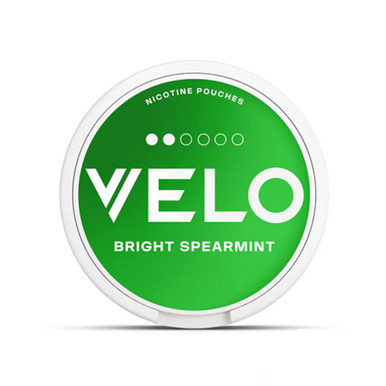
The can is the shallow cylinder the category has settled on: flat base, straight sides, a lid that lifts clear of the rim and presses back onto it. The lid face carries the brand, the flavour and the declared figure, and that last item earns its place the moment more than one tin shares a drawer, because tins get read from above rather than picked up.
Inside, pouches sit in a ring around the inner wall, flat and even, so the first out does not disturb the rest. Each is a small pale rectangle with softened corners, dry to the touch rather than moist, and light enough to be easy to forget you are holding. How many sit in a tin is not something our record states, and we decline to estimate it — the packaging carries the count and an invented figure would only compete with the real one.
Turn the lid over and there is a shallow recess with a raised lip. That is the catch compartment, it takes several used pouches before it needs emptying, and it has no other purpose. It is not a store for fresh pouches.
The Velo range on our shelves
The Velo collection runs to twenty-one listings with us, and every one of the six nearest relations to this can is priced identically at £4.19, which makes moving around inside the brand a matter of flavour alone. All six named below are marked in stock in our record at the time of writing, and for none of them does our record state a can count — the same gap described earlier applies right across the brand.
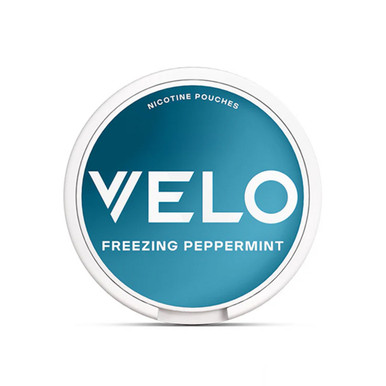
Within the mint family, Velo Crispy Peppermint and Velo Freezing Peppermint are both peppermint rather than spearmint, which is a genuine difference rather than a shade of one — sharper, more forward, less sweet and without the green herbal quality this can is named for. The two are distinguished from each other by their own naming conventions: "Crispy" pointing at a clean, snappy reading of peppermint and "Freezing" at a colder and more intense one. If you want a cool can that is clearly not this one, either of those does the job.
On the fruit side the brand splits three ways. Velo Cherry Ice at £4.19 is dark stone fruit over a cool base, and it is the closest thing in the range to a fruit-and-mint arrangement. Velo Icy Berries at £4.19 takes the same structure with a mixed berry character instead of a single fruit. And the two "Flame" listings, Velo Lime Flame and Velo Mango Flame, both at £4.19, use a naming convention of their own — "Flame" being the brand's word for a warmer, spiced reading of a fruit, in the tasting sense that mulled fruit is described as warm, and not a description of temperature or of anything the pouch does.
Between them those six cover cool, fruit-over-cool and fruit-with-spice at a single price point, which is about as tidy a range as any brand on our shelves offers.
Other cool cans worth knowing about
Beyond the brand, the mint shelf is crowded and the useful distinctions are between kinds of cool rather than between degrees of it.
For another spearmint specifically, Edge Spearmint at £14.95 is the direct comparison on our shelves and is currently available — the same mint, a different brand's reading of it, and a listing whose contents are worth checking against this one before drawing any conclusion from the prices. For the colder end, XQS Arctic Freeze at £39.90 and SYX Cool Mint at £29.90 go at plain cold mint from two directions, while White Fox Double Mint at £34.90 uses its name to signal intensity of the same idea rather than a second flavour. All three are in stock.
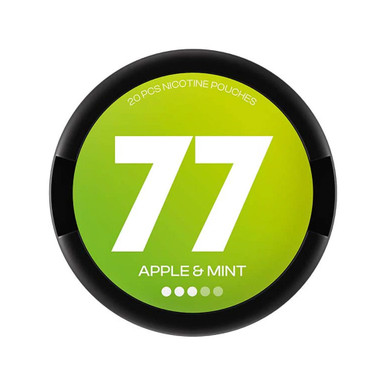
For a cool base with something over it, 77 Apple Mint at £39.90 puts a crisp green apple on top and Pablo Silver Edition Blueberry Peach Ice at £39.90 stacks two fruits over it. If you would rather leave the mint family altogether for your second can, UBBS Cola Ice at £19.95 for a five-can pack is a sweet cola idea and Fumi Dark Spice at £27.90 is a spice-forward one, neither of which will blur into a spearmint can in a rotation. Both are available in our record, as are the two fruit-over-cool listings above.
Keeping a tin in good condition
These are dry pouches, which makes storage the easiest part of owning one. Cool, dry, out of direct sun, lid closed. A drawer or a cupboard does it and nothing specialised improves on that.
Heat is the only realistic problem and the locations are predictable: a dashboard in summer, a windowsill facing the afternoon, a bag left in a boot, a coat over a radiator. Nothing dramatic happens to a warmed tin, but the effect is cumulative, and a tin repeatedly warmed and cooled is unlikely to taste like it did when it was opened. A spearmint flavour built on green herbal character has rather more to lose in that exchange than a heavy sweet mint does, because the aromatic detail is the first thing to go and it is precisely the detail the name is pointing at.
A closed lid does the rest. An open tin gives off aroma continuously, and aroma leaving the tin is character that never reaches a pouch. There is no reason to leave a lid off between pouches. Keep the catch well for used pouches only, and avoid decanting fresh pouches into anything else — the tin is the only thing carrying the flavour name and the declared figure, and this listing in particular has three possible figures, which makes an unlabelled loose pouch genuinely unidentifiable.
We publish no shelf life, no best-before date and no storage temperature range, because we hold none of those. The packaging is the authority on all three, and where it is silent, so are we.
Deciding what to put in the basket
Two decisions are available on this listing and only two. Which of the three declared figures, and whether the unit suits what you actually want.
On the figure: all three cost £4.19, so price does not enter into it. We publish 6mg, 8mg and 14mg without preference and we will not imply a preference through emphasis or ordering. If you already buy in this category you know which printed figures you tend to pick, and that knowledge is worth more than anything a shop could tell you. If you are comparing across brands, the declared figure on each listing is published for exactly that purpose.
On the unit: because our record does not state a can count here, the honest position is that we cannot tell you whether this is a larger or smaller buy than a listing at a different price. Check the listing page. It is a dull instruction and it is the correct one. If a known quantity matters to you more than a low headline price, the listings that state a can count are the ones to work from.
On which strength anybody should choose: we cannot advise, will not advise, and would be inventing an answer if we tried.
Ordering, delivery and the check at the door
Buying is ordinary. Pick one of the three declared figures, add the £4.19 listing to the basket, and read the live stock state on the listing rather than trusting this page, which was written before you got here.
Age verification applies and is not a formality. It happens when the order is placed, and identification may be requested on delivery. A parcel is not handed over to anyone who cannot show they are 18 or over. If someone else in the household is likely to answer the door, that is better known in advance than discovered at it.
Carriers, delivery timings and returns live on the site's own delivery pages, which hold the current position. Product pages are the wrong place to freeze that sort of detail, and the same applies to availability — every stock note on this page describes our record at the time of writing.
Where this page sits on the site
Three shelves carry this listing: the medium strength band, the brand collection of twenty-one Velo listings, and the mint shelf, which is the largest flavour grouping we run. Each is a different route in, and none of them tells you the declared figure of any individual can — only the listing does that.
If filtering is not what you want, the entire catalogue in one view is available. For brand-led browsing, the Pablo listings and the Cuba listings are two of the larger collections we hold, and both run at higher declared figures than this listing's lower variants. For figure-led browsing, the strength bands linked earlier do the same job from the other direction.
Questions we are asked about this one
How many cans do I get for £4.19?
We genuinely do not know, because the can-count field is empty in our record for this listing and we will not fill it with a guess. The listing page and the packaging are the places that answer it. We flag this rather than staying quiet because a low headline price looks like a bargain next to a twenty-pound listing, and that comparison is meaningless until you know what each one covers.
What is the difference between spearmint and peppermint?
They are different mints, not different strengths of the same one. Spearmint is rounder, sweeter and noticeably green and herbal — the mint of garden herbs. Peppermint is sharper and more forward, with a cool edge that arrives faster and a slightly medicinal character. Menthol is cooler still and the least sweet of the three. Our flavour tags do not distinguish between them, so the product name is where that information lives.
Does "Bright" mean it is stronger?
No. It is a taste descriptor, in the sense that tasting vocabulary calls a flavour bright when it is clean, high-pitched and free of heaviness. It points at the clearer, more herbal reading of spearmint rather than a dense sweet one. It says nothing about the declared figure, which is printed separately as 6mg, 8mg or 14mg depending on the variant, and it describes nothing that the product does to a person.
Which of the three strengths should I pick?
We cannot tell you, and any shop that answers that confidently is guessing about someone it has never met. All three are what the manufacturer prints, all three cost the same, and a higher number is not a better product. We list them in ascending order because that is the order they come in, not because it describes a route anyone should follow.
Why is a 6mg variant filed under Medium Strength?
Because a listing with three declared figures is filed once rather than three times, and this one has gone into the medium band. Our record does not say which figure drove the placement, so we cannot explain it further than describing it. If you browse by shelf and want the exact number, the listing itself is where to read it.
How long does a pouch last?
There is no honest single answer and we will not manufacture one. People range from well under ten minutes to the better part of an hour, and the same person varies across a day. Most go by the flavour rather than a clock: the opening is the most pronounced part, the middle is steadier and quieter, and the tail thins to a background note. A spearmint's green herbal character tends to fade before its sweetness does.
Is it allowed at work or on a flight?
Your employer decides the first and the airline decides the second, and neither question is one a shop can answer for you. Venues, employers and transport operators all set their own rules, and those rules are theirs to state. If you are travelling abroad, the destination country's own position matters too and can be considerably firmer than UK customers expect. Check before you travel, not at the gate.
How many pouches are in a tin?
Not something we hold, so not something we print. The count is on the packaging. We could offer a figure based on what tins in this category usually contain, but an estimate published next to real data gets read as data, and that is exactly the confusion these pages try to avoid.
Where is it made?
We do not hold that information and will not guess at it. Our record carries a brand name and nothing about manufacturing, origin or the business responsible. Whatever the packaging states on those points is the real answer and a better source than a shop page repeating something unverified.
Is this the same product as the Edge spearmint can?
No — different brands, different listings, different prices. They share a mint type by name, which is the only thing our data says they have in common, since our tags file both simply under mint. Beyond the name we hold nothing that would let us compare the two flavours, and we are not going to invent a comparison. A tin of each is the only way to settle it.
Do you publish ingredients or nutritional information?
Neither. We do not publish ingredient lists, we do not publish nutritional detail, and we do not describe what is inside a pouch or what happens once one is in place. Those belong to the manufacturer's own printed material. This page covers the object, the flavour as taste and aroma, the format in practice, storage and the neighbouring listings, and stops there on purpose.
Can I order different strengths together?
Yes — they are separate variants of the same listing and each goes into the basket on its own, so any combination is possible. What we hold nothing about is whether a single unit ever mixes figures; our record declares strengths against the listing rather than against individual tins. We would expect a unit to be uniform, but expecting is not knowing and we will not state it as fact.
Age, addictiveness and the legal position
This product contains nicotine. Nicotine is an addictive substance. That applies to all three declared figures on this listing and to every can on every shelf we run. It is the most important sentence on this page.
Sales are 18+ only. This is listed and sold to adults aged 18 or over who already use nicotine, and to nobody else. Nothing written above is intended to interest a person who does not already use nicotine, and nothing here suggests that anybody should start.
It is not a licensed stop-smoking medicine and is not offered, described or intended as one. It is not intended for non-smokers, for people who do not already use nicotine, for anyone under 18, or for anyone pregnant or breastfeeding. We make no health or medical claim about it in any direction, and we give no dosage guidance of any kind.
Identification may be requested on delivery. Age verification applies when the order is placed and again at the door, and a parcel will not be released to anyone who cannot show they are 18 or over. Keep tins closed and out of reach of children and animals, and put used pouches in general waste.
The short of it
Velo Bright Spearmint is listed at £4.19 in three declared figures — 6mg, 8mg and 14mg — all at the same price, with a single mint flavour tag that agrees with its name, and it is in stock as this is written. Spearmint is the round, green, herbal member of the mint family rather than the sharp one, and "Bright" names the clean, uncluttered reading of it as a matter of taste. The one thing we cannot tell you is how many cans £4.19 buys, because our record does not say, and that gap matters more than anything else on this page: it is the difference between a genuine comparison and a misleading one.
More from Velo
More medium strength pouches
More mint pouches
Where this sits
Velo Bright Spearmint Nicotine Pouches appears in these categories. Browse them, or jump to something close.
You might also like