Home / Medium Strength / 77 Blueberry Ice Nicotine Pouches
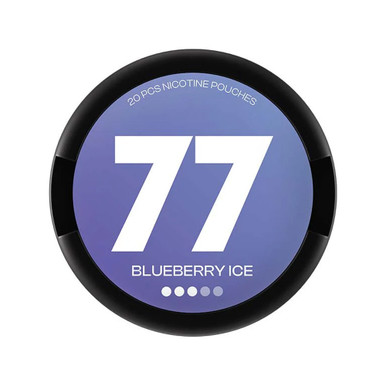
77 · 10.4mg · 10-can pack
Read the full guide
77 Blueberry Ice Nicotine Pouches
£39.90
✔ In stock — ready to ship
100% tobacco-free
Free over £20
Same-day dispatch
Secure checkout
This page describes 77 Blueberry Ice Nicotine Pouches. Our record holds a price of £39.90, one declared strength of 10.4mg, flavour tags for berry and mint, and a stock position of unavailable at the time of writing. It also holds one field that most listings on this site leave empty: our data records this product as 10 cans.
That last figure deserves its own paragraph, because it changes how every price on this page should be read. A great many pouch listings — ours included — give a price without recording what quantity it covers, which makes comparison between them close to impossible and forces us to write "we do not hold that" rather often. Here we do hold it. £39.90 for 10 cans works out at £3.99 a can, and that is arithmetic on our own recorded numbers rather than an estimate. It is the single most useful thing on this page and there is a whole section on it below.
The full guide to 77 Blueberry Ice Nicotine Pouches
4,903 words on how it eats, who it suits, how to serve it and what to put beside it.
What is on this listing, including the number most pages here do not have
Beyond those facts, everything here is a description of the object, a comparison drawn against other listings in our catalogue, or a note that something is outside what we know. Where our record is silent we say so rather than filling the space, which matters more on an age-restricted product than on anything else we could be selling.
The packaging is conventional for the category: a short cylindrical tin, cap printed with the brand, the flavour and the milligram figure, pouches arranged flat inside, and a shallow well moulded into the underside of the cap to hold used ones. On a ten-can listing the relevant point about packaging is that you are unlikely to have one tin open — you will have one in use and nine unopened, which is a different storage situation from a single can and is dealt with further down.
This is an adult nicotine product, listed for people aged 18 or over who already use nicotine. The full wording on that is in its own section towards the end.
Blueberry, taken as a flavour
Blueberry is a quiet fruit, and describing it accurately means resisting the urge to make it sound louder than it is. Where blackcurrant is sharp and assertive and strawberry is bright, blueberry is round. The character is musky and slightly jammy, with a soft skin-note behind it and very little acid — it is one of the least tart berries in common use, and that mildness is the whole of its appeal to the people who choose it.
There is a faintly floral quality at the edge of a good blueberry flavour, the thing that stops it reading as generic purple fruit. Whether that comes through depends on how heavily the rest of the can is built, and this is where the second word on the lid matters.
"Ice" indicates a cooling layer laid over the fruit. On a mild, round flavour the effect is more pronounced than it would be on a sharp one, because there is less acidity in the fruit to compete with the cold. The result reads as crisper at the front than plain blueberry would, with the soft fruit arriving just behind it rather than immediately. Some people prefer the cooled version precisely because it gives a mild fruit some definition; others find the cold gets in the way of the very softness they wanted. Both reactions are common and neither is a fault in the can.
The aroma from an opened tin leads with the fruit, cool second. All of the above is a description of a flavour by people who sell it, not a specification, and flavour is personal enough that yours may land elsewhere. What is not a matter of opinion is our filing: the record tags this can berry and mint, and that is why it appears on two flavour shelves rather than one.
Reading the 10.4mg
The declared strength is 10.4mg per pouch, printed on the can by the manufacturer. There is one variant on this listing, so the figure is fixed and no price hinges on it.
A milligram figure is a content declaration and a sorting key. It is good for putting products in an order and for letting someone who already knows their bracket filter a large catalogue down to a manageable one. It is poor at predicting how a can will strike a given person, because pouch size, how heavily the flavour is built, how cold it is and how long somebody keeps one seated all affect the impression and none of them are contained in the number. This is why experienced users tend to talk about specific products rather than about figures.
In our filing, 10.4mg puts this can on the medium strength shelf, the largest of our three bands at 135 listings, with the strong band and the extra strong band above it. Those bands are our own convention for organising a catalogue. They are not a manufacturer's classification, they are not an industry standard, and where a brand draws its own internal lines is entirely up to that brand.
We will not tell you which figure to buy. We have no information about what you use, we are not qualified to advise on it, and a retailer steering an individual towards a particular nicotine strength is doing something outside its role. The number is on the lid, the number is on the listing, and the decision is not ours to make.
Coming to this can from a different brand: the practical questions
This section is for people moving across from another manufacturer's can rather than starting anywhere new — the ordinary situation of having used one brand for a while and considering a different one. There are four things that reliably cause confusion in that move, and none of them involve a claim of any kind.
The strength figures do not line up
The first and biggest. Brands declare their figures differently, so two cans printing similar numbers are not necessarily offering similar things, and a number you know well from one range does not transfer cleanly to another. A decimal figure like 10.4mg sits oddly against the round numbers other ranges print, and the precision of the decimal does not indicate anything except that this manufacturer states it that way. Our strength bands paper over some of this by grouping products, but a band is a range and the products inside it are not equivalent. The honest position is that the figure tells you where a can sits in a list, and you will learn what it means for you by using it and not by reading it.
The tin is not the same tin
Tins differ more than people expect. Cap depth, how firmly the lid seats, how many pouches lie in the ring, how deep the used-pouch compartment is — all of these vary between manufacturers, and all of them affect whether a can is pleasant to carry. A cap that seats loosely will open in a coat pocket; a shallow compartment fills after three or four. These are not things any listing page can tell you reliably in advance, ours included, because our record holds price, strength, flavour and stock and nothing about the physical build. It is worth knowing that the variation exists, so that you attribute it to the can rather than to anything else.
Flavour names do not mean the same thing between brands
Two cans can both say blueberry and be doing quite different work. One may aim at fresh fruit and another at a jammier, cooked reading, and a cooling word on the lid can mean a light touch in one range and a dominant element in another. There is no cross-brand standard for any of this and there is no scale we can give you. Comparing the SYX blueberry listing at £29.90, the ZYN blueberry and mint can at £19.99 and the XQS version at £39.90 against this one is a matter of trying them, not of reading their names, and anyone who tells you otherwise is guessing.
Quantity is where most of the confusion actually is
The question that causes more trouble than the other three combined is what a price covers. A listing at £4.19 and a listing at £39.90 can look like a tenfold difference in cost and not be one, if the first is a single tin and the second is a box of them. This is the field most catalogues leave blank, and where ours is blank we say so. On this listing it is not blank — 10 cans — and that is the whole subject of a later section on this page.
The reordering rhythm changes as well
The last thing people underestimate is how differently a purchase behaves over time. Somebody used to buying a tin at a time has a short cycle: you notice the can is nearly empty, you order, it arrives, and the flavour decision gets revisited every few days without anybody consciously deciding to revisit it. That constant small reassessment is why single-can buyers tend to try far more products than they expect to.
A multi-can listing removes that cycle. The flavour decision is made once and then holds for as long as the box lasts, which is a genuine convenience for anybody settled on what they buy and a genuine irritation for anybody who is not. It also concentrates the cost into one payment rather than spreading it, which some people prefer and some do not. Neither pattern is better; they simply suit different people, and it is worth knowing which one you are before committing at a larger quantity rather than after.
There is a practical middle course, which is to keep a multi-can purchase as the settled part of a rotation and buy single tins of other things alongside it. That way the bulk listing covers the flavour you already know suits you, and the variety comes from cheaper individual cans that can change whenever you like. A good number of people who buy in quantity work exactly that way.
Nothing in this section is an argument for moving brands or for using anything at all. It is a list of the practical things that cause avoidable confusion when somebody who already uses pouches tries a different make of them, set down plainly so that they cause less.
The format itself, described physically
A pouch from a can like this is a small, dry, soft-sided pad, white, with rounded ends. It has no hard edges and weighs next to nothing. Beyond that general description, two physical distinctions run across the category and are worth knowing.
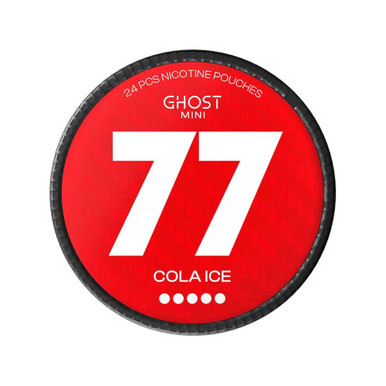
Slim against regular. Portions differ in footprint. A slimmer portion covers less area and is less noticeable in place; a regular portion is broader. Manufacturers use these words inconsistently and our record does not carry a portion size for this listing, so we cannot tell you which this is — we can only tell you that the distinction exists and that it accounts for a good deal of the difference people notice between brands. Where a brand offers a deliberately smaller portion it usually says so in the product name, as the 77 Ghost mini line does.
Dry against moist. Pouches differ in how damp they are to handle. A dry-format pouch feels like a small paper sachet; a moister one feels closer to damp cloth. This affects how a pouch feels going in and how quickly the flavour arrives, and again it is a physical property of the object rather than a claim about it. Our record does not state which format this listing uses.
Where it goes and how long it stays. The portion is designed for the space between the upper lip and the jaw and sits there without needing to be held. A fresh pouch is noticeable for a minute or so and then settles. After that it requires nothing — no device, nothing to put down, nothing to pick up again. How long anyone keeps one in varies too widely for a figure to be meaningful: a few minutes at one end, the better part of an hour at the other, and the same person differs between a quiet day and a busy one. Most people change when the flavour thins out, which on a cooled can happens to the cold element before it happens to the fruit.
Ending it. A used pouch comes out with a fingertip and goes into the well under the cap, which is what makes the format workable on a journey or anywhere without a bin. The well holds several. Tip it into general waste when it fills — not into a drain, a plant pot or a verge. Used pouches are small, pale and easy to lose track of on a surface, which is the practical reason to put them back in the tin, and the more important reason is that a tin, open or closed, should be kept shut and away from children and pets.
Blueberry Ice among the other 77 cans
We carry 29 products from this brand on the 77 shelf, and every one of them is listed at £39.90. On most brand pages price is the first thing that separates one product from another; here it separates nothing, and comparison inside the range is a flavour exercise from start to finish.
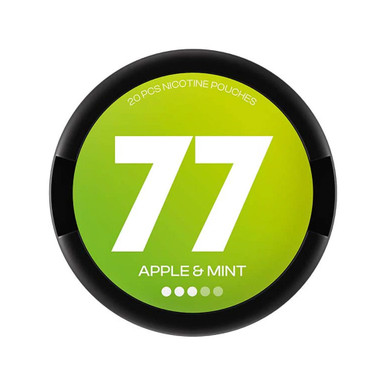
Within the brand's fruit output, this is the mild end. The Apple Mint can is sharper and greener, built on orchard fruit with the same kind of cool layer over it. Forest Fruits blends rather than isolates, so no single berry stands out and the result is rounder than any single-fruit can including this one. The VB Edition Arctic Berry listing, also £39.90, is the brand's coldest berry reading and reaches this page through the berry shelf rather than through the brand's core range.
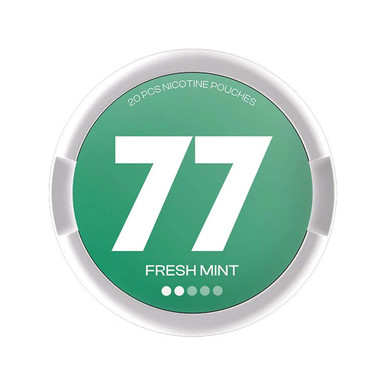
Outside fruit, the brand's soft-drink flavours are Cola Ice and Cola Vanilla, the first cooled and the second rounded off with something softer. And the mini sub-line, listed here as Ghost, covers the portion-size question rather than a flavour one: Ghost Mini Mango and the Ghost Original Mini can are both £39.90. If the footprint of the portion is the thing you would change, that line is where the brand's own answer sits.
What else people keep in the rotation
Two or three cans on the go is the usual arrangement, and with a mild fruit the second can is normally chosen for definition rather than for contrast — something with more edge on it, to stop a soft flavour becoming the only thing you taste.
The sharpest available move inside the same flavour family is the Fumi blackcurrant can at £27.90, which is tart and dark where this one is round and mild, and is probably the most instructive single comparison anyone can make on the berry shelf. Velo Strawberry Ice at £4.19 goes the other way, to a bright red berry with a cool layer, and is the cheapest berry-and-cold listing we hold. Nordic Spirit Frosty Berry at £4.49 is the mixed-fruit version of the same price bracket.
There is a scale point worth making here as well, since it follows from the quantity field. On a ten-can listing the rotation is lopsided by construction: you have a large amount of one flavour and small amounts of whatever sits beside it. That is a reasonable arrangement if the bulk flavour is the one you are settled on, and an awkward one if it is not, and it is another reason to be confident about a flavour before buying it at quantity rather than after.
For people who want the rotation to leave fruit entirely, a plain mint is the usual second can: Edge Spearmint at £14.95 at the lighter, sweeter end of the mint family, or Klint Arctic Mint at £36.90 for something colder and broader. And the Pablo Silver Edition blueberry and peach listing at £39.90 is the option for somebody who likes this fruit but wants a second one stacked with it rather than a different can altogether.
Ten cans, £3.99 each, and what that changes
This is the section the ten-can figure earns. Our record states that this listing covers 10 cans at £39.90, which is £3.99 per can, and that puts a number on the page that we can support with arithmetic rather than assumption.
The reason it matters is that it inverts how the listing looks. At £39.90 this is among the most expensive-looking entries on its shelf. At £3.99 a can it is one of the least expensive things in this comparison — cheaper per tin than any of the single-can listings we would otherwise put beside it. The table below sets out what our record does and does not say about each one.
| Listing | Our price | What our record says it covers |
|---|---|---|
| 77 Blueberry Ice | £39.90 | 10 cans — £3.99 each |
| Velo Strawberry Ice | £4.19 | Not recorded |
| Nordic Spirit Frosty Berry | £4.49 | Not recorded |
| Edge Spearmint | £14.95 | Not recorded |
| ZYN Blueberry Mint | £19.99 | Not recorded |
| Fumi Blackcurrant | £27.90 | Not recorded |
| SYX Blueberry | £29.90 | Not recorded |
| Klint Arctic Mint | £36.90 | Not recorded |
| XQS Blueberry Mint | £39.90 | Not recorded |
| Pablo Silver Edition Blueberry Peach Ice | £39.90 | Not recorded |
Read that table carefully, because the right-hand column is doing the work. "Not recorded" does not mean a single can. It means our data does not state the quantity, and some of those listings may well be multi-can too. We are not going to assume they are singles in order to produce a flattering comparison, and nobody else should either. The only row in that table where a per-can figure can honestly be calculated is the first one.
The practical consequences of a ten-can listing are worth spelling out, because they are real and not all of them are convenient. A larger quantity means a larger single outlay and a longer commitment to one flavour, which is a poor arrangement if you are not already sure you get on with it. It also means nine unopened tins sitting somewhere, which makes storage a slightly more serious question than it is for one can. Against that, the per-can cost is lower and the reordering is less frequent. Whether that trade suits you depends on how settled you are on the flavour, and that is a judgement we cannot make for you.
There is no strength decision to make here, incidentally: the listing holds one variant at 10.4mg, so the quantity is the only structural feature of the purchase worth thinking about.
Storing one open tin and nine closed ones
Most storage advice on a pouch page assumes a single can. A ten-can listing splits the question in two.
The tin in use needs very little: press the cap fully home after each pouch, keep it out of direct sun and away from heat — dashboards and windowsills being where cans are most often ruined — and empty the used-pouch well before it fills rather than after. An open tin is exposed to the air each time it is used, and flavour is what suffers first from a cap left half-seated.
The unopened tins want somewhere cool, dry, dark and, above all, out of reach. Nine sealed cans in a cupboard are a larger quantity of an age-restricted product sitting in a house than most people are used to, and that is the part worth taking seriously — a high shelf or a locked drawer rather than a kitchen worktop or a bedside table. Keep them away from pets as well as from children.
On refrigeration, which is always asked: our record carries no storage instruction for this listing, so we are not going to issue one. The manufacturer's own wording on the packaging is the authority and it outranks anything on this page. What can be said without inventing is that closed tins kept cool, dry and shaded are how the format is ordinarily stored, and that nothing about it requires more than that.
Ordering it, and the two checks that apply
The immediate answer is that this listing cannot be bought at the moment. Our record marks it as unavailable, and an out-of-stock line cannot go into a basket however fully it is described. We keep no waiting list, we do not take back-orders on individual products, and we cannot give a restock date that we have not been given. The listing page holds the live position; this page is a description of the product.
When a nicotine product here is available, two checks bracket the ordinary business of buying. At checkout there is an age check — everything on this site is sold to adults aged 18 or over, and an order that does not clear it is not dispatched. At the address, ID may be requested on delivery, and where it is requested and no adult present can produce it the parcel is not handed over. That is the basis on which age-restricted goods can be sent at all rather than a courier's discretion, and with a ten-can order in particular it is worth thinking about where the parcel will go, because this is not something to leave in an unattended porch.
Mixing brands and flavours in one basket makes no difference: one order, one age check, one parcel. Our usual returns terms apply site-wide, subject to the plain fact that an opened tin cannot be resold — a point with more force on a ten-can listing than on a single one.
Four ways to reach this listing
By strength, it is filed on the medium band and its 135 listings. By brand, on the 29-product 77 page. By flavour, it appears twice — on the berry shelf with its 76 cans and on the mint shelf, our largest at 148 — because it carries both tags.
Anyone browsing for this kind of flavour will do better on the berry shelf; the mint shelf will surface it, but among a great many cans that share only the cooling element. If you are working across brands instead, the Pablo page and the Cuba page are the nearest brand shelves of similar size, and the complete index of what we sell holds everything in one list.
Common questions on this product
Does £39.90 really cover ten cans?
That is what our product record states for this listing, and the £3.99 per can figure is straightforward arithmetic on it. It is worth confirming against the listing page itself before ordering, since our record is our record and the listing is the live version of it. We have flagged this because it is unusual — most entries in our catalogue leave the quantity field blank, and on those pages we say we do not know rather than guessing.
Is it in stock?
No. Our record shows it as unavailable as this was written, and the listing page is the live answer if that changes. We have no return date and we do not run notification lists for individual products, so we would rather say that plainly than leave an impression that something is due.
How many pouches are in each tin?
We hold the number of cans but not the number of pouches inside one. That count is printed on the packaging by the manufacturer, and that is where to read it. We are not going to publish a figure we cannot stand behind for the batch you might receive.
How does this compare with the blackcurrant version?
They are not close, despite sharing a shelf and a price. Blueberry is round, mild and low in acidity; blackcurrant is sharp, dark and tart with a leafy edge to it. People who find blueberry too soft usually get on with blackcurrant, and people who find blackcurrant too sharp usually prefer this. Both carry the same cooling word on the lid, and both are tagged berry and mint in our record.
What does the cooling element actually do?
It puts a cold character at the front of the flavour, ahead of the fruit. On a mild fruit that has a more obvious effect than on a sharp one, because there is less going on in the fruit to compete with it. How cold any given can reads is not something we can quantify — there is no such figure in our data and we are not going to construct a scale of our own to fill the gap.
Which strength should I buy?
We cannot answer that. We hold no information about you, we are not qualified to advise on nicotine strength, and a retailer recommending a figure to an individual is doing something it should not. Our strength bands exist so that anyone who already knows their bracket can filter the catalogue to it, and that is the limit of the help we offer here.
Is a decimal strength like 10.4mg unusual?
It is less common than a round number, and it means nothing beyond the fact that this manufacturer states its figure that way. A decimal is not a sign of greater precision in any meaningful sense, and it does not make a can comparable to one from another brand printing a similar number. Declared figures are not standardised between manufacturers.
Do you publish what is inside a pouch?
No. We do not publish ingredient, composition or technical detail for any nicotine product on this site. We describe flavour as taste and aroma, we publish the facts our record holds, and everything else is a matter for the manufacturer's own labelling, which is the authoritative source.
Where is it made?
We do not hold that information and will not guess at it. Our record carries a brand name and nothing about manufacture, origin or ownership. Whatever the packaging states is the only source worth relying on.
Can I take these abroad, or use them at work?
Both are outside what we can answer. Rules on bringing nicotine products into a country vary widely and some countries restrict or prohibit them; we do not hold a national list and will not improvise one, so check the destination's published requirements and the airline's. Workplace and venue rules are set by the workplace or venue, and a format being unobtrusive is not the same thing as it being permitted.
Will the last tin be as good as the first?
We do not hold shelf-life information for this listing, so we cannot give you a period or a date. Anything printed on the packaging by the manufacturer is the authority on that, and on a multi-can purchase it is worth actually reading rather than assuming. What we can say without inventing is the ordinary point about storage: sealed tins kept cool, dry and out of the light are in a better position than tins left on a sunny windowsill, and that applies across the category rather than to this product specifically.
Can I split a multi-can order with someone?
What you do with a product after it is delivered is your business rather than ours, but two points are worth stating. Everything we sell is supplied to adults aged 18 or over who already use nicotine, and that applies to anyone who ends up with a tin, not only to the person who placed the order. And we cannot split an order at our end — the listing is a single line at a single price and ships as one parcel to one address.
What if I order ten cans and do not like the flavour?
This is the genuine risk of a multi-can listing and we would rather name it than skate over it. Flavour cannot be tested without opening a tin, an opened tin is not resaleable, and our standard returns policy does not change either of those facts. If you are uncertain about blueberry as a flavour rather than about this particular can, a cheaper single listing elsewhere in the catalogue is a far less costly way to settle the question first.
Compliance and legal notice
Nicotine is an addictive substance.
77 Blueberry Ice Nicotine Pouches are supplied only to adults aged 18 or over who already use nicotine, and on no other basis. We operate an age check at checkout and do not sell to anyone under 18. ID may be requested on delivery, and where it is requested and cannot be produced by an adult at the address, the parcel will not be handed over.
This product is not a licensed stop-smoking medicine and carries no authorisation of that kind. It is not intended for non-smokers, for anyone who does not already use nicotine, for under-18s, or for anyone who is pregnant or breastfeeding. Nothing on this page is medical advice, and nothing on it should be taken as a suggestion that any person begin using nicotine or choose any particular strength.
Keep tins closed and out of reach of children and pets — a point that applies with more force to a ten-can quantity than to one — and put used pouches in general waste. Every product fact above, including the can count, the price, the declared strength, the flavour tags and the stock position, is taken from our own record for this listing. Where that record holds nothing, this page says so rather than estimating, and the manufacturer's labelling governs anything printed on the packaging.
The short of it
77 Blueberry Ice is the mild, round, low-acid end of the berry shelf with a cooling layer over the top, declared at 10.4mg, and out of stock as this was written. Its distinguishing feature is not the flavour but the record behind it: £39.90 covering 10 cans, or £3.99 each, which is a per-can figure we can actually calculate and one we cannot calculate for most of the listings beside it. It sits in the medium band, on the flat-priced 77 shelf, and on both berry and mint. If you want the opposite of it within the same family, the tart Fumi blackcurrant can is the comparison to make. Everything we know is above; everything we do not, we have written down as unknown.
More from 77
More medium strength pouches
More mint pouches
Where this sits
77 Blueberry Ice Nicotine Pouches appears in these categories. Browse them, or jump to something close.
You might also like