77 · 20mg
Read the full guide
77 Ghost Original Mini Nicotine Pouches
£39.90
✔ In stock — ready to ship
100% tobacco-free
Free over £20
Same-day dispatch
Secure checkout
This page describes 77 Ghost Original Mini Nicotine Pouches. The brand is 77. The product name, exactly as the maker gives it, is Ghost Original Mini. The declared strength is 20mg, the price on this listing is £39.90, and it is marked in stock at the time of writing. Our flavour record for it is empty — not withheld, not summarised away, genuinely empty — and that is dealt with properly further down rather than glossed over here.
Those are the facts. Our record for any listing carries brand, product name, price, declared strength, flavour and stock, and nothing else. It does not carry pouch counts, portion weights, dimensions, manufacturing detail or the small print on the base of the tin. Where this page needs one of those, it will say that we do not hold it. That is the only honest thing a shop can say about a number it has never been given.
The full guide to 77 Ghost Original Mini Nicotine Pouches
5,171 words on how it eats, who it suits, how to serve it and what to put beside it.
77 Ghost Original Mini: what the listing holds
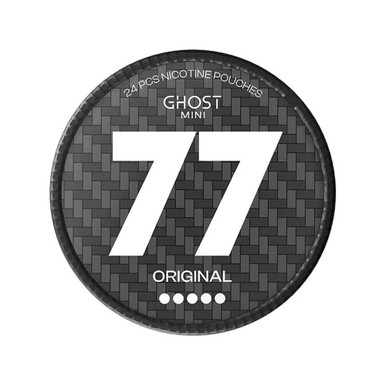
Physically it is a pouch tin of the usual pattern: a shallow round container, a lid that lifts clear and presses back down, branding and the strength figure printed on top so the can is identifiable without opening it. The pouches sit inside in a ring. The exact dimensions of the tin are on the packaging, not in our data.
Two words in the name carry information rather than decoration. Mini is the maker's format label. Original is the maker's name for this particular can within the Ghost line — it is not a flavour word and we have not been given a definition for it. The strength figure, 20mg, is a separate declared value and is not implied by either word.
Before anything else: this is an 18+ nicotine product for adults who already use nicotine. The full compliance wording has its own section at the foot of the page.
The strength ladder, and where a 20mg label sits on it
Because this listing carries no flavour record, the declared figure is the main piece of published information attached to it, and it deserves proper treatment rather than a line. This section is about what the number on a pouch can is, and — more usefully — what it is not. Everything here is information. None of it is advice, and nothing in it should be read as steering anyone toward a figure.
What the number is, as far as we can honestly say
The milligram figure is the nicotine content declared by the manufacturer for each pouch. It is printed on the can and we reproduce it exactly as given. That is the full definition of the field, and it is worth noticing how narrow it is: it is a label value, declared by the company that made the product, republished by us without alteration. We did not measure it. We have no way of measuring it. We publish it because the maker publishes it.
Read as arithmetic, the figures behave as arithmetic does. Twenty is larger than ten. Ten is larger than five. That ordering is genuine, and it is the only comparison we are in a position to make — a comparison between printed values. It does not describe what anyone experiences, and we will not translate it into one. If you want to know what a figure means for you, that is not a question a product page can answer, and we would rather leave it unanswered than answer it badly.
Why the same number on two cans is not the same thing
This is the part people most often get wrong, so it is worth being blunt. Manufacturers declare these figures in different ways, against different portion formats and different conventions. Two cans from two companies both showing 20mg on the lid are not therefore equivalent to one another. They are two independent declarations that happen to produce the same printed number.
We do not convert between makers' figures, we do not normalise them onto a shared scale, and we do not hold the underlying technical information that would let anybody do either honestly. So when this page mentions the figures on other cans, it is quoting labels side by side and nothing more. A can's own labelling is always the authority for that can.
The three shelves, and why they are not a ladder
Our listings are filed into declared-strength bands, and the word ladder in this section's heading is there to be argued with. The bands are a filing system. They exist so that somebody who already knows the figure they are looking for can filter to it in one click, and for no other reason.
This can, at 20mg, files under the Strong band, which holds 132 listings at the time of writing. The Medium Strength shelf holds 135. The Extra Strong shelf holds the higher declared figures. Those three pages sort stock; they do not rank it, they do not describe a progression, and moving between them is not a journey anyone is being invited to take. If you know your figure, use them. If you do not, we are not the right source for one.
Reading a figure off a listing against reading it off a can
There is a practical wrinkle worth knowing about if you compare listings on a phone while holding a can in the other hand. The figure we publish is the figure supplied to us for that product, and it is meant to match what is printed on the packaging. Manufacturers do, from time to time, revise packaging, relabel a line or change how they express a value. If the figure on the can in your hand and the figure on the listing ever disagree, believe the can. It is the physical, current, legally-labelled article; our listing is a record of it.
The same applies to any figure quoted on this page about another product. Where this page says that a neighbouring listing is £4.49 or £33.50, that is our price record at the time of writing, and prices move. Where it says that a shelf holds 132 listings, that is a count at the time of writing, and counts move faster than prices do. None of those numbers is a promise about what you will see when you click through; the destination page is the live one.
What the figure does not tell you
Four things, plainly. It does not tell you how many pouches are in the can, because that is a separate figure we do not hold. It does not tell you the portion size, which is likewise not in our data. It does not tell you anything about flavour, which on this particular listing is recorded as nothing at all. And it does not tell you whether the product is appropriate for any given person, which is not a judgement a shop makes.
The flavour field on this can is empty, and we are not going to fill it
Every other listing linked from this page has at least one word in its flavour record. This one has none. That is an unusual thing to put at the centre of a product description, but the alternative is worse, so here it is in full.
The product is called Ghost Original Mini. The word Original appears in the title. Our flavour field is blank. Those two statements sit together awkwardly and it would be easy to resolve the awkwardness by inventing something — by deciding that Original must mean an unflavoured can, or a plain one, or a maker's default, and writing a confident paragraph about how it tastes. We are not doing that. We have not been given a flavour statement by the manufacturer, we have not been given a tasting note, and a description written from a product name is a guess with good grammar.
What this means for you, practically, is simple. If flavour is the thing you are choosing on, this listing is not the one to choose blind. The can itself carries whatever flavour information the maker prints, and that is the source. If you have had this can before, you already know more about its taste than this page does.
If you would rather have a named flavour in front of you before you order, the rest of the 77 range is where to look, and the closest relative is the other Mini in the line: 77 Ghost Mini Mango, same £39.90, same 20mg declared figure, same Mini format word, with mango recorded against it as a flavour. That is the one listing on our shelves that differs from this one on a single field. If the format and the figure are what you want and the blank flavour field is what is stopping you, that is the can to read next.
Mini, portion and the mechanics of a pouch
A nicotine pouch goes in the mouth, tucked between lip and gum, and stays there. It is not chewed and it is not swallowed. That is the entire format and it does not vary by brand.
What the format word tells us, and what it does not
Because Mini sits in the product name, it is fair to ask what it refers to. The honest answer: it is a format designation applied by the manufacturer, and a format word of that kind on a pouch can generally refers to the physical portion rather than to the declared figure or the flavour. Note that this can is declared at 20mg — the same figure as plenty of cans that carry no format word at all — which is a useful demonstration that the two fields are independent of each other.
We do not hold the portion measurements. Not the weight, not the length, not a comparison in millimetres against any other format on this site. Those figures are not in our data and we are not going to estimate them from the word on the lid. The can states whatever the maker chooses to publish. What we can tell you without reservation is that every pouch inside a given can matches every other pouch in that can, so the first one out tells you what the rest are.
Where it goes and how long it stays
Lid off, one pouch out, lid back on. It goes in at the front of the mouth, usually under the top lip, held in place by the lip itself. It stays put. If it is uncomfortable where it is, move it; if it is uncomfortable everywhere, take it out. Nothing about the format requires anyone to persist with a pouch that does not suit them.
How long people keep one in varies so widely that an average would mislead rather than inform — minutes at one end, the better part of an hour at the other. The reason most commonly given for taking one out is that the flavour has gone, which in a pouch happens gradually and then completely, much as it does in chewing gum. We set no time and cannot tell you what yours ought to be. Whatever usage guidance the manufacturer prints on the can is the guidance that applies.
The catch lid and disposal
Pouch tins of this style carry a shallow catch compartment inside the lid, separated from the body of the can where the unused pouches sit. Used pouches go in there. It is practical rather than clever: somewhere to put a used pouch when there is no bin to hand, and a way of not carrying one loose. It fills up and wants emptying well before the point where the lid stops seating properly.
Disposal is general waste — a bin, not a sink, not a toilet, not out of a window. The tin is plastic and goes to household recycling to whatever extent your council accepts that grade, which varies by area and is not something we can answer for a particular address.
Heat, air and a can that stays usable
This is the section worth reading if you buy more than one can at a time, because the difference between a can in good condition and a can that has been mistreated is almost entirely a matter of where it has been kept. Two things act on a can: temperature and air. Everything below follows from that.
Pouches that have dried out
The most common complaint about any pouch can is that the contents feel dry. It is nearly always a storage story rather than a manufacturing one, and the cause is almost always air. Every time the lid comes off, the inside of the can meets room air. Take one pouch out and close it properly and that exchange is brief. Leave the lid resting on top rather than pressed down, or leave the can open on a worktop while you do something else, and the exchange continues for as long as the can is open.
The fix is the least interesting sentence on this page: press the lid down until it seats. Not balanced, not perched — seated. A lid that will not seat is usually a lid with a full catch compartment underneath it, which is an argument for emptying the compartment rather than an argument about the lid. Do that consistently and the dry-can problem mostly disappears.
Moisture going the other way
The opposite failure is rarer but it exists, and it comes from keeping a can somewhere damp — a bathroom shelf, a windowsill that collects condensation, a coat pocket that has been out in the rain repeatedly. A tin is not watertight and a damp environment is not a neutral one. The same instruction covers it: dry, not damp.
People sometimes ask about the fridge. Some do keep unopened cans there. We do not hold this manufacturer's storage guidance, so we will neither recommend it nor advise against it. If the can's own labelling says something about storage, that takes precedence over anything here.
Heat is the one that does the real damage
Temperature is where a can genuinely suffers. A tin left on a dashboard, on a sunny windowsill, next to a radiator, on top of a boiler cupboard or in a parked car in July spends hours at temperatures nothing about the packaging is built for. The result is a can that behaves differently from one that has lived in a drawer. This is not a health point and not a safety point — it is a condition point about a product you paid for.
The remedy is ordinary. Cool, dry, out of direct sunlight. A drawer, a cupboard, a shelf away from the window. No special container, no particular temperature, nothing to buy. The only real discipline is remembering that a car is not storage, and neither is a coat that lives on a radiator.
Storing what you have not opened yet
An unopened can is sealed as it left the factory and wants exactly the same conditions as an opened one: cool, dry, dark. If you keep a spare — and plenty of people do, so that a delivery delay does not become a problem — keep it somewhere that meets those conditions rather than wherever is convenient. A spare can that has spent a fortnight on a sunlit shelf is a worse spare than one that has spent it in a drawer.
Pockets, bags and cans that travel
Most of the storage advice above assumes a can that lives in one place. In practice a lot of cans travel, and a travelling can meets a different set of conditions from a stationary one. A coat pocket is warm, moves constantly and is periodically rained on. A bag left in a car boot in summer is a hot box. A back trouser pocket subjects the tin to pressure it was not designed for, and a lid that has been sat on repeatedly is a lid that stops seating — which, as above, is the start of the dry-can problem rather than a separate issue.
None of that is a reason not to carry a can. It is a reason to notice which can you carry. People who keep more than one at a time often settle on an arrangement where the can in the bag is the one they are currently using and the unopened one stays at home in a drawer, which keeps the reserve in good condition regardless of what the day does to the other one. It costs nothing to organise and it is the difference between opening a fresh can that has lived in a cupboard and opening one that has spent three weeks in a jacket.
One practical note on carrying: an inside pocket or a bag compartment keeps a tin flatter and cooler than a back pocket does, and a can that is not being crushed is a can whose lid still closes properly. That is the entire mechanical argument, and there is nothing more to it than that.
The rule that outranks all of the above
Wherever you keep a can, keep it out of reach of children and animals. A closed cupboard or a drawer is storage; a kitchen worktop, a bedside table or a bag left open on the floor is not. This is not a tidiness point and it is not negotiable.
Twenty-nine cans wearing the 77 mark
The 77 shelf runs to twenty-nine listings at the time of writing, which makes it one of the larger single-brand ranges we carry. Worth knowing before you browse it: on the listings linked from this page, every 77 can is £39.90. Price, in other words, is not a variable within this brand. The choice between its cans is a choice about flavour and declared figure only.
The declared figures are not uniform across the range. This can is 20mg and files under Strong. Others in the same range carry their own declared figures, printed on their own pages, and not all of them file on the same shelf. Two cans with the same brand mark on the lid can sit on entirely different strength shelves of ours, so read the figure on each listing rather than assuming the brand carries one.
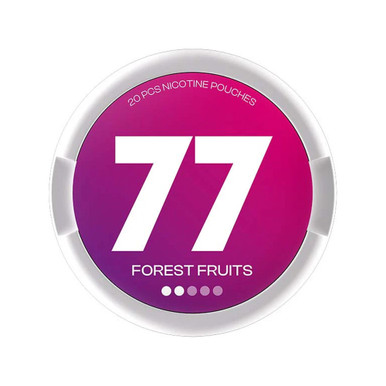
On flavour, the range splits roughly three ways. There is a fruit side, where 77 Forest Fruits at £39.90 is the mixed-berry option — blended berries rather than one named fruit, which gives a darker and deliberately less defined character. There is a mint side, where 77 Ice Mint at the same £39.90 is the plain cold mint, and its own page carries its own declared figure rather than the one on this listing. And there is a confectionery side, where 77 Cola Vanilla at £39.90 pairs a cola flavour with vanilla, while the Cola Ice listing at the same price takes the cola idea cold instead. 77 Apple Mint, also £39.90, sits across two of those categories at once, with an apple flavour and a mint behind it.
Against all of them, this listing is the one with nothing in the flavour column — which is either the reason you are reading it or the reason you will read one of the others instead.
Rotating this can with something else
Very few people buy one listing over and over with nothing beside it. The usual arrangement is two or three cans in rotation, because anything tasted every day for a fortnight stops registering as it did at the start. What follows uses nothing but brand, flavour and price.
Staying near this one
The nearest neighbour by every field we hold is the Mini Mango listing — same brand, same £39.90, same 20mg, same Mini format word, differing only in that it has a flavour recorded and this one does not. If you want a rotation that changes the taste and nothing else, that is the pairing with the fewest variables in it.
Outside the brand but at the same price point, Clew Blueberry is £39.90 and is a single dark berry rather than a blend, which makes it an easy second can to hold alongside something with no flavour statement of its own. Denssi Blueberry Freeze, also £39.90, is the same berry with a cold note laid across it, so the two of them together show how much that one addition changes a fruit. Cuba Ninja Coconut at £39.90 goes somewhere else entirely — coconut is one of the few genuinely soft, non-sharp flavours on our shelves and it does not resemble a berry or a mint in any respect.
Going further afield
If the point of the second can is maximum contrast, mint is where most people go. Klint Avalanche Mint is £36.90 and sits at the cold end of that; the Edge mint can is £14.95, which is a considerably lower listed price, and as always it is worth checking what each listing actually contains before treating a lower headline as a saving.
Among fruit listings at other price points, Killa Apple is £33.50 and is a single named fruit; Fumi Fiery Lime at £27.90 is at the sharp citrus end; Elf Bar Blueberry Raspberry at £29.90 is a two-berry blend; and Pablo Gold Edition Blue Raspberry at £19.95 is a confectionery reading of a berry rather than a literal one. At the bottom of the price spread on this page, the Nordic Spirit Max berry listing is £4.49. Every one of those carries its own declared figure on its own page, and none of them inherits the 20mg on this one.
The price spread across those names is worth a sentence of its own, because it looks stranger than it is. The listings mentioned in this section run from £4.49 to £39.90 — close to a ninefold difference between the ends. That is not a quality ranking, it is not a strength ranking, and it is not a comment on any brand. A large part of it is simply a difference in what a listing contains, and since our data does not record can counts we cannot resolve it for you here. The listing page for each product states what the unit is. Compare like for like once you have read that, and the spread usually stops looking dramatic.
Browsing by maker rather than by can, the Pablo range and the Cuba range are the other two large brand shelves we keep, both organised the same way as the 77 one.
Variants, or the absence of them
Some listings on this site offer a genuine choice between variants. This one does not, and saying so is more useful than inventing a decision. We hold exactly one variant for 77 Ghost Original Mini: 20mg at £39.90. No second declared figure, no second pack size.
Our record also carries no can count for this listing, which means we cannot tell you on this page whether £39.90 buys a single tin or a multi-can pack. We will not deduce it from the price. The listing itself states what the unit is, and the basket restates it before payment; either is a better source than a guess made here. Where that matters most is in price comparison — setting £39.90 against £4.49 tells you very little until you know what each figure is buying.
Checkout, postage and proving your age
Ordering is the same as anywhere else on the site: the listing goes into the basket and postage is applied at checkout according to the service you pick, not according to which can you chose. The price shown on the listing is the price of the listing.
Age verification is the part to read rather than skim. These are 18+ products, sold only to adults who already use nicotine. Checks may apply when the order is placed, and ID may be requested on delivery. A courier is entitled to ask and entitled to refuse the handover if there is nobody of age present to receive the parcel — so if the delivery address is a workplace or a neighbour, make sure someone over 18 will be there. We will not knowingly fulfil an order placed on behalf of anyone under 18.
On stock: this listing is marked in stock as this page is written. Stock indicators on this site are maintained rather than left to go stale, and some listings elsewhere in this very brand are marked out of stock at present, which is a state we publish rather than hide. The listing above is always the current answer; this paragraph is not.
How this listing is filed
There are two routes back to this can through the site's navigation, and it is worth knowing that there are only two. By declared figure it sits on the Strong shelf with 131 other listings. By maker it is one of the twenty-nine on the 77 brand page.
There is no flavour shelf route to this listing, for the reason covered above: with an empty flavour field there is no flavour page for it to sit on. That is a real navigational consequence of a blank data field and it is better to say so than to let you hunt for it. If you tend to find things by flavour, note the brand page or the strength band instead.
More broadly, everything we stock is browsable in one place, and the strength bands — Medium, Strong, Extra Strong — cut across every brand at once.
Things people ask before ordering this one
What flavour is it?
We do not hold one. Our flavour field for this listing is empty, and rather than fill it from the product name we are telling you that it is empty. The can carries whatever flavour information the maker prints on it, and that is the only source we would stand behind. If a named flavour is what you need before ordering, the other cans in the range all have one recorded.
Does Original mean unflavoured?
We do not know, and we are not going to reason our way to an answer. Original is part of the product name as the manufacturer wrote it. It may carry a meaning within their range; we have not been told what it is. Anything we published on that basis would be a guess presented as information, which is not something a product page should do.
How many pouches are in the can?
Not a figure we hold. Our data records brand, name, price, declared strength, flavour and stock; a pouch count is not one of those fields. The number is printed on the can. We will not publish an approximate figure, because an approximate pouch count is an invented one with a hedge in front of it.
What does Mini refer to?
It is the manufacturer's format label, part of the name rather than a description we wrote. On pouch cans a word of that kind generally refers to the physical portion rather than to the declared figure or the flavour. We hold no measurements, so we cannot give you a size or a weight, and we will not estimate either.
Is 20mg a high figure?
It is a larger printed figure than many cans we stock carry and a smaller one than some. That is a comparison between labels and it is the only one available to us. We cannot tell you how a figure will be experienced, we cannot tell you whether it suits you, and we do not give that sort of guidance. Our strength shelves file listings so they can be found; they are not a scale anyone is being pointed along.
Is it the same as a 20mg can from a different brand?
Not necessarily, and we would not assume it. Manufacturers declare these figures in different ways and against different portion formats, so two cans showing the same number are two separate declarations that coincide. We publish each maker's own figure and do not convert between them, because we do not hold the technical detail that would make a conversion honest.
My pouches feel dry — is that normal?
Dryness in a pouch can is usually a storage matter. Air is the main cause: a lid that is resting rather than seated, or a can left open for long periods, lets the contents exchange air with the room. Heat compounds it. Press the lid until it seats, empty the catch compartment so that it can seat, and keep the can somewhere cool, dry and out of direct sunlight. If a sealed, correctly stored can is not as expected, that is a matter for us or the maker rather than a storage question.
Can I keep it in the fridge?
Some people do with unopened cans. We do not hold this manufacturer's storage instructions, so we will neither endorse nor discourage it. The general conditions are uncontroversial — cool, dry, out of direct sunlight, never left in a hot car — and the can's own labelling outranks anything written here.
What is the difference between this and the Mini Mango?
One field. Both listings are £39.90, both are declared at 20mg, both carry the Mini format word and both are in the 77 range. The Mango listing has mango recorded as its flavour. This one has an empty flavour field. On everything else we hold, they match.
Is this listing in stock?
It is marked in stock as this page is written, but the listing itself is the live answer. Stock changes, pages do not update themselves in prose, and if you are reading this some time after publication you should trust the indicator above rather than this sentence.
Why does this can have no flavour page to sit on?
Because our flavour shelves are built from the flavour field, and this listing's field is empty. A can with mango recorded appears on the mango shelf; a can with mint recorded appears on the mint shelf; a can with nothing recorded appears on neither. It is a direct consequence of the blank rather than an oversight in the navigation. The brand shelf and the strength shelf both carry this listing and are the two reliable routes back to it.
Will you tell me which can to buy?
We will tell you what each listing carries — brand, flavour, declared figure, price — and how one compares with another on those fields. We will not recommend a strength to a person and we do not give medical, health or dosage advice of any kind. Everything on this page is product information rather than a recommendation about consumption.
Compliance and the law
This is an 18+ product. We sell it only to adults who already use nicotine, and to nobody else.
Nicotine is an addictive substance. That applies to this can exactly as it applies to every other nicotine product we list.
This product is not a licensed stop-smoking medicine. It is not intended for non-smokers, for anyone who does not already use nicotine, for under-18s, or for anyone pregnant or breastfeeding. Nothing on this page should be read as a suggestion that anybody begin using nicotine.
ID may be requested on delivery. Age verification applies both to the order and to the handover, and a courier may refuse to complete a delivery where age cannot be confirmed. Store the can securely, out of reach of children and animals.
To close
77 Ghost Original Mini is a 20mg listing in the 77 range at £39.90, carrying the maker's Mini format word and no flavour record on our side at all. That blank is the single most important thing on this page, which is why it is stated four times rather than hidden once. Where we hold a fact it is here; where we do not, we have said so. The can in your hand outranks this page on every point.
More from 77
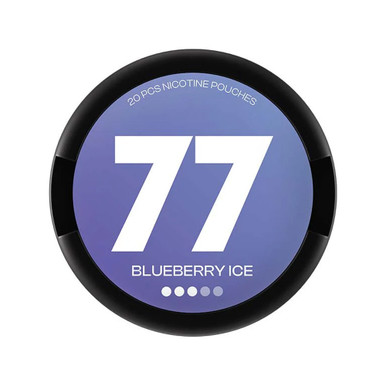
More strong pouches
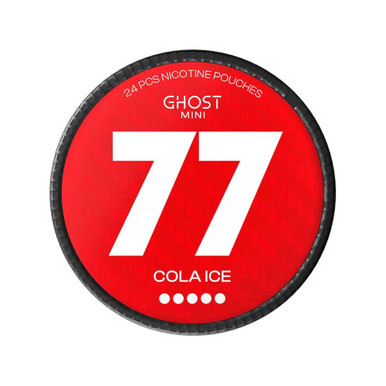
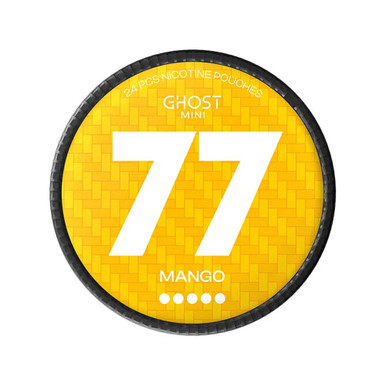
More 77 pouches
Where this sits
77 Ghost Original Mini Nicotine Pouches appears in these categories. Browse them, or jump to something close.
You might also like