77 · 20mg
Read the full guide
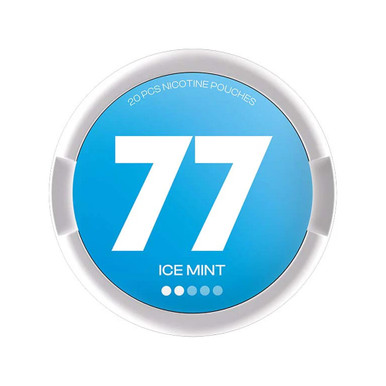
77 VB Edition Mini Arctic Mint Nicotine Pouches
£39.90
✔ In stock — ready to ship
100% tobacco-free
Free over £20
Same-day dispatch
Secure checkout
77 VB Edition Mini Arctic Mint Nicotine Pouches, priced £39.90, one declared strength of 20mg, in stock as we write this. One flavour tag: mint. Brand: 77. Manufacturer's product name: VB Edition Mini Arctic Mint.
Those are the facts. Below them sits a page that is mostly about one thing — what this format is actually like to use, hour by hour, which is the question we are asked more than any other and the one that product listings tend to skip past in a sentence. After that there is a long comparison against the other cans sharing our Strong shelf, a look at the near-identical berry version of this can, and a set of honest refusals where our information stops.
The full guide to 77 VB Edition Mini Arctic Mint Nicotine Pouches
5,053 words on how it eats, who it suits, how to serve it and what to put beside it.
The listing, stated plainly
There is one structural thing worth saying at the outset, because it explains the shape of this page. This can and the Arctic Berry version are, in every field we hold, the same product with one difference: the flavour tags. Same brand, same series, same Mini designation, same 20mg declaration, same £39.90. We are not going to manufacture differences between them that our data does not support. What we will do instead is give each page the work its own subject deserves — and on this one, that means the format and the mint shelf.
Standard and necessary note first: age-restricted nicotine product, sold to adults who already use nicotine. Full wording at the foot of the page.
Arctic Mint, as taste and as smell
Our flavour data gives this can a single tag, and that tag is mint. No fruit behind it, no spice across it, nothing layered over it. Whatever else can be said, this is a mint can and nothing else, which on a shelf as crowded as ours is itself a piece of information.
The word that does the remaining work is Arctic. Mint is not one flavour but a spread of them, and the two ends of that spread are quite far apart. At one end there is the leafy, herbal, almost grassy character — spearmint territory, sweeter, softer, closer to the plant. At the other there is the cold end, where the sensation of temperature is as prominent as the taste, and where a pouch reads less like a herb and more like a frost. A name containing Arctic is pointing at that second end, and it is a consistent enough convention across the shelf to be useful.
As aroma, cold mint carries. Take the lid off a can of this type and it reaches you before you have got a pouch out, which is not true of every flavour — a soft fruit note often needs the can right under your nose. As taste, the cold arrives early and the minty character sits with it rather than behind it. There is a sweetness in the sense that mint flavourings generally have one, but it is not a confectionery sweetness and it does not sit on top as a separate layer the way a fruit note would.
We should be clear about the limit of that description. We are describing a flavour family and the convention its name belongs to. We are not measuring this particular can, because flavour intensity is not a specification we hold for any product on this site, and a claim about how cold this one is relative to another would be invention dressed up as detail. Our mint shelf runs to 148 products and they do not all taste alike; where exactly this one falls among them is something you find out by trying it.
The vocabulary printed on mint cans
Since this can's name leans entirely on one descriptive word, it is worth spending a paragraph or two on how that vocabulary works across the shelf — because once you can read it, browsing 148 mints becomes a great deal less arbitrary.
Manufacturers reach for a small and fairly consistent set of words. Spearmint and menthol name particular characters and are the most literal of them. Cool and cold are the general-purpose signals for the chilled end, used by most makers in roughly the same way — the Clew can and the Denssi one, both at £39.90, are examples of each word doing exactly that job. Ice tends to be appended to something else rather than standing alone, which is why it usually turns up attached to a fruit or, as in the Ice Cool can from Cuba Ninja, doubled up with another cold word.
Then there is the more figurative tier: Arctic, Frosty, Avalanche, Storm. These are pointing at the same cold end but reaching for imagery to do it, and our shelves carry several — the Avalanche Mint can at £36.90, the Cool Storm listing at £29.90, the Frosty Mint can at £4.49. This product's own name sits squarely in that tier.
And running against all of them, a small counter-vocabulary for the other direction entirely: fiery, hot, warm. The Fumi can at £27.90 is the example on our shelves, and it is a useful reminder that mint is not automatically cold. It is a flavour family broad enough to run in two opposite directions, and a name is the only signal you get before opening a can.
Now the important limitation, and it is a real one. This vocabulary is descriptive marketing language, not a graded scale. There is no agreed order in which Arctic outranks Frosty, or Avalanche outranks Storm. No standards body defines any of it, makers use the words at their own discretion, and we hold no intensity data that would let us rank them even informally. So the honest use of this vocabulary is as a rough direction-finder — it will reliably tell you cold from warm, and almost nothing more precise than that. Anyone telling you one of these words means a specific degree of anything is reading more into a label than the label contains.
The format, minute by minute
This is the substance of the page. Almost every question we get from people who have not used pouches for long is really a question about time — what happens at the start, what happens in the middle, and how you know when it is over. So that is how this section is arranged.
Getting one out
The can opens one-handed once you have the knack, and most people do it without looking after the first week. Thumb under the lip of the lid, lift, and the lid comes clear. The unused pouches sit flat in a ring around the inside, so a finger goes in at the edge rather than the centre. Lid back on straight afterwards — before anything else, not after you have put the pouch in your mouth — because an open can in a hand is a can that gets knocked.
The first minute
The pouch goes between lip and gum. Under the top lip is the common position; the lower lip works and some people prefer it. You place it with a finger, let the lip close over it, and that is the whole operation.
The first minute is when a new pouch feels most like an object in your mouth. There is a physical presence to it that people notice more at the start than later, partly because it is genuinely there and partly because attention is on it. Flavour comes through in this first stretch — with a cold mint, usually quickly, since cold notes tend to be the first thing any pouch gives you.
If the position is wrong you will know quickly, and adjusting it is a matter of moving it with the tongue. People do this constantly and without thinking. There is no correct position and no reason to persist with an uncomfortable one.
Where it settles
After the first few minutes the pouch stops registering as an object and becomes background. It sits in the fold where you put it, held by the lip, and it stays there through talking and moving about. Most people settle into one habitual position and stop making a decision about it.
Eating and drinking with one in are both physically possible. Whether they are pleasant is personal, and a cold mint in particular is a flavour that many people would rather not have sitting behind a meal, so taking one out before eating is a common habit rather than a rule.
The long middle
The middle stretch is the least eventful and the longest. The flavour is steady for a while and then begins to thin — not suddenly, and not in a way you can put a moment on. It is the same gradual retreat you get from chewing gum: at some point you notice that the taste you put it in for is mostly gone, and you realise it went some minutes ago.
How long that stretch runs varies enormously between people, and that variation is the reason we do not publish a figure. Some take a pouch out after five minutes. Some leave one in for the better part of an hour. An average of those two would describe nobody, and a number printed on a shop page reads like an instruction whether or not it was meant as one. The manufacturer's own usage guidance is printed on the can and it takes precedence over any general description here.
Knowing when it is done
There is no signal and no timer. The thing people actually go by is flavour: when the taste has gone, the pouch has done what it was put in for. Some go by the physical sense of it instead, and take one out when it starts to register as an object again.
Neither is a rule. It is worth saying directly that nothing about the format requires you to leave a pouch in for any length of time at all, and that taking one out early is not doing it wrong.
Taking it out, and what happens to it
Out with a finger, into the catch compartment under the lid or into a bin. The compartment exists so that a used pouch has somewhere to go when there is no bin nearby, and it keeps used and unused physically separate, which is the whole point of it. It fills faster than people expect; empty it before it stops the lid seating flat.
Used pouches go in general waste. Not a sink, not a drain, not out of a window. The can is plastic and whether your council accepts that plastic at the kerbside is a local question we cannot answer for your address.
What the Mini designation changes
Here we have to stop short. Mini is the manufacturer's designation for this run of cans, and it plainly indicates a smaller format, but we hold no dimensions for the can and none for the pouches inside it. We are not going to tell you how many millimetres anything is, how a mini portion sits differently in the lip, or whether it feels less present than a regular one — those are precisely the claims that would need measurements behind them, and we have none.
What can be said without invention: a smaller tin is a smaller thing to carry, which matters in a shirt pocket and not much anywhere else; every pouch within a given can is the same as every other, so the first one tells you what the rest are like; and the can itself carries the printed detail. That is the extent of it, and we would rather stop there than write a paragraph that sounds more informed than we are.
20mg: what the number is and is not
One declared figure applies to this listing: 20mg. It is what the manufacturer states for each pouch, it is printed on the can, and we reproduce it exactly as supplied. It is a label figure and this section explains it rather than advising on it.
The figure determines which of our shelves the can lives on. We sort by declared number into three bands so that the catalogue can be browsed by that number: medium, strong, and extra strong. This can sits in the middle of those three. That is a filing outcome, arrived at arithmetically, and it carries no opinion about the product.
Two things follow, and both are information rather than guidance. The first is that declared figures do not travel between brands. Makers declare in their own ways, against their own formats, and two cans showing similar numbers are not for that reason equivalent. We publish each maker's declaration unchanged, we do not convert between them, and we do not hold the technical detail that would allow anyone to do so honestly.
The second is more important and we will put it bluntly: a bigger number is not a better can. Our bands sort; they do not rank. Nothing on this page suggests that anyone should be looking at a higher figure than they already use, and we have no view whatever on which band a given person should browse. That is not us being coy — it is that the question is not one a shop can answer.
We also will not tell you what 20mg will be like. Not because it is a secret but because we have no way of knowing, and any sentence that appeared to answer it would be a claim about your experience that we cannot support.
The Strong shelf: how this can sits among its neighbours
The more useful comparison is not against the whole catalogue but against the cans we shelve alongside this one. The Strong band holds 132 products. Here is how this can relates to the ones nearest it, and — importantly — what kind of comparison we are in a position to make.
A caveat that has to come first. Each of the cans below carries its own declared figure, published on its own listing, and we are not going to reproduce other products' numbers on this page. Shelf membership tells you they fall in the same band we have defined; it does not tell you their figures are identical to this one's, and treating a shelf as a promise of equivalence would be a misreading. What we can compare confidently is brand, flavour direction and price, and those are three genuinely useful axes.
| Can | Price | Flavour direction |
|---|---|---|
| Clew Cool Mint | £39.90 | Cool mint, the closest direct parallel at this can's exact price |
| Denssi Cold Mint | £39.90 | Also the cold end of mint, also matching on price |
| Cuba Ninja Ice Cool | £39.90 | Iced mint from a much larger brand range |
| Klint Avalanche Mint | £36.90 | Cold mint, marginally below this can on price |
| Elf Bar Cool Storm | £29.90 | Cool mint under a name most people already recognise |
| Fumi Fiery Mint | £27.90 | Mint taken warm rather than cold — the opposite direction |
| Edge Mint | £14.95 | Plain mint, and the cheapest straightforward mint here |
| Nordic Spirit Max Frosty Mint | £4.49 | Frosty mint at the lowest listed price in this group |
| Killa Banana Ice | £33.50 | Not a mint at all — an iced fruit, for contrast |
Read across that table and two things stand out. The first is the price spread: £4.49 to £39.90 for cans we file in the same band. That gap is about what each listing contains rather than about one product being nine times the thing another is, and the buying section below returns to it. The second is how many different things the word mint is doing. Fumi's fiery version and the frosty Nordic Spirit can are both mints and are pointing in opposite directions; this can is at the frosty end with the second of those rather than the first.
If you are trying to work out where to go next from here, the useful move is usually sideways on flavour direction rather than up or down on price. Somebody who gets on with a cold mint generally gets on with another cold mint, whoever makes it.
The two Mini cans, side by side
We stock this can and 77 VB Edition Mini Arctic Berry, and the relationship between them is worth setting out because it is unusually clean.
Identical: brand, series, Mini format designation, declared figure of 20mg, price at £39.90, shelf band, and stock position. Different: the flavour tags. This can carries mint alone. The berry version carries mint and berry, which places it on two flavour shelves rather than one and puts a fruit note under the cold.
That is the entire difference as our data records it. It makes the choice between them a flavour question and nothing else, which is a rarer thing than it sounds — usually a decision between two cans involves trading off price or format or declared figure as well. Here it does not. If you want the cold without fruit, this one; if you want a berry under the cold, that one.
What we cannot tell you is whether the mint character is identical in the two cans with the berry simply added on top, or whether the mint itself is built differently in each. That is a formulation question, we hold nothing on it, and guessing would be exactly the sort of invented detail these pages avoid.
The rest of what 77 make
The 77 brand page gathers 29 products, and the ones nearest this can are all listed at £39.90. The range covers a good spread of directions:
- 77 Apple Mint — the brand's other mint-plus-fruit pairing, with an orchard fruit rather than a berry sitting under it.
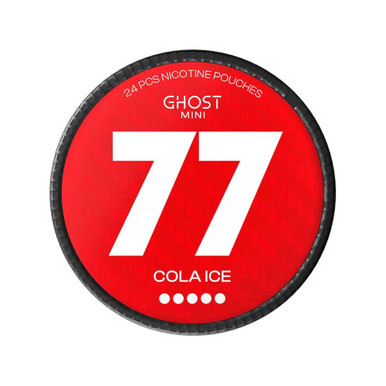
- 77 Cola Ice — the cold note applied to a soft-drink character instead of a mint one.
- 77 Cola Vanilla — the same cola family without the cold, rounded with vanilla.
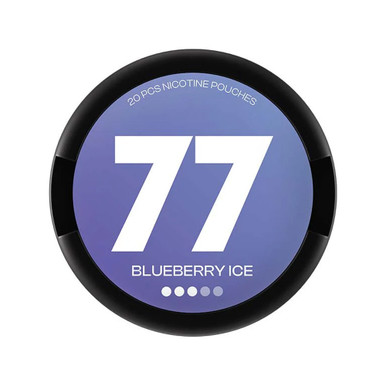
- 77 Forest Fruits — dark mixed berry, the furthest from this can in character of the six.
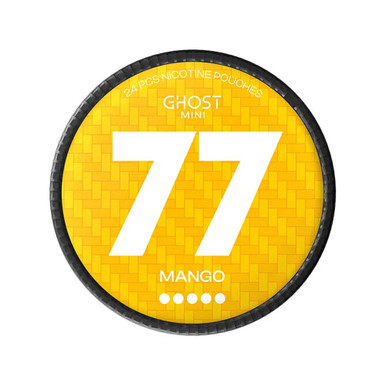
- 77 Ghost Mini Mango — tropical fruit, and a mini-format can, so it matches this one on format rather than flavour.
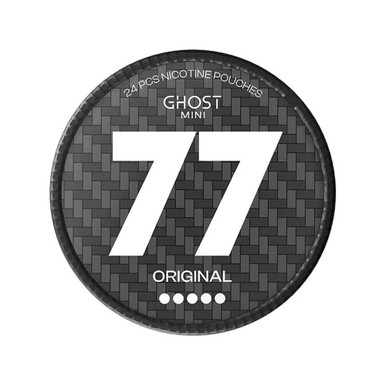
- 77 Ghost Original Mini — the plain member of that Ghost Mini line and the brand's other mini-designated listing.
For anyone shopping on format rather than flavour, those last two are the ones to look at: along with the berry version of this can, they are the mini-designated products we hold from this brand.
What people keep next to it
Mint is the flavour people are likeliest to keep as a constant and rotate other things around, which makes this can a reasonable fixture and the variety a question of what joins it. In practice the second can is usually one of three things.
Another mint, in a different direction — the Fumi can at £27.90 if you want mint that goes warm rather than cold, or Edge Mint at £14.95 for something plainer and considerably cheaper to keep as a spare.
A fruit, for contrast — Killa Banana Ice at £33.50 keeps the cold but changes the fruit entirely, while the Forest Fruits can from this same brand drops the cold and goes dark and sweet instead.
Or the same flavour direction from a different maker, which is what people do when they are working out whose cans they prefer — Clew Cool Mint and Denssi Cold Mint at £39.90 each, or Klint Avalanche Mint at £36.90, are all aimed at the same cold-mint territory as this one.
That is a description of what people do, not a suggestion that you buy three cans instead of one.
Keeping a can right
The single biggest factor is the lid. Pressed home and flat, the can is a sealed container and the contents hold; left off or seated badly, it is not, and the flavour thins over days rather than weeks. Cold mint is arguably the flavour where you notice this fastest, since the cold note is the volatile part and the part that carries.
Heat and light are the other two. A drawer, a cupboard, a bag, a bedside table — all fine. A windowsill in summer, a parcel shelf in a car, the top of a radiator — not fine, and easily avoided once considered.
Fridge storage is a widespread habit among pouch users and does nothing bad. Whether you would notice any difference is disputed and we will not pretend to settle it. If you do, keep the can closed, and keep it clear of anything you would rather did not taste faintly of mint.
Keep cans deliberately out of reach of children and animals. This is the line in this section that is not about flavour: a small bright tin with a lift-off lid is an attractive object to exactly the people who should not have one, and storing it somewhere considered rather than somewhere convenient is the whole of the answer.
Beyond that: empty the used-pouch chamber regularly, check the date on the can, and keep pouches in the can they arrived in.
One variant, and what is actually left to decide
This listing offers 20mg at £39.90 and nothing else. No second strength, no size options, no multipack in our records. So the decisions around it are external to the listing: whether cold mint is what you want, and what sits beside it.
We do not hold a pouch count for the can, and the cans-per-pack field is empty, so we cannot tell you what quantity £39.90 buys. We are not going to infer it from the price. The listing page and its product image are the place to check that before ordering, and asking us beforehand is better than guessing.
If it is a different declared figure you are after rather than a different flavour, the route is the band shelves rather than this page — the extra strong band and the medium band sit either side of this one. They are navigation, and which you browse is your decision alone.
Ordering, delivery and the age check
Sales are to adults in the UK aged 18 or over who already use nicotine. Verification applies at checkout and ID may be requested on delivery; a courier can decline to hand over a parcel if it is not produced. We will not knowingly supply anyone under 18, or anyone ordering on behalf of someone under 18.
About the price spread across our shelves, since this page has quoted figures from £4.49 to £39.90: those differences are driven by what sits inside a listing, not by one can being a fundamentally more valuable object than another. Read what a listing contains before you read across between two prices, and be particularly careful where — as here — we do not hold a quantity to publish.
Delivery costs, carriers and timings appear at checkout against your real basket and address. We deliberately do not quote timescales in product copy, because copy does not get rewritten when a carrier changes its schedule.
Where to go from this page
By flavour: the mint listing holds all 148 mints in one view and is the fastest route if mint is what you are browsing on. By brand: the 77 listing for this maker, or two of the larger ranges elsewhere on the site, the Pablo page and the Cuba page. By declared figure: the three band shelves. Or the whole catalogue if you would rather see everything and narrow it down yourself.
Most people settle on one of those routes and stay with it. Flavour-first suits anyone who knows what they like the taste of; brand-first suits anyone who has found a maker whose cans they get on with; band-first suits anyone shopping on the printed number.
Questions we get asked
Is this the same as the Arctic Berry Mini?
In every field we hold except one, yes: same brand, same series, same Mini designation, same 20mg, same £39.90, same shelf. The difference is the flavour tagging — this can is tagged mint only, the berry version is tagged mint and berry. Whether the underlying mint character is identical in both is a formulation question we hold nothing on and will not guess at.
How long does a pouch last?
We do not publish a time, because the honest range across people runs from a few minutes to the better part of an hour and an average would describe nobody. What generally ends it is the flavour thinning out. The usage guidance the manufacturer prints on the can is the guidance that applies, and it comes before anything general written here.
What does Arctic mean on the label?
It points at the cold end of mint rather than the herbal, leafy end — a real distinction in how pouch flavours are built and a fairly consistent naming convention across the shelf. It is not a measured scale and we cannot tell you how this can compares in coldness to another one, because flavour intensity is not a specification we hold.
How many pouches come in a can?
We do not hold that number, and the cans-per-pack field for this listing is empty too, so we cannot tell you what quantity the £39.90 covers. The count is printed on the can by the manufacturer. Check the listing page and the product photograph, and contact us if it is still unclear rather than assuming.
Is 20mg strong?
It is a declared figure, and on our shelves it falls in the band we label Strong. That is a sorting decision about a number rather than a description of what it will be like, and we cannot tell you how it will read for you — that would be advice, and giving it is not something a retailer should do. The number is printed on the can and we publish it exactly as given.
Can I put a pouch in and forget about it?
People do leave one in for long stretches, and after the first few minutes it generally stops registering as an object. But the format does not require any particular duration, and there is no timer and no signal. Follow the manufacturer's printed guidance on the can; beyond that, taking one out whenever you want to is not doing anything wrong.
Why is this can more expensive than a mint at £4.49?
Because the listings contain different things, not because one is intrinsically nine times the other. We do not hold quantities for this listing, which is exactly why we keep saying to check the listing page before comparing prices across products. A price is only comparable once you know what each one buys.
Does it fit in a shirt pocket?
Probably, given the Mini designation, but we hold no dimensions for the can and are not going to state a size we cannot evidence. The round pouch tin is close to a standard and fits coat pockets, jeans pockets and bags without difficulty; the shirt-pocket question is the one where a smaller can genuinely matters and the one we cannot answer precisely.
What does VB Edition mean?
It is the manufacturer's own series name for a run of cans within the 77 line. We have not been given an expansion of the initials and we are not going to invent one. The manufacturer is the source for that; from our side it is simply a series label that appears on the lid and in the product name.
Can I use one and have a coffee at the same time?
Physically there is nothing stopping you and plenty of people do. Whether a cold mint sitting behind a hot drink is pleasant is a matter of taste and many people would say not. There is no rule about it in either direction and nothing here is guidance about when to use one.
Is it available now?
Our records show it in stock as this page was written. Stock changes, so the listing itself is the live answer — this paragraph is a snapshot and the add-to-basket state on the page is not.
Which position in the mouth is the right one?
There is no right one. Under the top lip is what most people settle on, the lower lip works perfectly well, and either side is as good as the middle. People move a pouch about with the tongue while it is in and think nothing of it. If a position is uncomfortable, changing it or taking the pouch out are both reasonable responses, and persisting is not required by anything about the format.
Why do some of these cans have "Max" or "Extra Strong" in the name?
Because those are manufacturers' naming words, chosen at their own discretion, rather than points on a regulated scale. Our own band shelves are a separate thing — we sort by the declared milligram figure so the catalogue can be browsed by number. A can can carry a strength word in its name and sit in a different band of ours without either being wrong. The figure on the lid is the thing to read.
Do you know where it is manufactured?
No. We hold no origin information for this product and we are not going to name a country we cannot verify. The can carries the manufacturer's own details, which is the reliable place to read them, and the same applies to company background, production and anything else outside the small set of facts we publish.
Compliance
This product is sold only to adults aged 18 or over who already use nicotine. Age verification applies when ordering and ID may be requested on delivery; where it cannot be produced, the parcel may not be handed over.
Nicotine is an addictive substance. That is set out plainly here, as it is on every nicotine listing we publish, because it is the single most important thing to know about what is in the can.
This is not a licensed stop-smoking medicine and is not offered as one. It is not intended for non-smokers, for anyone who does not already use nicotine, for under-18s, or for anyone pregnant or breastfeeding. No health, medical or therapeutic claim is made about this product on this page, in any direction, and nothing above should be read as one.
Store cans out of reach of children and pets. Medical questions about nicotine belong with a qualified professional; a retailer is not equipped to answer them and we will not try to.
To finish
A single-variant mint can at 20mg and £39.90, mini-designated by its maker, tagged mint and nothing else, sitting in our Strong band among 131 other products. We hold no dimensions, no pouch count and no pack count, and this page says so rather than working around it. For the fruit version of the same can, the Arctic Berry Mini is a click away at the same price; for the wider field of mints, the mint shelf is where the rest of them are.
More from 77
More strong pouches
More mint pouches
Where this sits
77 VB Edition Mini Arctic Mint Nicotine Pouches appears in these categories. Browse them, or jump to something close.
You might also like