Home / Medium Strength / 77 Cola Vanilla Nicotine Pouches
77 · 5.2mg–10.4mg
Read the full guide
77 Cola Vanilla Nicotine Pouches
£39.90
✔ In stock — ready to ship
100% tobacco-free
Free over £20
Same-day dispatch
Secure checkout
77 Cola Vanilla Nicotine Pouches are listed at £39.90 in two declared strengths, 5.2mg and 10.4mg, with no price difference between them. Availability is showing as in stock while this is being written. Our flavour record for the product carries two entries, cola and coffee, which is worth flagging immediately because the product name says something else — more on that below, since it is the most interesting honest thing about this can.
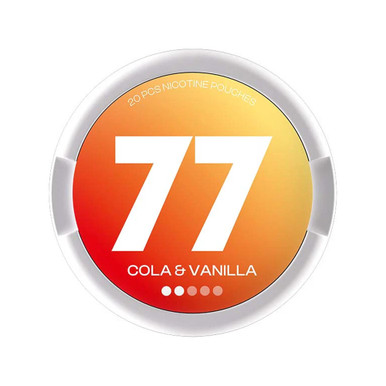
The packaging is a standard round pouch tin, the shallow cylinder shape used across nearly every brand we carry. A lid lifts off and presses back down, and it is printed with the brand, the flavour name and the strength figure. There is nothing unusual in the construction and no clever feature to describe. What there is, and what we will come to at some length, is a compartment under the lid for used pouches, which is a small piece of design that gets more use than people expect when they first buy one.
The full guide to 77 Cola Vanilla Nicotine Pouches
4,912 words on how it eats, who it suits, how to serve it and what to put beside it.
77 Cola Vanilla, and what the listing actually covers
We hold no pouch count for this listing and no cans-per-pack figure. Neither is a detail we are prepared to estimate: the printed tin carries whatever quantity information the manufacturer has chosen to declare, and it is the authoritative place to read it. We also hold nothing about the weight of a pouch, the dimensions of the tin, the date markings or any other printed detail. If a fact is not in the short list at the top of this section, it is not a fact we have.
Before the rest of the page: this is a nicotine product, restricted to adults of 18 or over who already use nicotine. Everything on this page is written on that assumption, and the compliance section at the bottom sets the position out in full.
The format itself, at some length
Most of what people want to know about a pouch they have not used before is not about the flavour at all — it is about the object and what having one in involves. Since this listing is in a format that varies less between brands than anything else about them, a proper description of it is more useful than another paragraph of tasting notes.
Portion size, and what a slim pouch actually is
A pouch of this kind is a small sealed sachet, roughly the footprint of a piece of chewing gum folded once, flat rather than round in cross-section. The trade calls this general shape a slim portion, as against the fatter, shorter portion some older products used. Slim is now the default across most of the shelves here, which is why a can from one brand generally feels much like a can from another in the hand even when nothing else about them matches.
We do not publish a weight or a measured dimension for the pouches in this tin, because our record does not carry either. What we can say is that this is a standard-format product rather than a mini one — 77 runs a separate mini line under the Ghost name, and the two are visibly different objects. If a physically smaller pouch is what you are after, the Ghost Original Mini listing and the mango can from the same mini line are where that sits in this brand, both at £39.90.
How it sits once it is in
The pouch goes between the lip and the gum, most commonly under the top lip toward the front, and the lip holds it there. It is not chewed. It is not sucked in any deliberate way. It is not swallowed, and if one is swallowed by accident there is nothing to do about it but not repeat the exercise. Once it is placed, it stays where it was put until it is moved, and moving it from one side of the mouth to the other is straightforward with the tongue.
There is an adjustment period with any new can, and it is usually about position rather than product. A pouch sitting too far back feels intrusive; one sitting too far forward pushes at the lip. Most people find a spot within the first few uses and then never think about it again. If a particular pouch is uncomfortable in every position you try, the sensible response is to take it out — there is no skill being developed and no benefit to persevering.
Ordinary activity carries on around it. Talking is unaffected after the first minute or two. Drinking is possible, though a large mouthful of anything will make the pouch's presence obvious and may shift it. Eating with one in is possible and is something few people bother with. None of this is instruction, simply a description of the practical envelope.
How long people keep one in
This is the single most-asked question about the format and the one where a shop has to be careful. There is no duration we are going to put forward as correct, recommended or typical-for-you, because that would be advice about use rather than a description of a product. What can be said factually is that habits vary enormously between individuals, that flavour is most pronounced in the early part and tapers from there, and that the fading of flavour is the cue most people describe using.
The practical consequence for a buyer is about rotation rather than timing. Somebody who keeps a pouch in for a short spell will work through a tin at a very different rate from somebody who does not, which means the same can represents a different number of days to two different people. That is why we cannot tell you how long a £39.90 purchase will last you, even in the loosest terms, and why anyone who quotes you a figure is quoting their own habit rather than yours.
Carrying a tin about
The round tin is designed to be carried, and it survives a pocket well enough, but two practical points are worth making because they are the ones that come up. A lid that has been sat on, dropped on a hard floor or levered open with a key can stop seating flush, and a tin that no longer closes properly is a tin that will dry out however carefully you treat it afterwards. If that happens, the sensible response is to work through that can rather than keep it in reserve.
The second point is that a tin in a trouser pocket spends its day at body temperature, which is warmer than a drawer. That is not a problem over an afternoon and it is not something to worry about; over weeks of being carried and never quite finished, it is one of the quieter reasons a can at the bottom of a bag is not as good as the one you opened last week. The cans you are not currently using are better off somewhere cool and still.
The catch lid and what happens afterwards
The compartment in the lid exists so that a finished pouch has somewhere to go that is neither a pocket nor a car door pocket nor a windowsill. It holds a few, and it is emptied into a bin at the first convenient moment. Leaving used pouches in it for days is not dangerous but it is unpleasant, and it will affect what the tin smells of when you open it next.
Used pouches go into household waste. They do not go down a sink, a drain or a lavatory under any circumstances. The empty tin itself goes into household waste too unless your local authority has something specific to say about the material, which is a question for them; we do not publish recycling guidance because we are not the people qualified to write it.
Cola, coffee and a name that says vanilla
Here is the honest oddity of this listing. The product is called Cola Vanilla. The flavour record we hold files it under cola and coffee. Those two things do not match, and rather than quietly pick whichever one makes for easier copy, it is better to set both in front of you and explain which is which.
The name is the manufacturer's. It is what is printed on the lid and it is what the brand has decided to call the flavour. The record is ours — it is how the product is filed in our catalogue, which determines which shelves it appears on when you browse by flavour. So this can appears on the cola shelf alongside sixteen other listings, and on the much smaller coffee shelf, which carries nine products in total. The word vanilla appears on neither, because we have no vanilla filing for it.
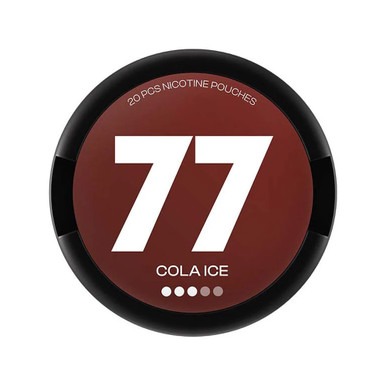
What can be described as taste, staying strictly within what those records support: the base is a cola flavouring, which is the sweet, faintly spiced, mildly citrus-edged compound that every cola drink shares. Over or behind that sits something in the darker, rounder, more roasted direction — which is the family the coffee filing points at, and which is also, not coincidentally, the direction a vanilla note tends to pull a sweet flavour. Soft and dark rather than sharp and cold. Where the Cola Ice can from the same brand puts a cooling note across the same base, this one appears to go the other way and deepen it.
What we are not going to do is tell you that it tastes of vanilla, because our record does not say so, or that it tastes of coffee in the way a cup of coffee does, because a filing category is not a tasting note. The aroma from an open tin runs in the same direction as the flavour — sweet first, with something darker behind it. Beyond that, the can is the authority and your own palate is the arbiter.
It is also worth saying what a cola flavouring is not, since the name invites an assumption. It is not a reproduction of any particular branded drink, and no pouch on this site claims to be. Cola as a flavour category is a family — a broadly similar arrangement of sweet, spiced and citrus notes that different manufacturers arrive at by different routes and in different proportions. Two cans both filed under cola can be markedly unlike each other while both being entirely recognisable as cola, which is why the seventeen listings on that shelf are worth treating as seventeen separate propositions rather than one flavour repeated.
What 5.2mg and 10.4mg mean as printed figures
Two strengths are declared for this product and both cost the same. The figures are the manufacturer's own declaration per pouch, reproduced by us without adjustment. We do not round them, recalculate them or translate them into another brand's convention, which is why the catalogue contains figures as tidy as 6mg and as specific as 10.4mg sitting side by side.
What the pair gives you here is a genuine choice within one flavour, which is less common than it sounds. Plenty of listings on this site exist in one strength only, and the alternative to the declared figure is a different can entirely. Here the flavour is held constant and only the number changes, at the same £39.90. If you already know which figure suits you, this listing lets you have the flavour at it.
What the figure does not do is support a comparison across brands. The declared number sits alongside pouch size, moisture and flavour balance, none of which appear in it and none of which we hold data on, so two cans printing the same milligrams are not thereby equivalent. Nor does it say anything about you. We do not know what you use or what you are accustomed to, we will not guess, and we will not tell you which of the two figures on this listing to choose. Both are on the page; the choice is not ours to make.
For navigation the bands are more reliable than the numbers. This product is filed in the medium band, which holds 135 listings, and the two bands above it are the strong shelf at 132 listings and then the extra strong shelf. Those bands are applied by us on a consistent basis across every brand, which is exactly what the printed figures are not.
Cans to keep alongside it
A dark, sweet flavour is one that most people find they want to break up rather than run continuously, so the question of what else is in the drawer is a real one. Each of the following is a can we stock, with the specific reason it is relevant.
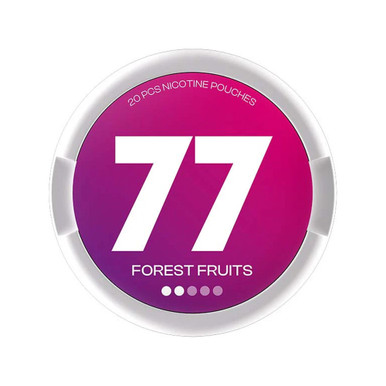
Within 77, the obvious companion is 77 Ice Mint, which is as far from a dark cola as the brand's own range goes and costs the same £39.90. 77 Apple Mint is the sharper, fruitier version of that contrast, and 77 Forest Fruits takes it into dark berry without any mint entry on its record — a different sort of darkness from this one, sweet rather than roasted.
Outside the brand, the cola side of the catalogue is small enough to know in full. Cuba Black Cola at £39.90 is cola run plain, without a second flavour over it. XQS Cola Lime, also £39.90, puts a citrus across the base instead of anything dark. UBBS Cola Ice is the cheapest cola-named can we carry at £19.95, and Denssi Chaos Cola Energy Pouches at £39.90 is a cola-named listing from a different line altogether — read its own page rather than assuming it is the same kind of product as this one.
On the coffee side, the shelf is smaller still. Clew Coffee matches this can's price at £39.90 and is the closest thing we stock to a coffee flavour carried on its own. ZYN Coffee Mini at £19.99 does the same in a mini-format pouch and at half the price. Killa Cappuccino at £33.50 is the third coffee-family option and sits higher up our strength shelves than this one.
For a complete change of direction, Fumi Blackcurrant at £27.90 is sharp where this is soft, Klint Arctic Mint at £36.90 is cold where this is not, and Edge Spearmint at £14.95 is the least expensive way to have a plain mint sitting in the drawer as a counterweight.
How this compares with the other cans on the same shelf
The most genuinely useful comparison for anyone deciding between cans is not against the whole catalogue but against the products filed in the same place. This can sits in the medium band, and the medium band is the biggest we have — 135 listings — so the comparison has to be narrowed to be worth anything. Narrowing it by flavour family is the way to do that.
| Can | Price | What differs from this listing |
|---|---|---|
| 77 Cola Vanilla | £39.90 | Two declared strengths; cola and coffee on the record |
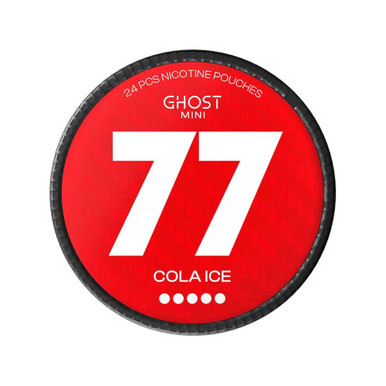
| 77 Cola Ice | £39.90 | One strength only; cola with mint rather than a dark note |
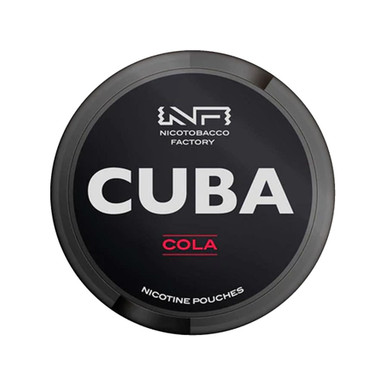
| Cuba Black Cola | £39.90 | Cola without a second flavour filed against it |
| XQS Cola Lime | £39.90 | Cola with citrus; same price, opposite treatment |
| UBBS Cola Ice | £19.95 | The cheapest cola-named can we stock |
| Clew Coffee | £39.90 | Coffee family without a cola base underneath |
Read across that table and a pattern shows up that is worth stating plainly: at £39.90 the price tells you nothing. Four of those six cans carry exactly the same figure and they are not variants of one another — different brands, different flavour records, different strength declarations. Price on this site reflects the brand and what a listing contains rather than any judgement from us, and we are not going to imply a ranking by arranging the shelf a particular way.
What does distinguish this listing from its shelf-mates is the pairing on its record. Cola is common enough in the catalogue to have its own shelf; coffee is rare, with only nine listings; the two filed against a single product is unusual. If you are choosing between cans and want the thing that is actually different about this one, that is it — not the price, which it shares with several, and not the format, which it shares with nearly everything.
One further comparison worth making is against the cheaper end. The ZYN coffee listing at £19.99 and the UBBS cola can at £19.95 are each roughly half the price of this one and are each the nearest thing to it on one of its two flavour axes. If the question is whether the 77 listing earns the difference, buying one of those first is the cheapest way to establish your own answer, and it is a better method than taking ours, which we are not going to offer.
Where it falls in the 77 range
The brand runs to 29 listings here, all collected on the 77 brand page. It is a broad range rather than a specialised one: mints of several kinds, a spread of fruits, a couple of teas, some confectionery-leaning flavours, the Ghost mini sub-line, and a set of special editions filed under their own names. Pricing across the brand is uniform at £39.90, which makes the range unusually easy to read — nothing in it is positioned above anything else by cost.
Within that, Cola Vanilla belongs to the small group of 77 cans built on a soft-drink base. Its immediate sibling is the Cola Ice listing, which takes the identical starting point in the opposite direction, and between them they cover both of the standard treatments a cola flavour gets. Having both in the house is the only way to find out how much of what you like is the base and how much is the treatment, and since they cost the same, the experiment is a clean one.
Storage, and keeping a tin in decent condition
Two things damage an opened can and neither is complicated. The first is leaving the lid off. Pouches lose moisture and never take it back, so a tin left open dries out, and a dried pouch is stiffer, sits differently and loses its flavour sooner. Closing the lid each time, including for the ten minutes until the next one, is the entire remedy.
The second is warmth. A can left in a vehicle in summer is the classic case, and dashboards are worse than glove compartments. Radiators, sunlit windowsills and the shelf above a cooker do the same thing more slowly. A cupboard, a drawer or any part of the house that stays at room temperature is all that is required, and nothing about a sealed tin demands a fridge.
A third factor, less often mentioned, is what else is in the same drawer. A tin is sealed rather than airtight in any laboratory sense, and a can stored for weeks next to something strongly scented will not be improved by the arrangement. A drawer with nothing much in it is a better place than a cupboard full of cleaning products, and that is the extent of the point — it is housekeeping rather than science, and it matters only over long stretches.
We do not publish a shelf life or an after-opening window for this product. Any date marking applied by the manufacturer is printed on the packaging and the can is the authority for it. For anyone keeping several flavours in rotation, the useful habit is to open one tin at a time and leave the spares sealed, because four open cans age together while one ages alone.
Choosing between the two strengths
Both declared figures on this listing, 5.2mg and 10.4mg, carry the same £39.90 price, so cost cannot guide the decision and we are not going to guide it either. What we can set out is the factual position. The flavour is the same in both. The format is the same in both. The only variable is the number the manufacturer prints.
If you have used other cans from this brand, the figure you got on with there is the most relevant comparison available to you, because at least the declaration convention is consistent within a single brand. If you have not, then a can from another brand printing a similar number is a much weaker guide, for the reasons set out higher up this page. We hold no cans-per-pack figure for either variant, so the listing page and basket line are the place to confirm what a given order contains before paying.
Where to find this again
Four filters lead here. The product sits on our cola listings, on the nine-product coffee shelf, on the brand page for 77, and in the 135-listing medium band. Combining two of those — a brand and a band, or a flavour and a band — usually narrows the catalogue to something you can read in one screen.
For wider browsing, the whole catalogue is the starting point, and among the larger brand pages the Cuba range and the Pablo range are both substantial enough to be worth going through on their own terms rather than arriving at through a flavour filter.
Questions people put to us about this listing
Why does the name say vanilla when the shelves say coffee?
Because the name belongs to the manufacturer and the filing belongs to us. The brand printed Cola Vanilla on the lid; our catalogue record for the product carries cola and coffee as its flavour entries, which is what determines the shelves it appears on. We publish both rather than quietly resolving the discrepancy in whichever direction reads better. The can is the authority for what the brand calls it, and our record is the authority for where it lives on this site.
Does it taste of vanilla?
We cannot tell you that, because our flavour record does not include vanilla and we only describe what we hold. What the record supports is a cola base with something darker and rounder against it. Whether that reads as vanilla to you, or as something else in the same general direction, is a judgement we are not in a position to make on your behalf. The lid carries the manufacturer's own flavour description and is the place that claim properly belongs.
Is 5.2mg exactly half of 10.4mg in practice?
Arithmetically the figures are in that ratio, and that is the whole of what can be said. The declared milligram figure does not capture pouch size, moisture or flavour balance, so it does not follow that one variant is experienced as precisely half the other. We publish the two numbers as the manufacturer declares them and we do not interpret the relationship between them. Anything beyond the arithmetic would be us guessing.
Do the two strengths cost different amounts?
No. Both are listed at £39.90, and that is consistent with how the brand is priced across its 29 listings on this site. It means the price cannot be used as a signal about which variant is which, and it means that choosing between them is purely a matter of the declared figure. Always read the basket line before paying, since the basket is the live record of what an order contains and a page is only a snapshot.
How many pouches are in a tin?
We do not hold that figure and will not estimate it. Our record carries no pouch count and no cans-per-pack value for this listing. The quantity information the manufacturer declares is printed on the packaging, and that is the authoritative source. Where you see a quantity stated on a product page on this site, it is because our record holds one; silence on a page like this one means the opposite.
Is the coffee note similar to the Clew or ZYN coffee cans?
They share a filing, not a recipe. The Clew listing at £39.90 carries coffee as its flavour without a cola base underneath it, and the ZYN mini at £19.99 does the same in a smaller pouch. This can has a cola base with the coffee filing against it, which is a different construction. Being on the same shelf means our catalogue groups them; it does not mean they taste alike, and we are not going to suggest they do.
Can I have one in while drinking something hot?
People do. A hot drink will make the pouch's presence more noticeable and may loosen its position, which is a comfort matter rather than anything else. Nothing about it is a problem we are aware of, and equally we are not going to encourage any particular combination — the honest position is that it is possible, some people do it, and it is entirely up to you.
Which of your cola cans is closest to this one?
By construction, the Cola Ice can from the same brand, since it shares the base, the brand, the price and the format and differs only in the treatment over the top. By flavour direction, nothing we stock is especially close, because a cola filed alongside coffee is unusual in our catalogue. The plain Cuba Black cola listing is the nearest thing to a neutral reference point if you want to taste the base on its own.
Do you know who makes it or where?
No, and we do not publish anything we cannot stand behind. We hold the brand, the product name, the price, the declared strengths, the flavour record and the stock position. There are no origin claims, founding dates or manufacturing details on this page because we do not have any. The packaging is the next place to look and, failing that, ask us — a straight answer of "we do not know" is better than a confident invention.
What happens at checkout because this is age-restricted?
An age check runs as part of the order and must be cleared before the order proceeds. On delivery, the courier may request ID, and if an adult cannot produce it where it is asked for, the parcel is not handed over and the delivery fails. There is nothing unusual or onerous about the process, but it is real rather than decorative, and having ID available on the delivery day avoids a second attempt.
If I do not like it, what are my options?
Our standard returns policy applies to this listing exactly as it does elsewhere on the site, and the detail of it lives on the policy page rather than here. Practically, the catalogue is built for moving sideways: the other sixteen cola listings give you different readings of the same base, and the full shop covers everything beyond that. Taste is personal and we would rather you found the right can than the one we happened to describe well.
Is the mini format a smaller version of this can?
Not of this product specifically. 77 runs its mini line under the Ghost name, and the two listings we carry from it are different flavours rather than smaller editions of the standard range. The Ghost Mini Mango can and the Ghost Original Mini are both £39.90, the same as this one. If a physically smaller pouch matters to you, those are the in-brand options; there is no mini version of Cola Vanilla in our catalogue.
Is stock reliable on this listing?
It is showing as available as this page is written, and that is a snapshot rather than a guarantee. Stock on this site tends to arrive and clear in whole deliveries rather than dwindling steadily, so a listing can go from available to sold out and back within a short window. The basket is the live position. If this one has gone, the rest of the brand's range is the quickest place to find something adjacent at the same price.
Do you sell it as a multi-can roll?
Our record carries no cans-per-pack value for this listing, so we cannot tell you from this page whether the £39.90 covers one tin or more than one. That is a real gap in what we hold rather than an evasion. The listing page and the basket state precisely what is included at the price shown, and those are the lines to read. Some products elsewhere in the catalogue do carry a stated pack quantity, and where they do, the page says so.
Compliance and the legal position
Nicotine is an addictive substance.
Sales of this product are restricted to adults aged 18 or over who are already nicotine users. We do not supply anyone under 18 under any circumstances. Age verification forms part of the checkout process, and ID may be requested on delivery — if it is asked for and no adult present can produce it, the courier will not release the parcel.
This product is not a licensed stop-smoking medicine, holds no such authorisation, and is not offered for that purpose. It is not intended for non-smokers, for anyone who does not already use nicotine, for anyone under 18, or for anyone pregnant or breastfeeding. No part of this page constitutes medical advice, and nothing written here should be taken as a reason for anyone to begin using nicotine or as a recommendation of a particular declared strength for a particular individual.
Store the product away from children and pets. Each factual statement made above — product name, brand, price, declared strengths, flavour record, stock position — is drawn from our catalogue record for this listing and from nowhere else. Where that record holds nothing, this page says so rather than filling the space. The manufacturer's own labelling on the can governs anything printed on the packaging.
To finish
Cola Vanilla is a £39.90 can from 77, offered in 5.2mg and 10.4mg at one price, in the standard slim format, with a cola base and a coffee filing against a name that says vanilla. That discrepancy is the most distinctive thing about the listing and we have left it visible rather than tidied it away.
If the dark side of a cola flavour is what interests you, this and the Forest Fruits can are the two places in the brand to look; if the cold side is, the Cola Ice listing is the direct counterpart at the same money. Everything we hold is set out above, and the gaps are marked as gaps.
More from 77
More medium strength pouches
More cola pouches
Where this sits
77 Cola Vanilla Nicotine Pouches appears in these categories. Browse them, or jump to something close.
You might also like