Home / Medium Strength / Fumi Blackcurrant Nicotine Pouches
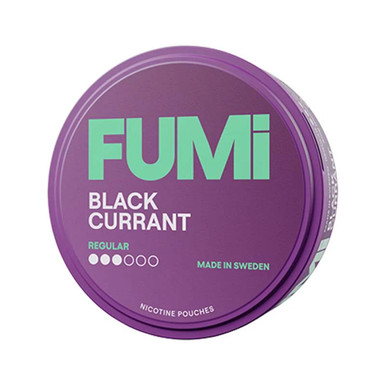
Fumi · 4mg–8mg · 10-can pack
Read the full guide
Fumi Blackcurrant Nicotine Pouches
£27.90
✔ In stock — ready to ship
100% tobacco-free
Free over £20
Same-day dispatch
Secure checkout
This page describes Fumi Blackcurrant Nicotine Pouches, sold as a pack of ten cans for £27.90, in two declared strengths — 4mg and 8mg — both at that same price. The flavour recorded against it is berry. Our system shows it in stock at the time of writing. That is the complete set of facts our product record holds for this listing, and every factual statement below comes from there.
Ten cans for £27.90 works out at £2.79 a can. That arithmetic is ours, not the manufacturer's, and it exists for one purpose: to make this listing comparable with the single-can products elsewhere on this site. The figure that matters at checkout is £27.90 for the box. We have not put a pouch count against it, because the per-can pouch count is not a field our record holds, and the printed can is where that is answered.
The full guide to Fumi Blackcurrant Nicotine Pouches
5,015 words on how it eats, who it suits, how to serve it and what to put beside it.
What is on this listing
Before going further: this is an age-restricted nicotine product for adults aged 18 or over who already use nicotine. Nicotine is an addictive substance. There is a full compliance section at the foot of this page. Nothing written here is intended to persuade anybody to consume anything — it is a description of a box, a flavour word, two numbers and a price, written for somebody who has already decided they are shopping.
Blackcurrant sits inside our berry grouping rather than having a shelf of its own. The berry shelf runs to 76 listings, which makes it one of the larger flavour groupings we keep — big enough that the filter alone will not narrow things much, which is most of the reason individual product pages like this one exist.
The pouch, as an object you handle
A nicotine pouch is a small sealed portion, soft, roughly the size and shape of a flattened jellybean. It is designed to sit tucked between the upper lip and the gum, where it stays put once settled. It is not chewed, not swallowed and not moved around the mouth. Settling one takes a moment; most people find a position they prefer and go back to it.
The can is the standard squat plastic cylinder — about the diameter of a large jar lid, a few coins deep, with a press-on friction lid rather than a screw thread. Most cans in this category, this one included by convention, carry a second shallow recess for used pouches. That recess is the most genuinely useful piece of design in the whole product category and the one customers notice last.
Disposal is short. A used pouch goes into the lid recess or straight into a bin. It is general waste. It does not go down a sink, a drain or a toilet, and it does not go on the ground. That is the whole of it, and it is the sentence most product descriptions leave out.
How long somebody keeps one in is a matter of personal habit and varies enormously between people. We do not hold usage data for this product and would not publish guidance on it if we did, because that is not a thing a shop should be advising on. The format behaves identically across essentially every brand we carry — whether you are holding this box, SYX Blueberry at £29.90 or Velo Strawberry Ice at £4.19, the object in your hand works the same way. What differs between listings is the flavour word, the declared figure, the pack arrangement and the price.
Blackcurrant, described as a taste
Blackcurrant is a distinctive position within the berry family and not interchangeable with the rest of it, which is worth saying because the filter groups them all together. What follows describes taste and aroma. It describes nothing else, and nothing else should be read into it.
Where it sits against the other berries
The berry shelf splits roughly into three readings. There is the red-berry reading — strawberry and raspberry — which is sweet, soft and floral at the edges. There is the blue-berry reading, which is rounder, jammier and much less acidic. And then there is blackcurrant, which is the darkest and sharpest of the three and behaves differently from both.
Blackcurrant carries a genuine tartness that strawberry does not have and blueberry actively avoids. It also carries a faintly green, almost leafy note underneath the fruit — the character that makes blackcurrant cordial recognisable at a distance from any other fruit squash. That leafy edge is what separates a blackcurrant reading from a generic dark-fruit one, and whether a given can includes it is the main thing that distinguishes a good blackcurrant from a vague one.
If you want to hear the contrast, the 77 strawberry listing at £39.90 is the soft red-berry pole and Cuba Black Blueberry at the same £39.90 is the round blue-berry pole. This can sits somewhere else entirely from both.
Sweetness and tartness together
A blackcurrant flavour has to hold two things at once. Too much sweetness and it collapses into a generic dark fruit; too much tartness and it stops reading as blackcurrant and starts reading as sour. The balance point is narrow and it is where the whole character of the flavour lives.
Our record tells us the word blackcurrant and the grouping berry. It does not tell us where Fumi has set that balance, and we are not going to invent a tasting note on a manufacturer's behalf. What we can do is tell you what the two possible readings would mean in practice. A sweeter setting would land near the Pablo Silver Edition blue raspberry listing at £39.90, which is a confectionery-style berry. A sharper setting would land closer to ZYN Blackcurrant Forest at £19.99, which names a darker, more forest-fruit reading in its own title.
Aroma on opening
Blackcurrant is a projecting smell. Lift the lid and it arrives quickly and spreads — it is one of the more assertive aromas on a berry shelf, less sugary than a strawberry can and more purple, for want of a better word. It does not linger the way a coffee or a liquorice aroma does; it is bright rather than heavy, and it clears.
Aroma and taste line up reasonably closely with this flavour family. Some fruit cans smell considerably sweeter than they taste. Blackcurrant tends to be honest on opening about what it is.
What happens as the flavour fades
Flavour in a pouch is at its most defined early and thins from there. With blackcurrant the sweetness generally goes first and the tart, slightly green edge holds on longer, so the taste narrows rather than simply getting quieter. That is the opposite of what happens with a cooling can, where the cool character usually outlasts the flavour it was attached to. Whether a narrowing taste is a flaw or a feature is a personal judgement and not ours to make.
Keeping a can in condition: air, heat and moisture
This section is longer than the equivalent on most product pages, for a practical reason. When you buy ten cans at once you are not buying a pocket item, you are buying an amount of stock that will sit somewhere for weeks. How and where it sits is the single biggest influence on what the last can is like compared with the first, and it is entirely within your control.
Air is the variable that matters most
Everything that changes a pouch over time comes back to air reaching it. A sealed can, lid pressed fully home, holds its condition well. A can with the lid sitting proud of the rim — the state a can ends up in when it has been closed in a hurry — is slowly exchanging air with the room, and the contents dry accordingly.
The practical test takes a second. Press the lid down until it stops and you feel it seat. A fresh can gives a firm, slightly resistant push. Over the life of a can that friction fit loosens a little, which is normal wear rather than a fault, but a loosened lid is exactly the state in which a can starts drying. A can that has loosened is still perfectly usable; it simply wants using rather than storing at the back of a cupboard for another two months.
Dry pouches and moist pouches behave differently in storage
Pouches are made in a range of moisture levels, and the difference is one of the more meaningful distinctions between products in this category. A drier pouch feels like a small firm cushion out of the can. A moister one feels softer and slightly heavier. They store differently: a drier pouch has less to lose and holds up better over a long period, while a moister one changes more noticeably as it dries and is more obviously worse for having been left open.
Our record does not specify which format this listing uses, so we are not going to state it. It is a real distinction and we would tell you if we held it. The manufacturer's packaging declares it, and it is visible the moment you open a can and handle one.
The storage consequence is straightforward either way. If your cans turn out to be on the moist side, the case for keeping them sealed and cool is stronger, because there is more to lose. If they are on the dry side, they are more forgiving of a loose lid. Neither changes the basic instruction, which is to close them properly.
Heat
Heat accelerates drying. A can on a car dashboard in summer, on a sunlit windowsill, or on top of a radiator will lose flavour definition faster than one in a drawer. This is not a safety point and nothing dramatic happens — the can you open in three weeks is simply flatter than it needed to be.
The fix costs nothing. A cupboard, a drawer, a bedside table, a bag that does not live in a car. Somewhere cool is better than somewhere warm, and somewhere dark is better than somewhere in direct sun. For a ten-can box in particular, the sensible arrangement is to keep the box itself somewhere stable and carry one can at a time, rather than letting the whole stock travel about with you.
Moisture in the wrong place
The used-pouch recess is the one part of the design that works against you if ignored. It holds damp material against the outside of a can you are still drawing fresh pouches from. Left for days it starts to smell, and a can stored on its side lets that dampness move about.
Two habits solve it completely. Empty the recess when you empty your pockets rather than when it is full. And store cans upright where you reasonably can — on their base, in a drawer, rather than rolling loose in a bag. Neither is difficult and both are the difference between a can that stays pleasant to open and one that does not.
The one can that travels
With a ten-can box there is always a working can and there is stock, and they live different lives. The working can goes into a pocket or a bag, gets opened several times a day, gets knocked about, and accumulates whatever ends up in the catch recess. The stock sits still in the dark. Treating them as the same thing is how people end up with nine cans in the state of the one they have been carrying.
The arrangement that works is the obvious one. Keep the box closed and somewhere stable — a drawer, a cupboard shelf, anywhere that is not warm and not in the sun — and take a single can out when the current one is finished rather than carrying two or three at a time. It costs no effort and it means the tenth can opens in roughly the condition the first one did.
The working can is also the one whose lid loosens, for the straightforward reason that it is the one being opened. If it has reached the point where the lid no longer seats firmly, that can is on a clock in a way the sealed ones are not, and the sensible response is to finish it rather than set it aside for a fortnight and start another.
What we do not hold on storage
We do not have a shelf-life or best-before figure for this product in our record. The printed can carries whatever dating the manufacturer declares, and that is the source to use. We are also not going to advise on refrigerating or freezing cans, because we hold no data on what that does to this product and anything we said would be invention. Where our record is blank, we say it is blank rather than filling the gap.
4mg and 8mg — reading the two numbers on this listing
This listing is recorded in two declared strengths, and both are £27.90 for the ten-can box.
| Declared strength | Price for the pack | Per can | Where it sits in our overall range |
|---|---|---|---|
| 4mg | £27.90 | £2.79 | Toward the lower end of the figures printed on cans we stock |
| 8mg | £27.90 | £2.79 | Still in the lower half of the printed range |
The milligram figure is a number the manufacturer prints on the can. It is a declared quantity and it is useful for one thing: ordering cans roughly against one another. A can marked 8mg is declared higher than one marked 4mg. That is the honest limit of what the number tells you.
What it does not do is translate into an experience — how a figure reads to a given person is individual and we have no way of knowing. Nor does it compare cleanly between brands, because different manufacturers arrive at their printed figures by different conventions and the numbers are not necessarily like for like. And it is not a recommendation. We stock a spread of figures because manufacturers produce a spread of figures.
On our own filters this listing sits on the Medium Strength shelf, which holds 135 listings. Those shelving names — Medium, Strong, Extra Strong — are our own browsing labels for a large catalogue. They are not a scale, an endorsement or a claim of any kind. The Strong grouping and the Extra Strong grouping sit above it if you want to see how the catalogue is distributed.
Moving between cans on our shelves
Very few people buy one listing and never look at another. Most work through a can, get curious, and try something adjacent. This section is about what actually changes when you move between products here — and, just as usefully, what does not.
What genuinely changes
Four things vary between listings on this site, and only four.
- The flavour word. The largest real difference and the one people notice first. Moving from blackcurrant to a mint reading is a change of category, not a variation.
- The declared figure. Manufacturers print different numbers, and the range across our catalogue is wide.
- The pack arrangement. Some listings are single cans, some are ten-can boxes like this one. This is the variable that most often catches people out.
- The price. Which follows the pack arrangement far more closely than it follows anything else.
The pack arrangement point deserves emphasis because it is where nearly every misreading of this catalogue starts. The Nordic Spirit blueberry listing shows £4.49 and this one shows £27.90, and someone scanning a grid would reasonably conclude one is six times the price of the other. They are not comparable numbers at all — they describe different quantities of product. The fix is dull and completely reliable: open both product pages and read what each contains before comparing anything.
What does not change
The format does not change. The object, the way it sits, the fact that it is not chewed or swallowed, the disposal — all identical across brands. Someone moving from the Clew blueberry box at £39.90 to this one is changing a flavour, a price and a declared figure, not learning a new format.
The can design does not meaningfully change either. Press-on lid, catch recess, same rough dimensions. Brands differ in the depth of the tin and the firmness of the lid fit, and those differences are visible side by side, but nobody has reinvented the container.
And the legal position does not change. Every listing on this site is 18+, age-verified at order, and ID may be requested on delivery, regardless of the declared figure on the can. A low declared number does not make a product less age-restricted.
The three sensible ways to move
If you are moving deliberately rather than at random, there are three clean approaches, and they answer different questions.
Hold the flavour, change the brand. This tells you how differently two manufacturers read the same word. Blackcurrant to the ZYN blackcurrant listing at £19.99 is the closest like-for-like available here and the most informative single comparison on this page.
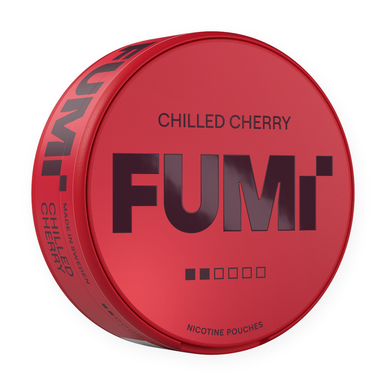
Hold the brand, change the flavour. This isolates the flavour and keeps everything else constant, which is straightforward on this brand because all sixteen of its listings sit at the same price. Fumi Chilled Cherry is the obvious dark-fruit neighbour.
Hold both, change the declared figure. The narrowest move available and the only one this listing supports internally, since it offers 4mg and 8mg at the same £27.90.
What does not transfer between listings
One caution, and it is the reason this section is written as information rather than guidance. Nothing you learn about how one declared figure reads to you transfers reliably to a different brand's figure of the same number, because the printed numbers are not produced to a single common convention. Treat every brand's ladder as its own ladder. We are not in a position to map one onto another and will not pretend to be.
The Fumi shelf
The Fumi range runs to sixteen listings here, which makes it a mid-sized brand shelf — big enough to have genuine internal variety, small enough to read through in one sitting. The consistent feature across it is price: everything sits at £27.90, which means choosing between Fumi listings is a pure flavour decision with no cost consequence attached.
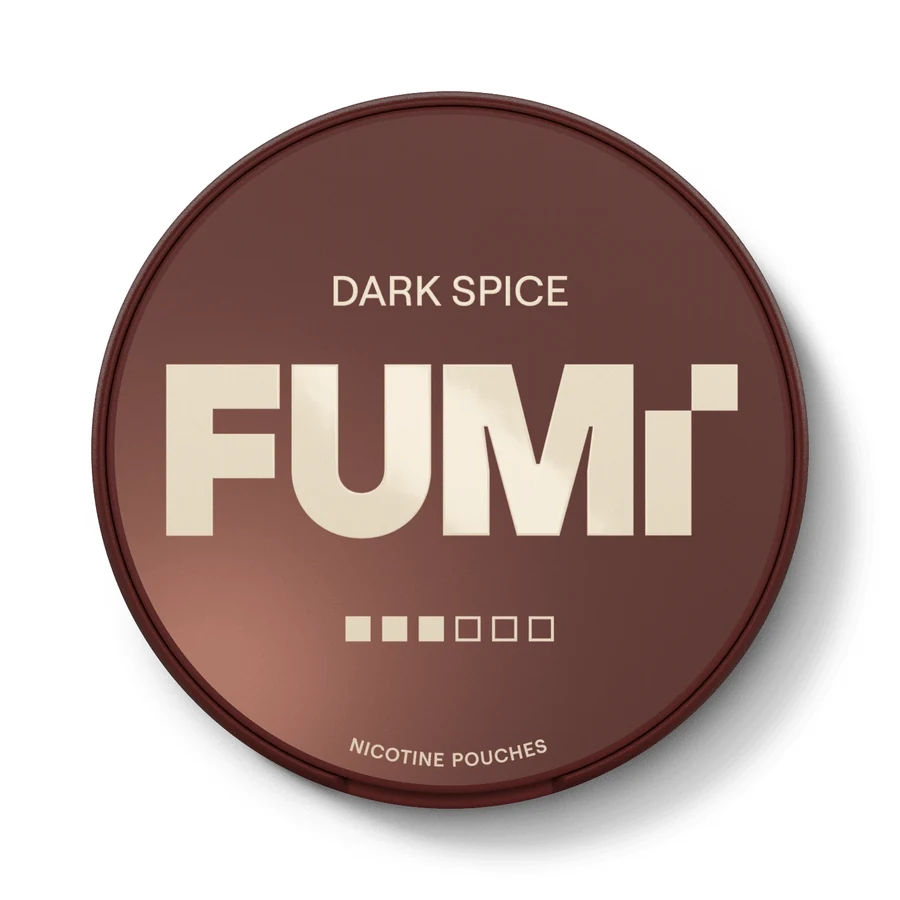
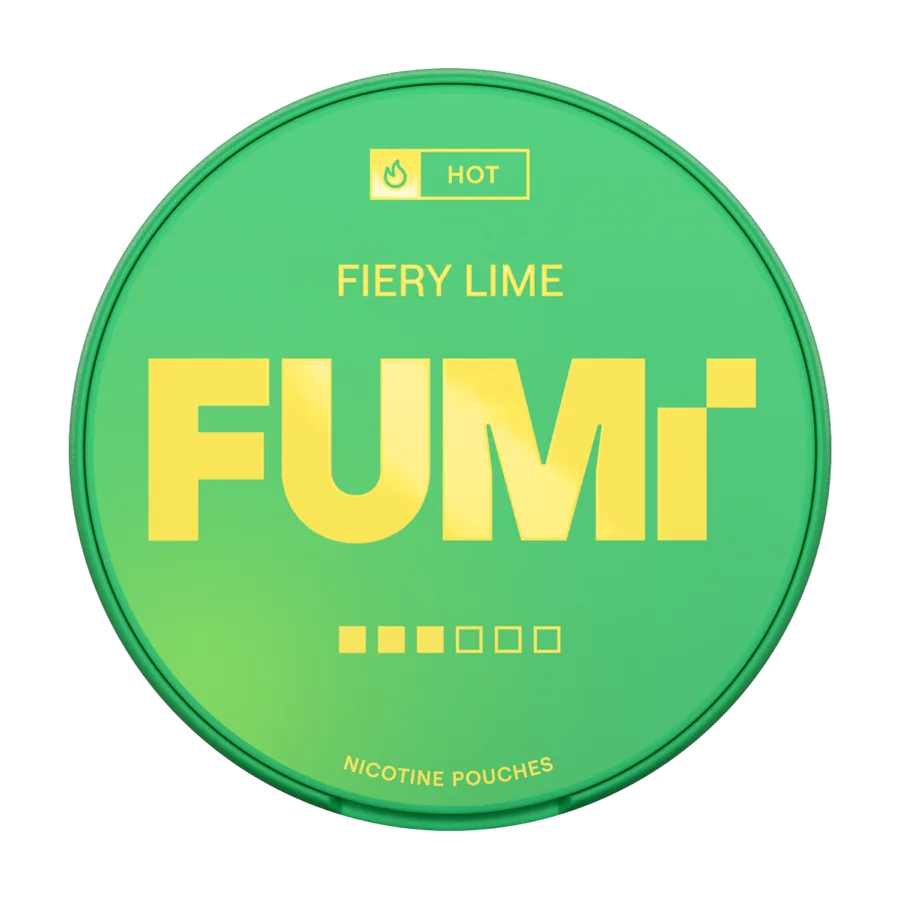
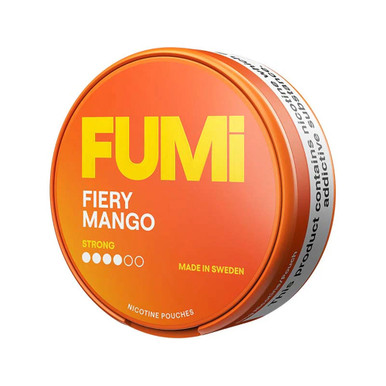
The range groups fairly neatly. This blackcurrant can and the chilled cherry listing are the dark-fruit pair. Fumi Fiery Mango and Fumi Fiery Peach cover the tropical and stone-fruit ground. Fumi Fiery Lime is the citrus entry. Fumi Fiery Mint and Fumi Minty Blueberry cover the cooling side, the second of those being a berry-and-mint combination that sits closest to this can while still being clearly different. Fumi Dark Spice is the outlier and the one that sounds least like the rest.
A note on those names. "Fiery" is a word the manufacturer uses in its flavour naming. On this site it is a flavour name and nothing more — it describes a taste direction the brand has chosen to label that way, and it should not be read as a statement about heat, strength or sensation. The same goes for "Dark Spice", which is a name on a can rather than a description of anything else.
A second can to keep alongside this one
People who buy pouches regularly tend to keep two or three flavours going rather than working a single one to the end. A sharp dark fruit is a flavour that gets tiring faster than a neutral one, and having something structurally different available is the standard solution.
The usual pairing for a tart berry is something cooling and uncomplicated. Inside this brand, the mint listing keeps you at £27.90 and changes the category completely. The minty blueberry can is the halfway option — still a berry, but with a cooling character running through it, which makes it the nearest sibling to this listing rather than a contrast to it.
For a different berry rather than a different category, XQS Berrynana Twist at £39.90 is a blended reading rather than a single-fruit one, and the Velo strawberry listing at £4.19 is the cheapest way to have a second flavour in a drawer, with the pack-size caveat above firmly in mind.
If you would rather browse than be pointed at things, the Pablo shelf and the Cuba shelf are the two largest brand ranges we keep and the most efficient starting points.
Ten cans at once — what the pack arrangement changes
Buying a box rather than a can changes three practical things, none of them to do with the product itself.
It changes where the stock lives. Ten cans is a drawer item, not a pocket item. The sensible arrangement is a stable home for the box and one can in circulation, which is also the arrangement that keeps the last can closest to the condition of the first.
It changes the comparison arithmetic. £2.79 a can is the figure to hold up against single-can listings elsewhere on the site, not £27.90. Forgetting that is how a perfectly reasonable box looks expensive next to a tin.
And it changes the consequence of a flavour you turn out not to like. One can is an experiment; ten is a commitment to a flavour word you may only have read. That is worth thinking about before ordering, particularly with blackcurrant, which is a more divisive flavour than a strawberry or a blueberry and which people tend to have firm opinions about before they start.
Choosing between 4mg and 8mg
The decision here is uncomplicated because price is not part of it. Both declared figures are £27.90 for ten cans, so nothing is gained or lost financially either way.
We are not going to tell you which to choose, and we would be doing something improper if we did. A shop cannot know how a declared figure reads to an individual, and pretending otherwise is the sort of guidance that has no business on a product page. The numbers are printed here, the number is printed on the can, and the choice belongs to the buyer.
Two pieces of information rather than advice. Both figures are variants of the same listing, so ordering one of each costs the same per box as ordering two of the same. And since both sit at £27.90, the 8mg box is not a premium product within this listing — it is the same box with a different number printed on it.
Ordering, delivery and the age check
This is an 18+ product and our process treats it as one. Age verification applies to the order and ID may be requested on delivery. That is not discretionary and it is not something a courier decides on the doorstep. If the age check cannot be satisfied, the parcel is not handed over.
It is worth choosing the delivery address with that in mind rather than discovering the problem afterwards. An address where an adult over 18 will be present is the one that works. Workplace receptions, neighbours and parcel shops vary in whether they can complete an age check at all, so it is better established before you select one than after the parcel has gone back.
The price on this listing is £27.90 for ten cans, the same at both declared figures. Delivery options, any order minimums and anything promotional are handled at checkout and on our delivery pages, which are the authoritative places for them — a product description can be read a long time after it was written and should not be trusted for anything that moves.
On stock: we show this as available at the time of writing. Stock does move and the live position on the product page is the one to trust. Where a listing has sold out we say so plainly rather than leaving an unavailable page looking normal.
Routes to this page
There are three ways into this listing and they suit different questions.
By brand, it sits under Fumi with fifteen siblings, all at the same price — the right route if you have settled on the brand and are choosing a flavour. By flavour, it appears in the berry grouping with 75 others, which is the route to take if the fruit matters more than the maker. By our shelving labels it sits in Medium Strength alongside 134 other listings.
If none of those is how you think about a purchase, everything we stock is listed in one place. It is a long page, and it is the honest starting point when you do not yet know what you are looking for. The filters are shortcuts through that list rather than separate shops.
Questions people ask about this box
Is £27.90 for one can or ten?
Ten. This listing is a ten-can pack and £27.90 is the price for the box, which works out at £2.79 a can. We spell this out because the catalogue mixes single cans and multi-can boxes, and comparing a box price against a can price is the most common way to misread the shelf. If you are comparing this with another listing, check what that one contains first.
How many pouches are in each can?
We do not hold that figure. The per-can pouch count is not a field in our product record, and rather than estimate it from what other brands do we are telling you it is missing. The count is printed on the can itself. This also means you cannot calculate a per-pouch price for this listing from anything on this page.
Does the 8mg cost more than the 4mg?
No. Both declared figures are £27.90 for the ten-can pack. Within this listing the strength you select has no effect on what you pay, and neither one is positioned as a premium version of the other. That is consistent across this brand's shelf, where everything sits at the same price.
Which strength should I buy?
We cannot advise on that and will not. The milligram figure is a manufacturer's declared number, and how any particular figure reads to any particular person is individual. We stock 4mg and 8mg on this listing because those are the two figures produced. Which one you buy is your decision to make, not ours to steer.
Are these dry or moist pouches?
Our record does not specify, so we are not going to state it. It is a real and useful distinction — drier and moister pouches feel different in the hand and behave differently in storage — and we would tell you if we held it. The manufacturer's packaging declares the format, and it is obvious the moment you handle one.
Will the last can be as good as the first?
That depends almost entirely on storage rather than on the product. Ten cans kept sealed, upright and somewhere cool and dark will be in much the same condition throughout. Ten cans left in a car through a summer will not. Air and heat are the two variables, and both are within your control. We cannot put a timescale on it because we hold no shelf-life figure for this listing.
How tart is the blackcurrant?
We do not hold a flavour measurement of any kind for any listing on this site, so any figure we offered would be invented. What we can describe is the character — blackcurrant is the sharpest and darkest of the three main berry readings, with a slightly leafy note under the fruit — and where it sits relative to the strawberry and blueberry cans we stock. Exactly where Fumi has set the balance is on the can.
Can I order 4mg and 8mg together?
Yes. They are selectable variants of the same listing and there is no price consequence to mixing them, since both boxes are £27.90. Each variant you order is its own ten-can pack, so an order of one of each is twenty cans in total. That is worth being clear about before confirming, given the quantities involved.
Do I need to be in to receive it?
Somebody over 18 does. This is an age-restricted product, age verification applies to the order, and ID may be requested at the door. A parcel that cannot pass an age check is not left. Choosing a delivery address where an adult will be present is the practical answer, and it is worth doing at the point of ordering rather than afterwards.
What does "Fiery" mean on the other Fumi cans?
It is part of the flavour name the manufacturer has given those products, and on this site it means nothing beyond that. It is not a description of heat, of strength, or of any sensation — it is a word printed on a can as part of a product title. The same applies to "Dark Spice". We describe flavours as tastes, and brand naming is not a fact about a product.
Do you publish reviews or ratings for this box?
Not on this page. We do not carry ratings, review counts or testimonials against our listings, and we are not going to summarise opinions we have not collected. Everything above is drawn from our product record, and where the record is silent — pack contents per can, moisture format, shelf life — we have said so rather than filling the space with something that reads like evidence.
The legal position
This product is sold only to adults aged 18 or over who already use nicotine. We do not sell it to anyone under 18, and it is not intended for, aimed at or suitable for anybody who does not already use nicotine.
Nicotine is an addictive substance.
This is not a licensed stop-smoking medicine and is not offered as one. It is not intended for non-smokers, for people who do not already use nicotine, for under-18s, or for anyone who is pregnant or breastfeeding. Nothing on this page is medical advice, dosage guidance, or a suggestion that any particular strength is suitable for any particular person or circumstance. Health questions about nicotine belong with a qualified professional, not with a product description.
Age verification applies to orders on this site and ID may be requested on delivery. Keep this product out of reach of children, and dispose of used pouches in general waste.
To summarise
Ten cans for £27.90, at 4mg or 8mg with no difference in price, filed under berry, shown as in stock. Blackcurrant is the sharpest of the berry readings and the one people have the firmest opinions about, which is worth weighing before committing to a box of ten. We hold no pouch count and no moisture format, and we have said so rather than guessing.
If this is not the one, the rest of the Fumi shelf sits at the same price and the full catalogue holds everything else. Every product page here is written from the same records, with the same gaps admitted.
More from Fumi
More medium strength pouches
More berry pouches
Where this sits
Fumi Blackcurrant Nicotine Pouches appears in these categories. Browse them, or jump to something close.
You might also like