Home / Medium Strength / 77 Strawberry Nicotine Pouches
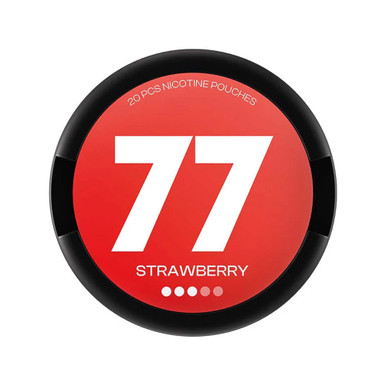
77 · 10.4mg · 10-can pack
Read the full guide
77 Strawberry Nicotine Pouches
£39.90
✔ In stock — ready to ship
100% tobacco-free
Free over £20
Same-day dispatch
Secure checkout
77 Strawberry Nicotine Pouches are stocked here at £39.90 for a 10-can pack, in a single strength of 10.4mg. At the time of writing this listing is in stock, which is worth noting because a fair number of the 77 range is not. The live availability marker sits on the listing itself and that is the one to trust.
Strawberry is the most heavily worked flavour idea in this entire shop. We file nineteen listings under our Strawberry shelf and seventy-six under the broader Berry category, which makes berry the largest flavour family we run after mint. So the interesting question about this can is not what strawberry tastes like — everybody knows — but which of the many possible strawberries this one is, and what you get for £39.90 that you do not get from a £3.85 tin of something similar. Both of those get proper answers further down.
The full guide to 77 Strawberry Nicotine Pouches
5,099 words on how it eats, who it suits, how to serve it and what to put beside it.
77 Strawberry: the listing in plain terms
The other facts are short. It is a 77 product and appears on the 77 brand page with the rest of the twenty-nine listings we carry from them. Its 10.4mg figure files it into the Medium Strength band alongside one hundred and thirty-five other cans. One image on the listing, one strength, one price, one pack configuration.
What we do not publish is composition or technical information about how any pouch is built. That belongs on the manufacturer's packaging and stays there. What this page can usefully describe is the physical object, the flavour as a taste, and where it lands among the many other strawberry cans on our shelves — which, given how crowded that shelf is, turns out to be the most useful thing a product page can do.
The tin itself: a close look at the object you are buying
Product pages tend to skip straight past the container to talk about flavour, which is odd, because the container is the part you interact with dozens of times a day and the part most likely to annoy you. Since this listing is ten of them, it is worth a proper look.
Size, feel and what a pocket will take
A 77 can is the standard modern pouch tin: a squat cylinder, a little wider than a bottle cap and around the depth of a stack of coins, made of rigid plastic with a slightly textured grip around the rim. It is designed to be opened one-handed, and it can be, though the first few cans out of a pack are always a bit stiffer than one that has been opened twenty times.
In a pocket it behaves well. It is flat enough not to print obviously through a trouser pocket and rigid enough not to be crushed when you sit down, which is more than can be said for a soft pack of anything. A jacket pocket takes it without a thought. A jeans watch-pocket will not take it. In a bag it disappears entirely, and the flat top and bottom mean cans stack, which matters with ten of them: a ten-pack stores as a short column rather than as a loose heap, and takes up roughly the footprint of a mug in a cupboard.
The one practical warning about pockets is pressure. A tin sat on repeatedly can have its lid forced very slightly proud of the rim without the owner noticing, and a lid that is not properly seated will let a can dry out over a few hours. If you pull a can out and it opens with less resistance than usual, that is the likely explanation. Pressing it firmly shut until it clicks is the entire fix.
The lid and the catch compartment
This is a two-chamber design and the second chamber is the genuinely good idea. The main well underneath holds the fresh pouches. The lid is not a flat cap — it has a shallow floor inside it, forming a compartment where used pouches go. Click the lid back down and the used ones are held separately from the fresh ones until you reach a bin.
It is a small space and it fills faster than people expect. Three used pouches sit in it comfortably. Four is fine. Five and the lid starts fighting you when you close it, and at that point the can will not seat flush, which is both annoying and bad for the pouches underneath. The compartment is not deep enough to be a substitute for a bin, and it was never meant to be.
It also has a hygiene dimension that nobody enjoys discussing but everybody encounters. A lid carrying yesterday's pouches sits directly above today's, and on a sweet fruit flavour the smell of the used ones is noticeable when you open the tin. Emptying the catch as a matter of routine — when you empty your pockets, when you get home, whenever — is the difference between a can that is pleasant to open and one that is not. It takes three seconds.
How the lid behaves over the life of a tin
One thing worth knowing about these cans, since you will have ten of them, is that the lid loosens slightly with use. A brand-new tin out of the sleeve is tight, and the first opening often needs a thumbnail under the rim. After a dozen openings it has eased to the point where a thumb push will do it one-handed, which is where you want it. By the time a can is nearly empty the lid is noticeably looser than it started, though in normal use it still seats properly.
That progression is normal and not a defect. The practical upshot is that a nearly empty tin is the one most likely to work open in a bag, so if you are carrying the last few pouches of a can around it is worth checking it is properly shut rather than assuming. It is also the reason people tend to decant the last few pouches into a fresh tin rather than carry a loose one, which is a perfectly sensible habit and costs nothing.
The portion count, and why this page does not print one
The obvious next question is how many pouches are in each can, and the honest answer is that our record for this listing does not carry that figure. We hold the pack size — ten cans — and we hold the strength and the price, and those we will state. A pouches-per-can number we do not hold, and we are not going to estimate one, because an estimate on a product page becomes a figure people budget against.
The manufacturer prints the count on the can itself, which is the authoritative source. If the number matters to your calculation of what £39.90 is actually buying, that is where to read it, and it is worth reading before assuming a figure from a different brand carries across. Pouch counts vary between makers and between formats within the same maker — the mini and standard sub-lines of a range rarely hold the same number.
Ten cans as an object in their own right
A ten-pack is a different physical proposition from a single tin and it is worth picturing before it arrives. It is a column of cans, usually sleeved, roughly the size of a tall coffee mug and surprisingly heavy for its size. It does not fit in a pocket and is not meant to. It lives in a cupboard, a drawer or a desk, and one tin comes out of it at a time.
That has a direct consequence for how you look after it, covered further down: nine cans sitting unopened somewhere stable are in far better condition after two months than nine cans that have all been carried around. The pack is the store; a single tin is the thing that travels.
What this strawberry actually tastes like
Strawberry flavours divide roughly into three kinds, and knowing which kind a can is tells you more than any amount of adjective. There is the ripe fresh-fruit strawberry, soft and slightly green at the edges. There is the candied strawberry — the sweet-shop version, the one that tastes of confectionery rather than of fruit. And there is the iced strawberry, where a cooling element is laid over either of the first two.
This can is the second kind with a nod to the first. The aroma on opening is sweet and unmistakably strawberry, with the slightly synthetic top note that candied versions always carry — not a criticism, just an identification. Underneath it there is a rounder, jammier note that keeps it from being purely sweet-shop.
In the mouth, sweetness leads and arrives quickly. The fruit character comes through in the first minute and is more jam than fresh punnet: cooked, rounded, a little bit deep. There is a mild tartness sitting behind it, enough to keep the sweetness from going flat but nowhere near the acid level of a sharp berry can. As the pouch settles, the candy element pulls back first and the jammier note runs on for a good while, gradually thinning out into a plain sweetness at the end.
Cooling is essentially absent. There is no mint component and no freeze element, which immediately distinguishes it from a large part of the strawberry shelf, where icing the fruit is the standard move. What you have here is a warm-character fruit flavour with nothing cold in it.
Breath afterwards is faintly sweet and fades quickly. An open tin will make a drawer smell mildly of strawberry sweets if you leave the lid off, which is a mild argument for not leaving the lid off.
The pouch, once it is out of the tin
The pouch is the standard slim white format: soft, small, rounded at both ends, dry to the touch and softening within a minute. Slim rather than the old fat portion, which is why it sits without much of a visible bulge.
Where people put it and how they settle it is personal habit, and anyone using pouches has already worked theirs out. The common approach is under the top lip, off to one side, flattened along the gum line with the tongue so it lies rather than bunches. If it feels folded, it probably is, and straightening it sorts it out.
As for how long it stays in, the flavour curve gives the clue. The candy element goes early, the jammy note runs longer, and the tail is fairly plain. Most habits seem to fall somewhere in the twenty to forty minute range and plenty of people go well past that without thinking about it. There is no correct figure, we are not going to invent one, and the pouch does not turn unpleasant — it just runs quiet.
Used pouches go in general waste. Not down a sink, not out of a window, not on the pavement. The empty tin is a small plastic pot for whatever your council collects.
10.4mg: what the figure on the front means
One strength on this listing: 10.4mg. Since the milligram number is how most people sort a catalogue this size, it deserves a straight explanation.
It is a content figure. The manufacturer measures what is in the product and prints it, stating it per pouch or per gram according to their own convention. Those conventions are not standardised between companies, which is the part that trips people up. Two tins from two different brands showing the same figure are not automatically equivalent, and comparing numbers across brands is a rougher exercise than it looks. The figure is a label on packaging, not a position in a ranking.
We sort those figures into bands so that a catalogue of this size can be browsed at all. 10.4mg falls in the medium band, which you can browse in full on the medium-strength shelf. The two bands above it are Strong and Extra Strong. Those are organisational categories for a shop, not a sequence anybody is being encouraged to work through.
Which number suits any particular person is not something we will comment on. We do not know you, a retailer is not the right source for that kind of judgement, and a page that starts offering it has stopped being a product description. We print the manufacturer's figures and stop there.
Nineteen strawberries: where this one lands
The strawberry shelf is one of the most crowded in the shop, and this is the section that earns its place on the page, because the difference between nineteen strawberry cans is genuinely hard to work out from names alone. Here is how this one sits against the ones we stock nearby.
The iced strawberries
The most common move on this shelf is to lay cold over the fruit, and several of our listings do it. Velo Strawberry Ice at £4.19 is the cheapest way to see what that combination does — a lighter strawberry with a clear cooling element over it. Denssi Strawberry Freeze at £39.90 takes the same idea considerably further, with the cold being a headline feature rather than a garnish.
This is the axis on which the 77 can is most clearly different from its shelf-mates: it has no cold in it at all. If you have tried strawberry pouches before and found them refreshing, there is a reasonable chance that what you liked was the ice rather than the fruit, in which case this can will not deliver it. Conversely, if you have found iced fruit flavours distracting and wanted the fruit on its own, that is precisely what this one is.
The blended strawberries
The second common move is to pair strawberry with a second fruit, which changes its character considerably. XQS Strawberry Kiwi at £39.90 adds a green, tart element that pulls the whole thing sharper. Killa Exclusive Strawberry Watermelon at £33.50 goes the other way, adding a watery, softer sweetness that rounds the fruit off rather than sharpening it. Pablo Exclusive Strawberry Cheesecake at £3.85 pairs it with a dessert note, and at that price is by some distance the cheapest strawberry-family tin we list.
Against all three, the 77 can is the plain one, and plain is the right word rather than a dismissive one. It is strawberry and nothing else, which makes it the reference point for the shelf: if you want to know what the fruit tastes like in this format without anything else in the way, this is the can that answers the question.
The straight strawberries
The direct comparison is Fumi Strawberry at £27.90 and Cuba Ninja Strawberry at £39.90, both of which also go at the fruit without additions. The distinctions between straight strawberries come down to where each sits between candied and fresh, and how much tartness each keeps. The 77 version leans candied-to-jammy with modest tartness, which places it toward the sweeter end of that trio rather than the fresher end.
The price spread, which is the other half of the decision
Strawberry cans in this shop run from £3.85 to £39.90, and that spread is not a quality ladder — it largely reflects pack size. A £3.85 or £4.19 listing is generally a single tin. A £39.90 listing like this one is ten cans. Comparing those two figures directly is comparing a sample with a supply, and it is the single most common misreading of our catalogue.
The useful way to use that spread is obvious once stated: if you do not already know that you like a flavour, buy at the cheap end and find out. If you know exactly what you want, the bulk listings are where the volume is. Nothing about the £39.90 tier makes a can better than the £4.19 tier; it makes there be ten of them.
Reading a crowded shelf without trying everything
Nineteen listings under one fruit is more than anybody is going to work through, so it helps to have a way of narrowing it that does not involve buying all of them. Three questions do most of the sorting, and they can be answered from the listings themselves.
The first is whether a can has a cooling element, which is usually signalled in the name — ice, freeze, arctic and similar words are doing real work rather than decorating. The second is whether it is a single fruit or a blend, which the name also tells you. The third is the pack size behind the price, which the listing states and which explains most of the spread between four pounds and forty.
Answer those three and nineteen options collapse to two or three that actually match what you are after. On this can, the answers are: no cooling, single fruit, ten cans. That is genuinely most of what distinguishes it from its neighbours, and it is a more useful summary than any amount of flavour description.
Stepping outside strawberry
For contrast within the berry family rather than within strawberry specifically, SYX Blueberry at £29.90 and Nordic Spirit Blueberry at £4.49 are the two blueberry options in this part of the catalogue, and blueberry reads deeper and less sweet than strawberry in this format. The full seventy-six listings sit on the berry shelf if you want to browse the lot.
Strawberry's position in the 77 range
Within the twenty-nine 77 listings we carry, the range splits into mints, fruits, colas, teas and a small dessert group, and Strawberry is one of the plainest fruit options in it — a single fruit, no cooling, no second flavour.
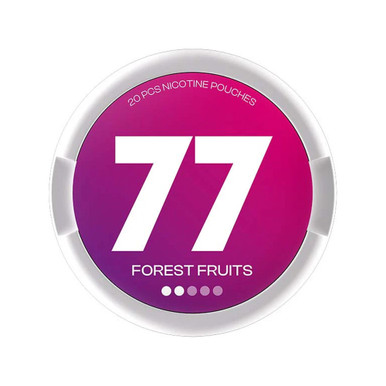
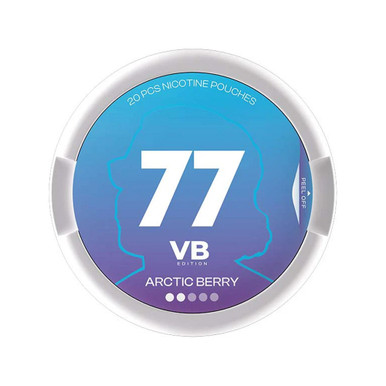
Its closest relative in the brand is 77 Forest Fruits, which takes the same jammy berry register and blends several fruits into it rather than committing to one. The other direction is 77 VB Edition Arctic Berry, also £39.90, which pairs berry with a mint element and is additionally the only 77 listing in this comparison offered in two strengths rather than one — useful to know if a strength choice matters to you, since this page cannot offer you one.
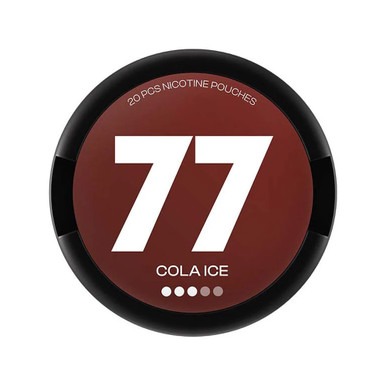
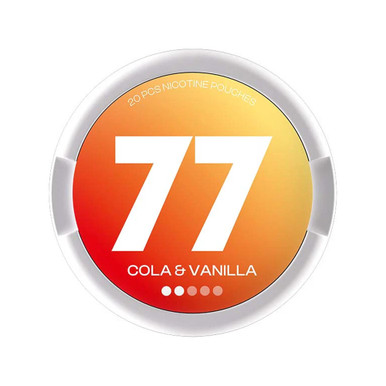
Further afield in the brand, 77 Apple Mint splits its work between fruit and cooling, 77 Cola Ice and 77 Cola Vanilla cover the soft-drink register, and the smaller-pouch sub-line runs through 77 Ghost Original Mini and the Ghost Mini Mango tin. Every 77 listing we carry is £39.90, so within the brand the choice is entirely about flavour and format, never about price.
What goes in the rotation with it
Ten cans of one sweet fruit is a lot of one thing, and most people buying at that volume keep something else on the go. The two usual companions are cold and sharp.
For cold, the Velo Strawberry Ice tin is an interesting choice precisely because it is the same fruit with ice over it, so you can run the comparison yourself for £4.19. For something colder and further away, the Denssi Freeze can is the stronger version of the same contrast.
For a genuine change of fruit rather than a variation on the same one, the SYX Blueberry can is deeper and less sugary, and the Nordic Spirit blueberry tin does it at single-can prices. If you want to leave the berry family altogether, the Pablo range and the Cuba shelf are the two longest flavour lists in this shop and cover everything from cola to liquorice.
Keeping ten cans in decent order
These are dry pouches, not the moist chilled sort, so the storage requirement is undemanding: keep them shut, keep them out of heat, and work through them in order.
Heat is the only thing that will noticeably change a can. A tin left in a car through a summer, on a sunny sill or above a radiator will lose the lighter parts of its flavour, and on a sweet fruit can the first casualty is the bright top note that makes it read as strawberry rather than as generic sweetness. What is left is flatter. It is not spoiled and it is not unsafe, just duller than what you paid for.
A fridge is not required and adds a small problem of its own: opening a cold tin in a warm room invites condensation onto dry pouches, which brings the flavour forward and shortens it. If you do chill cans, let one come up to room temperature before opening it. A cupboard achieves everything a fridge would, without that complication.
With ten cans, the discipline that actually matters is rotation. Finish an open tin before starting another rather than ending up with four half-used cans. The manufacturer prints a date on the packaging and that is the figure to work to, not anything on this page.
What is there to choose on this listing
Not much, which is worth being upfront about. One strength at 10.4mg, one price at £39.90, one configuration at ten cans. There is no second strength to weigh, no mini format and no single-tin option here.
The decision is therefore between this listing and a different listing, not within this page. If ten cans of one flavour is more than you want, the strawberry shelf has single tins at a fraction of the price — they are different products from different makers, but they are on the same shelf for a reason. If you already know this is the flavour you want in quantity, this listing does that job and is currently available, which several 77 listings are not.
If a choice of strength specifically is what you are after, this listing cannot give you one. The VB Edition Arctic Berry listing is the berry-family option in the 77 range that carries two figures rather than one.
Ordering, delivery and the age check
Buying works the same way here as anywhere on the site. Add it to the basket, combine it with anything else we sell, and it all ships together. There is no restriction on mixing brands, strengths, pack sizes or flavours in a single order, and there is no penalty for doing so.
We sell to over-18s only. Age verification is part of the checkout, and the courier may ask for identification when the parcel is handed over. Somebody aged eighteen or over must be present to receive it, and if there is nobody to show ID the parcel will not be left. This applies to every nicotine product on the site and nobody here can waive it.
Delivery charges, dispatch cut-offs and current timings are on the checkout and delivery pages rather than here, deliberately. A shipping promise baked into a product description written months ago goes stale and misleads people; a pointer to the live figures does not.
A word for anyone ordering from outside Great Britain or planning to travel with a ten-pack: rules on these products differ considerably between countries and some ban them outright, while quantity limits at customs become a real issue when you are carrying ten cans rather than one. We do not hold that country-by-country information and cannot advise on any given destination. Checking before you order or travel is genuinely your own responsibility.
Getting back to this page
Four routes lead here, which is more than most listings have. By brand, via the 77 listings. By strength, via the medium band. By narrow flavour, via the nineteen cans on our strawberry shelf. By broad flavour, via the seventy-six berry listings, which is the better route if you want to see strawberry in the context of everything else berry-adjacent.
If none of those suits, the complete product listing runs everything in one place, and the stronger bands are at Strong and Extra Strong if strength is the axis you browse by.
Questions people ask before ordering this
How many pouches are in each can?
We do not hold that figure and will not estimate it. Our record carries the pack size, the strength and the price, and those are the numbers we publish. The count per can is printed by the manufacturer on the can itself, which is the reliable source. It is worth checking rather than assuming, because counts vary between brands and between formats within a brand, so a number carried over from a different product will often be wrong.
Is £39.90 for one can?
No, it is for ten. This is a multi-can pack, which is the single most important thing to understand before ordering, because the price reads very differently once you know. It also means this listing suits somebody who already likes strawberry flavours rather than somebody testing one — ten cans is a supply, not a sample.
Is it cold or iced?
Neither. There is no mint or cooling element in this can at all, which sets it apart from a good part of the strawberry shelf, where adding ice is the usual approach. The flavour is warm in character throughout. If a cooling sensation is what you actually enjoy about fruit pouches, one of the iced strawberry listings will serve you better than this one will.
Is this a sweet-shop strawberry or a fresh one?
Closer to sweet-shop, with a jammier note underneath that gives it some depth. It is not the fresh, slightly green profile of a ripe punnet; it is the cooked, rounded, confectionery version, with modest tartness behind it rather than real acidity. That places it toward the sweeter end of the straight strawberry cans we stock rather than the fresher end.
Why is it so much dearer than other strawberry pouches?
Because most of the cheaper strawberry listings are single tins and this one is ten cans. The price spread across our strawberry shelf runs from under four pounds to just under forty, and almost all of that gap is pack size rather than anything else. Comparing a single-tin price with a ten-pack price directly is the most common mistake people make reading our catalogue.
Which strength should I get?
That is not a question a shop should answer and we will not. This listing has one figure, 10.4mg, taken from the manufacturer's packaging and published as given. We band figures so the catalogue can be browsed, not to suggest a route through them. Choosing between strengths is a decision for the person buying, who knows things about themselves that a retailer does not.
Is it actually in stock?
It was when this page was written, which is not true of every 77 listing. Stock moves though, so the live indicator on the listing is the accurate source rather than this paragraph. If it has gone by the time you read this, the other strawberry cans on our shelf cover similar ground at a range of prices and pack sizes.
Can I mix this with single cans of other things?
Yes, with no restrictions. Brands, strengths, flavour families and pack sizes all combine freely in one basket and arrive as one parcel. Pairing a bulk pack with a couple of cheap single tins of something contrasting is one of the more sensible ways to order, and costs nothing extra beyond the price of the tins.
How long does one pouch last?
The sweetness is loudest early and the jammier note runs on for a while after it, so the flavour declines gradually rather than dropping off sharply. People's habits vary widely and the twenty to forty minute range covers most of them, with plenty going longer. We are not going to publish a figure as though it were guidance. Nothing unpleasant happens with time; the flavour simply gets quieter.
What is in it?
We do not publish composition, ingredient or technical information for anything we sell. The manufacturer's own information arrives printed on the packaging and that is where to read it. If you need more detail than the can carries, the manufacturer is the source with the answers rather than a retailer paraphrasing something it did not write.
Does the catch lid in the can hold many used pouches?
Three or four comfortably. Five and you will feel the lid resisting when you try to close it, which is the can telling you to find a bin. It is a convenience feature for carrying used pouches until you can dispose of them properly, not a storage solution. Emptying it routinely also keeps the tin pleasant to open, since a loaded lid sits directly above the fresh pouches.
Does the flavour hold up across a whole ten-can pack?
Provided the unopened cans have been kept somewhere stable, yes — the tenth tin should behave much like the first. What changes a can is heat and a lid left open, neither of which happens to a pack sitting in a cupboard. The cans that drift are the ones carried around for weeks, which is an argument for keeping the pack at home and only having one tin in circulation at a time. The date printed on the packaging is the outer limit to work to.
Is there a stronger version of this exact flavour?
Not in the 77 range as we list it. This flavour comes in one figure, 10.4mg, with no second option on the listing. Other berry-family cans in the brand do carry two figures, and other brands on our strawberry shelf publish their own numbers on their own listings. We have no way of matching a flavour across brands at a chosen strength for you beyond pointing at the shelves, since every maker uses its own conventions for stating the figure.
Will I need ID when it arrives?
Possibly, and it is best to assume so. Age verification happens at checkout and the courier may additionally ask for identification at the door. Someone aged eighteen or over needs to be there to receive the parcel, and the delivery will not be completed if there is nobody to show ID. This is standard on every nicotine product we sell.
Legal information and compliance
This product contains nicotine. Nicotine is an addictive substance.
It is for sale to adults aged 18 or over who already use nicotine products, and to nobody else. Sales to under-18s do not happen here. Age verification is built into the checkout process, and identification may be requested by the courier at the point of delivery.
This is not a licensed stop-smoking medicine and is not intended for non-smokers, for anyone who does not currently use nicotine, for under-18s, or for anyone pregnant or breastfeeding. Nothing on this page is a health, medical or therapeutic claim and nothing here should be interpreted as one. For questions about nicotine and your own situation, a healthcare professional is the appropriate person to ask.
In summary
77 Strawberry is a ten-can pack at £39.90, single strength 10.4mg, in stock at the time of writing. The flavour is a candied, jammy strawberry with modest tartness and no cooling element whatsoever, which makes it the plain reference point on a shelf where most rivals either ice the fruit or blend it with something else.
The can itself is a well-made, pocket-friendly object with a genuinely useful catch lid, and ten of them is a supply rather than a purchase — which makes this a listing for people who already know they want a lot of straightforward strawberry. If you are still working that out, the cheaper tins on the strawberry shelf will tell you for a few pounds what this listing would cost you forty to find out.
More from 77
More medium strength pouches
More berry pouches

Where this sits
77 Strawberry Nicotine Pouches appears in these categories. Browse them, or jump to something close.
You might also like