
Home / Extra Strong / Pablo Exclusive Strawberry Cheesecake Nicotine Pouches
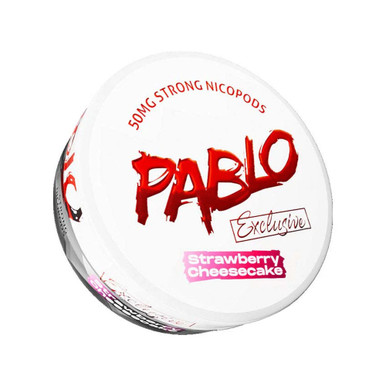
Pablo · 50mg
Read the full guide
Pablo Exclusive Strawberry Cheesecake Nicotine Pouches
£3.85
✔ In stock — ready to ship
100% tobacco-free
Free over £20
Same-day dispatch
Secure checkout
This is a single-strength listing. Pablo Exclusive Strawberry Cheesecake Nicotine Pouches are held at £3.85 with a declared figure of 50mg, one variant, one product image, and an availability flag reading in stock at the time of writing. The flag on the live listing is the version that counts.
Our internal record for this product has an empty cans-per-pack field. It is not zero and it is not one — it is simply absent, and we are not going to fill it in with a guess on a product page. £3.85 is the price against the listing as shown. What that price covers is set out on the listing itself, and on a site where neighbouring products are priced anywhere from £4.19 to £39.90 that is not a detail to skim past.
The full guide to Pablo Exclusive Strawberry Cheesecake Nicotine Pouches
5,022 words on how it eats, who it suits, how to serve it and what to put beside it.
What is on this listing: Pablo Exclusive Strawberry Cheesecake
Shelving is straightforward and there are four entries. It appears on the Pablo brand page, which runs to fifty-six listings. Its declared figure puts it in the Extra Strong band, currently ninety-eight listings. On flavour it carries two tags: the Berry shelf, seventy-six listings, and the Strawberry shelf, nineteen.
Worth naming the obvious before going further. This is a dessert-named product and it is an age-restricted one. The name describes a flavour and nothing else — there is no pudding here, no treat framing, and nothing about a dessert name changes who this is sold to. It is an 18+ product for adults who already use nicotine, described on this page as a flavour among several hundred other flavours, and that is the whole of it.
The pouch in use
The portion is a small dry rectangle with rounded ends. It goes under the upper lip, towards the front, and stays there without being held. It is not chewed and it is not swallowed. There is no device and nothing to charge — the can and the pouch are the entire apparatus.
Placement is more of a personal habit than a technique. Most people settle on a spot slightly off-centre, because dead centre tends to be where it is most noticeable to the person wearing it. It shifts a little when you talk and gets nudged back with the tongue without thinking about it after the first day or two. The sensation of having something up there is the main thing a person adjusts to, and it stops registering fairly quickly.
Duration is entirely a matter of individual habit. Some people take one out after a quarter of an hour, others leave it considerably longer, and a common approach is simply to go by when the flavour has finished — which, on this can, happens before most people remove it. We do not publish a recommended length of time and would not, because that would be advice about use and it is not ours to offer.
There is a rhythm to how the flavour behaves across that time, and it is worth knowing before you form a view of the can. The first minute is the loudest and is not representative of the rest. After that the flavour settles into a steadier middle that lasts the bulk of the portion, and then it tails off into a general sweetness with the specifics gone. Anyone judging a can on its first thirty seconds is judging the least typical part of it, which is why a single portion is a poor basis for deciding whether a flavour suits you and a whole can is a fair one.
On disposal: the used portion goes in the lid's catch compartment, and from there into general waste. Not into a sink, not down a toilet, not into a plant pot, and not left loose on a surface where a child or an animal could pick it up. That last point is the one that actually matters. The catch compartment exists so that you are never in the position of holding a used pouch with nowhere to put it, and it works well as long as you remember to empty it.
What the cheesecake does to the strawberry
Strawberry is the most heavily worked flavour idea on this site after mint, and there are nineteen listings on our strawberry shelf, so the only interesting question about any of them is what has been done to the strawberry. Here the answer is dairy and biscuit.
Take the strawberry first. On its own, a strawberry flavouring can go two ways — bright, slightly green, fresh-fruit-adjacent; or dark, cooked, jam-on-a-spoon. A cheesecake construction pushes it firmly towards the second. The fruit note here is the compote sort: thicker, sweeter, rounder at the edges, with the top-end brightness deliberately knocked off it. If you like strawberry because of its sharpness, that sharpness is the thing this can has given up.
What comes in its place is a lactic tang. This is the most distinctive thing about the can and the part people either recognise immediately or cannot find at all. Cheesecake as a flavour idea is built on soft cheese, which is sour in a completely different way from fruit — it is a dairy sourness, rounder and heavier, with none of the puckering edge of citric acid. It sits underneath the strawberry rather than on top of it, and it gives the whole thing a creaminess that a straight fruit can does not have.
Under that again there is a base note, and it is a dry one. Biscuit, faintly toasted, slightly grainy. It is the quietest of the three elements and it is also what stops the can reading as simply a very sweet strawberry. Without the base it would be a milkshake note; with it, it reads as a constructed dessert flavour with a top, a middle and a bottom.
Those three elements do not all arrive together. The dairy is forward early and is the first thing you would name if asked in the opening seconds. The cooked strawberry builds behind it and takes over the middle stretch, which is the longest part. The biscuit base is the last to declare itself and is most obvious near the end, once the sweetness has thinned enough to let something dry through. That ordering is the reverse of how most fruit cans work, where the brightest note leads and the body follows, and it is the single clearest way to describe how this can differs from a plain strawberry one without resorting to adjectives.
The smell of the open can reflects the same ordering. It is a warm aroma rather than a sharp one — sweet dairy first, cooked fruit behind it, and nothing green or acidic anywhere in it. Held against a plain fruit can, it is noticeably softer and a good deal harder to identify as strawberry from the smell alone.
There is one more honest thing to say about dessert flavours in this format generally, and it applies here. A dry pouch has to suggest a complicated flavour with very little to work with, and the result is always an impression rather than a reproduction. Cheesecake is a texture as much as a taste, and texture is the one thing a pouch cannot give you. What you get is the flavour outline of the thing — the tang, the cooked fruit, the dry base — carried on a format that feels nothing like a dessert. People who go in expecting the outline tend to get on with it. People who go in expecting the dessert do not.
And to repeat the point made at the top, because it belongs next to the flavour description rather than only in the compliance section: a dessert name is a flavour name. It is not an invitation, it does not soften what the product is, and it does not change who it is sold to.
Where our tagging falls short of the name. We file this can under berry and strawberry. That is it. Nothing in our data records the dairy side, the biscuit base, or the fact that this is a dessert construction rather than a fruit one. We do not run a cream shelf or a dessert shelf. So a shopper filtering by flavour will find this can sitting alongside eighteen other strawberry listings that are, in flavour terms, doing something quite different — and our filters will give them no way of telling which is which. That is a limitation of our shelving, not a description of the product, and it is the reason a paragraph like this one exists on the page at all.
Moving between cans on our own shelves: what changes and what does not
People rarely buy one can and stop. They move — between flavours, between brands, between price points — and the useful thing a shop can explain is which of the variables in front of them actually mean something and which are noise. Here is our honest account of it.
The declared figure changes meaning between makers
Every can on this site carries a strength figure and we record it as the manufacturer states it. What we do not do is normalise those figures, because we cannot. Our record for this product holds the string 50mg and nothing about what the 50mg is measured against. Another maker's can might state its figure on a different basis entirely. The consequence is unglamorous but important: two cans on our shelves showing the same number are not guaranteed to be stating the same measurement, and we are not able to resolve that for you. The can itself carries the maker's own wording, which is the only authoritative version.
Price tells you about the configuration, not the quality
This listing is £3.85. On the same page you will find Velo Strawberry Ice at £4.19 and in stock, which is broadly the same order of number, and then a cluster of strawberry listings at £14.95, £27.90, £33.50 and £39.90. Those are not four times or ten times the product. They are differently configured listings, and our pack record for this page holds their price without recording what sits behind it. Fumi Strawberry at £27.90 and in stock and Killa Exclusive Strawberry Watermelon at £33.50, also in stock, both fall into that group. Open the listing to find out what the price buys. Do not reason about value across two listings on this site from the price alone.
Format is more consistent than branding suggests
What does not change much, in practice, is the object. A dry pouch tin from one maker is very like a dry pouch tin from another — same rough diameter, same two-part lid, same catch compartment, same behaviour in a pocket. Brands differentiate hard on artwork and flavour naming and barely at all on the physical article. Someone moving from one house to another will notice the flavour and the price long before they notice the tin.
A brand name guarantees a house style, not a specification
Moving between houses is the change people most often overestimate and underestimate at the same time. Overestimate, because the physical article is near enough identical and nobody should expect a revelation from a different tin. Underestimate, because each house has a recognisable way of building a flavour, and that carries across their whole range far more consistently than the fruit on the lid does. Two strawberry cans from different makers can differ more from each other than two entirely different fruits from the same maker. It is one of the few genuinely reliable rules of thumb in this format, and it is why the sibling links on this page are grouped by house rather than by fruit.
What a brand name does not do is tell you anything specific. We do not publish maker-level information — no origin, no history, no manufacturing detail — because it is not information we hold and a product page is a poor place to speculate. What we publish is the name on the can and the listings we carry from it.
Stock is the variable that moves fastest
Availability changes far more often than anything else on a listing, and it changes in both directions. Two of the strawberry cans linked from this page are unavailable as written — Iceberg Kiwi Strawberry at £39.90 and Edge Strawberry at £14.95 — and both are worth a look rather than an order today. Neither is gone permanently as far as we know; they are simply not buyable at this moment.
The 50mg figure, as a number on a label
Fifty is a high number as our shelves go and it files this can on the top strength band. That sentence contains the entire meaning we attach to it.
We publish the figure because the manufacturer prints it and because shoppers use it to navigate. We do not publish an interpretation of it. We are not going to tell you what it will feel like, how it compares to another can in use, or whether it is a sensible figure for you to buy, because those are not things we know. We cannot advise which strength suits any person — not on this page, not by email, not by implication.
It also needs saying that there is nothing to be earned here. A higher declared number is not a better can, not a more serious purchase and not a measure of anything about the person buying it. Our Medium Strength shelf and Strong shelf are not the shallow end of the shop; they hold a very large part of our catalogue and a great many of the names people come here looking for. A number is a number.
If you want to see how much variation sits inside a single band, the extra strong grouping holds ninety-eight listings and a real spread of printed figures. Being on the same shelf does not mean two cans state the same thing.
The can as an object
Almost all product copy skips the container. It should not, because the container is the part you handle several times a day and the part most likely to irritate you, and on a listing where the flavour description runs to five paragraphs it seems only fair to give the tin three.
Shape, size and the pocket question
It is a squat plastic cylinder — wider than a bottle cap, about as deep as a short stack of coins, rigid rather than flexible, with a textured band round the rim for grip. Rigidity is the useful property. It will not crush when you sit down and it will not deform in a bag under a laptop, which is more than can be said for most small containers.
In a jacket pocket it disappears. In a front trouser pocket it sits flat enough not to print obviously, though it is noticeable when you sit. A jeans coin pocket will not take it. A bag swallows it entirely, which is the one real drawback — a can in a large bag is a can you will be rummaging for. People who carry one tend to give it a fixed pocket and keep it there.
The lid and the catch compartment
The lid is two parts. Lift the whole thing off and the fresh portions are underneath; twist the top plate and a shallow compartment opens in the lid for used ones. That second compartment is the single design feature that makes the format workable when there is no bin to hand, and it is the reason these tins are deeper than they need to be for the portions alone.
It holds several used portions comfortably. It does not hold a week's worth pleasantly, and a compartment left full for a fortnight will start to make itself known when you open the can. Emptying it is a ten-second job and the whole of the maintenance the object requires.
Portion count and what we know about it
We do not hold a portion count for this listing. It is not in our data. Counts vary between brands and between formats within a brand, and rather than publish a plausible-looking number we have not verified, we will say plainly that the figure is printed on the manufacturer's packaging and that is where to read it.
The rest of the Pablo Exclusive line on our shelves
Fifty-six Pablo listings sit on this site and the Exclusive range accounts for the bulk of the flavour spread. Six of its siblings are close enough to this can to be worth naming, and all six are currently available at the same £3.85, which makes them unusually clean comparisons — same price, same declared figure, same tin, different flavour only.
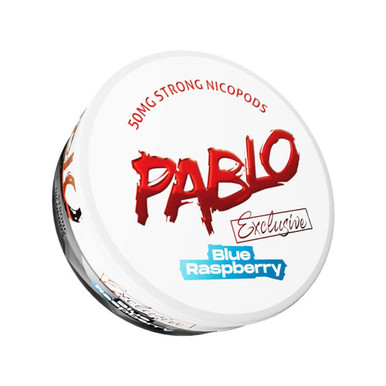
The closest in construction is Pablo Exclusive Bubblegum, not because it tastes anything like cheesecake but because it is the other can in the line that is openly a confectionery flavour rather than a fruit one. If the appeal here is a sweet-shop register rather than a fruit register, that is the other one to look at. Going the other way, Pablo Exclusive Blue Raspberry is the sharp, bright, unrounded option — everything this can has smoothed off, that one leaves in.
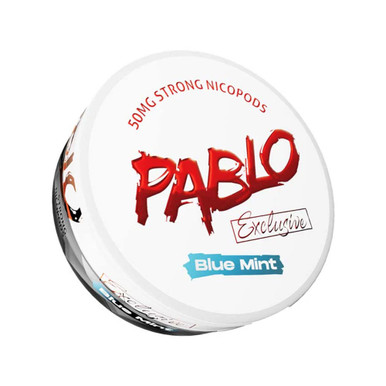
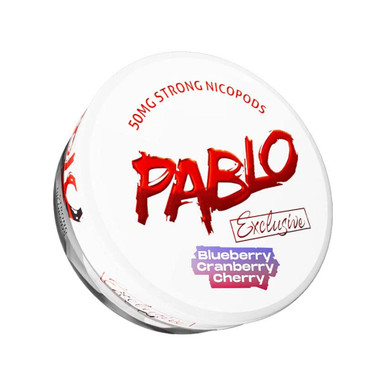
For the creamy side without the fruit doing the work, Pablo Exclusive Banana Ice is the nearest thing in the range: banana is a soft, rounded flavour with a natural creaminess to it, and the cooling on top gives it a finish this can does not have. Pablo Exclusive Blueberry Peach Ice is the range's layered fruit option, stacking two fruits and a cooling note, and Pablo Exclusive Blueberry Cranberry Cherry stacks three dark fruits with no cooling at all. Pablo Exclusive Blue Mint is the one with no dessert or fruit-sweet character to speak of, and is the obvious palate reset if everything above sounds too sweet.
That is six of fifty-six. Pablo's own shelf holds the remainder and shows live availability across all of them.
What people keep alongside this one
Running a single flavour indefinitely is uncommon, and a dessert-register can is one of the more likely ones to want a counterweight — sweet, creamy flavours tire a palate faster than clean ones.
Within the same brand and at the same money, Pablo Exclusive Strawberry Kiwi at £3.85 and in stock is the direct sibling comparison and a genuinely instructive one: it is the same strawberry base with a sharp green fruit on top instead of dairy, so the two cans demonstrate the two opposite things you can do to a strawberry. Keeping both is a reasonable way to have variety without leaving the fruit entirely.
Further out on the strawberry shelf, 77 Strawberry at £39.90 and in stock is a straight, unelaborated reading of the fruit, and Denssi Strawberry Freeze, also £39.90 and available, puts a cooling note where the dairy sits here. XQS Strawberry Kiwi at £39.90 is a third house's version of the strawberry-and-green-fruit idea and is in stock.
For a complete change of fruit family, Cuba Black Blueberry at £39.90 is in stock and moves to dark berry, and the Cuba shelf holds the rest of that house. If you would rather browse the whole thing, the full catalogue is the everything-view.
Choosing between the strengths and pack sizes listed
On this listing, there is nothing to choose. One variant is recorded — 50mg at £3.85 — and no second strength, no larger tin, no multipack. The choice is this can or a different can.
That is a useful thing to know in advance, because plenty of listings on this site do carry a dropdown and the two kinds of page look identical until you reach the buy box. Where different declared figures live is on the strength shelves, and those shelves are a filing system rather than a recommendation. We describe what is on them; we do not steer anyone between them.
Pack size is the same answer as at the top. Our record holds no cans-per-pack figure for this product, so we will not state one. The listing states what is sold. Given that the strawberry listings we link from this page span £3.85 to £39.90, checking that before checkout is not pedantry.
Keeping a can in condition
Three things degrade a dry pouch tin in ordinary domestic use, and all three are avoidable.
Heat is the first and the worst. A can on a dashboard in July, on a shelf above a radiator, or in a bag left in the sun will come out warm, and a warm can loses aroma the moment the lid comes off. The flavour does not become unpleasant, it becomes flat, which is a duller failure and easier to miss. A drawer or a cupboard solves it entirely.
The second is an imperfectly closed lid. These tins seal well but not hermetically, and the twist plate on the catch compartment is easy to leave a few degrees short of closed without noticing. A can left ajar overnight is noticeably drier and quieter the next morning.
The third is the used compartment, which has already had its paragraph and deserves the repetition: empty it. A full catch compartment sitting over fresh portions for a fortnight will affect what is underneath it.
We do not publish storage instructions of our own — the manufacturer's are on the can and those are the ones that govern. The only thing we will add is the practical one: a small, brightly printed tin is exactly the sort of object a child or an animal will investigate, so keep it somewhere deliberate rather than on a coffee table.
Buying, delivery and the age check
The mechanics are ordinary — listing, basket, checkout, confirmation, at the price displayed when you order.
The age check is the part to plan for. This is an age-restricted product sold only to adults aged 18 or over. Verification may take place when the order is placed, and ID may also be requested on delivery. A courier who asks and is not satisfied will not release the parcel, and that is not a matter of discretion. If the parcel is going to a workplace or to an address where somebody else will take it in, whoever receives it needs to be able to meet the same check.
On availability, this listing was in stock as written, and two of the pages linked above were not. Flags move in both directions and the product page is always the live answer.
Finding your way around from here
Four routes lead to this can. By maker, the Pablo listings. By declared figure, the Extra Strong band. By flavour, either the Berry shelf at seventy-six listings or the Strawberry shelf at nineteen, the second being small enough to read straight through.
Above those, the strength bands run in sequence — Medium, Strong and the extra strong grouping this can sits on — and everything we stock sits above all of them. Brand pages work identically from house to house, so Cuba's page behaves the same way Pablo's does.
The counts quoted throughout — fifty-six, ninety-eight, seventy-six, nineteen — are live figures as this was written and may have shifted since.
A practical note on how to use those shelves together, since most people only ever use one at a time. The flavour shelves are broad and will hand you seventy-six results that share a fruit family and very little else. The brand shelves are narrower and will hand you a consistent house style across a dozen different fruits. The strength bands cut across both and tell you nothing about taste at all. The quickest way to something you will actually like is usually to start from a house whose approach you already know and browse its flavours, rather than to start from a fruit and browse the houses — the fruit on the lid varies far less than the treatment behind it, as the whole of the flavour section on this page has been arguing.
Questions this listing tends to raise
Does it actually taste of cheesecake?
It tastes of a cheesecake flavouring, which is not the same claim. There is a real dairy tang and a real dry base note underneath the cooked strawberry, and those two things together are what the name is describing. Whether that adds up to cheesecake for you depends largely on how much you are expecting the base note to do. It is quieter than the fruit and quieter than the cream. Some people find it immediately; some never do.
Is this sweeter than a plain strawberry can?
In character, yes — the dairy and the cooked-fruit treatment both push it towards a rounder, heavier sweetness than a straightforward fruit flavouring gives. In measurable terms we cannot say, because we do not hold that kind of information about any can and would not publish it if we did. The comparison above is a description of taste, not a measurement.
Why is it not filed under any kind of dessert category?
Because we do not run one. Our flavour shelves cover fruit families, mint and a small number of other groupings, and a dessert construction like this one ends up tagged by its fruit alone. It is a genuine gap in our filtering and the reason this page spells out the dairy and biscuit elements in prose — our shelves will not do it for you.
What is the 50mg measured against?
We do not hold that. Our record stores the string the manufacturer gives us, which is 50mg, and does not record whether the figure is stated per portion or by weight. The can carries the maker's own wording and that is the authoritative source. We would rather tell you the limit of what we know than present a confident-sounding answer we cannot support.
Is 50mg the strongest thing you sell?
Our extra strong band holds ninety-eight listings and a spread of declared numbers, so it is not a single figure and this can is not necessarily at the top of it. More to the point, we do not present the band as a ranking to climb and we do not recommend a figure to anybody. If a different number is what you want, the strength shelves are there to browse; they are not there as a progression.
How many cans is £3.85?
Our record has no cans-per-pack figure for this listing, so we are not going to name one. The product page sets out what is being sold, and with neighbouring strawberry listings priced up to £39.90 it is worth two seconds of checking rather than an assumption.
Can I get this flavour at a lower declared figure?
Not from us. One variant exists for this flavour and it is the 50mg at £3.85. Moving to a different number means moving to a different can, and probably a different flavour with it, because we do not hold this particular construction in any other configuration.
Which of your strawberry cans is closest to this one?
Honestly, none of them is close, because the dairy element is unusual on our shelves. The nearest thing by shared base is the strawberry and kiwi can from the same line, which shares the fruit but not the treatment, and it is in stock at £3.85. If you want the fruit without any construction on top of it at all, the plain strawberry listings on our strawberry shelf are the place to look.
Will the flavour bother anyone standing next to me?
The format is a quiet one. There is nothing to switch on, nothing held in the hand, and the aroma stays largely in the can — it is noticeable when the lid comes off and much less so afterwards. Beyond that we are not going to make claims about what other people will or will not notice, because that depends on the room, the person and the setting. What we will say clearly is that where a product may be used is not ours to determine: venues, employers, landlords and transport operators each set their own rules, and those rules are theirs to state.
Do you carry the whole Pablo range?
We carry fifty-six Pablo listings, which is a substantial part of what the house makes but almost certainly not all of it. We do not publish a manufacturer's full catalogue and cannot tell you what exists elsewhere that we do not stock. The brand shelf shows what we have and its live availability, and that is the only list we can speak for.
Is there a shelf life?
We do not publish one. Date marking is printed on the can by the manufacturer and that is what governs. From the practical side, heat and a lid left open are what spoil a can in everyday use, and both are covered in the storage section above.
Does the photo match the can exactly?
There is one image on this listing and it is representative rather than guaranteed. Artwork gets revised by manufacturers without notice to retailers. The written facts — brand, name, declared figure, price — are the parts we stand behind.
Can I try one before buying a can?
No. We sell by the can and do not split them, there is no sampling, and opened age-restricted consumables cannot be returned. The least expensive way to test whether a flavour suits you is to buy the smallest configuration we list of it.
Age restriction and the legal position
This product is sold to adults aged 18 or over who already use nicotine. It is not sold to under-18s, and nothing written above is addressed to anyone who does not already use nicotine products.
Nicotine is an addictive substance.
It is not a licensed stop-smoking medicine and is not offered, described or intended as one. It is not intended for non-smokers, non-nicotine-users, under-18s, or anyone who is pregnant or breastfeeding. We make no health claim about this product in any direction, and no sentence on this page should be read as one.
ID may be requested on delivery, and age verification may also be carried out when the order is placed. Any question about whether a nicotine product is appropriate for you personally belongs with a healthcare professional rather than with a shop.
To summarise
A £3.85 single-variant can from the Pablo Exclusive line, declared 50mg, filed extra strong, tagged berry and strawberry — tags that say nothing about the dairy tang and dry biscuit base that are the actual point of it. Cooked strawberry rather than fresh, softened rather than sharpened, with a creamy middle and a quiet base. One image, no cans-per-pack figure on record, in stock as written. If the dessert register is not what you were after, the eighteen other strawberry listings take the same fruit in eighteen other directions.
More from Pablo
More extra strong pouches


More berry pouches
Where this sits
Pablo Exclusive Strawberry Cheesecake Nicotine Pouches appears in these categories. Browse them, or jump to something close.
You might also like